









Advanced Airdrop Guide: Survival Rules for Piercing Through the Witch's Fog
TechFlow Selected TechFlow Selected
Advanced Airdrop Guide: Survival Rules for Piercing Through the Witch's Fog
Based on analysis and argumentation of 100 projects.
 Navigating Web3 tides with focused insights
Author: 0x Laodong
Core Rules for Project Teams to Screen Users
When designing airdrop strategies, project teams rarely rely on a single criterion alone. Instead, they evaluate user quality across multiple dimensions to ensure airdrops reach genuinely valuable addresses. From the project team's perspective, they favor high-TVL, high-net-worth users and authentic active users who can contribute long-term to ecosystem development. Based on these principles and combined with historical airdrop project strategies, Laodong has summarized several core screening dimensions.
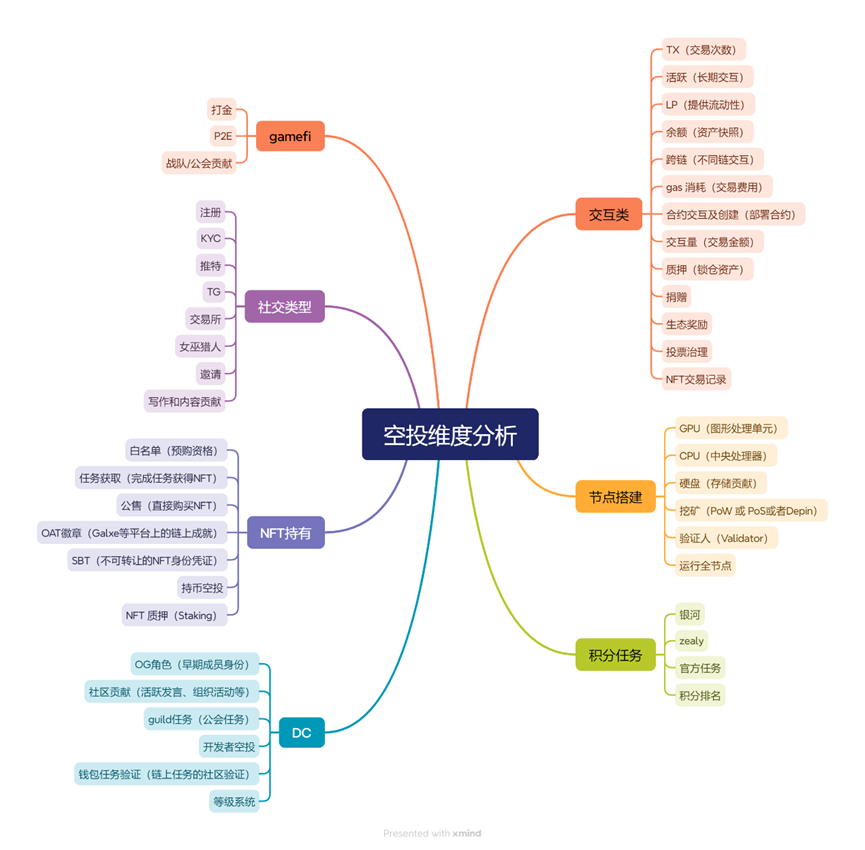
1️⃣Interaction-Based Screening Criteria
-
Transaction count, volume, and activity: Reflects a user’s on-chain activity level. Frequent transactions and deep interactions indicate certain commitment to the ecosystem, though excessively high data may signal volume manipulation. For example, in Starknet W, more actions lead to greater penalties;
-
Gas consumption: The total transaction fees paid by a user indirectly reflect their actual participation and contribution. For instance, Zkfair distributes airdrops based on gas consumption; currently, Morph uses gas expenditure to issue points;
-
Contract interaction & creation: Can be used to assess whether users participate in multiple ecosystem projects, helping distinguish genuine users from mere volume farmers. For example, both Arbitrum and zkSync apply weighted scores based on contract interaction counts;
2️⃣NFT & Asset-Based Screening Criteria
-
Whitelist, public sale, task-based acquisition: Such NFTs are typically limited in supply, enabling deflationary control and serving as credentials for airdrops, also indicating higher user engagement. For example, XAI distributed airdrops based on NFT ownership;
-
OAT badges and SBTs: Serve as on-chain achievements or non-transferable identity credentials, effectively proving long-term contributions and authentic participation. Examples include Odos' Pilot OAT and Linea's LXP;
-
Token holding, NFT staking: Holding tokens or staking NFTs not only demonstrates trust in project assets but may also provide additional incentives, while aiding in assessing asset quality and risk management. Examples include MOCA and PENGU distributing tokens via NFT airdrops;
3️⃣Point Tasks and Task Platforms
-
Point accumulation and ranking: Completing tasks on platforms like Galxe, Zealy, or official sites to earn points—higher points indicate higher engagement. Point rankings can also serve as key criteria for airdrop allocation. For example, IO's Galaxy Points missions, SCA's point-based airdrops, and many LSD projects’ point airdrops;
-
Cross-ecosystem tasks: Require users to complete tasks across multiple platforms or ecosystems, providing a more comprehensive assessment of overall activity and ecosystem contribution. For example, many Odyssey quests require completing various ecosystem tasks to earn rewards, such as Move and Linea;
4️⃣Community and Social Contributions
-
Twitter/Discord/Telegram activity: Users complete social tasks in communities—posting, retweeting, commenting in DC or TG, participating in discussions, or doing translations for social media—to obtain corresponding identity tags. These types of tasks are complex and often carry high airdrop value. For example, Kaito currently awards points through Twitter engagement; Move's Gorilla role is worth thousands of dollars; Dogs distributes airdrops based on Telegram account age and activity level;
-
Early members (OG roles) and referral contributions: Users who joined early or invited new users are more likely to receive airdrops, incentivizing long-term involvement. For example, IP's OG role received thousands of token airdrops;
-
Content creation and social media engagement: Promotion and discussion on platforms like Twitter, Medium, YouTube help spread awareness about the project and also reflect user endorsement. For example, Move's Creator role;
5️⃣Node Setup and Technical Contributions
-
Full nodes, mining, validators: Technical participation such as running nodes, mining, or acting as validators directly supports network security and performance—highly valued contributions by project teams. For example, IO workers use GPUs to mine points; Nillion nodes run via CPU; Grass earns points using IP and bandwidth;
6⃣GameFi and Entertainment Interactions
-
Farming, P2E: Earning tokens through in-game tasks within GameFi projects reflects user engagement and indicates reliance on the project’s entertainment ecosystem. For example, CATI users raise cats to earn tokens; large-scale games like Bigtime allow in-game farming to earn tokens.
⚔️ Attack and Defense: Sybil Detection Analysis and Countermeasures
🚨 Project Teams’ Sybil Identification Strategies
According to previous article's data analysis, among 100 projects in 2024, 32% explicitly conducted Sybil checks.
In airdrop campaigns, project teams conducting Sybil checks is essentially another form of filtering, aimed at identifying high-quality, authentic addresses with significant contributions, preventing low-quality, mass-created addresses from dominating airdrops. This isn’t solely targeted at professional farms—even individual users might be flagged as Sybil due to inconsistent interactions. Just as project teams continuously refine their screening rules, some farms still manage to achieve favorable outcomes.
Therefore, understanding how project teams detect Sybils and adopting corresponding defensive strategies is key to securing good results. Below, Laodong outlines some notable Sybil risk patterns:
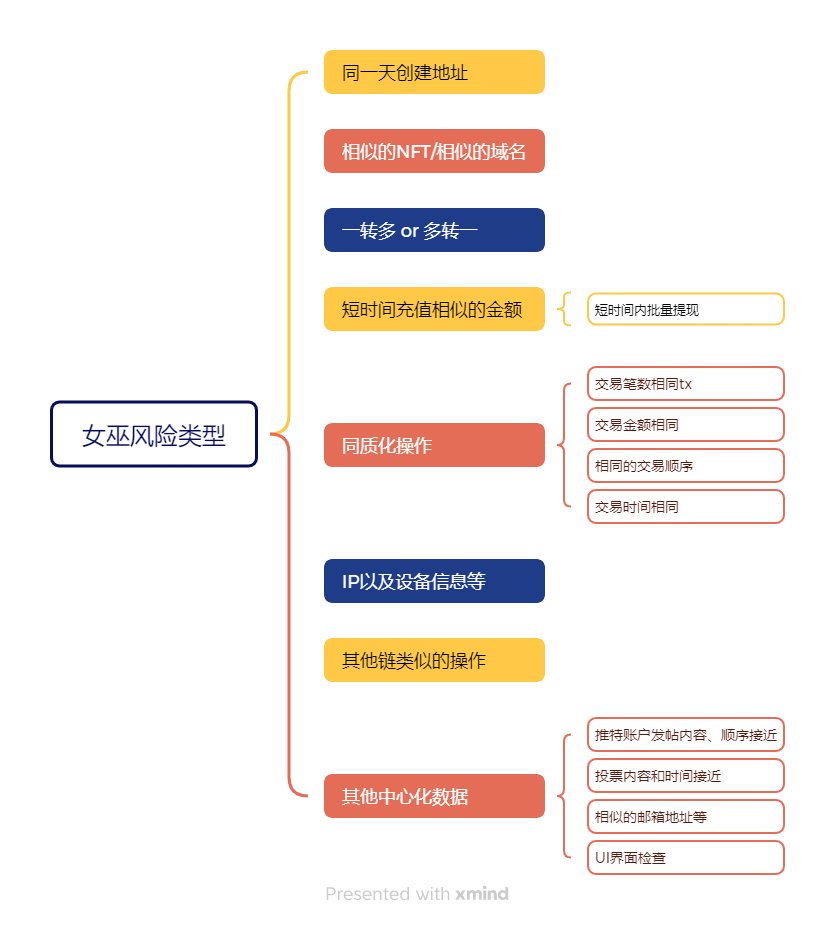
📕 Sybil Defense Tactics Manual
1️⃣ Abnormal Address Creation & Fund Flow
Project teams prioritize checking an address’s creation time, deposit path, and fund aggregation. Clustered behavior of this kind is one of the easiest ways to get flagged as Sybil. Main methods include:
-
Creating multiple addresses on the same day: If a large number of new addresses are created and funded on the same day, they’re easily marked as batch Sybil accounts.
-
One-to-many or many-to-one transfers: A single address transferring funds to multiple small accounts, or multiple addresses consolidating funds into one wallet, is considered abnormal fund distribution.
-
Funding similar amounts within a short time: If multiple addresses fund identical or nearly identical amounts around the same time, they may be identified as controlled by the same entity.
-
Batch withdrawals within a short period: Simultaneous withdrawals from multiple addresses to the same wallet constitute high-risk behavior.
💡 Prevention strategies:
-
Create only a few accounts per day when setting up new addresses, randomly choose funding times, avoid centralized operations.
-
Use CEX (Binance, OKX, etc.) sub-accounts as intermediaries to avoid direct on-chain fund consolidation.
-
Randomize funding amounts and timing to prevent fixed-amount, fixed-time batch operations.
-
Stagger withdrawal times and use different CEX sub-addresses for withdrawals whenever possible.
2️⃣ Abnormal On-Chain Interaction Behavior
Project teams analyze interaction patterns of addresses—this category is collectively known as homogenized interactions—with particular focus on the following behaviors:
-
Similar NFTs or domains: If multiple addresses receive identical NFTs or domains, they’re easily recognized as part of bulk operations.
-
Similar transaction counts: Multiple addresses with similar interaction counts and interacting with similar contracts are likely judged as bot operations.
-
Identical transaction sequences & amounts: If addresses follow the same interaction order, amount, and interact with the same counterparties, they’re highly likely to be identified as batch accounts.
-
Fixed-time interactions: If multiple addresses interact during the same timeframe (e.g., completing tasks within 24 hours), the risk is high.
💡 Prevention strategies:
-
Use different accounts to complete different tasks, space out interaction times, avoid performing identical actions simultaneously.
-
Insert "smoke screen projects" during interactions—e.g., engage in low-cost dApps like DEX trades or lending—to make on-chain behavior appear more natural.
-
Interact randomly with different contracts—don’t have all accounts interact with the same DEX, bridge, or contract. Select subsets of addresses to interact with specific contracts.
-
Spread interactions across all 24 hours of the day with random timing instead of fixed, synchronized batch operations.
3️⃣ IP and Off-Chain Data Analysis
Beyond on-chain data, project teams also analyze IP addresses, UI interface interactions, browser fingerprints, and social media data to detect Sybils via off-chain information:
-
Same IP / Same device: If multiple accounts use the same IP or browser fingerprint, the risk of being detected as operated by the same person is extremely high;
-
Similar social media behavior: If multiple Twitter accounts show similar posting content, liking sequences, or interaction patterns, they’re easily excluded by project teams. Inactive Discord accounts may be kicked from channels;
-
Email association: Using similar email naming conventions across multiple accounts may trigger risk controls;
-
UI interface checks: Direct interaction via contract calls without using the project’s UI interface may trigger risk detection for some projects, such as Dianyang;
💡 Prevention strategies:
-
Use proxy IPs and fingerprint browsers to alter device information;
-
Prioritize randomness in social interactions during account nurturing to avoid homogeneous content;
-
Register with different emails and avoid overly similar email naming;
-
Preferably use frontend interaction scripts to avoid being flagged for bypassing UI interfaces;
🎯 Tiered Strategy: Rational Account Allocation to Reduce Detection Risk
To improve airdrop success rates, it is recommended to adopt a tiered strategy by categorizing accounts differently, avoiding uniform patterns that could result in mass disqualification.
Currently, project teams increasingly favor premium accounts—on ZK, the reward gap between lowest and highest-tier addresses reaches 100x; on STRK it’s 20x, on ARB it’s 16.32x.
In terms of ZK, operating 100 premium accounts yields equivalent returns to 10,000 basic-income accounts, reducing operational effort while also lowering Sybil risks.
However, basic-income and lottery accounts still have their place—for example, Tensor and Magic Eden represent victories for basic-income accounts, while HMSTR represents a lottery account win—essentially universal distribution. Different strategies lead to entirely different outcomes.
✅ Premium Accounts (cost-no-object, focused nurturing) – At least top 1% across all metrics
-
High-quality interactions, participation in multiple ecosystems, social account binding, proof-of-humanity via tools like Gitcoin;
-
Personal-use wallets, fewer in number but high quality, enhancing contribution to on-chain ecosystems;
-
Simulate real user behavior, long-term operation, avoid one-time airdrop farming;
✅ Basic-Income Accounts (minimum airdrop threshold, moderate operation) – At least top 20% across all metrics
-
Participate only in core airdrop tasks, avoid obvious Sybil-like operations;
-
Moderate trading, avoid excessive frequency or overly regular interactions;
✅ Lottery Accounts (batch accounts, low-cost experimentation)
-
Perform only simple, high-ROI tasks, strictly control costs;
-
May employ more aggressive or liberal strategies, but won’t jeopardize main accounts;
🧠 Conclusion
In today’s environment of rapidly advancing AI and on-chain analytics, Sybil detection methods are becoming increasingly precise, rendering simple batch operations ineffective.
Therefore, for professional farms, Sybil operations must exhibit higher randomness and realism simulation, while flexibly adjusting strategies—combining tiered accounts, diversified interactions, optimized fund paths, and other methods—to reduce the likelihood of being flagged.
For individuals lacking the operational capabilities of a farm team, it’s advisable to focus on a small number of premium accounts with meticulous management—participating in multiple ecosystems, increasing social engagement, and building verifiable identity trails—to maximize airdrop returns. Only by knowing both yourself and your opponent, mastering core selection logic, and flexibly adapting operational approaches, can one remain invincible in airdrop campaigns!
Join TechFlow official community to stay tuned
Telegram:https://t.me/TechFlowDaily
X (Twitter):https://x.com/TechFlowPost
X (Twitter) EN:https://x.com/BlockFlow_News
 @crypto_laodong






