Gold, Bitcoin, and the Rise of DEXs: 5 Trends You Can't Ignore This Year
TechFlow Selected TechFlow Selected
Gold, Bitcoin, and the Rise of DEXs: 5 Trends You Can't Ignore This Year
Focus on crypto ecosystems that emphasize both decentralization and intelligent user experiences.
 Navigating Web3 tides with focused insights
Author: Duo Nine⚡YCC
Translation: TechFlow
The market is undergoing a significant shift. Clear signals indicate that past successful strategies are no longer effective.
In this environment, you must choose: adapt quickly to the new reality or be left behind?
Next, I will explore five emerging and unavoidable trends, diving deep into these new developments.
1. The Return of Safe Havens—The Rise of Gold
Before delving into cryptocurrencies, let's talk about gold. If you haven't noticed, gold (XAU) hit an all-time high this week, approaching $3,000 per ounce. Compared to two years ago, gold prices have nearly doubled. What exactly is happening behind this?
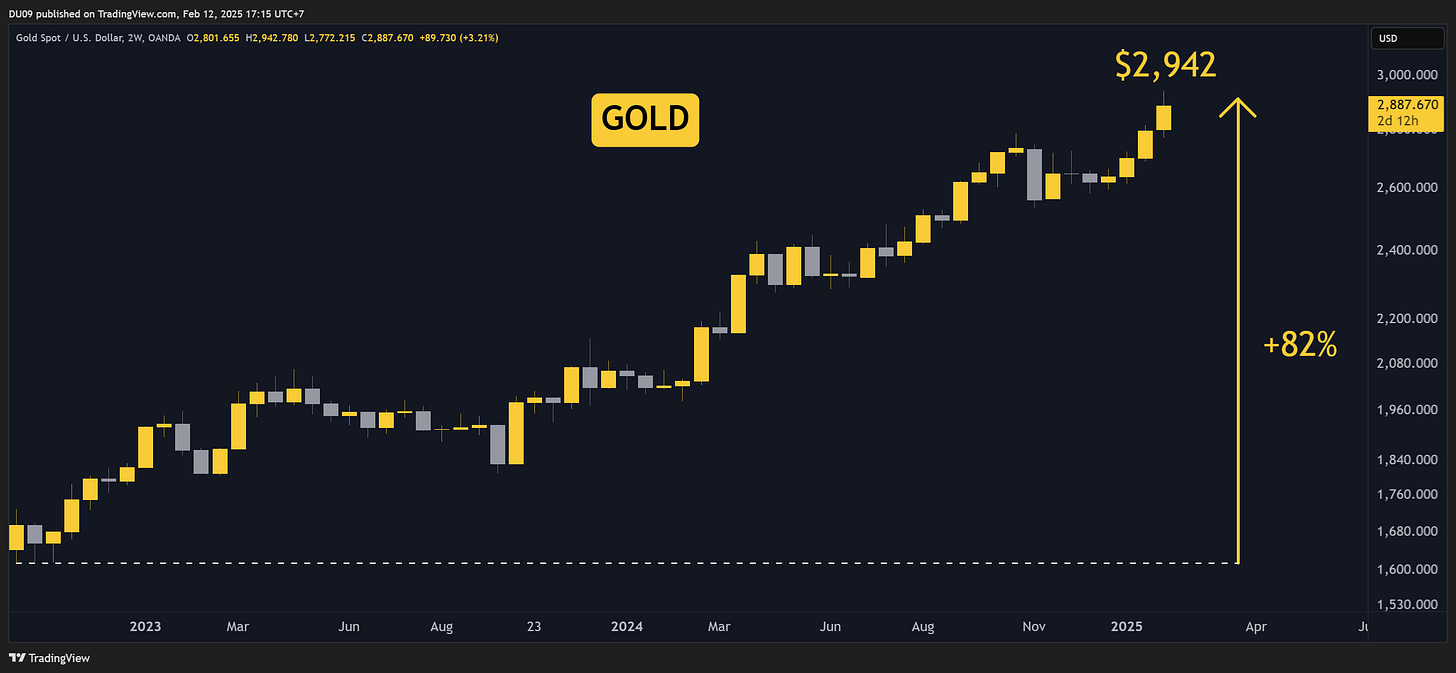
The answer is simple: someone is buying gold aggressively.
But why?
Largely as a hedge against market risks and geopolitical uncertainty.
From my observations, these buyers are likely nations and large investors. They've realized that the future global landscape may be fraught with uncertainty. If a trade war breaks out—or even military conflict—gold would undoubtedly be one of the safest assets.
For example, some extreme statements from Trump—such as wanting Canada to become the 51st U.S. state, taking over the Panama Canal, seizing Greenland from Denmark, or turning Gaza into a real estate project—have unsettled global investors. Additionally, U.S. tariff hikes on various countries only deepen these concerns.
Yet another major factor driving gold prices is BRICS+ nations (including Brazil, Russia, India, China, South Africa, and their allies) gradually reducing the dominance of the U.S. dollar in international trade. This shift puts immense pressure on the dollar and incentivizes these countries to back their currencies with as much gold as possible.
Previously, international trade relied almost entirely on the dollar. Now, more and more countries are choosing to transact using their own currencies backed by gold. This new demand has fueled a surge in gold prices.
So, what does this have to do with cryptocurrency?
Bitcoin is known as "Gold 2.0." If gold prices continue to rise, this is undoubtedly a positive signal for Bitcoin—and its impact may go far beyond what you imagine. Please continue reading the next section for more details.
2. Bitcoin’s Decoupling from the Market
If you closely observe the current market, you’ll notice an unprecedented phenomenon: Bitcoin’s price movement has clearly decoupled from the rest of the market, especially altcoins.
Look at the chart below. While Bitcoin continues to reach new highs, altcoins as a whole fail to follow. This situation has never occurred since Bitcoin’s inception in 2009.
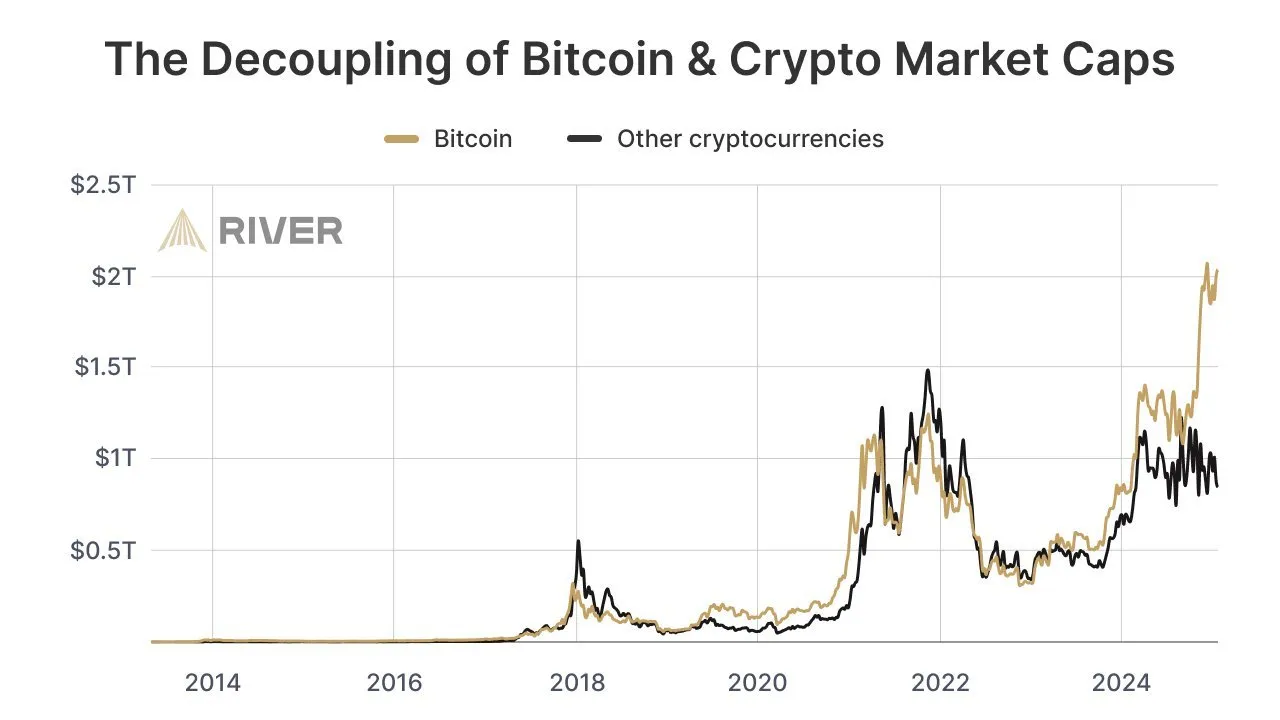
Bitcoin has now separated from altcoins in terms of price performance, gradually becoming an independent asset class. It is no longer tightly correlated with the rest of the crypto market, showing greater independence. In the future, Bitcoin’s price movements may resemble gold more than other assets.
This is also why the article began with a gold price chart.
The turning point occurred in 2024. When Bitcoin ETFs officially launched, Bitcoin evolved into an asset capable of competing with gold. Shortly afterward, Bitcoin’s price trajectory visibly diverged from the altcoin market, as shown in the chart above.
So, what’s the conclusion?
Bitcoin and gold have a bullish outlook.
This trend could last for a considerable period. Especially when countries continue printing fiat currency to fund trade wars or other conflicts, this trend may intensify further.
Moreover, this shift could profoundly affect Bitcoin’s four-year halving cycle. Will Bitcoin’s price still experience the same boom-and-bust cycles as before, or will it forge an entirely new path? We’ll have to wait and see.
3. Altcoin Dilution and Inflation Issues
Another key reason altcoins are underperforming relative to Bitcoin is their ever-increasing supply.
Take the Solana ecosystem as an example: the network mints millions of new tokens every month. Yet, overall liquidity in the crypto market hasn’t grown proportionally.
I also discussed this in a thread on X. The logic is straightforward:
When the same amount of capital is spread across more tokens, prices cannot rise. On the contrary, each altcoin suffers negatively due to reduced liquidity.
This phenomenon is undoubtedly bearish for the long-term development of altcoins.
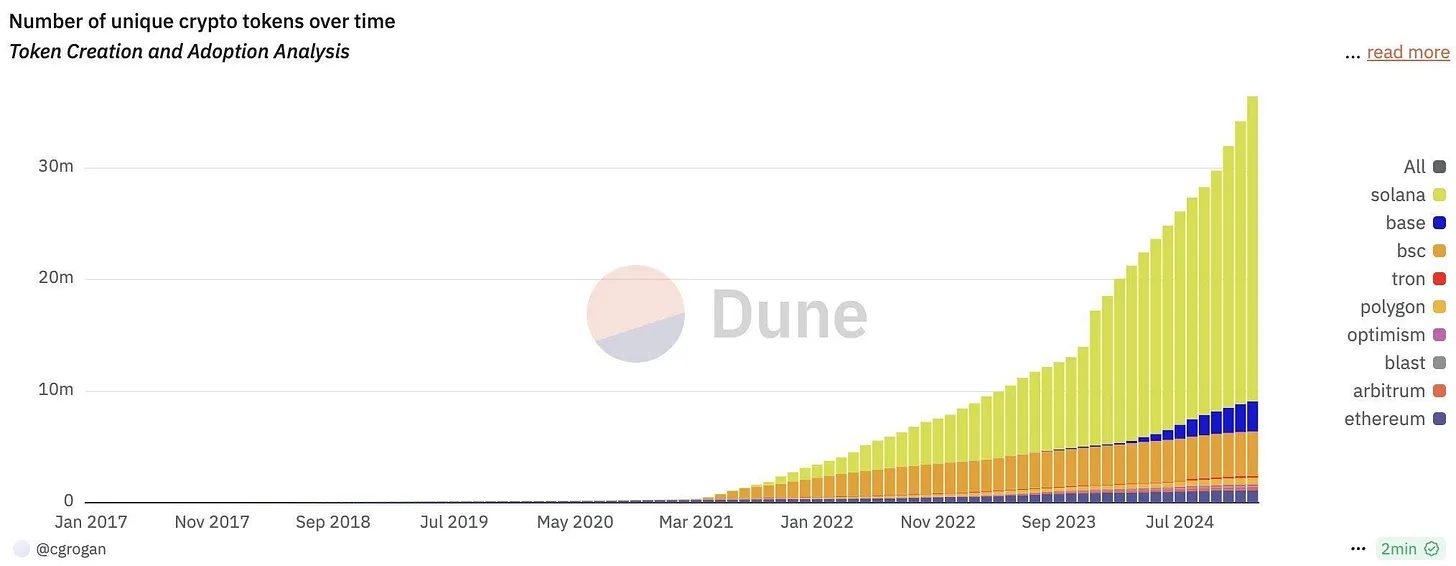
You can’t create value out of thin air by issuing more tokens. While Solana diluted the altcoin space by minting millions of new tokens and captured significant value in the process, this approach isn’t sustainable—especially when total liquidity across the altcoin market isn’t growing significantly.
In this fiercely competitive market, there will always be losers. Your goal should be to ensure you’re not one of them. If you prefer a safer strategy (because the market environment isn’t favorable), the best choice might be to completely avoid the altcoin market.
Just think: over the past two years, simply investing in gold could have nearly doubled your money; investing in Bitcoin could have yielded a 5x return. On a risk-adjusted basis, these returns have already far exceeded nearly all altcoins. So why take the risk on altcoins?
4. User Experience Over Blockchain Jargon
Solana’s success makes one thing clear: users prefer simple, intuitive applications over complex technical systems. They don’t care about backend details—simplicity and ease of use win.
When users buy and sell memes, no one wants to calculate gas fees or other costs. No one wants to bridge funds across chains or use cross-chain tools. And certainly, no one wants Ethereum-style workflows requiring approval before confirming a transaction. Such designs are too complex and unfriendly for average users.
In reality, most users don’t care about Layer-2 networks, decentralization, consensus mechanisms, or network security—these aren’t their priorities. Solana deeply understands this and focuses on delivering easy-to-use applications.
As a result, they’ve succeeded.
A massive influx of users has poured into Solana to trade Meme Tokens. As user numbers grow, so does liquidity, attracting more developers to build applications within its ecosystem. This positive feedback loop (flywheel effect) has been fully activated—even if primarily driven by greed and meme culture.
However, this success has made other altcoin players (like Ethereum) appear lackluster by comparison.
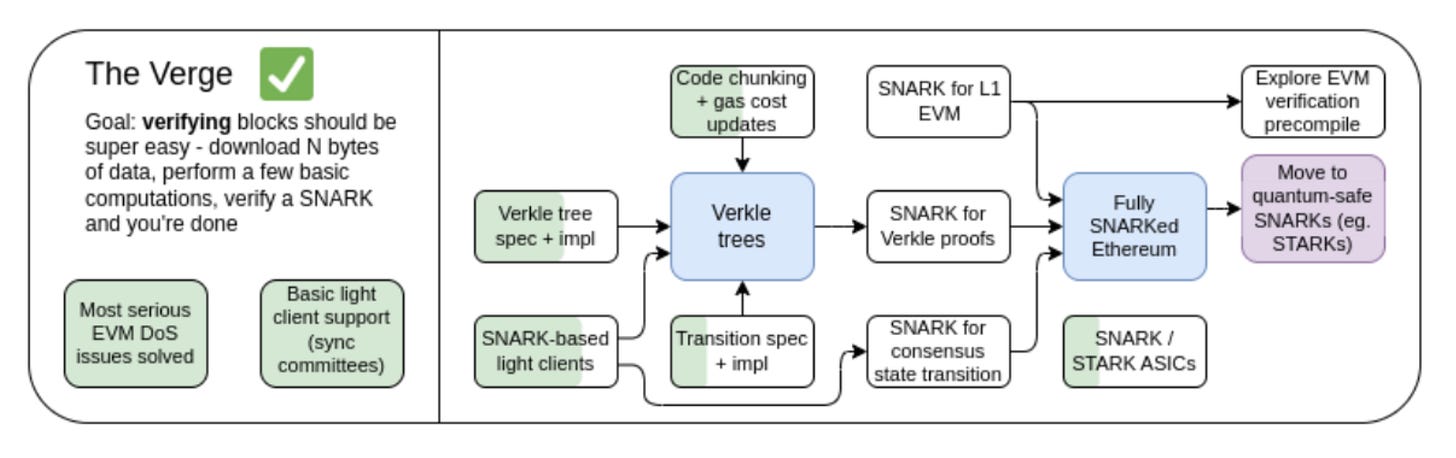
In a way, this shift is natural. The crypto industry is transitioning from blockchain-centric engineering language to user-focused application scenarios. In this process, technical jargon is becoming secondary, even niche. Yet, Vitalik (Ethereum’s founder) seems not to have fully grasped this. He remains focused on technical development, failing to keep pace with changing user demands.
Look at Ethereum’s roadmap below—you’ll understand.
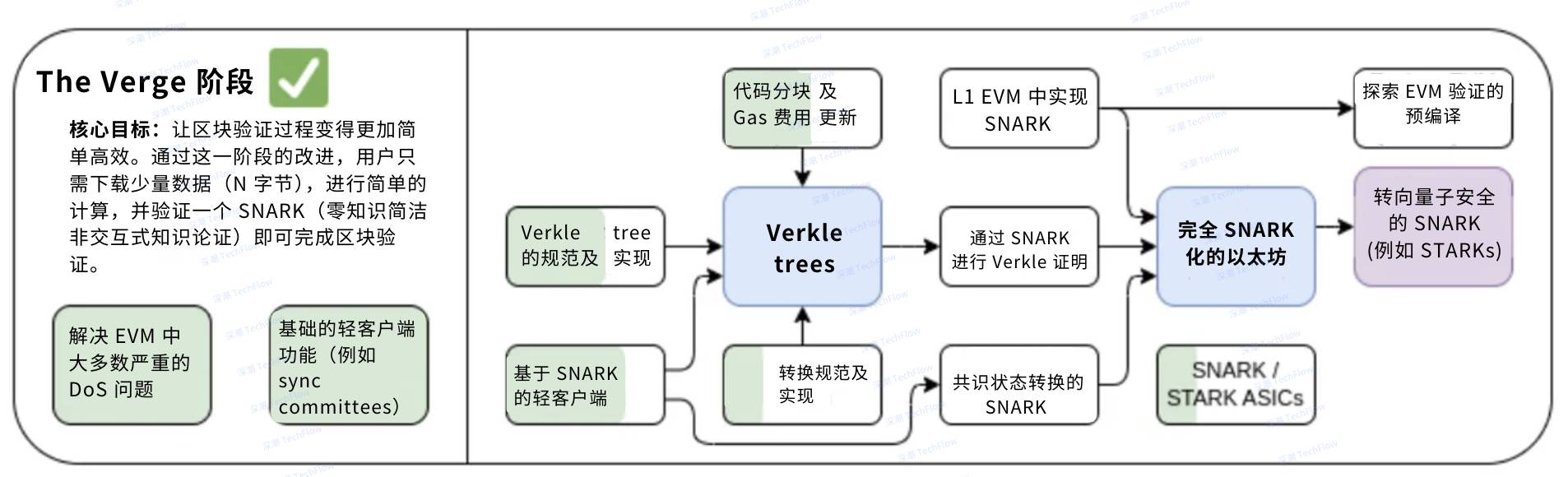
(Original image by Duo Nine⚡YCC, translated by TechFlow)
Cryptocurrency has long moved beyond the geeky realm of solving the Byzantine Generals Problem. That phase ended years ago. Today, real investment opportunities lie in where users are going—not in complex technical terminology.
Solana currently leads this race, but more competitors will emerge. These emerging areas are precisely where attention and investment should be directed.
5. Decentralized Exchanges (DEX) > Centralized Exchanges (CEX)
In the past, centralized platforms (CEX, such as Binance and other crypto exchanges) dominated the market, mainly because they offered simple, user-friendly interfaces that made entering crypto easy.
However, in recent years, decentralized applications (DApps) have begun to excel in user experience and cost efficiency, even surpassing centralized platforms in certain aspects. This trend is increasingly evident.
For instance, I explored a detailed case study in Alpha Post #52. Additionally, the TRUMP token launched in January relied entirely on decentralized tools for issuance, excluding traditional CEXs initially—they later scrambled to catch up and claim market share.
In the long run, I believe decentralized applications will gradually replace today’s CEX-dominated market platforms and ultimately become dominant. This shift is already visible in the rising trading volume of decentralized exchanges (DEX). Data shows that DEX volumes grew significantly in 2024 (see chart).
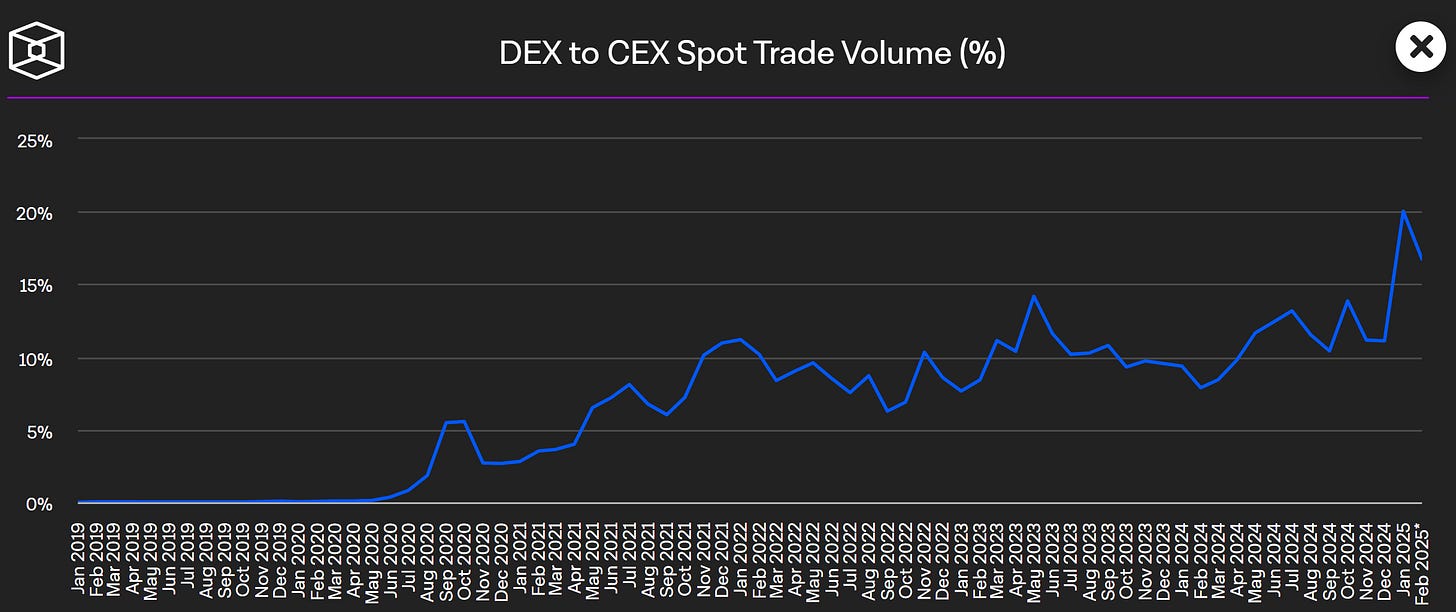
So why stick with centralized exchanges like Binance instead of decentralized platforms? Decentralized platforms not only offer users additional rewards but also allow them to share in platform profits through usage. More importantly, users retain full control over their assets, and the interfaces are increasingly user-friendly. In this space, AAVE stands out as a prime example, widely recognized for its product design and user experience.
Finally, I want to emphasize one point: focus on crypto ecosystems that prioritize both decentralization and intelligent user experience. These ecosystems are likely to emerge as future winners, as centralized institutions often move slowly in innovation and struggle to adapt to changing user demands.
While Solana currently leads the market, it faces two notable issues. First, its network’s centralization raises concerns among some users regarding security and decentralization. Centralization means control over network nodes is concentrated in a few entities, potentially weakening blockchain openness and censorship resistance. Second, Solana’s issuance of millions of tokens has diluted its ecosystem, leading to market saturation. This practice may erode the value of existing tokens and undermine long-term investor confidence.
Therefore, closely monitor emerging ecosystems that overcome these challenges and strike a balance between decentralization and user experience.
Join TechFlow official community to stay tuned
Telegram:https://t.me/TechFlowDaily
X (Twitter):https://x.com/TechFlowPost
X (Twitter) EN:https://x.com/BlockFlow_News
 @DU09BTC