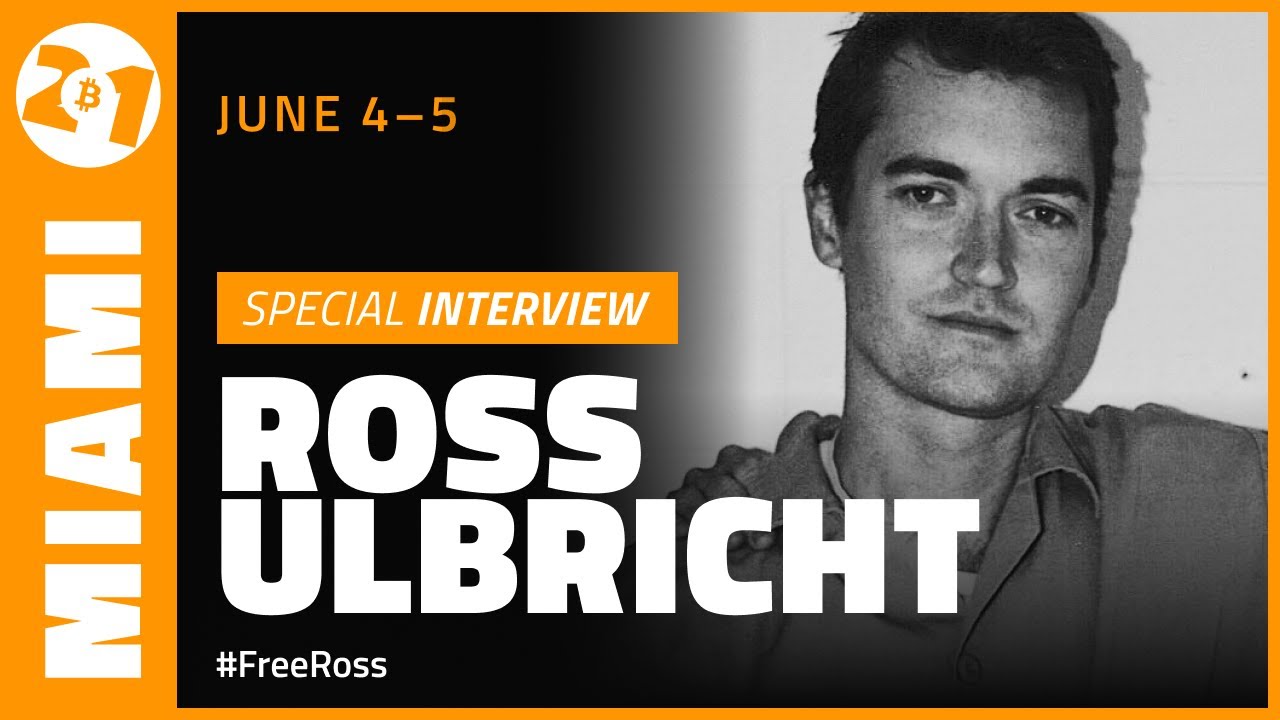
Interview with Ross Ulbricht, Founder of "Silk Road": Life in Prison Before Presidential Pardon
TechFlow Selected TechFlow Selected
Interview with Ross Ulbricht, Founder of "Silk Road": Life in Prison Before Presidential Pardon
Illuminating the darkest corners with the light of Bitcoin.
 Navigating Web3 tides with focused insights
Original interview: Bitcoin Magazine;
Guest: Ross Ulbricht, founder of Silk Road;
Translation: Ashley, BlockBeats
Editor's note: This interview took place in 2021 and marks the first time Ross Ulbricht, founder of Silk Road, has publicly spoken since the website’s shutdown. In this call, he reflects on his original intentions for creating Silk Road, expresses his beliefs in freedom and privacy, and offers deep apologies for the consequences that followed. Ross describes the pain of his imprisonment and, at the end of the interview, reaffirms his steadfast hope for Bitcoin’s future. This conversation is not only a personal cry from Ross but also a profound appeal for social justice and human dignity.
Below is the full transcript (slightly edited for clarity):
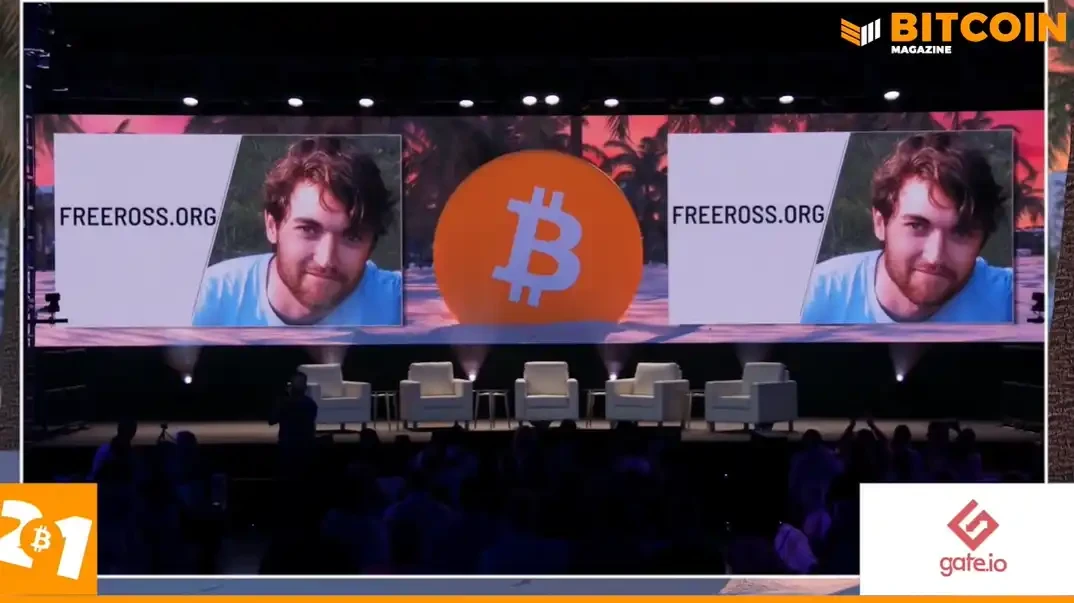
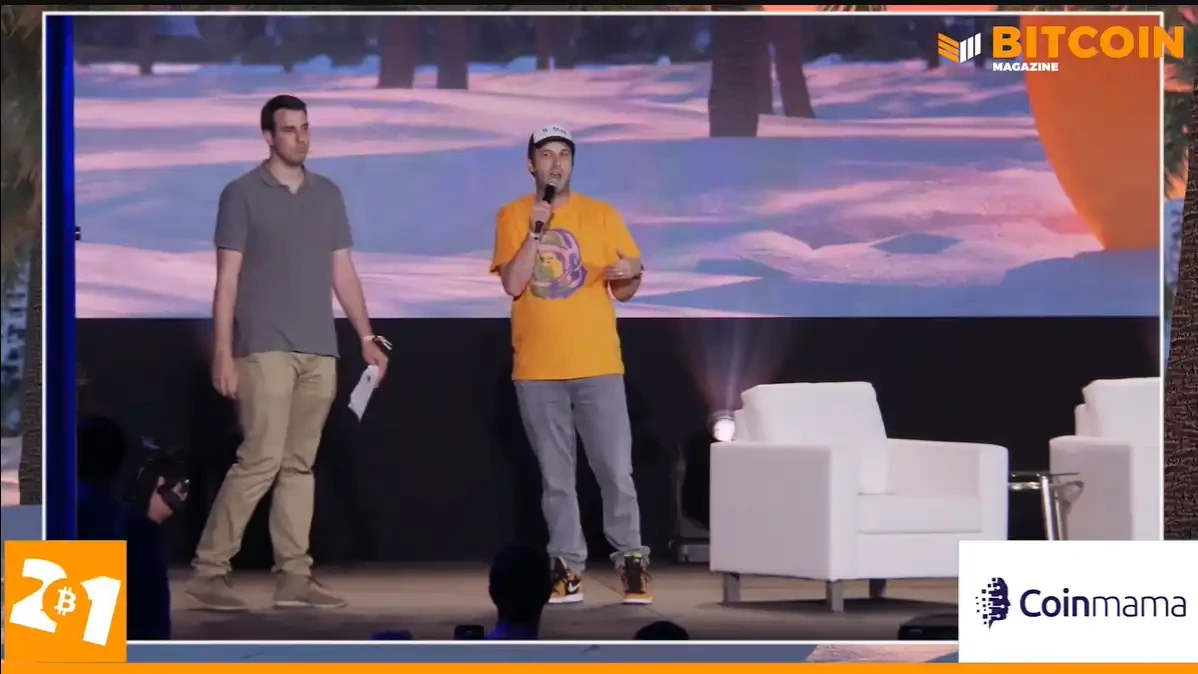
David Bailey (Bitcoin Magazine): I'd like to introduce Peter Chawaga from the Bitcoin Magazine team. I must say, it's an immense honor for us to have the opportunity to interview our next guest. This is his first-ever interview with Bitcoin Magazine—an absolutely historic moment. I'm incredibly proud of Peter's work. And just a heads-up—if you don't have tissues handy, get them now, because by the end, you might be crying. Okay?
Peter Chawaga (Bitcoin Magazine): Thank you, David. Today we've discussed so many incredible topics and revisited amazing stories around Bitcoin over the years. But this segment is truly special. So thank you all for being here—I truly believe this moment deserves your full attention. Before we play the recording, I’d like to read a brief statement to set the stage. Like many of you, my first real-world encounter with Bitcoin was through a platform called Silk Road. Launched in 2011, it was a website accessible via anonymizing software where users could buy and sell goods in a censorship-resistant way. It quickly became Bitcoin’s first major use case—perfectly embodying many of Bitcoin’s unique characteristics, the very traits we celebrate and take pride in today. It offered users a free, open, and censorship-resistant marketplace.
The founder of Silk Road was a 26-year-old libertarian, research scientist, entrepreneur, and early Bitcoin adopter named Ross Ulbricht. Less than three years after the site launched, it was shut down and Ross was arrested by federal authorities. Despite being a first-time, non-violent offender, he was sentenced to two consecutive life sentences plus 40 years. He has now served nearly eight years. Earlier this week, I had the rare opportunity to interview Ross from prison—and today, we’re sharing that audio recording. This is the first time since Silk Road was closed that Ross has spoken publicly via phone.
Before we begin, I want to share what it felt like speaking with Ross personally. My impression was of someone kind, gentle, and surprisingly positive given his circumstances. He did not come across as a violent criminal in any way—yet that’s how the media often portrays him. When you hear his voice, I know Ross is already a legendary figure within this community and beyond—but I hope you’ll remember he is a real human being. Facing the possibility of never regaining freedom, he maintains hope and strength in a way that deeply moved me. Now, please listen to this recording, and I hope you find it meaningful.
Ross Ulbricht: Hello.
Peter Chawaga (Bitcoin Magazine): Hi Ross, this is Peter from Bitcoin Magazine.
Ross Ulbricht: Hi, I’m Ross Ulbricht, calling you today from a maximum-security federal prison. We don’t have much time. I don’t know if I’ll ever get another chance to speak with you like this. I’ll try to say as much as I can, but when time’s up, I’ll have to hang up and return to my cell. I’ve lost my freedom—that’s what I want to talk to you about today. I want you to understand what losing freedom really means. But first, let’s talk about Bitcoin.
I was involved in Bitcoin’s early days. Back then, Bitcoin made me feel like anything was possible. It belongs to everyone—that’s what I loved most about it. It levels the playing field. When I truly grasped Bitcoin’s philosophy, I was electrified. I thought, through Bitcoin, I could try to do something truly meaningful. By the way, before I was imprisoned, there weren’t all these cryptocurrencies, tokens, and blockchains you see today. I missed all that. So for me, it’s all one thing—forks, new chains, everything. When I say Bitcoin, I don’t distinguish between them. Maybe it sounds cliché, but to me, we’re family.
Back then, I was excited—but also impatient. I saw Bitcoin’s potential for freedom and equality, but I didn’t take the time to fully understand its principles: immutability, consensus, and of course, decentralization. I had grand dreams for Bitcoin, and those dreams are slowly coming true. Because of you. You’re making them real. You’re doing the patient work I didn’t have the patience for back then. Over the past eight years, I’ve been amazed again and again by how far we’ve come.
But at the time, I was too hasty. I rushed ahead with my first idea—Silk Road. A website I created when I was 26—more than a decade ago now. It used Bitcoin to protect people’s privacy. I called it an anonymous marketplace. I thought: if Bitcoin can make payments anonymous and private, why wait? Why just talk about it? Let’s act! It was the impulsive move of a 26-year-old who believed he had to save the world before someone else did. I didn’t know if Silk Road would succeed—but now we all know it did become popular. It was used for drug sales, and I ended up in prison. I was sentenced to two life terms without parole, plus 40 years. I’m a non-violent first offender, but none of that mattered. I’ll spend decades, maybe the rest of my life, in this cell—growing old behind bars until I die and am carried out in a body bag.
A few days ago, I received a letter from a stranger. He thanked me for launching Silk Road. He believes Bitcoin wouldn’t be where it is today without it. I’m not sure. But for better or worse, Silk Road has become part of Bitcoin’s history. Still, I worry—maybe by launching Silk Road, I made our path harder. We’ll never know how things might have turned out differently, but I want to say this: if my actions made our journey more difficult, I’m sorry. If my actions contributed to drug abuse and addiction, I’m sorry. I was only trying to do something good. I was trying to help push us toward a freer, more equal world. But we all know—the road to hell is paved with good intentions. And now, I’m in hell.
I want you to understand what losing freedom truly means. Let me start with the “hole”—they call it many things: “the hole,” “solitary,” “the box.” For me, it’s “the abyss.” The prison within the prison. I once spent four straight months in the abyss. It’s hard to talk about, but I’ll try. The abyss can break you—or reshape you. There was a time when I felt my mind unraveling. I felt the walls closing in. I had to get out of that tiny room. That feeling lasted for days, until I started pounding the walls, kicking the heavy steel door. Deep inside, a longing for freedom was screaming. I couldn’t accept being here. I couldn’t accept what had happened to me.
But eventually, I realized I had to pull myself together. This pressure was destroying me. It may sound strange, but what saved me was gratitude. What could I possibly be grateful for in that little cell? Well, I had to start small. I had air—yes, stale air, but I could still breathe. I had water to drink—maybe not clean, but it didn’t make me sick. Food came every day through a slot in the door. I knew I wasn’t forgotten. My family—I knew they were still waiting for me. One day, this would end, and they’d still be there.
I forgave everyone who brought me to this point. I had to. Anger doesn’t hurt them—it only hurts me. So I had to let go. In the abyss, I dreamed I was free. I was in a park, overwhelmed with relief. No longer imprisoned. But then I started worrying—was I on bail? Would they lock me up again? I began thinking of running. That anxiety woke me. When I opened my eyes, I was back in the abyss. In that moment, everything that had happened—life sentences, high-security prison, months in isolation—crashed down on me. It felt like everything collapsed.
I want you to understand what losing freedom really means. After my sentencing, my mother went on a speaking tour in Europe to raise awareness about my case and seek help. While in Poland, she fell ill and had to return home early. The next morning, I called my sister from prison. As soon as she picked up, she said: “You don’t know about Mom yet, do you?” I asked, “What about Mom?” She answered in a voice that chilled me: “Oh, Ross, Ross, Ross.” At that moment, I understood. I thought she was about to tell me my mother had died.
But then she said: “Mom is in the hospital.” I exhaled in relief—she wasn’t dead. But immediately, I thought: “In the hospital? That’s not good either.” In fact, my mother’s heart had stopped during breakfast. My uncle revived her with CPR, and she was rushed to the hospital. When I called, she was still unconscious. We didn’t know if she’d survive, or whether she’d suffer brain damage. No one said it outright, but I knew—it was my fault. From the day of my arrest, she hadn’t rested for a single day. She fought tirelessly for my freedom, under crushing stress—until her body gave out.
The doctors diagnosed her with “stress-induced cardiomyopathy”—I call it “broken heart syndrome.” I broke my mother’s heart. I nearly killed her. The pain I’ve caused my family is indescribable. When I took my risks, I didn’t think enough about them. Thank God, my mother made a full recovery. Eight years later, she still fights for me every single day. But the whole ordeal—my imprisonment—was devastating for her. And for my fiancée, my father, my sister, my entire family. They are all suffering.
I want you to understand that losing freedom isn’t just about being locked in a cage. It’s not just the destruction this imprisonment brings upon your family. Locking someone in a cage until they die is the cruelest punishment imaginable. To make the public accept such punishment, people must be convinced the prisoner is evil—a monster, less than human. After my arrest, a fellow inmate came to me holding a magazine. He said: “Ross, they wrote about you.” I opened it and saw an illustration. The face resembled mine—same proportions—but the skin was yellowish, the eyes bloodshot, my body hunched like a demon. I couldn’t bear to look. I threw the magazine aside. It felt like claws tearing through my chest.
The inmate said: “At least read what they’re saying.” I replied: “Why? Why listen to lies about you when you can’t fight back?” He fell silent. Later that day, he told me they’d done the same to him—smearing him on national TV news. It was just a local newspaper article, but for each of us, it’s the same. That’s why I didn’t want to read it. He tore the page out, shredded it, and threw it in the trash. “I don’t want to read it either,” he said. That meant everything to me. “I don’t want to read it either.” That gave me hope—that you won’t see me as a monster.
They painted me as a violent drug lord. That’s not who I am. It’s a lie—a carefully crafted lie—to justify locking me away until death. This lie is meant to make you indifferent to me, to close your hearts. They lied in court records. They cheated—there’s documentation. They stole—two agents went to prison for it. These are facts on record. They fabricated evidence, destroyed evidence, planted false evidence—all documented.
At one point, they even studied how to execute me. They considered injecting chemicals into my veins to stop my heart. I once dreamed of a man holding a syringe, pressing it closer and closer to my jaw. I was backed against a wall, every muscle tensed, trying to escape. Just as the needle touched my skin, I woke up. I found myself still frozen in that tense posture, gasping, heart racing. I could still feel the terror of that needle approaching.
Are you starting to understand what losing freedom means? It means living in constant fear. So why did it take me so many years to speak to you? Because I was afraid. Even now, I’ve been strongly warned not to speak with you. They told me it would only anger the authorities and destroy whatever slim chance I have left in court. I don’t mean to provoke anyone. Yes, I’m afraid. Afraid of retaliation. Afraid that speaking today will land me back in the “abyss” or something worse. But I’ve learned that obeying fear too much can be as dangerous as ignoring it completely. Eight years have quietly slipped by. All this time, I’ve tried to block out the lies, focus on surviving each day, and stay strong for my family. But today—right now—I want to send a message to those who care about me, and to those who repeat the lies without thinking: Please stop. You are hurting me. Please stop. You know what you’re saying isn’t true. You’re hurting me, and you’re hurting my family. Please stop.
I want you to understand what losing freedom means. Ironically, I created Silk Road because I cared deeply about freedom, privacy, and equality. But because of Silk Road, I ended up in a place where those values don’t exist. I’m not alone. Prisons are filled with people who shouldn’t be locked up. We are mothers, fathers, sisters, brothers—but in your eyes, we’re portrayed as monsters, stripped of our human dignity.
And yet, there’s Bitcoin. From the genesis block onward, Bitcoin has been changing the world. Let me tell you something: we’ve only just begun. Every time Bitcoin is adopted somewhere, freedom and equality follow. Bitcoin is the symbol of freedom.
Now look at where we stand. On one side: lost freedom, despair, darkness. On the other: Bitcoin—freedom, equality, hope. These two cannot coexist. So the darkness must be hidden, ignored. But please listen—this is a cry from the darkness. A cry for help. My mother can’t do this alone. I’m not just shouting for myself—I’m shouting for all of us. We need your help. We need you to see the stark contrast between free Bitcoin and a life sentence until death. Today, right now, we face a choice. Will we ignore what’s happening? Ignore the loss of freedom? Ignore the dehumanization? Or will we wake up?
Listen: Bitcoin is powerful. Bitcoin has power. And so do we—but our work isn’t done. It’s time to wake up. It’s time to take the next step. Over the past eight years, I’ve watched Bitcoin grow. I’ve seen incredible innovation, inspiring courage. In Bitcoin’s early days, we didn’t know how it would unfold. But year after year, you’ve filled me with admiration. You make me proud. I have no doubt—we can achieve anything.
We are transforming the global economy, bringing the breath of freedom and equality to every corner of the world. I know we can transform the criminal justice system too. Today, I issue you a challenge: Turn your gaze to the hardest problems. I challenge you to shine Bitcoin’s light into the darkest corners. I challenge you—to set us free.
I’ve seen some of my friends return home after serving years, even decades. Some have even overturned life sentences. Every time it happens, I cry. Seeing someone regain freedom, reunite with their family—it’s indescribable. It’s beautiful, and painful—like a miracle. We need more miracles.
I have to hang up soon. But I don’t want to leave. I don’t want to go back to that cell. I want to stay with you. Talking with you today has given me the greatest sense of freedom I’ve felt in a long time. Thank you—for listening, for your attention. I will never forget this day. This memory can never be taken from me.
Well, I’m off. Thank you. Goodbye.
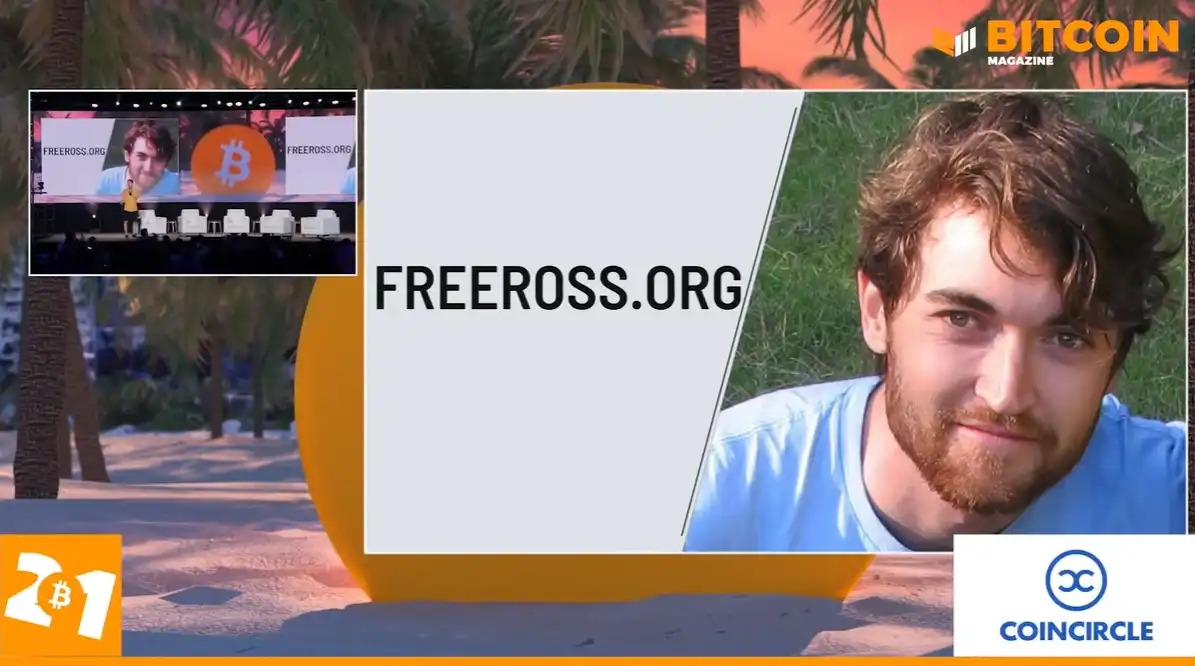
David Bailey (Bitcoin Magazine): Ladies and gentlemen, we are truly fortunate today. Lyn (Ross’s mother) is here with us—if you see her, please give her a hug for Ross, and for all of us. This is what Bitcoin is about—freedom, releasing Ross. We owe him, and we owe the world, a fair judgment. Please give Ross a round of applause, and let’s applaud this moment we’ve shared today. Thank you all.
Join TechFlow official community to stay tuned
Telegram:https://t.me/TechFlowDaily
X (Twitter):https://x.com/TechFlowPost
X (Twitter) EN:https://x.com/BlockFlow_News
 @BitcoinMagazine