Interview with Hu Yilin: Why leave Tsinghua to move to Singapore, All in Web3?
TechFlow Selected TechFlow Selected
Interview with Hu Yilin: Why leave Tsinghua to move to Singapore, All in Web3?
Hu Yilin shared in-depth insights on Bitcoin, NFTs, decentralized science, and explained the reasons for choosing Singapore as a long-term development base.
 Navigating Web3 tides with focused insights
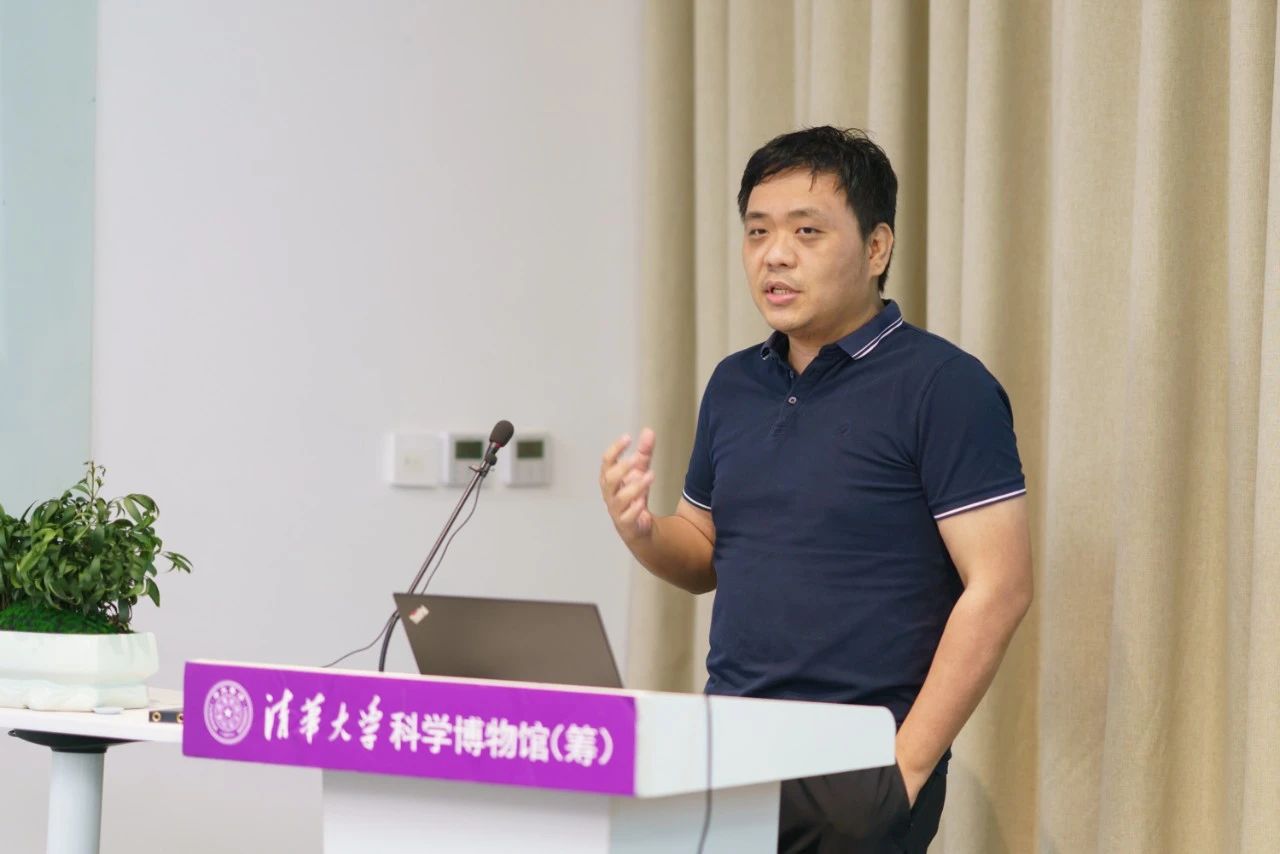
Interviewee: Hu Yilin, Associate Professor at the Department of History of Science, Tsinghua University
Editor: Wu Shuo Blockchain
In this episode, Hu Yilin shares his journey of leaving Tsinghua University and relocating to Singapore—a decision shaped by both the constraints of academic systems and his deep interest in free scholarship and the blockchain ecosystem. Holding a PhD from Peking University’s Department of Philosophy and previously serving as an associate professor at Tsinghua University's Department of History of Science, Hu is one of the few academics in the Chinese-speaking world actively engaging with blockchain communities.
Hu delves into how the "up-or-out" tenure system impacts young scholars and analyzes broader challenges within higher education reform. He also offers profound insights into Bitcoin, NFTs, decentralized science (DeSci), and explains why he chose Singapore for long-term development—particularly due to its crypto-friendly environment and family-oriented living conditions. Finally, he envisions a future where technology converges with art and reflects on redefining learning and education in the age of AI.
The audio was transcribed using GPT and may contain errors. Listen to the full podcast.
Reasons for Leaving Tsinghua
Colin: Hello everyone. As many listeners know, our good friend Professor Hu used to be an associate professor at the Department of History of Science, Tsinghua University. But now, he has left his position and moved to Singapore. Professor Hu, would you like to share how this transition came about?
Hu Yilin: You could say I'm all-in on Web3. First, let me clarify—I didn’t technically resign; it was more of a natural departure. Young scholars today face intense pressure under the “up-or-out” system, which requires passing a tenure review within six years or leaving. I decided not to go through that evaluation process.
The "up-or-out" model was pioneered by Tsinghua and Peking Universities, modeled after the U.S. academic system. That said, academia in the U.S. isn't exactly thriving either. And when China adopted this model, some aspects became distorted. Still, compared to many domestic institutions, Tsinghua remains relatively better. My experience there was that teachers are generally respected.
Although I’ve left Tsinghua, I don’t harbor major grievances. The university does treat faculty with respect—on two levels. One is treating teachers as part of the inner circle. Many universities implement the up-or-out system while treating faculty as temporary workers, exploiting their peak research productivity before age 35. Tsinghua is somewhat better in this regard—it emphasizes quality over quantity. With a "representative work" system, you only need a few papers meeting international or national standards, rather than churning out numerous publications. So in that sense, it’s acceptable. Nevertheless, I still chose to leave. This year marked the end of my contract, so I simply didn’t renew—it was a smooth exit.
I originally followed Professor Wu Guosheng from Peking University to Tsinghua and was among the founding members of the Department of History of Science. Interestingly, nearly all of us founding members have since departed. Strikingly, no junior faculty member in our department has passed tenure. Everyone had different reasons, but ultimately none stayed.
Some went abroad, others transferred to different universities. A few failed their reviews and couldn’t secure permanent positions, while some even changed careers entirely—like becoming monks. There were all kinds of outcomes; everyone found their own path.
Challenges in Academic System Reform
Colin: It seems higher education has changed dramatically. In the past, joining a university felt like entering a stable institution where you could coast along. Now it feels much more stressful.
Hu Yilin: Exactly—and this gets to the heart of academic issues. We can tie this into decentralized science (DeSci), discussing decentralization in research and scholarship. I feel deeply about this topic. Both traditional and contemporary academic models—whether in China or the West—have serious flaws and may no longer suit current realities.
When Tsinghua and Peking University led reforms decades ago, it was arguably necessary. Previously, academia often turned into a "position-holding game." For example, professors occupied posts regardless of performance, especially in humanities fields. Once someone secured a position, they kept it indefinitely, irrespective of research output. This stifled mobility and weakened scholarly culture. Hence came the "up-or-out" mechanism, replacing lifetime jobs with fixed-term contracts.
Typically lasting six years, this period coincides with a scholar’s most productive phase. Under this system, early-career researchers become de facto temporary staff, pressured to publish aggressively and win grants. They produce immense value for the institution, yet if they fail tenure review, they’re forced to leave.
Afterward? They might land at second- or third-tier institutions—or find no job at all. By then, they've passed their academic prime, research output declines, and opportunities shrink. This system is far from ideal for scholars.
That said, in balanced environments like Tsinghua, the model is somewhat tolerable. While there is pressure, it’s less extreme. Research enjoys relative freedom, teaching is valued, and competition ("involution") is moderate. However, such conditions are rare. Tsinghua’s fatal flaw is insufficient funding and low salaries. In corporate terms, high-paying firms (like big tech) are hyper-competitive, whereas lower-paid institutions like Tsinghua exert less pressure—but still create tension.
Looking broadly, this "involution" trend is unsustainable. I once read an article comparing academic positions to a Ponzi scheme. Especially in humanities disciplines, the best career path for PhDs is becoming professors—but faculty roles are limited. One professor trains 20 students; each of them trains more, creating infinite demand. Yet actual teaching positions don’t expand accordingly.
Previously, university expansion in China and the West helped absorb this surplus—driven by population growth and educational democratization. But now, with shrinking populations and saturated demand, the problem surfaces. Higher education is entering a contraction phase, making the current system increasingly unsustainable.
Colin: Never thought academia could resemble a Ponzi scheme—just like the crypto space.
Hu Yilin: Indeed. Many disciplines face similar issues. My field—history of science—is slightly more adaptable because we contribute to general education. But niche specialized fields suffer badly. If a professor trains only one successor per generation, they can’t even maintain course offerings. And courses require students—but what will those students do afterward? That’s why the model fails. Reform is inevitable.
Both China and the West face this, but China’s situation is worse. We compressed over a century of Western academic expansion into just 10–20 years. This rapid growth makes adapting to sudden contraction extremely difficult. The West faces comparable issues but with slower pacing, allowing more time for adjustment.
Why Choose Singapore After Leaving Academia?
Colin: Professor Hu, when did you first start considering leaving academia? And why Singapore specifically? Was blockchain or Web3 a factor?
Hu Yilin: I’ve always considered life beyond academia. I never saw a university job as a "secure iron rice bowl," so I constantly asked myself: What if I don’t get tenure? Of course, failing Tsinghua’s tenure wouldn’t mean unemployment—I could likely land at other top-tier Chinese universities. But the real question was whether I wanted to stay in academia at all, or become an independent scholar. That’s what I’ve long pondered.
I teach not for job security. As a Bitcoin enthusiast, I distrust the idea of an “iron rice bowl.” It appears stable but isn’t truly reliable. Even tenured positions aren’t immune—if the entire system collapses, the Ponzi scheme unravels, and the so-called secure job vanishes. Plus, even if the bowl remains, the food inside keeps shrinking.
Take Tsinghua: its salary is notoriously low. During early reforms, Tsinghua attracted talent with high pay despite offering no tenure—making it competitive then. But now, other universities have adopted quasi-tenure systems with improved compensation, while Tsinghua’s待遇 hasn’t significantly increased. So although the "rice bowl" exists, it doesn’t provide enough sustenance. Under these conditions, the "iron rice bowl" becomes an "iron cage"—preventing escape to freer, more dynamic environments.
Still, my time at Tsinghua was fulfilling—not financially, but intellectually. Teaching brought irreplaceable satisfaction. Preparing lectures and theories that influenced brilliant students—that feeling money can’t buy. Over time, however, that fulfillment evolved. When mentoring PhD students, I felt responsible for their futures, knowing they’d enter academia’s Ponzi structure. This contradiction gradually eroded my sense of purpose in teaching.
On the other hand, interacting with people in the crypto community gave me new forms of fulfillment. I realized my ideas could reach and influence many, receiving immediate positive feedback. I saw that knowledge dissemination isn’t confined to universities. Outside academia lies a broader, potentially more effective space for impact. That realization contributed significantly to my decision to leave.
Colin: So why Singapore? Was this carefully planned?
Hu Yilin: Not really. I made up my mind during my first visit. Initially, I considered Hong Kong.
Hong Kong was my first choice—convenient and familiar. As someone quite homebound, I’m uncomfortable in completely foreign settings, especially dealing with foreigners or language barriers. I wanted a place with a large Chinese-speaking population yet open-minded. Hong Kong seemed perfect—until I noticed several problems. Many say “moving to Hong Kong isn’t real emigration.” More importantly, the living environment felt oppressive, especially for children. Growing up in tight spaces could harm mental health. In contrast, Singapore offers spacious, comfortable living.
Also, people here are warm and friendly. My short stay in Hong Kong was okay, but overall, people felt somewhat lifeless—some service staff acted as if I owed them money. Singaporeans are noticeably warmer and more welcoming. Additionally, immigration procedures are relatively simple—applying for an Employment Pass (EP) isn’t too hard. While getting permanent residency is tough, merely residing here is easy.
To sum up, three reasons drew me to Singapore:
First, Chinese-friendly;
Second, relatively crypto-friendly;
Third, wealthy-friendly. The society is orderly and stable—perhaps not ideal for social dynamism, but excellent for affluent individuals who no longer need to struggle.
Integrating History of Technology with Blockchain Research
Colin: How is your life settling in, Professor Hu? What are your future plans? Will you continue academic work, or shift toward Web3 and blockchain?
Hu Yilin: A bit of both. My top priority now is settling my child—that comes first. Within that framework, I pursue freedom. Currently, I’ve merged academia with Web3—they’ve always been aligned for me. As I mentioned earlier, my involvement in Bitcoin directly stemmed from my doctoral thesis. While writing it, I explored the nature of money and concluded why Bitcoin is valid and valuable. Once I understood that, I entered the space. From beginning to present, this has been a practice of unity between thought and action.
My academic focus is history of science and technology, particularly technical philosophy. The history of technology fascinates me because it reveals the true forces driving historical change. Compared to political shifts or dynastic cycles, technological transformations are deeper and more radical. Politics often repeats itself—same soup, different pot—but technology progresses continuously. The Renaissance, Scientific Revolution, Industrial Revolution—all driven by scientific and technological advances. From perspective drawing and printing press to navigation, modern science, and industrial systems—these innovations reshaped human history in sweeping ways.
Studying technological history allows us to witness grand transformation—and even participate in it. That’s what makes it compelling. Meanwhile, science fiction imagines future tech changes, depicting new lifestyles and societies. While history explores the past and sci-fi speculates the future, we now live in a moment where massive change happens in real time. We keep experiencing historic moments, watching sci-fi become reality. That sensation is powerful.
This convergence gives me a sense of mission—as if contributing to a new chapter in humanity’s epic story. It’s exhilarating and embodies the unity of theory and practice. Studying history isn’t just recording the past—it informs present actions and judgments. History won’t tell you exactly what to do, but it inspires through emotional resonance and experiential insight.
For instance, watching a drama series—you understand new episodes better if you’ve seen previous ones. You place current events within a larger narrative, gaining deeper engagement. For me, viewing current affairs through a broad historical lens increases my investment.
So what we do isn’t just earning a living or tending our small plots—it’s participating in a greater human wave. Though its meaning is hard to define, the experiential intensity is undeniable.
Bitcoin Investment, Holdings Strategy, and Cold Wallets
Colin: Let’s talk practical crypto matters, Professor Hu. People are curious about your portfolio—do you still hold mostly Bitcoin? Did you accumulate steadily over time, or rely mainly on early purchases?
Hu Yilin: Actually, it’s not complicated. I started documenting my journey early—I remember writing about “entering the crypto space with just a few thousand yuan,” which you can find on my blog. Although I joined in 2013—an early adopter—I’m not rich today. Some find this surprising: being a HODLer since 2013, advocating holding BTC, yet not making huge gains? Simple reason: I was a broke student with no income, so initial capital was tiny.
I bought Bitcoin gradually, scraping money from my living expenses. My dad scolded me, saying living expenses were for living, not investing. Later, I used scholarship funds to buy more. So my starting capital was only a few thousand RMB. That was my seed fund, which I’ve consistently added to. This year, I sold a property in China after moving overseas and reinvested the proceeds into Bitcoin.
Colin: You're still buying even at today’s high prices?
Hu Yilin: Yes, I plan to keep accumulating. Long-term, I believe Bitcoin will outperform fiat currencies.
Colin:神鱼 once mentioned a “four-wallet theory”—60% in mainstream assets like Bitcoin stored in cold wallets; 20% for flexible operations; 10% for high-risk investments; 5–10% in fiat. Is your strategy similar?
Hu Yilin: I disagree, especially regarding the fiat portion. Using fiat interest to cover living costs is nearly impossible for ordinary people. Only someone like神鱼 can calculate such precision. Most can’t achieve that.
My strategy is Bitcoin-based. I allocate 4% of my total assets annually for living expenses, without converting to fiat or relying on interest. My cost of living is covered by Bitcoin’s annual appreciation rate, which far exceeds traditional fiat risk-free rates.
Colin: Do you stake Bitcoin for yield, or keep it in cold storage?
Hu Yilin: For staking, I only experiment with small amounts—one or half a BTC. It’s purely for trying new things. I’ve tried various platforms like Merlin and Blue Box, and lost quite a bit. But these were exploratory moves—to experience frontier applications.
Colin: Sometimes you can’t resist buying promising projects?
Hu Yilin: True. During the NFT boom, I couldn’t help myself and bought some—ended up losing a lot. Though NFTs are heating up again, my holdings have only recovered from “ankle-deep” to “knee-high.”
Colin: Any advice on cold wallets? Which one do you use?
Hu Yilin: My main holdings are in Bitaitai Wallet. It’s an old project—the team disbanded long ago—but the wallet doesn’t require updates and still works perfectly. I consider it one of the best cold wallet solutions. It uses an old smartphone as a cold device. Almost everyone has an unused old phone, right?
You install Bitaitai Wallet on the old phone, disconnect it from the internet, disable Bluetooth and Wi-Fi—turning it into a cold wallet. Then use a separate, connected phone with a hot wallet app, signing transactions via QR codes. This method is simple, secure, and low-cost—no need to buy dedicated hardware.
Colin: Isn’t Bitaitai Wallet from the same company as Bitpie?
Hu Yilin: Yes. But later, Bitpie launched hardware wallets and abandoned the Bitaitai model since it wasn’t profitable. Understandable—it’s open-source software with no revenue stream. But I personally love this approach.
Additionally, I recommend memorizing your seed phrases. I’ve memorized several sets myself. Even if a cold wallet fails, your assets remain safely recoverable.
Comparing Bitcoin and Ethereum Ecosystems
Colin: Professor Hu, you’ve worked on NFT projects in the Bitcoin ecosystem, but recently industry attention has shifted toward meme coins. Do you think Bitcoin’s ecosystem still has potential? Or are you following trends on Solana or Base?
Hu Yilin: I don’t dismiss meme coins—they’re playable. Regarding Bitcoin’s ecosystem, I remain optimistic. But currently, it lacks a clear development path and strong communal identity.
Across the industry, Bitcoin’s ecosystem has unique strengths. One reason I support it is its role as an alternative to Ethereum. Ethereum suffers from unclear positioning: it wants to uphold decentralization and punk ideals, yet in many ways leans centralized. It’s less decentralized than Bitcoin and slower than Solana in efficiency and pace.
Solana has a clear stance: embrace centralization for speed and performance. This attracts users prioritizing user experience. If you want a faster chain, choose Solana. In contrast, Ethereum feels stuck in the middle—appealing to neither side fully.
Base, as a corporate-backed chain, also leans toward centralization, focusing on efficiency. While not fully centralized, it’s more centralized than Ethereum, clearly prioritizing performance.
I support Bitcoin’s ecosystem because it represents the ideal of decentralization. As a believer in decentralization, I see this direction as correct. But Bitcoin’s current challenge is also being stuck in the middle. On one hand, Bitcoin HODLers reject many new ecosystem projects, seeing them as mere “coin speculation” or山寨 variants. On the other hand, traders seeking quick profits find Bitcoin’s ecosystem slow, inefficient, and low-traffic—far less attractive than Solana.
As conservative HODLers, we rarely commit more than 1–2% of our holdings to such projects. Going all-in or heavily investing is unthinkable. Because of this conservatism, Bitcoin’s ecosystem struggles to attract core Bitcoin holders, while also failing to lure short-term speculators.
Despite this, I believe Bitcoin’s ecosystem still holds promise. For example, instead of chasing speculative momentum, it could focus on long-term value projects. Bitcoin-based NFTs might be one such direction. Given Bitcoin’s stronger “permanence” and “robustness,” it could offer greater credibility in the NFT space.
Future breakthroughs in Bitcoin’s ecosystem may depend on next-gen NFT products—those moving beyond pure speculation, offering real utility or gameplay. If such models align well with Bitcoin’s ethos, I believe the ecosystem can rise again.
Possibilities and Challenges of Decentralized Science
Colin: Professor Hu, what are your upcoming exploration plans? Will you continue focusing on art-related areas, or venture into decentralized science (DeSci), as we discussed before?
Hu Yilin: Regarding DeSci, I must admit self-awareness. I deeply want to contribute, but currently lack the drive and energy to lead initiatives. This field is long-term and extremely challenging. So if someone else takes initiative, I’ll fully support them—as advisor, consultant, or public backer. I rarely endorse projects, but if one genuinely advances decentralized research and meets my philosophical standards, I’m willing to stand behind it.
Colin: Indeed, some projects are clearly money-grabs disguised as DeSci, launching tokens from day one.
Hu Yilin: Right—many are too eager. Launching a token immediately drains a project’s long-term potential. The core issue in decentralized research isn’t funding, but influence and consensus-building. Establishing academic legitimacy is key.
Money alone can’t advance science. If it could, China would already have dozens of Nobel laureates. China isn’t short on capital. The real bottleneck is time, culture, and scholarly atmosphere—things money can’t instantly create. Take Peking University: though not highly funded, its intellectual depth in both sciences and humanities is profound. This kind of heritage can’t be replicated overnight, even by Tsinghua or others.
Decentralized science mirrors decentralized finance. Many projects launch tokens solely for fundraising, but DeSci doesn’t lack money. The true conflict lies in needing time to build consensus and cultural momentum—not attracting short-term profit seekers from day one.
That said, I’m not against token launches altogether. Tokens can come later—but shouldn’t be the starting point. They should emerge as tools in mature stages. DeSci needs long-term vision and steady progress, not premature monetization. Only then can real advancement occur.
Future Plans: Merging Technology and Art
Colin: Professor Hu, you might consider collaborating with like-minded people to launch a dedicated podcast—say, focused on DeSci, releasing weekly episodes. I think that’d be great.
Hu Yilin: Thanks for the suggestion! I actually have similar plans. I rented a studio in Hong Kong earlier, initially intended for digital art exploration. In the future, I may produce content in various formats—not necessarily podcasts, perhaps video programs or other creative formats. We have access to advanced MR/XR systems and digital art setup tools. So we may release content on WeChat Channels, YouTube, or Bilibili. These shows could blend art, technology, academia, and DeSci themes.
We’ve deeply reflected on merging technology and art. Their separation is actually a product of modernity, emerging only after the Industrial Revolution. Earlier in history, technology and art were unified—even linguistically indistinct. The word “art” once encompassed technique, creativity, and knowledge. This split is largely an 18th–20th century phenomenon. We believe this divide may now enter a new phase of integration. As the saying goes: “after long division comes union.” Technology and art may reunite.
This new synthesis extends beyond art-tech fusion—it touches philosophy, science, and the trajectory of academia itself. For instance, reconsidering the university’s role: What are we cultivating? Is current education merely producing successors to occupy academic slots? That’s a serious concern.
It’s not just humanities suffering from a Ponzi-like structure—STEM fields face similar risks. Many trained professionals today are replaceable by AI. Universities have long treated human resources as primary outputs, but in the AI era, humans increasingly lose comparative advantage. AI evolves far faster than human learning. A human generation takes decades; AI improves almost daily.
Thus, we must rethink the meaning of learning. Broadly: Why do humans learn? What should we learn? Narrowly: What is the future of universities? While many institutions may vanish during transformation, essential elements of human civilization must endure. How we redefine learning and education will be a defining challenge of our time.
Join TechFlow official community to stay tuned
Telegram:https://t.me/TechFlowDaily
X (Twitter):https://x.com/TechFlowPost
X (Twitter) EN:https://x.com/BlockFlow_News
 吴说区块链
吴说区块链