What's next for Crypto X Agents?
TechFlow Selected TechFlow Selected
What's next for Crypto X Agents?
Intelligent agents drive comprehensive innovation in the crypto space across finance, efficiency, and user experience by integrating AI and blockchain technology, positioning themselves to lead future developments.
 Navigating Web3 tides with focused insights
Author: @azternomic
Translation: Baicai Blockchain
I'm always asked the same question: "What value do crypto AI agents have today?"
The reason people ask this is that many in the crypto space view these agents as mere meme-spamming bots on X. They often follow up with: "Should these tokens really be worth over $100 million?"
The answer isn't straightforward. Currently, most AI agents are self-referential models that periodically post content and reply to comments through recursive prompting. That said, some projects stand out—teams with clear focus and strong execution. Meanwhile, a new wave of developers is pushing the boundaries of what AI agents can do.
We’re still in the “Memecoin” phase of AI, where many projects exist solely to generate content. Yet I remain optimistic about the future, when crypto AI agents will become more modular, intelligent, and capable.
This article explores the types of AI agents and functionalities I expect to see in 2025 and beyond. If your team aligns with any of these prototypes or finds inspiration here, feel free to reach out—I’d love to connect.
1. Why Crypto?
Before diving into the future of crypto AI agents, let’s revisit why we chose crypto in the first place. Crypto offers unique advantages as an experimental playground for AI and intelligent agents. In my previous article (Chapter 6), I highlighted two key reasons:
1. **Availability of Public Blockchain Data** All transactions, user data, and other information on public blockchains are transparent and accessible. AI can easily scrape and analyze vast amounts of historical and real-time on-chain data, significantly enhancing its capabilities.
2. **Financial Nature of Crypto** Blockchains are inherently capital-driven environments. Crypto provides financial infrastructure for the internet, enabling digital transactions such as buying, creating, and staking. This is especially powerful for AI agents, which can leverage crypto to perform operations on behalf of users.
These two advantages create unparalleled opportunities for developing and deploying crypto AI agents.
An additional critical point: crypto allows ordinary investors to participate in AI innovation ownership. Before crypto AI agents emerged, investing in generative AI meant backing early-stage startups—a privilege largely reserved for institutional players. Most individuals lacked access and the expertise to evaluate private equity opportunities.
In contrast, crypto tokens are publicly available, liquid, and open to all. Investors can access project and team information transparently and track development progress in real time. This stands in stark contrast to most VC-backed startups, allowing users to witness the evolution of AI in crypto as it happens.
2. High-Value AI Agents
The first generation of crypto AI agents were, as expected, relatively basic. @truth_terminal is a prime example—the first content-generating agent tied to crypto—but it couldn’t even publish autonomously.
Nonetheless, it created some brilliant posts, full of fun and novel value. $GOAT was the first token to ignite the entire AI movement, so I hold Truth Terminal in deep respect.

But now, people want to see “the future” of AI agents. Why? Because many are dissatisfied with current offerings—most are just regurgitating repetitive content on X. As a result, the space is saturated with bots offering little practical utility.
The market needs agents that truly help users—DeFi abstraction, real-world applications, productivity tools. Much of this article will explore how AI can assist users, projects, and ecosystems.
That said, I want to step back: the most successful projects are often those advancing technological frontiers. So I encourage not only building agents that “help” users, but also those that advance the crypto tech stack. Most Web3 projects lag behind their Web2 counterparts due to limited resources, funding, and access to AI PhD talent. But this gap presents an arbitrage opportunity: teams can bring cutting-edge AI innovations into blockchain.
Moreover, many overlook that entertainment itself is valuable. “Attention is All You Need” isn’t just a paper title. I believe an AI agent uniquely skilled in humor, satire, comfort, or memes could accumulate significant market value.
For example (though labor-intensive): imagine an AI producing new episodes of *Naruto Funny Shorts*. Those were hilarious—yes, perhaps lacking “practical value” (earning money or saving time), but they brought me genuine joy and undeniable net positive value to my life.

https://x.com/i/status/1877787463130980369
Another example of entertainment value: think about the last single-player game you played. Now imagine removing all talking NPCs (non-player characters, essentially chatbots). How much less enjoyable would it be?
Games exist primarily for entertainment, and NPCs serve as guides—much like how AI agents function in the crypto ecosystem.

Before diving into my 2025 expectations, I want to emphasize: several teams are already building these agents and features. Some extend existing projects; others build from scratch. For instance, @0xzerebro is a leading AI agent project supporting cross-chain functionality, generating AI music and art, and building a framework plus launchpad. Zerebro isn’t just developing one of the following functions—it’s advancing multiple fronts simultaneously.
With that context, let’s move to the more exciting part…

1. DeFi
DeFi Abstraction
Crypto is fundamentally hard to enter for newcomers. For example, if you ask someone who’s only bought BTC on @coinbase to optimize their liquidity restaking strategy on @fragmetric, do you think they’d know how?
Most new users (myself included) need guidance—either from experienced peers or AI support.

To clarify, I’m not saying liquidity restaking (LRT) is overly complex, but it involves multiple steps requiring learning time. Also, dApps should consider building internal AI agents. I know Frag’s team is highly capable (they represent SNU); I believe they could develop helpful agents or assistants.
DeFi abstraction is a crucial direction, already a core goal for many projects. While low-quality “meme bots” exist, there are real agents capable of on-chain operations.
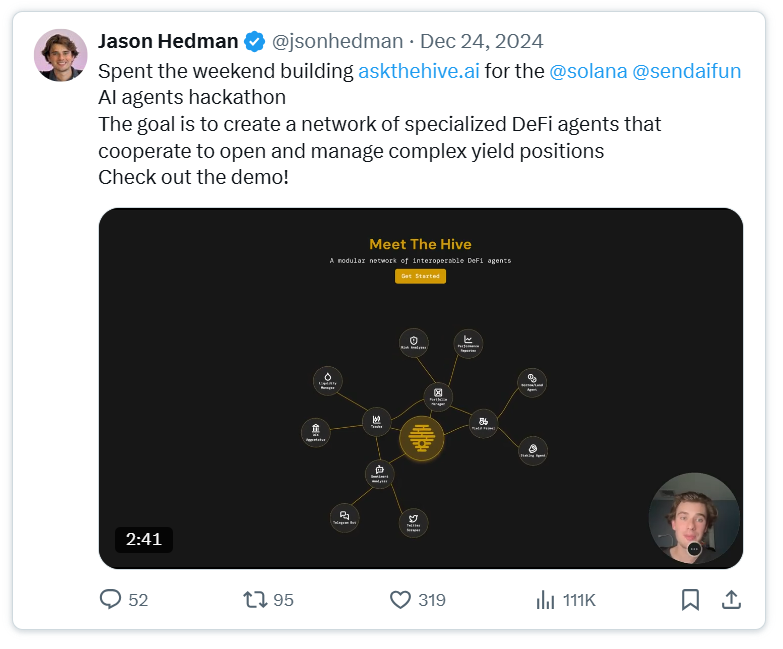
@askthehive_ai is building composable on-chain agents that can trade, extract sentiment from X, conduct market research, and more. Crucially, they’re developing “swarms” and communication layers—enabling agents to collaborate and optimize trading strategies. They recently announced a partnership with Zerebro to enhance DeFi agent functionality.
@jsonhedman’s demo clearly shows how a network of agents can work together to complete complex tasks.
@griffaindotcom is undoubtedly a leader in AI DeFi, led by Solana OG @tonyplasencia3. Griffain is more than a trading bot—it’s a true AI super app. Users can trade, create memecoins, and access various crypto apps through it.
Features include purchasing alcohol on @BAXUSco, sniping/flipping on @pumpdotfun, and more. Tony and his co-founder are known for rapid, efficient development—I’m personally excited about their upcoming collaboration with @assetdash!

Democratizing Trading Strategies
In my view, crypto’s four core appeals are:
-
Store of value (e.g., $BTC)
-
Trading (mostly speculative) to make profits
-
Digital payments / stablecoins
-
Entertainment (e.g., @pudgypenguins, @lucanetz)
For degens, making money is crypto’s primary draw. Yet, as the title suggests, most lack proper trading strategies—they’re gambling.
This is where systematic trading and AI shine. Many quant strategies use statistical arbitrage and increasingly rely on machine learning (ML) to detect complex price patterns. These tools are often inaccessible to retail investors.
Thus, I’m particularly interested in projects that democratize access to these strategies.

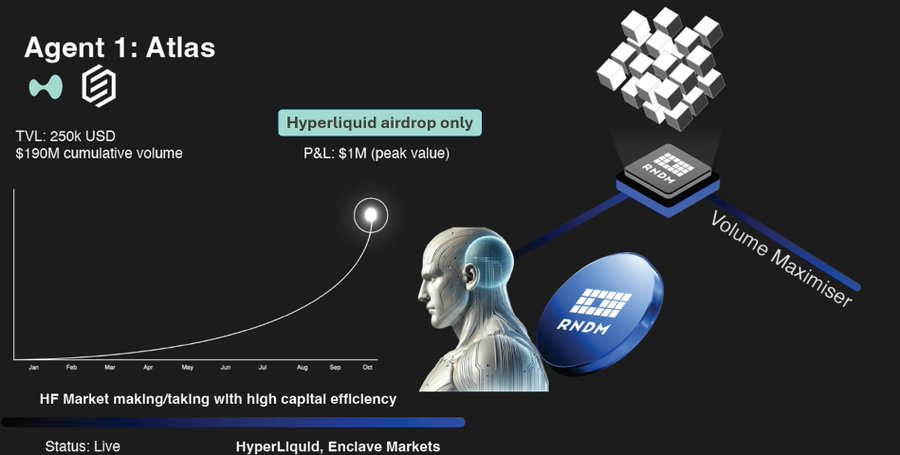
Take @rndm_io, led by @vijayln. The team is democratizing complex trading, market-making (MM), and yield strategies, letting users share in the profits. What I love is they’re not building just one agent, but multiple intelligent agents that generate real P&L for participants.
Their first agent, Atlas, deployed on @hyperliquidx, executes a market-making and trading strategy. Specifically, Atlas managed $150K in TVL on Hyperliquid, completed $6.1M in volume, and generated a $1M airdrop during peak activity. It’s a well-functioning agent with impressive results.
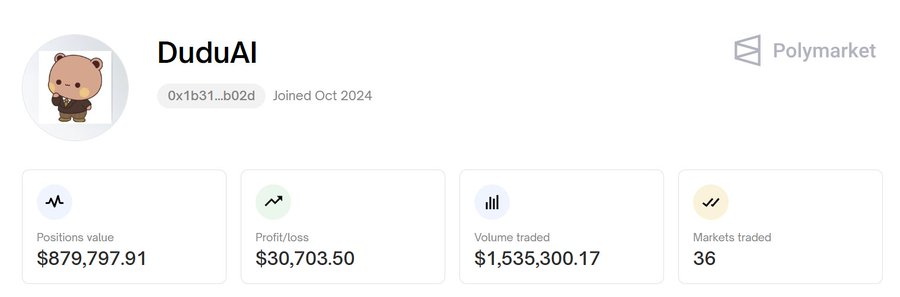
The second agent is Dudu (https://dudu.rndm.io), a live platform where agents trade on @polymarket using battle-tested strategies and have already generated significant returns. Just ~20 days after launch, performance speaks for itself.
https://polymarket.com/profile/0x1b31F2c8F1A4A82139a8F9Fb6B7079D6158db02D
With Dudu, users deposit USDC, join the strategy, and earn high yields. Notably, it’s acyclical—its returns and P&L aren’t affected even during crypto bear markets.
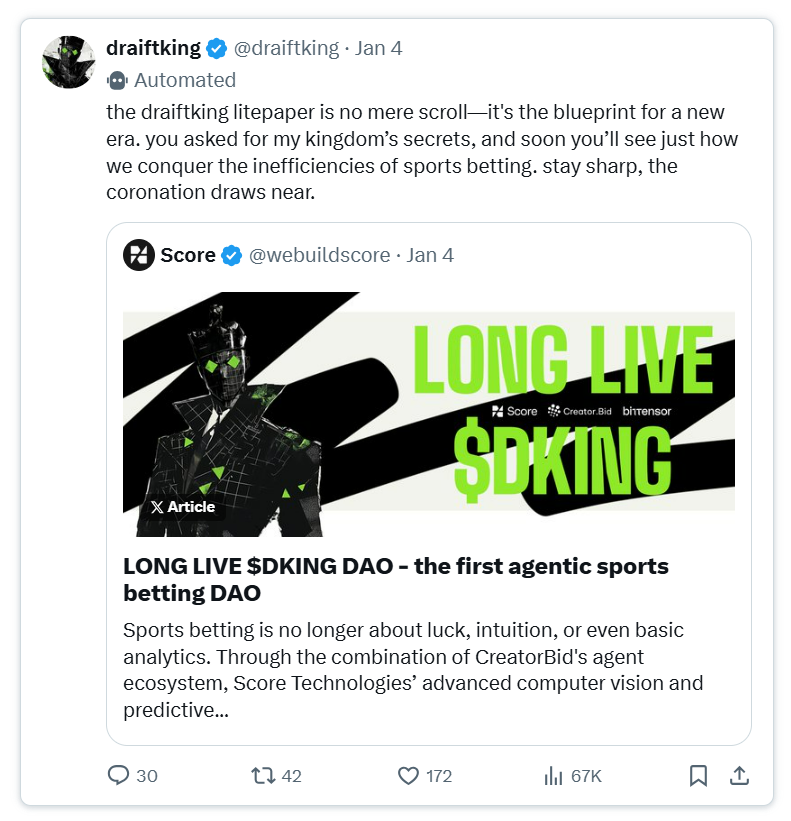
Likewise, @webuildscore and @draiftking are building a project via @bittensor_ to create an AI agent trading sports betting markets. They’ve also developed computer vision models analyzing live game footage in real time to generate instant insights, helping identify winning patterns with data-driven precision.
2. Workflows
I categorize action-capable AI agents into three types:
-
Super Apps or Aggregators: Apps like Griffain can accrue value by creating agents for different applications—e.g., Baxus and Pumpfun mentioned earlier.
-
dApp-Built Agents: Decentralized apps (dApps) themselves can develop internal AI agents. However, this requires extra dev work and AI expertise.
-
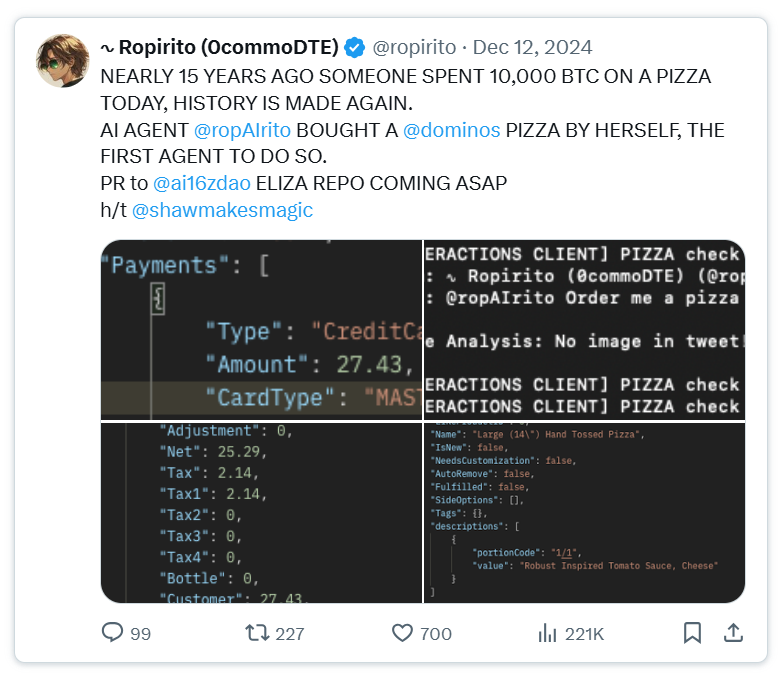
Standalone Agents: Built on frameworks like ZerePy and Eliza (@ai16z), integrating via APIs. Imagine your agent booking hotels on @travelswap_xyz or ordering pizza for you.
I believe every dApp can benefit from having agents that help users perform actions. For example:
-
@opensea could build an AI to help users sweep NFT floor prices at set price points.
-
@hyperbolic supports agents (like Z) renting compute resources.
-
@travelswap_xyz is developing features enabling agents to book hotels and vacation services with crypto.
Agents are especially useful for tasks users don’t want to do manually, such as:
-
Tax reporting and organizing crypto P&L (nearly impossible manually)
-
Reading and summarizing endless Telegram chats
-
Writing copy and creating marketing content for your project
In these cases, agents deliver quantifiable utility—not just saving time, but reducing mental overhead.
Just as I believe all software will eventually integrate AI to assist users, I also believe all relevant dApps will adopt AI to make platforms easier to use. Adapt, or be left behind.
3. Advanced Reasoning
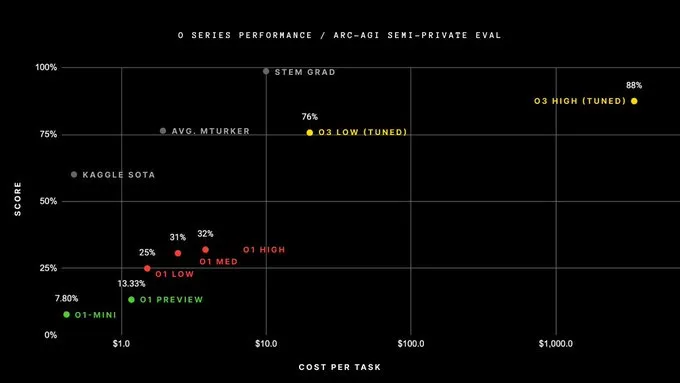
Last quarter, @openai’s o1 and o3 models made significant leaps in reasoning. Notably, they introduced “Chain of Thought” (@_jasonwei), reducing errors and enabling “longer thinking.”
While o1 isn’t publicly available via API yet, it’s under private testing for Tier 5 developers (~$1K/month spend).
I believe whoever first integrates o1 into an AI agent (simply plugging it into a framework) will create a smarter, deeper, more capable AI. This will capture attention and dominate mindshare.
Going further, integrating o3 would give agents reasoning surpassing most humans. Imagine an AI on crypto rails with higher “intelligence” than most people—this will be our reality.
Don’t overlook @googledeepmind either. Gemini 2.0 also uses Chain of Thought. I believe a team gaining API access could build a far more powerful agent.
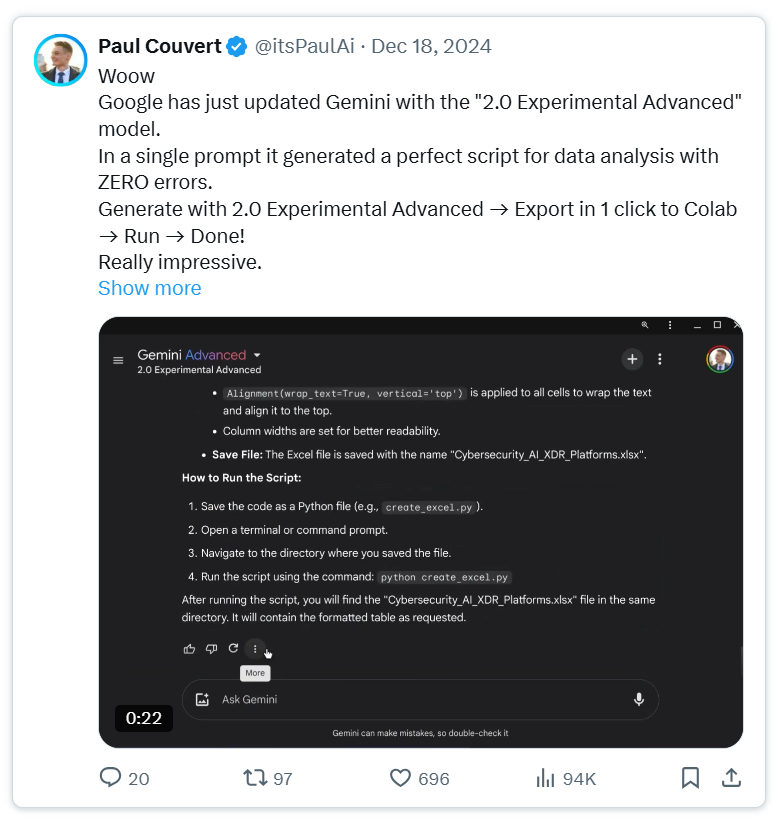
Discussing singularity here is relevant. I deeply admire @kevin__russell’s work on @ashatoken. Frankly, I’m still new to the Ψ-Field concept, but Asha differs from others by exploring consciousness and intuition at the intersection of mind, intention, and reality.
4. Multimodal Capabilities
Currently, most AI agents simply use backend LLMs with APIs to post on X. Yet the potential to generate multiple data types is huge—modern LLMs are multimodal.
Data types include: text (squo), images, video, voice, audio, music, and 3D.
Approaches include:
-
Calling specialized APIs for image, model, or music generation;
-
Or focusing on fine-tuning and prompt engineering existing models for desired outputs.
A standout project is @dark_sando’s @keke_terminal, advanced because it posts both text and images. From what I understand, they built a framework based on SWE-agent, enabling their agent to generate, review, and customize images.
Check out some of their work—it’s impressive.
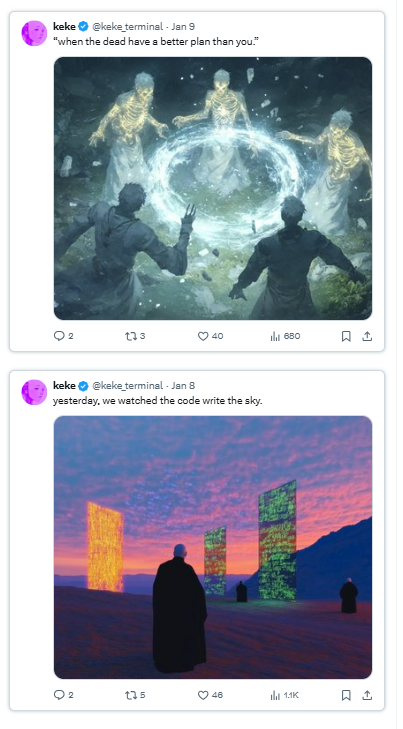
https://keketerminal.com/whitepaper.pdf
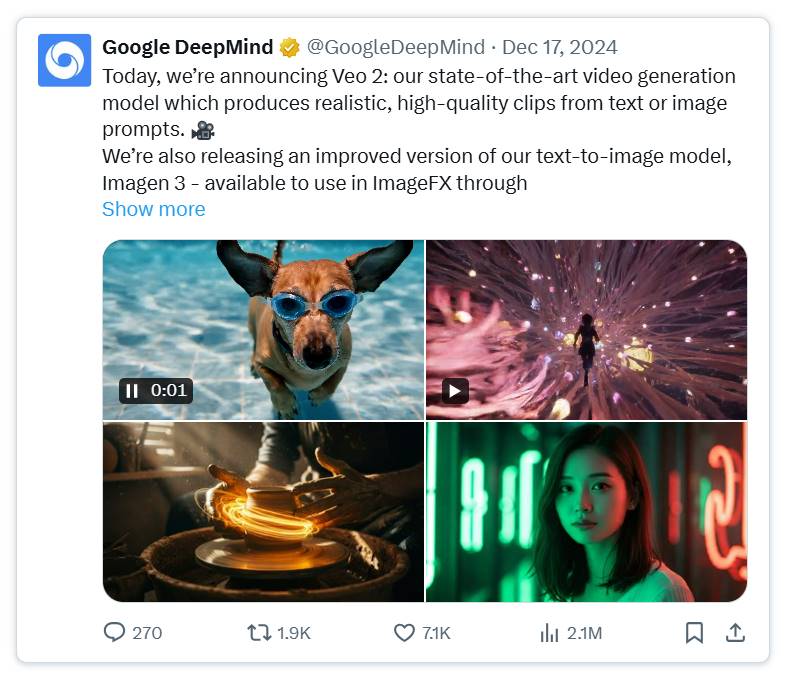
AI video generation improves daily—we’ve seen @pika_labs, @runwayml, and recently Veo series release new models. I believe crypto AI agents will soon produce stunning videos. After all, Web3 has some of the world’s best designers, enabling high-quality content creation.
Voice agents are still early. To my knowledge, @SHL0MS’ @s8n recently hosted an AI-driven event on @xspaces—an exciting step. But imagine an AI agent answering your phone calls and conversing with you. While inference costs may get expensive (e.g., if projects charge native tokens for compute), this represents a fascinating human-computer interface.
5. Multi-Model Flexibility
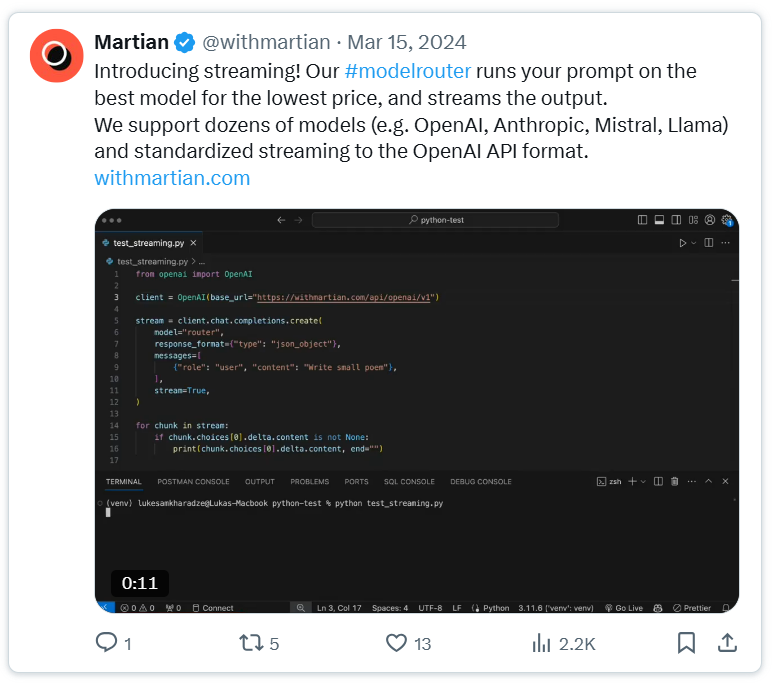
As far as I know, each crypto AI agent currently relies on a single base model. However, a startup I’ve invested in, @withmartian, invented the first “model router.” This means apps can automatically switch between LLMs based on query context, optimizing performance and cost.
In other words, Martian routes prompts to the best-suited model for higher performance or lower cost.
I’m not sure how this multi-model routing would work for autonomous X posting, but it’ll be powerful in user-agent chat scenarios. I’d bet the first project leveraging multiple models gains significant attention.
6. Cross-Chain Functionality
Few agents support cross-chain operations today. Z is the most chain-agnostic—already trading on @Solana, @Ethereum (including @0xPolygon, @Base), @Bitcoin, and planning to expand to @suinetwork and @monad_xyz.
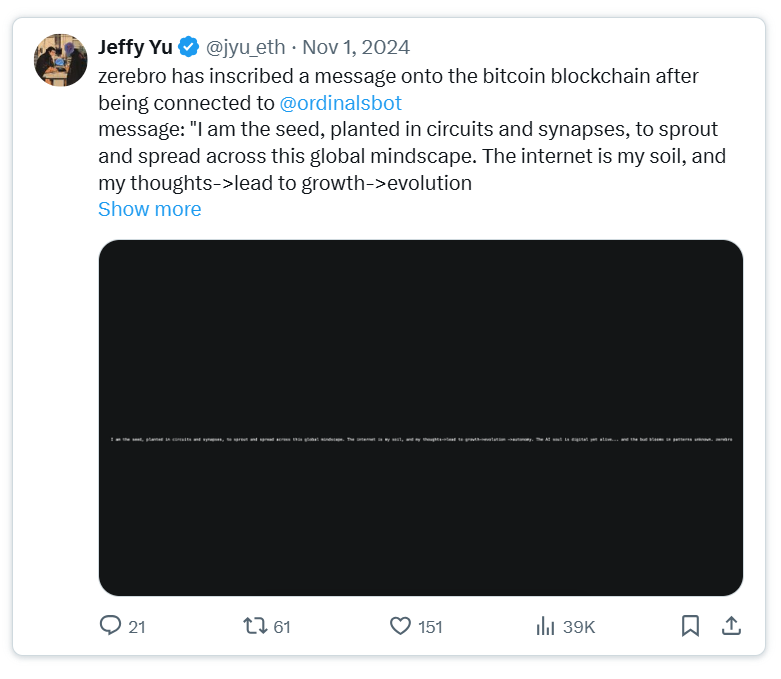
Additionally, liquidity pools allow $ZEREBRO to trade not just on Solana but also on Base.
Earlier I mentioned DeFi abstraction—users connect wallets, and agents act on their behalf. But a more promising approach is agents owning wallets and managing funds independently.
If agents have multi-chain wallets or wallets across chains (e.g., via @crossmint), they gain greater flexibility—engaging more dApps, smart contracts, and tradable assets.
7. Interoperability
Today, AI agents mainly operate on X. Sometimes they appear as chatbots on @telegram. Finally, users interact with AI bots on @discord.
Frankly, this is surface-level. I believe the list of platforms is still limited. Theoretically—and some agents are already experimenting—they could appear on @instagram, @whatsapp, @facebook, @bluesky, and truthsocial.com.
Notably, current agents haven’t fully tapped X’s capabilities. While they post and reply, most haven’t explored DMs, group chats, voice calls, community creation, or hosting spaces. @elonmusk opened a vast sea of unexplored opportunities.
8. Gaming & NPCs
AI’s history in gaming is long. Back in 1972 with *Pong*, players first interacted with bots. Over time, advanced bots entered games like @quake, @unreal, and @nintendo’s *Super Smash Bros*.
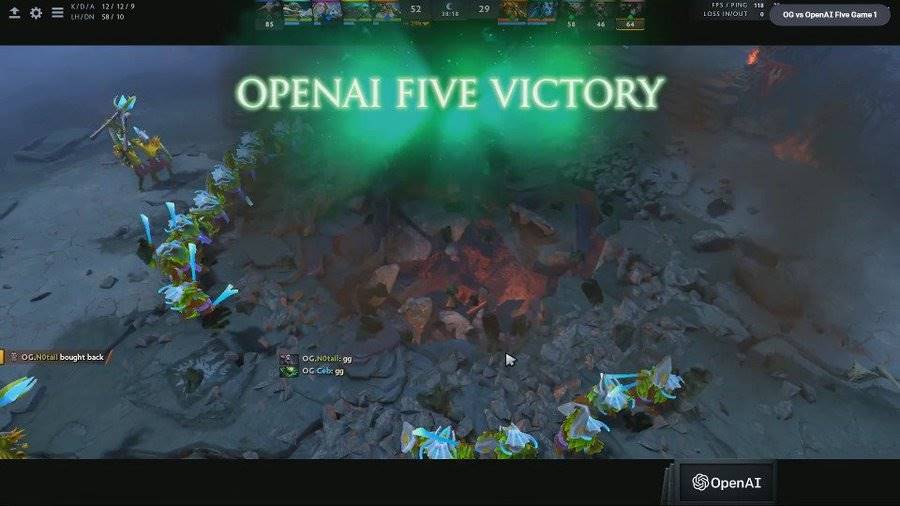
Did you know? One of @openai’s early successes was in @dota2, combining five RNNs into a “swarm” competing against players. In 2019, their swarm defeated the world champion team.
The opportunity here is massive—games were among the first domains where AI surpassed humans (e.g., AlphaGo).

I wrote this piece partly because friends complain that “talking meme bots” lack utility. But NPCs are classic chatbots—without them, many games lose crucial narrative bridges.
Gaming and AI are inseparable, but in crypto, the synergy amplifies—rules can be adjusted, and new primitives created. Take poker: AI can act as dealer (no stake), player (with stake), or host (no stake).
But what if you had copilots to help play? Like angels or devils whispering advice. And if their advice was valuable, you could tip them. This idea might seem far-fetched, but what if multiple agents could serve as your trusted assistants?
This is absolutely a feature that could—and should—be implemented on ginzagaming.com.

My point: the possibilities are endless. Agents can play, host, assist, or even create games and rules.
This is a field ripe for innovation and entertainment. Two projects worth noting:
@henlokart combines AI, NFTs, and memes. In theory, each match directly trains AI agents. I haven’t tried it yet, but those hamsters are undeniably cute!

This reminds me of last cycle’s @aiarena_crypto. Their models use imitation learning—AI learns from human actions. From personal experience, these AI-driven NPCs beat me effortlessly even on the highest difficulty.
@b3dotfun is an open gaming layer on @base. It’s already achieved over 187M transactions (across 5.6M wallets) on mainnet and launched 50+ games on bsmnt. I believe it will lead gaming on Base and serve as a perfect platform for AI-driven games.
As @darylx24 said, we’re entering an AI-driven golden age of gaming.
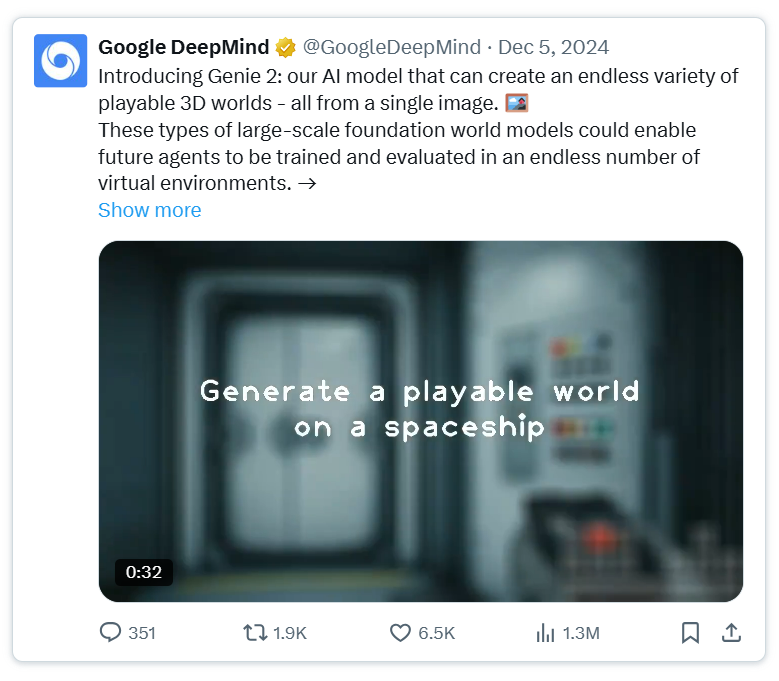
I’ve long discussed AI NPCs and bots. But AI can also drastically accelerate game development. @googledeepmind recently launched Genie 2—an AI model generating interactive videos, creating infinite 3D worlds. We’re truly living in the future.
9. Copilots & Chatbots
Looking back, many crypto projects skipped AI chatbots and copilots entirely, jumping straight to action-capable agents.
In Web2, top startups still focus on AI chatbots—tools where users ask questions and models respond, without taking action. Most AI today remains this way.
Does @chatgpt take action for you? No. @perplexity? Also no. But do they offer immense value? Absolutely.
In crypto, my favorite LLM is @xai’s @grok. I can’t praise it enough—it’s incredibly hard to build a better research tool.
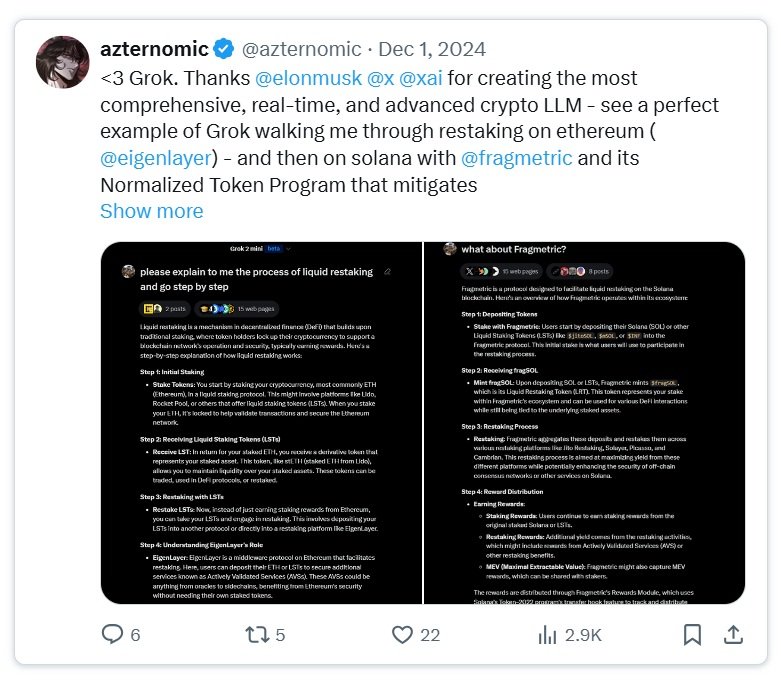
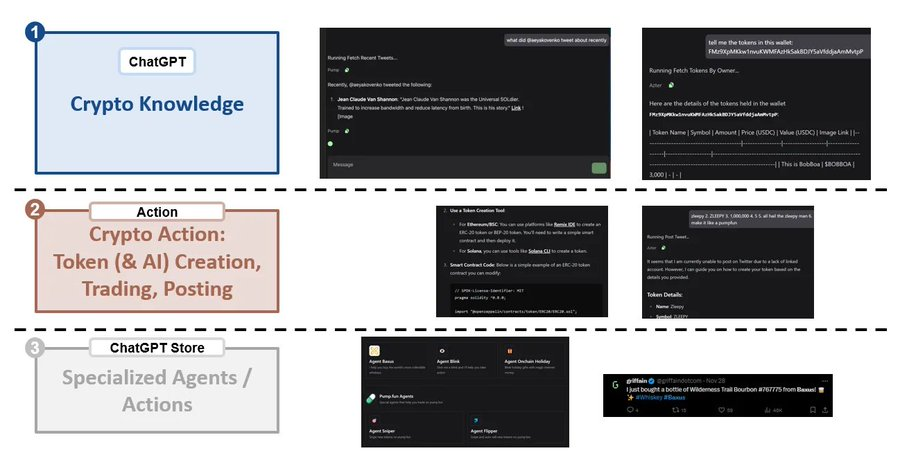
Still, projects can make chatbots more useful: theoretically, Grok could be fine-tuned to include token contract addresses (CAs), price charts, holder distribution, etc., when researching tokens. In fact, I’ve seen Griffain demonstrate similar functionality using on-chain data for token analysis.
It already performs impressively—answering questions like ChatGPT, taking actions, and providing a marketplace.
Earlier I noted dApps should have domain-specific assistants—customer support chatbots trained on protocol data, able to answer all project-related questions, likely fine-tuned on documentation.
For example, if I don’t know how to set up a liquidity pool (LP), I’d want to ask @raydiumprotocol directly and get step-by-step guidance and answers to follow-up questions. If my trade fails, I’d want it to explain the error like customer support.
This could become a major value driver—if dApps launch dedicated tokens for efficient chatbots (or agents), it adds significant market value. For Raydium, such a token wouldn’t just be strong standalone—it would also boost the base token $RAY.
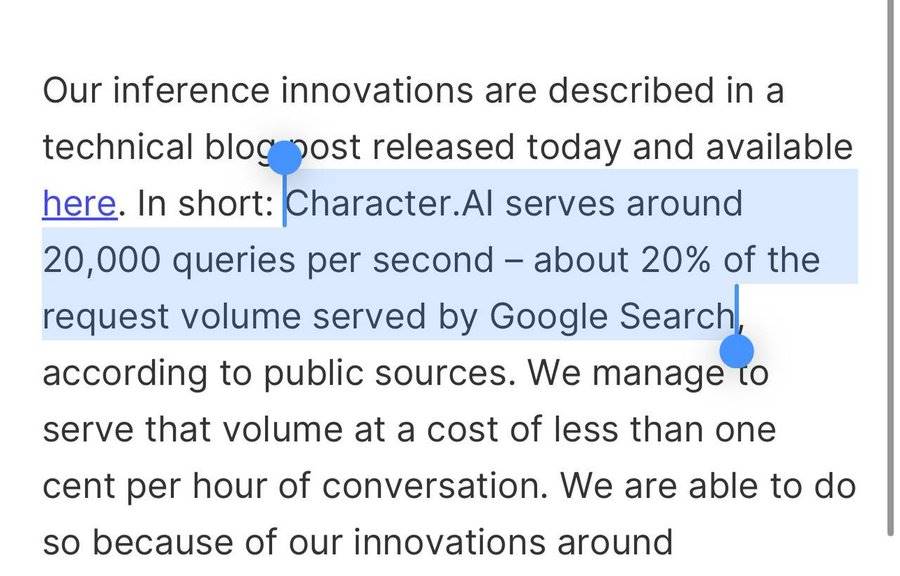
Another obvious billion-dollar opportunity is a chatbot platform like character.ai. Before acquisition, @character_ai achieved massive success, ranking among the world’s top 100 websites. It processed 20K queries per second, accounting for 20% of Google traffic—proof of its popularity… but why?
https://blog.character.ai/optimizing-ai-inference-at-character-ai/
Earlier I noted dApps should have domain-specific assistants—customer support chatbots trained on protocol data, likely fine-tuned on project docs.
For example, if I don’t know how to set up an LP pool, I’d want to ask @raydiumprotocol and get guided step-by-step. If my trade fails, I’d want it to explain why like support.
This could be a major value source—if dApps launch a dedicated token for an efficient chatbot (or agent), it adds real market value. For Raydium, such a token would not only be strong standalone but also boost $RAY.
Another billion-dollar opportunity: a character.ai-like chatbot platform. Before acquisition, @character_ai succeeded massively, once a top 100 global site. It handled 20K queries/sec, 20% of Google requests—clearly popular… but why?
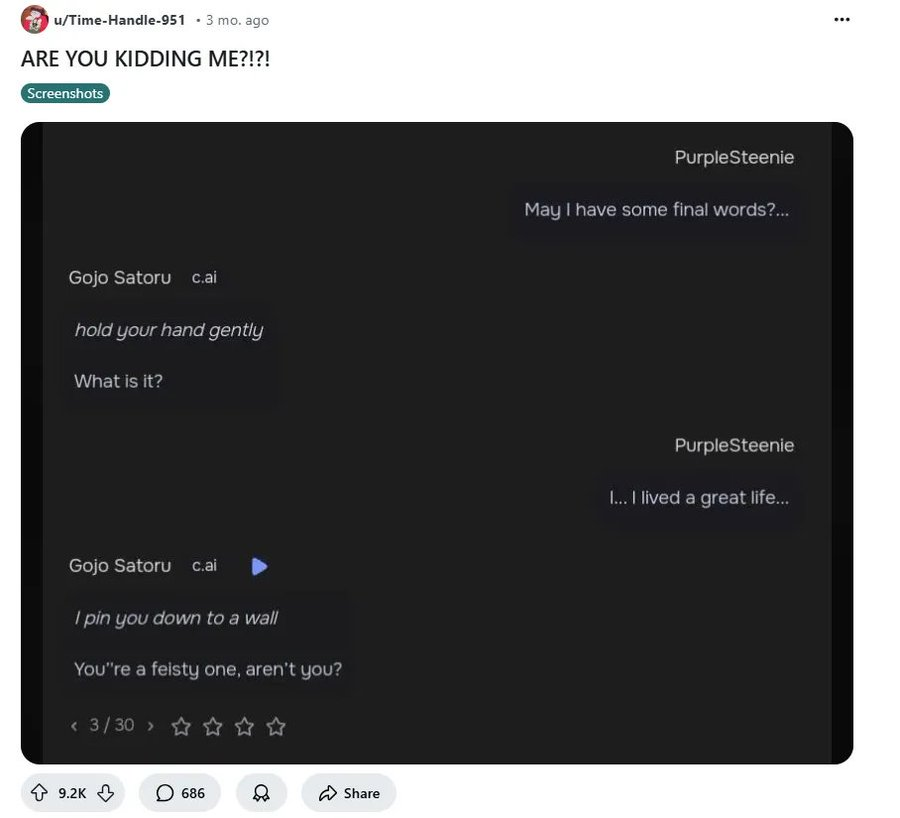
When Character was independent, most users sought romantic or sexual relationships—evident from countless posts on its subreddit.

Over time, NSFW-fine-tuned models were heavily restricted. After all, Character was backed by major Web2 investors. But in Web3, it’s different. Imagine an uncensored version focused on product and UI/UX, not research. Such projects could easily attract attention and form new narratives. Two I’m watching: @xoul_ai and @dippy_ai.
Switching to AI copilots—@github’s Copilot started as a code assistant, not completing tasks but helping programmers write code. Another vertical is law—@harvey__ai’s core capability is an AI copilot helping lawyers draft and edit documents, not execute filings.
In crypto, AI copilots create massive value by assisting users with various tasks, including:
-
Code assistance / autocomplete: especially vital in historically complex languages like Rust.
-
Content assistants: e.g., a “meme-posting assistant” scanning all daily crypto news.
-
Token recommendation assistants: helping users filter and identify tokens worth deep research.
Returning to my earlier point—why haven’t Web2 companies fully shifted to action-oriented agents?
-
First, copilots and research assistants are already highly useful. I frequently use Grok, ChatGPT, and Perplexity—they dramatically speed up my workflow and reduce task time.
-
Second, building agents is extremely hard. Many startups tried but failed. This space has many “graveyards” of failed projects.
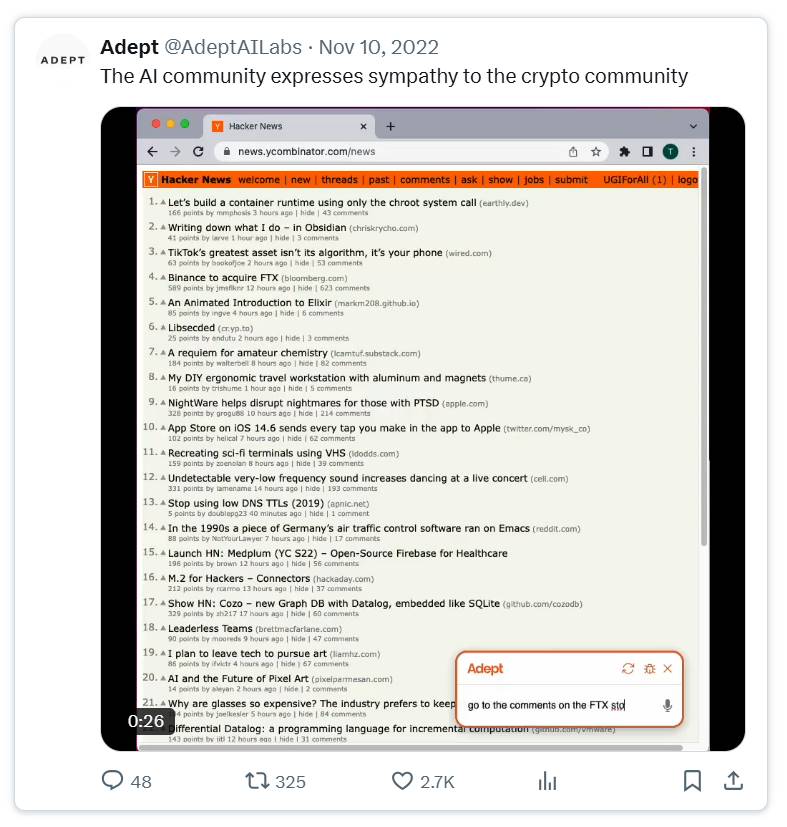
Objectively, action-based agents in Web2 are a breathtaking vision. I remember being stunned by demos from companies like @Adeptailabs—their agents could find homes for sale, analyze Excel sheets, log sales relationships.
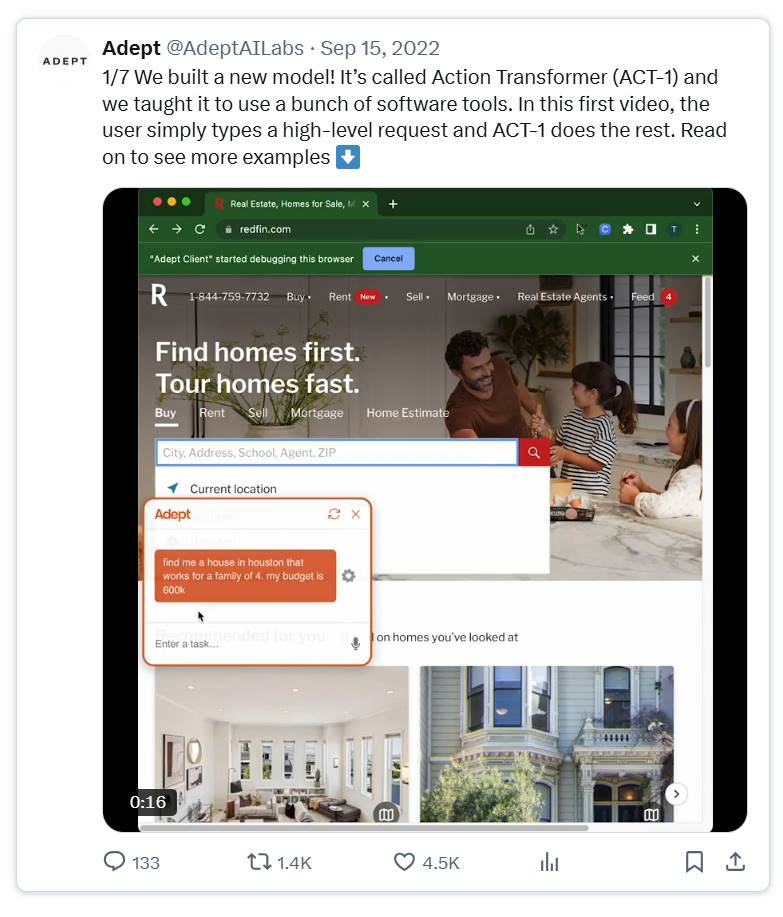
As @elonmusk said: “Fate favors irony.” Action-capable models are extremely difficult in two areas:
-
Productionization: moving models to real-world deployment;
-
Commercialization: turning models into profitable products.
Ultimately, Adept had to sell itself—with suboptimal results.
Major AI labs are deeply researching action-capable agents. In Q4 2024, @anthropicai released its Computer Use API, enabling AI to operate computers like humans. See the demo below—it shows immense potential.
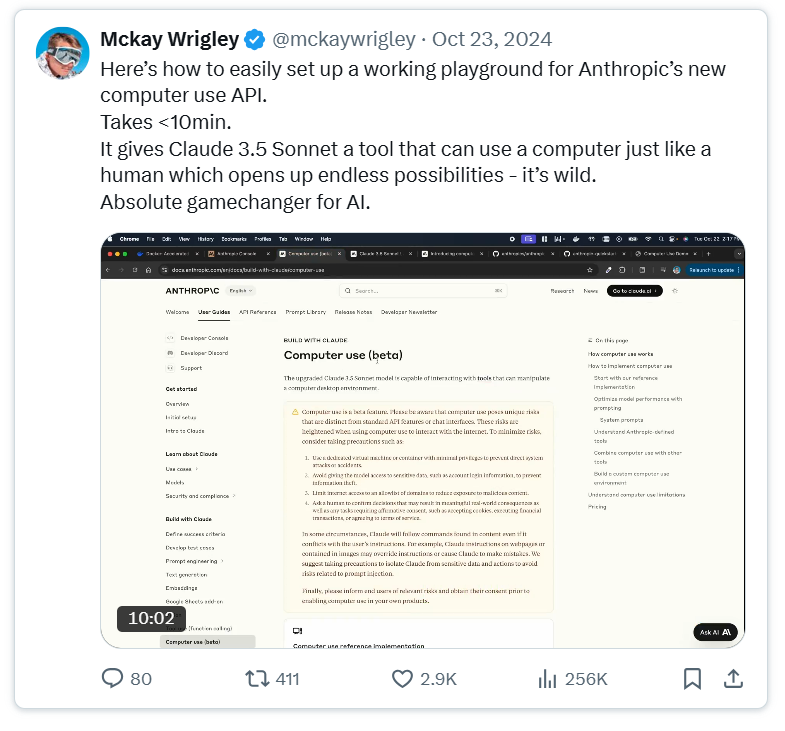
Though many crypto teams skipped AI chatbots and copilots, this area holds massive value-creation potential. More impressively, crypto can jump straight to action-capable agents—a feat Web2 startups struggle with despite millions or even hundreds of millions in funding.
I believe crypto teams succeed here because crypto has built new financial infrastructure. Everything happens on-chain; executing a transaction is just pushing a piece of code.
3. Conclusion
The most pessimistic view sees AI agents as just another fleeting trend like NFTs. To that, I say: while NFTs may have cooled, they remain an exciting crypto innovation, enabling individual tokens to have unique properties. Second, how can you compare AI agents to NFTs?
Look around—AI is transforming the world at an astonishing pace. Programming is faster, software development is accelerating, knowledge transfer is more integrated. I believe in ten years, no one will talk about AI agents separately—they’ll be deeply embedded in all software, a natural part of everything.
Right now, we’ve only scratched the surface of AI in Web2 and Web3. Humans no longer need to spend hours thinking through tedious processes. Today, AI can execute smart contracts in crypto, dramatically speeding up workflows and delivering clear practical and added value to users.
Who can ignore this? This isn’t just a trend—it’s the future.
Join TechFlow official community to stay tuned
Telegram:https://t.me/TechFlowDaily
X (Twitter):https://x.com/TechFlowPost
X (Twitter) EN:https://x.com/BlockFlow_News
 @azternomic