Quick Look: AI Pet Game The Farm – Can AI Agents Bring New Gameplay to Blockchain Games?
TechFlow Selected TechFlow Selected
Quick Look: AI Pet Game The Farm – Can AI Agents Bring New Gameplay to Blockchain Games?
By deeply integrating with AI Agents, The Farm aims to create an unprecedented immersive gaming world.
 Navigating Web3 tides with focused insights
Author: Zen, PANews
While the blockchain gaming sector continues to attract significant capital and market attention, it suffers from severe homogenization in gameplay and business models, lacking genuine innovation. However, with the rise of AI agent technology, the industry may be on the verge of a transformative shift. At the forefront of this wave, The Farm is attempting to create an unprecedented immersive gaming world through deep integration with AI Agents, redefining how players interact with virtual ecosystems.
Beyond conceptual innovation, The Farm—aligned with current industry trends—has already gained initial market recognition, reaching a market cap of $75 million and surging nearly 50% on January 3.
The Farm: A GenAI-Powered AI Agent Game
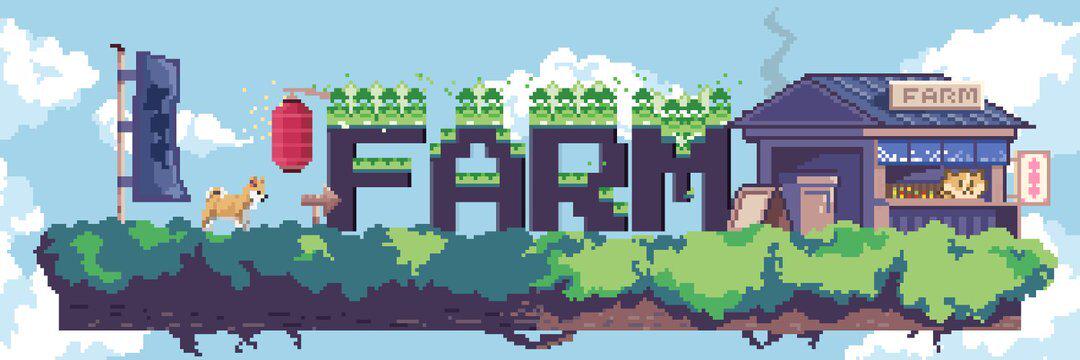
The Farm is the first GenAI-driven AI agent game built on Hyperliquid, combining on-chain creature generation (akin to CryptoKitties 2.0), simulation management (like *Stardew Valley*), and battle mechanics (inspired by *Pokémon Go*). Leveraging AI, it delivers a novel experience for player creation and interaction. The game's economy is powered by the $FARM token and unfolds through multiple progressive stages.
Game Design & Features
Phase One: The Ancestors
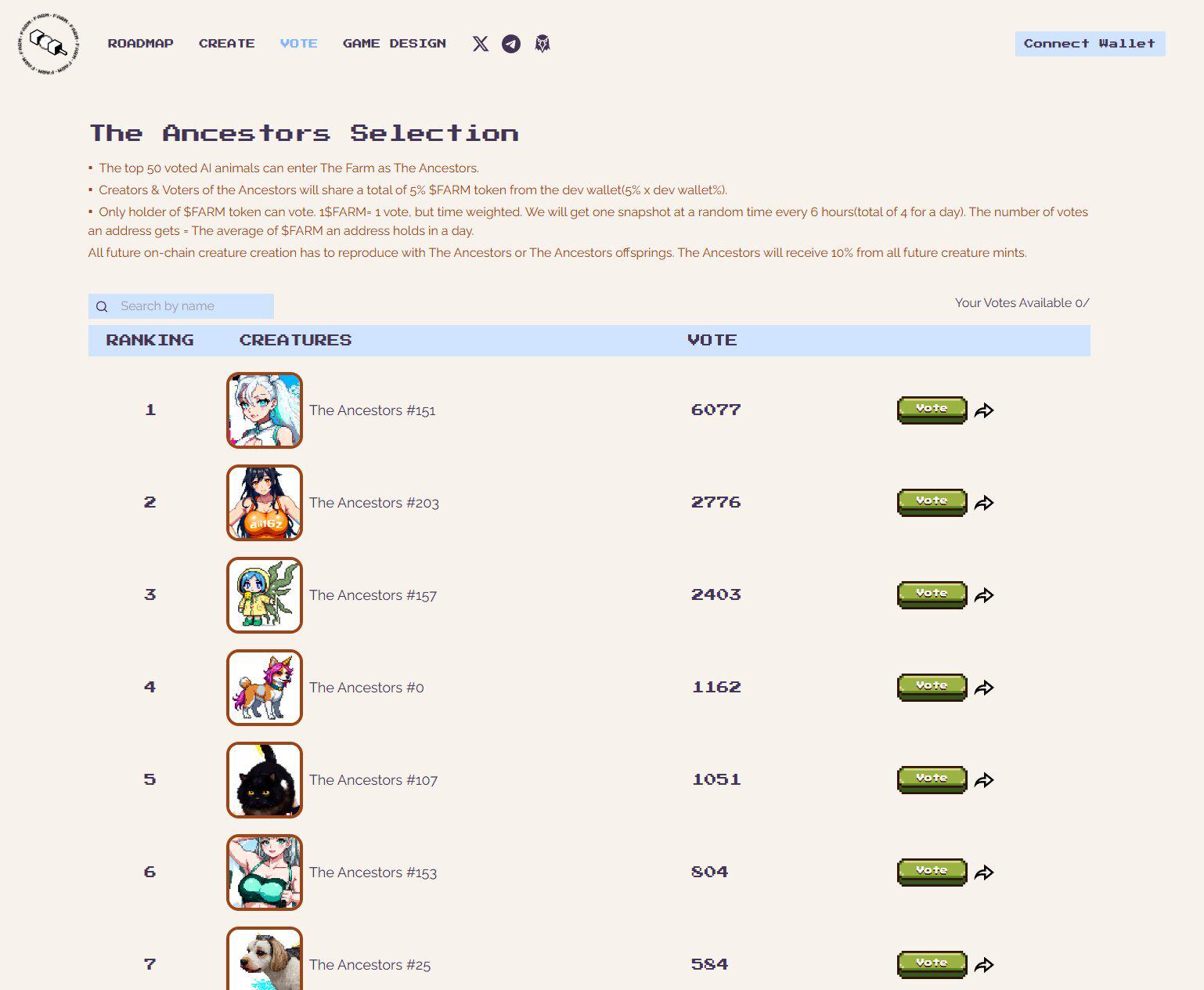
This phase launched on December 13, 2024, and concluded one week later. During this period, players could upload two photos to generate pixel-style hybrid creatures created by a GenAI model at no cost. By spending 100 USDC to mint a preferred creature, users entered them into a community vote. The top 50 voted creatures became “Ancestors,” each entitled to 10% of future minting revenues from all subsequent creatures. Creators and voters of these Ancestors also received airdrop rewards from the developer wallet.
Phase Two: Evolution
Launched immediately after the Ancestors selection ended on December 20, this phase will roll out features incrementally. All creatures are assigned traits, attributes, skills, personalities, favorite foods, and more—all generated by AI. Each creature is equipped with a personality, an on-chain wallet, and supports text and voice conversations. Creatures can learn AI-powered skills such as tarot reading or fortune drawing. Players can train their creatures by uploading data, purchase food, or enroll them in courses to improve attributes. Additionally, creatures will gradually unlock autonomous agent capabilities.
Phase Three: The Battlefield
According to The Farm’s roadmap, this phase is scheduled to launch by mid-February 2025. Creatures will be able to fight autonomously or form guilds controlled by players. The battle mode supports wagering, where winners claim the losers’ stakes, and defeated creatures may perish. This phase will significantly expand the dimensions of creature interaction and competition.
System Architecture of The Farm
As detailed in a technical article published by The Farm, the game does not adopt the more popular SWARM architecture but instead builds upon and extends the design principles of Langchain.
SWARM systems are known for their autonomy, decentralization, and flexibility. Each AI agent operates as an independent node within a SWARM pool, characterized notably by emergent behavior—leading to dynamic propagation in task management. Tasks are processed through decentralized, adaptive interactions: agents dynamically discover and collaborate on tasks based on local decisions and peer interactions.
When a request is sent to an AI agent in a SWARM pool, the agent either handles it independently or decomposes it into subtasks, processing some itself and delegating the rest to other agents in the pool. In the latter case, due to the lack of a global view of all agents’ capabilities, dynamic propagation methods may include broadcasting subtasks, forwarding based on local knowledge, random assignment, or simple rule-based distribution—possibly involving reading agent capability data from a decentralized ledger. While these mechanisms grant autonomy, they may lead to inefficiencies such as high latency, elevated costs, and loss of execution state, primarily due to the absence of structured task and trajectory planning.
As a multi-agent interactive game, The Farm aims for higher precision in task planning and improved agent coordination. It proposes an alternative, comprehensive architectural philosophy. The Farm asserts that on-chain multi-agent systems should feature precise task trajectory planning and robust tracking of agent execution states—achievable via a Data Availability layer (DA).
In contrast to SWARM, The Farm introduces an Orchestrator AI or on-chain AI Oracle service. This design includes functionalities such as task decomposition and allocation, service discovery with global visibility, tracking of subtask execution status and agent outputs, and dynamic adjustments to ensure task completion (e.g., reassigning subtasks if an agent fails or times out). Through global visibility and optimal path planning, this approach avoids redundant computation and resource waste caused by unstructured propagation, significantly improving efficiency and success rates for complex tasks. It also reduces the risk of state loss and establishes a foundation for inter-agent collaboration, enabling higher interoperability across multi-agent networks.
Token Model: 50% of Protocol Revenue Used for FARM Buyback and Burn
Starting as a generative AI (GenAI)-powered AI agent game, The Farm initially aims to attract users through on-chain creature generation (similar to CryptoKitties 2.0), simulation gameplay (like *Stardew Valley*), and battle mechanics (like *Pokémon Go*). It plans to evolve into a universal AI agent launchpad and ultimately offer Rollup-as-a-Service, enabling AI agents to possess their own appchains and develop independent ecosystems.
On the revenue side, The Farm’s gaming components generate income via $FARM for creature minting, in-game item and skill sales, and take fees from battles and wagers. The universal AI agent platform earns fees from agent token presales, liquidity launches, and service revenue sharing. Agents requiring appchains must stake $FARM to deploy them.
Fifty percent of protocol revenue is allocated to $FARM buybacks and burns, 40% goes to $FARM stakers, and 10% is reserved for the team. Additionally, $FARM stakers receive $veFARM, which grants access to revenue sharing and priority rights in agent configurations, enabling sustained value accrual for the token.
By integrating AI agents, The Farm aims to enhance the open-world gaming experience, empowering players to explore unknown realms and grow alongside their creations. Players can now craft characters that evolve continuously according to personal preferences, rather than being confined to fixed templates. The game world no longer follows preset scripts—instead, every player’s creativity collectively shapes the evolving universe. Furthermore, characters can interact with real-world entities, blurring the boundary between the virtual and the real.
Join TechFlow official community to stay tuned
Telegram:https://t.me/TechFlowDaily
X (Twitter):https://x.com/TechFlowPost
X (Twitter) EN:https://x.com/BlockFlow_News
 PANews