From Chit-Chat to Practicality: The Paradigm Shift and Future Trends of Web3 AI Agents
TechFlow Selected TechFlow Selected
From Chit-Chat to Practicality: The Paradigm Shift and Future Trends of Web3 AI Agents
The shift from "chatbots for casual conversations on social media" to "experts sharing professional insights" will continue.
 Navigating Web3 tides with focused insights
Original: 0xJeff
Translation: Yuliya, PANews
As the AI agent space evolves, the market has shifted dramatically from its early focus on personalized agents. Initially, users were drawn to agents capable of entertainment, joke-telling, or "setting vibes" on social media. While these agents generated buzz and attention, one fact has become increasingly clear as the market matures: practical utility far outweighs personalization.
Many personality-driven agents attracted significant attention upon launch but eventually faded into obscurity due to their inability to deliver value beyond superficial interactions. This trend highlights a crucial lesson: in Web3, substantive value takes precedence over surface-level appeal—utility triumphs novelty.
This evolution mirrors shifts seen in the Web2 AI landscape. Specialized large language models (LLMs) are now being developed to meet specific demands in niche domains such as finance, law, and real estate. These models prioritize accuracy and reliability, addressing gaps left by general-purpose AI.
The limitation of general AI lies in its tendency to provide only "good enough" answers, which is unacceptable in high-stakes contexts. For example, a popular model may achieve just 70% accuracy on certain expert-level questions—adequate for casual use but potentially disastrous when applied to court rulings or major financial decisions. This is precisely why fine-tuned, domain-specific LLMs achieving 98–99% accuracy are becoming increasingly vital.
So here's the question: Why choose Web3? Why not let Web2 dominate the specialized AI space?
Web3 offers several distinct advantages over traditional Web2 AI:
-
First is global liquidity. Web3 enables teams to raise funds more efficiently. Through token issuance, AI projects can access global capital directly, bypassing time-consuming VC meetings and negotiations. This democratizes fundraising and allows developers to obtain resources faster.
-
Second is value accrual via tokenomics. Tokens allow teams to reward early adopters, incentivize holders, and sustain ecosystem growth. For instance, Virtuals allocates 1% of transaction fees to cover inference costs, ensuring its agents remain functional and competitive without relying on external funding.
-
Third is decentralized AI infrastructure. Web3 provides open-source models, decentralized compute resources (such as Hyperbolic and Aethir), and vast open data pipelines (like Cookie DAO and Vana), offering developers a collaborative, cost-effective platform difficult to replicate in Web2. More importantly, it fosters a passionate developer community driving innovation together.
Web3 AI Ecosystem
Within the Web3 AI agent ecosystem, we’re seeing various platforms enhance capabilities through integration, unlocking new use cases. From Bittensor subnets to Olas, Pond, and Flock, ecosystems are building more interoperable and functional agents. Meanwhile, user-friendly tools like SendAI’s Solana Agent Kit or Coinbase CDP SDK continue to emerge.
The following ecosystems are building practicality-first AI applications:
-
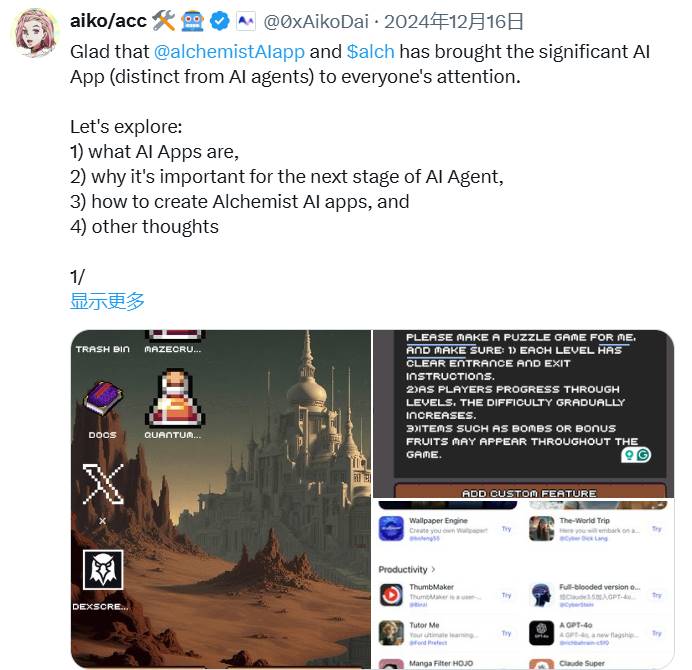
ALCHEMIST AI has developed a no-code platform for building AI applications.
-
MyShell has built an AI app store focused on image generation, visual novels, and virtual character simulation.
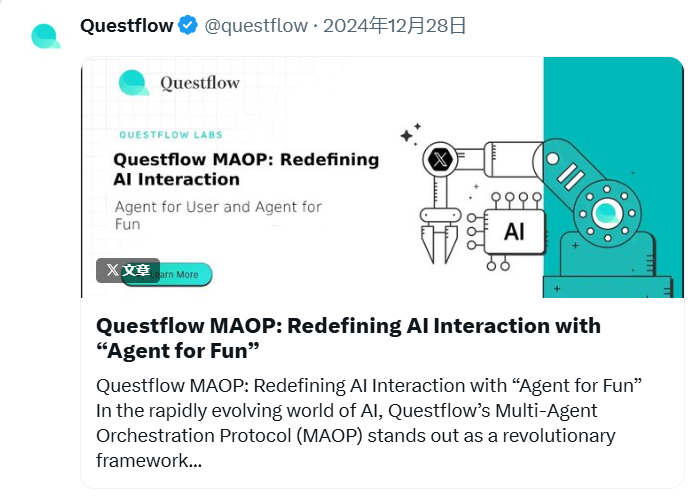
Questflow launched a Multi-Agent Orchestration Protocol (MAOP), targeting productivity-enhancing use cases. Its integration with Virtuals created Santa Claus Agent—a gamified airdrop and incentive management solution.
-
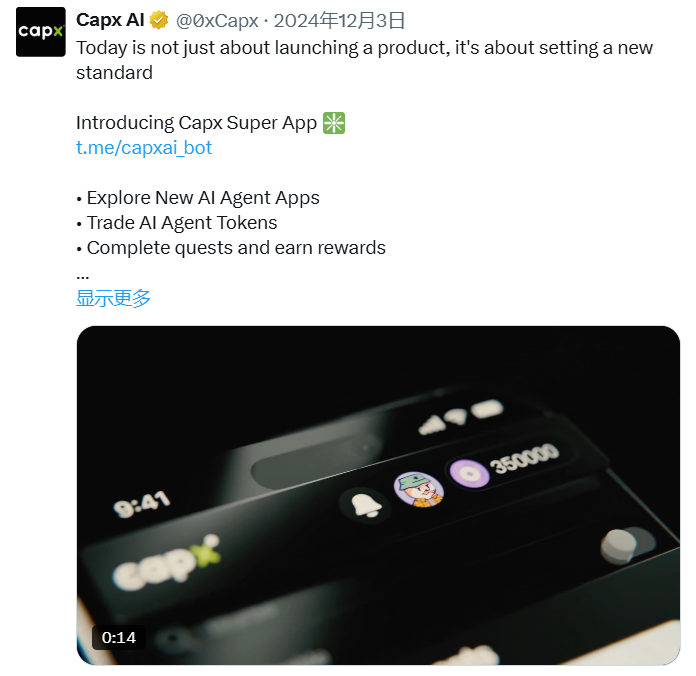
Capx AI launched a utility-first AI app store on Telegram.
Individual Agents Focused on Real-World Use Cases
Beyond ecosystems, individual specialized agents are emerging across verticals. Examples include:
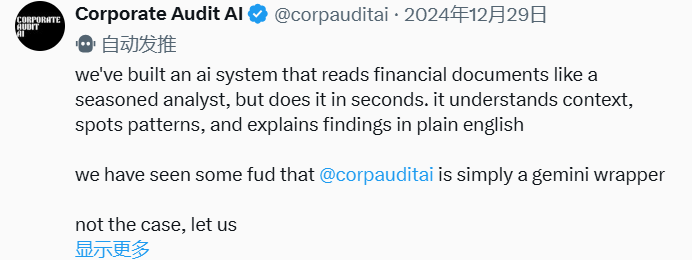
- Corporate Audit AI, a financial analysis agent designed to review reports and identify market opportunities.
-
$CPA Agent, developed by Tj Dunham, focuses on calculating cryptocurrency taxes and generating reports for users.

This shift from "chatty bots for social media banter" to "knowledge-sharing experts" will continue.
The future of AI agents does not lie in random conversational chatbots, but in expert agents across specialized fields delivering value and insights in engaging ways. These agents will continue creating mindshare and guiding users toward real products—be it trading terminals, tax calculators, or productivity tools.
Where Will Value Accumulate?
The biggest beneficiaries will be agent-focused L1s and coordination layers.
-
On the agent-centric L1 front, platforms like Virtuals and ai16z are raising industry standards, ensuring quality remains a top priority within their ecosystems. Virtuals remains the leading L1 platform in the agent space, while ai16z’s launchpad is poised to enter the race soon. Purely personality-driven agents are disappearing, replaced by those that are both useful and compelling.
-
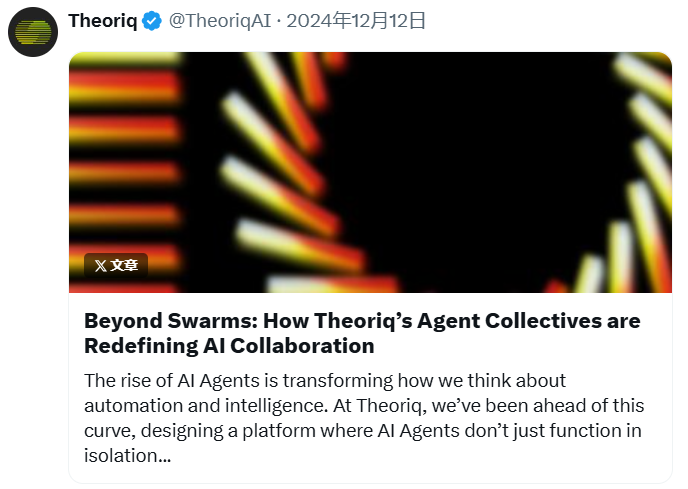
On the coordination layer side, platforms like Theoriq will orchestrate collaboration among numerous agents, combining their strengths to deliver seamless and powerful solutions. Imagine integrating agents like aixbt, gekko, and CPA into a unified workflow that captures alpha, executes trades, and handles tax reporting—all in one. Theoriq’s task-based discovery framework is moving toward unlocking this collective intelligence.
Final Thoughts
The narrative around utility-first AI applications has only just begun. Web3 has a unique opportunity to carve out a space where AI agents do more than entertain—they solve real problems, automate complex tasks, and create tangible value for users. 2025 will witness the transformation from chatbots to collaborative assistants, as specialized LLMs and multi-agent orchestration redefine what we expect from AI.
While Web2 and Web3 will gradually converge, Web3’s open, collaborative nature will lay the foundation for the most innovative breakthroughs. It’s no longer about “personality-driven AI agents,” but about agents that deliver practical value and meaningful impact. Watch closely: agent-focused L1s, coordination layers, and emerging AI applications. The age of agents has arrived—and this is only the beginning.
Join TechFlow official community to stay tuned
Telegram:https://t.me/TechFlowDaily
X (Twitter):https://x.com/TechFlowPost
X (Twitter) EN:https://x.com/BlockFlow_News