One-stop service for enterprises to launch tokens and transition to Web3—how reliable is it?
TechFlow Selected TechFlow Selected
One-stop service for enterprises to launch tokens and transition to Web3—how reliable is it?
Issuing a token is just the starting point of a project, not the end.
 Navigating Web3 tides with focused insights
By Liu Honglin
In the eyes of many outside the crypto circle, Web3 entrepreneurship is synonymous with launching a token.
While this may sound somewhat derogatory, it does reflect a common misunderstanding held by some within today's Web3 industry. For many entrepreneurs newly entering the Web3 space, the biggest challenge lies in how to develop a token, get listed on exchanges, and navigate the crypto community for marketing operations. These technical and market-related hurdles leave many feeling overwhelmed. As the saying goes, "different fields are as distant as mountains apart." When uncertainty prevails, one-stop "full-service" packages naturally emerge—promising quick and simple solutions to complex problems.

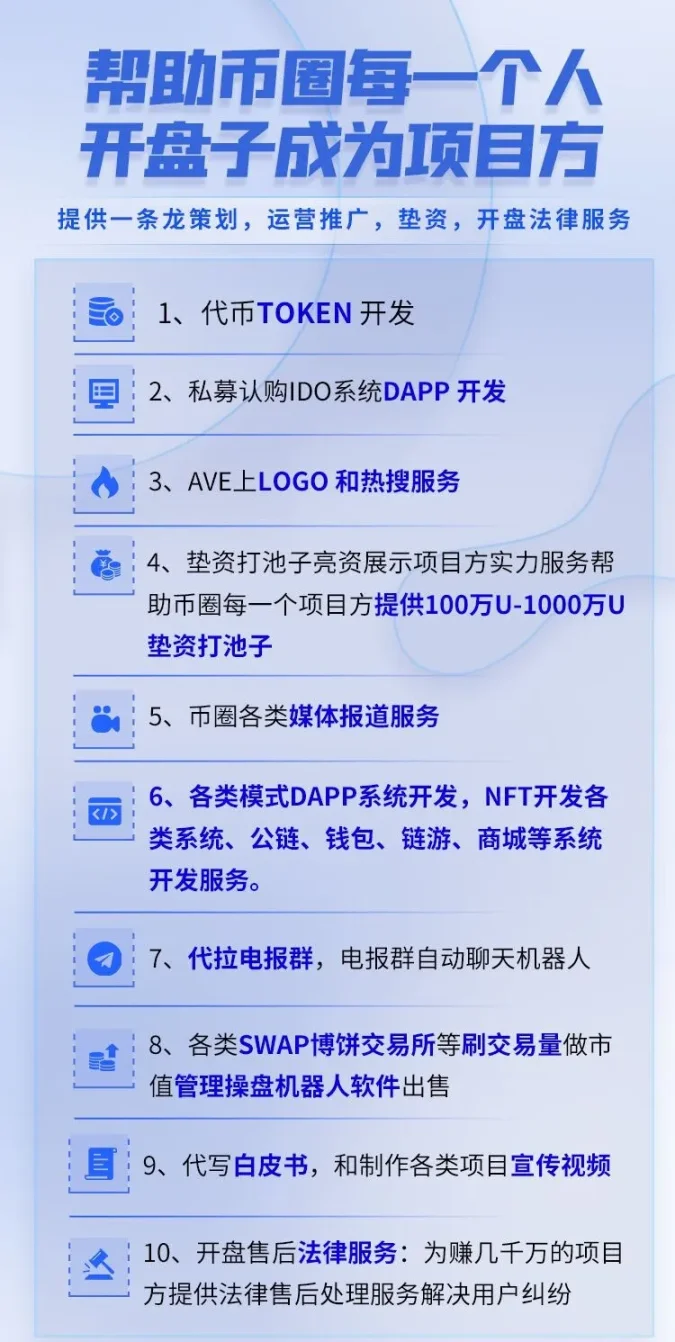
As Lawyer Honglin observed in a WeChat group, these crypto-centric "one-stop launch services" have recently become increasingly active. Full-service providers now offer everything from token development and DApp creation to private sales, community management, exchange listings, and even follow-up legal support—handling every step of the process. For project teams lacking technical or marketing experience, this seems like a godsend: pay the fee, and your token launch, listing, and promotion are all taken care of in one go. Yet beneath this apparent convenience lie numerous potential pitfalls.
The Misconception of Web3: It’s Not Just About Launching Tokens
In reality, Web3 encompasses far more than simply issuing tokens. As the next evolution of the internet, Web3 emphasizes decentralization, user sovereignty, data privacy, and the broad application of blockchain technology. Its scope extends beyond finance into social networking, entertainment, content creation, supply chain management, and more.
However, the current market is flooded with projects focused primarily on token launches, leading many to equate Web3 solely with "launching tokens." This narrow view not only limits public understanding of Web3’s true potential but also buries genuinely valuable Web3 applications. In such an environment, entrepreneurs often feel pressured to prioritize token issuance and market hype over deeper technological innovation and meaningful application development.
To meet clients' customized demands, some insiders resort to creating illusions of fake users and artificial prosperity. On the surface, the project appears vibrant—active communities, high trading volume—but this "boom" is often orchestrated. In reality, few genuine users participate; most active accounts belong to organized, disciplined groups known colloquially as "10U Warrior Teams." These so-called "warrior teams" typically manipulate token prices through coordinated buying and selling to simulate market activity and attract more investors.
Even worse, some service providers, chasing short-term results, employ pyramid-scheme tactics—recruiting members aggressively and exaggerating the project’s potential to lure inexperienced retail investors. Using inflated market forecasts and fabricated success stories, they entice investors to pour in capital. But once these investors join, they often find the project lacks real progress, and token prices cannot be sustained.
When service providers fail to deliver on promises, project teams inevitably face scrutiny and backlash from investors. Many entrepreneurs who initially sought to save time and effort through "one-stop services" ultimately find themselves trapped in schemes set up by unscrupulous vendors—projects stall, and some even face legal risks. This crisis of trust leaves many aspiring long-term Web3 builders deeply frustrated.
Back to Business Fundamentals: Does Launching a Token Equal Success?
Setting aside legal risks and returning to core business principles, entrepreneurs must ask: does launching a token truly determine a project’s success? Put differently, even if you successfully issue a token and list it on an exchange, will good times really follow? Ultimately, what determines whether a project can sustain long-term operations is a clear business model, real market demand, and ongoing operational capability.
Token issuance, as a fundraising mechanism, is essentially similar to traditional companies raising capital through stocks or bonds. A token sale can provide initial funding, but it doesn’t directly guarantee success. Real business success comes from value creation, meeting actual user needs, and maintaining continuous innovation and operational strength.
Understanding and fulfilling market demand is key to any successful venture—including Web3 projects. A successful Web3 project must first have a clear and viable business model. The existence of a token should not merely serve to raise funds, but to ensure the project can realize its long-term value. The business model must answer critical questions: What problem does the project solve? Who are the target users? How will it generate revenue? Entrepreneurs must conduct in-depth market research, understand real user needs and pain points, and design products that are truly attractive and competitive. Ignoring market demand and relying solely on token speculation without substantial product or service backing severely undermines long-term sustainability. Conversely, a project with a well-defined business model and real-world use cases can maintain stable, long-term growth even amid significant token price fluctuations.
A Web3 project’s success depends not just on the initial token launch, but on sustained operation and maintenance—ongoing technical upgrades, community building and management, marketing, and ecosystem nurturing. If a project lacks effective post-launch strategies, user experience deteriorates, engagement drops, and the token’s value becomes difficult to stabilize or grow.
Too many projects ignore these fundamentals, resulting in disastrous token price collapses. Even after launching a token, they still face immense survival pressure. Countless cases show that relying solely on token issuance for funding—without a clear business model or ongoing operations—leads to rapid price surges followed by steep declines, loss of investor confidence, and eventual cash flow collapse for the team.
Manqin Legal Advice
In practice, the relationship between service providers and project teams often hinges on contracts and agreements—but these documents don’t always fully protect the project side. When issues arise, project teams frequently lack effective legal recourse. In such cases, they risk not only financial losses but also reputational damage and diminished future opportunities.
When tempted by one-stop services, entrepreneurs need clear-headed judgment to avoid falling into traps set by untrustworthy vendors. Below are recommendations from Lawyer Honglin to help founders make smarter decisions when selecting service providers.
1. Choose Reputable Providers with Transparent Collaboration Models
As Jack Ma once put it plainly: “There’s no business-to-business—only person-to-person.” In any deal, integrity matters most. When choosing a full-service provider, prioritize companies with strong reputations and positive track records in the industry. Evaluate their reliability by reviewing past project portfolios, client feedback, and general industry reputation. A trustworthy provider typically focuses on long-term project development rather than short-term market theatrics.
Entrepreneurs should ensure transparency in collaboration. Clearly define responsibilities and obligations, sign detailed contracts, and specify exact deliverables and quality standards. Avoid providers with vague terms or exaggerated promises to prevent disputes and trust breakdowns down the line.
2. Dual Support in Technology and Marketing
Technical foundation is crucial for any Web3 project. Whether it’s smart contract security, blockchain network stability, or DApp user experience, solid technical capabilities are essential. A technically robust project ensures data security, efficient transactions, and system reliability—earning user trust and support.
Community is the lifeblood of any Web3 project. An active, high-quality user base provides continuous momentum and support. Founders must invest resources in building and managing communities, using transparent communication, effective incentive mechanisms, and valuable content to attract and retain user participation. An excellent service provider should not only offer technical support like token development but also possess professional capabilities in marketing, promotion, and community management. Founders are advised to prioritize vendors offering independent, professional community services—and avoid those relying on fake users or short-lived hype—to ensure authentic engagement and long-term user retention.
3. Legal and Compliance Safeguards
As governments worldwide tighten regulations on cryptocurrencies and blockchain technology, compliance has become a critical aspect of Web3 operations. Entrepreneurs must understand and adhere to relevant laws and regulations to ensure their projects operate within legal frameworks. Compliant operations not only mitigate legal risks but also strengthen investor and user confidence.
Web3 projects involve complex legal and regulatory challenges. Founders should work with service providers capable of delivering comprehensive legal support—ensuring compliance during token issuance, exchange listing, and ongoing operations, thus avoiding project failure due to legal exposure.
Conclusion
Launching a token is just the beginning—not the end. The desire to save time and effort via "one-stop services" is understandable, but never treat token issuance as a magic bullet that solves all problems. To succeed in the Web3 world, the real moat lies in solid technical capabilities, a clear business model, and compliant operations—not mere token launches or short-term market hype.
Only by integrating these three elements can a project stand out in the fiercely competitive Web3 landscape and achieve sustainable, long-term growth. We sincerely hope all entrepreneurs transitioning into Web3 keep a clear mind, deeply understand the essence and potential of Web3, and resist being swayed by fleeting market frenzies. Only through grounded, diligent efforts can one carve out a brilliant chapter in this field full of both opportunities and challenges.
Join TechFlow official community to stay tuned
Telegram:https://t.me/TechFlowDaily
X (Twitter):https://x.com/TechFlowPost
X (Twitter) EN:https://x.com/BlockFlow_News