








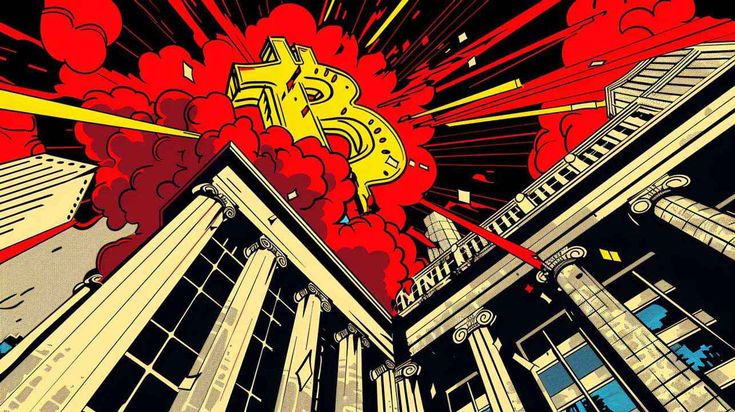
The New York Times: How Crypto Advocates Turned "Debanking" Into a Political Storm
TechFlow Selected TechFlow Selected
The New York Times: How Crypto Advocates Turned "Debanking" Into a Political Storm
Cryptocurrency industry insiders are concerned that crypto firms could be deliberately cut off from the global banking system, which in due course could become a political weapon against the industry.
 Navigating Web3 tides with focused insights
By Erin Griffith and David Yaffe-Bellany, The New York Times
Translated by Luffy, Foresight News
At the beginning of last year, Ryne Saxe began struggling with demands from banks that partnered with his San Francisco-based startup, Eco. These banks presented a long list of new compliance and reporting requirements that Eco had to meet.
What was the issue? Eco is a cryptocurrency company operating in an industry under intense regulatory scrutiny. The banks said they were under pressure from government agencies to follow new guidelines regarding crypto clients. Saxe said Bill.com, Eco’s payroll provider, later canceled the company's account, citing these new policies.
Ryne Saxe, founder of San Francisco-based cryptocurrency firm Eco, wears a hoodie and baseball cap in front of a building. Banks have demanded Eco comply with a series of new compliance and reporting requirements.
After enduring eight grueling months, Saxe decided to shut down Eco’s app and revised his business plan to no longer rely on bank partnerships. Eventually, Bill.com reinstated his account.
"It felt like being in hell," Saxe said. "Our banking access kept shrinking."
For years, cryptocurrency startups like Eco have struggled to open and maintain U.S. bank accounts, prompting widespread outrage among entrepreneurs. They’ve taken to social media to accuse the government of orchestrating a campaign against the crypto industry, calling such actions unconstitutional and un-American. They’ve sued banking regulators and raised the issue with members of Congress.
This frustration has now reached a peak. Last month, influential venture capitalist Marc Andreessen, co-founder of Andreessen Horowitz (a16z), discussed the topic on Joe Rogan’s podcast, which has over 10 million listeners. Andreessen accused Democrats of “intimidating” crypto startups by pressuring banks not to work with them. Elon Musk, Coinbase CEO Brian Armstrong, and Gemini co-founder Tyler Winklevoss amplified these concerns. Tyler Winklevoss claimed that the government and banks are “engaging in evil.”

Brian Armstrong stands in an office with glass partitions and potted plants, chin resting on hand, looking sideways.
Complaints about “debanking”—being excluded from banking services—sometimes overlook key context or exaggerate the impact on startups. But crypto executives have turned this issue into a potent political weapon at a pivotal moment for the industry.
Under President-elect Donald Trump—a vocal Bitcoin supporter—the crypto sector expects a shift in policy that could create a more favorable regulatory environment. Last week, Trump appointed crypto advocate and venture capitalist David Sacks as his “White House AI and Crypto Czar.”
Crypto executives are already urging Trump and Sacks to make personnel appointments and implement policies that elevate the industry’s standing in the U.S. Ending banking restrictions on crypto startups is one of their top priorities.
No one has exact figures on how many crypto firms have been denied or lost bank accounts, but Andreessen of a16z says the problem has affected 30 tech founders backed by his firm. (a16z has invested in more than 100 crypto startups.)
Last year, three top financial regulators sent letters to banks warning them to be cautious when dealing with crypto companies. Nic Carter, founder of crypto investment firm Castle Island Ventures and a prolific writer on debanking, labeled this coordinated effort by government and banks as “Operation Choke Point 2.0.” (Note: Operation Choke Point was a 2013 Justice Department initiative under Obama targeting businesses suspected of fraud and money laundering, but it inadvertently harmed many legitimate merchants.)

Marc Andreessen sits speaking, gesturing with his hands, wearing a headset microphone.
Austin Campbell, an adjunct business professor at New York University who has advised crypto firms, said the outcome has been “devastating for businesses.”
Still, many crypto firms that lost accounts managed to open new ones. Regulators’ warnings state that banks are “neither prohibited nor discouraged” from serving any particular category of customer. Many banks may have valid reasons for dropping crypto clients: the industry has a well-documented history of scams, fraud, and high-risk financial activities that harm consumers and lead to endless litigation and criminal charges.
“Serving crypto firms exposes traditional banks to reputational, regulatory, and financial risks,” said Eswar Prasad, an economist at Cornell University. “Banks are generally reluctant to take on clients whose financial profiles appear suspicious.”
A spokesperson for financial operations platform Bill.com declined to comment on Eco’s case and said the company notifies customers who violate its service policies. A representative from the Office of the Comptroller of the Currency, one of the banking regulators, said the agency did not instruct any bank to “open, close, or maintain individual accounts.”
Fifteen years ago, crypto pioneers had little interest in partnering with banks. They aimed to create a new form of money that didn’t require banks or other intermediaries to store funds or process transactions. This technology was supposed to provide refuge for those underserved by traditional banking.
But as crypto evolved into a trillion-dollar industry, crypto firms became increasingly dependent on existing financial infrastructure. They need bank accounts to pay employees, receive funding from venture capitalists, and convert cryptocurrencies into dollars.
Even before regulators intensified scrutiny, banks were wary of crypto due to its use in illegal finance—from drug trafficking to ransom payments. Megan Knab, a tech professional in New York, became interested in crypto in 2017 and linked her digital wallet on exchange Gemini to her account at a major bank. Soon after, she received a one-sentence email stating her bank account had been closed.
“I had to go to a physical branch to withdraw cash to retrieve my balance,” Ms. Knab said.
Sadie Raney, CEO of crypto hedge fund Strix Leviathan, said that in 2017, when she first tried to pay her employees, her payroll provider Xero abruptly blocked the transaction. They told her the company had banned all business related to crypto firms.
“It’s been a nightmare ever since,” Raney said. (A Xero spokesperson said the company couldn’t comment on individual cases but currently still serves some clients with crypto-related businesses.)
Eventually, crypto firms turned to a small group of banks enthusiastic about working with the industry. Most notably, Silicon Valley Bank, which specialized in serving tech startups. Signature Bank and Silvergate Bank were also popular among crypto firms.
But in 2022, the collapse of the FTX cryptocurrency exchange increased pressure on banks to sever ties with crypto firms. As the government cracked down on the sector, some crypto startups left the U.S. Shortly after FTX collapsed, federal banking agencies and the White House issued guidance encouraging banks to “separate high-risk digital assets from the banking system.”
Katie Haun, founder of crypto investment firm Haun Ventures, said of the guidance: “It was too broad, too vague. One bank told one of our portfolio companies, ‘This business isn’t worth the risk to us.’”
Two months later, Silicon Valley Bank failed, triggering a nationwide banking crisis. Silvergate and Signature soon followed into bankruptcy.
In the week Silicon Valley Bank collapsed, Konstantin Richter, CEO of crypto firm Blockdaemon, found himself in crisis. Three-quarters of his company’s assets were held at the bank and needed to be moved. He planned to transfer the funds into a separate account at Bank of America.
Then he got a call from Bank of America: the bank would be closing Blockdaemon’s account—with little explanation.
“I felt violated,” he recalled. “It felt deeply unfair.” (The bank declined to comment.)
After Silicon Valley Bank was taken over, Richter eventually moved all company funds back into the restructured bank. But relying on a single institution carries greater risk than diversifying across multiple banks.
“The whole point of crypto,” Richter said, “was to bank the unbanked—and then suddenly you’re unbanked yourself.”
Many crypto entrepreneurs who lost accounts found alternative banking solutions. Others were forced to leave the U.S. to secure stable banking relationships, while some resorted to makeshift arrangements—using cryptocurrencies and offshore debit cards to run their businesses.
Yet light now appears at the end of the tunnel. Since Trump’s election victory last month, the crypto industry has gained momentum. This month, Bitcoin surged past $100,000—a long-awaited milestone.
Nic Carter, the venture capitalist, said he’s already discussing legislative solutions to debanking with lawmakers, aiming to protect crypto firms’ rights. French Hill, a Republican congressman from Arkansas and member of the House Financial Services Committee, called on Congress to investigate how banking regulators have treated crypto companies.
Crypto’s talking points are now gaining traction in Washington. With Republicans controlling Congress, Hill wrote on social media this month: “We will be able to stop, reverse, and investigate ‘Operation Choke Point 2.0.’”
Join TechFlow official community to stay tuned
Telegram:https://t.me/TechFlowDaily
X (Twitter):https://x.com/TechFlowPost
X (Twitter) EN:https://x.com/BlockFlow_News
 @nytimes











