XRP Deep Dive: From Technology to Meme Coin Trading Guide
TechFlow Selected TechFlow Selected
XRP Deep Dive: From Technology to Meme Coin Trading Guide
This article will provide an in-depth analysis of the XRP Ledger (XRPL) operation mechanism, token transaction methods, core concepts, and directions for further exploration.
 Navigating Web3 tides with focused insights
Author: Ignas | DeFi Research
Translation: Yuliya, PANews
In the current cryptocurrency market, a striking phenomenon is unfolding: XRP has surged 3.5x within a single month, even surpassing Solana in market capitalization. This dramatic market performance once again underscores the unpredictability of crypto markets.
Despite ongoing controversies surrounding XRP within the crypto community, market dynamics often transcend individual biases.
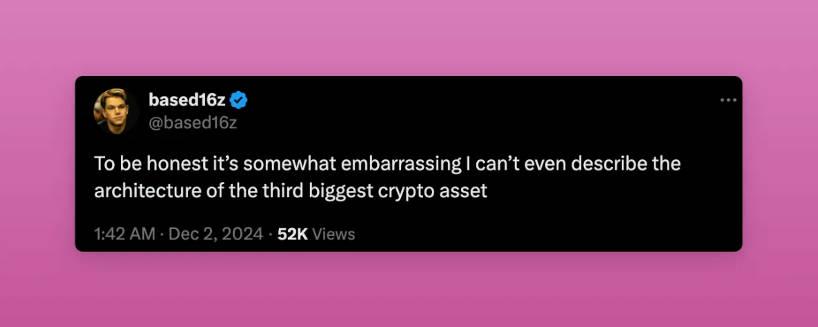
With the booming growth of the meme coin market, the XRP ecosystem may become a key battleground for the next wave of speculative frenzy.
This article will provide an in-depth analysis of the XRP Ledger (XRPL), covering its operational mechanisms, token trading methods, core concepts, and directions for deeper research.
What is XRPL?
The XRP Ledger positions itself as a blockchain platform focused on speed and efficiency.
In reality, however, it ranks neither first in speed nor decentralization, and its efficiency remains highly debatable.
Unlike blockchains using PoW or PoS, XRPL employs a federated consensus mechanism, where validators reach transaction consensus without mining or staking.
Here’s how it works:
The network consists of over 109 validators processing transactions, with 31 trusted validators forming the Unique Node List (UNL) responsible for consensus. These include entities such as Arrington XRP Capital, Bifrost Wallet, Ripple Inc., and XRPscan.
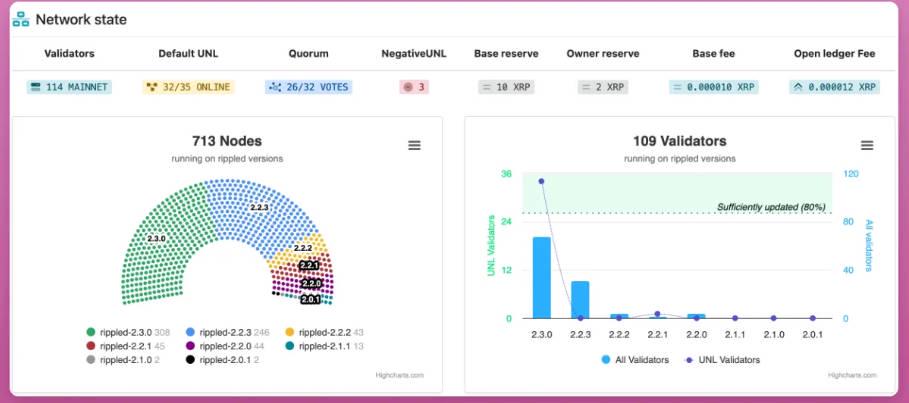
While any entity can theoretically run and publish a UNL, this UNL-dependent model introduces centralization risks, as Ripple and the XRP Ledger Foundation largely control the default UNL selection. New validators typically require approval from Ripple Labs—hence the term "federated consensus."
XRP transaction confirmation takes 3–5 seconds. In contrast, Solana significantly outperforms in node count, transaction speed, and smart contract capabilities. However, XRP transaction fees are nearly zero—just 0.00001 XRP per transaction.
Trust Lines, Reserves, and Rippling Mechanism
Wallet Activation and Reserve Requirements
Creating a wallet in the XRPL ecosystem comes with unique requirements:
An account must hold at least 10 XRP as a base reserve to activate. Additionally, each fungible token held requires an extra 2 XRP owner reserve to be locked. For example, holding 20 meme coins would lock 40 additional XRP.
A governance vote is currently underway proposing a tenfold reduction in these reserve requirements. Users can check the current values under the “base reserve” and “owner reserve” tabs on XRP Scan.
Understanding Trust Lines
Trust Lines form the foundational structure for holding fungible tokens on XRPL. According to Ripple’s official documentation: “Trust lines enforce XRPL rules, ensuring no one is forced to accept unwanted tokens. This safeguard is crucial for use cases like community credit on XRPL.”
The core value of Trust Lines includes:
-
Preventing unsolicited spam token receipts
-
Enabling freeze and authorization controls
-
Supporting the “No Ripple flag” to prevent unintended balance adjustments
When a token issuer creates a token, their balance may go negative, indicating issued supply, while holders have positive balances. For instance, after sending 100 tokens, the issuer's trust line shows -100, and the recipient shows +100.
Detailed Explanation of Rippling
Rippling (the origin of the name Ripple) extends this concept by allowing token balances to automatically flow through connected accounts during payments. It’s a passive exchange system enabling atomic settlement without issuer involvement.
For example: If Alice owes Bob $10, and Bob owes Charlie $10, the rippling mechanism allows Alice to pay Charlie directly, automatically adjusting balances across all relevant trust lines.
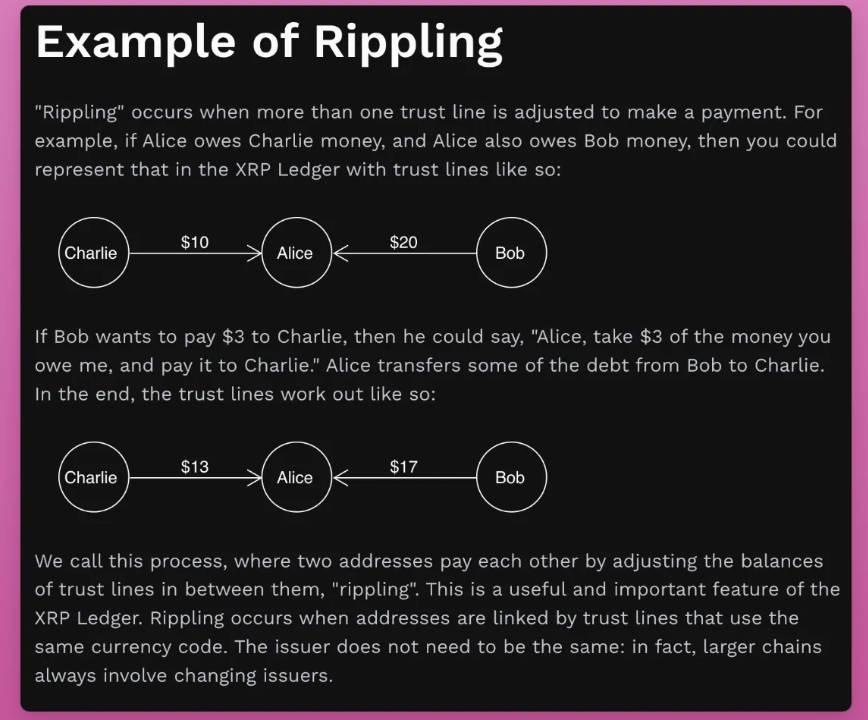
This design resembles a double-entry accounting system and is primarily used for:
-
Efficient net settlement
-
Real-world asset (RWA) support
-
Stablecoin transactions
-
Tokenized commodities
-
Cross-border payments
This architecture grants greater control to asset issuers. Especially regarding compliance, authorized Trust Line issuers can enable the “Require Auth” flag, restricting token ownership to approved accounts only. This makes XRPL particularly suitable for assets requiring strict KYC/AML regulations.
While such centralized control may draw criticism from decentralization advocates, it is precisely this feature that gives XRPL a unique advantage in specific application scenarios.
After understanding how Rippling works, users can choose whether to enable or disable it based on their needs:
Enable Rippling if:
-
You want your account to serve as part of a payment path
-
Your account acts as an intermediary, such as a market maker or exchange (though it's unclear whether fees can be earned via this function)
Disable Rippling if:
-
You don’t want your balance used in payment paths
-
You’re a regular user wanting to protect assets from unexpected adjustments
It’s important to note that each trust line created (e.g., connecting to a meme coin issuer) locks 2 XRP in reserves within your wallet.
XRPL's Technical Evolution: From Hooks to EVM Sidechain
Compared to Ethereum’s EVM, Solana’s SVM, or Aptos’ Move VM, XRPL follows a different technical path. It uses a WebAssembly-based Hooks system—a lightweight program for transaction logic.
Hooks System
Hooks represent XRPL’s unique approach to smart contracts. Interestingly, they currently operate on the Xahau network (a fork of XRPL), not the mainnet. Hooks allow additional logic to be executed before or after transactions, such as:
-
Blocking fraudulent payments
-
Automatically saving XRP
-
Adding carbon offsets to transactions
Notably, Uniswap v4 also adopts a similar hooks mechanism to add pre- and post-trade functionalities, supporting features like limit orders.
EVM Sidechain: Expanding the XRPL Ecosystem
Although XRPL already has native AMM functionality supporting liquidity provision and cross-token swaps, Ripple is developing an EVM sidechain to enable more efficient capital flows between other chains and DeFi applications.
Key Features
-
Currently in testing phase
-
Expected to launch in a few months
-
XRP will serve as the gas token
-
Uses Axelar as the cross-chain bridging solution
Community Controversy
There is division within the XRPL community about the technical roadmap:
-
Some advocate for implementing Hooks directly on the mainnet
-
Others question the necessity and role of the EVM sidechain
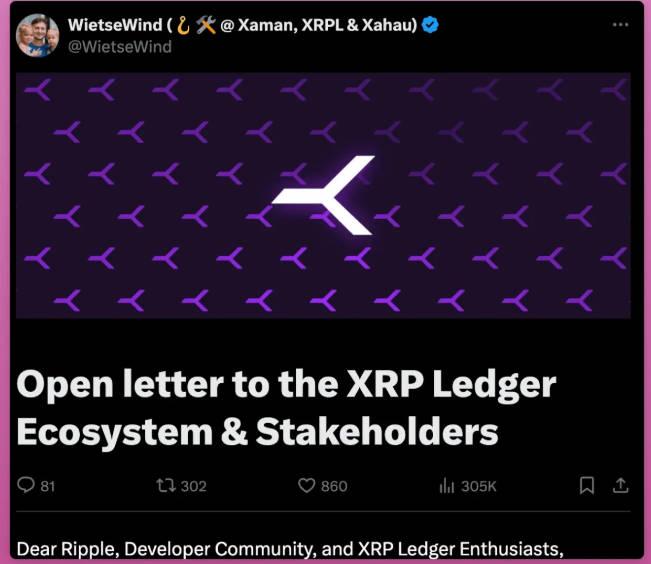
Notably, the bridge between EVM and XRPL is powered by Axelar. If this ecosystem grows successfully, Axelar could emerge as a major beneficiary.
Future Outlook
XRPL is moving toward a modular architecture—an important technological inflection point. The development trajectory of the EVM sidechain will be a focal point to watch, potentially unlocking new use cases and opportunities for XRPL.
These technical innovations will expand XRPL’s potential, especially in DeFi applications. As the ecosystem evolves, we may witness increasingly innovative use cases emerging.
Complete Guide to Trading Meme Coins on XRP
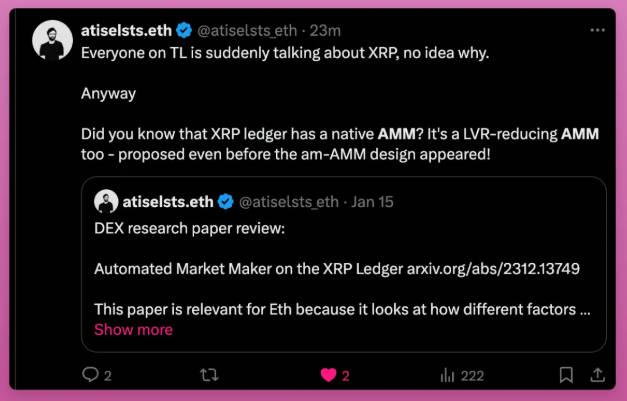
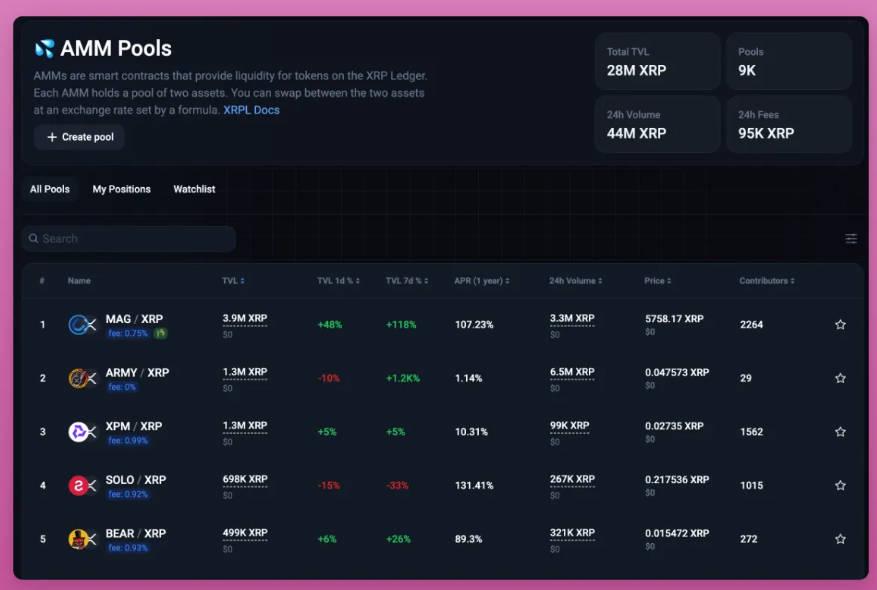
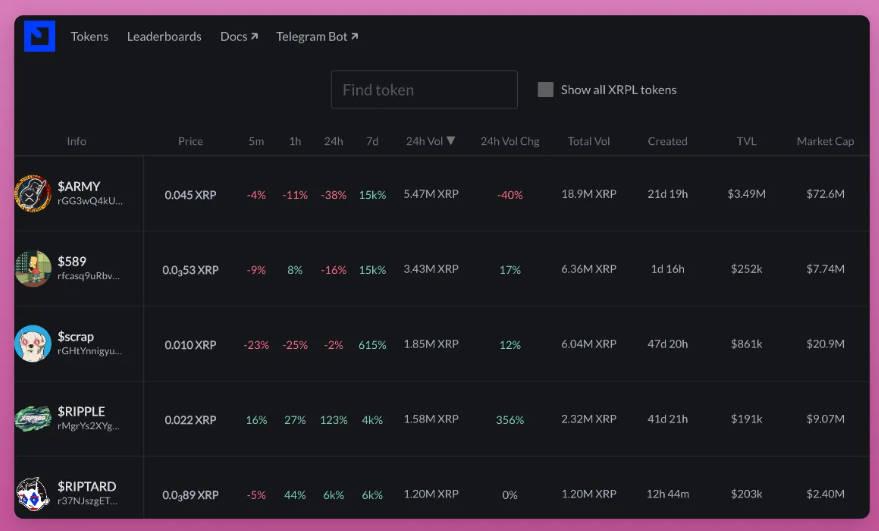
XRPL has built-in AMM (automated market maker) functionality, currently mainly used for meme coin trading.
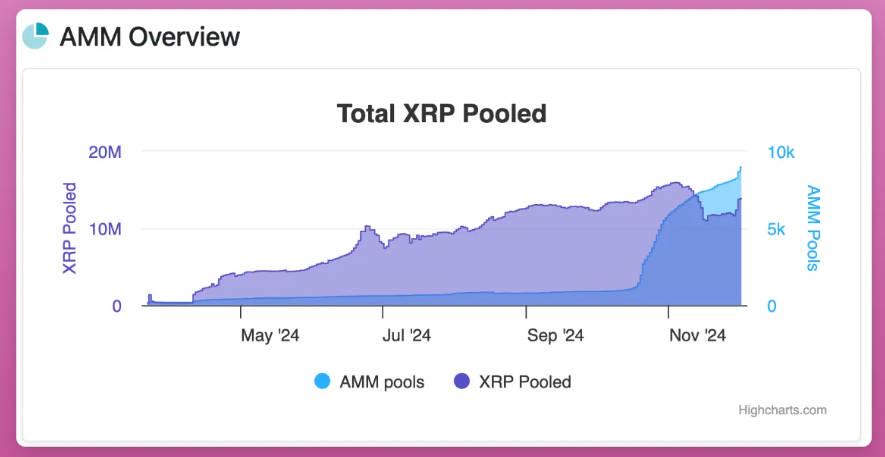
Approximately 14 million XRP is deposited into AMM pools. While TVL remains relatively low, trading volume continues to rise due to the meme coin boom. (Pool liquidity can be viewed on XRP Scan.)
Getting Started
1. Wallet Options
Visit the First Ledger website to create a wallet via Telegram, or create one directly in-browser and securely store your keys locally.
Alternatively, try the mobile Xaman wallet. It performs well, and you can import keys between both wallets to see which suits you better.
2. Acquiring XRP
Purchase XRP from centralized exchanges or use Simpleswap for cross-chain bridging.
3. Trading Platforms
First Ledger (ideal for beginners): Real-time updated token list, sortable by 24h volume, market cap, holder count, and creation time.
xMagnetic (advanced platform): Offers token discovery, liquidity provision, and data analytics; recommended to use with Xaman wallet.
Sologenic DEX serves as a backup option but offers a less smooth experience. We recommend pairing Xaman wallet with xMagnetic.
Risk Warnings
Most meme coins are controlled by a small number of wallets—commonly, the top 10 wallets hold over 40% of supply. XRPL truly needs something like Pump.fun to make token launches fairer. Focus on early projects, prioritize trading volume, examine holder distribution, and exercise caution with new tokens.
Meme coin investing demands caution, proper risk management, and thorough research. Remember: Always understand project fundamentals before trading—avoid impulsive investments.
Join TechFlow official community to stay tuned
Telegram:https://t.me/TechFlowDaily
X (Twitter):https://x.com/TechFlowPost
X (Twitter) EN:https://x.com/BlockFlow_News
 Ignas | DeFi Research