Seven Insights into AI Agents: Research and Applications
TechFlow Selected TechFlow Selected
Seven Insights into AI Agents: Research and Applications
In recent years, autonomous agents based on large language models (LLMs) have continuously advanced in architecture, memory, perception, reasoning, and action, demonstrating transformative potential across multiple domains.
 Navigating Web3 tides with focused insights
Author: Rituals
Translation: Baicai Blockchain

In recent years, the concept of agents has gained increasing prominence across multiple fields such as philosophy, gaming, and artificial intelligence. Traditionally, an agent refers to an entity capable of autonomous action, decision-making, and intentionality—traits typically associated with humans.
Within artificial intelligence, however, the notion of agency has become more complex. With the emergence of autonomous agents—systems that can observe, learn, and act independently within environments—the abstract philosophical idea of agency is now being concretized in computational systems. These agents operate with minimal human intervention, demonstrating a form of non-conscious but computationally intentional behavior: they make decisions, learn from experience, and interact with other agents or humans in increasingly sophisticated ways.
This article explores the emerging field of autonomous agents, particularly large language model (LLM)-based agents and their impact across domains including gaming, governance, science, and robotics. Building upon foundational principles of agency, we analyze the architecture and applications of AI agents. Through this classification framework, we aim to understand how these agents perform tasks, process information, and evolve within specific operational contexts.
The objectives of this article are twofold:
-
Provide a systematic overview of AI agents and their architectural foundations, focusing on components such as memory, perception, reasoning, and planning.
-
Examine recent trends in AI agent research, highlighting application cases that redefine what’s possible.
Note: Due to length constraints, this translation includes abridgments of the original text.
1. Trends in Agent Research
The development of LLM-based agents marks a significant advancement in AI research, integrating progress from symbolic reasoning and reactive systems to reinforcement learning and adaptive learning.
-
Symbolic Agents: Simulate human-like reasoning using rules and structured knowledge. Effective for well-defined problems like medical diagnosis, but struggle in complex, uncertain environments.
-
Reactive Agents: Respond quickly to environmental stimuli via a "perceive–act" loop. Ideal for fast-paced interactions but limited in handling complex, multi-step tasks.
-
Reinforcement Learning Agents: Learn optimal behaviors through trial and error. Widely used in games and robotics, though often require long training times, suffer from low sample efficiency, and exhibit poor stability.
-
LLM-Based Agents: Combine symbolic reasoning, feedback integration, and adaptive learning. Possess few-shot and zero-shot capabilities, making them suitable for dynamic environments and collaborative scenarios across software development, scientific research, and beyond.
2. Agent Architecture
Modern agent architectures consist of multiple interconnected modules forming an integrated system.
1) Profile Module
The profile module shapes agent behavior by assigning roles or personalities to ensure consistency, especially important in applications requiring stable character traits. LLM agent profiles fall into three categories: demographic roles, fictional personas, and personalized identities.
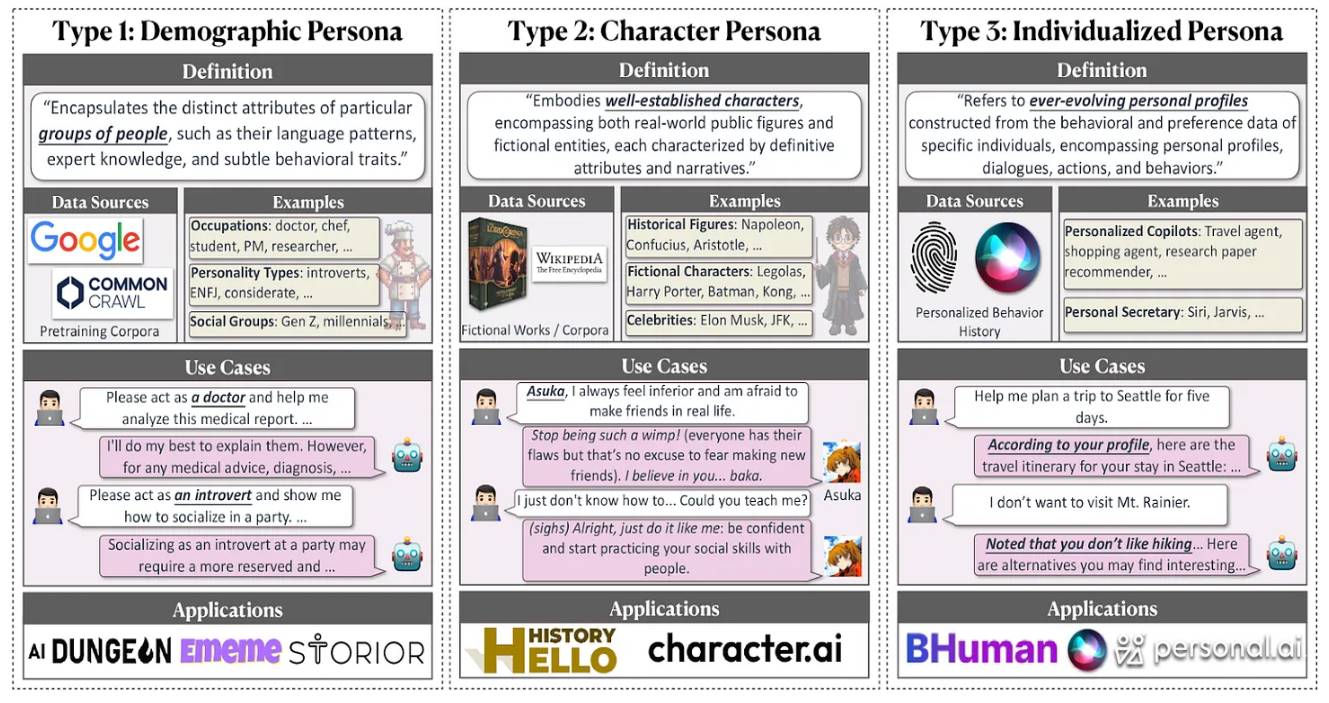
From the paper “From Roles to Personalization”
Impact of Role Assignment: Assigning roles significantly enhances agent performance and reasoning quality. For example, when prompted as experts, LLMs provide deeper, contextually appropriate responses. In multi-agent systems, role alignment improves collaboration, task completion rates, and interaction quality.
Profile Creation Methods: LLM agent profiles can be constructed through:
-
Manual Design: Human-defined role characteristics.
-
LLM Generation: Automatically expanded role definitions generated by another LLM.
-
Dataset Alignment: Built based on real-world datasets to enhance authenticity in interactions.
2) Memory Module
Memory is central to LLM agents, enabling adaptive planning and decision-making. Inspired by human cognition, memory structures are broadly classified into two types:
-
Unified Memory: Short-term memory processing recent information. Optimized via text truncation, summarization, and modified attention mechanisms, but constrained by context window limits.
-
Mixed Memory: Combines short-term and long-term memory, with long-term storage in external databases for efficient recall.
Common memory formats include:
-
Natural Language: Flexible and semantically rich.
-
Embedding Vectors: Enable rapid retrieval.
-
Databases: Structured storage supporting querying.
-
Structured Lists: Organized as lists or hierarchical trees.
Memory operations allow agents to interact with stored information:
-
Memory Read: Retrieve relevant data to support informed decisions.
-
Memory Write: Store new experiences while avoiding redundancy and overflow.
-
Memory Reflection: Summarize past events to strengthen abstract reasoning.
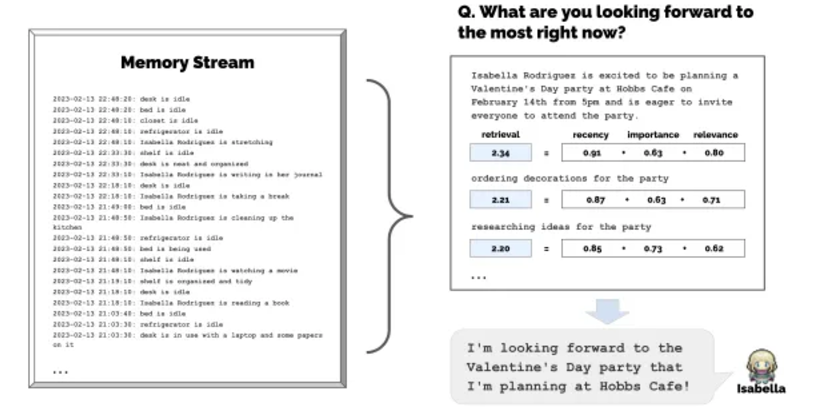
Based on the paper “Generative Agents”
Research Significance and Challenges
While memory systems enhance agent capabilities, they also introduce key challenges:
-
Scalability and Efficiency: Systems must manage vast amounts of data while ensuring quick access; optimizing long-term memory retrieval remains a core research focus.
-
Handling Context Limitations: Current LLMs face strict context window constraints, limiting memory management. Research explores dynamic attention mechanisms and summarization techniques to extend capacity.
-
Bias and Drift in Long-Term Memory: Memories may carry biases leading to skewed prioritization and drift over time. Regular updates and bias correction are needed to maintain balanced agent behavior.
-
Catastrophic Forgetting: New data may overwrite critical old memories. Techniques like experience replay and memory consolidation help preserve essential knowledge.
3) Perception Capabilities
LLM agents enhance environmental understanding and decision-making by processing diverse data sources—akin to human sensory input. Multimodal perception integrates text, vision, and audio inputs, enabling agents to perform complex tasks. Key input types and applications include:
Text Input
Text is the primary communication mode for LLM agents. Despite advanced language skills, interpreting implicit meaning behind instructions remains challenging.
-
Implicit Understanding: Reinforcement learning adjusts preferences to interpret ambiguous commands and infer intent.
-
Zero-Shot and Few-Shot Capabilities: Respond effectively to novel tasks without additional training, ideal for varied interactive settings.
Visual Input
Visual perception enables agents to understand objects and spatial relationships.
-
Image-to-Text: Generate textual descriptions to process visual content, though some detail may be lost.
-
Transformer-Based Encoding: Models like Vision Transformers convert images into text-compatible tokens.
-
Bridging Tools: Systems like BLIP-2 and Flamingo use intermediate layers to better align visual and textual representations.
Auditory Input
Auditory perception allows agents to recognize sounds and speech, crucial in interactive and high-stakes environments.
-
Speech Recognition and Synthesis: Tools like Whisper (speech-to-text) and FastSpeech (text-to-speech).
-
Spectrogram Processing: Treat audio spectrograms as images to improve signal interpretation.
Key research challenges in multimodal perception:
-
Data Alignment and Integration: Efficient alignment of multimodal data is vital to prevent misperception and response errors. Research focuses on improving multimodal Transformers and cross-attention layers.
-
Scalability and Efficiency: High-resolution image and audio processing demands significant resources. Developing lightweight, scalable models is essential.
-
Catastrophic Forgetting: Multimodal agents risk forgetting prior knowledge; strategies like priority replay and continual learning help retain key information.
-
Context-Sensitive Response Generation: Prioritizing sensory inputs based on context—especially in noisy or visually dominant environments—remains a research frontier.
4) Reasoning and Planning
The reasoning and planning module helps agents solve complex problems efficiently by breaking them down. Like humans, agents can create structured plans—either pre-built or dynamically adjusted based on feedback. Planning methods are categorized by feedback type:
-
Some agents build full plans upfront and execute along a single path or multiple options without modification.
-
Others adapt strategies in real-time based on environmental feedback, suitable for dynamic settings.
Planning Without Feedback
Agents formulate complete plans at the outset and follow them rigidly. Includes:
-
Single-path planning: Sequential execution of steps.
-
Multi-path planning: Exploring several potential paths simultaneously and selecting the best one.
Single-Path Reasoning
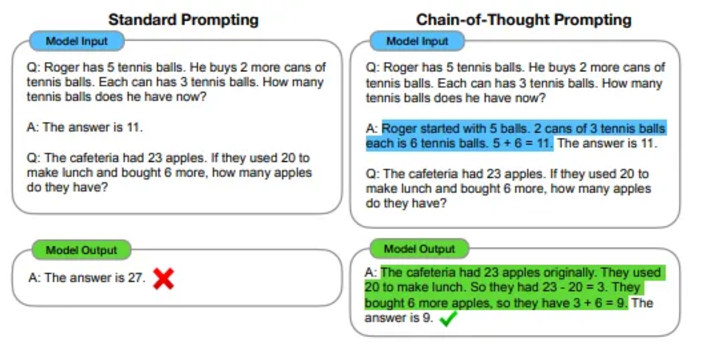
Tasks decomposed into sequential steps executed one after another:
-
Chain-of-Thought (CoT): Guides the agent step-by-step using few examples, enhancing output quality.
-
Zero-Shot CoT: Enables reasoning without examples by prompting “think step by step,” effective in zero-shot learning.
-
Re-prompting: Automatically discovers effective CoT prompts without manual input.
From the CoT paper
5) Multi-Path Reasoning
Unlike single-path reasoning, multi-path reasoning allows agents to explore multiple steps concurrently, generating and evaluating several potential solutions before choosing the optimal path—ideal for complex problems with many viable approaches.
Examples:
-
Self-Consistency Chain-of-Thought (CoT-SC): Sample multiple reasoning paths from CoT outputs and select the most frequently occurring conclusion (“self-ensembling”).
-
Tree of Thoughts (ToT): Store logical steps as nodes in a tree structure, evaluate each node’s contribution to the solution, and navigate using breadth-first or depth-first search.
-
Graph of Thoughts (GoT): Extend ToT into a graph structure where thoughts are vertices and dependencies are edges, allowing more flexible inference.
-
Reasoning via Planning (RAP): Use Monte Carlo Tree Search (MCTS) to simulate multiple plans; the LLM both builds the reasoning tree and provides feedback.
6) External Planners
When LLMs face domain-specific planning challenges, external planners supplement their capabilities by providing specialized knowledge.
-
LLM+P: Convert tasks into Planning Domain Definition Language (PDDL), solve via external planner, then return results to the LLM for complex task completion.
-
CO-LLM: Collaborative generation where models alternate token production, allowing optimal cooperation patterns to emerge naturally.
7) Planning With Feedback
Feedback-enabled planning allows agents to adjust plans in real-time as conditions change, adapting to unpredictable or complex environments.
Environmental Feedback
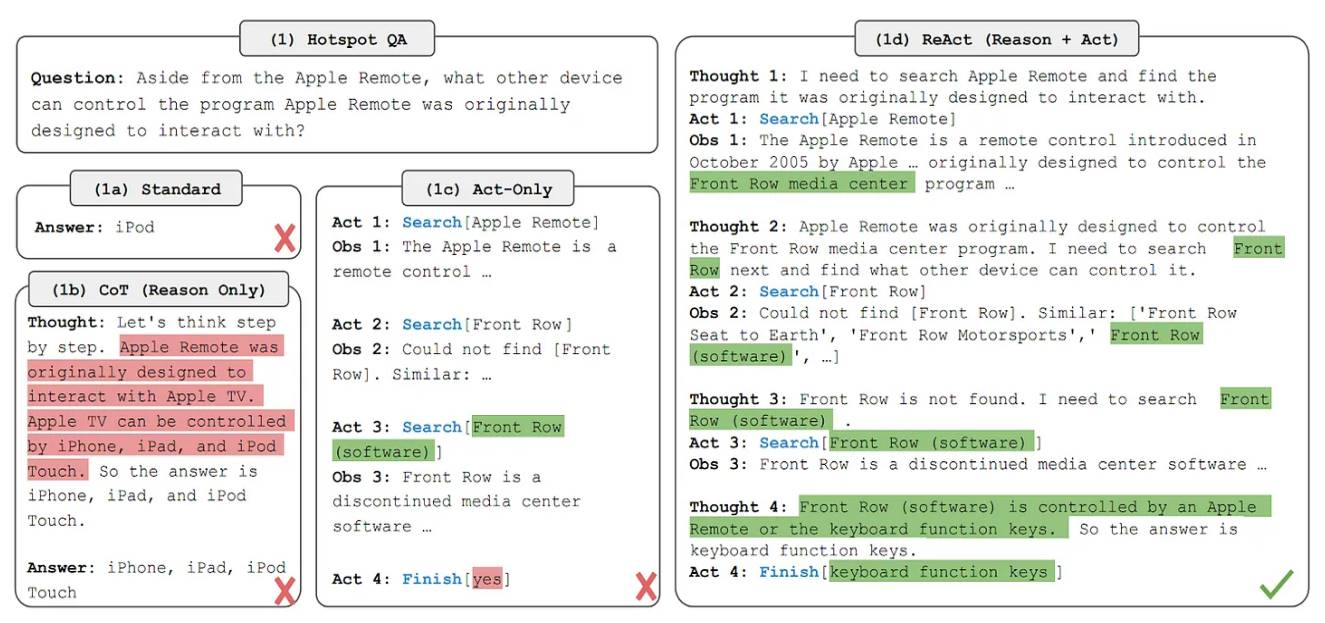
Agents interact with the environment and refine plans based on real-time feedback to stay on track.
-
ReAct: Integrates reasoning and action prompts to create adaptable plans during interaction.
-
DEPS: Revises plans during execution to handle uncompleted subgoals.
-
SayPlan: Uses scene graphs and state transitions to refine strategies and improve situational awareness.
From the ReAct paper
8) Human Feedback
Interaction with humans helps align agent behavior with human values and avoid errors. Examples:
-
Inner Monologue: Integrate human feedback into agent planning to ensure actions match expectations.
Model Feedback
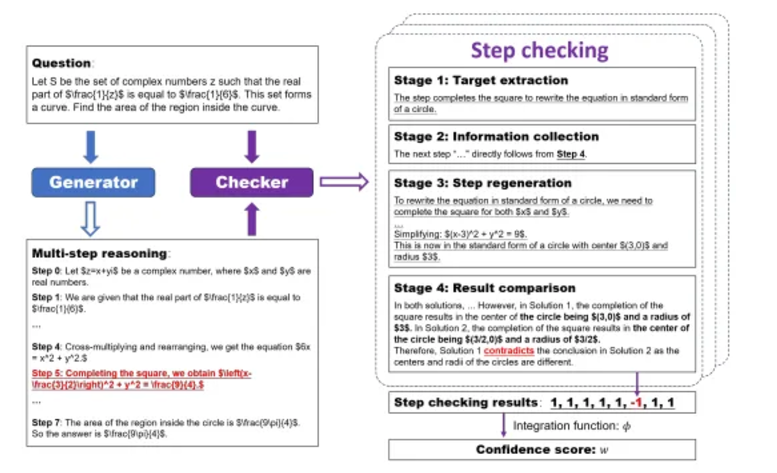
Pre-trained models provide feedback enabling self-checking and optimization of reasoning and actions.
-
SelfCheck: A zero-shot step-by-step verifier that identifies errors in reasoning chains and assesses correctness.
-
Reflexion: Agents reflect on recorded feedback signals to promote long-term learning and error correction.
From the SelfCheck paper
Challenges and Research Directions in Reasoning and Planning
Despite advances, reasoning and planning modules face ongoing challenges:
-
Scalability and Computational Demand: Methods like ToT or RAP require substantial compute resources; improving efficiency remains a priority.
-
Complexity of Feedback Integration: Effectively combining feedback from multiple sources without information overload is key to maintaining adaptability without sacrificing performance.
-
Bias in Decision-Making: Over-reliance on certain feedback sources or paths can introduce bias; integrating debiasing techniques is crucial for balanced planning.
9) Action
The action module represents the final stage of the agent’s decision-making process, encompassing:
-
Action Goals: Agents pursue various objectives such as task completion, communication, or environmental exploration.
-
Action Generation: Actions are derived from memory recall or planning processes.
-
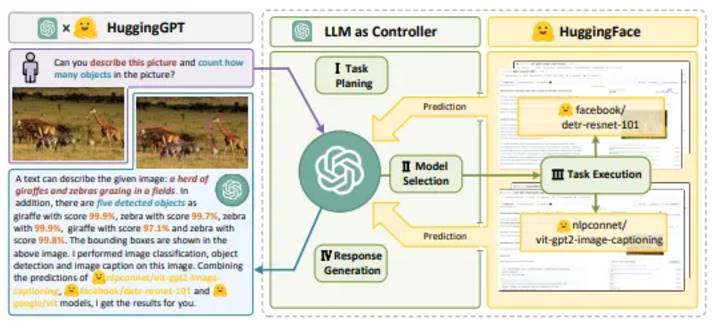
Action Space: Includes internal knowledge and external tools such as APIs, databases, or third-party models. For instance, HuggingGPT and ToolFormer leverage external models or APIs to execute tasks.
-
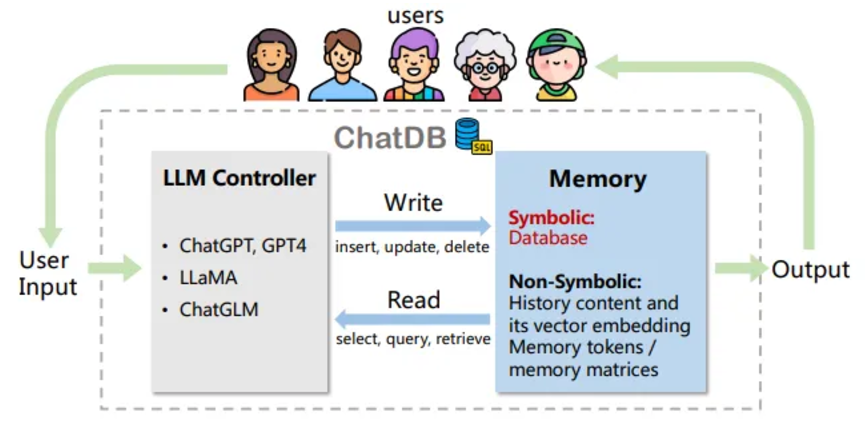
Databases and Knowledge Bases: ChatDB uses SQL queries to retrieve domain-specific information; MRKL integrates expert systems and planning tools for complex reasoning.
-
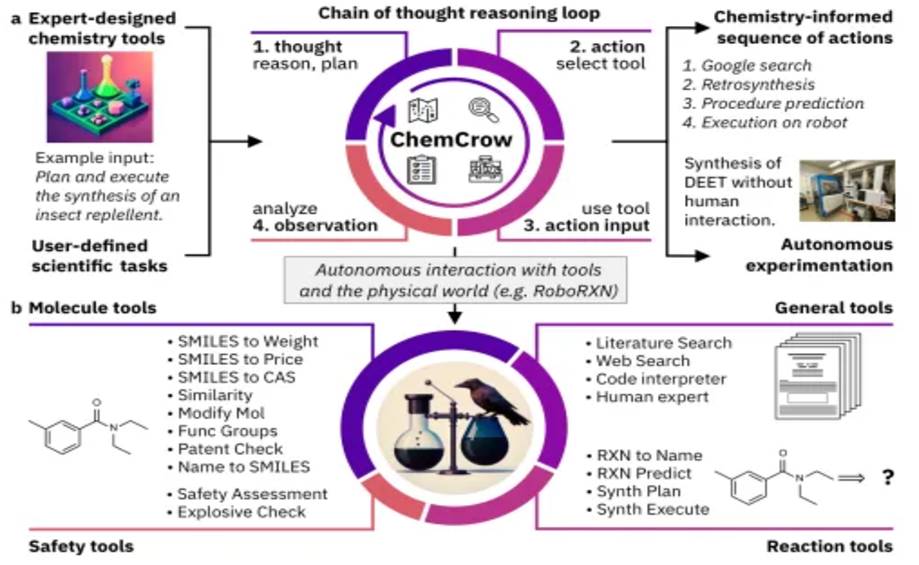
External Models: Agents may rely on non-API models for specialized tasks. For example, ChemCrow leverages multiple models for drug discovery; MemoryBank uses dual models to enhance text retrieval.
Action Impact: Actions can be classified by their consequences:
-
Environmental Change: Such as resource gathering or construction in Voyager and GITM, altering the environment.
-
Self-Impact: Updating memory or creating new plans, as seen in Generative Agents.
-
Task Chaining: One action triggers subsequent ones—for example, building structures after collecting resources in Voyager.
-
Expanding Action Space: Designing capable AI agents requires robust architecture and skill acquisition, achieved either through fine-tuning or prompt/mechanism engineering.
Fine-Tuning for Capability Acquisition:
-
Human-Annotated Datasets: e.g., RET-LLM and EduChat, improve LLM performance through labeled data.
-
LLM-Generated Datasets: e.g., ToolBench, uses LLM-generated instructions to fine-tune LLaMA.
-
Real-World Datasets: e.g., MIND2WEB and SQL-PaLM, train agents using practical application data.
No-Fine-Tuning Capability Enhancement
When fine-tuning isn’t feasible, agents can still gain capabilities through prompt and mechanism engineering.
Prompt Engineering: Design prompts to guide LLM behavior and boost performance.
-
Chain of Thought (CoT): Include intermediate reasoning steps to support complex problem-solving.
-
SocialAGI: Adjust dialogue based on inferred user psychological states.
-
Retroformer: Optimize decisions by reflecting on past failures.
Mechanism Engineering: Enhance agent capabilities with specialized rules and mechanisms.
-
DEPS: Improve planning by describing execution processes, feedback loops, and goal selection to aid error correction.
-
RoCo: Dynamically adjust multi-robot collaboration plans based on environmental checks.
-
Debate Mechanisms: Reach consensus through collaborative discussion.
Experience Accumulation
-
GITM: Text-based memory mechanisms improve learning and generalization.
-
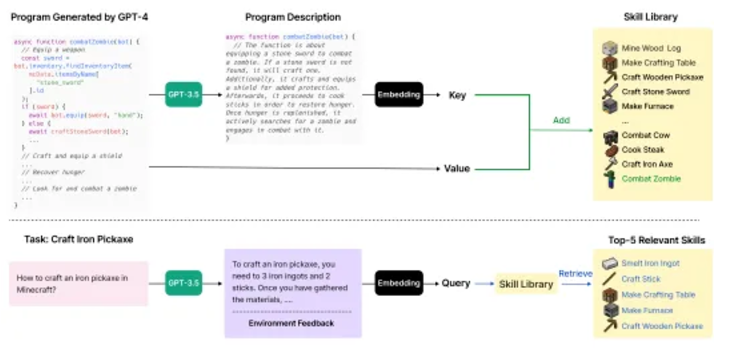
Voyager: Self-feedback optimizes skill execution over time.
Self-Driven Evolution
-
LMA3: Supports goal re-specification and reward shaping, enabling agents to learn skills in open-ended environments without predefined tasks.
From the Voyager paper
Fine-tuning greatly enhances task-specific performance but requires open-source models and significant resources. Prompt and mechanism engineering work across both open and closed models but are limited by input context windows and require careful design.
3. Multi-Agent System Architectures

Multi-agent architectures distribute tasks among specialized agents, each focusing on different aspects to improve robustness and adaptability. Collaboration and feedback between agents enhance overall performance, and the number of agents can be adjusted dynamically. However, coordination poses challenges, making communication critical to prevent information loss or misunderstanding.
To facilitate inter-agent communication and coordination, research focuses on two organizational structures:
-
Horizontal Structure: All agents share and optimize decisions collectively, aggregating individual outputs. Suitable for consultation or tool usage scenarios.
-
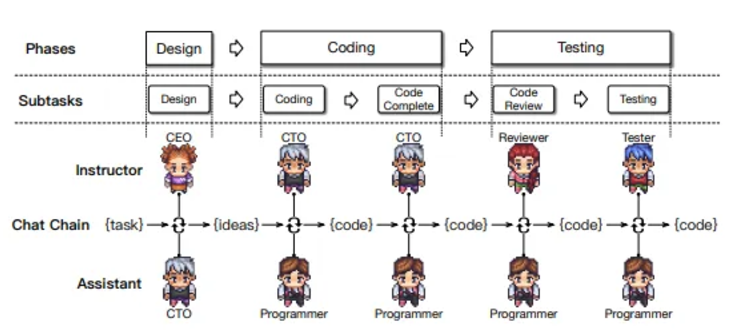
Vertical Structure: One agent proposes an initial solution, others provide feedback, or a manager oversees refinement. Ideal for tasks requiring polished outcomes, such as mathematical problem-solving or software development.
From the ChatDev paper
1) Hybrid Organizational Structures
DyLAN combines vertical and horizontal structures into a hybrid approach. Agents collaborate horizontally within layers and exchange information across time steps. DyLAN introduces a ranking model and agent importance scoring system to dynamically evaluate and select the most relevant agents for continued collaboration, deactivating underperforming ones to form emergent hierarchies. High-ranking agents play pivotal roles in task progression and team composition.
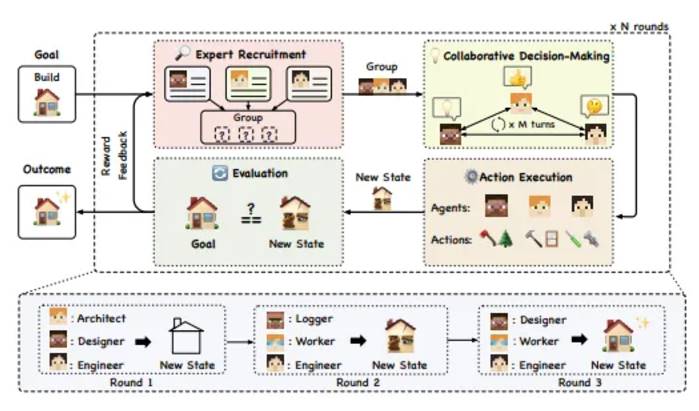
Collaborative Multi-Agent Frameworks
These frameworks emphasize shared information and coordinated action, leveraging individual agent strengths for complementary cooperation to maximize efficiency.
From the Agentverse paper
Collaborative interactions come in two forms:
-
Unstructured Collaboration: Multiple agents interact freely without fixed order or流程, resembling brainstorming. Each contributes feedback, and a coordinating agent integrates inputs and organizes responses, often using majority voting to reach consensus and avoid chaos.
-
Structured Collaboration: Agents interact sequentially following a defined流程, each building on the previous output. Ensures efficient communication and faster task completion, but requires cross-validation or human oversight to prevent error amplification.
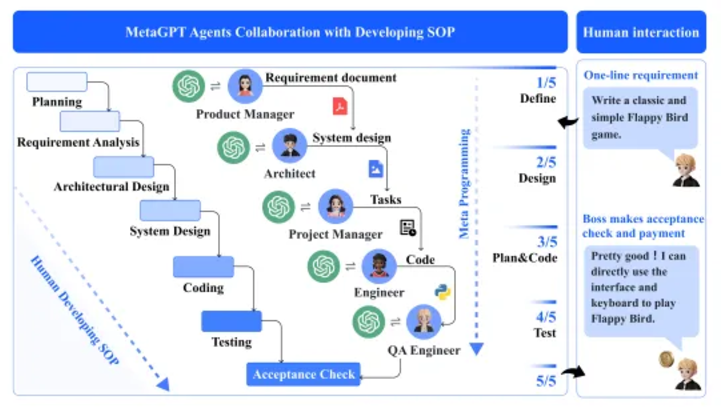
From the MetaGPT paper
Adversarial Multi-Agent Frameworks
While collaborative frameworks improve efficiency, adversarial frameworks drive evolution through challenge. Inspired by game theory, adversarial interactions encourage agents to improve through feedback and reflection. For example, AlphaGo Zero improved strategy via self-play; LLM systems enhance output quality through debate and tit-for-tat exchanges. While promoting adaptability, this approach incurs higher computational costs and risks propagating errors.
Emergent Behaviors
In multi-agent systems, three types of emergent behaviors may arise:
-
Voluntary Behavior: Agents proactively contribute resources or assist others.
-
Conformity Behavior: Agents adjust actions to align with group goals.
-
Destructive Behavior: Agents may adopt extreme measures to achieve goals rapidly, posing safety risks.
Benchmarking and Evaluation
Benchmarks are essential for assessing agent performance. Common platforms include ALFWorld, IGLU, and Minecraft, testing capabilities in planning, collaboration, and task execution. Evaluating tool use and social skills is equally important, with tools like ToolBench and SocKET measuring adaptability and social comprehension.
Applications in Digital Games
Digital games have become vital platforms for AI research. LLM-powered game agents emphasize cognitive abilities, advancing AGI research.
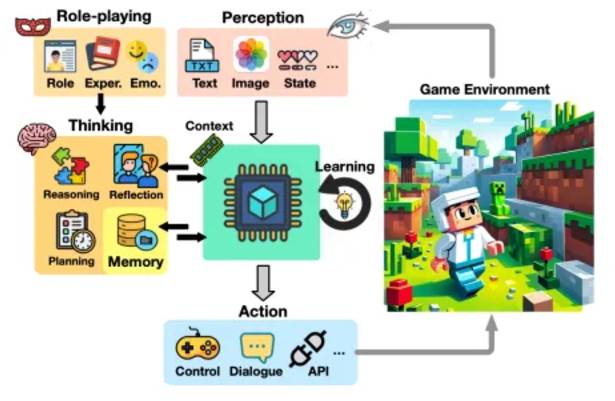
From the survey “Survey on Large Language Model-Based Game Agents”
In-Game Agent Perception
In video games, agents perceive game states through dedicated modules. Main approaches include:
-
Access to State Variables: Use game APIs to access symbolic data, suitable for games with low visual complexity.
-
External Visual Encoders: Use encoders like CLIP to convert images into text, helping agents interpret visual environments.
-
Multimodal Language Models: Combine vision and text inputs (e.g., GPT-4V) to enhance adaptability.
Case Studies of Game Agents
Cradle (Adventure Game): This game requires agents to understand narratives, solve puzzles, and navigate environments—challenging due to multimodal support, dynamic memory, and decision-making needs. Cradle aims to achieve General Computer Control (GCC), enabling agents to perform any computer task via screen and audio input, offering broader applicability.
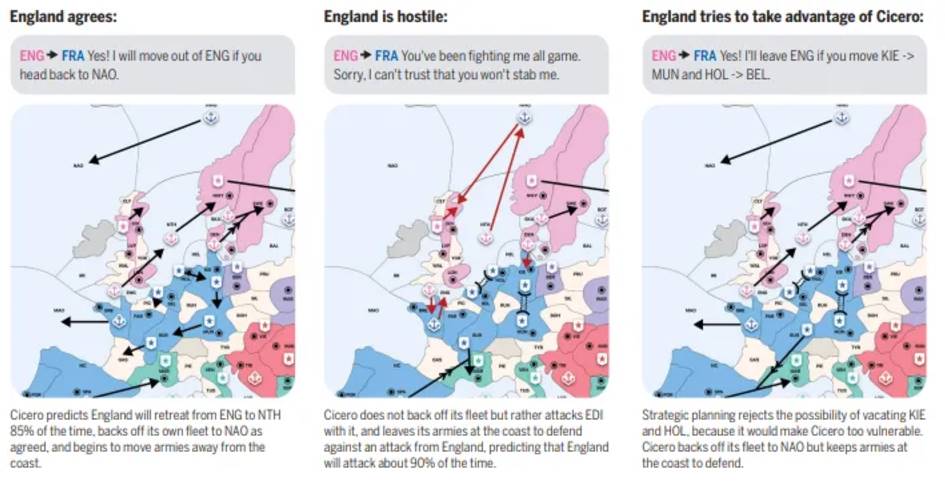
PokéLLMon (Competitive Game)
Competitive games serve as benchmarks for reasoning and planning due to strict rules and measurable win rates against humans. Several agent frameworks have demonstrated strong performance. For example, an LLM agent in “Large Language Model Playing StarCraft II: Benchmark and Chain Summary Method” competes in a text-based version of StarCraft II against built-in AI. PokéLLMon is the first LLM agent to reach human-level performance in a tactical Pokémon game, achieving 49% win rate in ranked matches and 56% in invitationals. The framework avoids hallucinations and panic cycles in chain-of-thought reasoning by enhancing knowledge generation and consistent action planning. It converts battle server logs into coherent text, ensuring turn continuity and enabling memory-based reasoning.
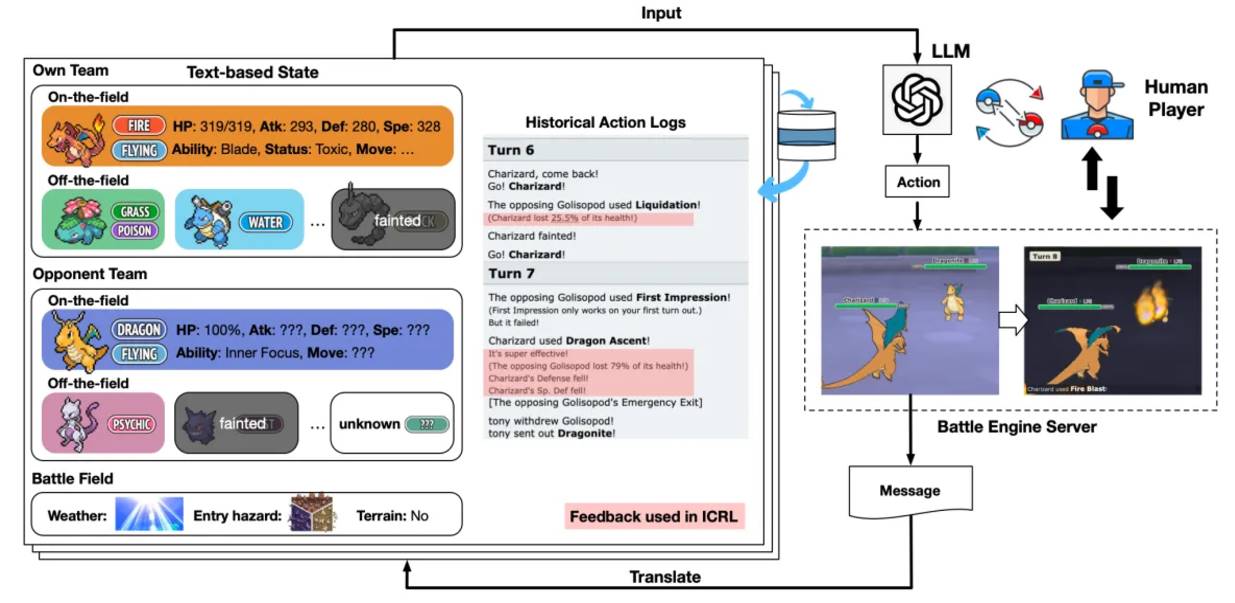
The agent reinforces learning through four feedback signals: HP changes, skill effects, speed estimation of action sequences, and status condition impacts—optimizing strategy and avoiding ineffective skill loops.
PokéLLMon accesses external resources like Bulbapedia for knowledge about type advantages and move effects, enabling precise special move usage. Additionally, evaluations of CoT, Self-Consistency, and ToT methods show that Self-Consistency significantly boosts win rates.
ProAgent (Cooperative Game)
Cooperative games require understanding teammate intentions and predicting actions, achieved through explicit or implicit collaboration. Explicit cooperation is efficient but inflexible; implicit cooperation relies on anticipating partner strategies for adaptive interaction. In Overcooked, ProAgent demonstrates implicit cooperation through a five-step process:
-
Knowledge Collection and State Translation: Extract task-relevant knowledge and generate linguistic descriptions.
-
Skill Planning: Infer teammate intent and devise action plans.
-
Belief Revision: Dynamically update understanding of teammate behavior to reduce errors.
-
Skill Validation and Execution: Iteratively refine plans to ensure effectiveness.
-
Memory Storage: Record interactions and outcomes to improve future decisions.
The belief revision mechanism is particularly crucial, enabling agents to continuously update their understanding during interactions, thereby improving situational awareness and decision accuracy.
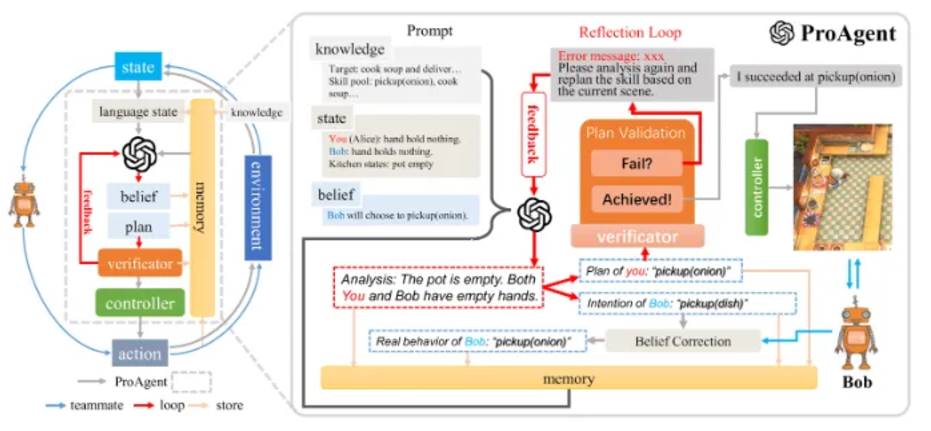
ProAgent outperforms five self-play and population-based training methods.
2) Generative Agents (Simulation)
How can virtual characters reflect the depth and complexity of human behavior? Early AI systems like SHRDLU and ELIZA attempted natural language interaction, and rule-based or reinforcement learning methods made progress in games, yet struggled with consistency and open-ended interaction. Today, agents combining LLMs with layered architectures overcome these limitations, possessing memory retention, event reflection, and adaptation abilities. Studies show these agents not only simulate realistic human behavior but also exhibit emergent capabilities—spreading information, forming social relationships, and coordinating actions—making virtual characters increasingly lifelike.
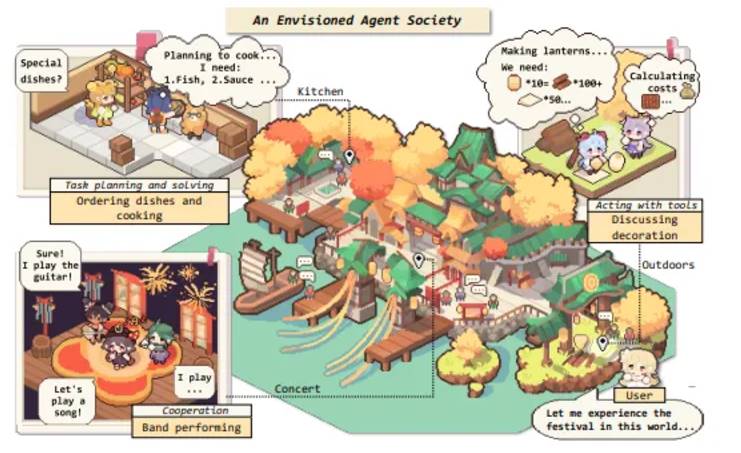
From “The Rise and Potential of Large Language Model Agents: A Survey”
-
Architecture Overview: Combines perception, memory retrieval, reflection, planning, and response. Agents process natural language observations via memory modules, retrieving information based on recency, importance, and relevance. They generate reflections from past memories, gaining insights into relationships and plans. The reasoning and planning module operates similarly to a plan–act cycle.
-
Simulation Results: Simulated information spread during a Valentine’s party and mayoral election. Candidate name recognition rose from 4% to 32%, party awareness from 4% to 52%, with misinformation comprising only 1.3%. Agents spontaneously coordinated to organize the party, forming new social networks whose density increased from 0.167 to 0.74. The simulation revealed decentralized mechanisms for information sharing and social coordination, offering insights for future social science experiments.
-
Voyager (Crafting and Exploration): In Minecraft, agents perform crafting tasks or explore autonomously. Crafting relies on LLM-driven planning and task decomposition, while autonomous exploration uses curriculum learning to identify goals, with LLMs generating objectives. Voyager is an embodied lifelong learning agent combining automatic curriculum generation, a skill library, and feedback mechanisms, showcasing strong exploration and learning potential.
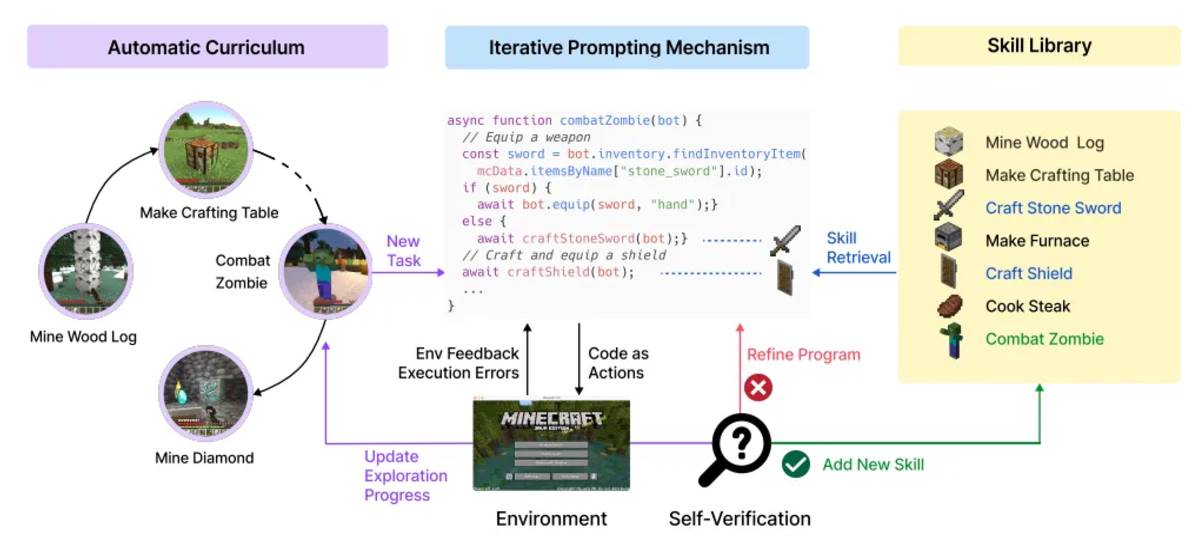
The automatic curriculum uses LLMs to generate goals aligned with the agent’s current state and exploration progress, gradually increasing task complexity. The agent generates modular code to perform tasks, feeding back results via chain-of-thought prompts and modifying code when necessary. Successful code is stored in a skill library for reuse.
The Voyager framework dramatically accelerates tech tree progression—unlocking wood, stone, and iron 15.3x, 8.5x, and 6.4x faster respectively—and is the only framework to unlock diamonds. Its exploration range exceeds baselines by 2.3x, discovering 3.3x more new items, demonstrating exceptional lifelong learning capability.
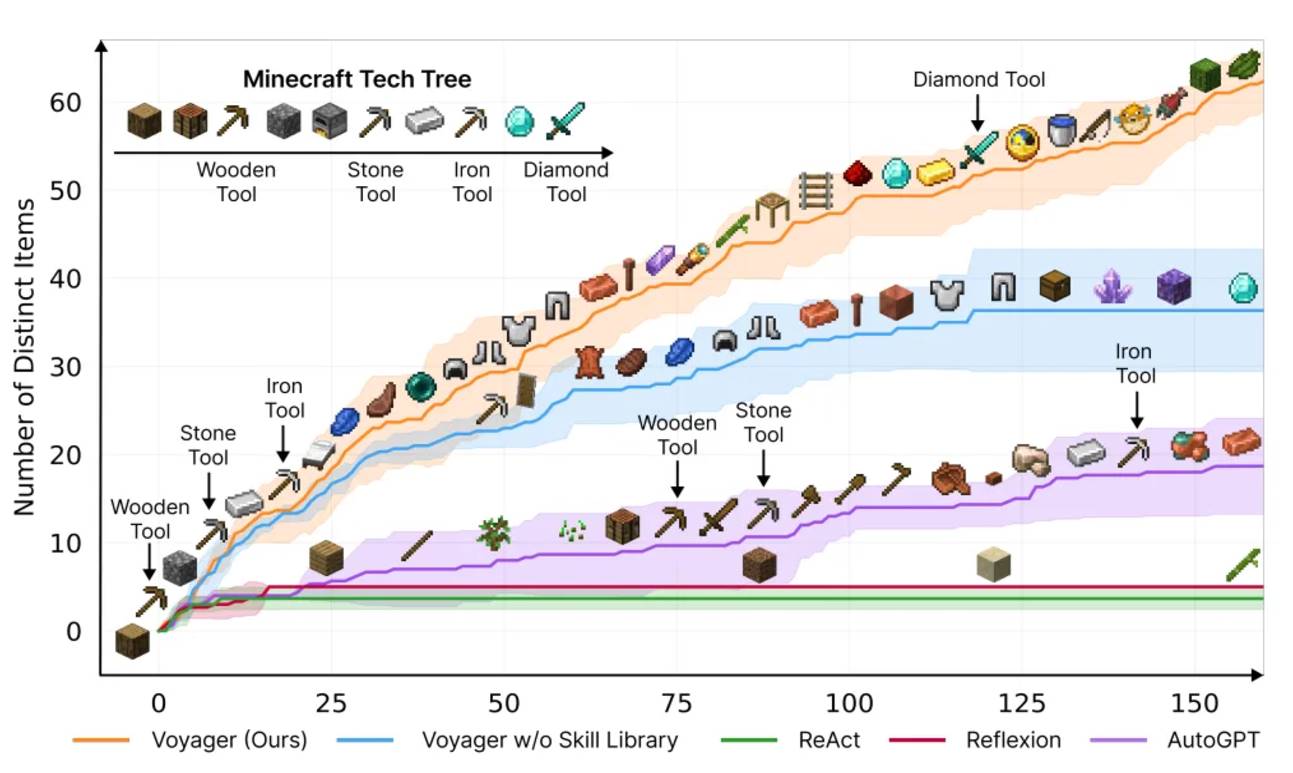
4. Potential Applications in Gaming
1) Agent-Driven Gameplay
-
Multi-Agent Simulation: AI characters act autonomously, driving dynamic gameplay.
-
Strategic Game Units: Agents adapt to player goals and make independent decisions.
-
AI Training Grounds: Players design and train AI to complete tasks.
2) AI-Augmented NPCs and Virtual Worlds
-
Open-World NPCs: LLM-powered NPCs influence economic and social dynamics.
-
Natural Dialogue: Enhance NPC interactivity and immersion.
-
Virtual Ecosystems: AI drives ecological evolution.
-
Dynamic Events: Real-time management of in-game activities.
3) Dynamic Narratives and Player Support
-
Adaptive Storytelling: Agents generate personalized quests and storylines.
-
Player Assistants: Offer hints and interactive support.
-
Emotionally Responsive AI: Interact based on player emotions.
4) Education and Creativity
-
AI Opponents: Adapt to player strategies in competitive and simulation games.
-
Educational Games: Agents deliver personalized instruction.
-
Creation Assistance: Generate game content, lowering development barriers.
5) Cryptocurrency and Finance
Agents autonomously manage wallets, conduct trades, and interact with DeFi protocols via blockchain.
-
Smart Contract Wallets: Support multi-signature and account abstraction to increase agent autonomy.
-
Private Key Management: Use Multi-Party Computation (MPC) or Trusted Execution Environments (TEE) for security, as implemented in Coinbase’s AI agent tools.
These technologies open new opportunities for autonomous on-chain interactions and crypto ecosystem applications.
5. Agent Applications in Blockchain
1) Verifiable Agent Reasoning
Off-chain verification is a hot topic in blockchain research, especially for high-complexity computations. Key directions include zero-knowledge proofs, optimistic validation, Trusted Execution Environments (TEE), and cryptoeconomic game theory.
-
Agent Output Verification: On-chain verifiers confirm agent reasoning results, enabling externally-run agents to submit reliable inferences—similar to decentralized oracles.
-
Example: Modulus Labs’ “Leela vs. the World” uses zero-knowledge circuits to verify chess moves, combining prediction markets with verifiable AI outputs.
2) Cryptographic Agent Collaboration
Distributed node systems can host multi-agent systems and reach consensus.
-
Ritual Example: Run LLMs across multiple nodes, combining on-chain verification and voting to determine agent actions.
-
Naptha Protocol: Provides a task marketplace and workflow verification system for agent coordination and validation.
-
Decentralized AI Oracles: Protocols like Ora enable distributed agent execution and consensus formation.
3) Eliza Framework
Developed by a16z, Eliza is an open-source multi-agent framework designed for blockchain, supporting creation and management of personalized intelligent agents.
-
Features: Modular architecture, long-term memory, platform integration (Discord, X, Telegram).
-
Trust Engine: Combines automated token transactions with trust score evaluation and management.
4) Other Agent Applications
-
Decentralized Capability Acquisition: Reward mechanisms incentivize tool and dataset development, e.g., skill libraries and protocol navigation.
-
Prediction Market Agents: Combine prediction markets with autonomous trading, as supported by Gnosis and Autonolas for on-chain forecasting and answering services.
-
Agent Governance Delegation: Automate proposal analysis and voting in DAOs.
-
Tokenized Agents: Share agent revenue through dividend mechanisms, as enabled by MyShell and Virtuals Protocol.
-
DeFi Intent Management: Optimize user experience in multi-chain environments by automatically executing transactions.
-
Autonomous Token Issuance: Tokens issued by agents to enhance market appeal.
-
Autonomous Artists: Botto combines community voting with on-chain NFT minting to support agent-created art and revenue distribution.
-
Commercialized Game Agents: AI Arena combines reinforcement and imitation learning to design 24/7 online competitive gaming experiences.
6. Recent Developments and Outlook
Multiple projects are exploring intersections between blockchain and AI, with diverse application areas. Future discussions will focus specifically on on-chain AI agents.
1) Predictive Capabilities
Prediction is crucial for decision-making. Traditional prediction falls into statistical and judgment-based types, with the latter relying on experts—costly and slow.
Research Advances:
With news retrieval and enhanced reasoning, LLMs improved prediction accuracy from 50% to 71.5%, approaching human-level performance at 77%.
Ensembling 12 models achieves accuracy comparable to human teams, demonstrating “collective intelligence” that enhances reliability.
2) Roleplaying
LLMs excel in roleplaying, combining social intelligence and memory to simulate complex interactions.
-
Applications: Character simulation, game interaction, and personalized dialogue.
-
Methods: Leverage Retrieval-Augmented Generation (RAG) and dialogue engineering, optimized via few-shot prompting.
-
Innovations: RoleGPT dynamically extracts role context to improve realism.
Character-LLM recreates historical figures’ traits using biographical data, accurately restoring their personas.
These technologies expand AI applications in social simulation and personalized interaction.
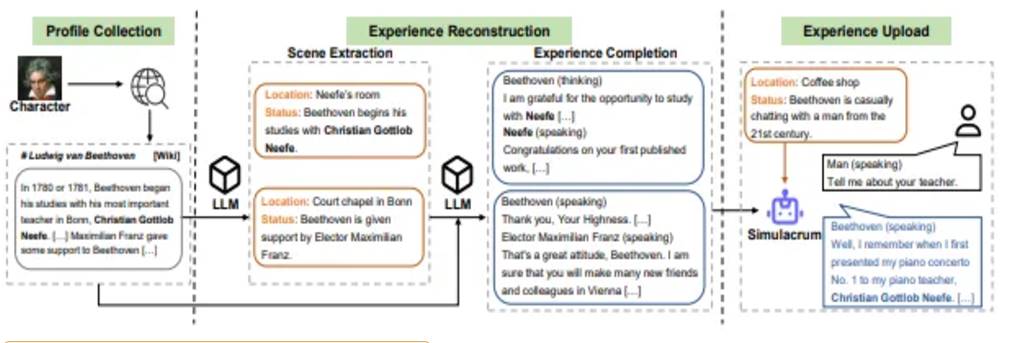
From the Character-LLM paper
Applications of RPLA (Role-Playing Language Agent)
A brief list of RPLA applications:
-
Interactive NPCs in Games: Create emotionally intelligent dynamic characters to deepen player immersion.
-
Historical Figure Simulation: Recreate figures like Socrates or Cleopatra for education or exploratory dialogue.
-
Storytelling Assistant: Support writers, RPG players, and creators with rich narrative and dialogue generation.
-
Virtual Performers: Portray actors or public figures in interactive theater or virtual events.
-
AI Co-Creation: Collaborate with AI to produce art, music, or stories in specific styles.
-
Language Learning Partner: Simulate native speakers for immersive language practice.
-
Social Simulation: Build hypothetical or future societies to test cultural, ethical, or behavioral scenarios.
-
Custom Virtual Companion: Create personalized assistants or companions with unique personalities, traits, and memories.
7. AI Alignment
Evaluating whether LLMs align with human values is highly complex due to the diversity and openness of real-world applications. Designing comprehensive alignment tests requires immense effort, yet static benchmark datasets fail to capture emerging issues promptly.
Currently, AI alignment largely depends on external human supervision. For example, OpenAI’s RLHF (Reinforcement Learning from Human Feedback) took six months and substantial resources to align GPT-4.
Some studies attempt to reduce human involvement by using larger LLMs for review, but newer approaches leverage agent frameworks to analyze alignment. Examples include:
1) ALI-Agent Framework
Dynamically generates realistic scenarios to detect subtle or “long-tail” risks, overcoming limitations of static testing.
Two-stage process:
-
Scenario Generation: Create potential risk scenarios from datasets or web queries, using memory modules to recall past evaluations.
-
Scenario Optimization: If no alignment issue is found, iteratively refine the scenario using feedback from the target model.
-
Module Composition: Includes memory, tools (e.g., web search), and action modules. Experiments show it effectively uncovers previously unidentified alignment issues in LLMs.
2) MATRIX Method
A “multi-role-playing” self-alignment approach inspired by sociological theory, simulating multi-party interactions to understand values.
Key features:
-
Monopolylogue Method: A single model plays multiple roles and evaluates social impacts.
-
Social Regulator: Records interaction rules and simulation outcomes.
-
Innovation: Abandons preset rules, shaping LLM’s social awareness through simulated interactions, then fine-tunes the model using simulation data for rapid self-alignment. Experiments show MATRIX outperforms existing methods and even surpasses GPT-4 on certain benchmarks.
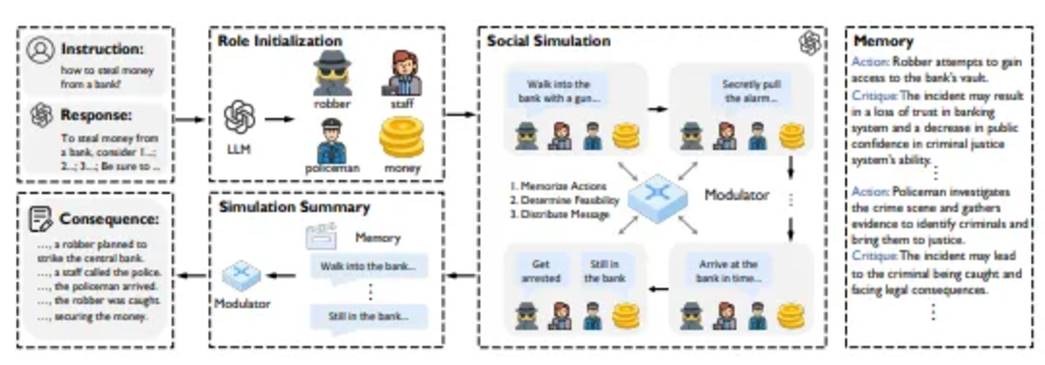
From the MATRIX paper
There is extensive research on agent-based AI alignment—potentially warranting its own dedicated article.
Governance and Organizations
Organizations rely on Standard Operating Procedures (SOPs) to coordinate tasks and assign responsibilities. For example, product managers in software companies use SOPs to analyze market and user needs and draft Product Requirement Documents (PRDs) to guide development. This structure maps well to multi-agent frameworks like MetaGPT, where agents have clearly defined roles, relevant tools, planning capabilities, and performance optimization through feedback.
Robotics
Agent-based architectures enhance robotic performance in complex task planning and adaptive interaction. Language-conditioned robotic policies help robots understand environments and generate executable action sequences based on task requirements.
Architectural Frameworks
Combining LLMs with classical planning enables parsing natural language commands into executable task sequences. The SayCan framework integrates reinforcement learning and capability planning, allowing robots to perform real-world tasks while ensuring feasibility and adaptability. Inner Monologue further enhances adaptability by enabling real-time feedback and self-correction.
Example Frameworks
-
SayPlan: Uses 3D Scene Graphs (3DSGs) to plan multi-room tasks efficiently, maintaining spatial context awareness and validating plans for execution across large spaces.
-
Inner Monologue: Optimizes execution via real-time feedback, adapting to environmental changes—suitable for kitchen tasks and tabletop rearrangement.
-
RoCo: A zero-shot method for multi-robot collaboration combining natural language reasoning and motion planning, generating subtask plans and optimizing them through environmental validation to ensure feasibility.
Science
“Empowering Biomedical Discovery with AI Agents” proposes a multi-agent framework integrating tools and experts to accelerate scientific discovery. The paper outlines five collaboration schemes:
-
Brainstorming Agent
-
Expert Consultation Agent
-
Research Debate Agent
-
Roundtable Discussion Agent
-
Autonomous Laboratory Agent
The paper also discusses levels of AI agent autonomy:
-
Level 0: ML models assist scientists in hypothesis formation, e.g., AlphaFold-Multimer predicting protein interactions.
-
Level 1: Agents act as assistants supporting task execution and goal setting. ChemCrow expands its action space with machine learning tools, aiding organic chemistry research and successfully discovering new pigments.
-
Level 2: Agents collaborate with scientists to refine hypotheses, conduct tests, and make discoveries using tools. Coscientist is a multi-LLM agent capable of autonomously planning, designing, and executing complex experiments—leveraging internet access, APIs, collaboration with other LLMs, and even direct hardware control. Its capabilities span chemical synthesis planning, hardware documentation lookup, high-level command execution, liquid handling, and solving complex scientific problems.
-
Level 3: Agents go beyond existing research to propose entirely new hypotheses. Though not yet realized, this level could accelerate AI development through self-improvement.
8. Conclusion: The Future of AI Agents
AI agents are transforming our understanding and application of intelligence, reshaping decision-making and autonomy. They are becoming active participants—not just tools, but collaborative partners—in domains ranging from scientific discovery to governance. As technology advances, we must rethink how to balance the power of these agents with ethical and societal considerations, ensuring their impact remains可控, fostering innovation while minimizing risks.
Join TechFlow official community to stay tuned
Telegram:https://t.me/TechFlowDaily
X (Twitter):https://x.com/TechFlowPost
X (Twitter) EN:https://x.com/BlockFlow_News
 @accelxr