








VitaDAO, the leading DeSci project: How is it driving longevity research?
TechFlow Selected TechFlow Selected
VitaDAO, the leading DeSci project: How is it driving longevity research?
Anti-aging is feasible, but immortality remains a dream.
 Navigating Web3 tides with focused insights
By KarenZ, Foresight News
DeSci has rapidly risen to prominence thanks to endorsements from Vitalik Buterin and CZ. The sector surged in popularity after Binance announced its investment in BIO Protocol and as DeSci became a frequent topic at Devcon. Tokens for biological research projects on pump.science, such as RIF and URO, have even seen thousand-fold increases. Today, we focus on the leading project in the DeSci space—VitaDAO.
What is VitaDAO?
VitaDAO is a community-owned initiative launched in July 2021 to fund early-stage longevity research. Its goal is to leverage collective community power to drive scientific innovation, supporting projects aimed at extending human lifespan and preventing age-related diseases.
In January 2023, VitaDAO raised $4.1 million in funding from strategic investors including Pfizer Ventures (the venture arm of pharma giant Pfizer), Shine Capital, L1 Digital, and DeSci/Web3 organizations Beaker DAO and Spaceship DAO. Notable individual investors include Balaji Srinivasan (former CTO of Coinbase) and Joe Betts-LaCroix (Retro Biosciences). Prior to this, in September 2022, Pfizer had already invested $500,000 into VitaDAO to accelerate longevity R&D.
At the time of the funding announcement, VitaDAO noted that Pfizer was the first pharmaceutical company to vote on DAO proposals within VitaDAO and would participate in multiple other ways, including transaction processes, scientific evaluation, incubation, and commercialization.
Notably, Paul Kohlhaas, author of the VitaDAO whitepaper, is not only an administrator of the token economics working group and a member of the technology and legal teams, but also the founder and CEO of DeSci projects Molecule and BIO Protocol, and a former employee at Consensys. Tyler Golato is a co-founder of VitaDAO, Molecule, and BIO Protocol. (The author will cover Molecule separately in a future article series.)
What Progress Has VitaDAO Made?
According to the latest data from VitaDAO’s official website, it has deployed $4.2 million in funding to support 24 projects. The following selected funded initiatives illustrate VitaDAO’s broad reach in advancing longevity research:
-
Matrix Bio: Researching the anti-cancer and life-extending effects of high-molecular-weight hyaluronic acid from naked mole rats, initiated in March 2023. In October of the same year, VitaDAO launched the biotech startup Matrix Bio with $300,000 in funding and plans to raise additional capital via IP-NFT fractionalization;
-
Scheibye-Knudsen Lab: Applying machine learning to analyze 1.04 billion prescription records to understand how drugs affect human lifespan;
-
Fang Lab: Combining AI with wet-lab validation platforms to identify new mitophagy-activating drug candidates for treating Alzheimer’s disease;
-
An Lab: Focused on reversing periodontitis;
-
Humanity: Connecting wearable devices to monitor digital biomarkers and quantify aging scores, providing a scientific basis for personalized aging management;
-
GERO: Using physics and AI to understand the aging process and develop a pipeline of drug candidates and therapies targeting multiple age-related chronic diseases to slow aging;
-
Oisín Biotechnologies: Developing gene therapies to combat sarcopenia and other age-related conditions, with product lines including treatments that stimulate muscle growth, selectively destroy fat cells, and eliminate senescent cells. In July 2024, Oisín Biotechnologies completed a $15 million Series A round led by AbbVie Ventures, the investment arm of U.S. pharmaceutical giant AbbVie. These funds will primarily support research into eliminating unwanted fat cells and enhancing muscle mass.
VitaDAO issued its governance token, VITA, three years ago. The current market cap of VITA stands at $130 million. Notably, the VitaDAO treasury currently holds approximately $55.84 million in assets, including $14.3 million in VITA, $1.14 million in WETH, and a portfolio of IP assets and IP-NFTs valued at $38 million. Additionally, VitaDAO is set to receive 21 million BIO tokens through BIO Protocol’s bio/acc rewards program. BIO Protocol has completed its initial token offering, and founder Paul Kohlhaas stated that BIO’s Launchpad and token transferability features will launch in early Q1 next year.
VitaDAO has partnered with Viktor Korolchuk Lab at Newcastle University to launch the VITA-FAST token. The lab focuses on identifying compounds that may trigger autophagy and rejuvenate aging cells. The VITA-FAST token sale concluded last year with 1,700% oversubscription and recently surged sixfold within a week, reaching a market cap of $23 million. VITA-FAST was created through a vote by VITA token holders and is officially recognized as the first longevity IPT (Intellectual Property Token) to tokenize a Korolchuk IP-NFT on Molecule.
Speaking of IP-NFTs, Molecule’s Catalyst platform enables democratized funding and IP tokenization through IP-NFTs and IP Tokens (IPTs). Under this model, research projects can bundle their potential intellectual property into an IP-NFT, then tokenize the IP-NFT into IP Tokens (governance tokens for the IP-NFT), allowing decentralized ownership and fundraising, thereby enabling partial governance over IP rights.
Additionally, the VitaRNA/Artan Bio team, initially funded by VitaDAO with $91,000, recently succeeded in identifying and validating two promising lead candidates from an initial screening of 15 oligonucleotide candidates. They’ve also formed a manufacturing partnership with multinational biotech firm Lonza to ensure that VitaRNA’s lead therapeutic candidate, ARTAN-102, will be produced according to industry standards for preclinical and clinical studies. The team previously raised $300,000 through IP-NFT tokenization and plans another round of sales in Q1 2025.
Regarding recent developments, on October 17, VitaDAO launched VitaLabs—an internal interdisciplinary scientist network designed to internally develop aging research and enhance democratic IP ownership through Intellectual Property Tokens (IPTs). Specifically, VitaLabs assembles cross-disciplinary teams during each four-month cycle to generate ideas, conduct experiments, and regularly update progress. Successful projects advance to deeper research and potential spin-out creation. VitaDAO has also launched the VitaLabs Fellowship Program to attract talent into longevity research.
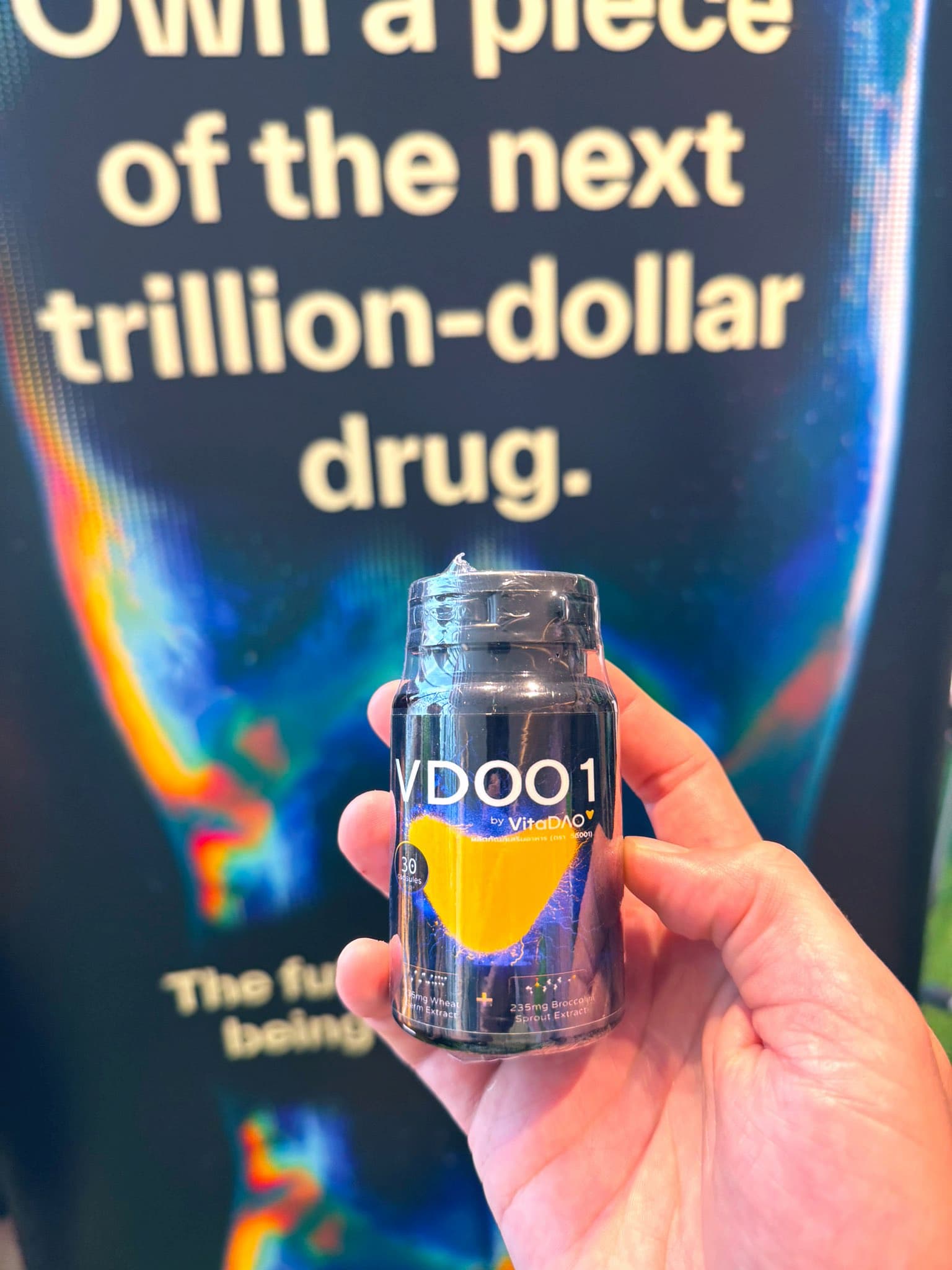
During Devcon, VitaDAO unveiled its first longevity product, VD001—a high-dose spermidine supplement approved by Thailand’s Food and Drug Administration.
The updates on VitaDAO and its funded projects mentioned in this article may not be exhaustive. Given the inherent complexity and long-term nature of anti-aging and longevity research, despite some skepticism from parts of the community, most remain confident that, while science cannot reverse the laws of nature, humanity is moving toward a healthier, more vibrant future through technological advancement.
Join TechFlow official community to stay tuned
Telegram:https://t.me/TechFlowDaily
X (Twitter):https://x.com/TechFlowPost
X (Twitter) EN:https://x.com/BlockFlow_News
 Foresight News






