








Inefficient scientific research system, the free spirit of DeSci
TechFlow Selected TechFlow Selected
Inefficient scientific research system, the free spirit of DeSci
Cryptocurrencies indeed have immense potential in driving frenzied research and development.
 Navigating Web3 tides with focused insights
By Zuo Ye
The new sheriff in town always starts with three bold moves. Elon Musk, leading a team of unpaid 80-hour-per-week IQ-200 geniuses, has swung the efficiency optimization axe at some truly bizarre research projects:
-
Brown University spent $170,000 studying LGBTQ-related issues in China;
-
The University of Iowa spent $1.04 million on DEI-related creative writing programs.
All of these represent institutions across the U.S. collectively milking taxpayer funds—while Musk himself has been one of the fattest lambs forced into this system. After Musk "switched sides" to support Trump, he was repeatedly targeted by investigations from California government agencies and environmental organizations.
For instance, they demanded studies on whether Starship recovery operations might affect sharks in the ocean; if not sharks, then whales; and if recovery poses no issue, perhaps launching Starships could impact seal hearing.
Musk responded like the ultimate engineer—he instructed SpaceX employees to strap a pair of headphones onto a real seal during a Starship launch, ultimately using data to prove there was no fatal impact.
Such absurdities—whether targeting his own aerospace ventures or the broader academic research system—are prime candidates for an award in “Most Wasteful Government Spending.” The ridiculous university studies erode public trust in governance, while those aimed at him reflect pure capital inefficiency and pointless bureaucratic churn.
In this sense, Musk naturally needs a new scientific research paradigm—and DeSci (Decentralized Science) addresses exactly that.
Since Binance strategically invested in the DeSci protocol Bio Protocol, the market has entered a full-blown FOMO phase around DeSci. Longevity themes have further fueled public interest in biomedical research. Is the 21st century finally the century of biology?
Rigidity of the Current Research System
If retail investors are buying DeSci-related memes out of greed, what researchers themselves truly desire is liberation—from the entrenched, hierarchical, institutionalized research machine driven by the perpetual cycle of grants → papers → academic titles.
Contrary to popular belief, scientific research—especially in STEM fields—is largely a government-facing enterprise. Vast amounts of basic research funding flow through the U.S. National Science Foundation (NSF), which controls disbursements and maintains close ties with American universities and laboratories.
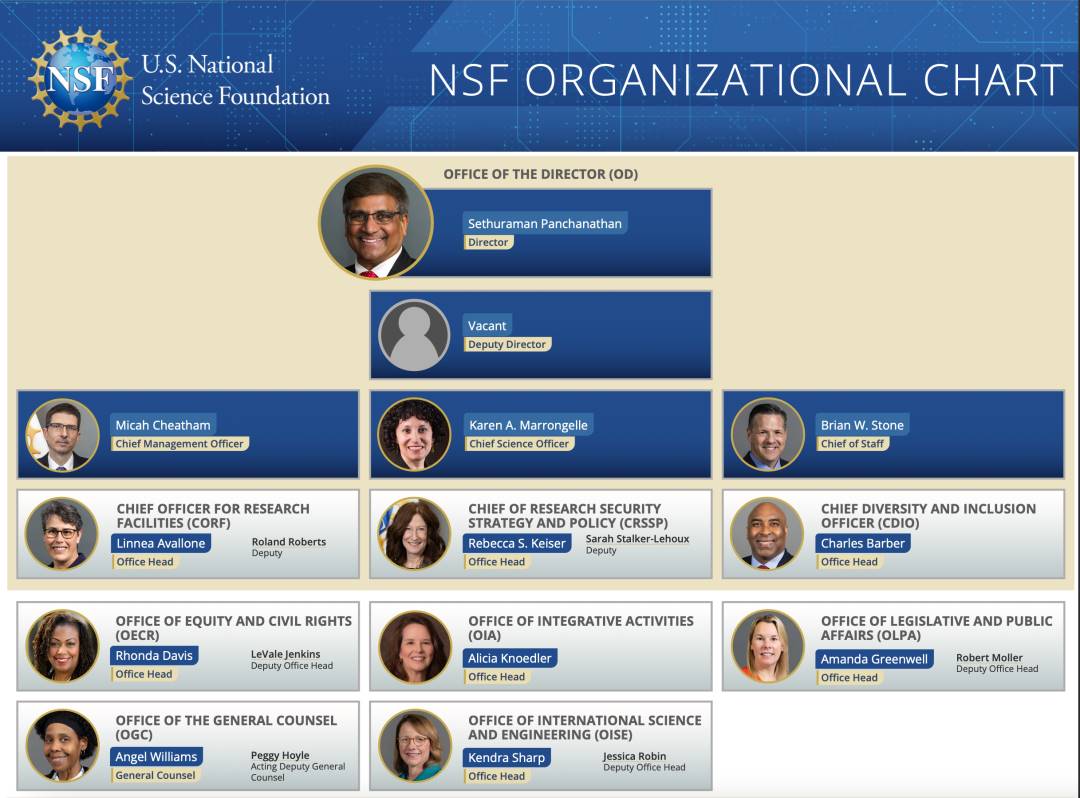
(Let’s be honest—Indians have done far better than Chinese academics. Years of hard research pale next to simply controlling how research funds are allocated.)
Young faculty members must secure grants to recruit students and conduct research. As a result, genuine innovation becomes little more than decorative paperwork tailored to please NSF reviewers. On average, fewer than 30% of applications are approved, with median funding around $150,000. That may sound reasonable, but given the scale of U.S. academia and number of researchers, it's barely enough to survive.
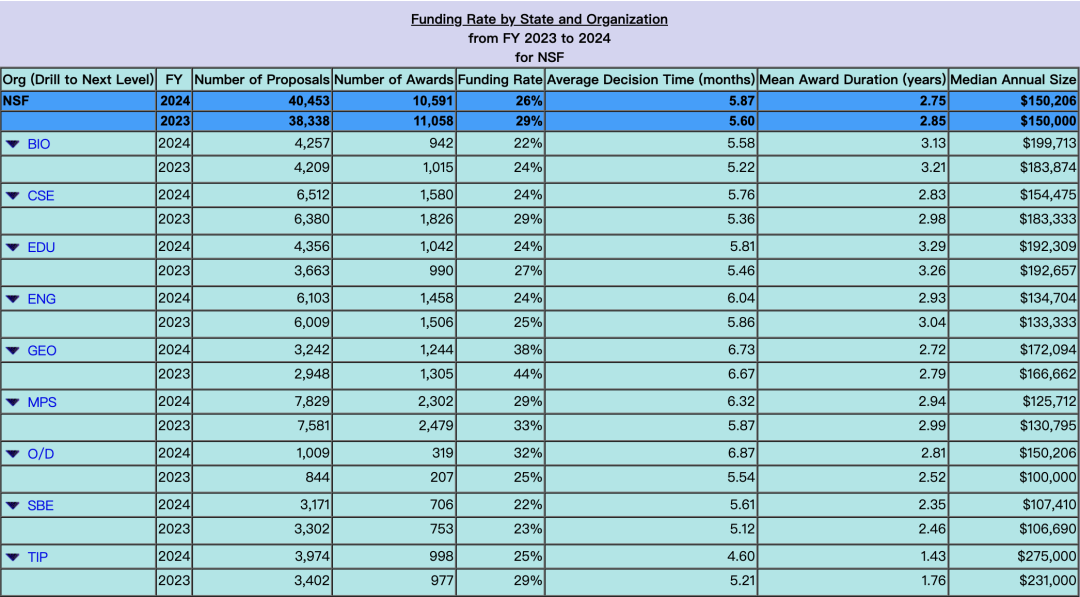
Image caption: NSF approval rates for fiscal years 2023–2024. Source: NSF
In recent years, as DEI culture (Diversity, Equity, and Inclusion) spreads widely, even federal bodies like the NSF have come under its influence. To stay politically aligned, the NSF shifts focus—and researchers quickly follow suit, aiming to publish more papers and earn tenure or other academic titles.
This rigidity isn’t unique to the U.S.—China’s version is even more extreme: born from the American NSF model, but locally evolved into a rigid hierarchy of academic “hats” with clear rankings and distinctions.
After reform and opening-up, China fully adopted the NSF system and adapted it to local conditions, creating unofficial yet powerful academic tiers such as academicians, Changjiang Scholars, Distinguished Young Scientists, and Outstanding Young Scientists. While not official teaching ranks, these titles heavily influence career advancement. Crucially, they correlate almost perfectly with the level of funded grants. Under the tyranny of publication metrics, academics frantically produce low-quality papers, chasing returns on expensive journal page charges.
Profit-Driven Academic Publishing Industry
It’s fitting—and yet surprising—that the current DeSci wave has brought Sci-Hub back into the spotlight.
Within the grant → paper → title cycle, publications serve as direct proof of output. Since most basic research cannot be commercialized, publishing in high-impact journals becomes the sole validation metric. Nature, Science, and Cell form the top tier globally. In the U.S., these papers are critical for Chinese international students seeking permanent residency. In China, they’re a fast track to wealth and academic glory.
The problem? The global academic publishing industry is highly commercialized. Springer, Elsevier, John Wiley & Sons, Sage Publishing, and Taylor & Francis Group control over 80% of scholarly publishing.
The irony? Researchers pay these publishers to publish their work—and then their institutions must pay again to access it. This channel monopoly generates massive profits. For example, Elsevier reported €7.49 billion in revenue and €1.96 billion in profit in 2018—a staggering 26% net margin.
Thus emerged the Open Access (OA) movement within academia—an attempt to dismantle this monopolistic structure. Unfortunately, leading OA platforms are still run by traditional publishers, who now charge hefty “article processing fees.” For instance, mainland Chinese scholars must pay $5,000 to publish in Nature’s OA journals. So OA benefits readers—but authors still foot the bill.
Low-quality OA journals face a fate similar to that of unregulated crypto markets: lack of oversight leads to rampant fraud, turning “Open Access” into a synonym for predatory publishing.
High quality means high cost; low quality means made-up nonsense.
Against this backdrop, Sci-Hub rose as a revolutionary force. In 2011, Alexandra Elbakyan—a Kazakhstani woman born in the former Soviet Union—outraged by the greed of academic publishers, decided to make all papers freely available online. Her story began almost simultaneously with Bitcoin’s creation—an origin tale rooted in the love of knowledge and freedom.
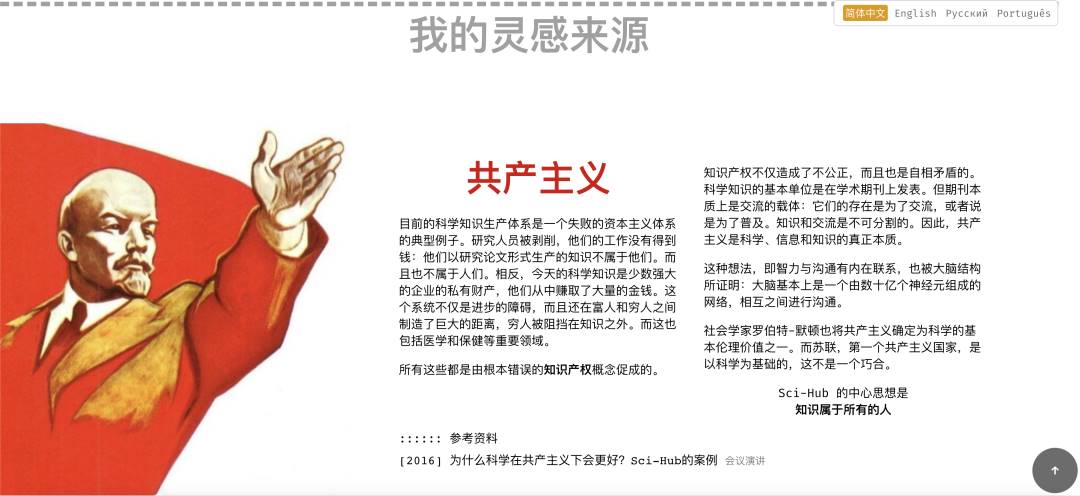
Image caption: Inspiration behind Sci-Hub’s founding
Source: https://sci-hub.se/alexandra
To Elbakyan, scientific knowledge belongs to all humanity. Publishers should not restrict access under the guise of operational costs. Using Sci-Hub is simple: input a paper’s DOI number, and the full text appears instantly—cutting through bureaucracy and returning knowledge to its true purpose.
The Current DeSci Frenzy
The convergence of memes, Vitalik/CZ narratives, and longevity themes has spawned legends of thousand-fold gains—Rifamycin (RIF) and Urolithin (URO). Pump.Science has inherited Pump.Fun’s mantle, while Bio Protocol and its network of sub-DAOs attract intense speculative capital.
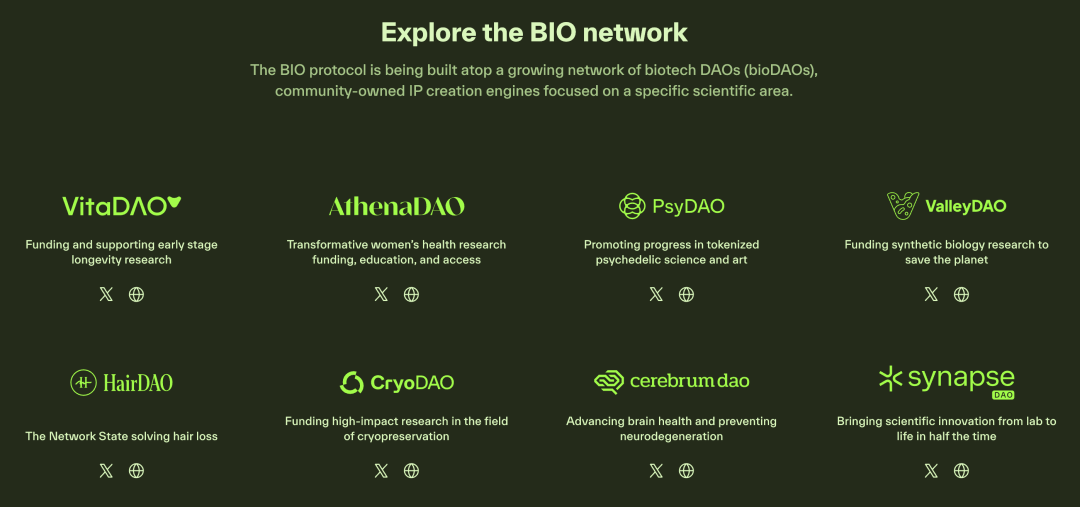
Image caption: Structure of BIO Protocol
Source: https://www.bio.xyz
But we must remember: moving a drug from lab to market typically takes years or even decades. This inefficiency reflects flaws in the current system—but bypassing regulatory processes won't necessarily speed up safe development.
That said, cryptocurrency does offer immense potential to accelerate R&D. In Silicon Valley circles, billionaires already experiment with young blood infusions, off-label use of targeted drugs, supplements, and even whole blood replacement therapies. The FDA remains the world’s most authoritative regulator, yet some wealthy individuals circumvent it by turning to countries like Thailand or nations in Africa to fast-track drug approvals.
Huang Jiaxui’s reckless gene-editing experiment earned him a criminal conviction for privately designed genetic modifications. If cryptocurrency can help decentralize science and give everyone free access to research, that would be a noble achievement. But if it pushes us toward radical human experimentation, let Liu Cixin’s words serve as our warning: Give time to civilization, not civilization to time.
May we safely navigate through this great trough of human scientific endeavor.
Join TechFlow official community to stay tuned
Telegram:https://t.me/TechFlowDaily
X (Twitter):https://x.com/TechFlowPost
X (Twitter) EN:https://x.com/BlockFlow_News
 @zuoyeweb3






