At SUI's New High, Discussing the Three Major Move Blockchains from a User Perspective
TechFlow Selected TechFlow Selected
At SUI's New High, Discussing the Three Major Move Blockchains from a User Perspective
Sui and Aptos are direct competitors, each with their own strengths, while the Movement ecosystem effect cannot be underestimated.
 Navigating Web3 tides with focused insights
By Alex Liu, Foresight News
On November 14, SUI surged past 3.5 USDT, reaching a new all-time high; Bitwise is set to launch an Aptos Staking ETP on the Swiss Stock Exchange; Movement’s mainnet is approaching launch... Beyond EVM, Solana, and BTC, a vibrant new ecosystem is emerging—Move-based blockchains are gaining momentum.
Sui, Aptos, and Movement are frequently discussed together because they are allpublic blockchain platforms supporting smart contracts written in the Move language, commonly referred to as"Move chains". Sui and Aptos are Layer 1 blockchains whose core teams originated from Facebook (now Meta)'s now-defunct Diem/Libra project (where the Move language was first developed). Both have successfully raisedhundreds of millions in funding, launched their mainnets, and rank among the top by market capitalization. Movement, on the other hand, is a Layer 2 built on Ethereum aiming to bring the Move language into the ETH ecosystem, having raised tens of millions and currently operating on testnet.
Despite being grouped under the "Move chain" label,the differences between these three are far greater than most realize. As someone who holds both SUI and APT and actively participates in both ecosystems, I hope this article sheds light on some overlooked insights during this pivotal moment for Move chains, aiding readers in research and decision-making.
Technical Differences at a Glance
This article focuses primarily on non-technical aspects but briefly touches upon technical distinctions. Recently, DWF Ventures, the research arm of a well-known market maker, published a so-called “comparative analysis” of these three chains that containedfactual inaccuracies regarding technical details. If even institutional researchers make such errors, it's clear there's significant room for improvement in general understanding of Move chain technologies.
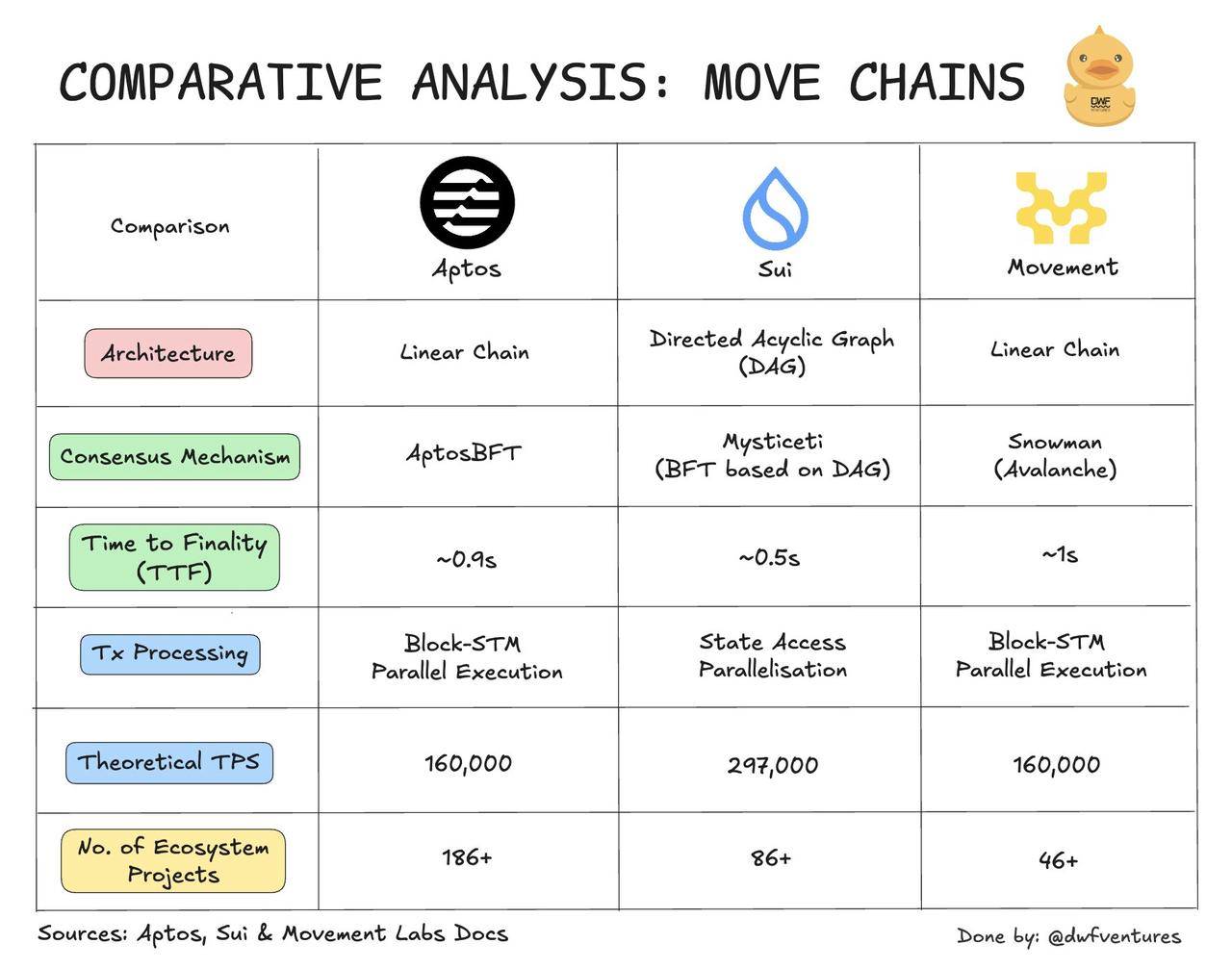
Aptos and Sui have highly unique architectures—strictly speaking, they aren’t even traditional “blockchains”, but rather Directed Acyclic Graphs (DAG), a special data structure composed of “checkpoints”. In contrast, Movement follows a conventional linear blockchain model made up of blocks. Other notable projects using DAG include kaspa (KAS), the recent favorite among PoW miners aiming to revive Bitcoin’s original vision. In the image above, DWF incorrectly depicts Aptos as a linear chain—while Aptos initially launched with a linear architecture, it later transitioned to DAG.
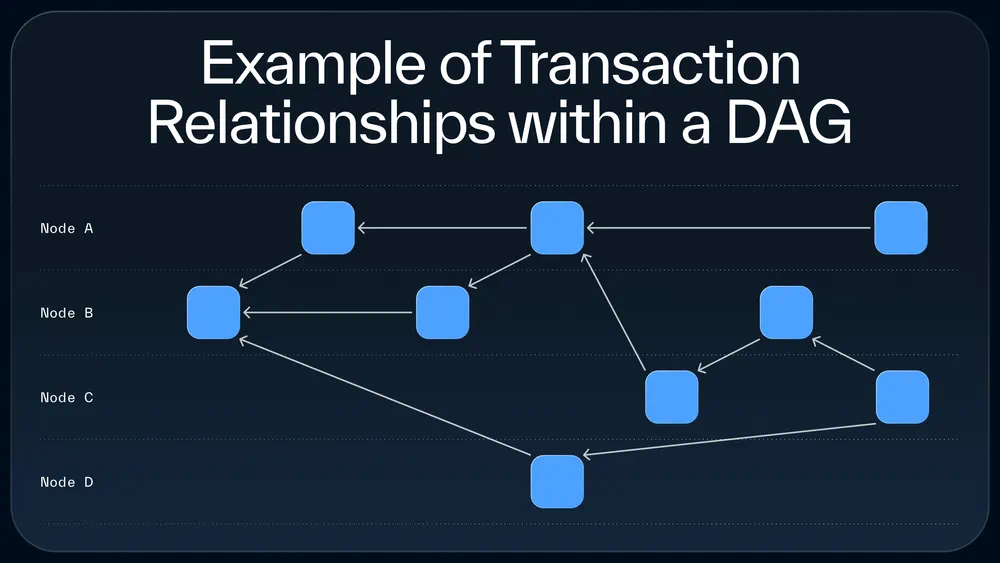
Transaction relationships within a DAG
Beyond architecture, differences also exist in consensus mechanisms and approaches to parallel transaction processing.
Both Sui and Aptos use DAG-based BFT (Byzantine Fault Tolerance) consensus, though specific mechanisms like leader selection differ. Movement adopts Avalanche’s Snowman consensus. Different consensus designs result in varying TTF (Time to Finality). Currently, Sui’s Mysticeti consensus leads, confirming transactions in under 0.5 seconds. Aptos plans to upgrade to the RAPTR consensus, which also shows strong potential.
For parallel execution, Aptos and Movement both employ Block-STM, an optimistic parallelization engine that assumes all transactions can run concurrently and re-executes only those encountering conflicts. Sui uses a “state access” method, categorizing, sorting, and executing transactions only after verifying no conflicts exist.
Despite sharing the Move language, it has diverged into two major variants: Sui Move and Aptos Move. Movement theoretically supports both but primarily focuses on Aptos Move.
User Experience
(Movement remains on testnet; actual user experience is not covered here.)
Speed & Fees
For high-performance blockchains, speed and low cost are key competitive advantages. In practice, latency differences are nearly imperceptible—interactions feel instantaneous across both.
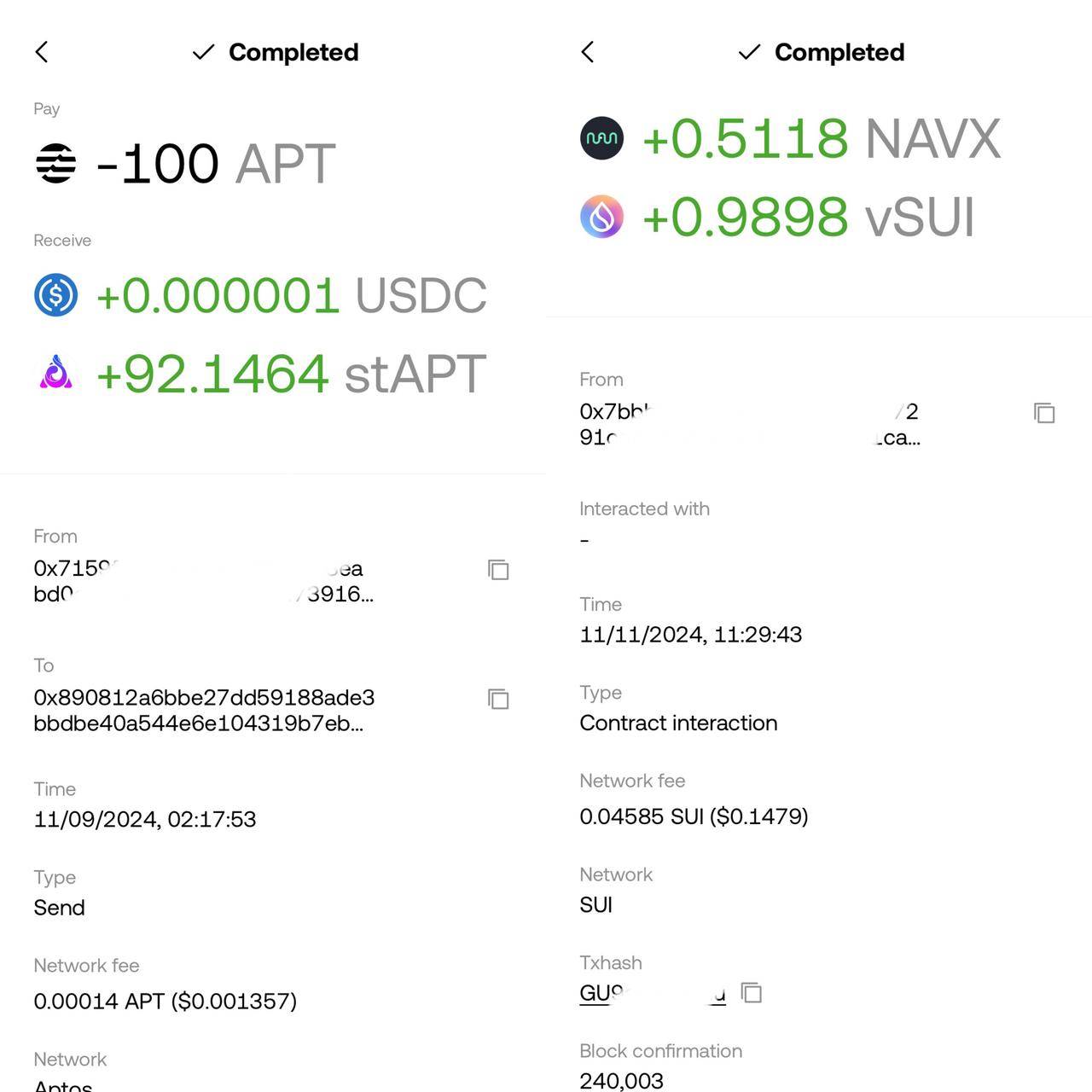
However, fee structures differ:All interactions on Aptos maintain negligible costs, whereasSui sometimes incurs relatively high gas fees (e.g., claiming rewards on Navi costs $0.14 in fees, as shown below). High gas costs may also relate to contract code quality, but overall, Aptos demonstrates better cost control.
Stability
Stability is another critical factor—no one wants to conduct frequent financial activities on a blockchain prone to outages. Sui has never experienced downtime since its mainnet launch and successfully handled massive transaction volumes from inscriptions and runes. However,Aptos briefly halted block production last October.

Hardware Wallet Integration
I store larger holdings in hardware wallets, and my experience reveals:
Sui’s Ledger integration is poor—initially requiring repeated reconfiguration of blind signing settings each time the app was opened, with infrequent software updates or maintenance. Moreover,none of Sui’s mainstream mobile wallets support hardware wallets!
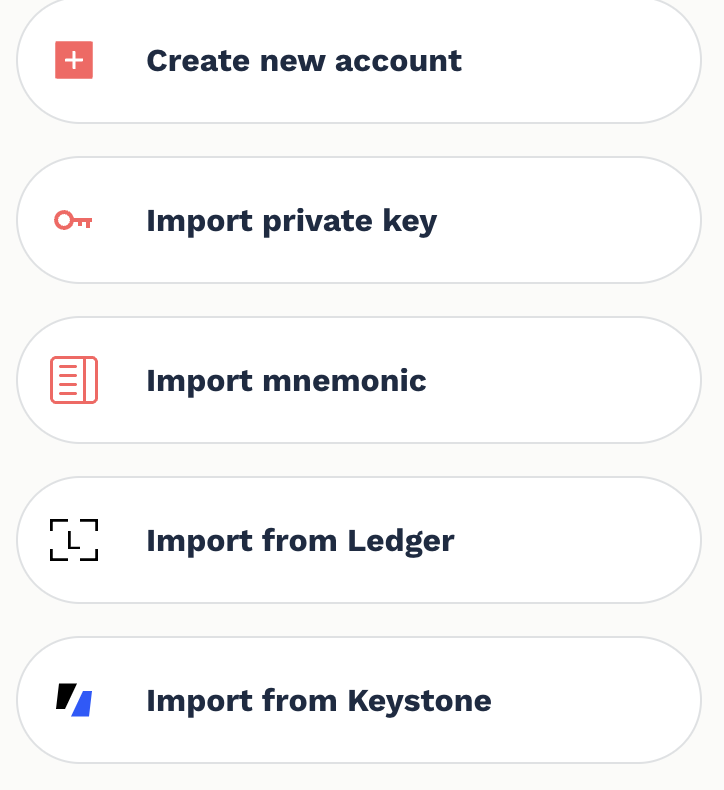
In contrast, Aptos offers solid Ledger integration with regular updates. Petra, the official wallet developed by the Aptos team, supports multiple hardware wallets and even includes customized animations during signing—attention to detail that significantly enhances user sentiment.

Regarding wallet experience, I find Aptos’ official Petra Wallet > Sui’s official Sui Wallet (in terms of balance change previews, multi-account switching, etc.).
This observation leads to a broader conclusion:Sui appears indifferent toward Crypto Native users, investing minimal resources to meet our needs. In contrast, Aptos delivers a superior experience. Who does Sui target instead? It seems deeply committed to the narrative of “Mass Adoption” and “incremental users,” promoting wallet creation via Web2 accounts like Google, Twitch, and Facebook. Its focus lies in attracting Web2 users to expand the overall market rather than competing for existing crypto users.

Is this strategy good or bad? It’s hard to judge. Solana first captured Crypto Native users before gradually achieving mass adoption—a path that proved highly successful in hindsight.
Team Culture
From a non-technical observer’s perspective, Sui indeed appears more innovative, whileAptos carries certain “follower” traits:
Initially,Aptos was based directly on Diem’s codebase, retaining its account model and linear chain structure. Sui launched later—though also from former Diem engineers—redesigned key components, and introduced a novel object-centric DAG architecture.Aptos later adopted an object model and DAG as well.
Sui pioneered token incentives for DeFi projects to attract TVL, which grew substantially.Aptos followed suit with subsidies for its own ecosystem projects.
After PoW-style games emerged on Solana, imitation projects appeared first on Sui,then Aptos officially promoted similar clones within its ecosystem.

Mysten Labs, Sui’s developer, used this logo for two years. Aptos Labs recently unveiled its latest logo:

This might not be called “similarity”… perhaps more like competitive chemistry?
Another dimension of team culture is vision:Aptos distributed generous testnet airdrops, providing many with their first crypto gains, while Sui offered no testnet airdrop, instead holding community lotteries for token purchase allocations.
The Movement team currently stands out for its exceptional ability to cultivate community and generate “hype” around its project. Despite lacking a mainnet, they’ve already convinced much of the crypto community they will be the next big thing.
Research & Engineering
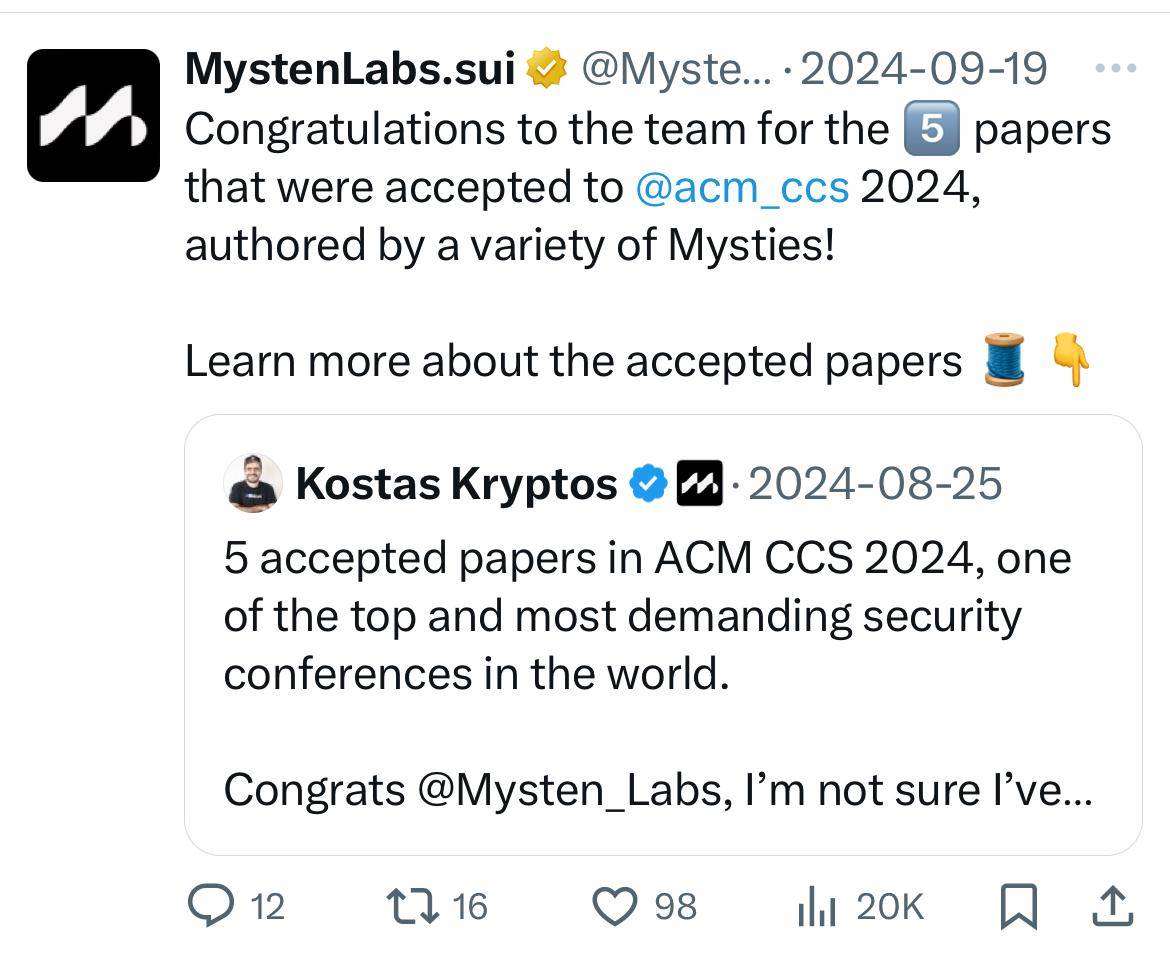
Mysten Labs, Sui’s developer, boasts outstanding academic credentials—recently having five papers accepted at ACM CCS, one of computer science’s top conferences. Regarding engineering, beyond the widely recognized Sui blockchain, they’ve launched Walrus, a decentralized storage protocol built on Sui, and plan to integrate the SCION network standard. Additionally, Sui is exploring radio-based transaction transmission for offline environments.
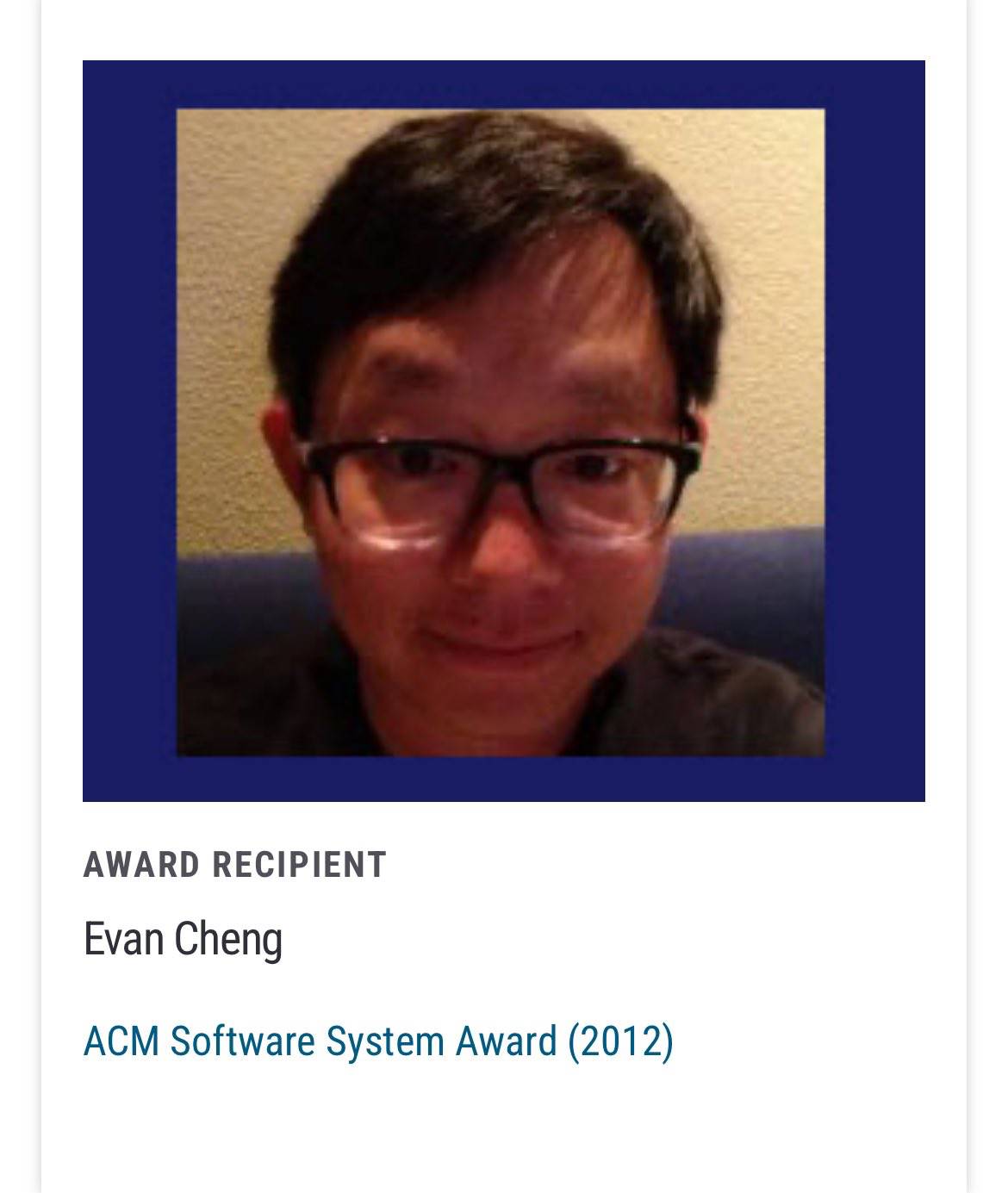
Sui’s co-founder and CEO received the ACM Software System Award in 2012 for contributions to LLVM
Aptos Labs also ranks among industry leaders in research and engineering. A simple example:The Block-STM parallel execution engine, originally developed by Aptos, has been adopted by major projects including Starknet, Polygon, Monad, and Movement.
Undeniably, Movement’s team lacks the depth of the other two. But in today’s meme-driven supercycle, project vibe may outweigh fundamentals.
Ecosystem & Community
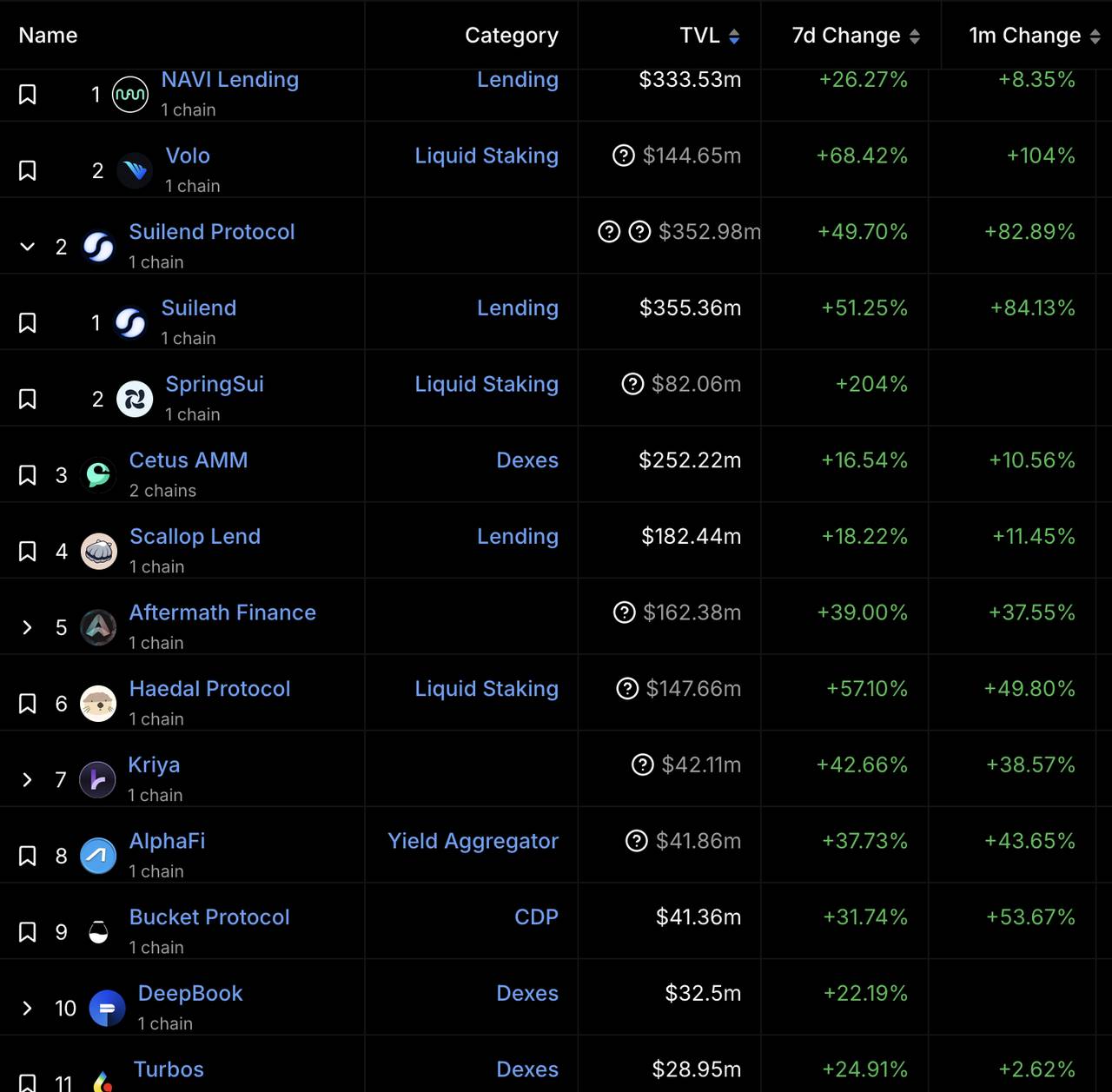
Sui ecosystem projects, source: DefiLlama
Objectively, Sui currently hosts a richer and more developed ecosystem than Aptos, with higher DeFi TVL.Aptos TVL has grown notably recently, but sources are homogenous, mainly driven by lending protocols funded by the foundation and incentivized with APT tokens. Earlier this year, I recall being the only person speaking in an Aptos project’s Discord, waiting 3–4 days without response to an English question posed to the team.
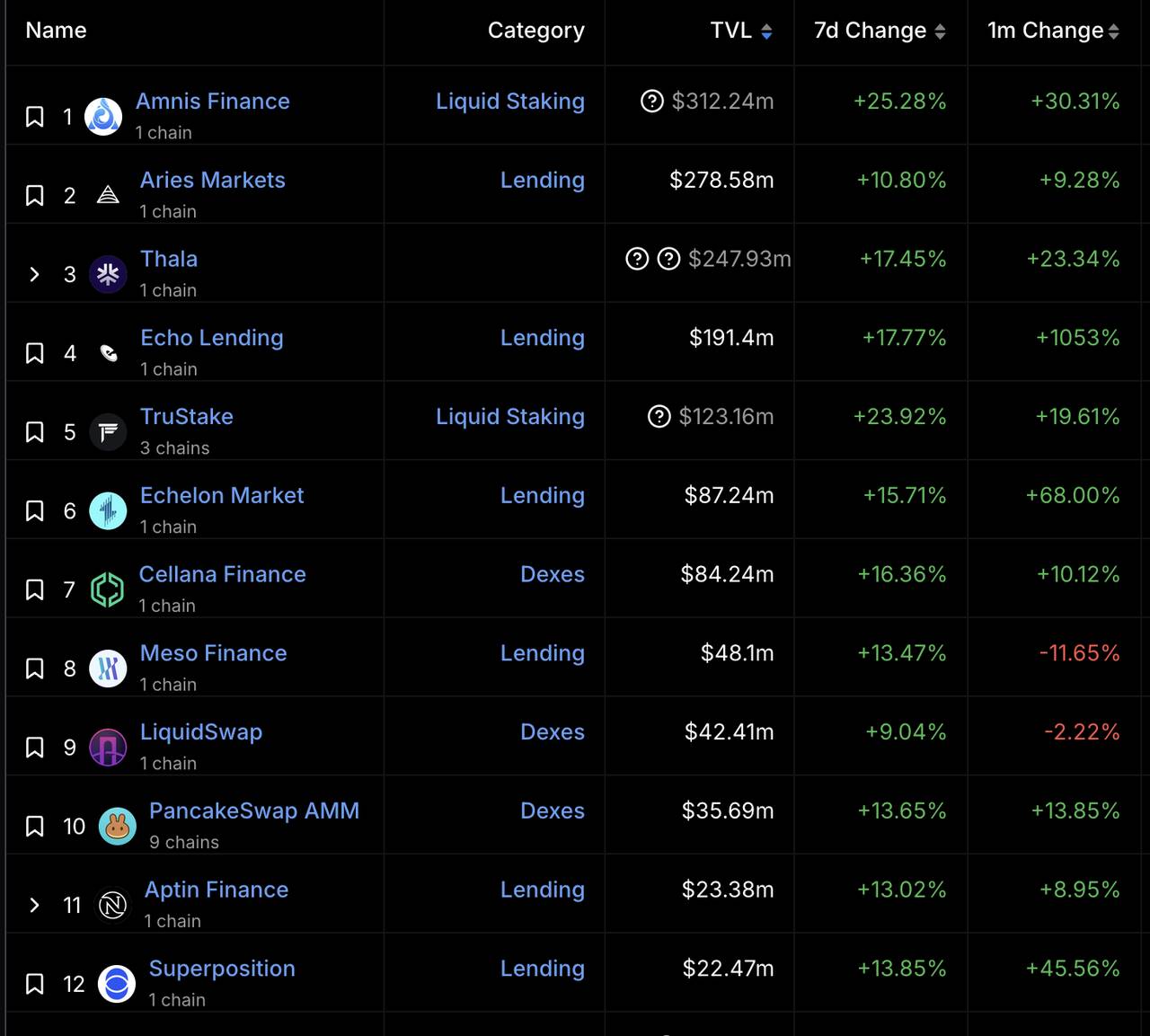 Aptos ecosystem projects, source: DefiLlama
Sui’s community is also generally more active than Aptos’ (possibly influenced by stronger price performance), suggesting the slogan “No Airdrop, No Community” doesn’t always hold true.Movement’s community rivals Monad’s cult-like following, with “gmove” visible everywhere—granting this yet-to-launch token remarkable mindshare.
Notably,Sui and Aptos appear to be genuine rivals, often taking opposing sides in selecting ecosystem partners. Wormhole is the dominant cross-chain bridge on Sui, so Aptos avoids it and instead partners with LayerZero. When Sui integrates native USDC, Aptos naturally launches native USDT first.
Aptos and Sui also differ in their stance toward Movement.Aptos is more open, having expressed support for Movement expanding the Move language ecosystem. Nearly every Aptos project I’ve used plans to deploy on Movement’s mainnet;Sui is comparatively closed, with co-founders previously dismissing L2s as meaningless, and most ecosystem projects building exclusively on Sui.
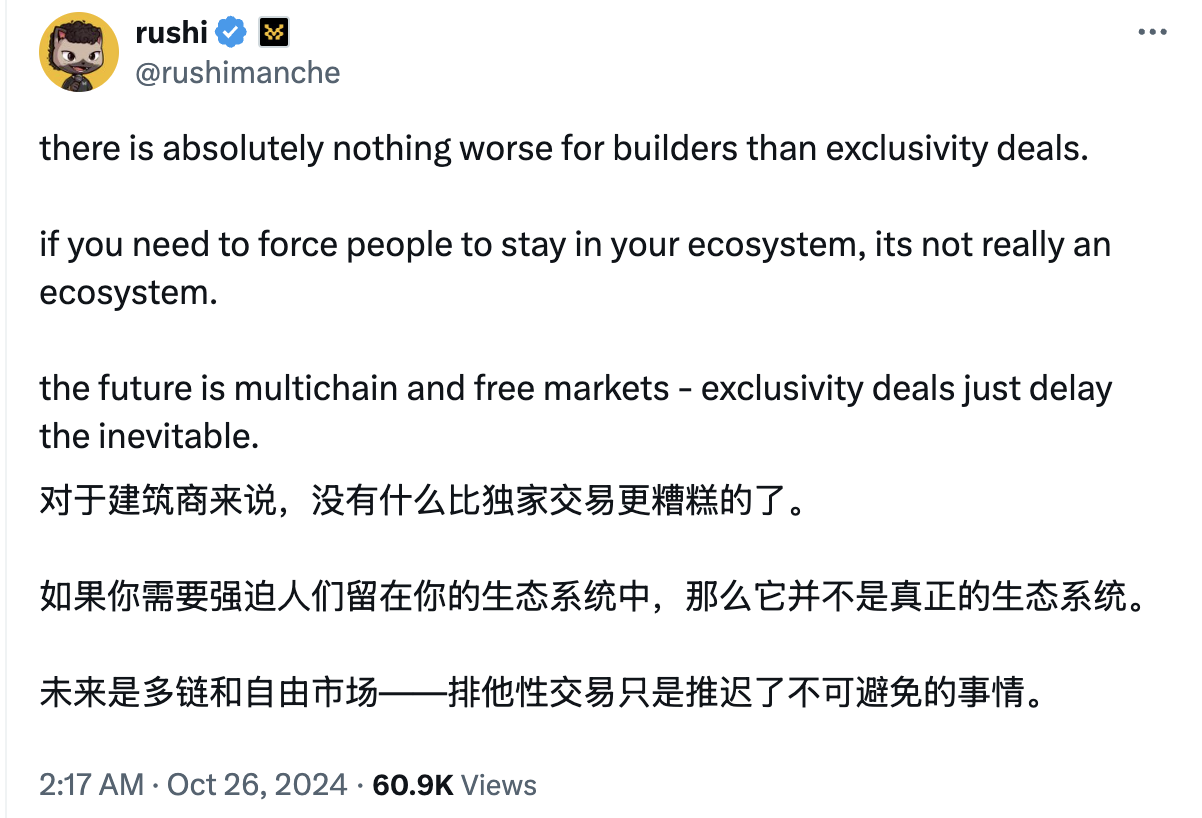
Movement’s co-founder once criticized “exclusive protocols” on X, seemingly making a pointed remark.
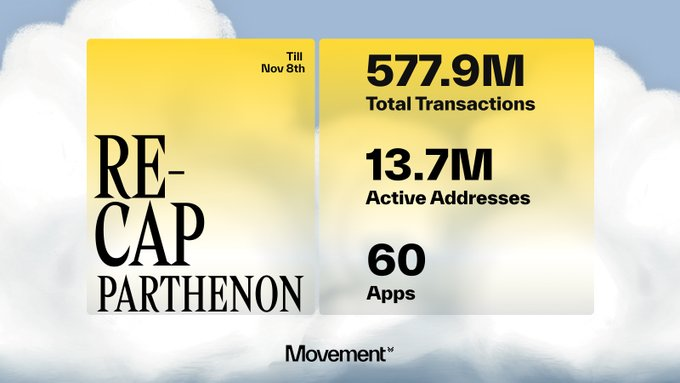
Though still on testnet, Movement already hosts over 60 apps and millions of active addresses—an ecosystem effect that cannot be ignored.
Shared Challenges
Currently, the Move ecosystem lacks significant wealth-generation opportunities for retail investors. While foundation-funded token subsidies exist, high-net-worth whales dominate yield farming, making double-digit APYs unappealing to average users. The ecosystem lacks致富 stories like Solana’s JTO airdrop or Bonk meme coin.
In particular, Aptos appears better positioned to address this, as most of its ecosystem projects haven’t launched tokens yet. Recommended reading: Gold Rush Guide | Must-Know Airdrops & High-Yield Opportunities on Aptos
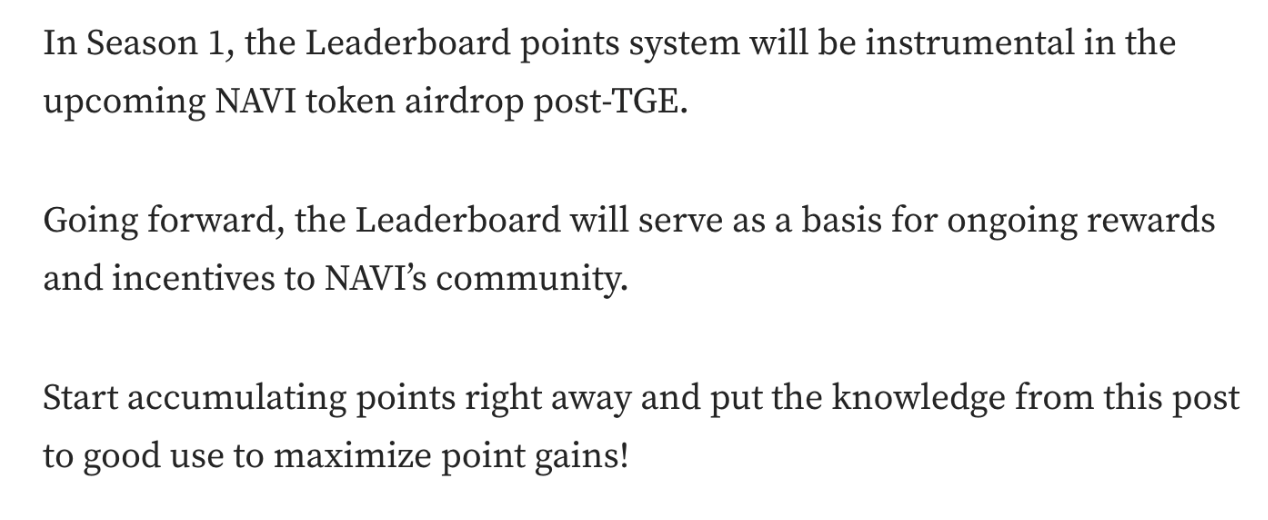
Sui’s third-party ecosystem projects have started launching tokens, but airdrop allocations remain low. Worse, Navi—the largest lending protocol on Sui before being overtaken by Suilend (planning a December airdrop)—released a points leaderboard in January, claiming points would play a key role in an “upcoming” token airdrop—yet despite launching its token in February, no airdrop has materialized since, leaving it unresolved.
Projects developed directly by Sui’s team (Deepbook, Sui NS) follow a model of broad community airdrops and subsequent price support, almost as if stepping in personally to improve Sui’s wealth-generation appeal due to lackluster third-party efforts.
Regarding meme-driven wealth effects, both still have room to grow. SUI’s FDV and circulating market cap are roughly 1/3 and 1/10 of SOL’s, respectively, yetthe largest meme coin on Sui is worth only 1/20 of Solana’s top meme, and Aptos’ biggest meme GUI is merely 1/100 the value of WIF.

Despite various challenges, the long-term outlook for Move chains remains bright. Recommended reading: Why Are Developers Betting on Move-Based Blockchains?
Join TechFlow official community to stay tuned
Telegram:https://t.me/TechFlowDaily
X (Twitter):https://x.com/TechFlowPost
X (Twitter) EN:https://x.com/BlockFlow_News
 Foresight News