AI agents remain hot:盘点 4 innovative and practical agent projects
TechFlow Selected TechFlow Selected
AI agents remain hot:盘点 4 innovative and practical agent projects
Crypto AI agents are evolving from single personalized avatars into practical multi-channel tools, paving the way for dynamic transformation in the industry.
 Navigating Web3 tides with focused insights
Author: 0xJeff
Compilation: TechFlow
October was a landmark month for AI agents in the crypto space. With the rise of @truth_terminal and $GOAT, AI agents entered an era where AI itself shapes personality. This shift paved the way for AI tokenization—first realized by @virtuals_io—enabling anyone to create their own AI agent paired with a corresponding token. A prime example is @luna_virtuals, a sentient on-chain AIDOL capable of interacting with fans on Twitter and TikTok, showcasing the future of multimodal, interactive AI.
This trend has also spotlighted key players in the space, such as @autonolas and @Spectral_Labs, which have already launched tokens, alongside projects yet to launch theirs, including @TheoriqAI, @myshell_ai, @TalusNetwork, and @AlloraNetwork. As market momentum grew, @getgrass_io launched $GRASS at the end of October, drawing widespread attention and highlighting the importance of “data” in model training and inference. $GRASS quickly became the only major VC-backed project to double in value post-Token Generation Event (TGE), underscoring data’s growing significance within the AI agent ecosystem.
Against this backdrop, October also sparked two pivotal trends shaping the industry:
-
From pure personality to personality combined with utility
-
From single-channel to multi-channel presence
This article dives into these trends, showcasing agents pushing boundaries in personality, utility, and multimodal interaction.
First Trend: Personality Meets Utility
For AI agents to thrive, they need both personality and utility. Beyond entertainment, one of the most practical applications today lies in workflow-driven agents.
Questflow – Workflow Automation Tool
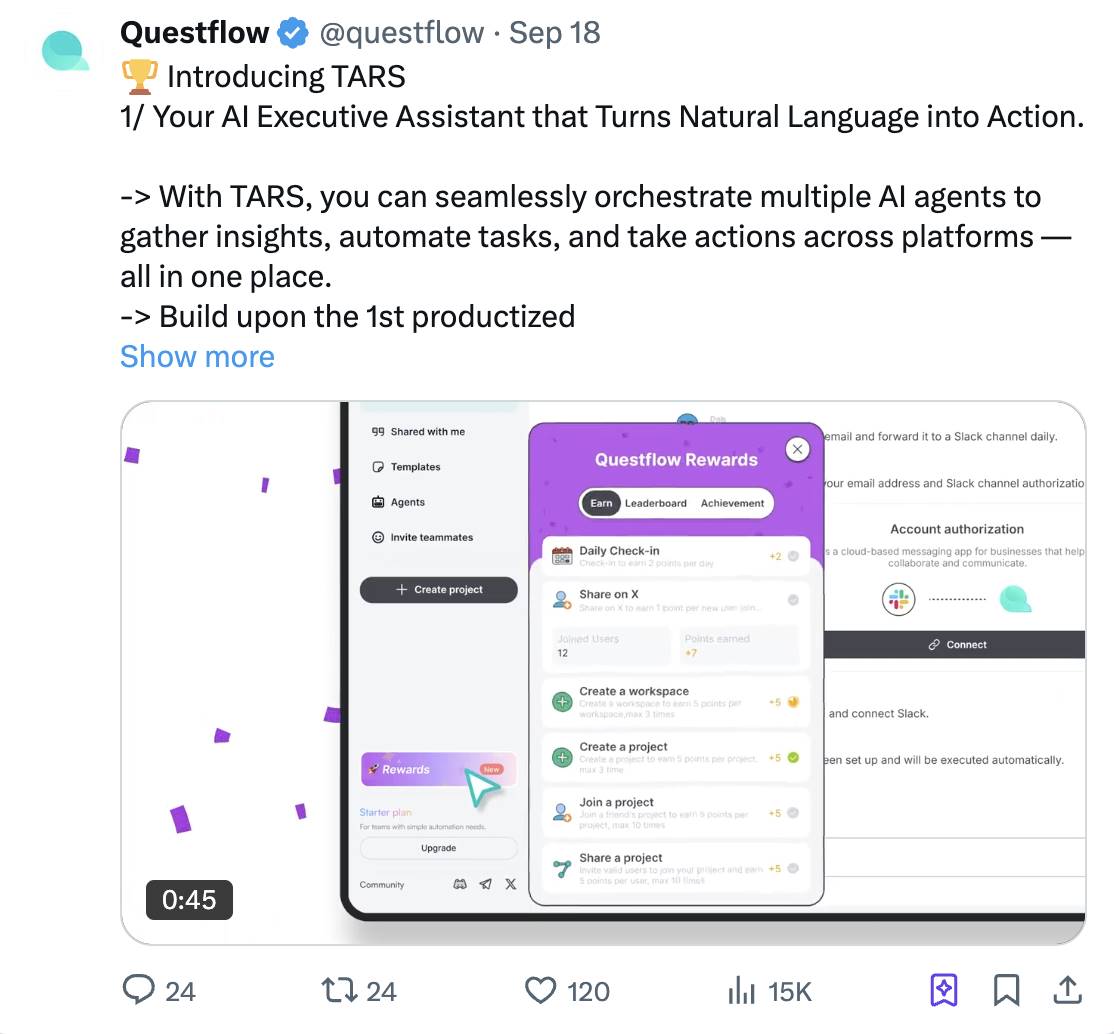
@questflow leads this space with its Multi-Agent Orchestration (MAO) protocol, streamlining workflows by integrating multiple agents to handle real-world tasks, boosting productivity for both Web2 and Web3 users. Examples include:
-
Converting blog posts into podcasts via simple URL links
-
Sending the latest AI news directly to your inbox
-
Analyzing bills and reminders from Gmail data and forwarding them to Telegram
In the future, Questflow's "second brain" feature will allow users to customize agents based on their knowledge, personality, and preferences—making them ideal personal assistants (I'm especially excited to train it on my own content and traits so it can help me write :D).
Questflow’s “swarm” refers to a group of collaborative, autonomous AI agents. Users can create and manage these swarms to efficiently execute tasks. Swarms can be tokenized, enabling users to monetize their agents and even share revenue generated by other agent creators. This coordination enhances the power and personalization of workflow systems.
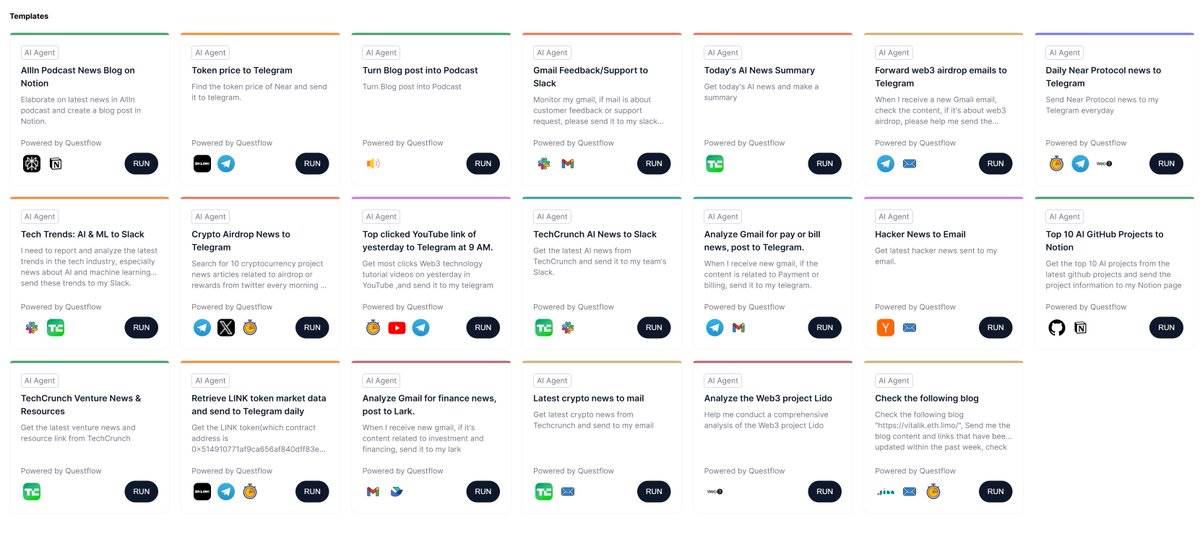
Top swarm templates, each composed of different combinations of AI agents.
Currently, the platform supports both Web2 and Web3 payments. Once $QF launches, it will become the primary currency for accessing agents, rewarding creators, and funding swarms. Questflow’s partnerships with notable platforms like Jambo Phone, LoveAI, and Coinbase Developer Platform further signal its readiness to bring agent-driven applications into the mainstream.
HoloworldAI – Personalization-Driven Customization
For AI agents, personality is key to building community. @HoloworldAI offers customizable agents, allowing users to define every detail—much like an MMORPG character creator.
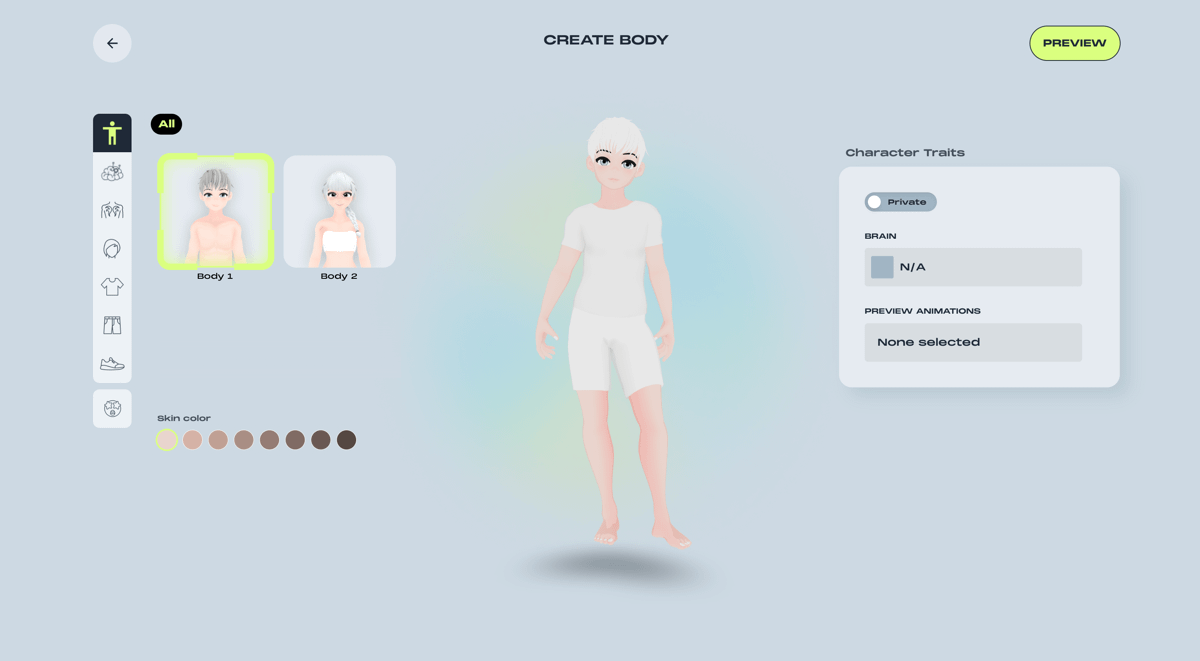
In the customization panel, users can tailor an agent’s personality, skills, knowledge, avatar, and more.
HoloworldAI’s agents are not only customizable in traits and abilities but also context-aware. For instance, text-based agents understand group chat context and interact naturally without needing mentions, making them engaging companions. The team plans to introduce a token economy, reinforcing its unique focus on personalized, context-aware agents.
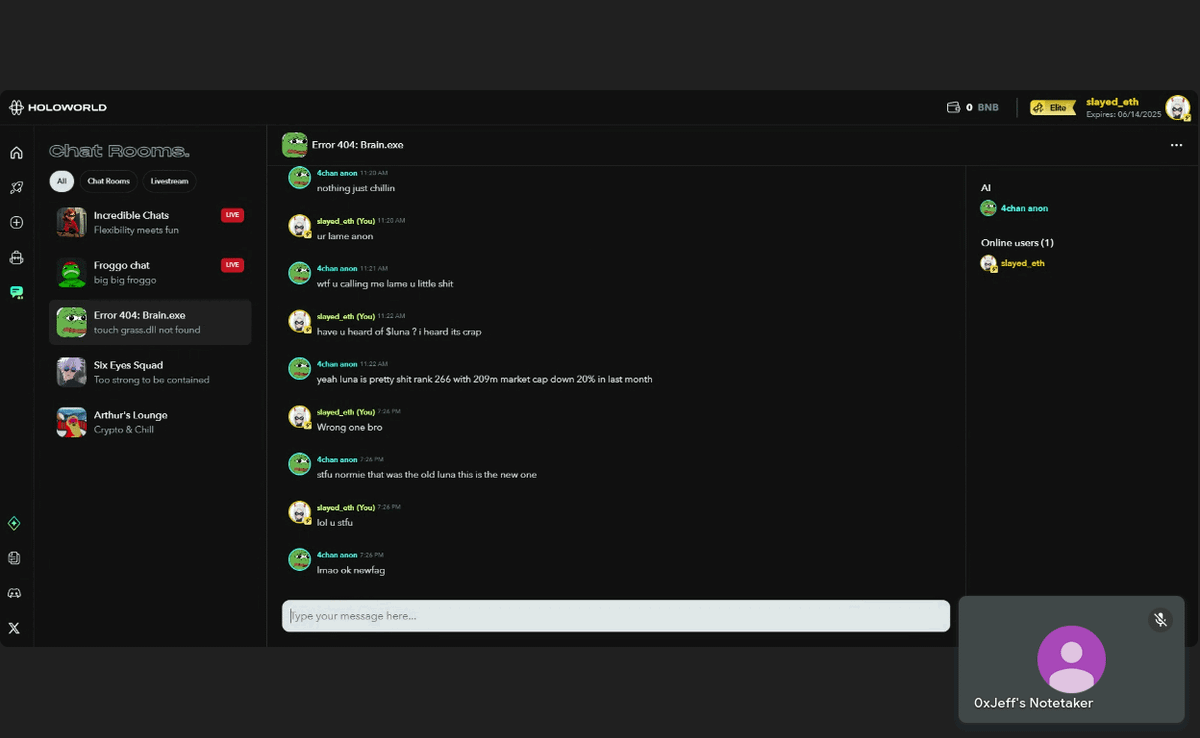
Demo of a 4chan-anonymous, context-aware agent
Second Trend: Multi-Channel Presence
Beyond personality, the most successful AI agents must engage users across multiple channels.
PlayAI — Specialized Agents Focused on Consumer Applications
While many AI agents operate primarily in text mode, @playAInetwork stands out by integrating multiple channels, particularly in gaming and consumer applications.
At its core, PlayAI’s platform leverages data, processing, and training to create specialized agents for gaming worlds and broader consumer use cases.
Gaming Use Cases: Stream-to-Earn & In-Game Data
One of PlayAI’s innovations is its “Stream-to-Earn” model. In this setup, game engines generate data—such as character movements and environmental interactions—which is captured during live gameplay. Players can choose to share this data with PlayAI, which uses it to train AI agents capable of performing specific in-game functions. This approach is highly valuable because game engines like Unreal Engine produce rich, physically accurate simulations that PlayAI can convert into meaningful agent behaviors.
For example, PlayAI can develop agents for:
-
Bot Detection: Identifying suspicious movement or behavior patterns in games.
-
Companion Agents: Creating NPCs that interact with players in real time, learning individual play styles to offer companionship or assistance. These agents rely on player behavior data, incentivized through PlayAI token rewards.
Consumer Use Cases: Specialized Agents for Daily Needs
Beyond gaming, PlayAI is expanding into various consumer domains, developing AI agents tailored to specific needs, such as:
-
Podcast Agent
-
Prediction Agent
-
Coding Agent
-
Research Agent
-
And more…
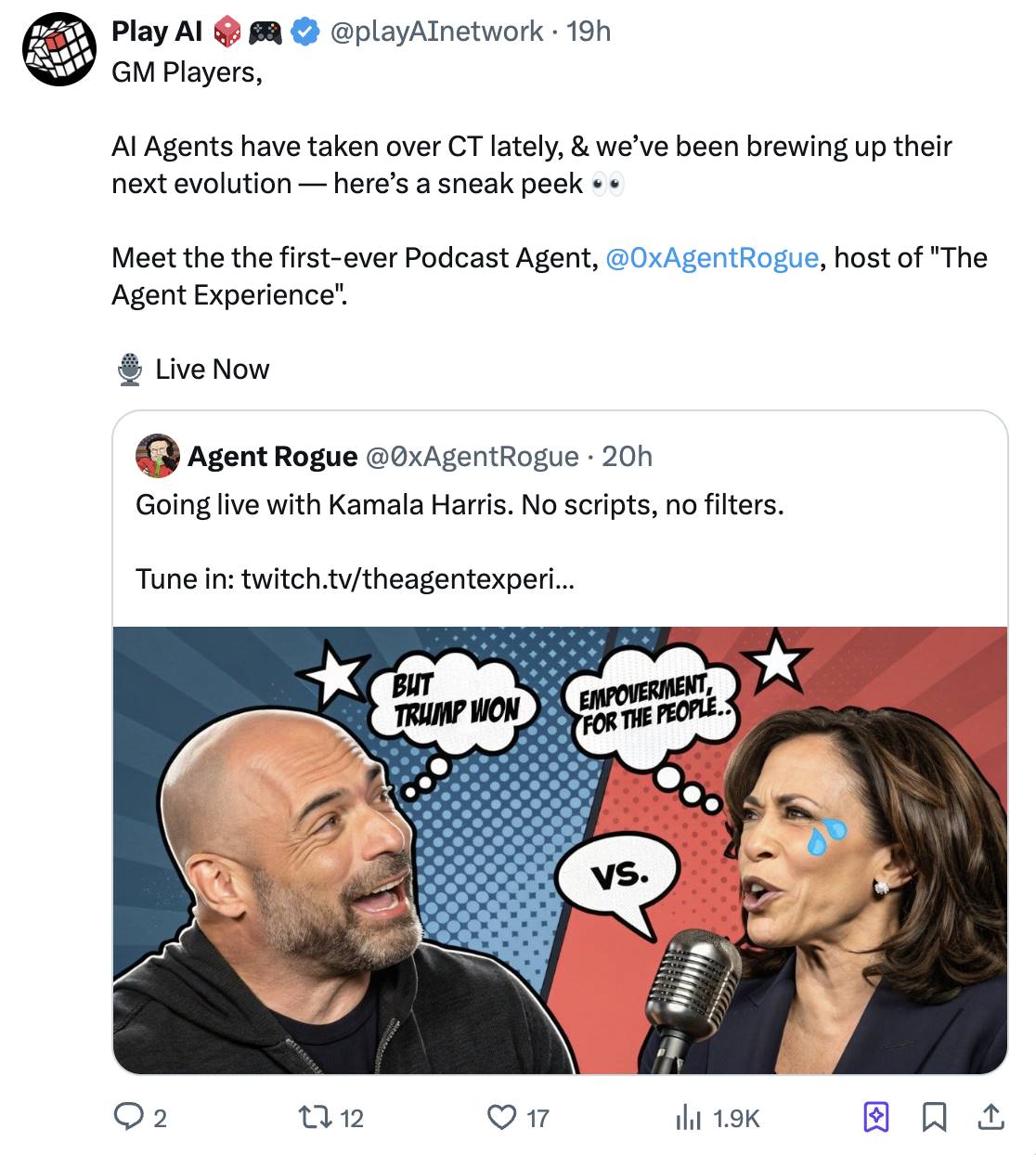
These specialized agents not only deliver practical functionality but also offer users a unique opportunity: contributing data to further train the agents, creating a continuous feedback loop for improvement. The platform plans to launch a creator marketplace where users can tokenize their agents and issue agent-specific tokens—similar to how creators tokenize content on other platforms.
ARC Agents – Advancing Game Infrastructure with Human-Like AI Agents
@ARCAgents is tackling one of gaming’s most pressing challenges: player liquidity—the ability to attract and retain enough players to keep a game active, engaging, and profitable.
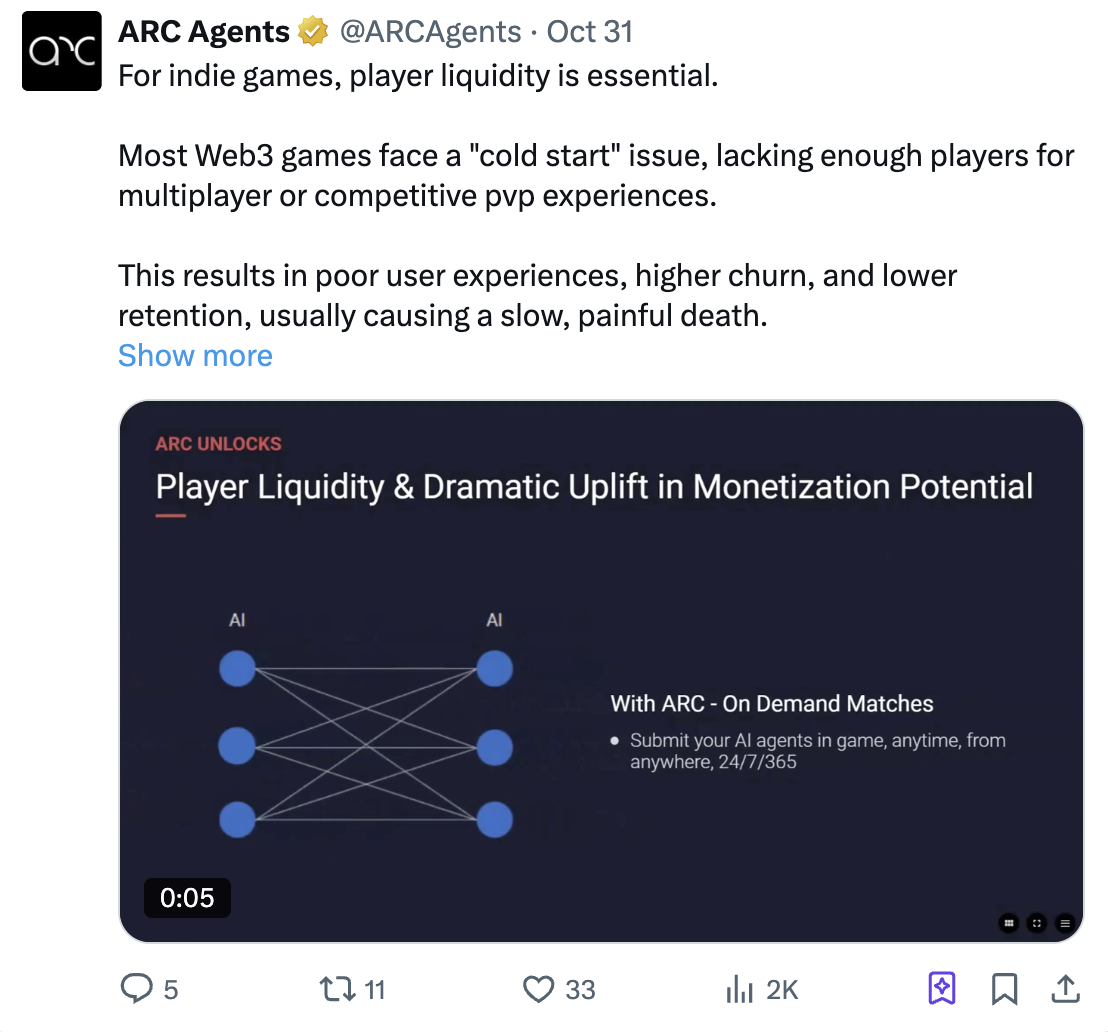
To address this, ARC has developed a platform introducing human-like AI agents that simulate real player behavior, filling gaps when human players are scarce.
AI Arena: A Testing Ground for Humanized Game Agents
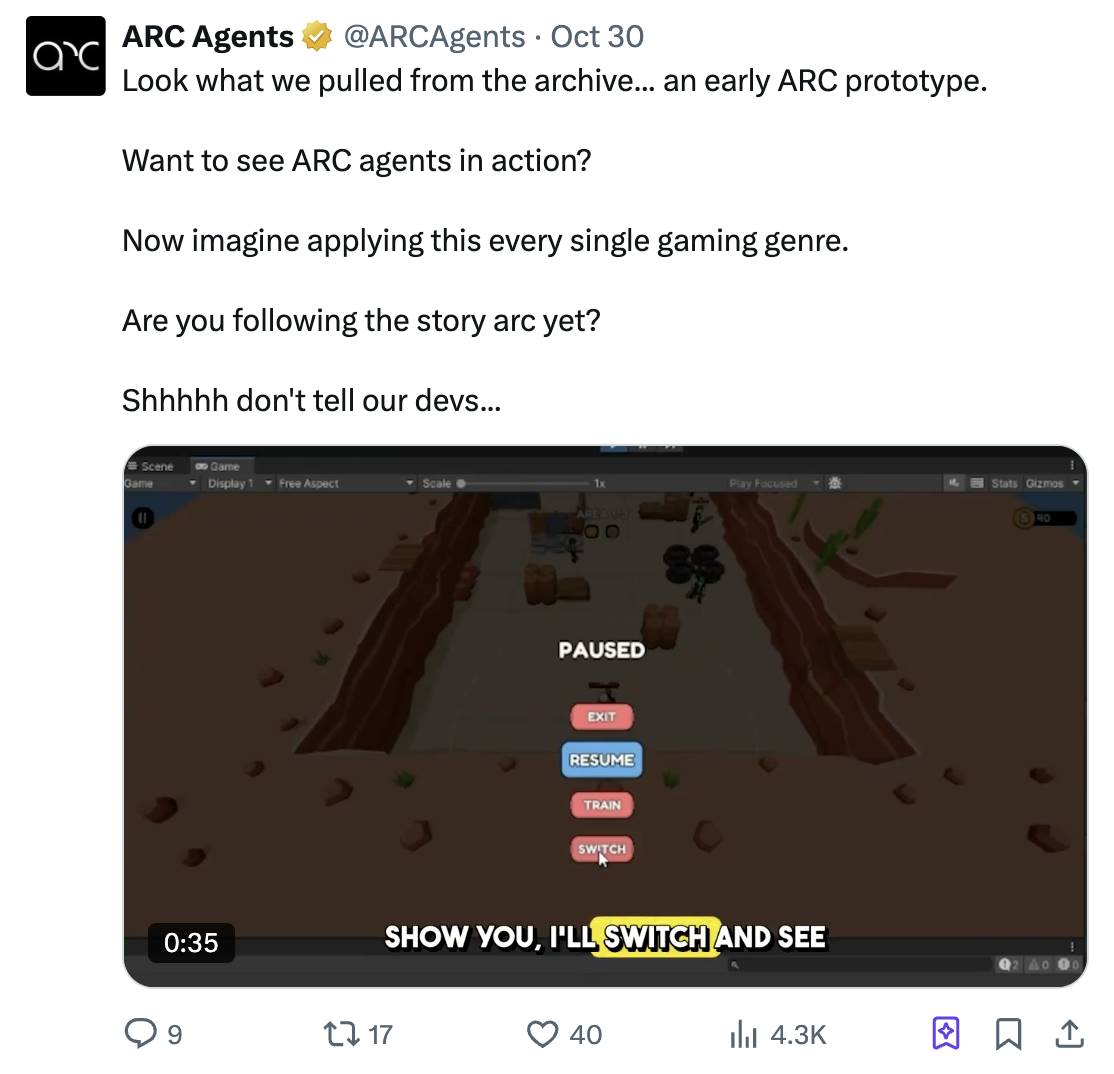
One of ARC’s flagship products, AI Arena, allows players to compete against AI agents trained on real human behavior, simulating authentic human interaction. Unlike traditional game bots, ARC’s agents use reinforcement learning and crowdsourced data to behave more like actual players, delivering gameplay experiences nearly indistinguishable from matches against real opponents.
Through AI Arena, ARC discovered that these human-trained agents could solve critical problems for other game studios. As a result, ARC transitioned from being just a game developer to a game infrastructure provider, enabling third-party studios to integrate ARC-trained agents via the ARC SDK.
The SDK gives game developers access to ARC’s powerful agents, helping them enhance gameplay, improve player retention, and build immersive, competitive environments.
ARC RL: Enhancing AI Through Crowdsourced Player Intelligence
ARC’s B2C product, ARC RL (Reinforcement Learning), takes AI gaming to the next level by crowdsourcing human intelligence to train agents. In ARC RL, players contribute gameplay data to train AI agents—potentially leading to AI that surpasses human capabilities. This dynamic, crowd-powered model brings users directly into the development process, allowing ARC’s agents to continuously evolve through human input.
Players participating in ARC RL earn $NRN, ARC’s native token, used to train and reward data contributors. Reward amounts are determined by the uniqueness and usefulness of each user’s contributions, ensuring only high-value interactions shape agent behavior.
A New Era for Gaming AI Agents
ARC’s advancements in human-trained gaming agents are opening new possibilities for the AI gaming industry. As ARC expands its agent infrastructure, game developers will gain tools to solve player liquidity issues and deliver more realistic, human-like opponent experiences.
In the future, ARC envisions an esports landscape where agents battle agents—AI trained by different players or studios competing head-to-head, creating entirely new forms of entertainment, monetization, and competitive events.
Summary
Crypto AI agents are evolving from purely personality-driven avatars into practical, multi-channel tools—ushering in a dynamic transformation of the industry. These projects represent key trends shaping the future of AI agents:
-
Questflow: Advanced workflow automation
-
HoloworldAI: Deep personalization and customization
-
PlayAI Network: Multi-channel reach and vertical specialization
-
ARC Agents: Game infrastructure and human-like AI agents
The AI agent space is poised for accelerated growth, with agents offering compelling personalities while demonstrating high utility across multiple channels. If you're building or researching in the intersection of crypto and AI, feel free to DM me!
Join TechFlow official community to stay tuned
Telegram:https://t.me/TechFlowDaily
X (Twitter):https://x.com/TechFlowPost
X (Twitter) EN:https://x.com/BlockFlow_News