








TIME Magazine 30,000-word cover story: Behind Trump's election as the Bitcoin president
TechFlow Selected TechFlow Selected
TIME Magazine 30,000-word cover story: Behind Trump's election as the Bitcoin president
Trump's comeback was no accident.
 Navigating Web3 tides with focused insights
By Eric Cortellessa, TIME
Translation: Liam, Carbon Value
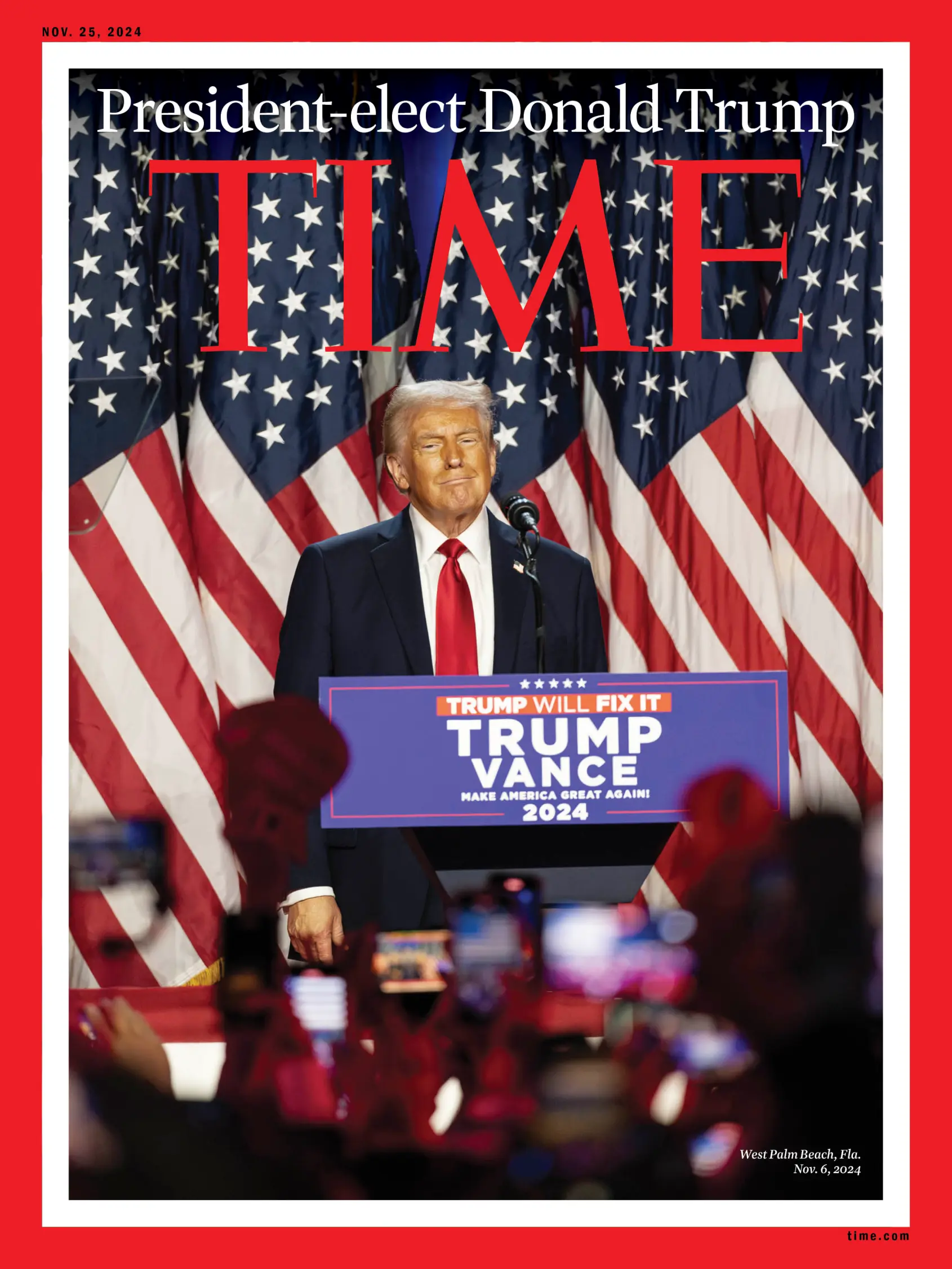
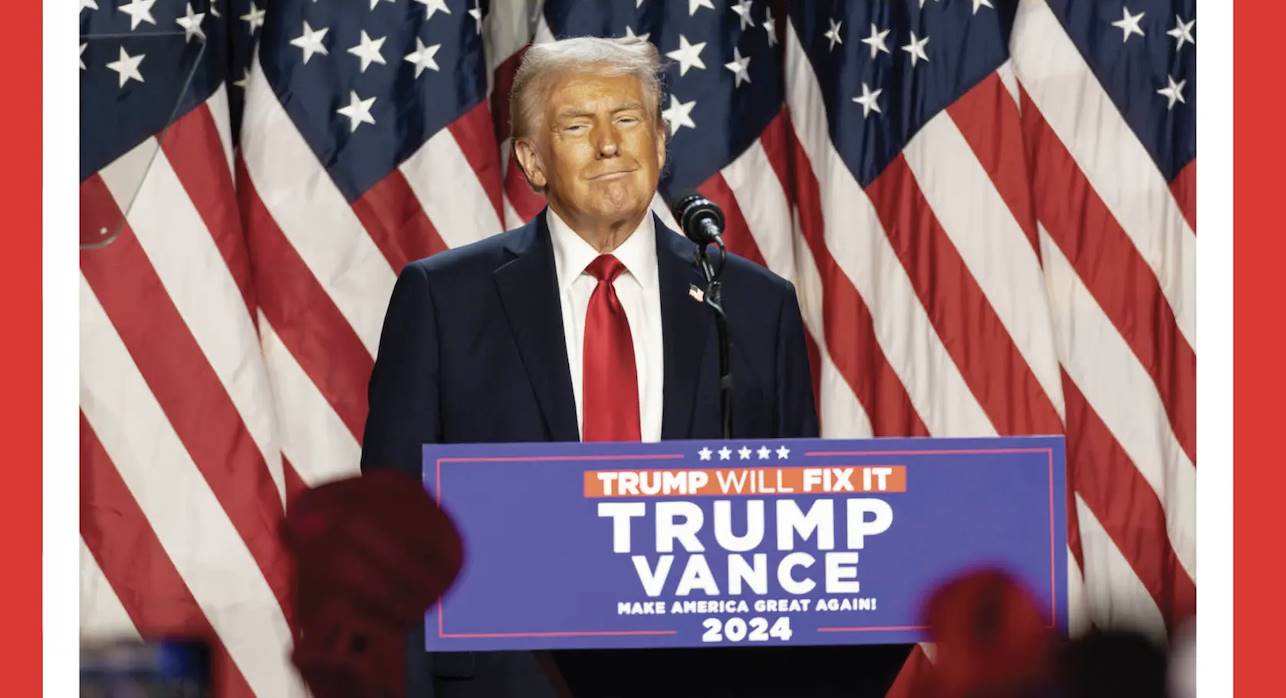
This was the moment he had dreamed of for four years. At 2:24 a.m. on November 6, Donald Trump strutted onto the stage of a banquet hall in Florida, surrounded by advisors, party leaders, family, and friends. The Associated Press had not yet called the election, but it was already clear that voters had propelled him back into power. Gazing at a sea of supporters wearing red MAGA hats, Trump basked in near-certain victory. "We have achieved the most incredible political accomplishment," Trump said. "America has given us an unprecedented mandate of strength."
How the 78-year-old Trump won reelection will become history, though America's choice can already be traced to several pivotal decisions. For Trump’s senior aides, the campaign’s theme could be summed up in one simple slogan: “Maximize male appeal, manage female appeal.” That meant emphasizing economic and immigration issues—something Trump did relentlessly. It meant deflecting attention from the chaos of his first term, the abortion bans he ushered in, and his assault on American democracy four years ago. It meant harnessing the discontent of disillusioned voters and exploiting the cultural divisions and tribal politics Trump has long leveraged.
Above all, this outcome is attributable to an extraordinary figure whose political trajectory back to the White House is unprecedented in America’s 250-year history. When Trump left office in 2021, he was widely reviled after inciting a mob to ransack the U.S. Capitol in an attempt to overturn his electoral defeat. Three years later, he orchestrated a comeback unlike any in modern memory. Trump easily defeated his Republican rivals, forced President Joe Biden out of the race, and crushed Vice President Kamala Harris with a victory so sweeping it exceeded nearly everyone’s expectations. In the process, Trump shrugged off 34 felony convictions and a cascade of other criminal indictments.
His success was staggering. Trump carried North Carolina, pulled Georgia back into his column, and shattered the Blue Wall. His campaign defied conventional wisdom about winning men and women alike. Exit polls showed Trump won overwhelming support from Latino male voters in key battleground states; in Pennsylvania, their support rose from 27% to 42%. Nationally, his backing among Latino men surged from 36% to 54%. Trump also increased his share of non-college-educated voters, won Black voters in Pennsylvania and Wisconsin, and solidified white women’s support nationwide—stunning Democrats who expected an uprising following the Dobbs decision. Among first-time voters, Trump’s support jumped from 32% four years ago to 54%.
He benefited from several major breaks. When Trump launched his campaign after suffering three consecutive rebukes in national elections, Republican leaders tried to ignore him. His main opponents were too timid to challenge him directly. Friendly judges and legal delays combined to push his harshest criminal trials past Election Day. As late as July, Trump’s general-election opponent was an unpopular incumbent president widely perceived as too old for the job. Biden’s disastrous performance in the first—and only—debate confirmed those doubts. The Democrats hastily replaced him with Harris, losing a more experienced candidate who might have drawn broader support. Voters largely dismissed Trump’s advanced age and increasingly incoherent campaign rhetoric. Most Americans viewed Trump’s legal troubles as part of a broader corruption conspiracy aimed at stripping him—and them—of power. After the pandemic, global instability led to the ouster of sitting leaders worldwide, and Trump benefited from that trend.
The consequences could be historic. Trump has dominated American politics for nine years. After four tumultuous years in office culminating in insurrection, America chose to reappoint him. During the campaign, Trump advanced an authoritarian agenda that would dismantle democratic norms in the United States, and he is already preparing to execute it: mass detentions and deportations of immigrants; using the justice system to retaliate against political enemies; deploying the military against civilians. The extent to which Trump chooses to wield the power entrusted to him will determine the fate of the nation.
To loyal believers of “Make America Great Again,” Trump’s victory represents an electrifying vision. To less fervent supporters who helped lift him to power, his rhetoric is mostly bluster, aimed at reforming a government detached from America’s economic and social needs. To much of the rest of the United States and the world, Trump’s second term appears as a blow to democracy at home and abroad. This deep division will define the nation’s discourse over the next four years. The country is more polarized than at any time since the Civil War. But soon, at least one thing will bind us all: by January 20, we will all live in Trump’s America. Based on more than two dozen interviews conducted over the past eight months, this article explores how Trump achieved this and offers a glimpse into what he may become.
As always, Trump relied on instinct to shape his strategy. In April 2023, just days after making history by becoming the first former president criminally indicted, he gathered advisors at Mar-a-Lago in Florida. The topic of conversation: how could he control the political narrative? Trump had just finished a phone call with his friend Dana White, CEO of the Ultimate Fighting Championship. There was a fight scheduled in Miami that Saturday. "I think those guys are going to like me," Trump said.
On April 10, when Trump entered the arena, he was greeted with thunderous applause. There, he met Nelk Boys, a group of influencers who host a right-wing podcast. Trump had appeared on their show a year earlier, but YouTube removed it for spreading election lies. This chance encounter led to a second appearance. At the time, his closest confidants didn’t realize it, but interviews on male-focused podcasts would become the turning point in his remarkable political resurgence.
It’s easy to forget how shaky Trump’s prospects seemed at the start of his campaign. He announced his third presidential bid in November 2022, just days after Republicans suffered a crushing defeat in midterm elections—the third consecutive national election in which the former president was seen as a liability. Candidates handpicked by Trump embraced his lie that the 2020 election was stolen and lost key races nationwide. Elected Republicans saw this as a sign that America was moving on from Trump and largely avoided his resentful opening speech at Mar-a-Lago. They hoped he would simply fade away.
But launching the campaign early proved wise, allowing Trump to frame looming criminal charges as politically motivated. With each indictment, his approval among Republican voters grew, and he raised millions of dollars. His main rivals spent more time attacking one another than uniting to stop the man blocking their path forward. Ron DeSantis, arguably Trump’s strongest opponent, dropped out after the Iowa caucuses. By March, Trump had secured enough delegates to become the Republican nominee—a rare feat in modern U.S. history during the most competitive presidential primary ever.
Trump’s overwhelming victory in the primaries resulted from a carefully crafted strategy by his two campaign managers, Susie Wiles and Chris LaCivita. Wiles, a veteran strategist from Florida, had worked on DeSantis’s 2018 gubernatorial campaign but fell out with him after inauguration. After the 2020 election, Wiles took over Trump’s primary political action committee, Save America. According to sources close to him, Trump, though in exile, was already plotting his return to Washington and suspected DeSantis would be his biggest obstacle in the 2024 primary. Who better to help than Wiles?
Wiles recruited seasoned Republican operative LaCivita. Together, they drafted the campaign strategy. They concluded that the base of the Make America Great Again movement was strong enough to secure Trump’s nomination, freeing up time to test a plan to defeat Biden in November. Trump’s team focused on building an operation to identify and mobilize reliable Trump supporters.
Wiles, LaCivita, political director James Blair, and Trump’s longtime pollster Tony Fabrizio believed gender would be key. In 2020, Biden maintained Hillary Clinton’s 13-point lead among female voters while narrowing the gap with men by five points. "Men cost us the last election," a senior source on Trump’s campaign said. "Our goal is to never let that happen again."
Polls showed men, especially young men, harbored the deepest resentment toward Biden, particularly on economic issues. In head-to-head matchups, Trump held his largest leads among unreliable male voters under 40. Advisors focused on activating this group, broadly seen as viewing Biden as an elderly man unfit for the presidency. These young people didn’t get news from mainstream media and cared little about reproductive rights or democratic backsliding. When they engaged politically, it was mainly through edgy bro podcasts and social media. They admired Trump’s brashness and rule-breaking habits. Focusing heavily on voters disengaged from politics was risky. But LaCivita often repeated a Winston Churchill quote that became his campaign mantra: “Safety first is safety nowhere.”
While courting male voters, Trump also had to avoid losing women by a wider margin than in 2016 and 2020—an immense challenge given that Supreme Court justices he appointed helped overturn Roe v. Wade, paving the way for nationwide abortion bans. Whenever abortion came up, Trump insisted the issue was now decided by states and redirected focus to the economy, immigration, and crime—issues that campaign strategists believed would resonate with affluent suburban women who might otherwise support him.
When Trump sat down with TIME for an interview in April 2024, Biden’s polling numbers were slipping, and the Trump camp believed they were on a path to decisive victory. In two interviews, Trump laid out his agenda for a second term, aiming to reshape America and its role in the world. Meanwhile, allied groups such as Heritage Foundation’s Project 2025 and America First Policies were laying groundwork to implement Trump’s strongman vision. Many of their ideas—from strict abortion limits to dismantling environmental protections to placing the entire federal bureaucracy under presidential control—are deeply unpopular with the broader electorate. Yet Trump seemed to view an autumn victory as inevitable.
Campaign confidence began growing after Biden’s disastrous debate performance on June 27, though it took three tense weeks to solidify. On July 13, Trump survived an assassination attempt in Butler, Pennsylvania, where a gunman’s bullet grazed his ear. Trump stood up, fists raised, blood streaming down his face—an image of defiance that electrified his supporters. Days later, Trump unveiled J.D. Vance, the 39-year-old Ohio senator, as his running mate at the Republican convention, signaling confidence that even if MAGA leaders exited politics, the movement would endure.
The momentum didn’t last. Three days after the Republican convention ended, Biden announced he wouldn’t seek re-election and endorsed Harris. Within days, the vice president consolidated Democratic support. Soon, she raised hundreds of millions more dollars than Trump and drew crowds unmatched by Republicans since the Obama era. Trump’s victory no longer seemed certain.
In meetings at Mar-a-Lago and Trump’s New Jersey golf club, Wiles, LaCivita, and their staff convened repeatedly to address the threat posed by the new opponent. A younger candidate made it harder to attract voters disillusioned with Biden. Competing with a woman made limiting losses among female voters even more difficult. Democratic efforts to tie Trump to extreme agendas like Project 2025 started gaining traction. Early internal polling revealed the scale of the challenge. Fabrizio’s data showed widespread desire for change, with the biggest risk being that Harris would emerge as the agent of that change.
The Trump team began airing ads and sending surrogates to cable TV blaming Biden’s presidency on Harris, suggesting she would inherit many of her boss’s weaknesses. They focused on her role in immigration policy, assigning her responsibility for addressing root causes of Central American migration and blaming her for surging border crossings. Meanwhile, Trump distanced himself from Project 2025 while portraying Harris as further left than she actually was.
Privately, the campaign recognized that Trump’s message on abortion—leaving it to the states—was insufficient. Polls showed abortion rights ranked as the third or fourth most important issue for voters. After months of hesitation on federal restrictions, his senior aides told him it was time to directly address the issue. On October 1, Trump posted on Truth Social that he would not support a national ban.
Challenges emerged internally as well. Trump grew increasingly restless. He brought in allies from previous campaigns, including Corey Lewandowski, one of his 2016 campaign managers. According to multiple campaign officials, Lewandowski was one of the staunchest advocates of “letting Trump be Trump” and believed Wiles and LaCivita were botching the effort. In August, according to two people familiar with the meeting, Lewandowski urged Trump to fire the entire campaign leadership. Trump gave no commitment, merely nodding and listening. Wiles and LaCivita quickly met with Trump, arguing Lewandowski was distracting and derailing the campaign. Wiles told him their approach was working and now wasn’t the time to stray off course. Trump agreed. On the next flight, he held a meeting with everyone, including Lewandowski, who was sidelined in the final weeks, no longer serving as an advisor and appearing almost exclusively on cable news.
Harris’s momentum seemed to persist into September. She won the only debate between the two candidates, goading Trump into mistakes. "Internally, we were very concerned. She turned out to be a stronger opponent than we realized, and the dynamics had shifted," a senior Trump official said. But a week later, when polls showed the debate had barely changed the race and candidates remained tied, the campaign breathed easier. Trump returned to his mantra: accelerate efforts to win young male voters. Several insiders told TIME that in late July, Wiles commissioned 27-year-old Republican consultant Alex Bruesewitz to provide Trump with a list of popular online podcast hosts for interviews. The next morning, Bruesewitz and another senior Trump advisor, Daniel Alvarez, found Trump on the golf course.
“I have a list of podcasters I’d like to recommend to you,” Bruesewitz said. Trump cut him off. “Did you talk to Barron about this?” he asked, referring to his 18-year-old son.
“No, sir,” Bruesewitz replied.
“Call Barron, see what he thinks, then tell me,” Trump said before hanging up. Later that day, Bruesewitz reached Barron, who particularly liked Adin Ross, an influencer known for livestreaming video games (like NBA2K and Grand Theft Auto) with celebrities. They agreed Trump should start there. The podcast strategy was underway.
In August, Trump appeared on Ross’s podcast, which quickly went viral, drawing millions of live views. In the following weeks, Trump gave a series of flattering interviews to young male podcast hosts: Logan Paul, Theo Von, Joe Rogan. The campaign deliberately avoided most traditional media interviews.
Trump took unconventional approaches to outsiders. He claimed to neutralize a potential third-party threat by offering Robert F. Kennedy Jr. control over healthcare policy in exchange for dropping out and endorsing him. The campaign outsourced its most labor-intensive field operations in key swing states to groups like Turning Point USA and America First Works. In the final weeks, billionaire Elon Musk poured over $100 million into his own political action committee to help Trump’s ground game in battleground states. Musk promised to lead a new “Department of Government Efficiency” that would oversee countless federal agencies regulating his companies, hiring staff and incentivizing voter outreach with payments. He personally camped out in Pennsylvania, a state both sides considered pivotal, distributing $1 million in checks to registered voters who signed petitions. Musk also turned his social media platform X into a hub for conspiracy theories, framing the stakes of the election to his more than 200 million followers. In the final weeks, he amplified far-right conspiracies alleging Democrats were “importing” undocumented immigrants into swing states to irreversibly tilt the electoral map in their favor. “If Trump doesn’t win,” Musk said, “this will be the last election.”
As usual, Trump’s self-destructive impulses presented challenges. Just over a week before Election Day, he fulfilled a lifelong dream by holding a rally at Madison Square Garden in New York. Trump’s warm-up speakers delivered speeches filled with hate, xenophobia, and racism. The campaign brought in crude fighters, including insult comic Tony Hinchcliffe, who referred to Puerto Rico as a “floating garbage island.” According to two insiders, the campaign did not vet his remarks nor upload them to the teleprompter before his routine.
Trump’s former chief of staff John Kelly recently publicly stated that Trump praised Hitler’s generals. Mark Milley, Trump’s former chairman of the Joint Chiefs of Staff and retired general, called him a “full-blown fascist.” Internal polling from Harris’s campaign showed the rally’s repulsive atmosphere pushed late-deciding voters toward her. Trump seemed poised to collapse at the last minute.
Just after 9 p.m. on Election Night, Trump walked into the banquet hall at Mar-a-Lago, greeted by thunderous cheers from a crowd packed with wealthy donors. Behind him were his family members, including sons Eric and daughter-in-law Lara, and his youngest son, Barron. For the next three and a half hours, he celebrated alongside Musk and White as election results surpassed even his most optimistic supporters’ predictions.
Trump’s transition team is packed with loyalists: former cabinet secretary Linda McMahon, businessman Howard Lutnick, his sons Donald Jr. and Eric, and running mate J.D. Vance. All are tasked with ensuring only true believers join his incoming administration. He is expected to rely on networks of organizations that have been preparing to carry out his agenda. Among them is Russell Vought, former director of the Office of Management and Budget and head of America First Policies, who has been drafting executive orders Trump could sign within hours of taking office.
The first and most radical agenda item is expected to be immigration and border security. In his interview with TIME, Trump said he plans to use executive power to launch mass deportations of undocumented immigrants, ordering National Guard, ICE, and federal law enforcement to conduct raids. Campaign sources say Tom Homan, a former Trump official affiliated with Project 2025, is expected to lead this effort.
Meanwhile, Trump’s senior advisors told TIME that a massive purge of the federal bureaucracy is planned. They say the most satisfying part for Trump will be firing Special Counsel Jack Smith, who charged Trump with mishandling classified information and conspiring to overturn the 2020 election.
Trump’s most controversial moves will almost certainly face major legal and political battles. During the campaign, he vowed to appoint an attorney general who would investigate and prosecute his political opponents and critics. Last summer, a Supreme Court ruling emboldened Trump by granting presidents possible immunity from certain criminal prosecutions for official acts. Given Trump’s psychological tendencies, his vows of revenge against adversaries, and the removal of many obstacles that hampered him in his first term, authoritarian scholars believe the nation stands on the brink of crisis.
In the end, the election is a judgment on the American people and the president they have chosen once again. Trump’s resurgence was no accident. By launching a social and political movement, Trump gained coercive power over the Republican Party, systematically dismantled many longstanding American norms, and ushered in a cohort of sycophants eager to fulfill his most autocratic impulses. He will enter a second term committed to creating a governance environment with almost no constraints on his power. He makes no secret of it. This is what the American people have decided they want.
On April 12, former President Donald Trump granted TIME a wide-ranging interview at his Mar-a-Lago Club in Palm Beach, Florida, followed by a telephone follow-up interview on April 27.
In the interview, Trump discussed his agenda for a second term, including mass deportation of millions, reducing the size of the federal civil service, and more direct intervention in Justice Department prosecutions than any predecessor. He also shared his views on other issues, including abortion, crime, trade, Ukraine, Israel, and the prospect of political violence in this election cycle.
Below is the transcript of Trump’s interview with Eric Cortellessa, national political correspondent for TIME, lightly edited for clarity.
Let’s start with Day One: January 20, 2025. You’ve said you’ll take a series of aggressive actions on the border and immigration—
Donald Trump: Yes.
You’ve vowed to—
Trump: Energy too.
Yes, yes. We’ll definitely get to that. You’ve vowed to launch the largest deportation effort in American history. Your advisors say this includes—
Trump: Because we have no choice. I don’t think a country can withstand what we’re going through. By the time Biden leaves, there could be 15 million, maybe even 20 million. Twenty million, many coming from prisons, many from mental institutions. I mean, look at what’s happening in Venezuela and other countries. They’re getting safer.
Okay, let’s talk—You’ve talked about mass deportations. I want to be specific about exactly how you intend to do it.
Trump: If you go back to the 1950s, Dwight Eisenhower isn’t known for this—you wouldn’t think of him that way. But, Eric, Dwight Eisenhower was very tough on illegal aliens not coming into our country. He deported massive numbers of illegals. He did it for a long time, very skillfully. He took them across the border, and a few days later they’d come back. Then he started taking them 3,000 miles away—
Do you have a plan, sir?
Trump: We’ll use local law enforcement. We’ll absolutely start with the criminals coming in. The number coming in is unprecedented. We’re seeing a new type of crime. It’s called immigrant crime. You see it all the time. In New York, they physically attack police. And worse. You see it all the time. In every city. Especially Democratic-run cities. There are many big ones, but Chicago, New York, and Los Angeles are worse than others.
Does that include using the U.S. military?
Trump: Yes. When we talk about military, generally we mean the National Guard. I used the National Guard in Minneapolis. If I hadn’t used it, I don’t think Minneapolis would exist today because it was really bad. But I think it means the National Guard. If I thought things were out of control, I could absolutely use the military if necessary. We must ensure national security. We must maintain law and order in the country. However it takes, I think the National Guard can handle it. You know, if Nancy Pelosi used the National Guard, I’d meet their demands, but I frequently—
Would you use the military inside the country and at the border?
Trump: I don’t think I have to. I think the National Guard can do it. If they can’t, then I’ll use the military. You know, our situation is different. Now we have millions, whereas two years ago we didn’t.
Sir, the Insurrection Act prohibits using the U.S. military against civilians. Would you ignore that provision?
Trump: Well, these aren’t civilians. They’re not legally in our country. This is an invasion of our country. An invasion possibly unlike any other nation has ever seen. They’re coming in by the millions. I believe we already have 15 million. I think by the end, you’ll have 20 million. That’s more than almost every state.
So you can envision using the military to deal with this?
Trump: I can envision using the National Guard. If I have to go further, I must. We have to do whatever it takes to stop what we’re facing. Again, a powerful force is assembling in our country. In the past three weeks, 29,000 came from China, all minors, mostly males. Yes, you have to take necessary measures to stop crime, to stop what’s happening at the border.
Does that include building new immigration detention camps?
Trump: We don’t need to do much. Because we’re going to take them out of the country. We’re not keeping them here. We’re going to take them out. This was done before.
Will you build new ones?
Trump: Obama did it in the form of prisons, you know. For that, I got blamed for four months. Later people realized it was him, not me.
So are you ruling out the possibility of building new immigration detention camps?
Trump: No, I’m not ruling anything out. But in fact, we’re going to move them out so quickly, we won’t need many detention camps. We’re going to take them back to where they came from.
I ask because your close aide and advisor Stephen Miller has said part of executing this deportation effort will include new immigration detention camps.
Trump: We might do that to some extent, but we won’t have to do much because once we start, we’re going to kick them out. We’ll obviously start with criminals. We’ll use local police because they know their names, middle names, third names. I mean, they know them very well.
How do you plan to involve state and local police departments? What authority does the president have to do that?
Trump: Some might not want to participate because they don’t want to share wealth. We have to do it. This is unsustainable for our country.
Does that mean you’ll offer financial incentives from the federal government to state and local police departments?
Trump: Very likely. I want police to be immune from prosecution because liberal groups or progressive groups—depending on what they want to be called, kind of liberal, kind of progressive—are very adamant. They want everybody involved. I don’t know. You know, sanctuary cities are failing everywhere. I really believe even those supporting sanctuary cities have a pent-up emotion to end sanctuary cities because it just doesn’t work for the country.
So, by your own admission, these are new, bold, and aggressive actions.
Trump: I don’t think they’re bold. I think they’re common sense. But I really believe, Eric, these actions—they allow so many people into our country, it’s incredible, especially considering most come unchecked or unvetted. They just flood in. The numbers flooding in are unlike anything any country has ever seen. This is an invasion of our country.
Okay, let me put it this way: They’re new and will certainly be challenged in court. If courts rule against you, do you commit to obeying all court orders supported by the Supreme Court?
Trump: I’ll obey court orders. I’ll act very legally, just like I built the wall. You know, I built a tremendous wall, which gave us a lot of data. I’m willing to do far more than I said. I was willing then and now—I wish they’d finish that wall. I did what I said, and much more than I imagined. But when you do it, you find you need more wall in different places, and people once thought you couldn’t—didn’t need to.
But frankly, the first time I discovered Biden wanted open borders was because I never believed it. It didn’t make sense. The first time I really saw it was when he didn’t want to install the wall that was already built, which could have been completed in three weeks instead of tearing it down and doing hundreds of extra miles of work.
I want to talk about your plan to build the wall quickly, but circling back: So you commit to obeying all Supreme Court orders? All orders supported by the Supreme Court?
Trump: Yes, of course I will. I have great respect for the Supreme Court.
Going back to the border wall, in your last term, you tried to negotiate with Democrats Nancy Pelosi and Chuck Schumer on border funding and had a chance to get $25 billion. But negotiations failed. Ultimately, you only got $1.4 billion—
Trump: But with $25 billion, things became unacceptable.
Codifying protections for Dreamers—
Trump: Well, there were many other things. Many bad things. Of course, they gave you money for the wall. You know, I basically took the money from the military. I thought it was an invasion of our country, so I took from—
So my question is, what do you plan to do in your second term? Will you immediately use federal funds to continue building the wall on Day One? Will you legislate? How do you plan to do it?
Trump: I think what we’ll do is finish—we built more wall than I thought when you and I talk about finishing the wall. But in the process of building, you find you need it. We built it, then found leaks in certain areas. Like politicians leaking, they leak too. We found the problem, then built it, then built other things. It’s just a system. We had a good system. We could have added another 200 miles of wall and good territory. Because the wall really works, you know, walls and wheels. I’d say, you know, lots of things, look at your recorder here, other things obsolete in about six months. You’ll have better things. But two things never obsolete: walls and wheels.
You just said something. You said, “We want to protect police from prosecution.” What do you mean by that?
Trump: Police—their authority has been stripped. If something happens to them, even if they do a good job, their house, pension gets taken. I mean, they end up losing their families. They’re prosecuted. We must give police the authority and respect they deserve. Now, mistakes happen, bad apples exist—it’s terrible. But now it’s worse. When a department store is looted, police stand outside while 500 kids walk out with air conditioners, TVs, other stuff. Police want to act. But they’re told not to interfere. They say leave it. If you interfere, if you stop the crime, we’ll threaten your pension, your house, your family, your wife or husband. Police are sued all the time. We want them immune from prosecution if they do their jobs.
Will you try to pass a law through Congress?
Trump: Sorry.
Will you push Congress to pass a bill to do this?
Trump: We’ll see.
Let’s turn to the economy, sir. You’ve said you’ll impose a 10% tariff on all imports and over 60% on Chinese imports. Can I ask you now: Is that your plan?
Trump: Possibly higher. Maybe just part of it. But someone always—look when they come in, they steal our jobs, steal our wealth, steal our country.
But you said more than that: Are you saying over 10% on all imports?
Trump: Over 10%, yes. I call it a “ring tariff.” We have a ring of nations. Besides reciprocity, we have reciprocal tariffs. If we do that, the numbers are amazing. I don’t think it’ll impact much because they make so much off us. I don’t think prices will rise that much. Many say, “Oh, that’ll be a tax on us.” I don’t believe it. I think it’s a tax on the country. I know. I made billions from China. Before, nobody did anything to China. I also made people aware of China’s threat. China makes $50–60 billion annually. Before me, nobody mentioned China. Detroit is very sad because the EV mandate is ridiculous—can’t go far. Too expensive, and they’ll be made in China. They’ll all be made in China.
Mr. President, most economists—knowing not all agree on this—but most economists say tariffs raise prices.
Trump: Yes.
Are you willing to accept inflation?
Trump: No, I’ve seen it. I see some—I don’t think it causes inflation. I think it doesn’t cost our country. Because what happens, other countries do very well. China excels. India is hard to deal with. India—I get along well with Modi, but hard on trade. Frankly, France is very hard on trade. Brazil is very hard on trade. They charge high import fees. They say, we don’t want your cars in Brazil or China or India. But if you build a factory in our country, hire our workers, that’s fine. That’s basically what I’m doing. I was doing it, pushing hard, but then hit COVID. We had to deal with it. Ultimately, we delivered stock market performance far better than when COVID first hit. But if you look at our initial years, the numbers are amazing. Never has an economy—
Sir, there’s no doubt the economy did well in your first term. But Moody’s did say the trade war with China cost the U.S. $316 billion and 300,000 jobs. [Editor’s note: The $316 billion estimate was made by Bloomberg Economics, not Moody’s.]
Trump: Yes. Moody’s doesn’t know what they’re talking about. We had the strongest economy in history. Moody’s acknowledges that. How could we lose if we had such a great economy? Everyone acknowledges it. If we hadn’t done it, we wouldn’t have a steel industry now. They dumped steel into this country. I imposed a 50% tariff on steel. Tariffs will go higher. The people who love me most are businesses, especially steel. They love me because I saved their industry. Steel company CEOs and executives cry when they see me. They say, before you came, nobody helped us. China dumped massive steel into our country. We saved the steel industry.
Do you think businesses will pass the tax cost to consumers?
Trump: No, I don’t think so. I think it costs the country—I think their revenue decreases. Actually, I think the taxed countries’ revenue decreases. I don’t believe—
You don’t believe businesses will pass on costs?
Trump: No, I think the situation you create. The way out of the whole mess is, you ultimately manufacture instead of importing from China due to extra cost, you ultimately produce in America. Traditionally, that’s how it works. If you look at what happened. Look at China, they don’t want our cars. They charge huge fees. Look at India. India’s a great example. I get along well with Indian representatives. Modi’s a good guy, doing what he must. But we had issues with Harley-Davidson. I brought Harley-Davidson people to the White House. I said, “How you doing lately? Business good? Everything okay?” I said, “Out of curiosity, how do you handle relations with India?” “Not good.” Now remember, this was five, four years ago. They said, “Not good. We can’t do business with India because they charge us such high tariffs, over 100%.” At that price, consumers collapse, can’t buy. They said, “But they’ll do anything for us to build a Harley-Davidson factory in India. They don’t want us selling motorcycles to India, but they do want us to build a factory.” I said, “Well, I’m not too happy about that.” But eventually it happened. They built a factory in India. Now no taxes, and we’ll do the same. We’ll build here. Something’s happening now, nobody talks about, maybe doesn’t know, but I have a friend who builds auto factories. That’s all he does. If you ask him to build a simple apartment somewhere, he doesn’t know how. But he can build factories, millions of square feet, the biggest in the world. He’s incredible. I said to him, “I want to see your factory.” He said to me, “Okay, you ready to go to Mexico? Ready to go to China?” I said, “No, I want to see it here.” He said, “We don’t actually build here. Big factories aren’t built here. Big factories are now being built in Mexico or China.” China’s now building factories in Mexico to make cars for America. These are the biggest factories in the world. If I’m president, that won’t happen because I’ll impose a 100% tariff on them. Because I won’t allow them to steal our other businesses. You know, Mexico has already stolen 31% of our car manufacturing and auto business. And China’s share is much larger. We have a tiny piece of that business, then you have a poor fool like this gentleman in the UAW who agrees we’ll make pure electric vehicles, which is very sad because pure electric vehicles aren’t what consumers want.
Sir, I understand your position—
Trump: By the way, I have nothing against pure electric vehicles. I think it’s great. You can buy an EV, I think it’s fine. They don’t go far. They have problems. They don’t work in cold weather. They don’t work in hot weather. Many problems. When I was in Iowa, EVs were everywhere. All over the streets. Temperature on Iowa caucus night was minus 40 degrees.
I was with you then.
Trump: Right. I’ve never heard of such cold.
I want to clarify what you just said: Are you considering imposing a 100% tariff on goods imported from China and Mexico?
Trump: I didn’t say that. They impose 100% tariffs on us. Their tariffs are much higher. India imposes higher tariffs on us. What’s Brazil’s tariff—Brazil is a very, very high-tariff country. I ask people, who’s the toughest? I won’t tell you because I don’t want to insult these countries, since I actually get along well with them. But you’d be surprised. The EU is very tough on us. They don’t accept our foreign products. They don’t accept our cars. We accept Mercedes-Benz, Volkswagen, BMW. They don’t accept our cars. If we want to sell Chevys, even Cadillacs, a beautiful Cadillac Escalade, if we want to sell our cars to Germany, for example, they won’t accept.
We’ll come back to Europe later.
Trump: I said to Angela Merkel: “Angela, how many Chevys are in downtown Berlin?” She said none. I said, “You’re right. But we buy your cars, including Volkswagens, relatively cheaper cars.” I said, “Do you think that’s fair?” She said, “Probably not fair, but until you came, nobody ever mentioned it.”
Sir, you’ve criticized how Israel waged war on Hamas. In a recent interview, you said Israel needs to “end the war” and “get back to normal.”
Trump: Yes.
As president, would you consider halting military aid to Israel to force it to end the war?
Trump: Okay. Let me start internally. [Has assistant turn down AC.] I don’t have to start from scratch. But as you know, Iran was bankrupt. Iran was—
No, I know, but can you—
Trump: No, but think about how great a job I did. This wouldn’t have happened. You wouldn’t have—Hamas wouldn’t have money. You know?
I understand, sir, I just want to know—
Trump: No, but I want to point out. During my tenure, reports said Iran had no money for anyone—little terrorism. We didn’t. I had four years—we had no terrorism. We didn’t have the World Trade Center destroyed. You know, Bush once said, “Well, we’re a safe country.” I said they destroyed the World Trade Center on your watch. Do you remember that debate? That was a good example. But it’s true, absolutely true. But we didn’t experience terror—we 100% eliminated ISIS. Now they’re starting to come back.
I wonder—you said you want Israel to end the war. You said need to “get it over with.” How do you plan to do it? Would you consider stopping aid?
Trump: I think Israel is doing very poorly on public relations. I don’t think Israel Defense Fund or any organization should release photos nightly of buildings collapsing, possibly with people inside, which they do every night.
So you don’t rule out suspending or limiting aid?
Trump: No, I—We have to do it. Listen, no president has done for Israel what I’ve done. Look at everything I did, first the Iran nuclear deal. You know, Netanyahu begged Obama not to make the deal. I terminated the deal. If they were smart and energetic, besides trying to cozy up to Trump, they could have made a deal because they were in a weak position. They should have made a deal with Iran. They didn’t sue. They didn’t make a deal. But I did the Golan Heights.
You did.
Trump: Nobody even thought of the Golan Heights. I gave them the Golan Heights. I did the embassy in Jerusalem. Jerusalem became capital. I built the embassy.
Right.
Trump: The embassy is very beautiful and cost much less than anyone imagined. You’ve heard that too. But no president has done for Israel what I’ve done. Interestingly, the Israeli people appreciate it. My approval is 98%, the highest.
You know who’s not popular in Israel now?
Trump: Bibi.
Yes. Do you think he should step down?
Trump: Well, I had a bad experience with Bibi. It was about Soleimani because you probably know, he backed out before the strike. I said, “What’s going on?” Because it was supposed to be a joint operation, suddenly we were told Israel was out. I was very unhappy about that. I’ll never forget it. It taught me something. I’d say, October 7 shouldn’t have happened.
It happened on his watch.
Trump: No, it happened on his watch. I think despite everything, it affected him deeply. Because people will say, that shouldn’t have happened. They had the best equipment. They could have stopped it. Many knew about it, thousands knew, but Israel didn’t, and I think he bears primary responsibility. Now there’s the hostage situation—
Is his time up?
Trump: I happen to think on hostages, knowing the enemy, knowing the hostages, I think few hostages remain. You know, they talk about all these hostages taken. I don’t believe these people have the ability or desire to care for hostages in negotiations. I don’t think—I think the number of hostages will be far fewer than people imagine, which is very sad.
Do you think in a second term, you’d work better with Benny Gantz than Netanyahu?
Trump: I think Benny Gantz is good, but I don’t want to say that. I haven’t talked to him about it. But I know some very good people in Israel who could do a good job.
Do you think—
Trump: I’d say Netanyahu deserves criticism for what happened on October 7.
Do you think the outcome of the war between Israel and Hamas should be a two-state solution between Israelis and Palestinians?
Trump: Most people think it’ll be a two-state solution. I’m not sure a two-state solution is feasible anymore. Everyone talks about two states, even I did there. I said, “What do you like here? Do you like two states?” Now people go back—depends where you are. Changes daily. If Israel makes progress, they don’t want two states. They want everything. If Israel doesn’t make progress, sometimes they talk about two states. Two-state seems the favorite idea, policy, concept.
Do you like it?
Trump: Depends when. Once I thought two-state was possible. Now I think two-state will be very, very hard. I think it’ll be harder to achieve. I also think fewer people like the idea. Four years ago, many liked it. Today, far fewer like it.
You said—
Trump: Maybe no other idea. You know, some say this is the hardest, hardest problem to solve.
Yes, absolutely.
Trump: Because kids grow up taught to hate Jews, hatred deeper than anyone can imagine. I have a friend, a very good friend, Sheldon Adelson, who thought making a deal impossible because hatred is too deep. I think hatred on both sides is greater, but hatred toward Jews is very great, starting from kindergarten. He felt it—he was a great dealmaker. A very rich man. He was rich because he could make deals. He loved Israel more than anything. He loved Israel, wanted to protect Israel. He felt because hatred is so deep, no deal possible.
Do you feel that way now?
Trump: I disagree. But so far, he hasn’t been wrong.
You said you were proud to be the first president in generations not to get the U.S. into a war. You touched on it at a press conference. But if Iran and Israel go to war, would you side with Israel?
Trump: I’m very loyal to Israel, more than any other president. I’ve done more for Israel than any other president. Yes, I’ll protect Israel.
This week you said abortion should be decided by states and that you wouldn’t sign a federal ban. So I want to confirm: Would you veto any bill imposing federal restrictions on abortion?
Trump: You don’t need a federal ban. We just got rid of a federal ban. You know, if you go back to Roe v. Wade, Roe v. Wade was about—more than abortion, returning it to the states. So states will negotiate deals. Florida will differ from Georgia, Georgia from elsewhere. But that’s now. It’s very interesting. But remember, for 53 years, every legal scholar pointed out legally, abortion falls under state jurisdiction. Now it’s starting to move that way. People start focusing on 15 weeks, 5 or 6 weeks, start focusing on time limits. Suddenly they start deciding definitions of abortion.
People want to know, if a bill comes to you, would you veto it? That matters greatly to many voters.
Trump: But you must remember this: it will never happen because it won’t. You can never get 60 votes. Neither Democrats nor Republicans can do it for many years. Right now, it’s basically 50-50. I think we have a chance to gain a few seats, but a few seats means 51 or 52. We have a long way to go. So it won’t happen because you won’t get the seats. Okay. But having said that, it depends on the states, on state power. States will make their own decisions.
Do you think—
Trump: You know? It relieves tremendous pressure on everyone. But we—definition unclear. Honestly, Republicans, many Republicans, don’t know how to talk about this. This never affected me.
So for clarity: on federal restrictions—federal abortion restrictions, you won’t commit to vetoing the bill?
Trump: I don’t have to commit to veto because it’ll never happen—first, it’ll never happen. Second, it’s about states’ rights. You don’t want to go back to the federal government. It’s all about getting rid of the federal government. Eric, this is settled because—this is settled. In the past week, this issue simplified greatly. It was always about getting rid of the federal government. The last thing you want is to go back to the federal government. States are dealing with it. Look at Ohio. Ohio passed bills surprising people. Kansas, I mean, these are conservative Trump states, Ohio and Kansas, all these states, but they passed what they wanted. It’s about states’ rights.
I understand, sir. Your allies in the Republican Study Committee (about 80% of the Republican caucus) have included the Life at Conception Act in their 2025 budget proposal. That bill would grant embryos full legal rights. Is that your position?
Trump: Again. What?
The Life at Conception Act would grant embryos full legal rights, including in their 2025 budget proposal. Is that your position?
Trump: I’ll leave everything to the states. States will differ. Some will agree, some oppose. Texas and Ohio will be different.
Would you veto the bill?
Trump: I don’t have to do anything about veto because we’ve already restored veto power to the states.
Okay.
Trump: They’ll make these decisions.
Do you think women should have access to the abortion drug mifepristone?
Trump: Well, I have thoughts, but I won’t explain. I’m not ready to say now. But I have very strong thoughts. I might release it next week.
Mr. President, this is a big issue because your allies are calling for enforcing the Comstock Act, which bans mailing drugs used for abortion. The Biden Justice Department hasn’t enforced it. Would yours?
Trump: I’ll make a statement on that in the next 14 days.
Will you?
Trump: Yes, I have an important statement. I’m very firm on this. Actually, I think it’s a very important issue.
Understood. You think this should be left to states. You’ve made that clear. If states decide to punish women who have abortions after bans, would you be comfortable with that?
Trump: You mean weeks?
Yes. Suppose the ban is 15 weeks—
Trump: Again, it’ll be— I don’t have to be comfortable or uncomfortable. States will decide. States must be comfortable or uncomfortable, not me.
Do you think states should monitor women’s pregnancies to know if they have abortions after bans?
Trump: I think they might. Again, you have to communicate with states. Roe v. Wade was about returning abortion to states. It’s a legal decision, maybe moral to some. But mainly legal. Every legal scholar, Democrat, Republican, others wants this returned to states. You know, Roe v. Wade was always considered very bad law. Very bad. Legally, it was a very bad issue. People were amazed it lasted so long. All I did was select some very good people, frankly very brave, judges who ultimately were Republican—
States will decide whether to be satisfied—
Trump: Yes, states—
With prosecuting women for post-ban abortions. But are you comfortable with that?
Trump: States will say. Whether I’m comfortable doesn’t matter. It doesn’t matter at all because states will decide. By the way, Texas will differ from Ohio. Ohio will differ from Michigan. I see what’s happening.
President Trump, we’re in Florida. You’re a resident of Florida.
Trump: Yes.
How do you plan to vote in the state’s abortion referendum this November, which would overturn DeSantis’s six-week ban?
Trump: Well, I said I thought six weeks was too harsh.
You did say that.
Trump: I did say that previously.
Yes.
Trump: I think when I made that comment, it was quite controversial, but over time, less so. I think Ron was hurt badly by doing it because people—even conservative women in Florida thought—
Well, this referendum would change that. Will you vote for it in November?
Trump: Well, there are other implications. I won’t tell you how I’ll vote. I’ll just tell you, the state will decide.
Okay, sir. Violent crime nationwide is down. Down 6%—
Trump: I don’t believe it.
You don’t believe it?
Trump: Yes, fake data.
You think so?
Trump: Well, it
Join TechFlow official community to stay tuned
Telegram:https://t.me/TechFlowDaily
X (Twitter):https://x.com/TechFlowPost
X (Twitter) EN:https://x.com/BlockFlow_News
 TIME
TIME


