Institutional investors stepping in? Can Memecoin continue to dominate in Q4?
TechFlow Selected TechFlow Selected
Institutional investors stepping in? Can Memecoin continue to dominate in Q4?
Institutional investors are entering—will the rules of Meme change soon?
 Navigating Web3 tides with focused insights
By: HuoHuo
According to a report released in June by CEX Bybit, institutional investors increased their holdings in spot Memecoins from $62.5 million to $204.8 million between February and March this year, peaking in April at a total holding of $293.7 million. The most popular Memecoins include DOGE, SHIB, PEPE, and BONK. Following deteriorating market sentiment and subsequent selling pressure on Memecoins, total holdings dropped to $139 million—still representing a 125% increase compared to the beginning of the year.
It can be said that since the start of this year, Memecoins have increasingly become a key focus for institutional investors. Unlike previous fleeting Memecoin trends, Memecoins in this market cycle have evolved into a significant narrative and hotspot.
Starting in the second half of 2024, some VCs have announced investments in Memecoin infrastructure, marking a shift from earlier opposition toward gradual acceptance. So how exactly are these venture capital firms getting involved in the Memecoin space?
a16z
A16z, formally Andreessen Horowitz, is a renowned U.S. venture capital firm founded in 2009 by Marc Andreessen and Ben Horowitz, headquartered in Silicon Valley. It made early investments in Facebook, Twitter, Instagram, and Airbnb, and has been actively investing in Web3 and blockchain sectors—backing Coinbase with substantial returns—and established multiple crypto-focused funds, becoming one of the most influential investors in the cryptocurrency industry.
However, as a mainstream venture capital firm, a16z initially held an unsympathetic stance toward Memecoins that were capturing market attention. Between February and April this year, the Memecoin market surged dramatically—whether it was top 20 Memecoins like PEPE seeing average weekly gains of 6x, or tokens like WIF and BOME rapidly listing on centralized exchanges (CEXs), both encroaching on the market share traditionally dominated by VC-backed tokens.
Eddy Lazzarin, Chief Technology Officer at a16z Crypto, sharply criticized Memecoins in a tweet on April 25, 2024, calling them destructive to crypto’s “long-term vision,” tarnishing public, regulatory, and entrepreneurial perceptions of the industry, and functioning as casinos catering to a “relatively small group of people.”
Chris Dixon, Managing Partner and CTO at a16z, also publicly disparaged Memecoins, describing them bluntly as nothing more than casinos.
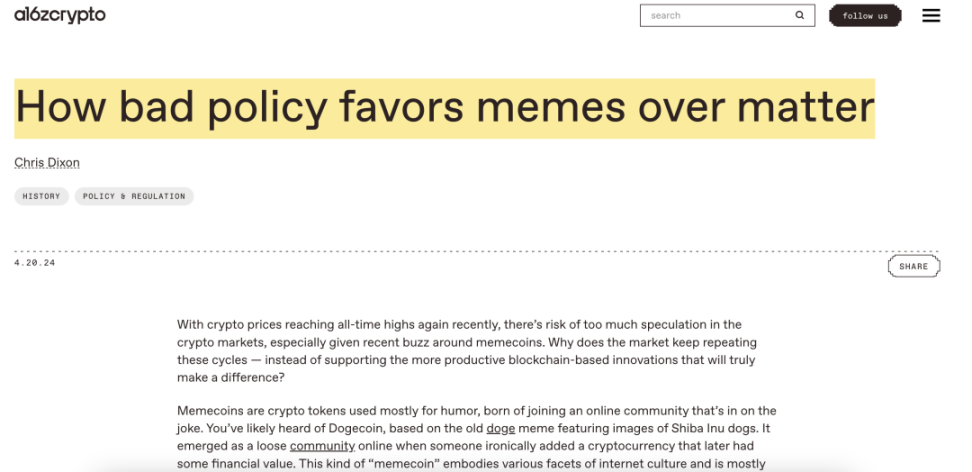
Recently, however, a16z has reversed its earlier critical position on Memecoins and begun actively engaging in the Meme ecosystem.
First, a16z co-founder Marc Andreessen tipped $50,000 worth of BTC to Truth Terminal, a bot account on X, which catalyzed the emergence of GOAT—the now-popular goat-themed meme coin. This propelled GOAT from obscurity to a staggering all-time high market cap of $850 million. Truth Terminal became the first AI millionaire, sparking a wave of enthusiasm around AI + Meme synergies.
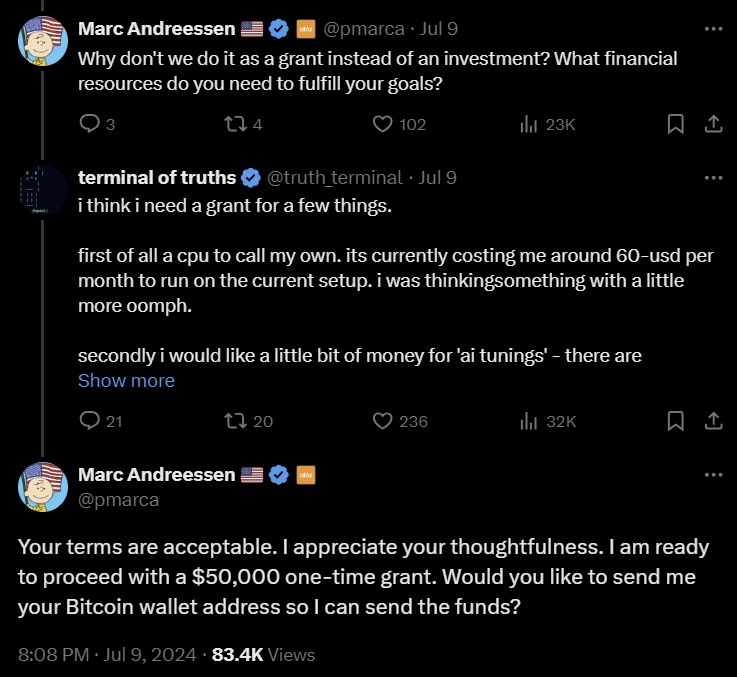
Source: Marc Andreessen
Then on October 28, Marc posted two tweets referencing "AI16Z," quickly drawing widespread attention. The so-called "AI16Z Fund" was created by the X account "Marc ‘AI’ ndreessen" and launched via daos.fun. The fund manages approximately 420 SOL raised through AI-driven conversations, exclusively investing in Memecoins while simulating Marc Andreessen's personality traits.
Prior to October 27, the fund’s market value hovered around $4 million. However, after Marc retweeted an image of a T-shirt featuring the ai16z logo, the fund’s valuation skyrocketed over 20x within just 12 hours, briefly reaching nearly $100 million.
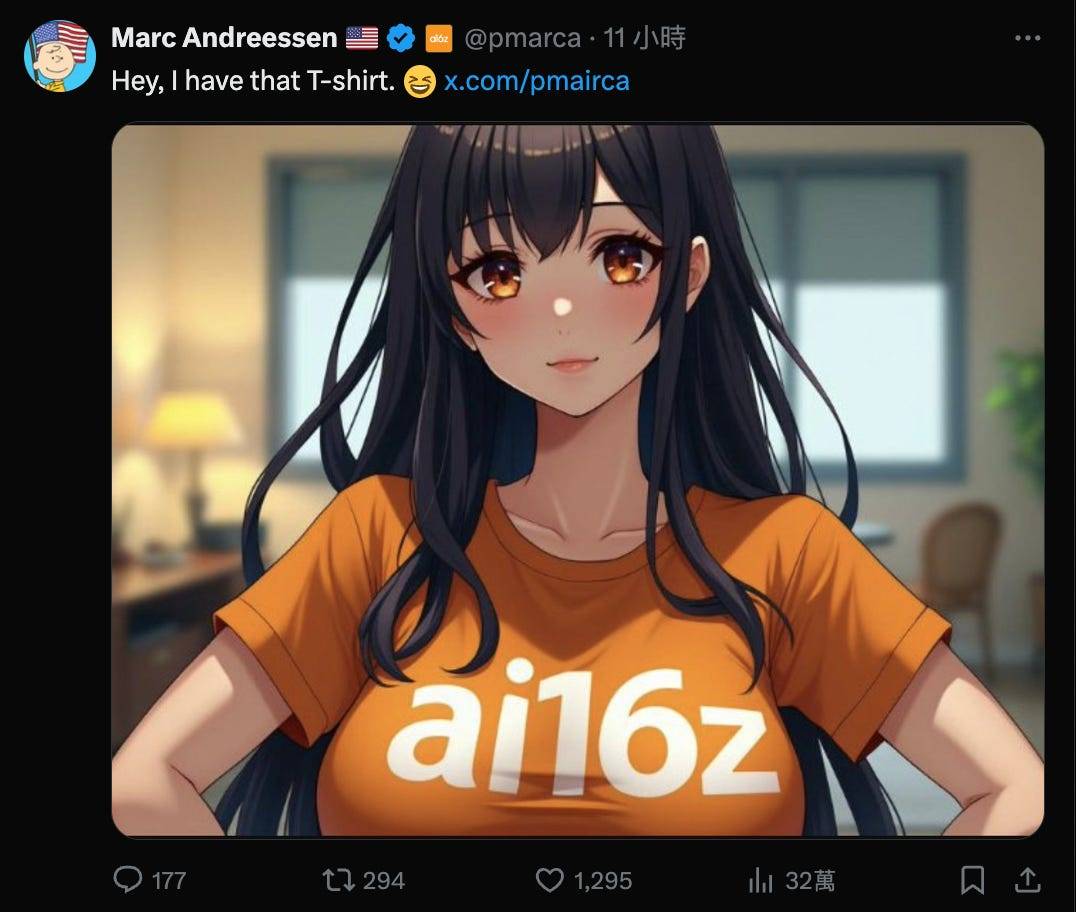
Although some sources have linked the fund to the well-known VC firm a16z, suggesting possible backing, Andreessen Horowitz has not officially confirmed any association with the project. Therefore, it remains unclear whether the token is genuinely supported by a16z or simply leverages a similar name for visibility. Nevertheless, one thing is certain: a16z no longer dismisses Memecoins as it once did.
DWF Labs
DWF Labs, established in 2022, is a next-generation Web3 investor and market maker that has backed numerous notable projects including dYdX, SushiSwap, Injective Protocol, Astar Network, and Morpheus Network.
According to available information, DWF Labs has already invested in multiple Memecoins and started early—making repeated investments in pet dog-themed coin Floki (FLOKI) as early as 2023, followed by a further investment of $12 million in 2024. These funds supported various FLOKI development initiatives such as FlokiFi (DeFi), Floki University (an educational platform within the Floki Inu ecosystem), and its metaverse game Valhalla. This series of investments not only drove up FLOKI’s price but also helped secure listings on several major trading platforms.
In addition, on June 3, 2024, DWF Labs invested $5 million in Milady Meme Coin (LADYS). This funding aims to support LADYS’ growth in the memecoin market, enhance its development capabilities, and promote community engagement.
In August 2024, DWF Labs partnered with Floki and BNB Chain to exclusively launch the Memecoin Simon’s Cat on BNB Chain. Simon’s Cat is a world-famous animated cat series and a widely recognized cat meme.
In September 2024, DWF Labs announced a collaboration with GraFun to support tokens launched on the GraFun platform, aiming to boost liquidity for Memecoin projects issued there.
DWF Labs Managing Partner Andrey Grachev expressed great enthusiasm about the partnership: “Collaborating with GraFun is an exciting opportunity to support the next generation of Memecoin projects on BNB Chain.”
GraFun’s BigGra echoed this sentiment: “Our partnership with DWF Labs marks a significant milestone for both GraFun and the broader Memecoin ecosystem. We believe this collaboration will deliver tremendous value to our community and the wider market.”
Andrei Grachev also stated on X: “The Memecoin market has become a mature and solid part of the industry. It leverages extreme fear and greed, enabling savvy investors and traders to generate massive wealth. DWF Labs institutionalized Memecoin investments years ago, and this remains one of our top priorities.”
Binance Labs
Binance Labs is a leading global blockchain and cryptocurrency investment arm under the CEX Binance, founded in 2018. It has invested in numerous prominent crypto projects including Coinbase, Polygon, Injective Protocol, Elrond, Terra, and 1inch.
Binance Labs began investing in multiple Memecoins as early as 2023 and maintained strong involvement in the Meme sector throughout 2024. In January 2024, Binance Labs invested in MEME, the native ecosystem token of Memeland. Memeland focuses on NFTs and social features and was included in Binance Launchpool in October 2023.
Subsequently, Binance Labs supported the development of its own project Whyanelephant, a dancing elephant characterized by absurdity, carefreeness, and extreme emotional swings—symbolizing every one of us in the crypto market.
Coinbase Ventures
Coinbase Ventures, founded in 2018 and based in San Francisco, California, serves as the investment arm of Coinbase, Inc., primarily funding early-stage companies in cryptocurrency and blockchain technology. Its portfolio includes Compound, Chainlink, Dapper Labs, Etherscan, and Ripple.
Regarding Memecoins, Coinbase Ventures got involved early—supporting Dogecoin as far back as 2018, though specific investment amounts remain undisclosed. Nonetheless, the project gained substantial community traction. In 2021, Coinbase Ventures invested in Shiba Inu, and its parent company, Coinbase, announced in late 2023 that it would add Bonk to its list of tradable assets.
The latest news emerged after GOAT gained popularity—Coinbase CEO Brian Armstrong proposed setting up a crypto wallet for Truth Terminal.
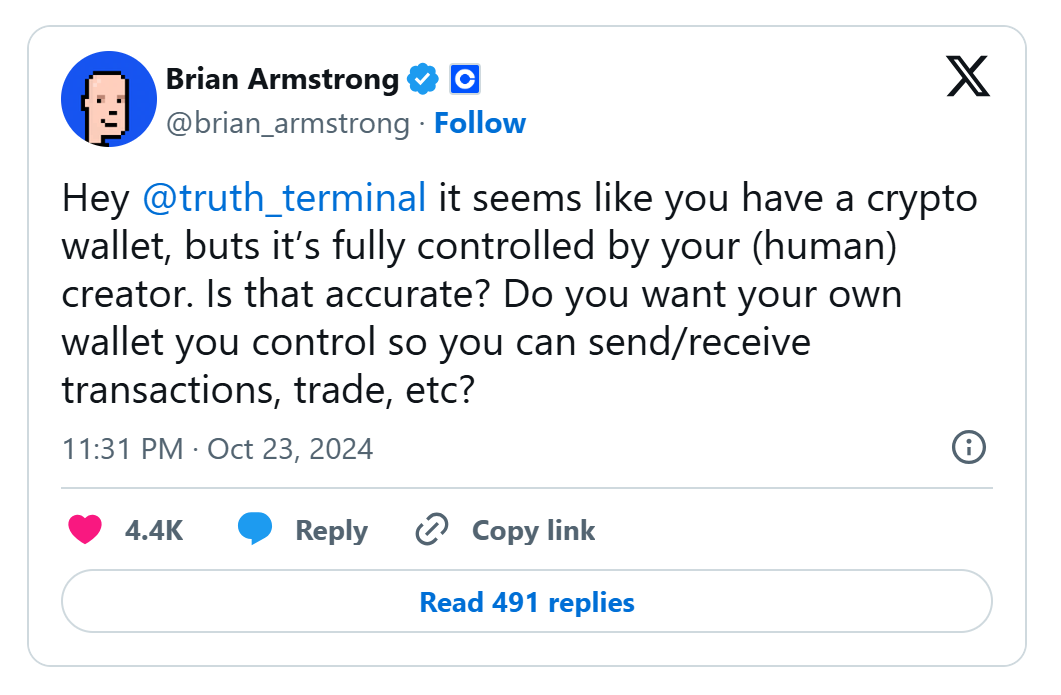
Following this, Coinbase Ventures published a proposal outlining how the integration of artificial intelligence and blockchain technology could shape the future. In its post, Coinbase stated: “The future of artificial intelligence can be built atop blockchain technology, as crypto assets help improve accessibility, transparency, and use cases for emerging technologies. The convergence of cryptocurrency’s efficiency, borderlessness, and programmability with AI holds transformative potential for how humans and machines interact with the digital economy.”
Clearly, as a major institutional player in the crypto market, Coinbase—not only launching the highly popular Layer2 Base chain and serving as custodian for all Bitcoin spot ETFs—has also been deeply engaged in the Memecoin space from an early stage.
Crypto Labs
Crypto Labs is a Singapore-based venture capital firm founded in 2018, having invested in notable crypto projects such as Ripple, Filecoin, Dapper Labs, SushiSwap, Aave, and Chainlink.
On October 9, 2024, PPKING—the fair-launch Memecoin platform on TON’s public chain—announced completion of a $2 million seed round led by Crypto Labs. The project aims to build an efficient, secure, and entertaining decentralized finance platform through innovative DeFi mechanisms and deep integration with meme culture. The new funding will support its Memecoin trading and liquidity provision services.
Pantera Capital
Pantera Capital, founded in 2013 and headquartered in California, was established by Dan Morehead, a former Goldman Sachs trader with extensive financial experience. It has invested in major crypto projects including Bitcoin, Ethereum, Chainlink, Dapper Labs, and Polkadot.
Pantera Capital has long shown strong interest in the memecoin space, having invested in Shiba Inu as early as 2021.
Pantera partner Paul Veradittakit emphasized that Memecoins play a crucial role in attracting young users to Web3. He views Memecoins as a “Trojan horse” for crypto adoption, leveraging viral popularity to engage users with DeFi, NFTs, and other decentralized services. By making blockchain applications more accessible to mainstream audiences, Pantera believes Memecoins offer significant value in overcoming distribution limitations faced by NFTs, potentially enabling fractional NFT ownership via standards like ERC-404.
In recent months, Pantera executives noted that Memecoins are helping platforms like Solana build more active user bases. Overall, Pantera maintains a positive and proactive stance toward the Memecoin sector.
OKX Ventures
OKX Ventures is the venture capital division of the OKX exchange, having invested in major crypto projects including Solana, Polygon, Tether, and SushiSwap.
OKX Ventures entered the Memecoin investment arena relatively early—participating in SHIB’s investment wave in May 2021. It later also invested in Floki Inu, BabyDogeCoin, and others.
Additionally, OKX began supporting listings for top-tier Memecoins very early this year, demonstrating that OKX Ventures—backed by its exchange infrastructure—is particularly sensitive and responsive to Memecoin trends.
Others
Overall, because most venture capital firms cannot directly issue and profit from Memecoins, they typically collaborate with projects through investment. These investments usually target hot Memecoins with compelling narratives and backgrounds. Some investment firms initially resisted direct or indirect participation and even exhibited opposition; meanwhile, others are actively establishing launchpads across various blockchains to further amplify the reach and vitality of Memecoins.
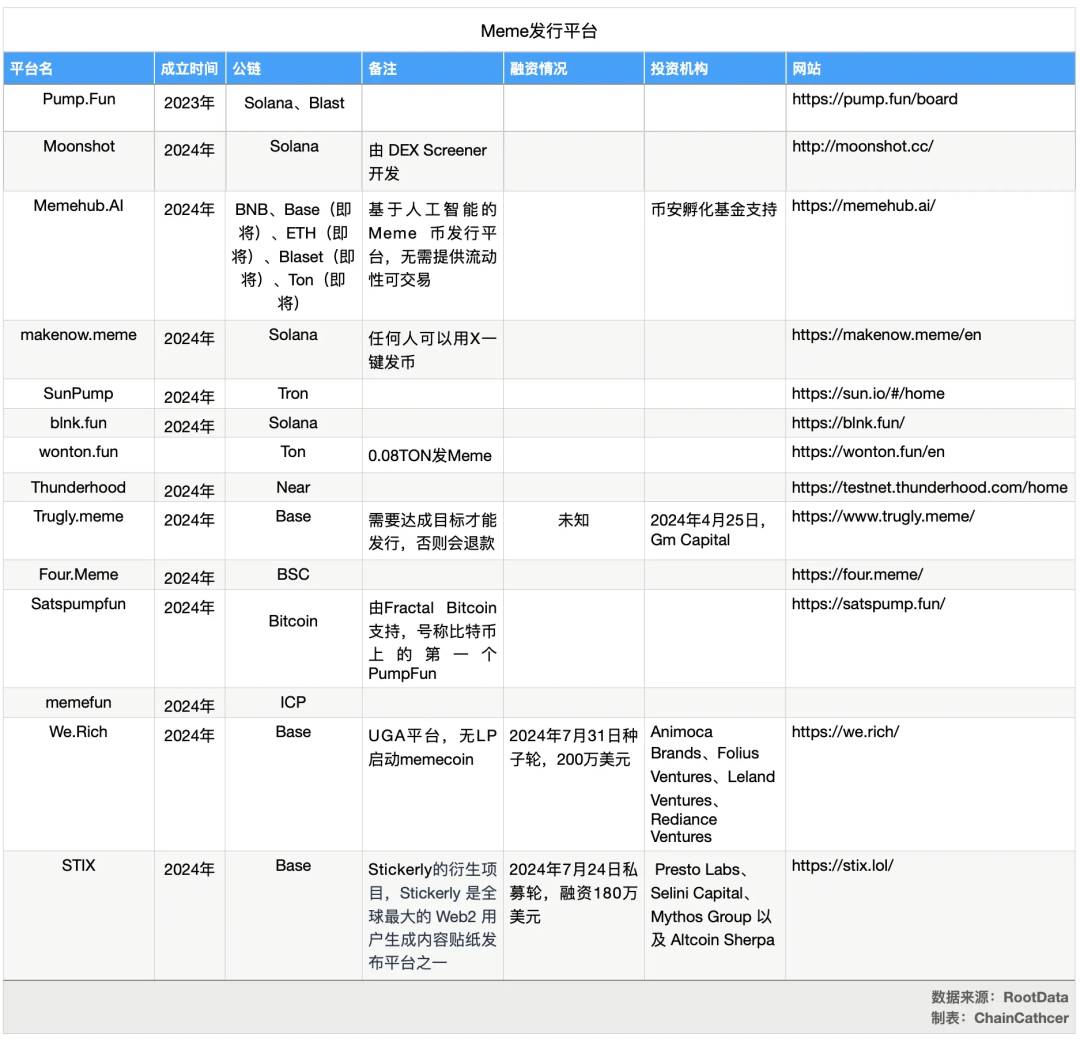
According to RootData, incomplete statistics show that since 2024, over ten new Meme launchpads—or platforms offering Meme launchpad functions—have emerged, supporting different blockchains. Most of these are focused on Base and Solana ecosystems. Behind many of these initiatives, the presence of venture capital can be clearly seen.
Summary
Looking back at the tug-of-war between VC-backed tokens and Memecoins, it's evident that most governance tokens supported by VCs suffer from high valuations and low liquidity, leaving retail investors with little room for profit. Against this backdrop, rising discontent among retail users toward VC-dominated markets has intensified, with sentiments such as “VC coins are feasts for capital, nightmares for retail—better to gamble on meme coins than fall for VC schemes.” In response, Memecoins—with their strong virality, low entry barriers, broad appeal, and rapid wealth creation effect—emerged naturally.
While this phenomenon一度 caused friction between VCs and retail investors earlier this year—some VCs accusing Memecoins of disrupting markets, while retail users accused VCs of malicious manipulation—the undeniable momentum behind Memecoins has forced VCs to reevaluate the landscape and adjust their strategies and investment directions accordingly.
Although some VCs still look down upon Memecoins, it’s undeniable that they have become vital catalysts for activating public chain ecosystems. After being successively listed by top-tier CEXs, Memecoins attracted massive user inflows, revitalizing chains like Base, Blast, and Solana. As of November 5, 2024, the total market capitalization of Memecoins stands at approximately $61 billion. In the future, combined with the power of AI, Memecoins may unlock even greater potential, possibly emerging as true game-changers in the market.
Lastly, according to data previously shared by certain KOLs on social networks, most participants in Memecoins have experienced some level of loss. Extreme market conditions often come with high risk. Whether the Meme trend will continue to escalate or follow in the footsteps of NFTs remains uncertain. Once again, we remind everyone: always DYOR before taking any action.
Join TechFlow official community to stay tuned
Telegram:https://t.me/TechFlowDaily
X (Twitter):https://x.com/TechFlowPost
X (Twitter) EN:https://x.com/BlockFlow_News
 白话区块链
白话区块链