








Which well-known crypto projects have already entered Singapore, a popular destination for overseas expansion?
TechFlow Selected TechFlow Selected
Which well-known crypto projects have already entered Singapore, a popular destination for overseas expansion?
This article compiles some representative Web3 projects in Singapore for reference.
 Navigating Web3 tides with focused insights
Authors: Xu Yuewen, Iris, ManQin Law Firm
Since 2019, a series of forward-looking policy initiatives have been introduced, strongly advancing the development of Web3 technologies. For instance, the "Digital Economy Alliance" was established in 2019 to actively promote the growth of the digital economy ecosystem; the "Digital Payments Alliance," launched in 2020, has driven innovation and progress in the field of digital payments; and the introduction of the "Digital Currency Lab" has enabled deeper exploration into the potential and applications of digital currencies.
These policies have catalyzed the emergence and rapid growth of numerous Web3 projects in Singapore. Today, Singapore has achieved notable success in the Web3 space, giving rise to many well-known projects. ManQin Law has compiled a list of representative Web3 projects based in Singapore for reference.
* The following list is ordered by year of establishment, with no ranking implied
Merlin Chain
#Infrastructure #Layer2
-
Founded: 2023
-
Ecosystem: Bitcoin
-
Funding: $800 million
-
Project Overview: MerlinChain is a Bitcoin Layer 2 solution powered by Bitmap, leveraging native assets, protocols, and products from Bitcoin’s Layer 1 to make Bitcoin engaging once again. Its goal is to amplify the overall asset potential of the Bitcoin ecosystem by empowering Layer 1 assets, protocols, and user ecosystems at Layer 2—such as building accessible metaverse experiences based on Bitmap or DeFi protocols based on BRC-420 to fully unlock token-duality value. It is a new BTCLayer2 solution supported by OKX. What makes it stand out is that it directly addresses Bitcoin’s core challenge—scalability.
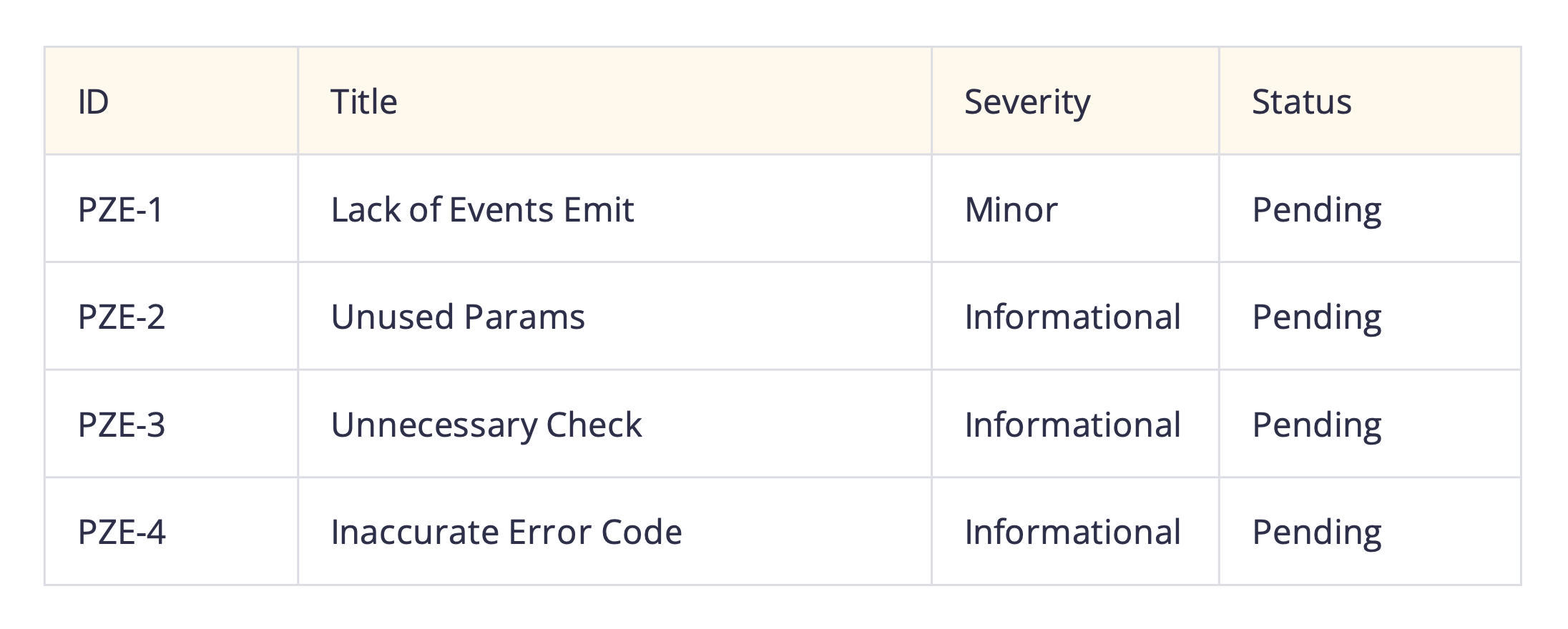
The development team behind Merlin Chain, Bitmap Tech, registered a limited liability company in Texas, USA in 2021, with headquarters in Dallas. According to GitHub records, Merlin Chain has commissioned ScaleBit to conduct a smart contract audit report, including manual code review and static analysis, to identify potential vulnerabilities and security issues. During the audit, ScaleBit identified four varying levels of issues: lack of event emission, unused parameters, unnecessary checks, and inaccurate error codes.
AltLayer

#Infrastructure #Modular #Restaking
-
Founded: 2022
-
Ecosystem: Ethereum
-
Funding: $21.6 million total — $7.2 million seed round in July 2022, followed by a $14.4 million strategic round in February 2024.
-
Project Overview: AltLayer is an open and decentralized Rollups protocol that introduces the innovative concept of restaked rollups. It leverages existing rollup stacks (such as OP Stack, Arbitrum Orbit, ZKStack, Polygon CDK, etc.) and enhances them with improved security, decentralization, interoperability, and cryptoeconomic fast finality.
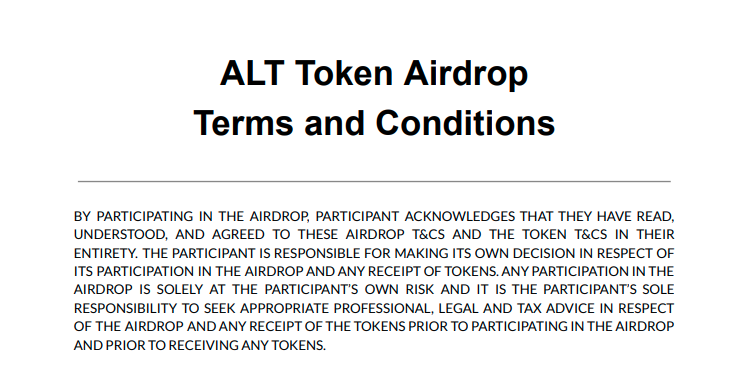
AltLayer's airdrop documentation includes specific legal terms: users are strictly required to complete KYC (Know Your Customer) verification, especially participants in its collaboration with Binance Launchpool who must verify their identity when staking BNB or FDUSD to receive ALT token rewards. Additionally, airdrops and mining of the new ALT token are prohibited for users in sanctioned regions or countries, including Canada, Cuba, Crimea, Iran, Japan, New Zealand, the Netherlands, North Korea, Syria, the United States and its territories, and any non-government-controlled areas of Ukraine. The document also notes potential regulatory and tax implications related to ALT and states that the protocol is governed by the laws of the British Virgin Islands. Furthermore, the airdrop terms mention compliance with data protection and privacy regulations such as GDPR.
DWF Labs
#CeFi #OTC #Market Maker
-
Founded: 2022
-
Project Overview: DWF Labs is a Web3 venture capital firm and market maker. It provides market-making services, secondary market investments, early-stage investments, over-the-counter (OTC) trading, token listing, and advisory services to Web3 companies. DWF Labs is part of DigitalWave Finance (DWF), one of the world’s top cryptocurrency trading firms, active in spot and derivatives trading across more than 40 leading exchanges. DWF has its global headquarters in Switzerland and its Asia headquarters in Singapore, with additional offices in Dubai, mainland China, and Hong Kong.
DWF Labs is headquartered in Switzerland but maintains an office in Singapore. According to its publicly disclosed privacy policy, DWF Labs collects and shares data in accordance with applicable laws and regulations, safeguarding users’ data rights. Particularly for users residing in the European Economic Area, DWF Labs complies with the General Data Protection Regulation (GDPR). Users have the right to access, correct, delete, and restrict the processing of their personal data. The company relies on lawful bases for processing, including contract fulfillment, legal compliance, and user consent.
DWF Labs requires users on its Liquid Markets platform to complete KYC (Know Your Customer) verification, which involves collecting and verifying identity information, proof of address, and biometric authentication (e.g., facial recognition). These procedures aim to prevent identity theft and money laundering. KYC comes in two tiers—basic and enhanced—with the enhanced version applying to users with higher transaction volumes, such as accounts withdrawing over $1 million per day.
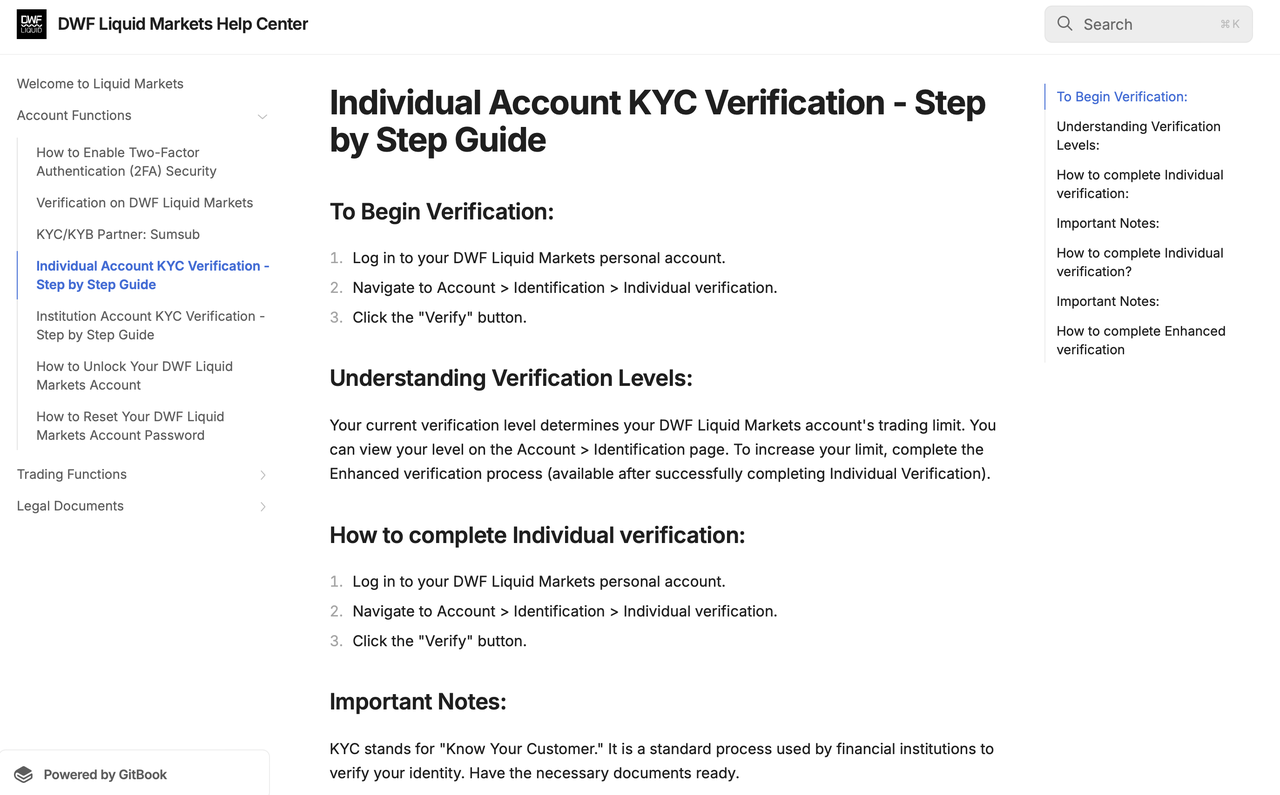
In addition, DWF Labs partners with Sumsub for KYC and KYB (Know Your Business) verification, utilizing Sumsub’s technology support for global ID document verification, address validation, and database screening. The platform integrates multi-layered security and compliance measures, including anti-money laundering (AML) requirements and adherence to the Travel Rule, ensuring its global operations meet local regulatory standards.
Aethir

#Infrastructure #DePIN #CloudComputing #ArtificialIntelligence
-
Founded: 2022
-
Ecosystem: Ethereum, Arbitrum
-
Funding: $9 million Pre-A round completed in July 2023
-
Project Overview: Aethir is a decentralized real-time rendering network unlocking content accessibility in the metaverse. Aethir builds scalable, decentralized cloud infrastructure (DCI), enabling gaming and AI companies of all sizes to deliver their products directly to end-users regardless of location or hardware capabilities.
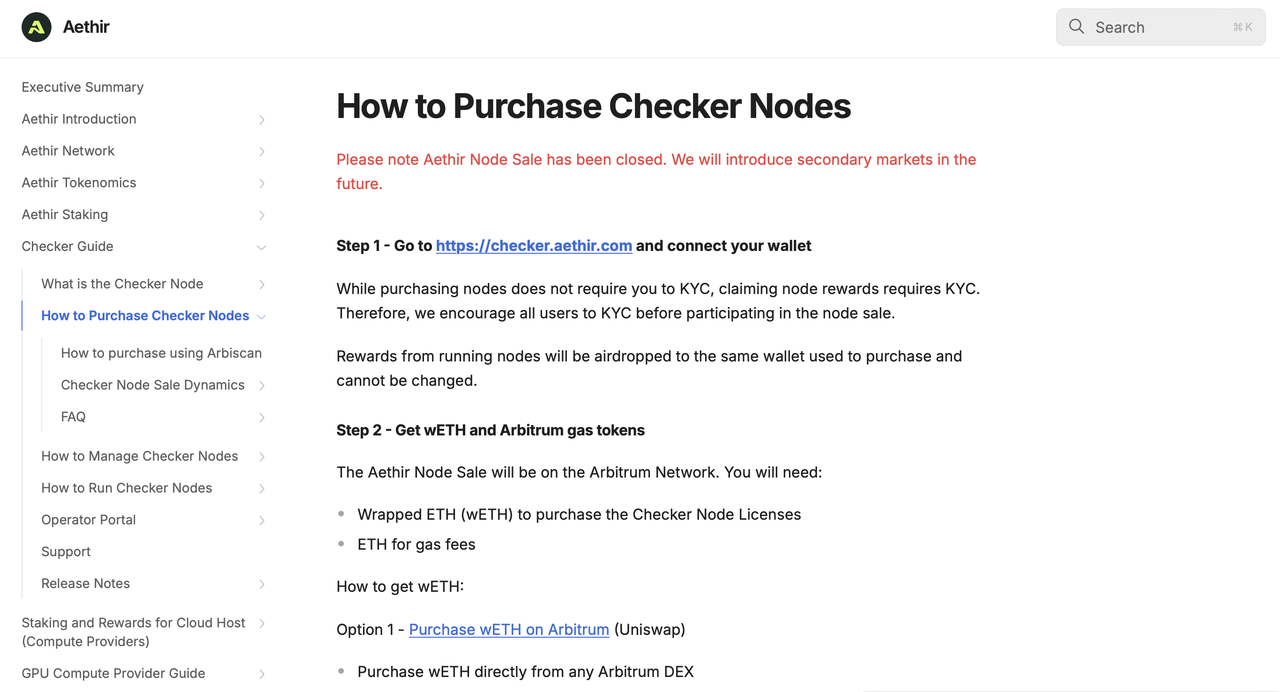
Aethir has established the Aethir Foundation in Singapore, primarily aimed at supporting the expansion of decentralized computing and the Web3 ecosystem. To ensure compliance, Aethir Foundation has implemented necessary measures to align operations with international and Singaporean legal requirements. For example, during Checker Node reward claims and withdrawals, users must complete KYC verification to comply with anti-money laundering (AML) regulations. Node operators are also required to undergo KYC during node sales and operations. Aethir’s terms explicitly restrict user behavior to comply with applicable laws and regulations—for instance, prohibiting unauthorized software use or publishing illegal content. These terms also cover intellectual property and feedback ownership, protecting the platform’s legitimate operation. Moreover, access to the Aethir platform is restricted in certain jurisdictions, such as the United States and countries under sovereign sanctions. These measures ensure compliance with local laws and international sanctions, allowing Aethir to operate legally across global markets.
Cointime
#CryptoMedia
-
Founded: 2022
-
Project Overview: Cointime is a cryptocurrency news aggregation platform operated by QUANTBASE PTE. LTD. It provides readers with the latest crypto news, events, data, and indices. Whether it’s trending cryptocurrency news, real-time price movements, in-depth industry analysis, or cutting-edge technologies, readers can find comprehensive coverage on Cointime.
zkLink
#Infrastructure #Layer2
-
Founded: 2021
-
Ecosystem: Ethereum, Polygon, BNB Chain, Avalanche, Arbitrum, Optimism, Base, StarkNet, ZkSync, Linea, Polygon zkEVM, Manta, opBNB
-
Funding: $8.5 million seed round in October 2021, $10 million strategic round in May 2023, $4.68 million public sale in January 2024, and another strategic round in July 2024.
-
Project Overview: zkLink is a transaction-centric multi-chain L2 network featuring unified liquidity secured by ZK-Rollups. dApps built on the zkLink L2 network leverage seamless multi-chain liquidity to rapidly deploy solutions for decentralized, non-custodial order books, AMMs, derivatives, and NFT exchanges. Operating as a trustless, permissionless, and non-custodial interoperability protocol, zkLink aims to connect different blockchains, eliminate distinctions among tokens, and resolve the issue of fragmented liquidity across isolated chains.
Based on publicly available information, zkLink has implemented a series of compliance measures during the $ZKL token sale and registration process. Participants are required to complete KYC (Know Your Customer) verification, while residents of the United States, Canada, China, South Korea, and other restricted regions are excluded to comply with relevant national regulations. Additionally, zkLink restricts access for users in economically sanctioned regions, ensuring service usage aligns with local and international regulations such as those from Europe and the U.S. This helps maintain global compliance and mitigate legal risks.
zkLink provides a detailed privacy policy ensuring compliance with data protection regulations like GDPR. The policy outlines the collection and processing of users’ IP addresses, access data, and logs—primarily to ensure service stability and improve user experience. Furthermore, zkLink conducts anonymous behavioral tracking to gather non-personally identifiable data for product improvement. The policy also emphasizes user responsibilities, including securing wallet keys and recovery phrases.
zkLink engaged ABDK Consulting to conduct a comprehensive audit of its smart contracts and protocols. The scope included differences between zkLink Protocol and Era contracts, specific .sol files, and optimization-related documents and interfaces. The audit revealed several medium-severity issues, mainly concerning suboptimal code design—such as parameter passing, inefficient call encoding, and storage address calculation—as well as some previously fixed overflow and defect issues, along with corresponding recommendations.
SkyArk Chronicles

#GameFi
-
Founded: 2021
-
Ecosystem: BNB Chain
-
Funding: $15 million
-
Project Overview: SkyArk Chronicles is a Triple-A fantasy JRPG game featuring interoperable NFTs. It consists of a trilogy combining two GameFi titles (“House of Heroes” and “Legends Arise”) and one SocialFi metaverse (“Mirrorverse”).
SkyArk Studio, the developer of SkyArk Chronicles, is a blockchain gaming company based in Singapore. It aims to replicate the success of Hong Kong unicorn Animoca by building an ecosystem to incubate crypto projects and leveraging proprietary resources from SkyArk Studio.
The SkyArk Chronicles token system includes two tokens: $SAR and $REO. These tokens will be used across various scenarios within the game and metaverse, offering players ways to participate in the in-game economy, purchase items, and earn rewards. As of now, SkyArk has not officially launched its token sale.
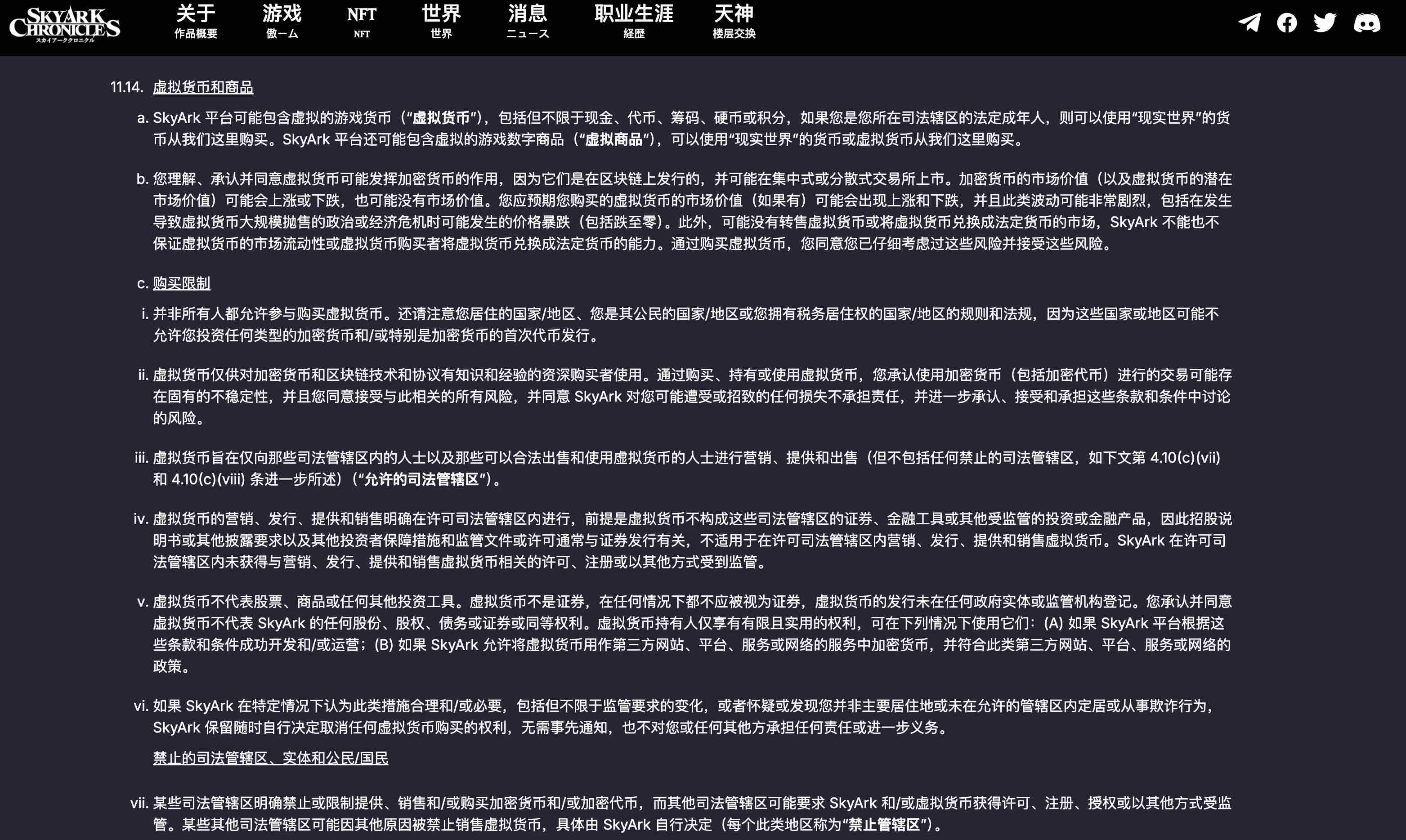
SkyArk Chronicles includes disclaimers about virtual currency compliance in its official website terms.
First, it clearly distinguishes between virtual currency and traditional goods, stating that virtual currency may function as cryptocurrency but does not represent securities or other investment instruments, is not registered with any government entity or regulator, and grants holders only limited utility rights.
Second, it imposes strict purchasing restrictions—not everyone is eligible. Buyers must consider regulations in their jurisdiction and should be experienced individuals familiar with cryptocurrencies and blockchain technology. Sales are marketed, offered, and conducted only to individuals in specific jurisdictions where such activities are legally permitted, and do not constitute regulated investment or financial products in permitted jurisdictions.
Finally, it defines prohibited jurisdictions. Certain regions explicitly ban or restrict cryptocurrency-related transactions, while others may require licensing. SkyArk reserves the right to prohibit sales in certain areas to ensure the game operates within a compliant framework.
Nansen
#Tools #Data&Analytics #OnchainData
-
Founded: 2019
-
Funding: $88.2 million — $1.2 million seed round in October 2020, $12 million Series A in 2021, $75 million Series B in 2021.
-
Project Overview: Nansen is a blockchain analytics platform that enriches on-chain data with millions of wallet labels. Cryptocurrency investors use Nansen to discover opportunities, perform due diligence, and protect their portfolios through real-time dashboards and alerts.
Rather than facilitating direct cryptocurrency transactions for end users, Nansen focuses on data analysis and mining. Additionally, through its partnership with Kaiko, it combines Kaiko’s market data with Nansen’s blockchain data to provide regulatory-compliant reference prices for digital assets on both centralized (CEX) and decentralized exchanges (DEX).

Nansen is not entirely free to use. While it offers limited free features, advanced analytics and data access typically require a subscription. Users can choose from various paid plans to unlock more sophisticated tools and deeper on-chain data insights. Correspondingly, Nansen uses a Master Services Agreement (MSA) for customers purchasing products and/or services via order forms. The MSA clearly defines responsibilities on both sides—specifying delivery timelines, methods, and quality standards to ensure customers receive expected products and services. It also includes clauses regarding payment methods, deadlines, refunds, and exchanges. These provisions help ensure fairness and transparency in transactions, preventing disputes and protecting the legitimate interests of both the platform and its users, thereby maintaining compliance with relevant laws, regulations, and industry standards.
Mask Network
#SocialFi
-
Founded: 2018
-
Ecosystem: Ethereum, Polygon, BNB Chain, Solana, Avalanche, Arbitrum, Optimism, Fantom, Gnosis Chain, Scroll, Harmony, Aurora, Conflux, Flow, Astar
-
Funding: Nearly $200 million
-
Project Overview: Mask Network is a Web3 gateway designed to connect Web2 users to Web3. By integrating decentralized applications into traditional social networks, Mask Network offers decentralized alternatives to familiar Web 2.0 features. Users can enjoy secure, decentralized social messaging, payment networks, file storage, and sharing without leaving mainstream social media platforms. The released 2.0 version includes a multi-chain Mask Wallet, a MaskID login system aggregating users’ social media accounts and Web3 addresses, and a dApp marketplace called D.Market.
Mask Network has an operational presence in Singapore, conducting management and operational activities locally. However, its legal entity “Mask Network Pte. Ltd.” has been deregistered. Therefore, Mask Network primarily operates through affiliated companies and partners: it has established funds with Singapore-based partners like Bonfire Union to advance Web3 and decentralized social networking. Beyond commercial efforts, Mask Network founded the nonprofit organization Mask Academy, which supports Web3 research and education through collaborations with universities and research institutions worldwide.
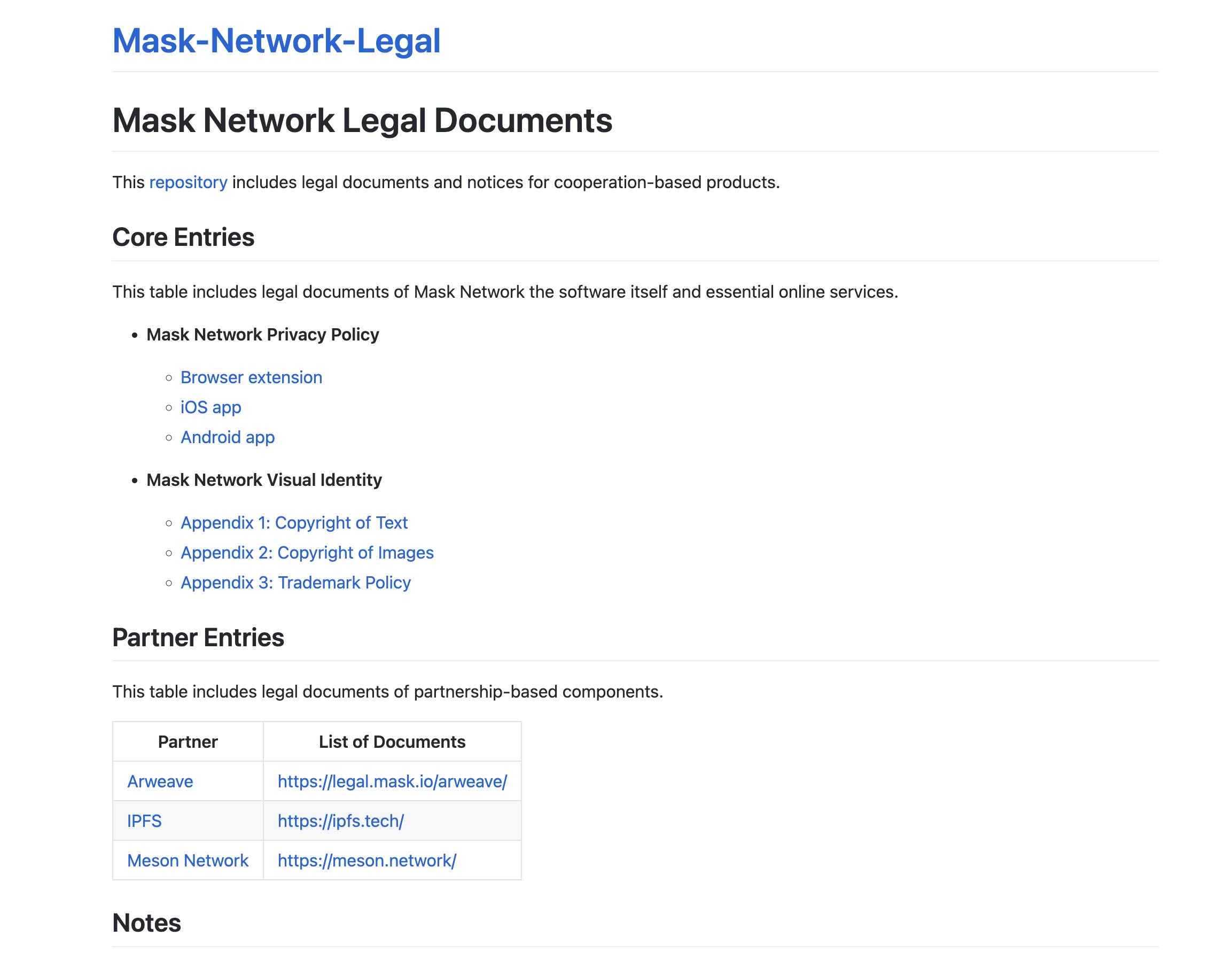
Mask Network’s privacy compliance is guided by its user privacy policy, covering data management, user autonomy, and third-party dApp integration. The policy clarifies that the platform is responsible only for dApps it develops, while third-party dApp services fall outside its direct control—meaning users assume certain risks when using these services.
Additionally, Mask Network affirms its principles of data encryption and privacy protection, ensuring users' social information and data remain safeguarded when using Web3 decentralized applications. The platform employs self-sovereign control mechanisms, giving users full control over their wallets and private keys, and does not store such sensitive data.
Regarding data usage permissions, Mask Network also requires users to complete necessary identity verification to ensure transaction security.
Bitget
#CeFi #CEX
-
Founded: 2018
-
Funding: $30 million
-
Project Overview: Founded in 2018, Bitget is a cryptocurrency exchange and Web3 company. As of early 2024, Bitget serves users in over 100 countries and regions, helping more than 25 million users achieve intelligent trading through leading copy-trading solutions.
Bitget is registered as a Virtual Asset Service Provider (VASP), particularly in countries like Poland and Lithuania. These registrations allow Bitget to legally offer cryptocurrency trading and related services in these regions, ensuring compliance with local and international financial regulations.
On the KYC front, Bitget implemented mandatory KYC verification starting September 1, 2023. All new users must complete KYC to access platform services such as spot trading, futures trading, and other functionalities. After October 1, users who have not completed KYC can only perform limited actions like withdrawals and order cancellations and cannot initiate new trades. This measure aims to enhance platform security and ensure compliance with global and regional anti-money laundering (AML) and counter-terrorism financing (CFT) requirements.
From an auditing perspective, Bitget publishes monthly Proof of Reserves (PoR) reports to demonstrate the health of its asset reserves and ensure user fund safety. In 2023, these reports showed reserve ratios consistently around 200%, significantly exceeding the industry standard of 100%.
Additionally, in 2023, Bitget launched a $300 million auditable protection fund to strengthen compliance and transparency. The fund consists primarily of BTC, with smaller amounts of ETH and USDT, and is designed to protect assets stored on the platform from hacking, theft, and other threats. Bitget commits not to touch these funds for at least three years and maintains publicly accessible wallet addresses. The fund has recently been bolstered, bringing its total to $300 million, held across seven transparent wallet addresses.
Cryptocurrency group BGX made a strategic investment in OSL, a licensed virtual asset exchange in Hong Kong and the parent company of BC Technology Group (HKG: 0863), subscribing to HK$710 million in new shares.
Paradigm
#CeFi
-
Founded: 2018
-
Funding: $35 million Series A round completed in December 2021.
-
Project Overview: Paradigm is a liquidity network for crypto derivatives traders across CeFi and DeFi. The platform enables traders to access unified, on-demand liquidity across multiple assets and protocols without compromising price, scale, cost, or immediacy. Its mission is to build a platform where traders can execute any trade with anyone and settle anywhere. Paradigm boasts the largest network of institutional crypto counterparties, serving over 1,000 institutional clients each month with more than $10 billion in trading volume, including hedge funds, OTC desks, lenders, structured product issuers, market makers, and prominent family offices.
In Singapore, the entity behind Paradigm is Paradigm Pte. Ltd., focusing on liquidity provision and innovation in digital asset markets. Paradigm has recently incubated a decentralized perpetual derivatives appchain named "Paradex," aiming to consolidate its liquidity and provide a more transparent trading environment.
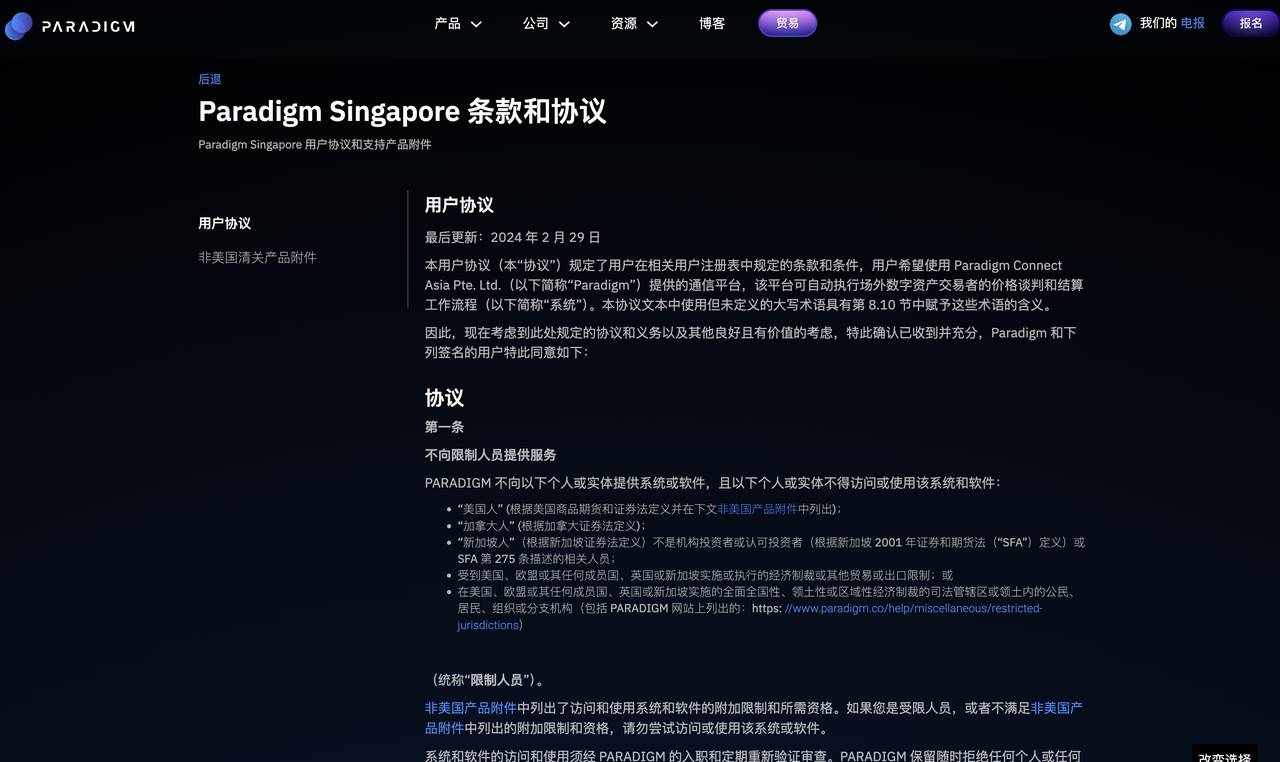
The company’s official website terms and agreements reflect significant compliance efforts: clearly restricting services to restricted persons (including specific nationalities and sanctioned individuals); imposing strict licensing rules for system and software use, including user administration; emphasizing compliant usage and prohibiting violations; detailing fees, duration, and termination clauses; providing thorough provisions on confidentiality and intellectual property; defining responsibilities—including user indemnification and Paradigm’s免责 scenarios—and specifying dispute resolution via Singapore law and arbitration—to ensure compliant business operations.
KuCoin
#CeFi #CEX
-
Founded: 2017
-
Funding: $180 million — $20 million Series A in November 2018, $150 million in 2022, and $10 million in strategic funding later that year.
-
Project Overview: KuCoin, established in September 2017, is a global cryptocurrency exchange offering spot trading, margin trading, P2P fiat trading, futures trading, staking, and lending services.
Starting July 15, 2023, KuCoin implemented mandatory KYC verification. All new users must complete KYC to gain full access to platform services, including spot, futures, leveraged trading, and other financial products. Users who registered before this date but have not completed KYC face restricted account functionality—limited to selling spot orders and fund withdrawals—but cannot make new deposits.
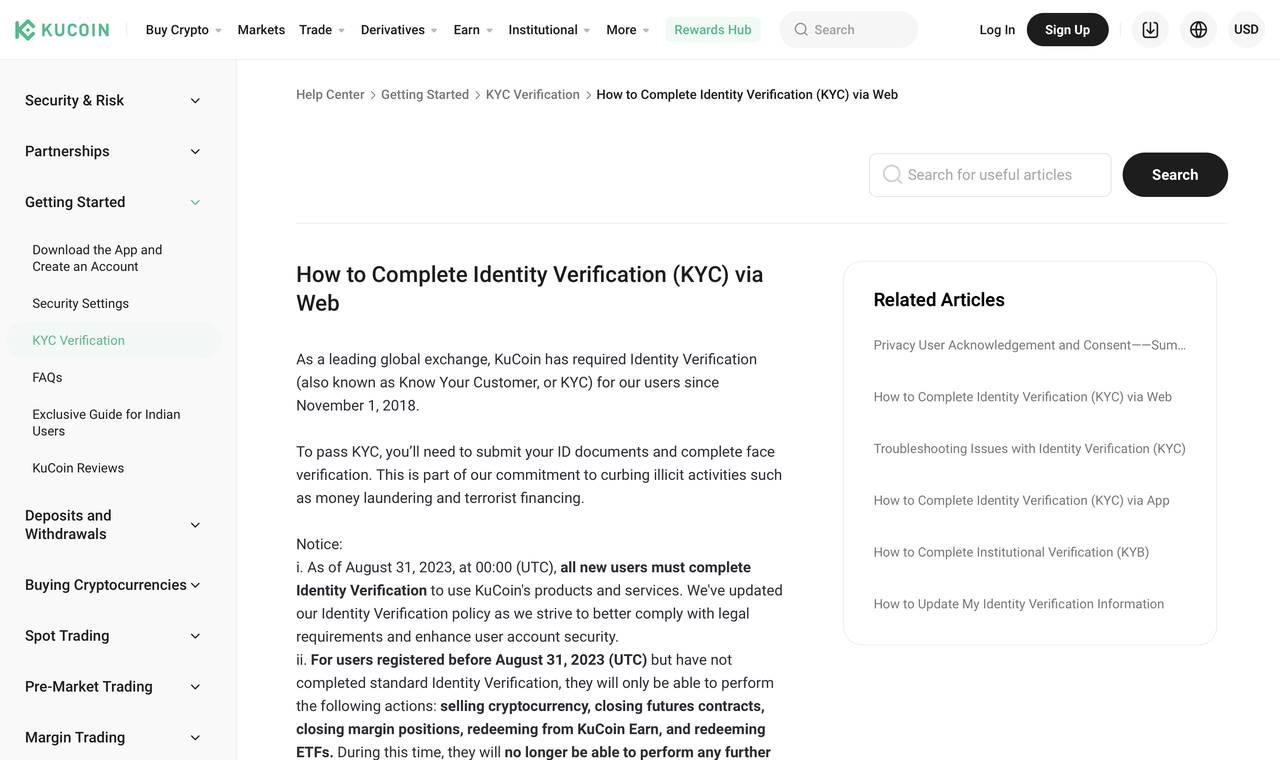
Alongside implementing KYC, KuCoin has strengthened user data security management. The platform commits to using encryption and secure storage to protect personal information, ensuring data safety during identity verification. Additionally, KuCoin continues to allow withdrawal functionality—even users who haven’t passed KYC can withdraw their funds at any time.
Paxos

#CeFi #Custody #StablecoinIssuer
-
Founded: 2013
-
Funding: Approximately $535 million — $3.25 million in 2013, $25 million Series A in 2015, $65 million Series B in 2018, $142 million Series C in 2020, and $300 million Series D in 2021.
Paxos is a U.S.-based fintech company specializing in blockchain and digital assets. It issues Pax Dollar (USDP), a stablecoin pegged 1:1 to the U.S. dollar, and provides secure digital asset custody services to help institutional clients manage crypto holdings. Additionally, Paxos develops blockchain infrastructure to support its financial products and drives the integration of traditional finance with digital assets, building enterprise blockchain solutions for institutions such as PayPal, Interactive Brokers, Mastercard, Bank of America, Credit Suisse, and Société Générale.
Licensed as a trust company by the New York State Department of Financial Services (NYDFS), Paxos offers a range of digital asset services, including stablecoins (like Pax Dollar USDP and PayPal USD PYUSD developed with PayPal) and gold-backed tokens (PAXG). Holding a trust license allows Paxos to provide regulated financial services such as custody, trading, and clearing—placing it under stricter oversight than typical cryptocurrency exchanges or payment providers.
On July 1, 2024, Paxos announced that its Singapore entity, Paxos Digital Singapore Pte. Ltd., received formal approval from the Monetary Authority of Singapore (MAS), obtaining a VASP license and becoming a Major Payment Institution, authorizing it to issue stablecoins in Singapore. Companies holding a VASP license must adhere to specific laws and regulations to ensure compliance: they implement AML (anti-money laundering) and KYC (know your customer) procedures to reduce financial crime risks, submit regular reports, undergo audits, and remain under supervision by financial regulators.
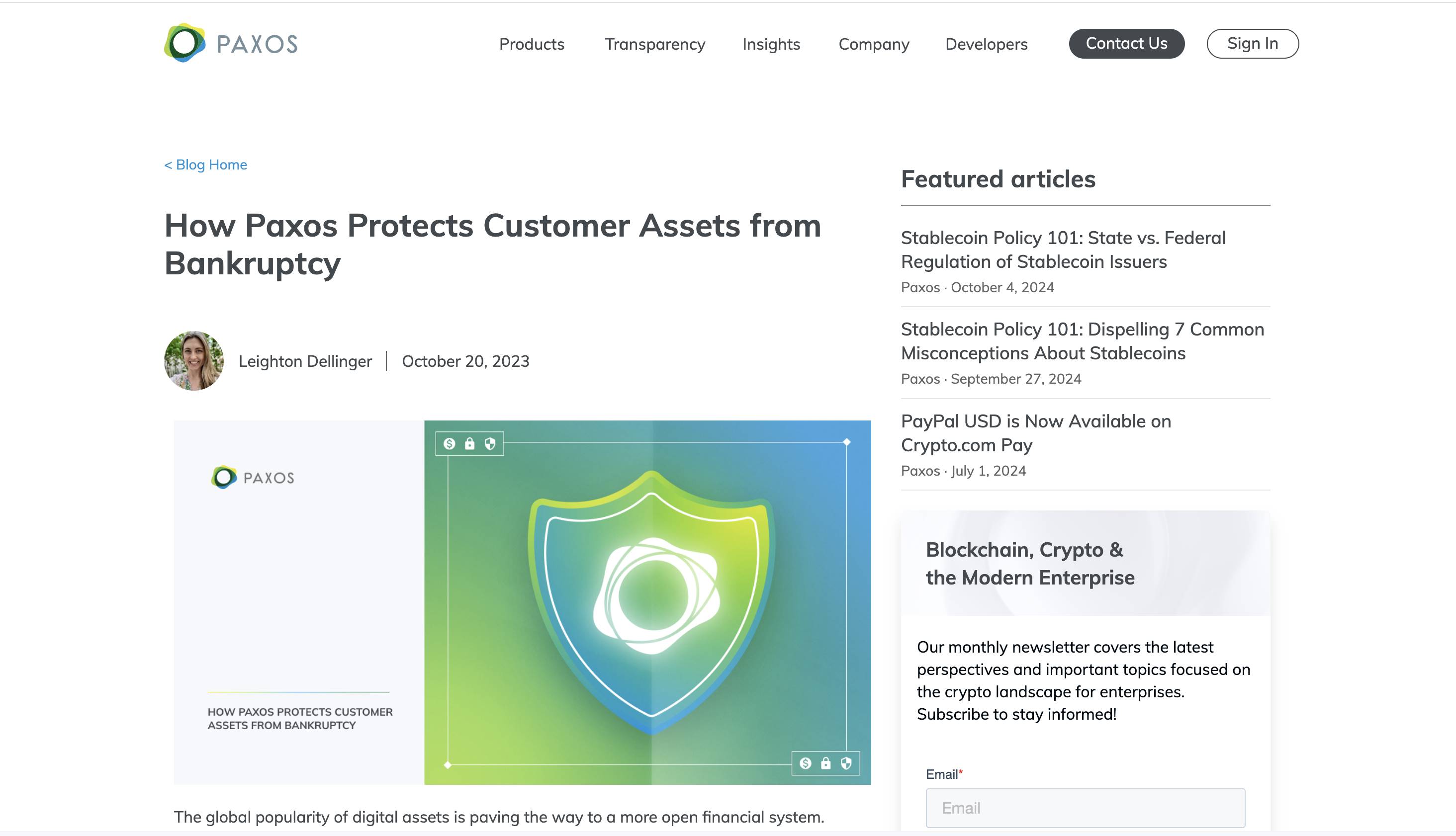
Furthermore, as a digital asset custodian, Paxos discloses on its website that it maintains bankruptcy remoteness. Should Paxos Trust ever become insolvent (an unlikely scenario), client assets would remain protected. It emphasizes that its operations differ from banks—particularly in that it does not operate fractional reserves. Instead, Paxos holds all client assets 1:1, ensuring funds are always available for redemption and never loaned out.
ManQin Law Summary
From the above projects, although Singaporean authorities have begun advancing crypto regulation and established the VA licensing framework, in practice the regulatory environment remains relatively open and ambiguous. Nevertheless, this has created favorable conditions for crypto industry players and projects seeking to establish in Singapore—keeping it among the top global startup destinations.
However, for Web3 projects, compliance is undoubtedly the future trend. Therefore, alongside growth, entrepreneurs should prioritize compliant operations—financial projects should obtain relevant licenses, dApp projects must ensure data and privacy compliance, and all should closely monitor evolving regulatory frameworks in Singapore to avoid disruptions during periods of rapid development.
Join TechFlow official community to stay tuned
Telegram:https://t.me/TechFlowDaily
X (Twitter):https://x.com/TechFlowPost
X (Twitter) EN:https://x.com/BlockFlow_News






