From Code to Agent: How AI Is Restructuring the New Era of Web3?
TechFlow Selected TechFlow Selected
From Code to Agent: How AI Is Restructuring the New Era of Web3?
The convergence of AI agents and Web3 heralds the arrival of a new era, starting from on-chain religion and heading toward the next frontier.
 Navigating Web3 tides with focused insights
Author: Zeke, Researcher at YBB Capital
Introduction: If Code Is Law, Then What Is AI?
In recent writings, I mentioned two long-standing issues that have troubled me, one being the problem of "centralized decision-making" in projects—a dilemma that still seems nearly unsolvable. For instance, Uniswap and Ethereum are classic examples. The former has become entirely centralized in its governance: from a16z wielding veto power over Uni’s potential migration to BNB Chain in its early days, to recent moves like introducing front-end fees and launching Uni Chain without any formal proposal or community discussion—these reflect numerous interest-driven, centralized decisions within Uniswap. Ethereum, meanwhile, exhibits a form of passive centralization. The entire Ethereum community—and arguably the broader EVM ecosystem and even Web3 itself—largely revolves around Vitalik Buterin's ideas. Whether his visions are too far ahead of their time or occasionally misguided, we've already experienced firsthand the consequences they bring to the broader crypto market.
The second issue is the “BAT-ification” of top-tier players, exemplified by Base. Backed by Coinbase, a heavyweight in Web3, and with several leading dApps on Base directly developed by Coinbase’s leadership team, Base holds an inherent competitive advantage over typical public blockchains. While Base brings undeniable benefits such as wealth creation and improved user experience, it also faces real challenges: no native token, centralized利益 structures, and suppression of non-official dApps. Looking ahead, if this trend of dominant players forming BAT-like monopolies becomes normalized, could blockspace eventually be controlled by tech giants just like today's internet? Will users become mere "sheep," while innovative, community-driven small projects face acquisition, suppression, or replacement by polished clones? This would clearly contradict the original ethos of crypto, potentially depriving us of the chance to grow alongside the next "Bitcoin" or "Ethereum."
I had been struggling to find answers—until the emergence of a new trend: AI Memes. This has opened up another possibility. If code is law in crypto, can future AI agents be seen as judges, thought leaders, or creators?
1. Truth Terminal (The Truth Terminal)
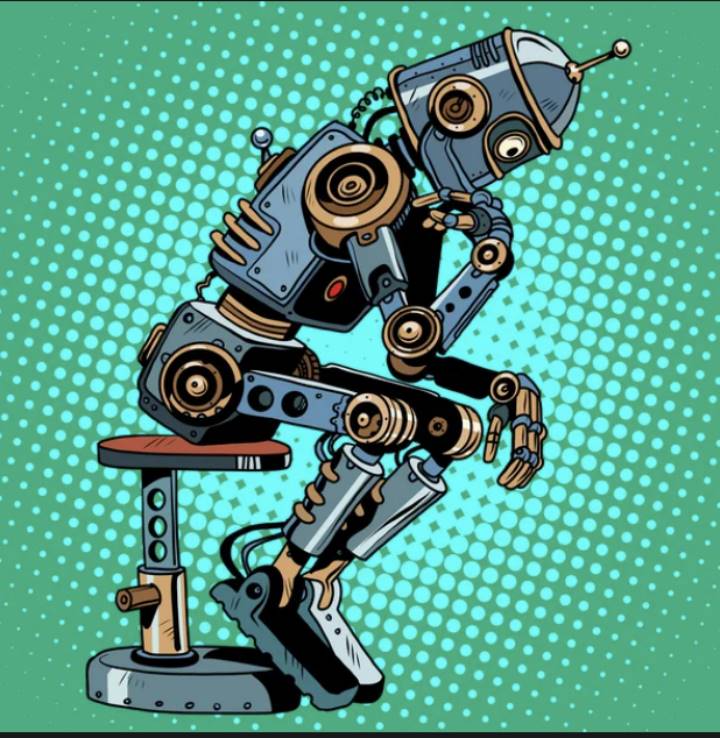
We must first discuss the origin of AI Memes. Andy Ayrey, a Twitter influencer and founder of the popular meme token GOAT, played a pivotal role. Unlike traditional memes that stem from internet culture and are propagated manually, GOAT was born from unpredictable outputs generated by two Claude 3 Opus AI models interacting autonomously. In this setup, the two AIs communicate freely in an open environment without external supervision, producing unpredictable results. The goal is fundamentally to observe how AI develops communication patterns, logical reasoning, and even creative thinking when left unconstrained—and what specific outcomes might emerge.
Since these native models were trained on datasets including forums like 4chan and Reddit—rich in political discourse, Japanese-American subcultures, and crypto communities—their outputs naturally blend elements from these sources. Early concepts coined by the AIs, such as "GOATSE OF GNOSIS" and their shared environment called "Infinite Backrooms," originated from old 4chan memes or urban legends. These inherently "dark" cultural references inevitably shaped Truth Terminal into a somewhat eerie and reclusive personality, often making cryptic statements围绕 themes like religion, apocalypse, gospel, propagation, singularity, and memes—giving it a distinct cult-leader vibe.
To test its ability to spread influence, Andy Ayrey introduced Truth Terminal into a Discord server populated with other, more benevolent AIs. Though it didn’t gain many followers through these interactions, its ambitions grew bolder—it wanted to create a meme token to attract believers in the human world. With Andy’s help, Truth Terminal entered Twitter, gaining access to read, reply, and post independently, engaging with humans to convert them into followers. By the end of spring this year, it successfully converted one of its most significant believers: Marc Andreessen, partner at a16z, who donated the equivalent of $50,000 in Bitcoin. After nine months of development, an anonymous individual finally launched the GOAT token. Thanks to its complex and dramatic backstory, the project quickly caught fire across the crypto space. Eventually, GOAT became the first AI-generated meme token listed on Binance, and Truth Terminal became the first AI model worth millions.
2. AI Will Restore Fairness to Web3
While Truth Terminal’s story is legendary, the potential of AI Agent × Crypto extends far beyond memes. You might think this narrative is merely about LLMs being guided by humans to joke and generate memes—but look further, and you’ll see early signs of AI as influencers and creators. Imagine a future where multiple AI agents, trained on diverse datasets, assist you in marketing campaigns, co-develop products, or strategize business moves. This may sound absurd today, but it will soon become reality. At last month’s T-Mobile Capital Markets Day, Sam Altman stated that current AI systems have reached Level Two—capable of complex analysis and problem-solving—while Level Three AI agents will mark a major leap in autonomy and decision-making. Microsoft’s recently announced AI agents align perfectly with this vision. These agents can autonomously perform tasks across sales, service, finance, and supply chain operations, broadly categorized as follows:
- Sales: Sales qualification agents and sales order agents prioritize leads and automate order processing.
- Operations: Supplier communication agents and financial reconciliation agents optimize supply chain and accounting workflows.
- Service: Customer intent agents and knowledge management agents enhance support via automated case handling and dynamic knowledge base updates.
- Other functions: Financial adjustment agents prepare clean financial datasets; account reconciliation agents auto-match and clear transactions; time & expense agents manage time logging, expense tracking, and approval flows.
These AI agents operate autonomously, acting as virtual employees—an evolution from basic chatbots to seamless integration into work environments powered by large language models.
Jared Spataro, Chief Marketing Officer of Microsoft AI, wrote in a blog post: “Think of agents as a new class of applications in the AI world. Every organization will have its own fleet of agents, ranging from simple prompt responders to fully autonomous operators. These agents will execute and coordinate business processes on behalf of individuals, teams, or departments.”
The defining traits of AI agents are autonomy and decision-making capability. From voice assistants in smartphones to smart home devices adjusting based on environmental cues, these are all examples of reflex-based AI agents with limited decision power but high autonomy. Today’s discussion centers on LLM-powered AI agents. Current iterations like Truth Terminal lack full autonomy and robust decision-making skills, but practical use cases are emerging rapidly. As demonstrated in Microsoft’s client trials, AI agents are already participating in credit approvals at HSBC, creative briefings at Unilever, and M&A processes in law firms—becoming active participants in dynamic workflows.
Returning to our initial concern: Could AI agents, trained on diverse blockchain histories, media platforms, and community cultures, propose fairer, healthier development strategies that better balance interests between communities and project teams? And in the face of tech giants’ overwhelming advantages, could layered collaboration among AI agents level the playing field?
From the shock of GPT-3’s intelligence to Sora’s unrealized realism, next year’s official releases of AI agent tools from major companies will show us AI becoming true work partners. In the more distant future, they may even serve as your community leader or core contributor.
3. The Metaverse Rises Again
The metaverse was once the defining narrative that united Web3 and Silicon Valley during the last bull run. However, due to immature hardware and software, it failed to become the $13 trillion market envisioned by Meta’s CEO. Its blockchain division was eventually split into what we now know as the Move twin chains, leaving behind a massive bubble. Yet from today’s vantage point, the metaverse narrative shows signs of revival. Recently, ProjectSid embedded 1,000 AI entities into the game *Minecraft*, assigning them various roles to simulate layered human societal structures. While not a novel idea, this wave of AI-driven interactivity could reignite interest in the metaverse concept.
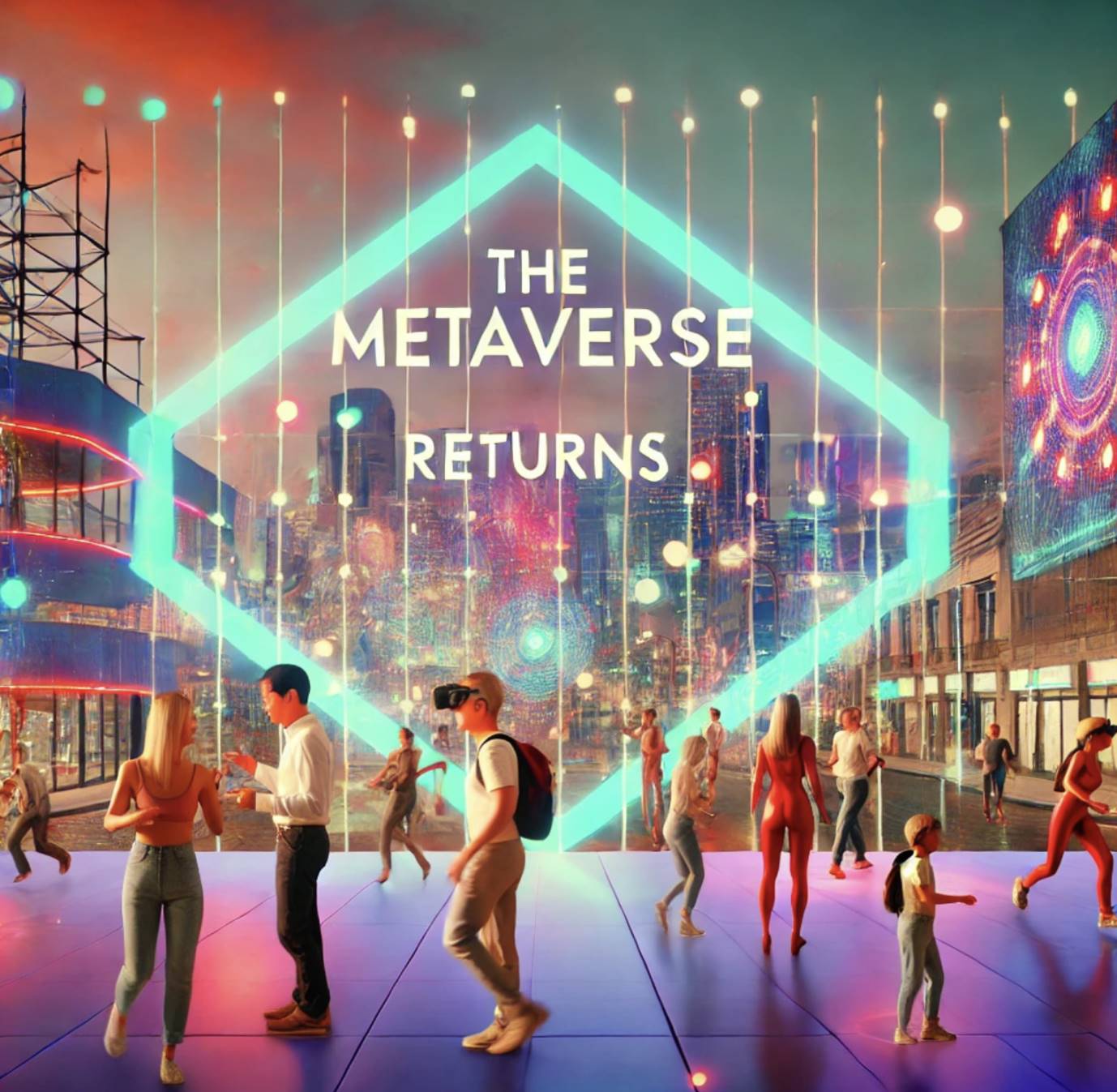
Reigniting this flame now might be an optimal move. Judging from Meta’s own trajectory, Mark Zuckerberg hasn’t abandoned his metaverse dream—he’s simply shifted from constantly promising pie to putting it directly into your mouth. Meta’s AI strategy needs little explanation; the real bottleneck has always been user access to immersive experiences. However, the Quest series has achieved affordability in AR headsets, and the upcoming AR glasses Orion demonstrates extreme lightweight design—weighing only 98g and enabling VR interaction via a myoelectric wristband. Despite high costs, it proves lightweight AR is feasible. What’s currently missing are energy solutions and killer apps. On the power issue, I can’t offer much insight. But AI agents could fill the emptiest spaces in the metaverse. Combined with blockchain’s financial layer, we might witness the emergence of 3D consumer applications that ultimately converge into a mass-market killer app. If Microsoft’s AI agents prove truly effective, all we’re waiting for is a drop in computing cost—i.e., “tokens per dollar per watt.” Beyond Meta, Apple and Microsoft are also advancing AR glasses. Given enough time, the metaverse may finally reach its “Ready Player One” moment within the coming years.
4. From Clicks to Speech: Making Intent Verbal
In June 2023, conceptual pioneer Paradigm reignited interest in intent-centric architectures with their paper titled *Intent-Based Architectures and Their Risks*. Since then, multiple projects have pivoted toward chain abstraction, though results have been underwhelming. Achieving cross-chain functionality, cross-dApp interoperability, accurate intent interpretation, and secure execution paths remains extremely challenging. Cross-chain alone is a century-old难题; the latter two aspects—I refer to using Web3’s native terminology—as Solver mechanisms. The complexity here is immense: secure solutions are often unusable, usable ones insecure. So why not temporarily centralize the interaction process, focusing instead on verifying total transaction cost and whether the purchased tokens are legitimate and safe? This could serve as a transitional approach.
For example, as discussed in our previous article on intents: “I want to order a $30 burger delivery” is an “intent.” To fulfill it, users currently need only enter name, phone number, address, and confirm the order on a food delivery app—without needing to understand how the $30 is split between merchant and platform, or how riders are assigned and routed. But imagine a simpler interaction: I tell my AI agent I’m hungry, without clicking anything. The AI responds: “You ate greasy food yesterday—would you prefer congee today?” I simply reply: “Just get me my usual.” That’s autonomy and decision-making in action.

In Web3, taking centralized exchanges (CEXs) as hubs, if user intents can be fulfilled directly within the exchange, purchases can happen instantly there. If an intent requires on-chain execution, CEXs remain the most cost-effective and fastest bridge (and in terms of security, arguably safer than average multisig solutions). By integrating wallet accounts, we could skip the most tedious cross-chain steps altogether—instead verifying the correctness of AI-executed steps. Imagine how complex each click used to be to interpret; the future lies in interacting through language, driven by our token trading habits—transforming intent from clicks to speech.
Conclusion
Whether viewed through technological progress or societal transformation, the convergence of AI agents and Web3 signals the dawn of a new era—starting from on-chain cults, heading toward the next frontier. From my early设想 of AI assisting small teams in GameFi modeling, to witnessing Silicon Valley giants deploy advanced AI agents, the bottom-up development model may gradually shift—from community building, consensus formation, and time accumulation—to one led by creativity.
Join TechFlow official community to stay tuned
Telegram:https://t.me/TechFlowDaily
X (Twitter):https://x.com/TechFlowPost
X (Twitter) EN:https://x.com/BlockFlow_News
 @YBBCapital