AI Boom: Tech Giants' Elite Launch New Project to Change the World
TechFlow Selected TechFlow Selected
AI Boom: Tech Giants' Elite Launch New Project to Change the World
How does Nillion protect privacy and security when Twitter user data is used for AI training?
 Navigating Web3 tides with focused insights
Author: Viee, Core Contributor at Biteye
Editor: Crush, Core Contributor at Biteye
Have you ever thought about it? Maybe AI will understand you better than you understand yourself.
In this era of AI explosion, the personal data of millions is being used to train models like ChatGPT. This statement may no longer be a speculative question about the future—it’s an urgent issue we must address today.
The blockchain industry faces an even greater challenge. In a field where information and data are publicly accessible in real time, how can we maintain both user trust and privacy security?
During the TOKEN 2049 conference in September, discussions around AI ranked among the top three hottest topics. After the event, we began researching some interesting AI+Web3 projects, including @nillionnetwork.
01 What is Nillion?
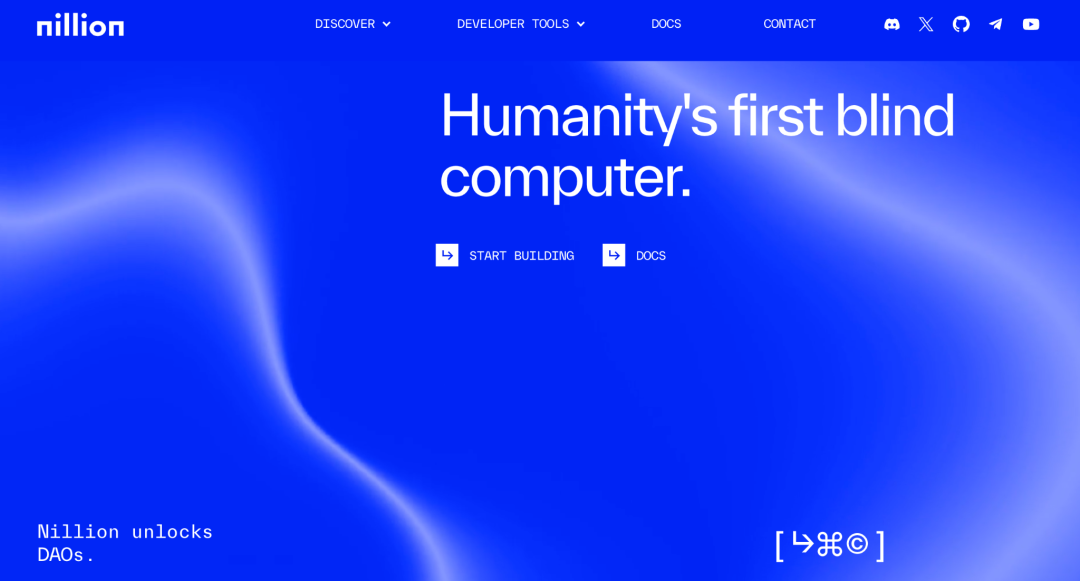
What exactly is Nillion trying to do? In simple terms: enabling users to securely process and share sensitive data without exposing their private information—earning it the title of the world's first "Blind Computer."
Imagine this: as personalized AI models grow increasingly reliant on users’ private data, would you feel comfortable handing over your data entirely to an AI system?
The core pain point here is clear: if individuals cannot protect their personal data privacy, the development of customized, personalized AI will be severely hindered.
No wonder developers from renowned companies like Uber, Coinbase, and Goldman Sachs have spent years attempting to solve this very problem.
02 How Does “Blind Computation” Work?
The Nillion Network consists of two parallel, interdependent layers: the coordination layer and the orchestration layer. Think of this dual-network architecture as a library divided into a front desk (coordination layer) and reading rooms (orchestration layer).
-
The coordination layer (NilChain) manages storage operations across the network and handles payments for blind computations—similar to a library front desk that oversees book lending and returns, ensuring every transaction proceeds smoothly.
-
The orchestration layer (Petnet) leverages privacy-enhancing technologies such as MPC (Multi-Party Computation) to protect data at rest and enable blind computation—operations performed on data without revealing it. Think of these as specialized reading rooms where readers use privacy-preserving tools (like MPC) to analyze books without actually opening them. During data analysis, users’ privacy remains protected while still gaining valuable insights. For example, each node involved in the computation shares encrypted keys and transaction details, allowing transactions to be completed without direct access to users’ private keys.
03 Real-World Applications: Use Cases Across Industries
Most current AI+Web3 projects boast brilliant ideas but struggle with practical implementation. FOMO runs high, and the more hyped they get, the more likely they become mere buzzwords.
What sets Nillion apart is its focus on tangible, viable use cases—and its growing list of strategic partnerships.
For instance, in healthcare, patients could safely share their genomic data to receive personalized health recommendations, all while keeping their privacy intact.
In finance, users can conduct trades on encrypted platforms, ensuring their transaction data remains inaccessible to third parties.
Additionally, within blockchain applications, Nillion enables users to process sensitive data on-chain without public exposure—opening up new possibilities for decentralized apps (dApps).
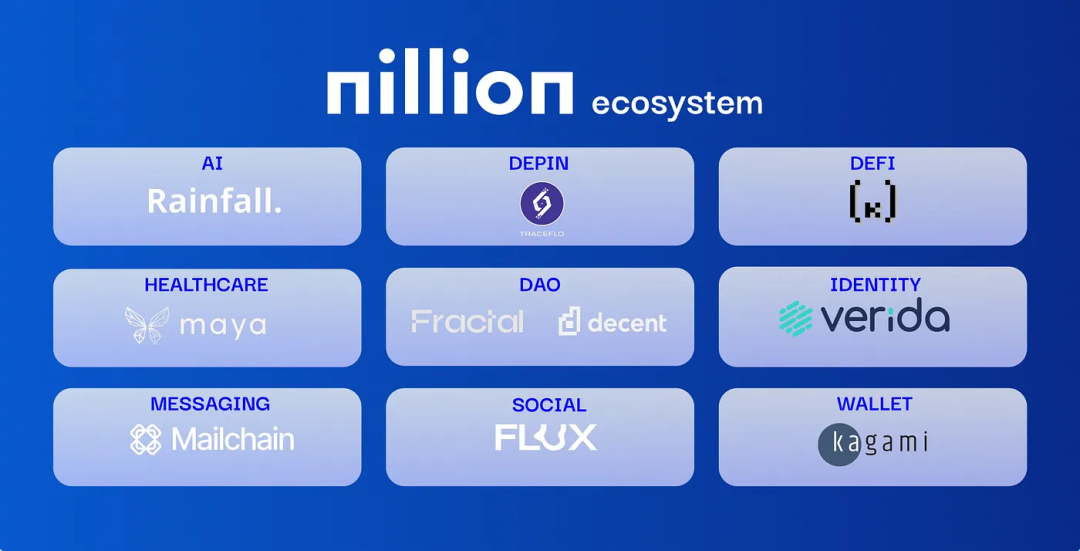
Selected projects in Nillion’s ecosystem (partial list)
To date, Nillion has established collaborations across multiple sectors, including artificial intelligence, healthcare, decentralized finance (DeFi), infrastructure, wallets, decentralized autonomous organizations (DAOs), identity verification, and gaming.
In the AI space, for example, Nillion partners with Ritual, Rainfall, and Skillful AI to advance secure computing in personalized AI applications.
In healthcare, collaborators like Agerate and MonadicDNA are exploring how Nillion can enable secure sharing and analysis of patient data.
Moreover, last month Nillion announced integration with the NEAR Protocol, introducing blind computation and blind storage. By combining Nillion’s privacy-preserving computation with NEAR’s transaction processing capabilities, the two networks will support modular data privacy, private data management, and private AI.
04 How Can Ordinary Users Participate?
Nillion’s testnet comprises two components: the NilChain testnet and the Petnet testnet.
-
Method 1: Use NIL testnet tokens to interact with the NilChain testnet. Follow the official guide to set up a wallet connected to the NilChain testnet, claim test tokens via the Testnet Faucet, and transact NIL tokens on the NilChain testnet.
-
Method 2: Developers can write blind applications using the Nada programming language and connect them to the Petnet testnet.
The second method suits technically skilled users. The first is straightforward—worth trying if you're already following the AI赛道 (track/sector).
🔍 For details, refer to the official testnet guide: https://docs.nillion.com/testnet-guides
05 Conclusion
OpenAI keeps getting sued, and Microsoft Copilot is embroiled in privacy scandals. In the future, data privacy and security may become far more critical than we currently imagine. Under these circumstances, enjoying the benefits of AI while confidently safeguarding personal information will become an unavoidable societal challenge.
Join TechFlow official community to stay tuned
Telegram:https://t.me/TechFlowDaily
X (Twitter):https://x.com/TechFlowPost
X (Twitter) EN:https://x.com/BlockFlow_News
 @BiteyeCN