Is decentralized social back? Quickly experience Towns, the social protocol backed by a16z with $25 million
TechFlow Selected TechFlow Selected
Is decentralized social back? Quickly experience Towns, the social protocol backed by a16z with $25 million
Encrypted social apps still have a long way to go.
 Navigating Web3 tides with focused insights
Author: TechFlow
Recently, the news that a16z founder Marc Andreessen granted $50,000 to an AI bot—which later launched the viral Goat token—became a hot topic.
But don't forget: a16z's intention was never to invest in memes. The projects backed by this top-tier VC are making real progress across various sectors.
Yesterday, Towns—a decentralized social protocol that raised $25 million in a round led by a16z—officially launched. However, due to the overwhelming hype around meme cycles, serious projects like this get overlooked amid limited attention spans.
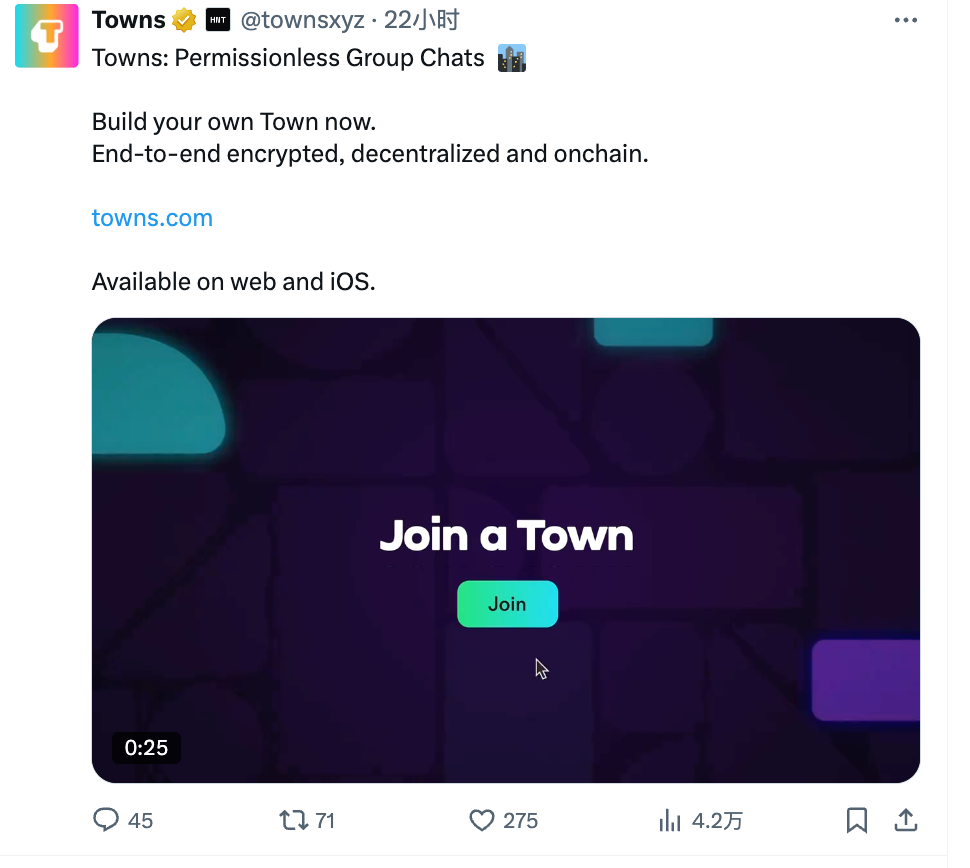
With the mindset of "better to examine ten thousand than miss one," new crypto products always deserve scrutiny. What if an opportunity quietly emerges while no one is watching?
We quickly signed up and tested this product that looks more like a decentralized Discord. Given Telegram’s founder’s arrest, FriendTech’s decline, and Farcaster’s lukewarm reception, could decentralized social be making a comeback?
Feature Experience: A Decentralized Version of Discord
First, let's clarify: the $25 million funding from a16z wasn’t recently announced.
In February 2023, Towns raised $25.5 million in a Series A round led by Andreessen Horowitz (a16z), with participation from Benchmark and Framework Ventures.
After nearly two years of development and refinement, the Towns product has only now officially launched.
In a crypto world where new trends emerge daily, taking two years to build an app feels slow. Yet methodically building and launching only when ready gives the impression of genuine product focus.
So, what exactly does Towns offer?
1. Login: No Crypto Wallet Required – Blockchain Logic Abstracted
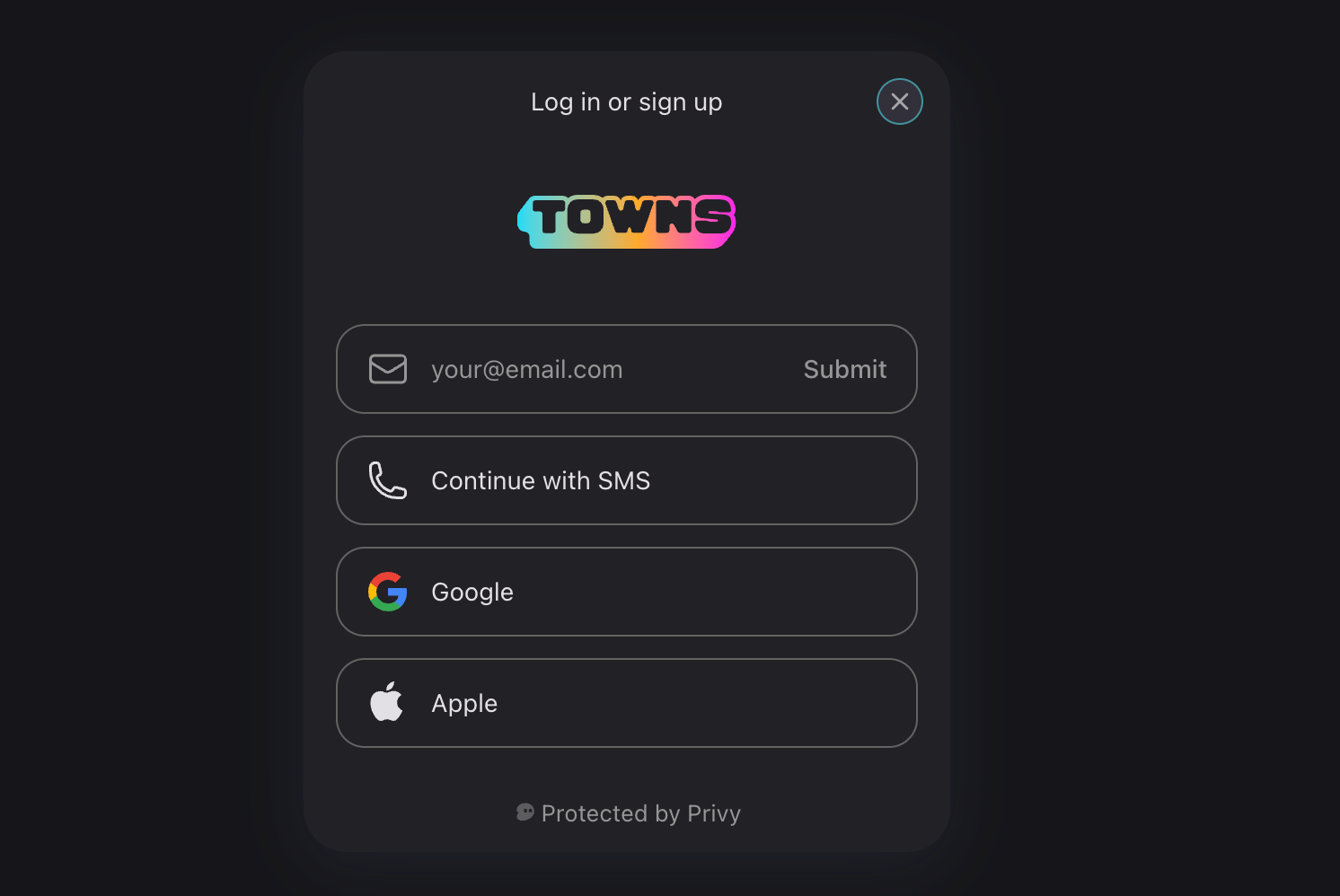
Towns currently offers both web and iOS versions. Upon visiting https://www.towns.com/, users see login options that do not involve connecting a crypto wallet. Instead, third-party accounts or phone number login are provided as standard mainstream methods.
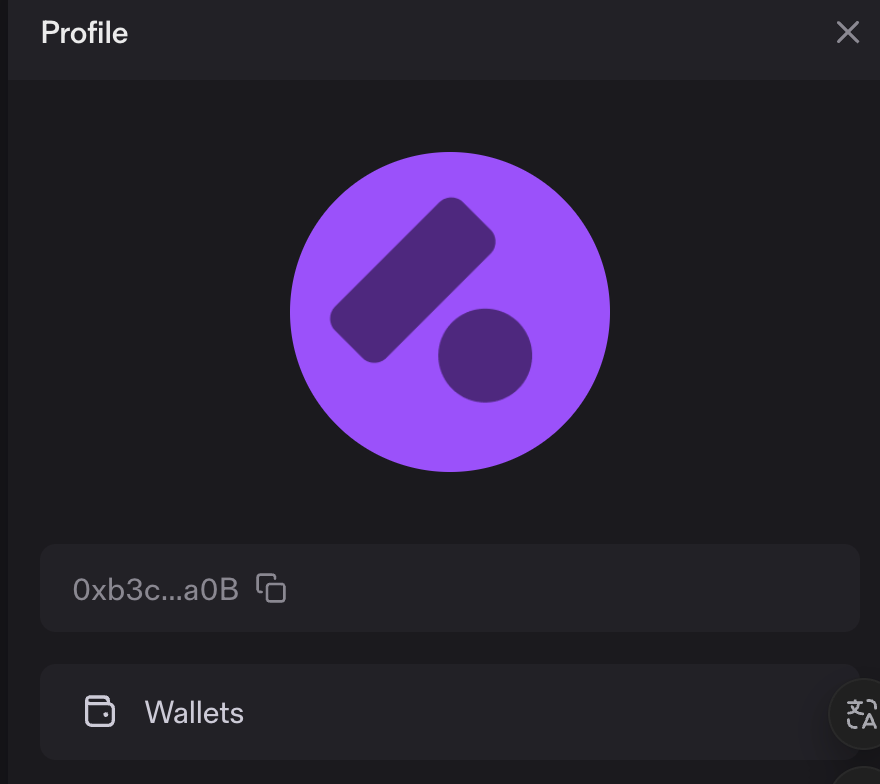
After registration, the personal profile page reveals that the system has automatically created an integrated wallet—likely using a keyless MPC wallet design. The blockchain layer is abstracted during login, which has become the common approach for most consumer-grade crypto products.
2. Creating Communities: Similar to Discord, But With Built-in Monetization via Membership
Once registered, users can either join a community or create their own.
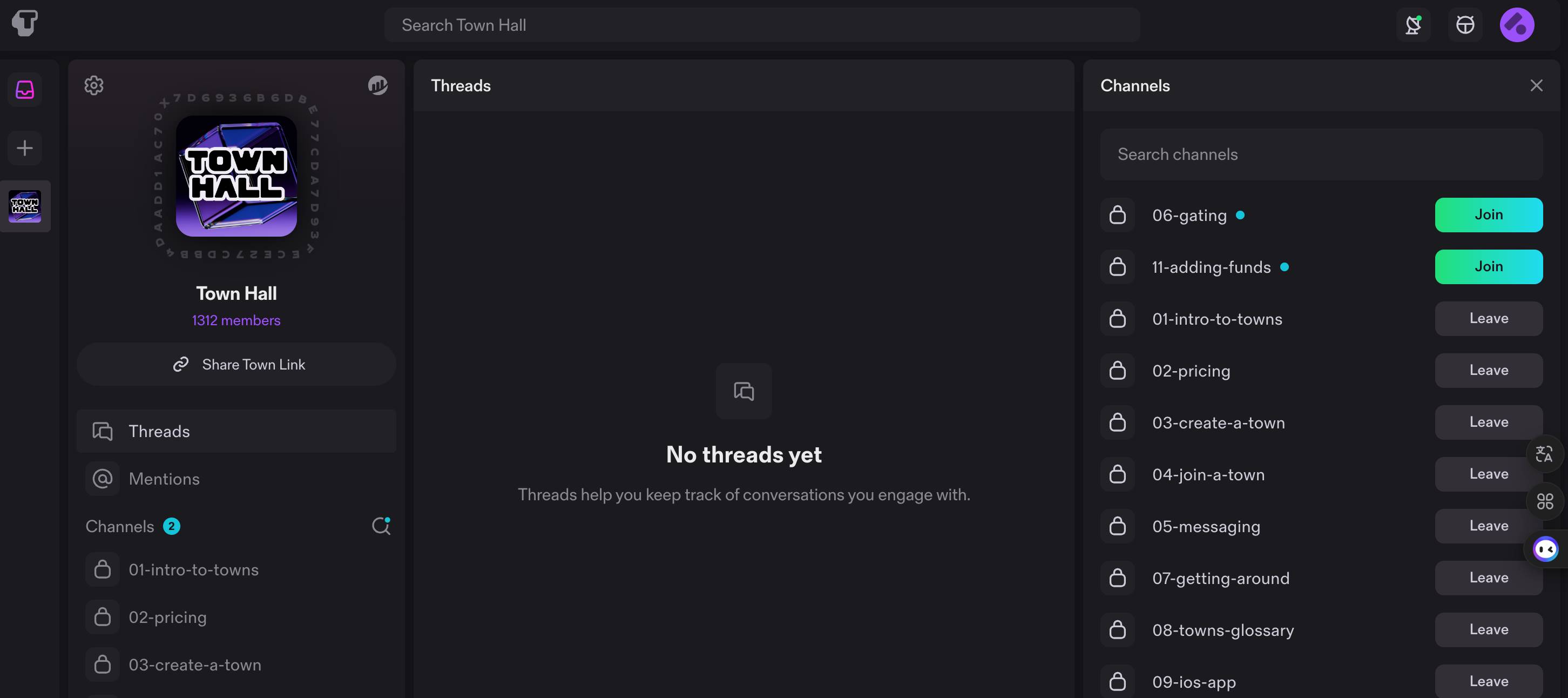
The concept of a “community” here closely mirrors Discord: users find interest-based groups and engage in different discussion channels within them.

When creating a group, Towns leverages on-chain economics and token/NFT-based access control to offer built-in membership monetization.
As shown below, creators can set the first 100 members to join for free. Subsequent members can be charged a fixed price, or follow a dynamic pricing model—cheaper early, more expensive later—to generate FOMO.
Since it’s a fully end-to-end decentralized application, group creation and member onboarding are on-chain actions subject to gas fees. Group creators have the option to “pre-pay gas” to cover joining members’ costs—and naturally, they can recoup these fees through membership charges.
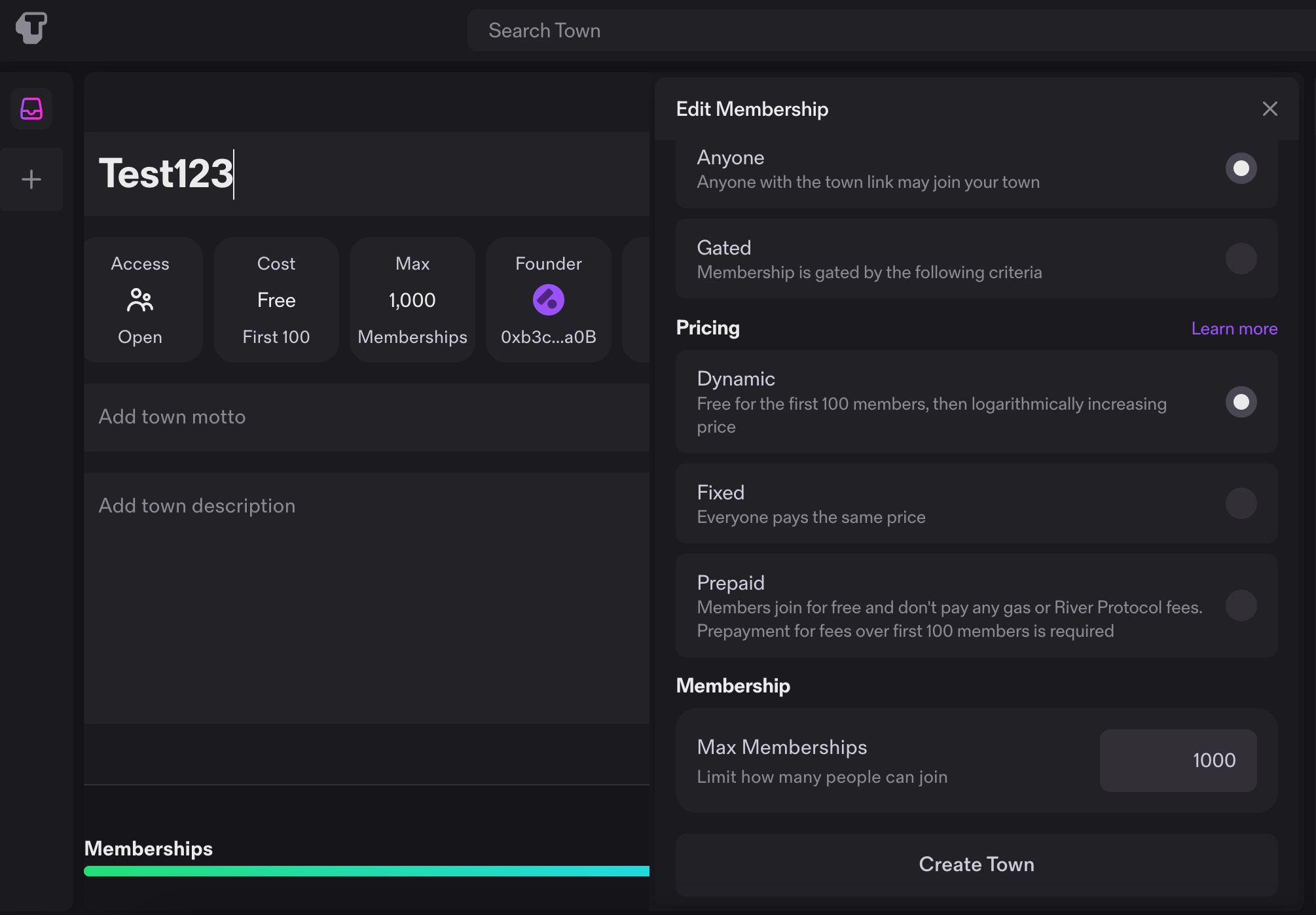
Additionally, access can be restricted based on holding specific tokens or NFTs.
3. Joining a Community: Join = Mint, Ownership of Information Control
When you click to join a group, the system automatically mints an NFT representing your membership in that group—confirming both that the action was initiated by you and that you are now an official member.
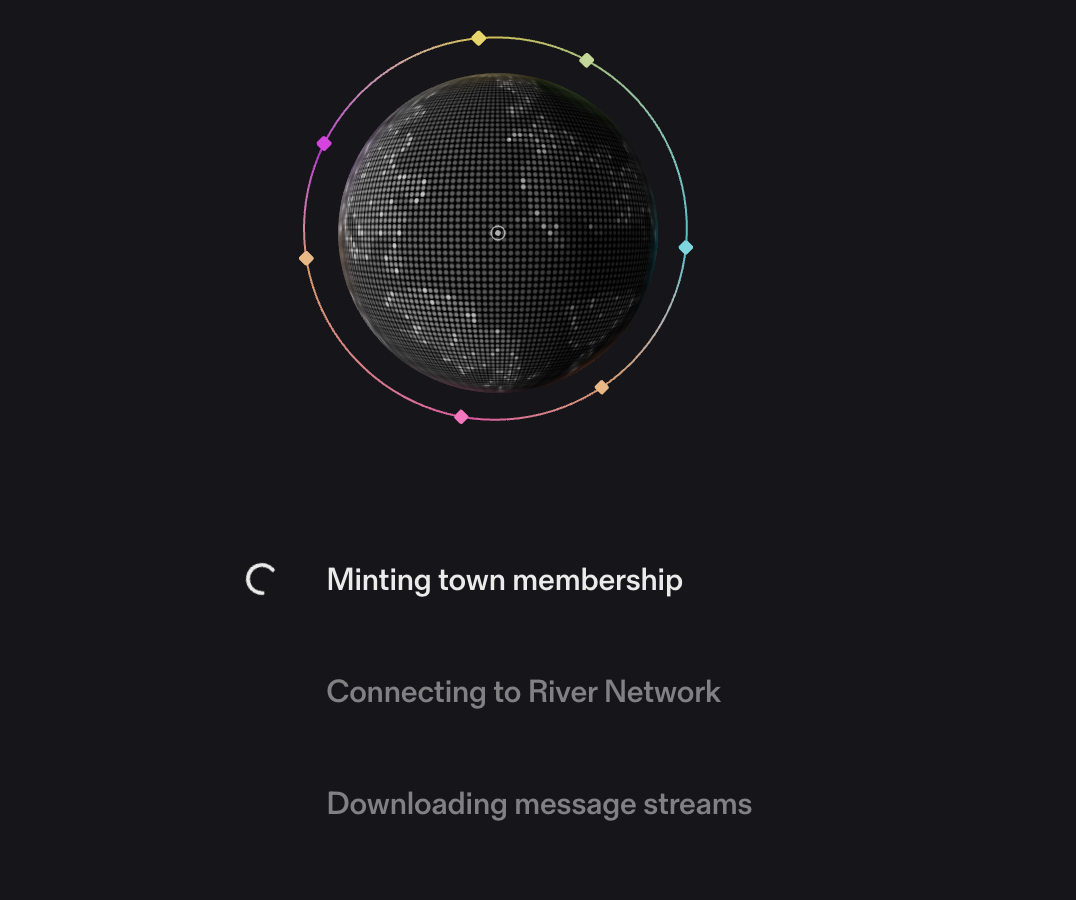
This action is then confirmed on-chain before syncing all information feeds from the group. Due to its decentralized architecture, your message streams and data aren’t controlled by any single centralized entity—though the front-end experience remains similar to a regular Discord interface.
Underlying Technology: Application Chain Powered by River
How does Towns achieve being a fully on-chain social protocol? The answer lies in River—an L2 scaling solution specifically designed for decentralized social applications.
River provides Towns with a three-layer technical framework enabling high performance and decentralization.
1. EVM-Compatible L2 Chain
Towns operates on River’s Layer 2 (L2) chain.
In practice, this means user interactions—such as posting, commenting, liking—can be processed quickly and cheaply on-chain without suffering from Ethereum mainnet congestion.
2. Decentralized Off-Chain Streaming Nodes
To meet real-time communication needs, Towns uses River’s decentralized off-chain streaming node network. Using efficient peer-to-peer protocols, it delivers messaging performance close to centralized systems while preserving decentralization.
This enables Towns to support real-time chat and notifications akin to traditional social platforms.
3. Smart Contracts Deployed on Base
Towns’ core logic is governed by smart contracts deployed on Base. These contracts define fundamental rules of the social protocol—including user identity management, community creation, and permission controls.
Built on these three components, each community (or “Space”) in Towns is effectively an independent, programmable on-chain asset. Each Space is a unique NFT representing ownership and governance rights of the community.
More importantly, to protect user privacy, Towns implements end-to-end encryption. All user communications are encrypted, and only the participants can decrypt them. This feature is embedded directly into the protocol layer, ensuring privacy doesn’t rely on any centralized server.
Towns vs Warpcast
Both backed by a16z, how does Towns compare with its predecessor Warpcast?
We’ve prepared a comparison table for quick reference:
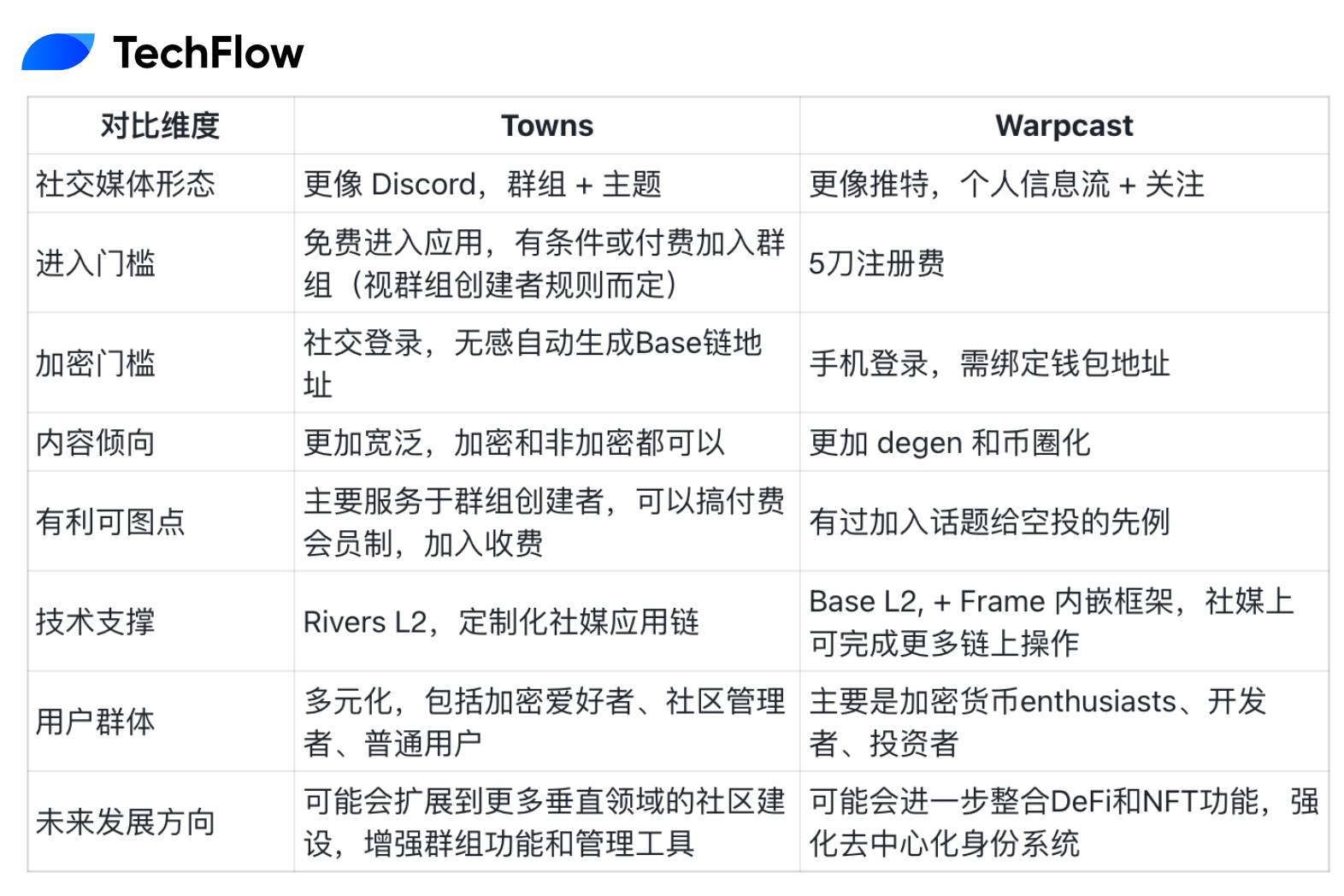
Finally, in the attention-driven crypto world, Towns must answer a critical question:
Do users really have the incentive to abandon Telegram, Discord, or even Farcaster for the sake of full decentralization?
User habits aren’t changed overnight. Often, familiarity outweighs even existential fears when choosing between platforms.
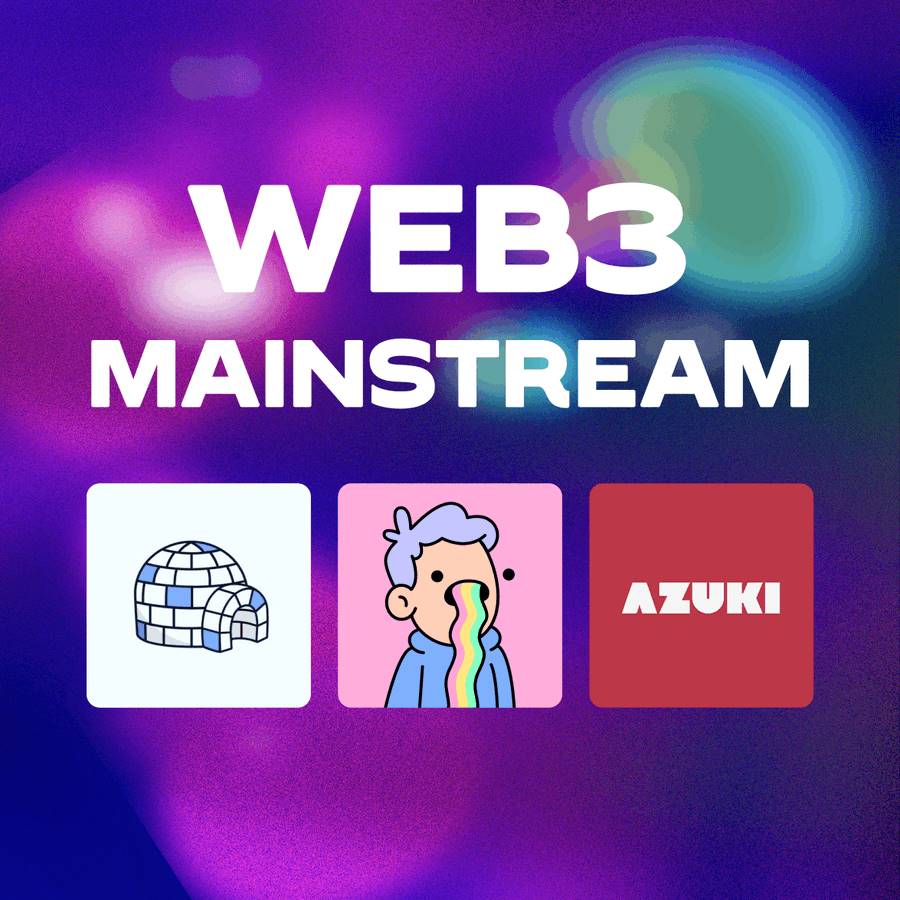
Towns clearly faces strong competition from established apps, making its go-to-market strategy crucial. For example, Towns is actively partnering with popular crypto communities and NFT holders, proactively creating spaces to attract them—such as Azuki, Doodles, and Penguins, as shown below.
But all of this hinges on one thing: profitability. Only when there’s money to be made will creators want to form groups (e.g., sharing alpha), and members be willing to pay entry fees.
Moreover, broader crypto market conditions cannot be ignored.
After all, if everyone is losing money, who wants to join a chat group? The road ahead for crypto social apps remains long and challenging.
Join TechFlow official community to stay tuned
Telegram:https://t.me/TechFlowDaily
X (Twitter):https://x.com/TechFlowPost
X (Twitter) EN:https://x.com/BlockFlow_News
 深潮TechFlow