








DeFiance founder: It's time to make DeFi great again
TechFlow Selected TechFlow Selected
DeFiance founder: It's time to make DeFi great again
DeFi has just begun, and the future of finance will be decentralized and on-chain.
 Navigating Web3 tides with focused insights
Authors: Arthur Cheong & Eugene Yap
Compiled by: TechFlow
The European Renaissance, beginning in the 14th century, sparked a revival of art, culture, and ideas that profoundly reshaped modern civilization.
Today, we are witnessing a similar awakening in the world of cryptocurrency—the Renaissance of Decentralized Finance (DeFi). Like its historical predecessor, this movement is breaking down barriers and redefining our understanding of money and finance. Powered by blockchain and smart contracts, DeFi is democratizing financial services, enabling global users to participate in a trustless economic system without relying on traditional financial intermediaries. It has the potential to completely revolutionize the financial industry.
Just as the European Renaissance was driven by technological progress and societal change, the DeFi Renaissance is being propelled by key factors that are helping it overcome early challenges and enter a new phase of growth and innovation.
1. DeFi Is Emerging from the Trough of Disillusionment
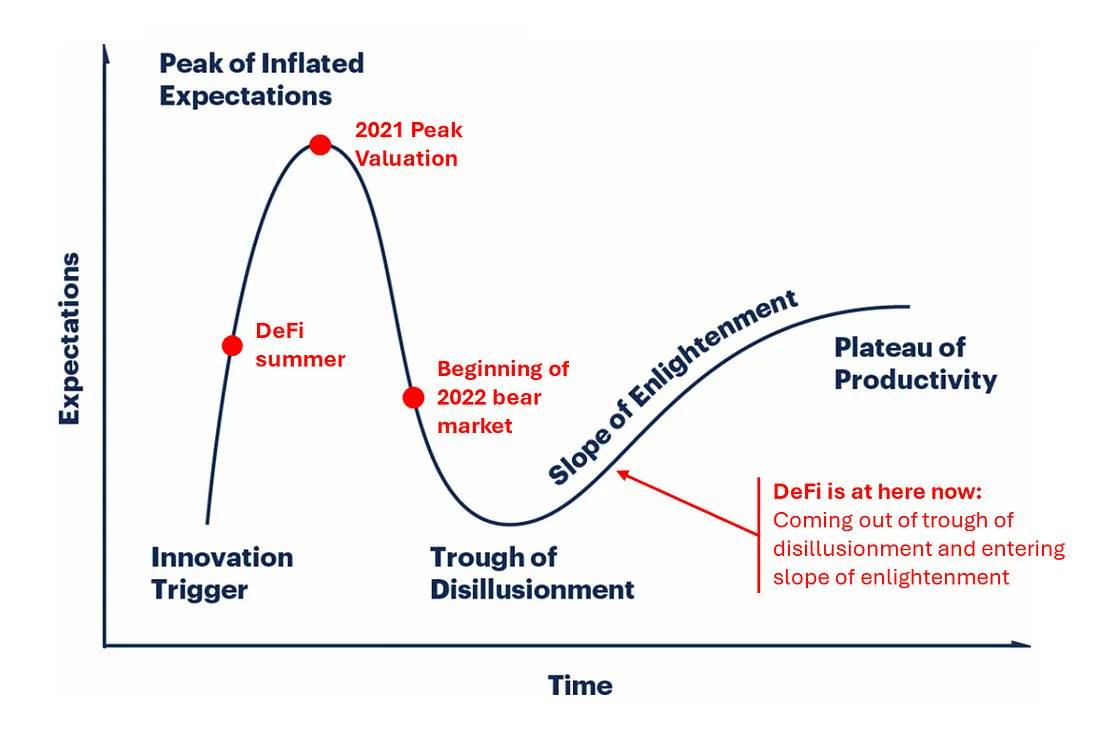
DeFi experienced rapid growth in 2020 and 2021, with many expecting it to completely disrupt traditional finance (TradFi). However, like most emerging technologies, the initial hype gave way to disappointment as infrastructure remained immature, leading to a downturn in 2022.
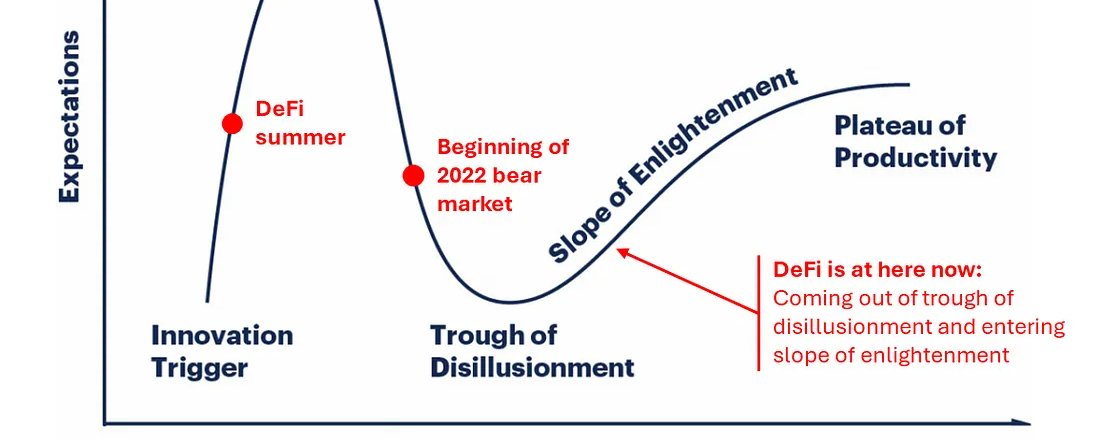
Yet, as with any revolutionary movement, DeFi has grown stronger and is now climbing out of the "trough of disillusionment" and ascending the "slope of enlightenment." The Gartner Hype Cycle provides a useful framework for understanding this process, and DeFi is now showing clear signs of recovery.
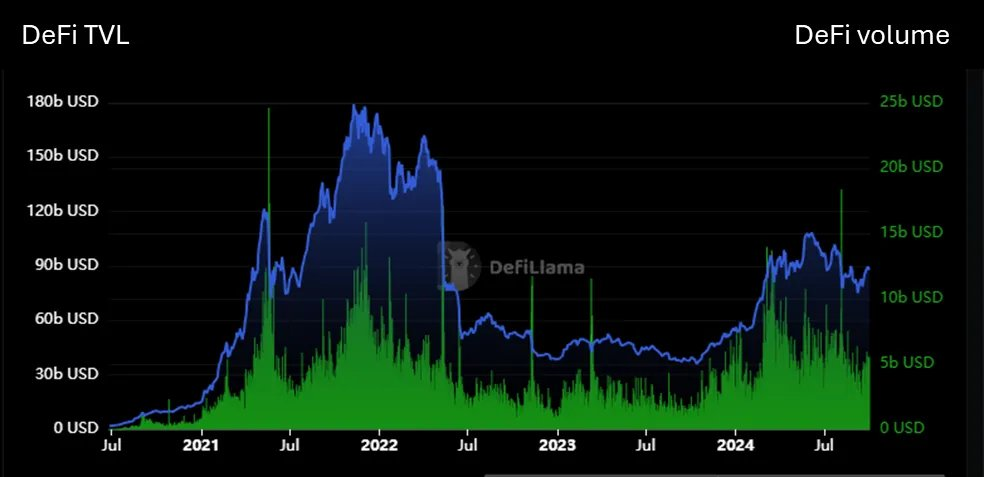
After two years of consolidation, key metrics such as Total Value Locked (TVL) are rebounding, as shown in the chart below. While rising crypto asset prices have contributed to improved metrics, trading volumes on DeFi platforms have also surged, nearly returning to 2022 levels—confirming the authenticity of this recovery.
In fact, some core DeFi projects, such as Aave, have surpassed their 2022 peaks across multiple metrics. For example, Aave’s quarterly revenue has exceeded levels seen in Q4 2021—the peak of the previous bull market.
Our full analysis of Aave can be found here.
This indicates that DeFi is maturing and entering a new development stage, ready for long-term scalability.
2. A New Interest Rate Cycle Will Make DeFi Returns More Attractive
DeFi’s recovery isn’t solely driven by internal developments—external macroeconomic shifts are also playing a crucial role. As global interest rates shift, risk assets like cryptocurrencies—and particularly DeFi—become more appealing to investors seeking higher yields.
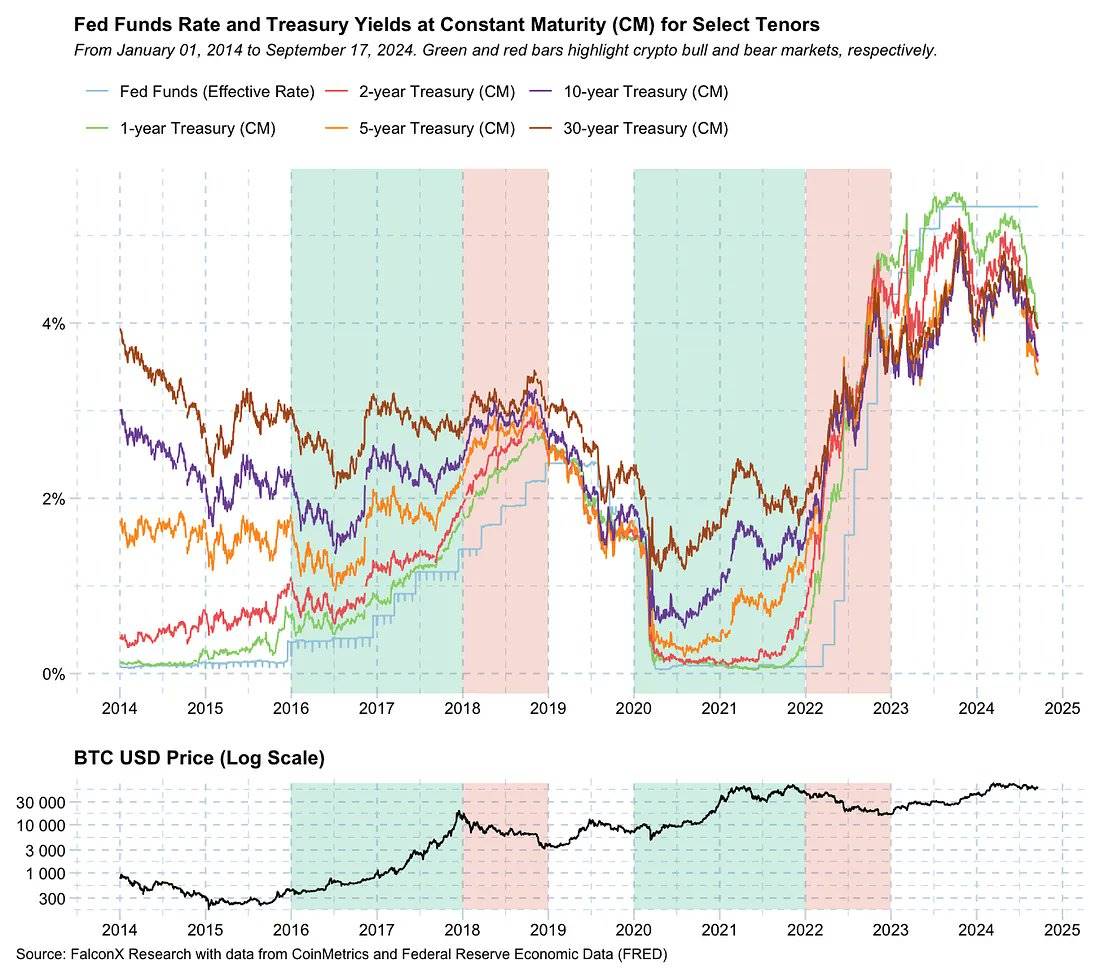
With the Federal Reserve cutting rates by 50 basis points in September, markets may be entering a low-rate environment, similar to those that fueled crypto bull runs in 2017 and 2020, as illustrated below. Bitcoin (and broader crypto) bull markets typically emerge during periods of declining rates (green zones), while bear markets often coincide with rate hikes (red zones).
DeFi benefits from lower interest rates in two primary ways:
-
Reduced opportunity cost of capital—As interest rates fall, returns from Treasury bills and traditional savings accounts decline, prompting investors to seek higher yields through DeFi protocols via yield farming, staking, and liquidity provision.
-
Lower borrowing costs—Cheaper financing encourages DeFi users to take out loans for productive uses, boosting activity across the ecosystem.
While rates may not return to near-zero levels seen in prior cycles, the opportunity cost of participating in DeFi will significantly decrease. Even modest rate cuts can have amplified effects due to leverage, creating meaningful yield spreads.
Moreover, we anticipate the new rate cycle will act as a major catalyst for stablecoin growth, substantially reducing the capital cost for traditional finance funds to deploy into DeFi in pursuit of yield.
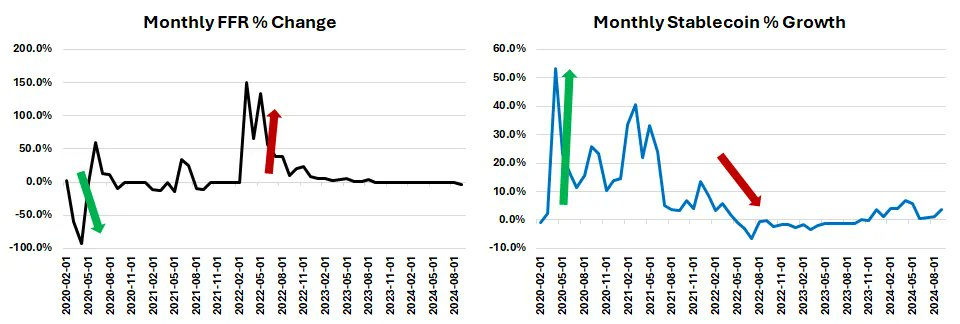
In the last cycle, there was an inverse relationship between the Federal Funds Rate (FFR) and stablecoin supply growth, as shown below. With rates falling again, stablecoin supply is expected to expand, providing more “dry powder” to accelerate DeFi’s growth.
3. Finance: Crypto’s Killer Product-Market Fit
Crypto has experimented with numerous use cases—NFTs, metaverse, gaming, social media—yet by most objective measures, none have achieved true product-market fit (PMF).
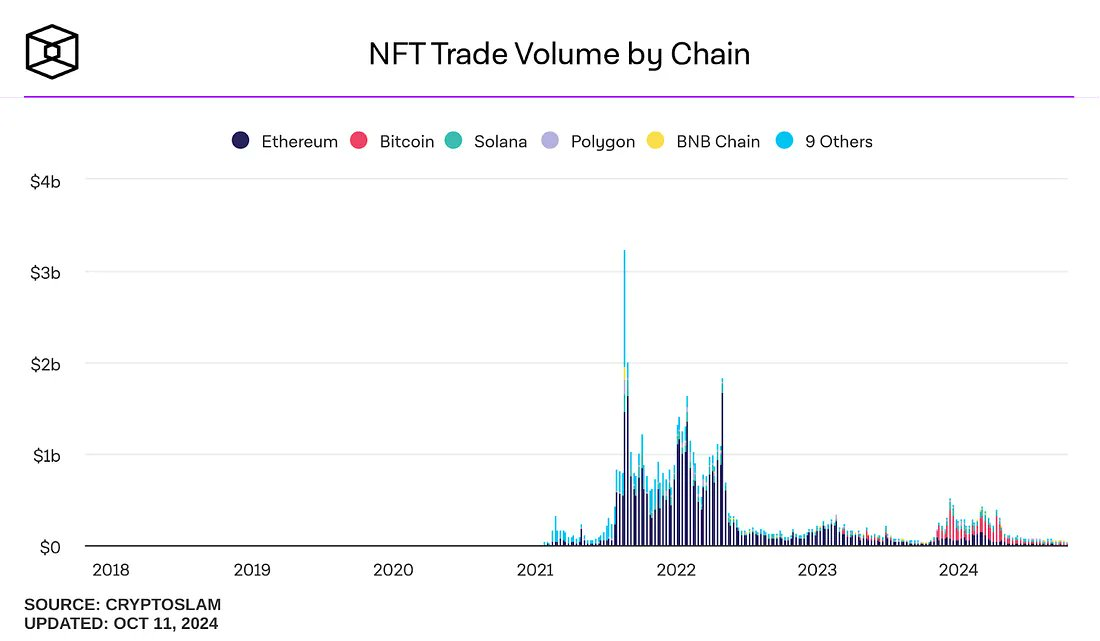
For instance, even amid a brief resurgence of Bitcoin Ordinals in 2024, NFT daily trading volume continues to decline.
Similarly, in metaverse and gaming, no breakthrough Web3 game has gained widespread global adoption. Early Web3 metaverse projects like Decentraland and Sandbox struggle to reach a few thousand daily active users, while Roblox boasts 80 million. Although TON games have impressive user numbers, it remains unclear how many would continue playing without ongoing financial incentives.
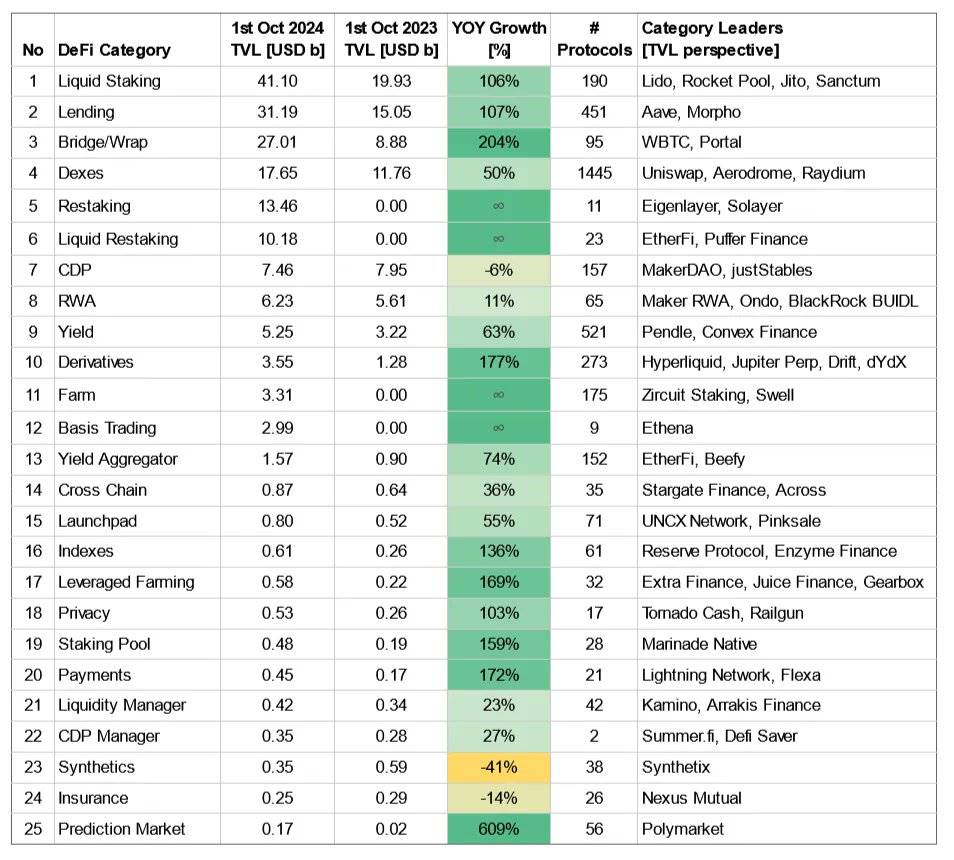
In contrast, DeFi has already demonstrated strong product-market fit. Core DeFi categories such as liquid staking and lending have posted over 100% year-on-year growth, proving their appeal. Meanwhile, new billion-dollar categories like restaking (EigenLayer) and synthetic base assets (Ethena), which had zero TVL just a year ago, are rapidly gaining traction. This explosive growth highlights DeFi’s composability and permissionless nature—new financial “Lego blocks” are being built atop one another to unlock novel applications.
Despite long-standing regulatory barriers limiting DeFi’s potential to disrupt TradFi, its inherent advantages are undeniable. For example:
-
Cross-border transactions and remittances average 6% in fees and take 3–5 business days.
-
Stock exchange backends are bloated and limited by operating hours, making them inefficient.
-
Real-world assets like real estate can be tokenized to unlock liquidity and composability in DeFi—for example, used as collateral.
DeFi’s 24/7 operation, low cost, high liquidity, and lack of intermediaries make it a far more efficient alternative. The technology is mature; the question is whether regulators will allow DeFi to disrupt a $10 trillion global financial industry built on inefficiency.
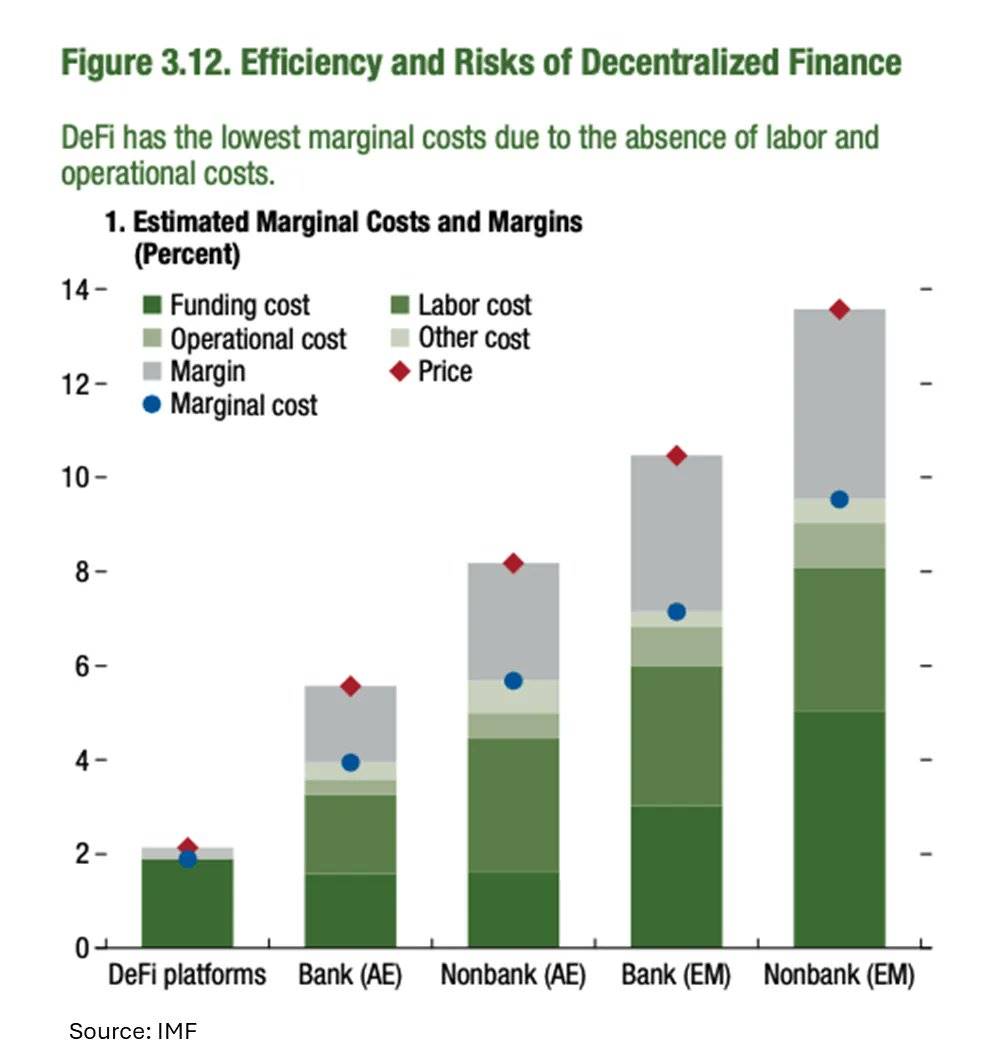
To illustrate how DeFi outperforms TradFi in efficiency, consider the cost of running financial services based on IMF research:
-
Labor costs: Nearly 0% for DeFi vs. 2–3% for TradFi. For example, DeFi loans are processed automatically without human intervention, unlike TradFi which requires manual reviews and paperwork.
-
Operational costs: Just 0.1% for DeFi vs. 2–4% for TradFi. DeFi eliminates the need for large offices or intermediaries—smart contracts handle transactions, and blockchains verify them. Overall, marginal costs in TradFi reach 6–8% in developed economies and 10–14% in emerging markets, costs ultimately borne by users.
DeFi simply removes these inefficiencies. That’s it.
Furthermore, the fintech sector has seen little real innovation over the past 15 years, consistent with findings from Blockchain Capital. Despite advances in AI and global internet access, fintech still relies on outdated systems—like SWIFT, a 50-year-old network used by banks, where transfers typically take 1–4 days.
Most fintech innovations—digital payments, fractional shares, APIs—focus on improving user experience rather than addressing core inefficiencies in traditional finance. For example, Robinhood and Plaid offer convenient stock-buying solutions but still depend on legacy financial infrastructure. The fundamental issue is that fintech merely connects to outdated systems to maximize utility, rather than building entirely new ones. While helpful, these changes fail to solve the deep-rooted problems plaguing traditional finance.
Unlike fintech, DeFi was built digital-first. Instead of relying on old systems, DeFi embeds financial services directly into the internet. In DeFi, features like fractional shares, over-collateralized lending, and global payments aren’t innovations—they’re baseline functionality. This marks a fundamental shift from incremental improvements to radical transformation in how finance operates.
By embracing DeFi, we don’t just make small adjustments—we unlock vast new economic opportunities, improve financial inclusion, and create wealth in areas traditionally ignored by finance. This means rebuilding the financial system to function better in a digital world.
Looking ahead, the 2024 U.S. election could bring regulatory clarity. A Trump victory might usher in crypto-friendly policies, while Harris’s administration has recently shown positive sentiment toward the industry, which may continue. Regardless of political outcomes, DeFi’s momentum is now unstoppable.
DeFi is just getting started. The future of finance will be decentralized and on-chain.
4. Improved User Interface/User Experience, Infrastructure, and Security
In its early days, DeFi was daunting for users due to clunky interfaces and technical complexity. However, over the past few years, user experience, infrastructure, and security have all improved dramatically, making DeFi more accessible to mainstream users.
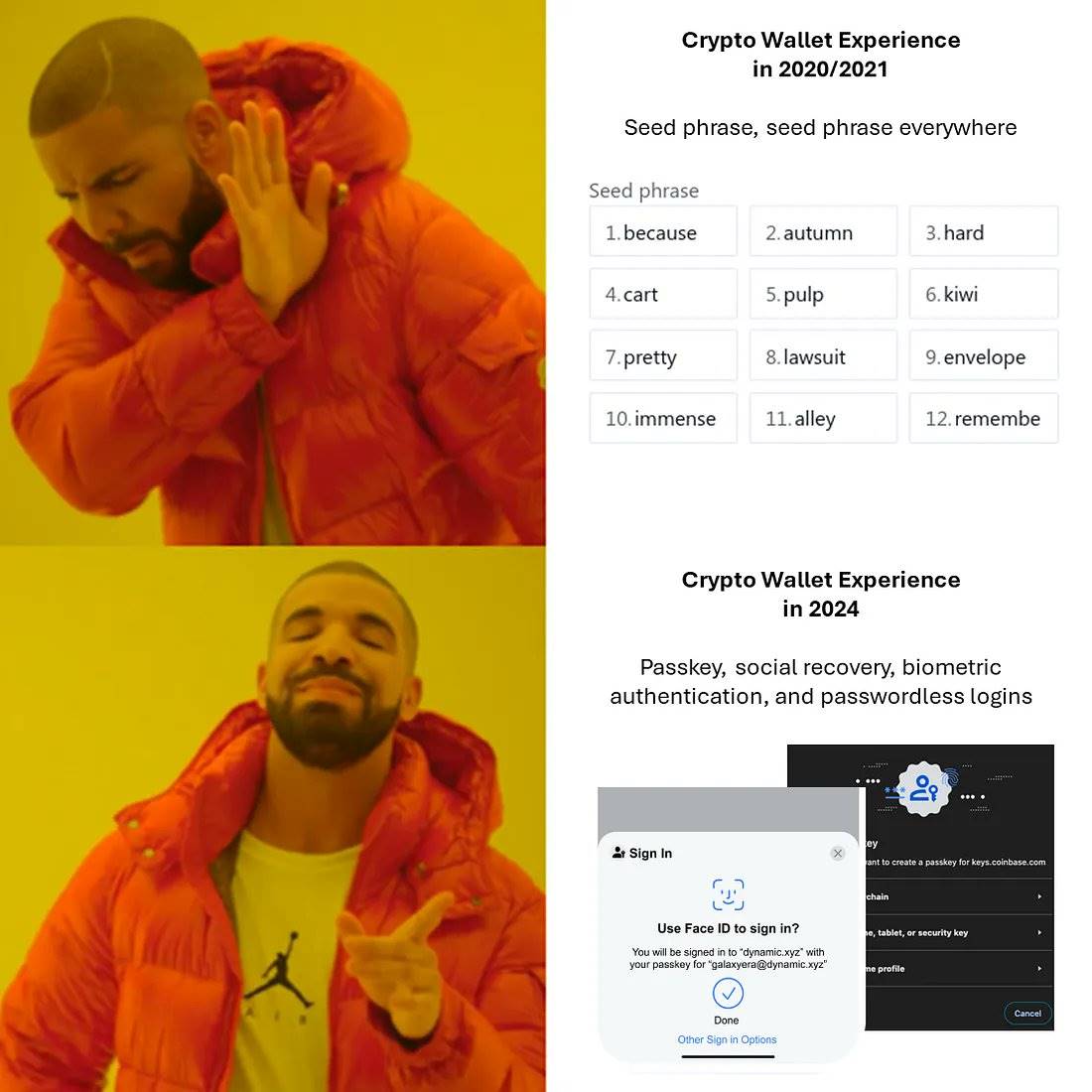
One of the most significant advancements has been in wallet infrastructure. Managing seed phrases and private keys was once a major hurdle, but new smart wallets and embedded wallets have simplified and secured this process. Features like social recovery, biometric authentication, and passwordless login now allow users to manage their funds easily, without the complexities of traditional Web3 wallets.
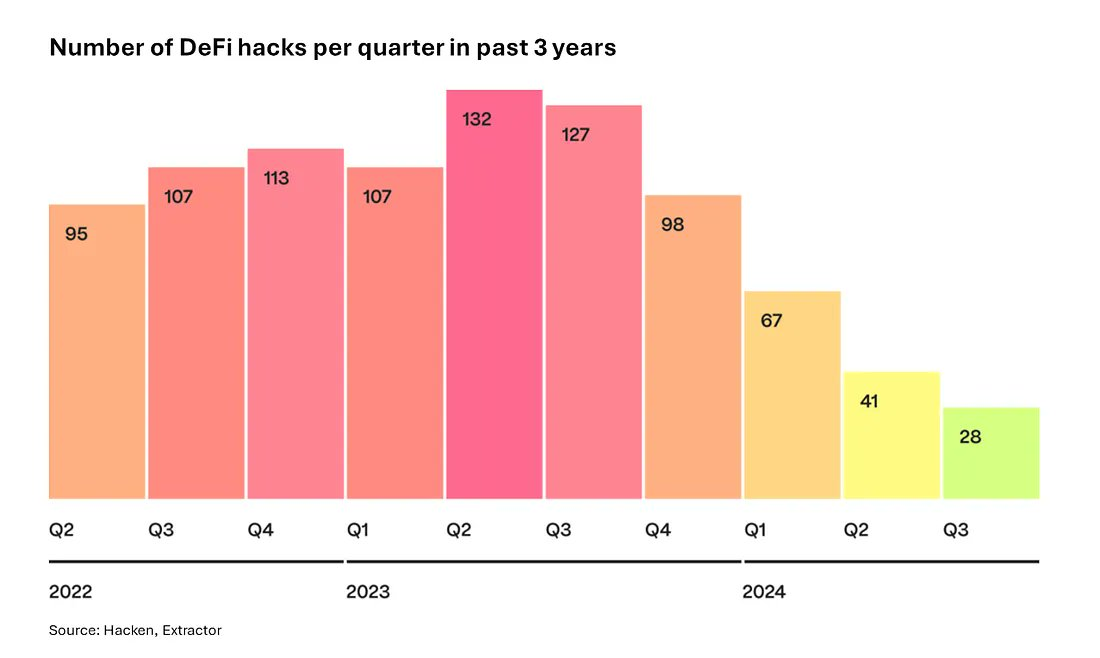
DeFi’s security has also greatly improved, with comprehensive smart contract audits before deployment now standard practice. Platforms like ImmuneFi use bug bounty programs to incentivize ethical hackers to identify vulnerabilities, ensuring issues are resolved before exploitation. These improvements in wallet infrastructure and security have made DeFi safer and more efficient for all users. The sharp decline in DeFi hacks over the past year is a direct result of these enhancements.
Thanks to these advances, DeFi is increasingly moving toward mainstream adoption—including by institutions—fueling sustained growth.
5. Make DeFi Great Again
Just as the European Renaissance transformed society, DeFi is poised to revolutionize finance. With immense innovative potential, we are only beginning to witness its impact. As more users and investors join DeFi, the future of global finance will increasingly shift on-chain, making financial systems more efficient, open, and accessible.
DeFi has the power to eliminate inefficiencies, break down barriers, and create new opportunities for financial inclusion. This is not a passing trend, but a fundamental shift in how the world interacts with money. From global payments to universal access to financial services, DeFi enables anyone to participate in the financial system.
Currently, the total market cap of all DeFi protocols is approximately $33 billion, representing just 1.4% of the entire crypto market cap of $2.3 trillion.
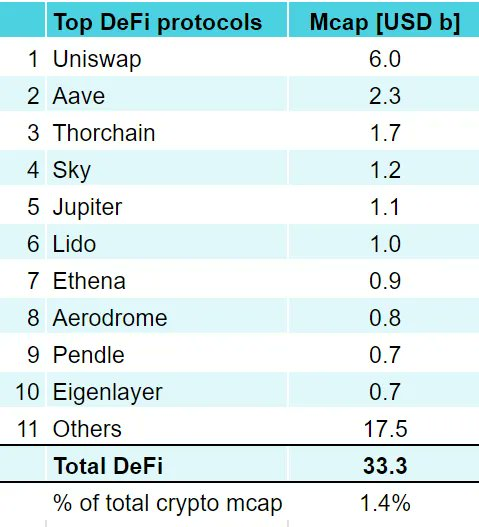
Figure: Data as of October 13, 2024
Despite challenging market conditions and industry headwinds, DeFi’s recent growth and success have been overlooked—but this will change. As DeFi protocols continue evolving at a rapid pace and returning growing value to token holders—such as Aave’s recent tokenomics proposal—market participants will increasingly focus on DeFi fundamentals and potential, reallocating capital accordingly.
We expect that as DeFi continues expanding and the market awakens to its new momentum and potential, DeFi’s share of the total crypto market cap will grow from 1.4% to 10% within the next two years.
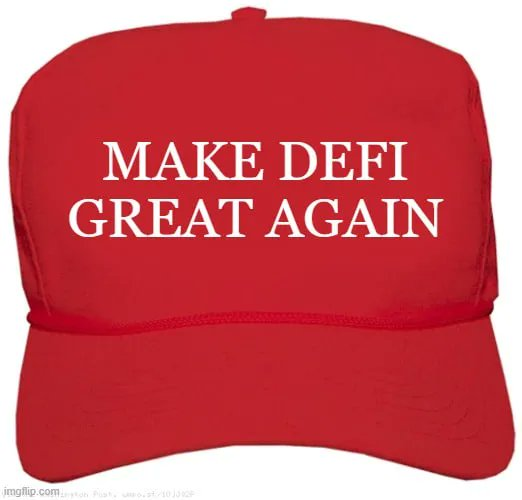
Make DeFi Great Again.
Acknowledgments
-
The person who popularized the term “DeFi Renaissance”
Disclaimer: This document is for informational purposes only. The views expressed herein do not constitute investment advice or recommendations. Recipients should conduct thorough due diligence based on their individual financial situation, investment goals, and risk tolerance (not addressed herein) before making any investment decisions. This document does not constitute an offer or solicitation to buy or sell any assets mentioned.
Join TechFlow official community to stay tuned
Telegram:https://t.me/TechFlowDaily
X (Twitter):https://x.com/TechFlowPost
X (Twitter) EN:https://x.com/BlockFlow_News
 @Arthur_0x






