








September Blockchain Gaming Report: Industry Recovery, Telegram Games Spark Frenzy
TechFlow Selected TechFlow Selected
September Blockchain Gaming Report: Industry Recovery, Telegram Games Spark Frenzy
Understanding the Impact, Market Growth, and Sustainability Challenges of Telegram Games
 Navigating Web3 tides with focused insights
By: Stella L
Data source: Footprint Analytics Games Research Page
In September, the total market capitalization of blockchain gaming tokens increased by 29.2% to reach $23.2 billion, while daily active users (DAU) rose 12.3% to 4.7 million. A notable trend is the rapid rise of Telegram-based games, sparking intense competition between blockchain networks and centralized exchanges (CEXs) for user acquisition. However, this boom has raised questions about the sustainability of on-chain engagement.
Meanwhile, new regulatory challenges are emerging, prompting established projects to reconsider their blockchain integration strategies. As the industry continues to adapt, the focus remains on effectively leveraging blockchain technology to create sustainable and engaging gaming experiences.
Macro Market Overview
The crypto market demonstrated strong performance in September. Bitcoin opened at $57,429 and closed the month at $63,485, achieving a 10.5% gain. Ethereum performed positively as well but underperformed compared to Bitcoin. Ether started at $2,426 and ended at $2,603, posting a 7.3% increase. Notably, mid-September saw the ETH/BTC exchange rate hit a new cycle low of 0.0386.
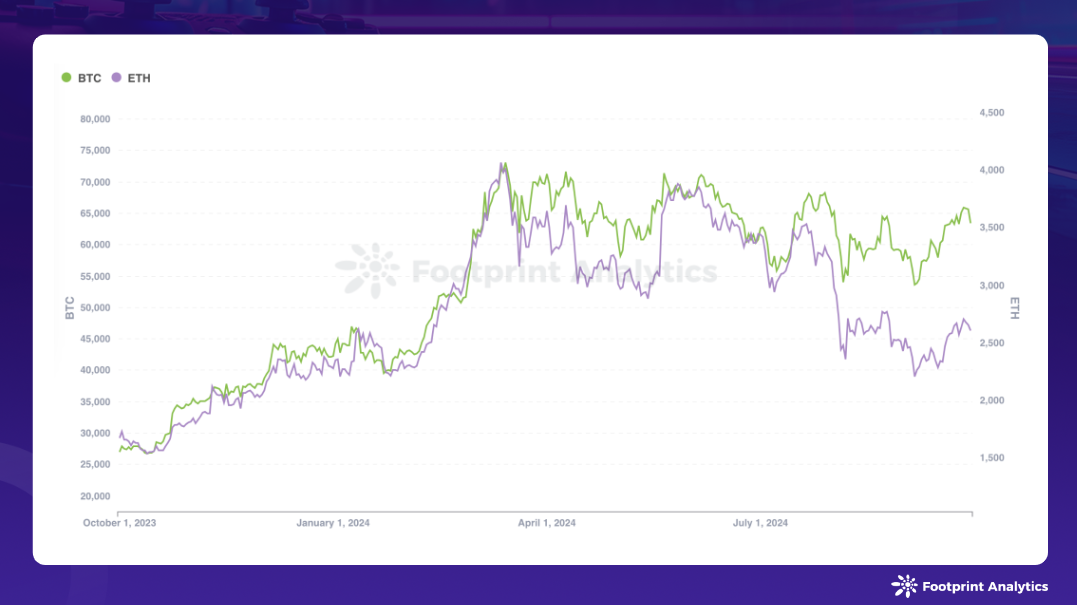
Data source: Bitcoin and Ethereum price trends
Several key factors contributed to this positive market sentiment:
-
Monetary policy shift: On September 18, the U.S. Federal Open Market Committee (FOMC) unexpectedly implemented a 50-basis-point rate cut—larger than anticipated. Later in the month, Chinese policymakers introduced macroeconomic stimulus measures, supporting global equity markets.
-
Regulatory progress: The U.S. regulatory environment showed signs of improvement. The Securities and Exchange Commission (SEC) approved listing applications for spot Bitcoin ETPs (exchange-traded products), with expectations that more approvals will follow.
-
Institutional adoption: Bank of New York appears poised to offer cryptocurrency custody services—a move that could further solidify crypto’s legitimacy within the financial sector.
-
Political support: The political landscape also shifted positively. Former U.S. President Trump announced a new decentralized finance (DeFi) protocol, while Vice President Harris made statements supporting digital assets and blockchain technology.
Blockchain Gaming Market Overview
September marked a rebound for the Web3 gaming sector, aligning with the broader upward momentum in the crypto market. The total market cap of blockchain gaming tokens surged from $18 billion to $23.2 billion—an impressive 29.2% growth. This recovery, following a sharp decline the previous month, highlights the close correlation between this sector and broader crypto market dynamics.
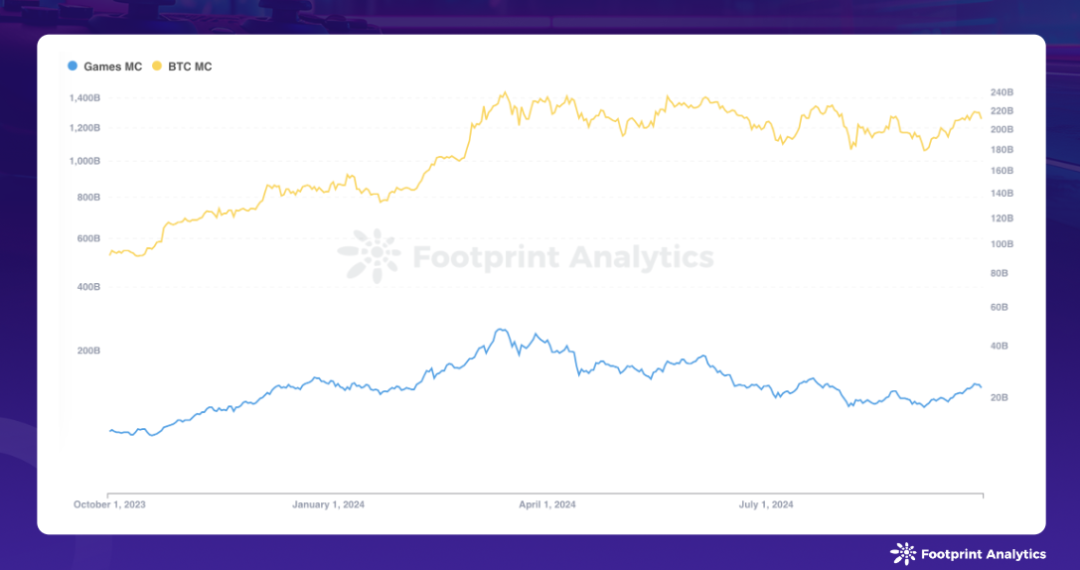
Data source: Market capitalization of blockchain gaming tokens and Bitcoin
User engagement continued its upward trajectory, with daily active users (DAU), measured by unique wallets, reaching 4.7 million in September. This represents a 12.3% increase compared to August, primarily driven by heightened activity on the opBNB network.
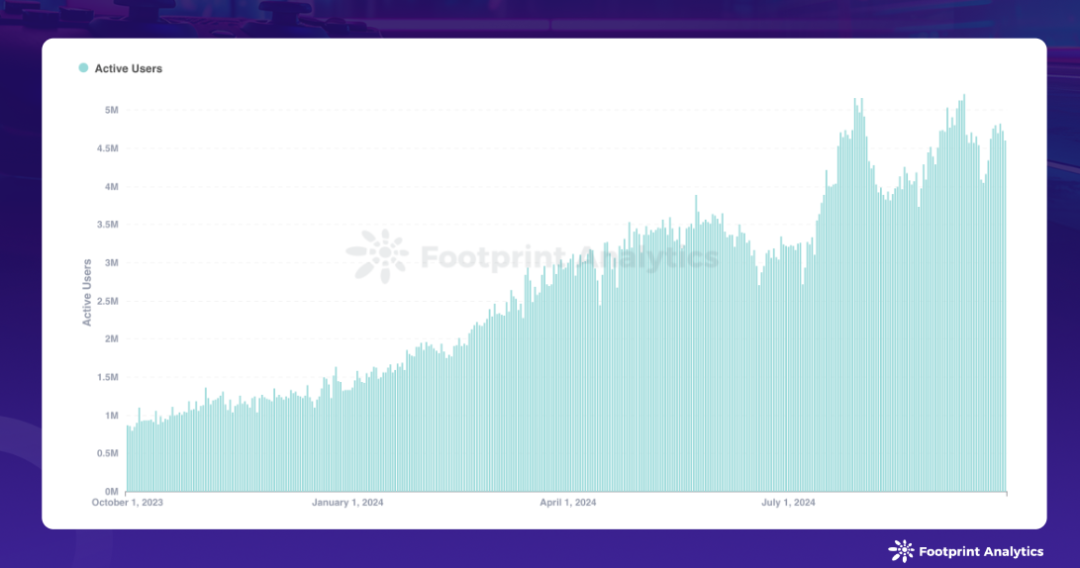
Data source: Daily active users in blockchain gaming
Transaction metrics also improved, with average daily transaction volume in blockchain gaming reaching 9.1 million transactions—a modest 2.5% increase from August.
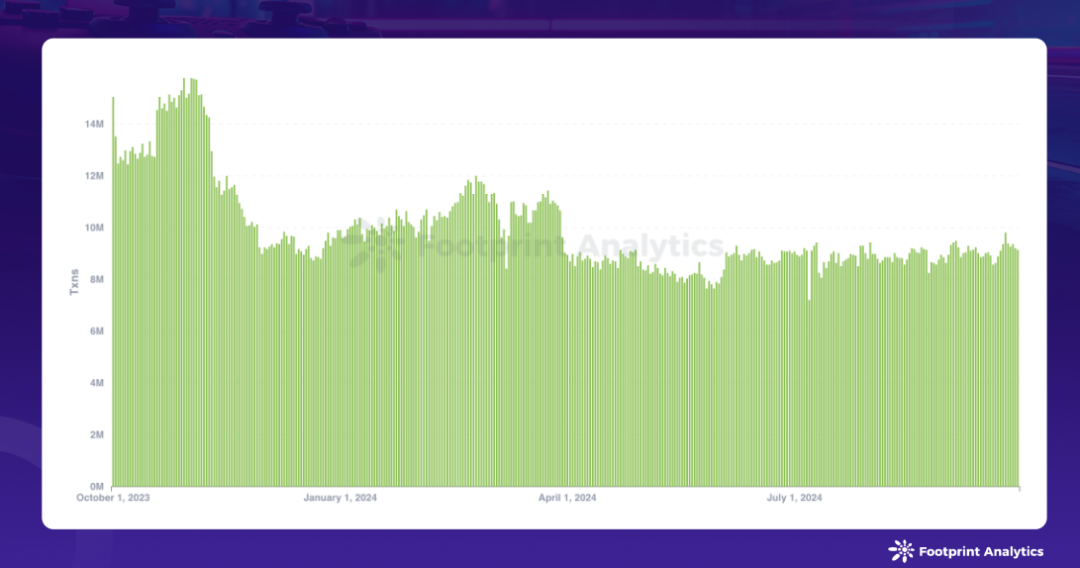
Data source: Daily number of blockchain game transactions
However, daily transaction value declined by 22.9%, settling at $13.1 million. It should be noted that this figure excludes several outlier data points on September 13, 17, 25, and 27 caused by internal wallet transfers within a single game.
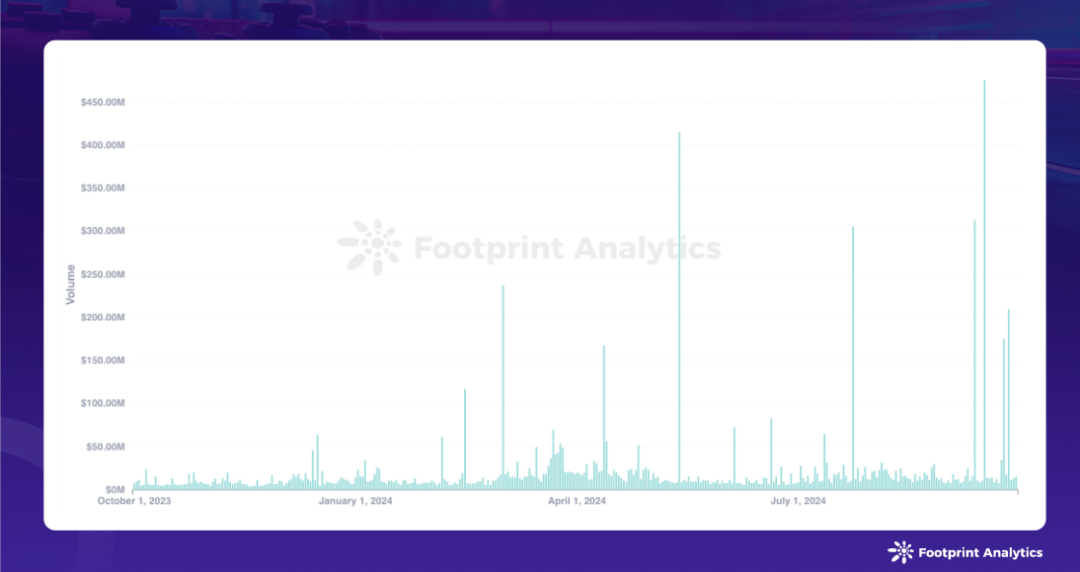
Data source: Daily transaction value in blockchain gaming
In September, attention significantly shifted toward Telegram-based games. This shift was evident in two main areas:
First, expansion by blockchain networks: Beyond TON, multiple blockchain networks are now competing to attract users from the Telegram ecosystem—a trend that began last month. For example, BNB Chain has integrated with Telegram, offering seamless access for both users and developers.
Second, competition among centralized exchanges (CEXs): CEXs are actively vying for Telegram traffic, viewing it as a critical user acquisition channel. Binance stands out, having quickly listed four tokens based on Telegram and TON. In September, Binance announced its 58th Launchpool project, Hamster Kombat (HMSTR), and its 59th, Catizen (CATI), continuing the momentum from August's listings of Toncoin (TON) and Dogs (DOGS). Other exchanges like Bitget are making strategic investments—for instance, allocating $30 million to the TON blockchain.

Catizen
This trend extends beyond exchanges, as various entities and projects launch their own Telegram-based initiatives. Binance is preparing to release Moonbix, a Telegram mini-app game, while CryptoKitties announced a new Telegram game titled "CryptoKitties: All The Zen."
At Token2049 Singapore 2024, Bybit CEO Ben Zhou shared some figures: “Some tokens have brought us millions of new registered users, of which 400,000 to 500,000 became depositing users. These new users mainly come from Eastern Europe, Africa, South Asia, Nigeria, India, and some European countries.”
TON has established an effective user acquisition pipeline and conversion funnel with exchanges, inspiring similar strategies across the industry. However, there are signs that this effect may be waning, as the same users might simply be circulating among different projects.
While these games excel at user acquisition, their contribution to on-chain activity appears limited. Most only bring tokens on-chain while gameplay and assets remain off-chain. This structure raises concerns about long-term sustainability and economic viability.
Data reveals a disconnect between user acquisition and sustainable on-chain participation. Without consistent on-chain user activity, these games and developments may struggle to maintain economic vitality over time. As the industry evolves, bridging the gap between initial appeal and sustained on-chain engagement will be crucial for the healthy development of the Web3 gaming ecosystem.
Blockchain Gaming Public Chains
In September, the number of active games across blockchain networks increased to 1,563—an uptick of 4.5% from August. Market dominance remained stable, with BNB Chain, Polygon, and Ethereum leading in terms of game count at 22.0%, 18.6%, and 14.8%, respectively.
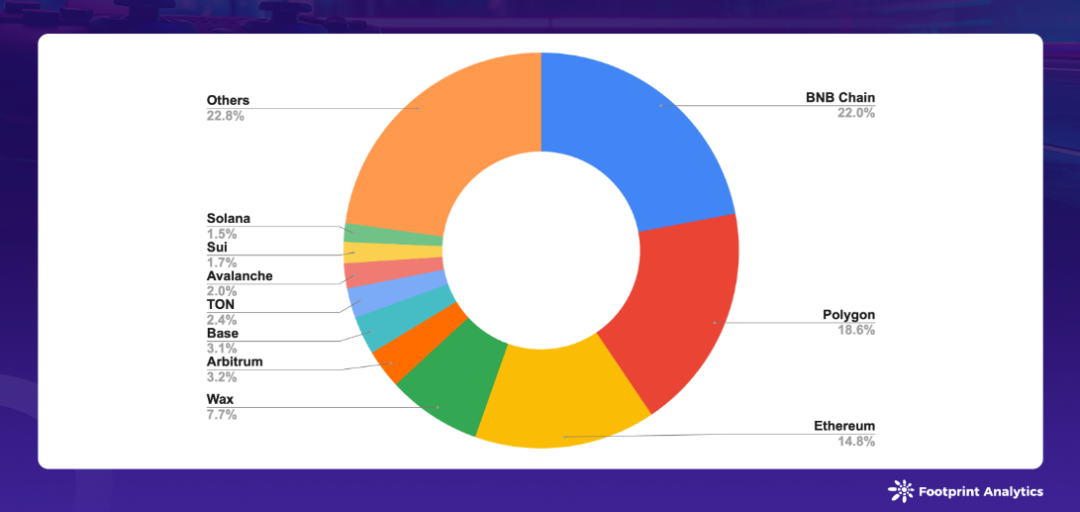
Data source: Distribution of active game projects across public chains
The DAU landscape saw significant shifts, with opBNB, Ronin, and Nebula (a SKALE subnet) emerging as top performers, averaging 1.1 million, 1.1 million, and 458,000 DAU per day, respectively. By the end of September, their DAU shares stood at 28.2%, 20.1%, and 9.2%.
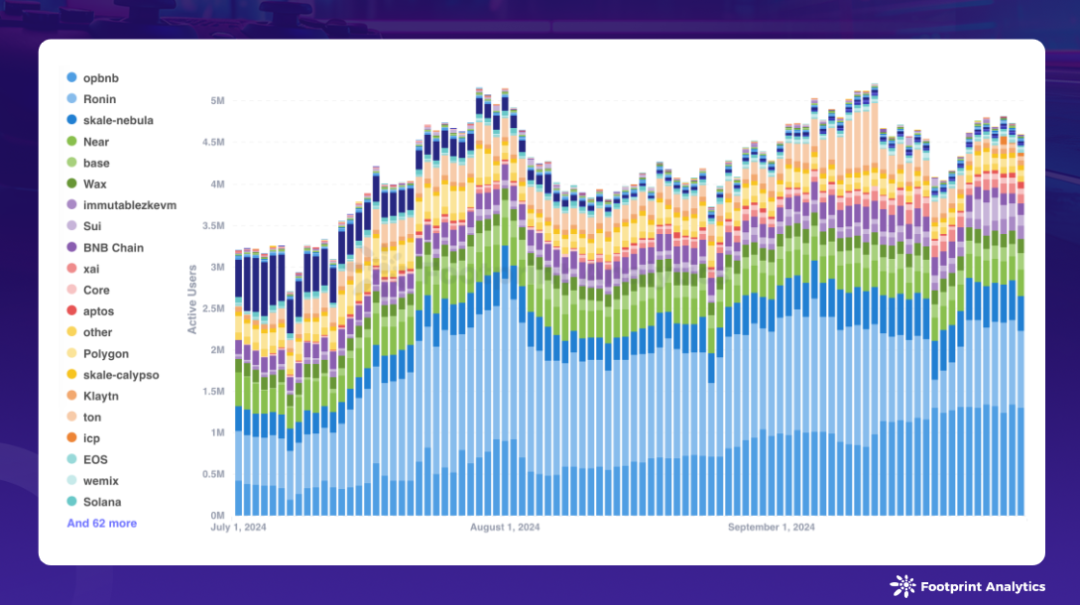
Data source: Daily active game users per public chain
opBNB showed remarkable growth, with its average DAU surging 62.0% month-over-month, increasing its market share from 22.4% to 28.2%. This growth was fueled not only by the popular game SERAPH: In The Darkness but also by Elfin Metaverse, a new esports platform and open-world metaverse launched mid-September.
In contrast, Ronin’s DAU share continued to decline, dropping from 29.5% in August to 20.1% in September. This trend is largely attributed to the weakening performance of Pixels, whose DAU fell from over 700,000 to 470,000 during the month. Notably, although Ronin’s average DAU was nearly double that of opBNB in August, opBNB surpassed Ronin in September—marking a pivotal shift in competitive dynamics.
Sui’s average DAU grew by 48.4% to 92,000, driven by the success of the Telegram game BIRDS, which attracted a large user base within its first week. This result underscores the growing trend of blockchains leveraging Telegram for user acquisition.
Core’s average DAU increased by 66.9% to 62,000, supported by the second season of Core Ignition Drop, which included Web3 gaming alongside BTCFi. Games such as World of Dypians and Pixudi played a key role in attracting users to the Core ecosystem.
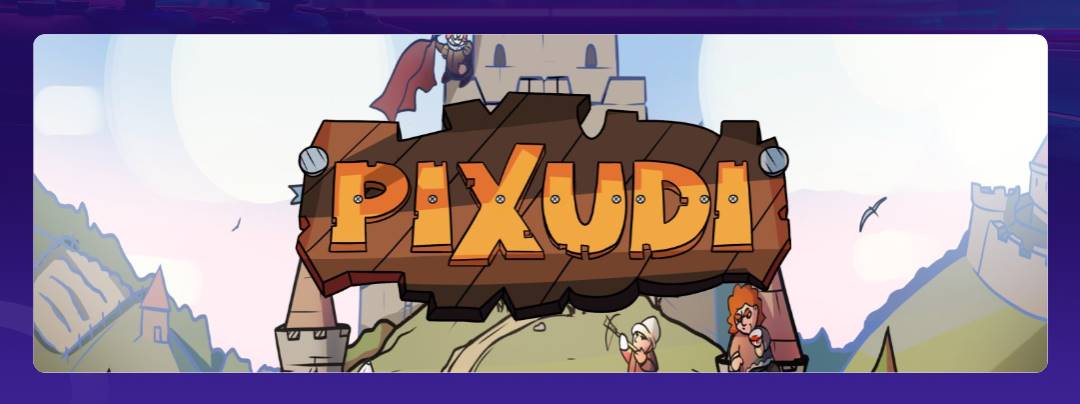
Pixudi
Competition among blockchains for games and users is intensifying. The Treasure DAO community is discussing a proposal to potentially migrate its Web3 gaming ecosystem from Arbitrum to ZKsync. This potential move stems from delays in Arbitrum’s "Gaming Catalyst Program," which has yet to materialize despite proposing to distribute 200 million ARB tokens over two years to incentivize game development on its chain.
Blockchain Game Overview
The blockchain gaming space now includes 3,448 games, with 1,295 classified as active. Notably, 285 games attracted over 1,000 monthly active on-chain users (MAU), representing 8.3% of all games and 22.0% of active ones. This distribution highlights ongoing challenges in user retention and engagement within the blockchain gaming sector.
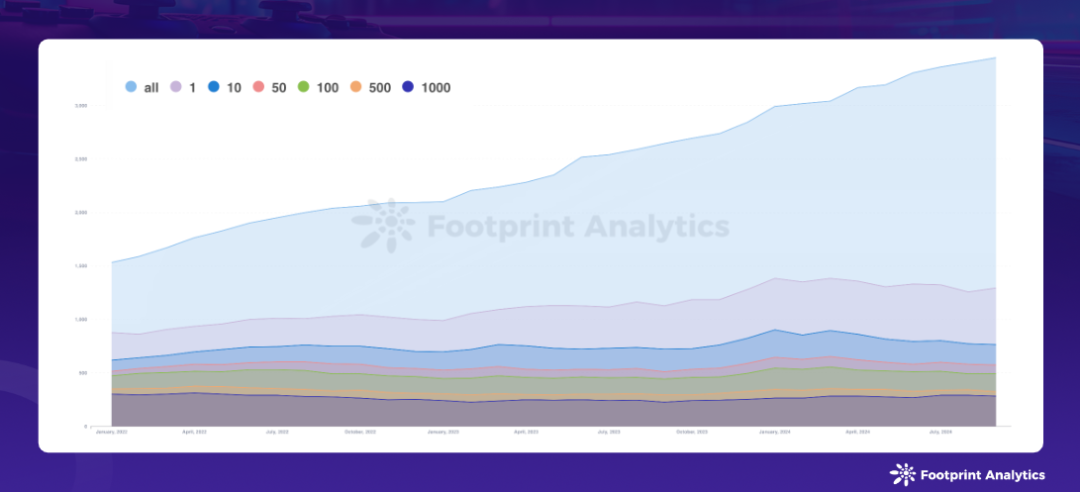
Data source: Number of monthly active blockchain games
In September, the blockchain gaming industry faced new regulatory scrutiny—extending beyond previous focuses on CEXs, stablecoins, and DeFi. Notably, fantasy sports company Sorare was charged in the UK for "operating unlicensed gambling facilities." This case signals that regulators are increasingly scrutinizing blockchain gaming platforms, especially those blurring the lines between gaming, gambling, and digital asset trading.
Also in September, the sector witnessed certain project exits. Dimensionals, a roguelike deck-building game developed by Mino Games, officially transitioned to a pure Web2 model, abandoning its original blockchain and NFT integration. Backed by prominent venture capital firms including Andreessen Horowitz (a16z), Y Combinator, and Standard Crypto, the project had raised a total of $18.2 million.
Its Web3 journey began with the launch of the Genesis Stone series in March 2023 but faced numerous challenges, including bot-ridden whitelist giveaways and DDoS attacks. The shift of this well-funded project from Web3 to Web2 has sparked important discussions about the difficulties of integrating blockchain technology into traditional gaming models and the long-term viability of certain Web3 gaming approaches.
Increasing regulatory scrutiny and technical implementation hurdles are forcing companies to reevaluate their strategies. Successful projects must skillfully navigate compliance issues, ensure robust security, develop compelling gameplay that justifies blockchain integration, and strike a balance between meeting the expectations of traditional gamers and crypto enthusiasts.
Blockchain Gaming Investment and Funding Trends
In September, the Web3 gaming sector secured $65.6 million in funding across 13 financing events—an increase of 6.6% from August. Three of these fundraising rounds did not disclose amounts.
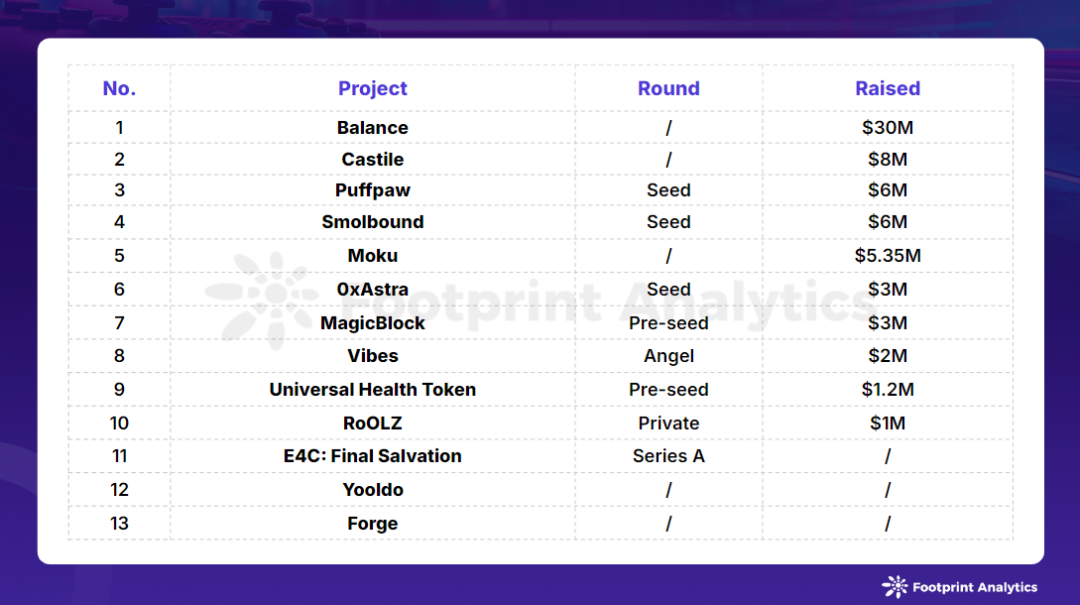
Web3 gaming funding events in September 2024 (Source: crypto-fundraising.info)
E-PAL, a gaming and social platform, launched Balance, its AI-powered blockchain experience platform. This rollout follows two successful funding rounds led by a16z and Galaxy Interactive. This major investment will primarily support the development of Balance’s infrastructure, which is critical to E-PAL’s ambitious goal of building an open, inclusive, and fair Web3 ecosystem. The move also highlights the convergence trend among AI, blockchain, and social gaming platforms.
Regarding a16z, its dedicated gaming fund, Game Fund One—with an initial size of $600 million—has achieved notable success over nearly two years. The fund announced it will invest $30 million in tech startups related to gaming, focusing on cutting-edge areas such as AI, VR/AR, and Web3 gaming. The application window opened on August 26, 2024, and closed on September 30, with the program set to officially launch in San Francisco in January 2025. Selected startups will receive comprehensive support, including expert talks, personalized mentorship, and a $750,000 investment per company. Additionally, they will benefit from the expertise and resources of the a16z SPEEDRUN team.
Besides, several innovative projects secured new funding.
Puffpaw, an innovative platform combining health initiatives with blockchain technology, raised $6 million in seed funding. Their "quit smoking & earn" model built on Berachain represents a novel approach to incentivizing positive health behaviors through blockchain rewards.
Universal Health Token (UHT) gamified healthcare using blockchain technology and successfully raised $1.2 million in a pre-seed round, attracting investments from industry leaders including Animoca Brands and Polygon. The project exemplifies the trend of applying gaming and blockchain principles to non-gaming domains, potentially revolutionizing health engagement and management.
Join TechFlow official community to stay tuned
Telegram:https://t.me/TechFlowDaily
X (Twitter):https://x.com/TechFlowPost
X (Twitter) EN:https://x.com/BlockFlow_News
 Footprint Analytics






