What Would Happen If Telegram Shut Down? The Hidden Risks in the Cryptocurrency Market
TechFlow Selected TechFlow Selected
What Would Happen If Telegram Shut Down? The Hidden Risks in the Cryptocurrency Market
Reducing over-reliance and achieving platform diversification is no longer an option—it's a necessary survival strategy.
 Navigating Web3 tides with focused insights
By Chi Anh and Ryan Yoon
This report by Tiger Research examines the hidden risks posed by the cryptocurrency market’s irreplaceable reliance on Telegram, highlighting structural vulnerabilities exposed by Vietnam’s ban on the platform.
Key Takeaways
-
Exposed Platform Dependency Risk: In June 2025, Vietnam’s ban on Telegram led to a 45% drop in user activity across major crypto communities within days. This incident highlights a critical structural vulnerability—the industry's heavy dependence on a single, non-replaceable communication platform.
-
No Viable Alternatives: Despite exploring alternatives such as Discord, Signal, and local messaging apps, none can replicate Telegram’s unique combination of global reach, privacy features, and native crypto user experience. No other platform currently matches this feature set at scale.
-
Rising Global Regulatory Pressure: Governments worldwide are increasing scrutiny over Telegram under the banner of “digital sovereignty,” targeting its resistance to data sharing and surveillance. However, Telegram has recently begun cooperating with authorities in certain jurisdictions, temporarily easing concerns in key markets.
1. Telegram’s Role in the Cryptocurrency Market
With strong privacy protections, scalable group chats, and seamless bot integration, Telegram has become the primary communication platform for global crypto communities. These attributes make it the go-to choice for KOLs and new projects building audiences. Market participants actively use Telegram as their main channel for interaction.
Today, Telegram plays a central role in the structure of the cryptocurrency market. Its presence is often taken for granted—until one imagines a major event like Token2049 without it. Attendees would resort to exchanging LinkedIn profiles, an awkward and incongruous scenario. At this stage, a crypto ecosystem without Telegram is nearly unimaginable.
2. Vietnam’s Full Ban on Telegram
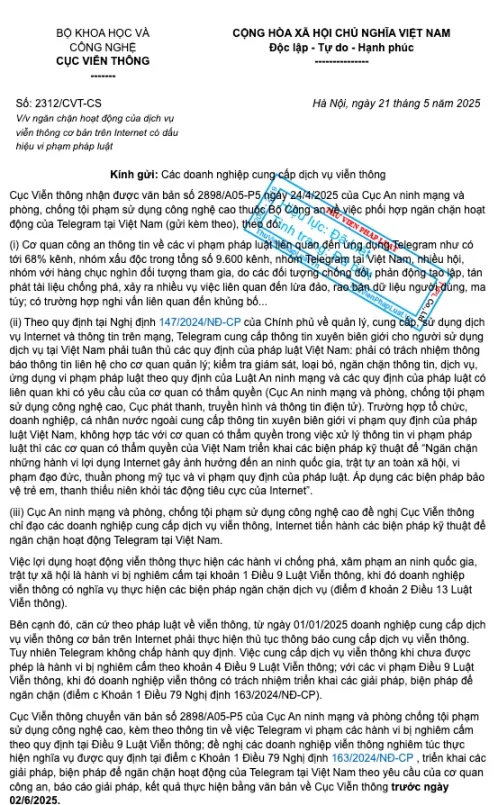
Official Telegram ban order issued on May 21. Source: thuvienphapluat
On May 21, 2025, Vietnam’s Ministry of Information and Communications, acting on a request from the Ministry of Public Security, issued Directive No. 2312/CVT-CS, instructing all telecom operators to block Telegram domestically by June 2.
The move immediately triggered chaos across Vietnam’s entire crypto ecosystem. As one of the world’s largest user bases for Telegram, Vietnam’s crypto sector, like many others, heavily relies on the platform as its primary communication channel. The ban left local crypto projects and users without viable alternatives. While many turned to VPNs (Virtual Private Networks) to maintain access, this workaround is at best a temporary and incomplete solution.
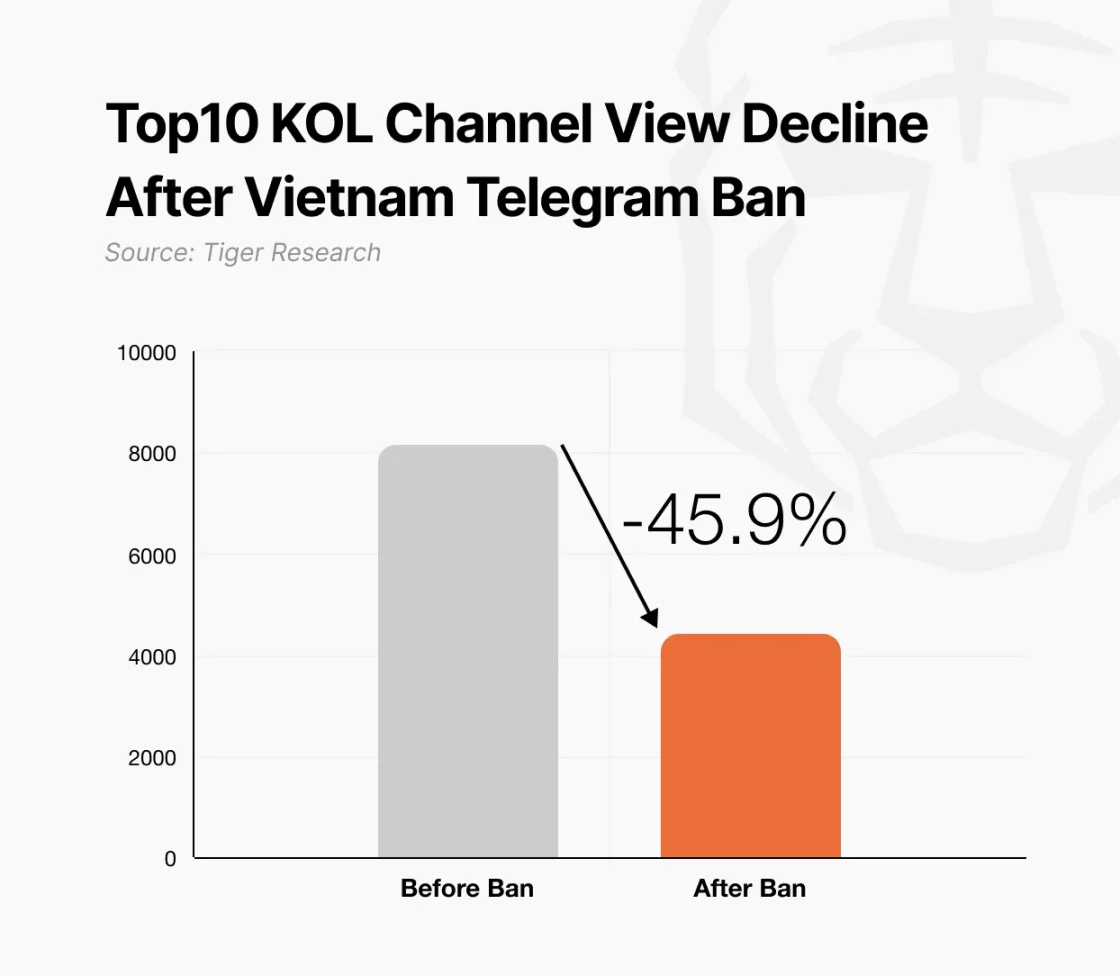
For average users with only moderate interest in cryptocurrency, accessing Telegram via a VPN proved too inconvenient. As a result, many disengaged entirely. Within just a few days, average traffic across Vietnam’s top ten crypto communities dropped by more than 45%.

Communities rapidly shifting to Discord as an alternative. Source: Telegram
In response, community organizers began exploring and promoting alternative platforms. Activity surged on Vietnamese Discord servers, while some communities experimented with local messaging apps like Zalo, aiming to serve users seeking lighter, simpler interfaces.
However, these alternatives fail to replicate Telegram’s unique balance of usability, privacy, and native crypto functionality. Despite the ban, most users continue relying on Telegram via VPN—a workaround, not a replacement.
3. Are There Viable Alternatives to Telegram?
Regulatory pressure on Telegram reveals a structural vulnerability in the crypto industry: its deep dependence on a single communication platform.
As seen in Vietnam, the immediate reaction to the ban was widespread use of VPNs. While this provides a short-term workaround, it creates significant barriers for ordinary users. Although institutional participation in crypto is growing, retail investors still drive much of the market activity. During this transitional phase, when the market seeks to expand beyond early adopters, reliance on Telegram has become an obstacle to broader adoption.
This has prompted active exploration of alternative platforms. Discord emerged as the preferred option for many Vietnamese communities, offering real-time communication and a developer-friendly environment. However, it lacks Telegram’s mobile-first simplicity. Another contender, Signal, touts robust security but offers limited tools tailored to native crypto use cases—making it an incomplete substitute.
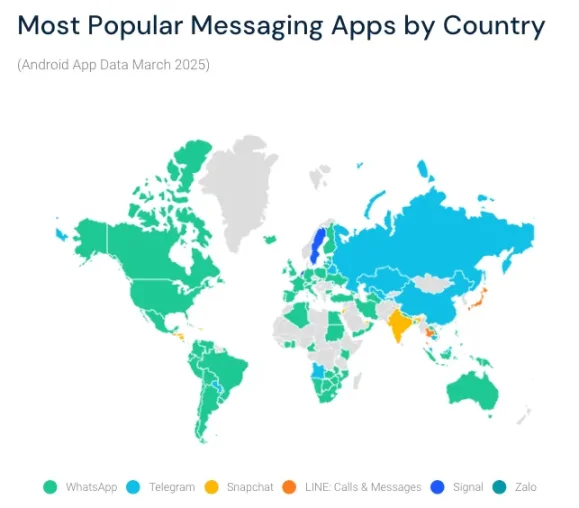
Source: Similarweb
Other messaging apps like Zalo or WhatsApp typically have regionally confined user bases, making them inherently incompatible with the global nature of the crypto ecosystem, which assumes cross-border communication by default.
Ultimately, the crypto industry has yet to find a viable replacement for Telegram. While its technical advantages—such as anonymity, privacy, and bot integration—explain its continued dominance, the core issue is structural.
There is currently no universally adopted communication platform capable of operating seamlessly across borders. Given differing national communication preferences, finding a single alternative that meets the global demands of the crypto ecosystem remains a formidable challenge.
Telegram occupies a rare position in the messaging landscape. It does not dominate any single national market and is often not users’ primary app. Yet, across diverse regions, it frequently ranks as the second-most-used messaging tool. This unique status as a universal secondary platform grants Telegram de facto neutrality across borders. It is precisely this region-agnostic positioning that makes it so difficult to replace.
4. Growing Regulatory Risks Around Telegram
Despite the lack of viable alternatives, governments including Vietnam’s are increasingly scrutinizing Telegram under the banner of “digital sovereignty.”
This stems largely from Telegram’s strong privacy policies and general refusal to share user data—exceptions exist only with a few major jurisdictions. For many governments, the inability to monitor encrypted communications on the platform remains a core concern.
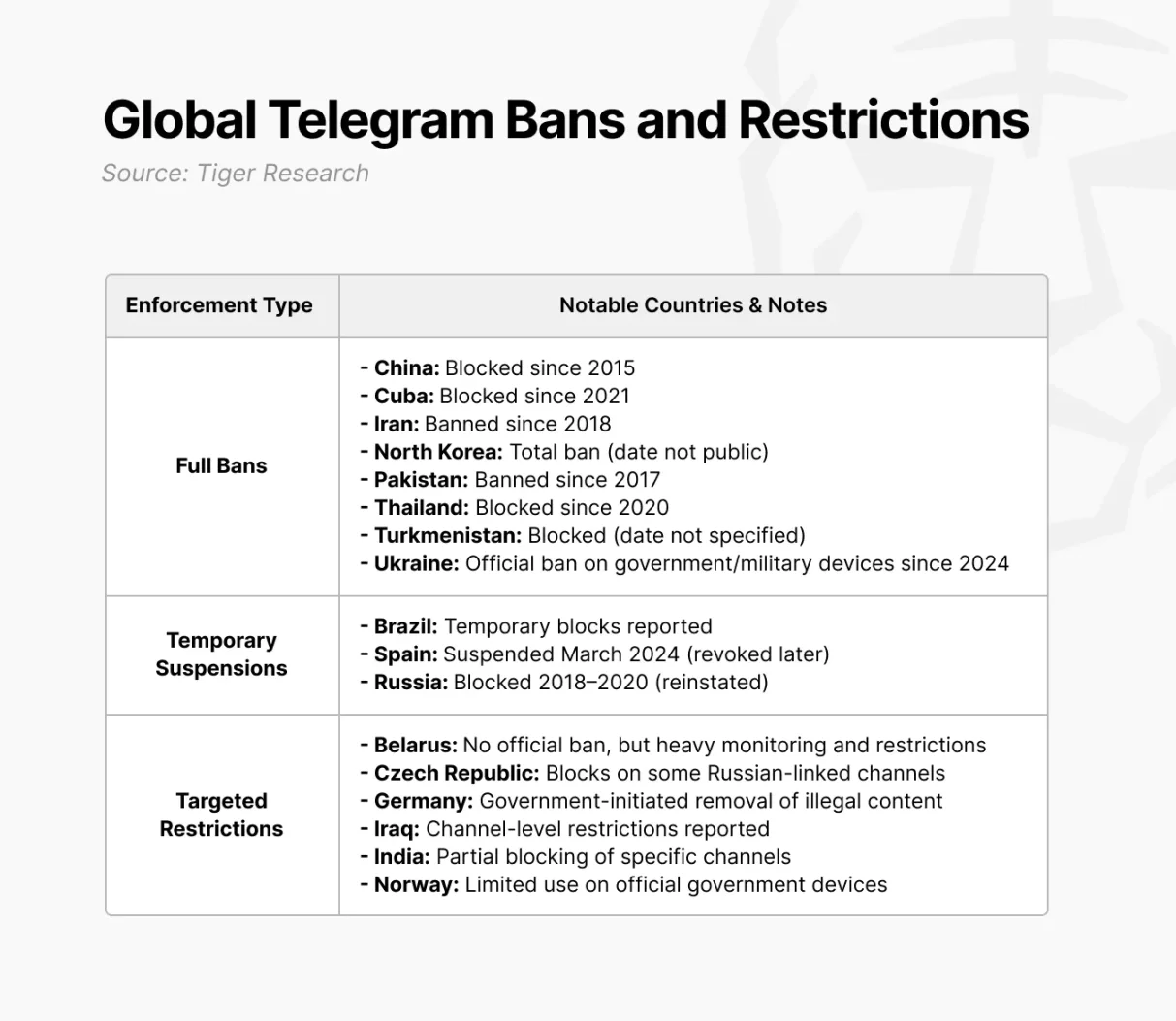
These concerns are increasingly translating into regulatory action. Countries that have acted against Telegram typically follow one of three strategies: First, full bans, often accompanied by efforts to promote domestic alternatives. Second, temporary blocks tied to specific events—such as legal non-compliance or election-related tensions. Third, selective filtering, where governments allow access to the app but block specific channels or throttle speeds.
These precedents suggest more restrictions may follow. Several countries are now considering full or partial bans on Telegram. While political rationales vary, regulatory patterns are becoming more consistent. Governments commonly cite national security, non-compliance with local laws, or public order risks as justification for control.
In this context, how Telegram responds has become a critical variable. Although triggers differ by jurisdiction, the underlying issue is the same: Telegram’s unwillingness or inability to meet local compliance requirements. In jurisdictions with stricter regulatory environments, tolerance for non-cooperative platforms is significantly lower.
However, signs indicate a shift in Telegram’s strategy. Following CEO Pavel Durov’s arrest, the company has taken steps toward greater compliance. A notable example is its publication of a transparency report disclosing IP addresses and phone numbers of violators—but only in jurisdictions with strong democratic institutions.
Although limited in scope, Telegram now shows greater willingness to cooperate with government requests than in the past. This shift is expected to reduce the risk of immediate sanctions in major markets such as the United States.
5. What If Telegram Is Fully Banned?
A global ban on Telegram remains unlikely, but governmental concerns are real and growing. If such a scenario were to occur, initial user responses might mirror Vietnam’s case—with increased use of VPNs. However, as previously noted, this approach is only a short-term workaround.
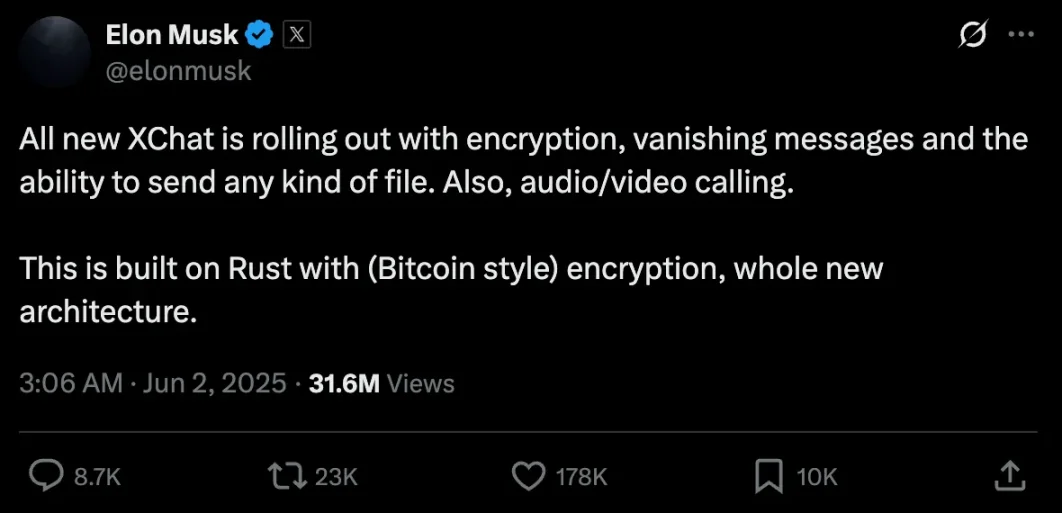
In the event of a full ban, users would begin migrating to alternative services. As previously discussed, the most viable successors won’t be clones of Telegram or local messaging apps. Platforms possessing Telegram’s regional neutrality are more likely to gain traction.
Signal, which has seen rising adoption recently, is a potential candidate. But an even stronger contender could be X’s upcoming messaging service, XChat. Given X’s deep integration with the crypto community, XChat could leverage its existing user base for a powerful market entry.
Yet, a more immediate risk lies in the potential impact on the TON Foundation. Although officially separate from Telegram, the two are closely linked. Native Telegram-based T2E (Telegram to Earn) games have been central to TON ecosystem growth. Easy access to TON wallets directly within the Telegram interface is also a key advantage.
Expanding ban measures turns this integration into a liability. If Telegram access is blocked, user acquisition and transaction flows for TON-integrated apps would be immediately affected. Even if the blockchain continues functioning normally, the impact persists. Since the market views Telegram and TON as a unified platform, TON-based projects face direct reputational and operational risks.
While a global ban on Telegram is improbable, the industry must confront a reality: viable alternatives are limited. More broadly, the crypto ecosystem doesn’t just rely on Telegram—it depends on multiple single points of failure within its infrastructure. Until these structural vulnerabilities are addressed, the industry will remain exposed to sudden, external shocks.
The path forward is clear. Reducing overreliance and diversifying platforms is no longer optional. It is a necessary survival strategy.
Join TechFlow official community to stay tuned
Telegram:https://t.me/TechFlowDaily
X (Twitter):https://x.com/TechFlowPost
X (Twitter) EN:https://x.com/BlockFlow_News
 @tiger_research