Will AAVE Lead the Revival of DeFi?
TechFlow Selected TechFlow Selected
Will AAVE Lead the Revival of DeFi?
This article will closely examine AAVE's position and assess its potential role in DeFi's strong recovery.
 Navigating Web3 tides with focused insights
Author: Greythorn
Introduction
Arthur from Defiance Capital and several other notable figures are hinting at a potential DeFi recovery. Recently, analyst @tradetheflow_ shared a compelling argument outlining why a DeFi 2.0 rebound may be imminent. Below is a brief overview of the key drivers he emphasized:
-
DeFi has significantly evolved, delivering better scalability, improved security, and innovative use cases such as tokenization of real-world assets (RWA) and on-chain credit products.
-
Total Value Locked (TVL) has nearly tripled since October 2023, while trading volume on decentralized exchanges (DEXs) continues to grow relative to centralized exchanges.
-
Major players like BlackRock and PayPal are entering the market through tokenized funds and stablecoins, signaling increased mainstream adoption.
-
Recent interest rate cuts have boosted liquidity, making DeFi yields more attractive compared to traditional investments.
-
DeFi today is more mature and secure, positioning it well for the next wave of growth.
In the broader economic context, Jerome Powell's 50-basis-point rate cut could mark a turning point. The M2 money supply is rising again, and Bitcoin is following past cycle patterns, suggesting the potential start of a parabolic bull run.
Some warn that aggressive rate cuts often precede recessions, and ongoing geopolitical tensions remain a concern. While these risks are real, we remain positive today. This rally feels different—like it’s setting the stage for a unique upswing that could surprise many.
Given the prolonged bear market we’ve endured, it’s reasonable to assume that DeFi valuations are suppressed, implying the sector may be undervalued. In this article, we will closely examine Aave’s position and assess its potential role in a strong DeFi resurgence.
Aave: Ready to Explode?
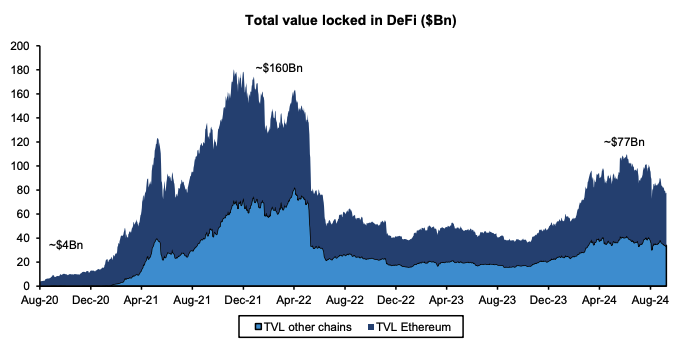
DeFi’s TVL has rebounded sharply from its 2022 lows, more than doubling to $77 billion. However, despite this recovery, current TVL remains 50% below its 2021 peak of approximately $154 billion. This suggests that even with growing interest, DeFi valuations are still far below their previous bull market highs.
Source: Bernstein
1. Market Leadership and Activity
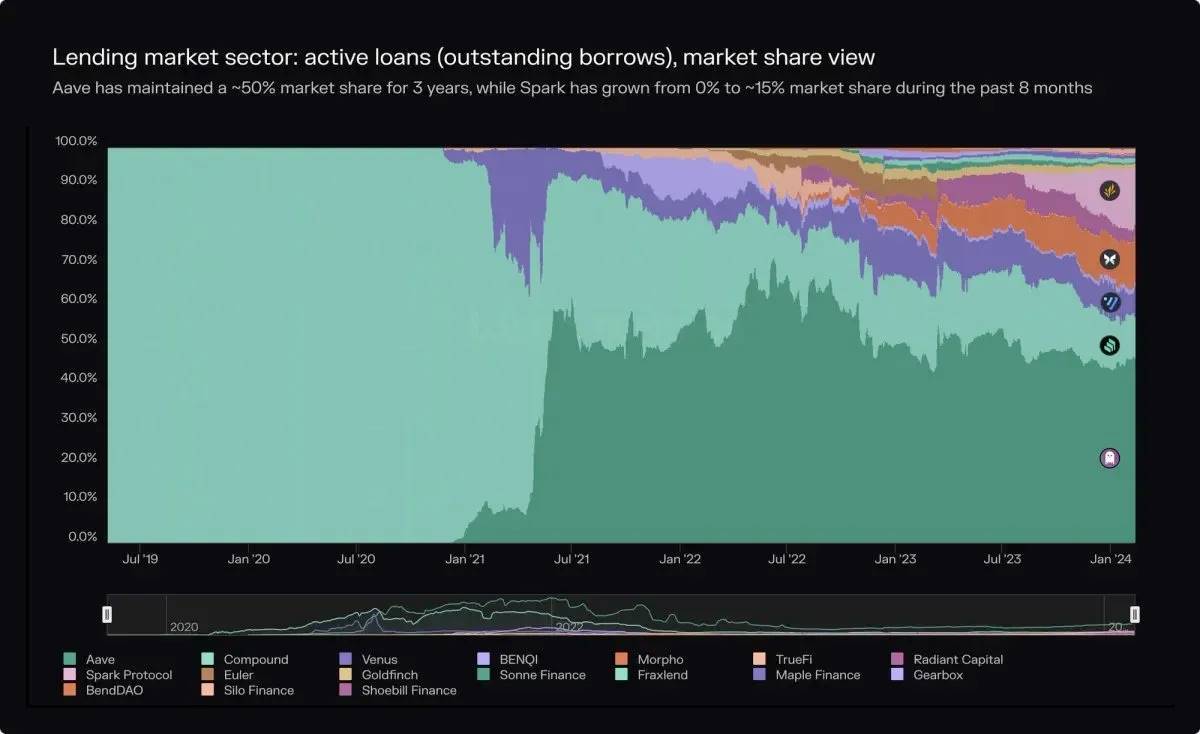
Aave is one of the leading platforms in the DeFi space, enabling users to lend and borrow cryptocurrencies without intermediaries. Originally launched as ETHLend in 2017 and rebranded as Aave in 2018, the platform gained momentum during the 2020 DeFi boom and has captured over 50%share of the DeFi lending market over the past three years. Its success has been driven by continuous upgrades and new product launches, such as the GHO stablecoin and the $400 million “Umbrella Safety Module” enhancing security. The “buy and distribute” program has further supported long-term token growth by creating consistent buy-side pressure.
Source: Token Terminal
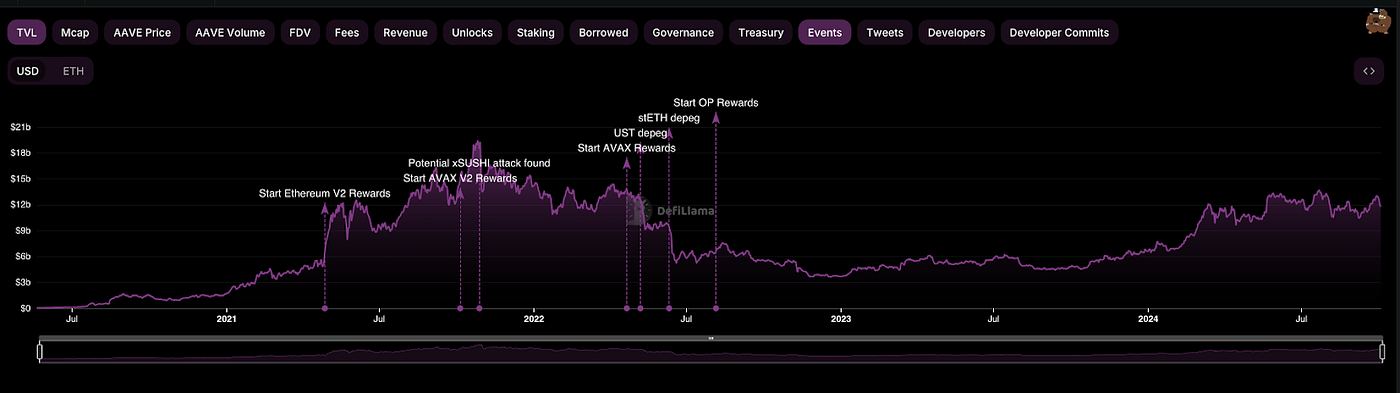
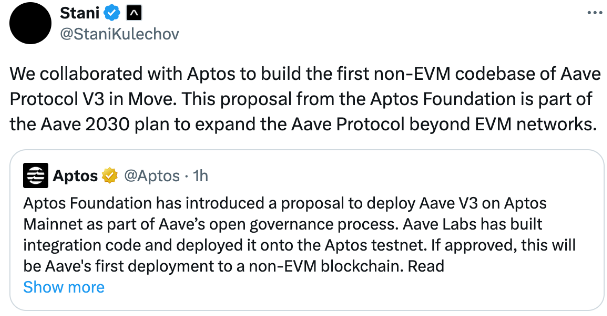
In 2024, Aave’s TVL reached $13 billion, reflecting strong user adoption and growing confidence in the platform. The launch of the GHO stablecoin has diversified its revenue streams, while recent expansion into non-EVM chains like Aptos has broadened its market reach.
Source: DeFiLlama
Source: X
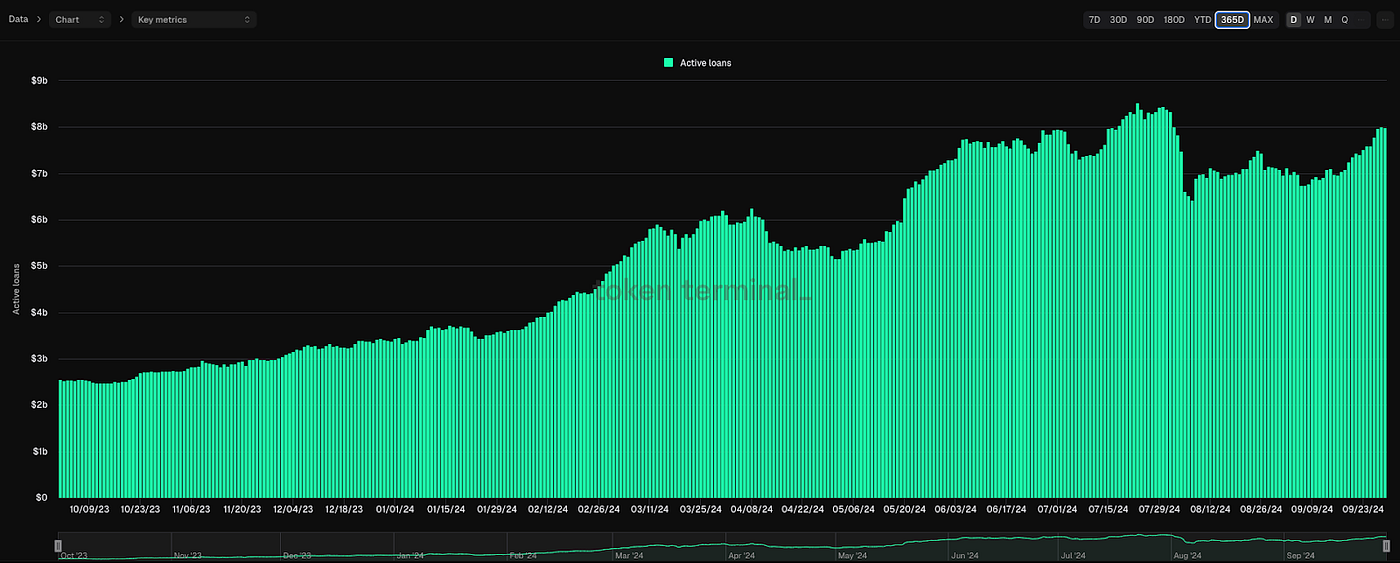
Aave’s outstanding loans have also recently increased. As of the latest update, Aave’s outstanding loans stand at $7.4 billion—a significant rise that reinforces its dominance in the DeFi lending market. This growth is supported by recent adjustments to its tokenomics, which reduce inflationary pressure on the AAVE token and redirect revenue to GHO stakers, making the protocol more attractive to lenders.
2. Undervaluation and Accumulation Potential
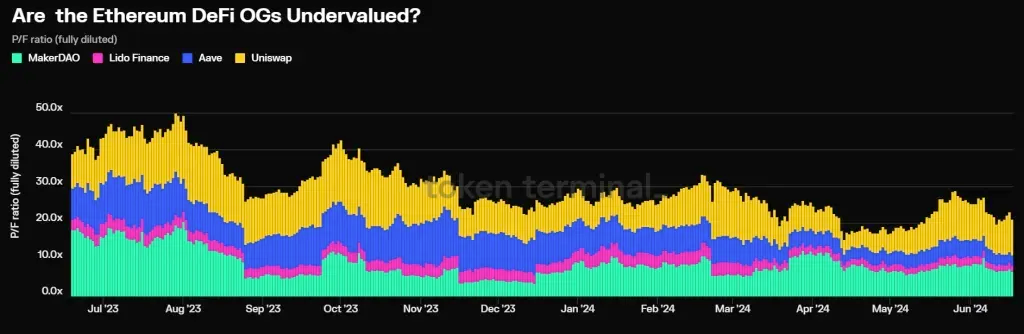
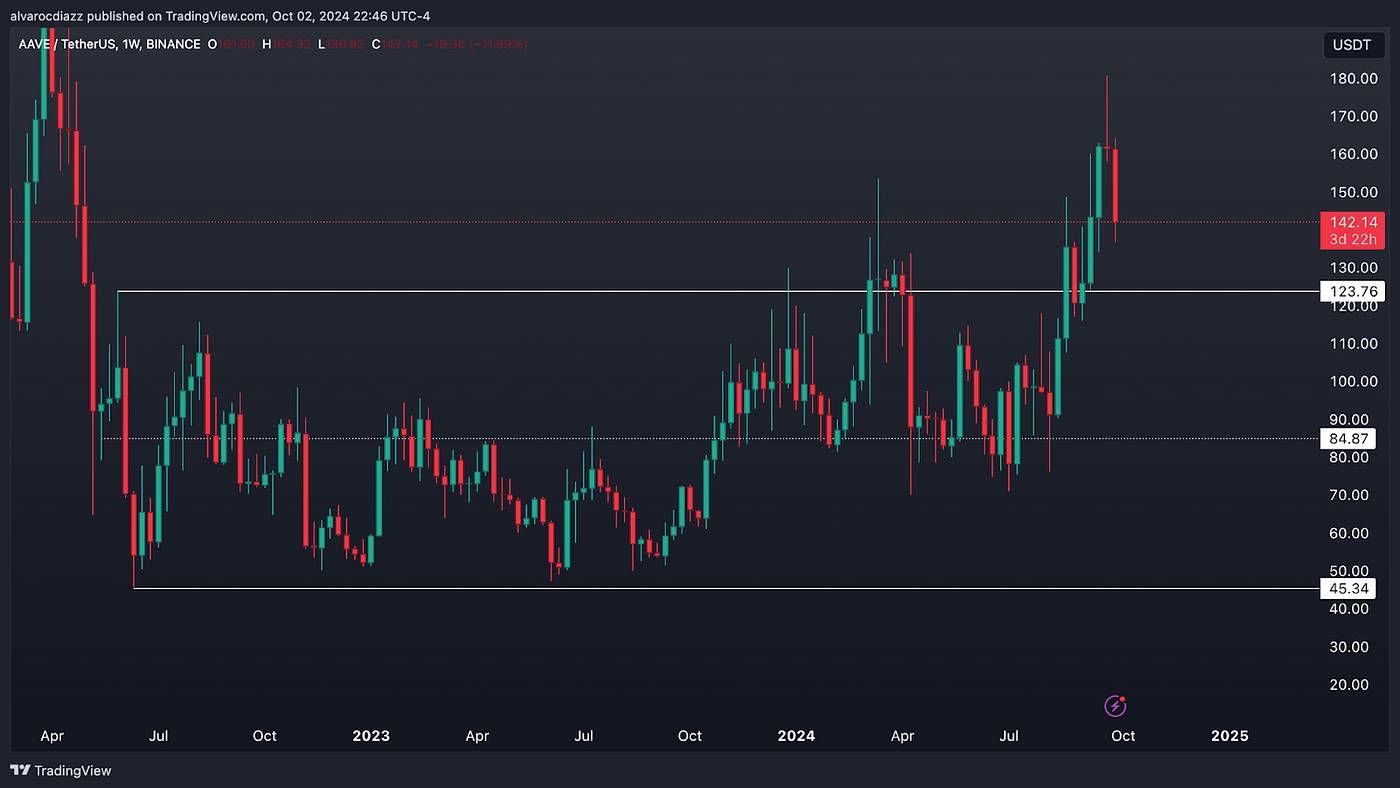
Despite its dominant position, Aave and other DeFi projects remain undervalued. Several months ago, Michael Nadeau explained that Aave had a price-to-fees (P/F) ratio of just 2.8x, with annual revenues of $240 million. Given that 93% of its token supply is already in circulation, Aave may face less selling pressure compared to other projects, potentially setting the stage for a rebound after a 2.5-year consolidation period. Recent breakout patterns suggest Aave may be in the early stages of a new uptrend, making it an attractive asset for long-term accumulation. This technical setup, combined with solid fundamentals, supports the case for a potential price recovery—especially as DeFi projects regain attention.
Source: @MichaelNadeau
Source: TradingView
3. Institutional Interest
Recently, institutional interest in Aave has been driven primarily by the launch of Aave Arc, a permissioned DeFi product designed specifically for regulated financial institutions. Currently, the platform is accessible to over 30 whitelisted firms, including CoinShares, Wintermute, and Galaxy Digital. By offering a compliant environment for digital asset lending and borrowing, Aave Arc aims to bridge traditional finance and DeFi, delivering high-yield opportunities while meeting regulatory standards.
Moreover, Bernstein has officially added Aave to its digital asset portfolio, replacing GMX and Synthetix. With potential U.S. rate cuts on the horizon, lower traditional interest rates will reduce yields offered by dollar-denominated money market funds, making DeFi’s higher yields comparatively more attractive and increasing demand.
The anticipated launch of ETH ETFs this year could also drive substantial capital inflows into DeFi. Given Aave’s strong presence in the Ethereum lending market, it is well-positioned to be a primary beneficiary, attracting new capital from institutional investors.
4. Competitive Advantages
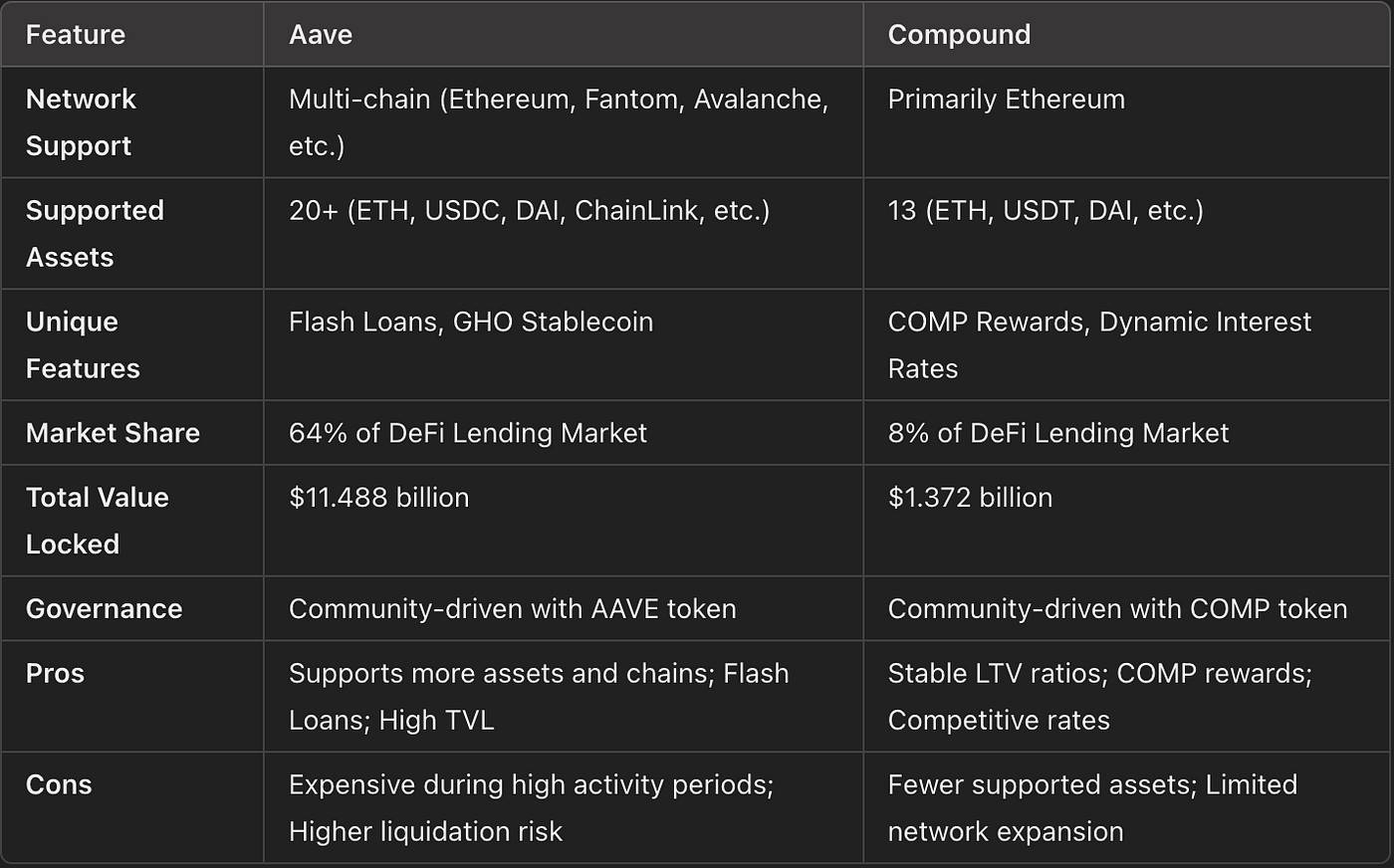
Compared to competitors like Compound, Aave stands out due to its multi-chain capabilities and broader range of supported assets. While Compound operates mainly on Ethereum, Aave is present across networks such as Polygon, Avalanche, and Fantom—offering wider coverage, lower fees, and faster transactions, making it more appealing to users.
In addition, Aave supports a wider variety of collateral types—from traditional cryptocurrencies to tokenized assets and staked derivatives. This diversified offering, along with features like flash loans and the GHO stablecoin, has helped Aave capture a larger share of the DeFi market and maintain its leadership in the lending sector.
5. Upcoming Catalysts
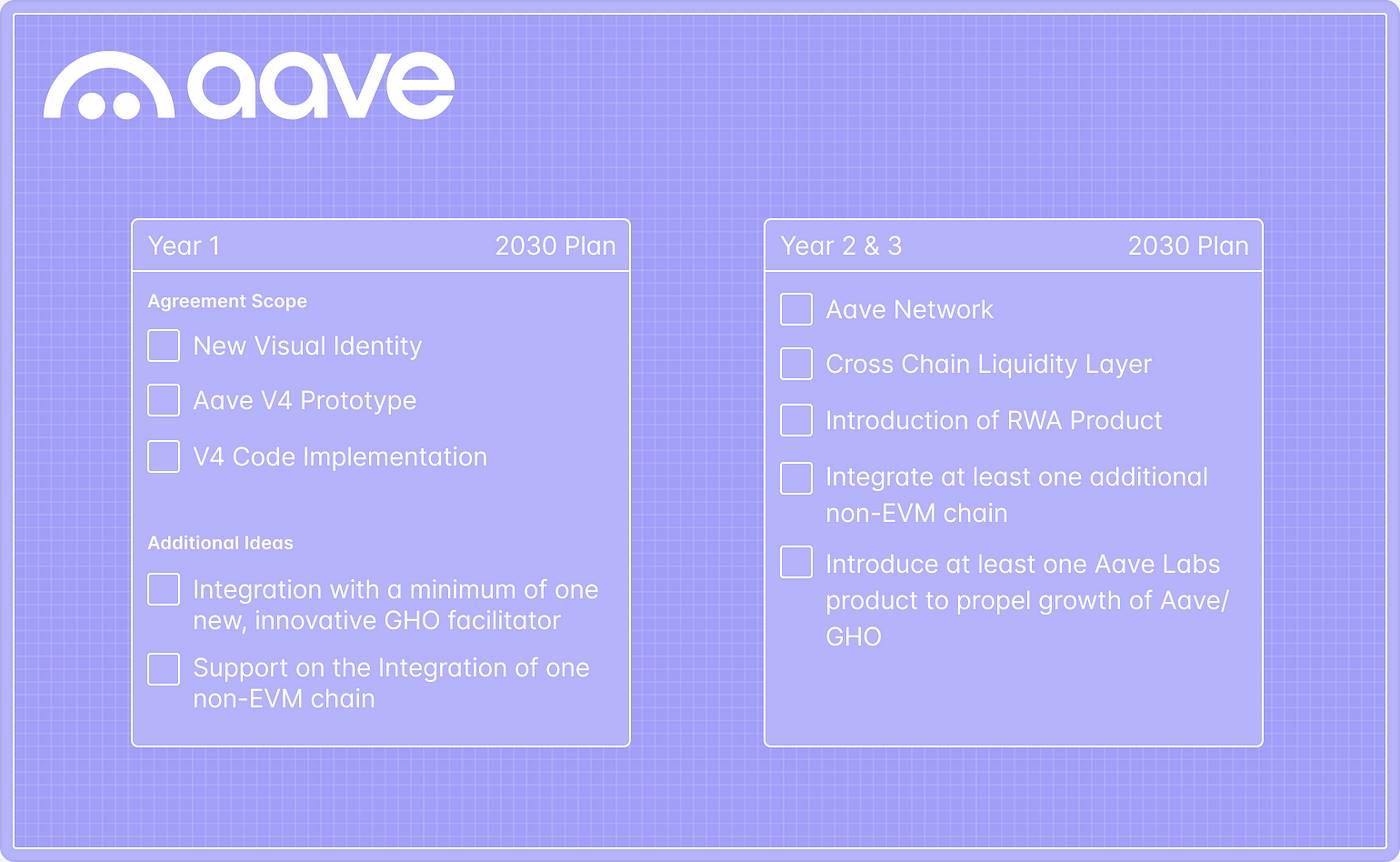
Aave 2030 is a strategic proposal from Aave Labs aimed at expanding the protocol beyond Ethereum and introducing new functionalities over the coming years. Key objectives include:
-
Multi-chain expansion: Aave aims to support non-EVM chains and broaden its footprint, building a blockchain-agnostic cross-chain DeFi platform. This will allow users to access Aave’s services across different blockchain ecosystems, enhancing liquidity and user adoption.
-
Aave V4 upgrade: Introducing integration with real-world assets, higher capital efficiency, and enhanced governance tools. By integrating real-world assets with its native stablecoin GHO, Aave intends to diversify its collateral base and provide greater stability for its lending services. This move could attract more users and institutions, particularly those seeking safer, real-world-backed financial products.
-
Proactive funding model: Unlike previous retrospective funding models, Aave proposes a proactive budget model for its 2030 plan, setting clear allocations and goals in advance. The initial budget includes 15 million GHO and 25,000 stkAAVE allocated toward research, development, and security audits.
Source: AAVE
Aave’s overarching goal is to build a sustainable, cross-chain, and compliant DeFi ecosystem by 2030—one capable of adapting to changing market dynamics and serving as core infrastructure for both retail and institutional users.
Bullish Fundamental Factors
-
Aave controls 67% of the DeFi lending market and manages $7.4 billion in outstanding loans, positioning it strongly to benefit from growth in DeFi lending.
-
Aave is active across multiple blockchains (Arbitrum, Avalanche, Base, BNB Chain, Fantom, Optimism, and Polygon), with plans to expand to chains like Aptos, attracting more users and liquidity.
-
Aave’s GHO stablecoin is gaining traction, boosting platform revenue and diversifying income streams for greater stability.
-
Aave Arc is tailored for institutional investors, allowing compliant participation in DeFi and helping Aave attract significant capital inflows from traditional finance.
-
The potential launch of ETH ETFs and falling interest rates could channel more capital into DeFi, giving Aave a major opportunity to increase its TVL.
Bearish Fundamental Factors
-
Aave holds a large share of the DeFi lending market, but this high concentration means any technical issues, smart contract vulnerabilities, or regulatory actions against Aave could disproportionately impact the entire industry.
-
While GHO’s growth is encouraging, slower adoption or stronger competition from rival stablecoins could hurt Aave’s revenue and weaken its competitive edge in DeFi.
-
A global economic recession would likely reduce capital flows into risk assets like cryptocurrencies and limit borrowing activity on DeFi platforms, reducing platform revenues and TVL.
-
Escalating geopolitical risks could increase uncertainty and market volatility, discouraging investor participation in DeFi.
-
Although the threat of restrictive regulations currently seems less urgent, it remains a potential concern if less crypto-friendly governments or candidates come into power globally. Stricter rules on stablecoins, lending protocols, or DeFi activities could undermine confidence and reduce activity on platforms like Aave—particularly in key markets like the U.S. and EU. Monitoring upcoming elections and policy shifts is crucial for assessing this risk.
Disclaimer
This presentation has been prepared by Greythorn Asset Management Pty Ltd (ABN 96 621 995 659) (Greythorn). The information in this presentation should be regarded as general information only rather than investment advice and financial advice. It is not an advertisement nor is it a solicitation or an offer to buy or sell any financial instruments or to participate in any particular trading strategy. In preparing this document Greythorn did not take into account the investment objectives, financial circumstance or particular needs of any recipient who receives or reads it. Before making any investment decisions, recipients of this presentation should consider their own personal circumstances and seek professional advice from their accountant, lawyer or other professional adviser. This presentation contains statements, opinions, projections, forecasts and other material (forward looking statements), based on various assumptions. Greythorn is not obliged to update the information. Those assumptions may or may not prove to be correct. None of Greythorn, its officers, employees, agents, advisers or any other person named in this presentation makes any representation as to the accuracy or likelihood of fulfilment of any forward looking statements or any of the assumptions upon which they are based. Greythorn and its officers, employees, agents and advisers give no warranty, representation or guarantee as to the accuracy, completeness or reliability of the information contained in this presentation. None of Greythorn and its officers, employees, agents and advisers accept, to the extent permitted by law, responsibility for any loss, claim, damages, costs or expenses arising out of, or in connection with, the information contained in this presentation. This presentation is the property of Greythorn. By receiving this presentation, the recipient agrees to keep its content confidential and agrees not to copy, supply, disseminate or disclose any information in relation to its content without written consent.
Join TechFlow official community to stay tuned
Telegram:https://t.me/TechFlowDaily
X (Twitter):https://x.com/TechFlowPost
X (Twitter) EN:https://x.com/BlockFlow_News
 Greythorn