








Why does the crypto world hope Trump will win?
TechFlow Selected TechFlow Selected
Why does the crypto world hope Trump will win?
Trump has pledged to make America the "global cryptocurrency capital" and establish a "national strategic Bitcoin reserve" similar to the U.S. government's gold reserves, aiming to win votes from crypto enthusiasts.
 Navigating Web3 tides with focused insights
By Jonathan Josephs
Translated by TechFlow
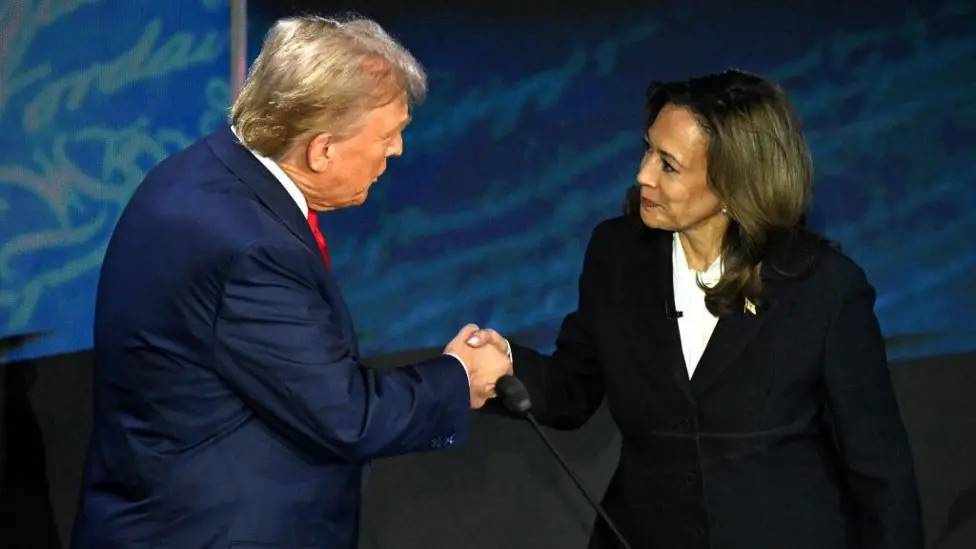
While Trump’s views on crypto are very clear, Harris’s position is less so.
"The crypto industry is 'filled with fraudsters, charlatans and scammers,'" said the head of one of America's top financial regulators, speaking to the BBC.
Gary Gensler, chair of the U.S. Securities and Exchange Commission (SEC), said "investors around the world have lost far too much money because crypto firms haven't followed the laws that our agency seeks to enforce."
The remarks come as the industry spends millions in political donations trying to influence the outcome of the November U.S. election in hopes of securing more favorable regulations.
Besides the presidential race between Donald Trump and Kamala Harris, all 435 seats in the House of Representatives will be up for re-election, along with 33 of the Senate’s 100 seats.
The future of cryptocurrency—one of the world’s most debated technologies—appears sharply divided between Donald Trump and the outgoing Biden administration.
Trump has promised to make the U.S. the “global capital of cryptocurrency” and to create a “national strategic Bitcoin reserve,” modeled after the U.S. government’s gold reserves, in an effort to win over crypto enthusiasts.
Last week, he launched a new crypto venture, World Liberty Financial. While offering few details, he said, “I think cryptocurrency is one of the things we have to do.”
This marks a dramatic reversal from three years ago, when he viewed Bitcoin as “looking like a scam” and a threat to the dollar.
Trump’s newfound enthusiasm stands in stark contrast to the Biden administration, of which Harris was vice president. In recent years, the White House has carried out a sweeping crackdown on crypto firms.
In March, Sam Bankman-Fried, founder and CEO of FTX, was sentenced to 25 years in prison for fraud, having stolen billions from global customers—many of whom are still struggling to recover their funds.
Then in April, Changpeng Zhao, founder of Binance—the world’s largest crypto exchange—was sentenced to four months in prison, while the company paid $4.3 billion (£3.2 billion) in penalties. He admitted allowing criminals, child abusers, and terrorists to sign up and launder money on his platform—a case brought by the U.S. Department of Justice.
The SEC also filed lawsuits against Binance. Last year, the financial regulator took a record 46 enforcement actions against companies seeking to profit from this emerging technology.
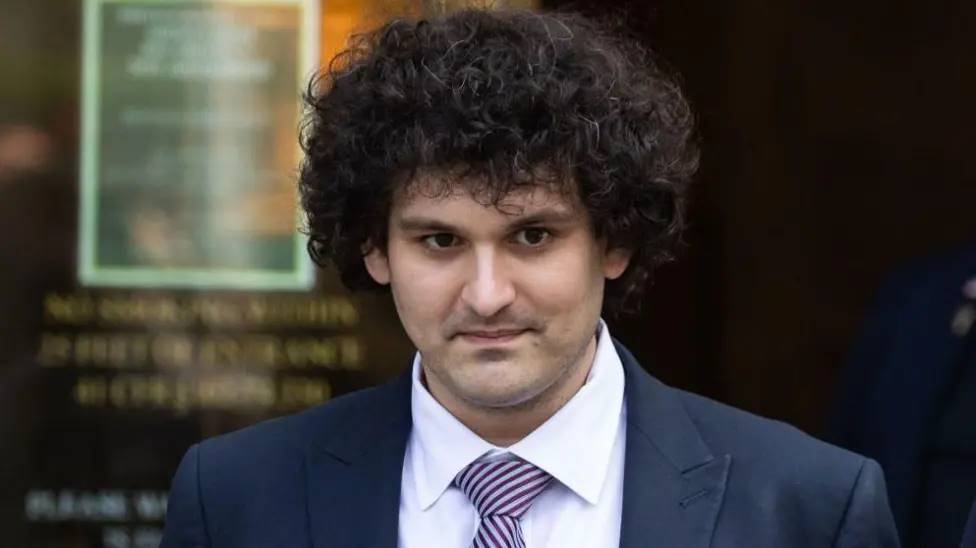
The imprisonment of crypto executive Sam Bankman-Fried reflects some of the worst aspects of the industry.
“This is a sector that has grown up saying, just because they keep their crypto assets on a new ledger, ‘We don’t want to follow time-tested laws,’” said Gensler.
He explained that rules requiring companies wishing to raise money from the public to “share certain information” have existed since the SEC’s creation, designed to protect investors.
This dates back to 1934, following the infamous 1929 Wall Street crash that marked the beginning of the Great Depression.
“Crypto makes up only a small part of U.S. and global capital markets, but it could undermine ordinary investors’ trust in those markets,” Gensler said.
Although supporters argue crypto offers a fast, cheap, and secure way to transfer funds, a survey by the U.S. central bank—the Federal Reserve—found that the number of Americans using crypto dropped from 12% in 2021 to 7% last year.
Harris has said little about crypto, but one of her advisers said last month she would “support policies ensuring emerging technologies and the industry can continue to grow.”
Recent meetings between her team and industry executives aim to build trust, giving crypto leaders hope for a brighter future regardless of who wins in November.
“I cannot stress enough how important this is—not just for America, but for the world,” said Paul Grewal, chief legal officer at crypto firm Coinbase, who attended these meetings.
“The U.S. is not only a major market for crypto, but key technologies around crypto are being developed here. I think we need to recognize that the rest of the world isn’t sitting idly waiting for the U.S. to sort itself out.”
He added that given how close the White House race is, “every vote will matter—and the crypto vote is no exception.”
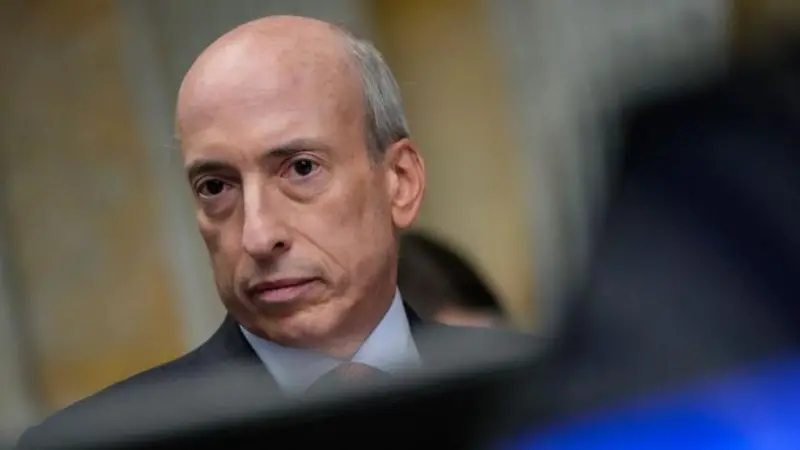
SEC Chair Gary Gensler has been highly critical of certain crypto firms.
This year’s U.S. crackdown on crypto has echoed in Europe. In April, the EU reached agreement on new laws aimed at reducing the risk of cryptocurrencies being exploited by criminals.
However, other regulatory bodies have moved more slowly. The G20 is developing minimum standards for crypto, but these are non-binding and implementation has progressed slowly.
In the U.S., a bill to regulate crypto has passed the House of Representatives but has yet to be approved by the Senate. Critics argue it would reduce consumer protections.
Coinbase’s Grewal supports the bill, saying, “The industry is not shying away from regulation.” He added that the industry simply wants crypto to be held to the same standards as other assets—“not tougher, but not weaker either.”
With the November U.S. election approaching, the crypto industry senses an opportunity to elect lawmakers sympathetic to its cause.
By last month, the industry had spent a record $119 million on donations, according to research by the nonprofit Public Citizen.
Rick Claypool, research director at the consumer advocacy group, said the money is being used “to help elect pro-crypto candidates and attack critics of crypto, regardless of political affiliation.”
He added that they’ve spent more on corporate donations than any other industry, attempting to pressure Congress into easing regulations and weakening consumer safeguards.
Join TechFlow official community to stay tuned
Telegram:https://t.me/TechFlowDaily
X (Twitter):https://x.com/TechFlowPost
X (Twitter) EN:https://x.com/BlockFlow_News
 @BBCWorld


