








Will the SEC's entanglement with crypto come to an end, or is a new chapter about to begin?
TechFlow Selected TechFlow Selected
Will the SEC's entanglement with crypto come to an end, or is a new chapter about to begin?
The U.S. Securities and Exchange Commission (SEC) has issued a Wells notice to OpenSea, intensifying the debate over cryptocurrency regulation and highlighting its ongoing legal and regulatory challenges.
 Navigating Web3 tides with focused insights
Author: Eterna Capital
Translation: Baishuo Blockchain
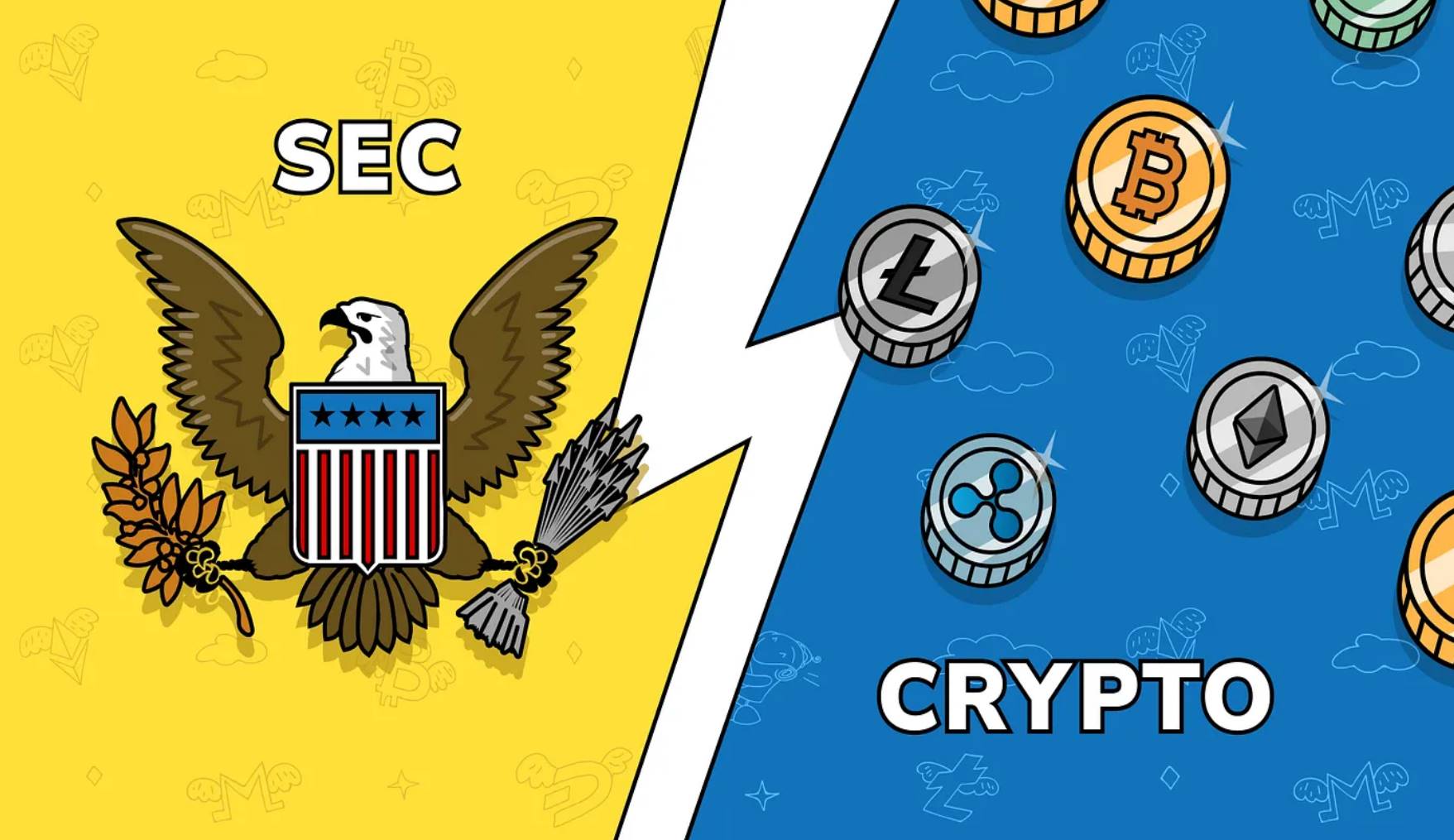
Recent reports indicate that the U.S. Securities and Exchange Commission (SEC) has issued a Wells Notice to OpenSea, a popular NFT marketplace—an action often preceding formal charges—adding a new chapter to the long-running legal saga that has plagued the blockchain industry for years.
It's well known that the SEC’s historical stance is "everything except Bitcoin is a security"—including, according to the notice sent to OpenSea, NFTs. The debate over whether crypto assets are securities or commodities is critical, as it determines whether oversight falls under the SEC or the CFTC. At its core, this is a judicial exercise in interpreting what qualifies as a “security” under the 1946 definition—a framework ill-suited for modern technologies like cryptocurrency. The resulting uncertainty and regulatory inconsistency have been major constraints on the growth of the crypto industry, dampening adoption, R&D, fundraising, and more.
Keen investors have already noticed that recent judicial developments suggest the SEC has failed to persuade courts—and its chances of success through further litigation are diminishing.
1. SEC vs. CONSENSYS
1) After ETH 2.0
In June 2024, the SEC dropped its investigation into Consensys regarding Ethereum 2.0—the blockchain’s transition to proof-of-stake. According to Consensys’ own statement, “this means the SEC will not bring charges alleging ETH sales were securities transactions.” This is certainly good news—
But astute observers prefer to wait for the SEC to formally conclude its investigations into Consensys’ ETH 2.0 transactions and Ripple.
Today, we also have reason to be optimistic about these matters.
2) Before ETH 2.0
Prior to Ethereum’s transition to proof-of-stake (i.e., during the proof-of-work era), the SEC could still potentially investigate Consensys’ Ethereum-related activities. What concerns investors isn’t necessarily the lawsuit itself, but its implications: any litigation targeting Consensys’ proof-of-work activities might include language suggesting ETH could be deemed a security—details that would worry ETH holders.
Luckily, the likelihood of such litigation is shrinking for two reasons:
-
Cryptocurrency has become a polarizing, politicized issue that neither presidential candidate can afford to ignore;
-
The approval of spot Ethereum ETFs can be seen as a de facto conclusion to the “security vs. commodity” debate.
2. SEC vs. RIPPLE
1) A Nuanced Ruling
In August 2024, Judge Torres issued a landmark ruling determining that Ripple’s sale of XRP tokens to institutional investors constituted an unregistered securities offering. While this resulted in a $125 million civil penalty—far below the $2.5 billion sought by the SEC—it was widely seen as a win.
Moreover, the court ruled that secondary sales of XRP on exchanges do not constitute securities transactions—a victory for Ripple and the broader crypto industry.
Yet this was a Pyrrhic victory: Judge Torres acknowledged that XRP could be considered a security in certain contexts—but not uniformly across all transactions. This highlights the complexity of applying traditional (“unreformed”) securities laws to crypto, allowing the SEC to act selectively depending on circumstances.
2) Legal Implications
Is the case over? Probably not. Both parties must file appeals by October 6. Ripple may choose to accept its “win” and refrain from appealing. Conversely, the SEC may appeal (in fact, it attempted to appeal before trial concluded—in August 2023—which Judge Torres unsurprisingly rejected). While appellate courts are likely to uphold Judge Torres’ unorthodox ruling, there is no guarantee.
Binding precedent? Contrary to frequent media misreporting, note that this ruling is not binding (unless affirmed by an appellate court). That said, it’s equally important to recognize the momentum is clearly positive: indeed, other judges in separate cases have cited SEC v. Ripple (for example, in the BNB token case, the Ripple ruling was referenced in SEC v. Binance, favoring the defendant, July 2024).
What about other altcoins? Even if Ripple ends with a binding precedent, most other altcoins remain vulnerable: XRP is an outlier—it never held an ICO, and its consensus mechanism is not based on proof-of-stake.
3. Shift in SEC Strategy
The Consensys and Ripple cases can be seen as major challenges to the SEC’s enforcement strategy, particularly its approach of seeking broad penalties and enforcing compliance across the crypto space.
1) Political Backlash
Both cases unfolded amid growing political scrutiny of the SEC’s regulatory posture toward crypto. Experts often overlook the fact that while the SEC is an independent agency supposedly insulated from politics, election dynamics have spurred unusual bipartisan efforts in Congress to rein in the SEC’s power and establish clearer regulatory guidelines.
Even prominent Democrats like Pelosi and Schumer have broken with the Biden administration, supporting legislation to bring regulatory clarity to the crypto industry and reduce the SEC’s expansive enforcement discretion. Meanwhile, Trump has criticized the current administration’s handling of the SEC and even suggested he would fire Gary Gensler if re-elected—despite the president having no authority to dismiss the SEC chair.
2) A Series of Legal Setbacks
The SEC’s regulatory actions in crypto face significant legal headwinds. Shortly after the Consensys and Ripple developments, an appeals court ruled that the SEC’s rejection of Grayscale’s spot Bitcoin ETF application was “arbitrary and capricious,” raising questions about the agency’s decision-making process. The SEC faced public scrutiny after dropping charges against Ripple’s co-founders. Weeks later, a Utah court condemned the agency for “gross abuse of power” in a case involving another crypto project. The SEC also appears to be encountering similar hurdles in its case against Coinbase.
These events, coupled with the SEC’s eventual reluctant approvals of spot BTC and ETH ETFs, signal a shift in the agency’s approach.
4. Conclusion: A Turning Point?
The Consensys and Ripple cases fall short of decisive victories, yet mark a turning point in the battle between the SEC and crypto. They underscore the need for clear legislation and lay groundwork for case law development: given the industry’s nascent stage, relying on piecemeal court rulings risks hindering crypto’s long-term evolution.
While the SEC may still pursue appeals and other cases continue, the emerging trend favors the technology. This is the result of judicial developments, political polarization around the issue, and the undeniable success—not just financially—of spot ETFs.
Against this backdrop, even if the SEC proceeds with issuing notices and filing lawsuits against platforms like OpenSea, such actions may be seen as “last gasps.” Regardless of the November election outcome, uncertainty remains the only constant—but institutional investors can now reasonably expect the judicial developments discussed here to eventually deliver the regulatory clarity they’ve awaited for years.
Join TechFlow official community to stay tuned
Telegram:https://t.me/TechFlowDaily
X (Twitter):https://x.com/TechFlowPost
X (Twitter) EN:https://x.com/BlockFlow_News
 白话区块链
白话区块链






