StackingDAO: The Liquidity Magnet for Stacks DeFi
TechFlow Selected TechFlow Selected
StackingDAO: The Liquidity Magnet for Stacks DeFi
Explore the role and functionality of StackingDAO.
 Navigating Web3 tides with focused insights
Author: Do Dive, DeSpread
Disclaimer: The content of this report reflects the views of the respective authors and is for informational purposes only. It does not constitute advice to buy or sell tokens or use protocols. Nothing in this report constitutes investment advice, nor should it be construed as such.
1. Overview of Liquid Staking Services
In blockchain networks using a Proof-of-Stake (PoS) consensus algorithm or similar mechanisms (such as Ethereum), a certain amount of native tokens must be staked to participate in block validation. While staking secures the chain by locking up significant capital, it also creates a problem: staked funds cannot be used elsewhere, reducing capital efficiency.
Liquid staking was introduced to solve this issue, offering services that allow staked assets to remain liquid while still participating in block validation. Liquid staking services typically provide users with the following features to unlock capital efficiency from staked assets:
-
Tokenization of staked assets: When users stake assets through a liquid staking service, they receive derivative tokens corresponding to their staked assets (e.g., stETH).
-
Value guarantee and reward distribution: Derivative tokens are guaranteed to be redeemable 1:1 for the underlying asset. Holders earn block validation rewards via mechanisms like rebasing or exchange rate adjustments.
-
Liquidity and asset utilization: Users can leverage the value of derivative tokens across various decentralized applications (dApps), such as using them as collateral for loans or providing liquidity in DeFi protocols.
The barrier to entry for block validation on certain chains is high. For example, becoming an Ethereum validator requires 32 ETH (worth over $10,000), while Solana validators face significant hardware costs due to the chain's demanding specifications.
Liquid staking services address these barriers by enabling more users to participate in block validation, benefiting both the network and users through:
-
Enhanced security: More native tokens staked strengthen the chain’s security.
-
Improved capital efficiency: Users earn block validation rewards while utilizing staked assets in DeFi.
1.1. Role of Liquid Staking
Lido Finance launched in December 2020 as a pioneer of liquid staking within the Ethereum ecosystem. In April 2023, Ethereum’s Shanghai upgrade enabled ETH withdrawals from the Beacon Chain. With market recovery, the volume of ETH staked via liquid staking services surged sharply.
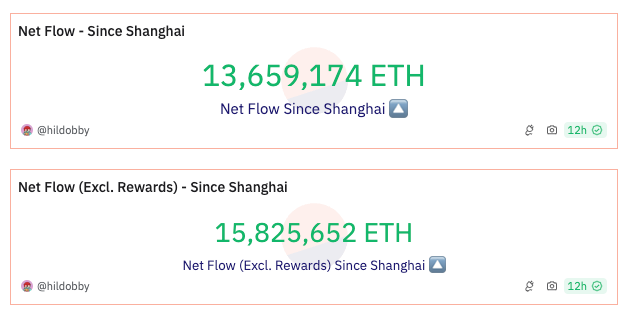
Source: @hildobby dune dashboard
According to the Dune dashboard provided by hildobby, approximately 15.8 million ETH were staked after the Shanghai upgrade, exceeding the pre-upgrade level of 13.6 million ETH by July 2024. Considering Ethereum Mainnet launched in 2015, these figures demonstrate a sharp rise in staking demand within just 15 months post-upgrade. Furthermore, about 32.6% of all Ethereum staking is now handled through liquid staking services, highlighting their critical role in the on-chain ecosystem.
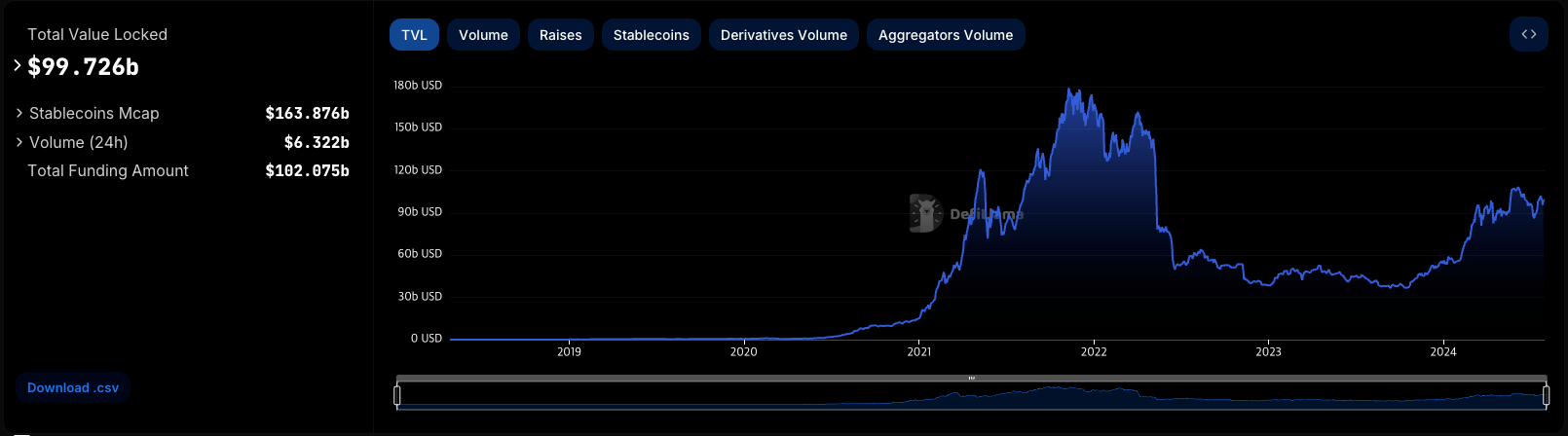
TVL trend across all protocols, source: Defillama
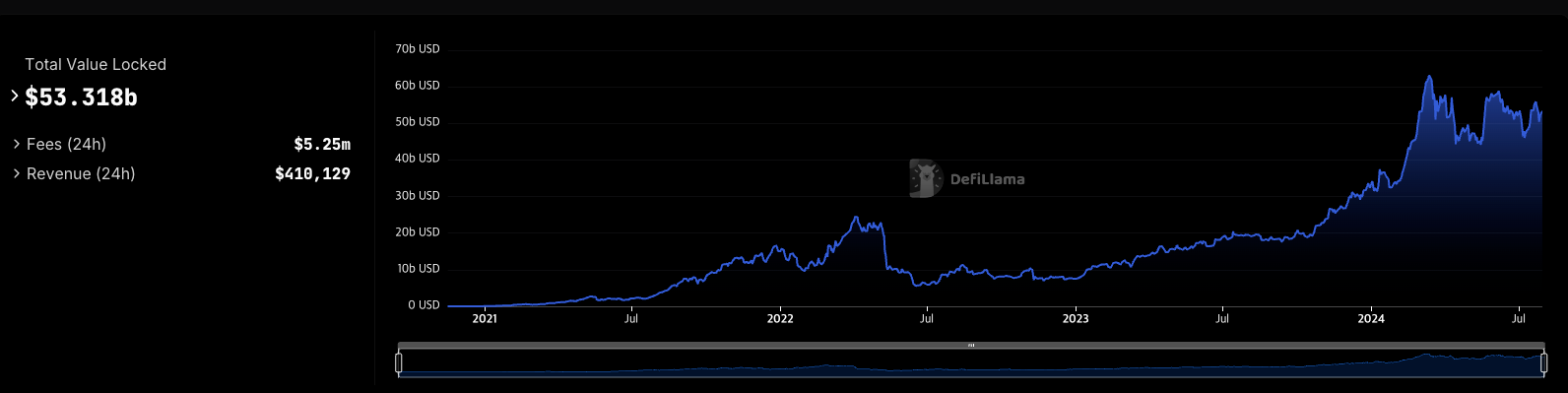
Liquid staking TVL trend, source: Defillama
According to DefiLlama data, liquid staking services account for over half of the total value locked (TVL) across all protocols, underscoring their dominance. Lido Finance alone holds the highest TVL among all protocols at approximately $32.7 billion.
Key metrics as of August 1, 2024:
-
Total TVL: $99.16 billion
-
Liquid staking TVL: $50.7 billion
-
Lido Finance TVL: $31.2 billion (ranked #1 overall; EigenLayer ranks second at $15.5 billion)
-
Ethereum staking amount: ~34 million ETH
-
Liquid staking usage: ~11 million ETH (32.6% of total ETH staked)
1.2. Applicability to Other Chains
The success of liquid staking on Ethereum has spurred adoption on other chains, including Solana, Avalanche, and IBC-based networks. Some of these services have already achieved substantial TVL, demonstrating their utility. Following Ethereum, Solana has become the second-largest chain by liquid staking volume, with notable protocols including:
-
Jito / TVL: $1.84 billion
-
Marinade / TVL: $1.1 billion
-
Sanctum / TVL: $758 million
These developments indicate the growing influence of liquid staking services across diverse blockchain ecosystems.
2. Stacks’ Proof-of-Transfer (PoX) and Liquid Staking
Even chains not using Proof-of-Stake (PoS) mechanisms can offer favorable conditions for liquid staking if their consensus involves token locking or delegation to validators. Stacks, which uses the Proof-of-Transfer (PoX) consensus mechanism, is one such example.
The PoX algorithm in the Stacks blockchain features interaction between miners and Stackers. Miners send Bitcoin (BTC) to Stackers in exchange for the right to create Stacks blocks and earn STX rewards. In return, Stackers must lock a certain amount of STX to receive BTC rewards. For more details, refer to “Stacks Nakamoto Upgrade: A Butterfly Ready to Emerge”.
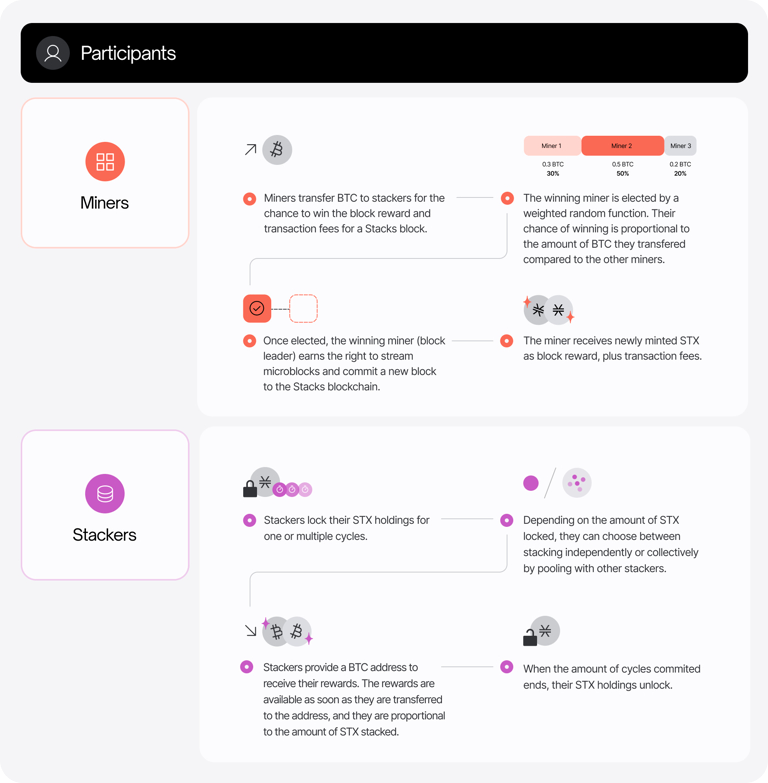
Roles of miners and Stackers, source: stacks docs
Initially, Stackers only needed to lock STX tokens to participate in PoX. However, following the upcoming Nakamoto upgrade later this year, Stackers will take on a new role called Signer. Signers will be responsible for verifying, storing, signing, and propagating Stacks blocks produced during a miner’s tenure.
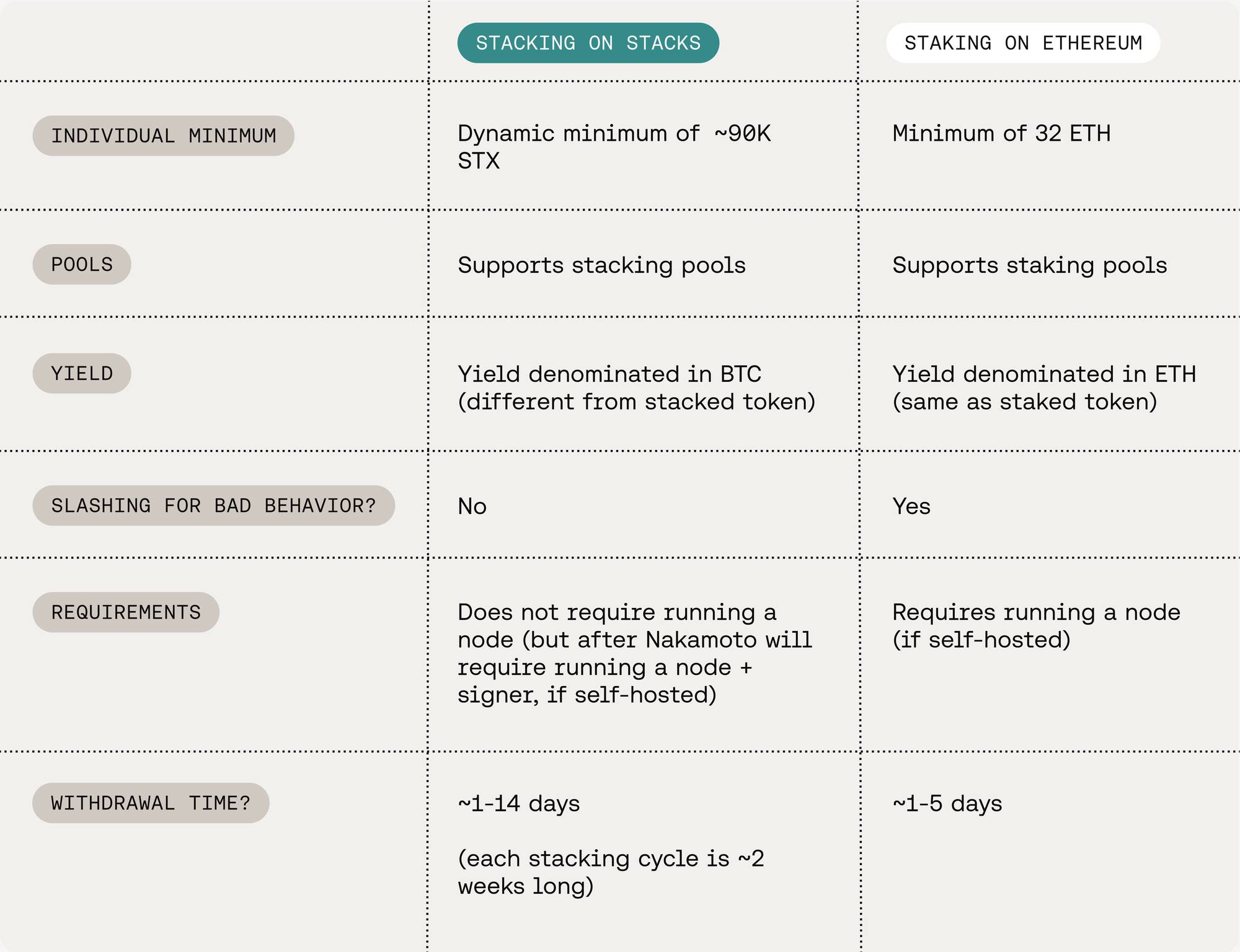
Stacking vs Staking, source: Hiro blog
As shown, the “Stacking” process in Stacks resembles “Staking” in Ethereum: 1) Both involve locking tokens to participate in on-chain consensus; 2) Both require large amounts of native tokens, and post-Nakamoto upgrade, Stackers will also need to run nodes, creating entry barriers; 3) Both involve locking assets for fixed periods with withdrawal delays, reducing capital efficiency—highlighting the need for liquid staking services.
3. Liquid Staking Service: StackingDAO
3.1. Stacking Mechanism and the Role of StackingDAO
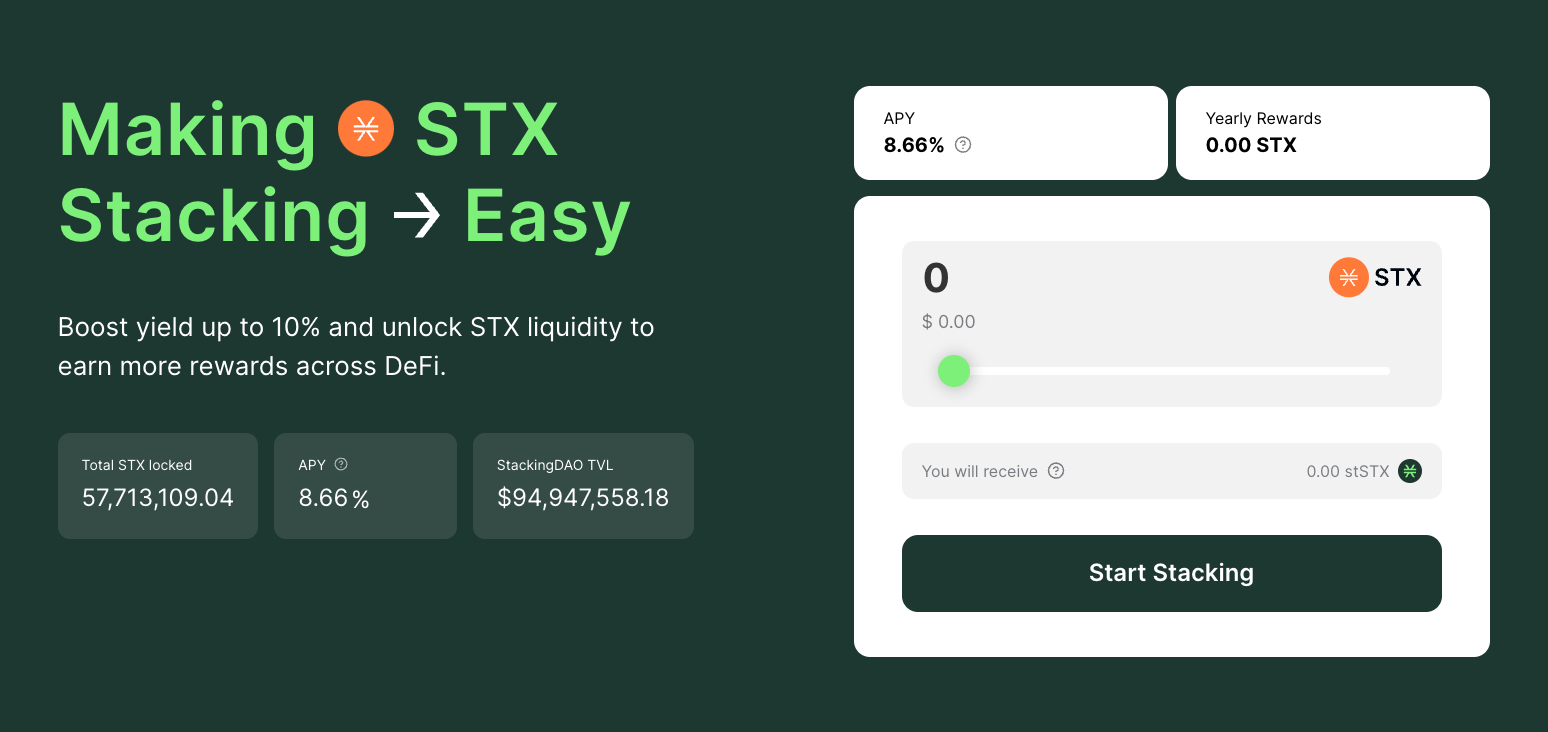
Source: StackingDAO
StackingDAO is a decentralized application (dApp) that provides liquid staking services for the Stacking process on Stacks. Similar to other liquid staking services, users can deposit their STX tokens into StackingDAO to participate in Stacking and earn an annual percentage yield (APY) of around 8% (base rate 7%) via the derivative token stSTX.
The Stacking mechanism on Stacks shares similarities with Ethereum’s Staking process, introducing significant entry barriers:
-
Stacking cycles: Stacking operates in two-week cycles, imposing time constraints on locking, unlocking, and re-Stacking.
-
Minimum STX requirement: Registering as a Stacker requires at least approximately 90,000 STX tokens.
-
Node operation: After the Nakamoto upgrade, Stackers must operate nodes.
The two-week cycle imposes timing inflexibility, requiring users to align asset locking/unlocking with cycle boundaries. Additionally, if a user wishes to unlock only part of their assets, they must first unlock all, then re-lock the remainder—an added complexity.
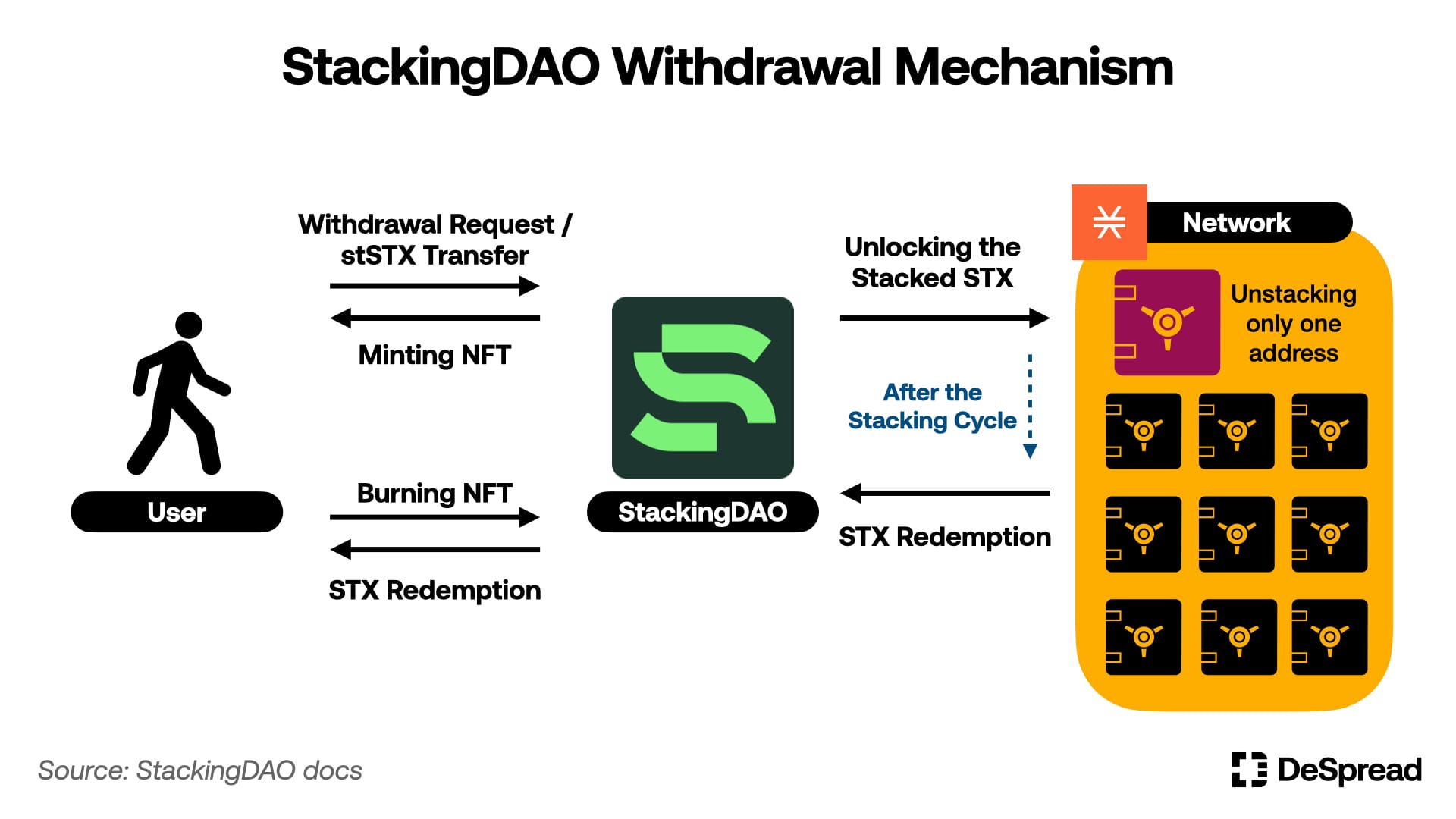
To address these challenges, StackingDAO designed an exit mechanism that lowers entry barriers while minimizing impact on Stacking yields. Key features include:
-
Diversified Stacking addresses: StackingDAO distributes STX across 10 different Stacking addresses to reduce yield impact.
-
Staggered withdrawals: Only one of the 10 addresses is unlocked per Stacking cycle, enabling staggered withdrawals based on user requests.
-
NFT issuance: When users request a withdrawal, they send stSTX to the protocol, which issues an NFT as a receipt. At the end of the Stacking cycle, users can burn the NFT to redeem unlocked STX tokens.
This mechanism reduces timing constraints and friction in the Stacking process, allowing users greater flexibility in accessing and using their assets while maintaining Stacking rewards.
3.2. Growth and Key Metrics
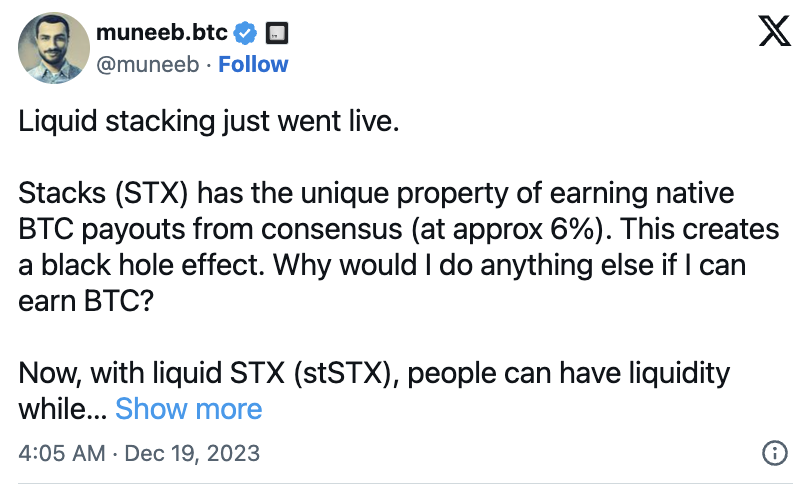
Muneeb announces StackingDAO launch, source: Muneeb X
Since its launch in December 2023, StackingDAO rapidly gained attention and attracted users and capital through an effective points system. The points system rewards users daily based on stSTX holdings, encouraging stSTX to be pegged to STX and used in DeFi protocols:
-
1 point per stSTX held
-
1.5 points per stSTX deposited into a DeFi protocol
-
2.5 points per stSTX deposited into Bitflow’s stableswap pool
Key metrics as of August 21, 2024:
-
Total stSTX issued: ~56.8 million
-
stSTX DeFi utilization rate: 45%
-
stSTX TVL in DeFi: $36.78 million
-
Total points issued: ~14.95 billion
-
Total users: 37,498
As the first liquid staking dApp in the Stacks ecosystem, StackingDAO quickly reached a peak TVL of nearly $125 million shortly after launch. Despite market corrections, StackingDAO’s TVL remains around $80 million, making it the largest dApp by capital in the Stacks ecosystem.
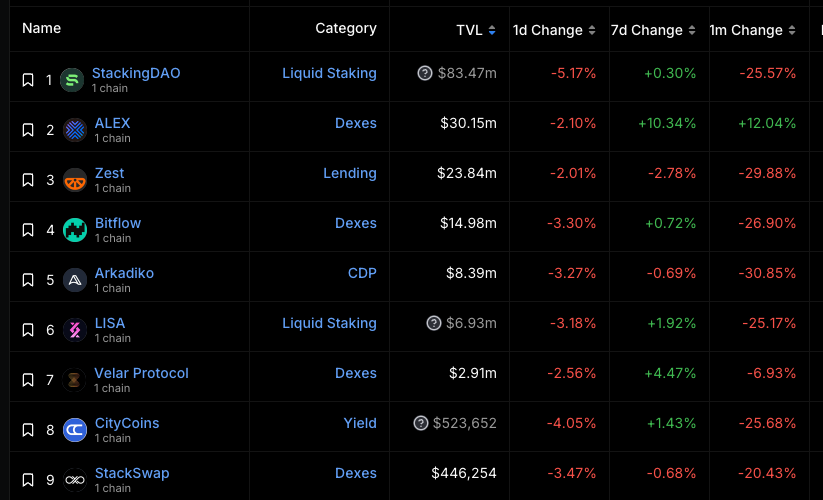
Stacks dApp TVL ranking, source: Defillama
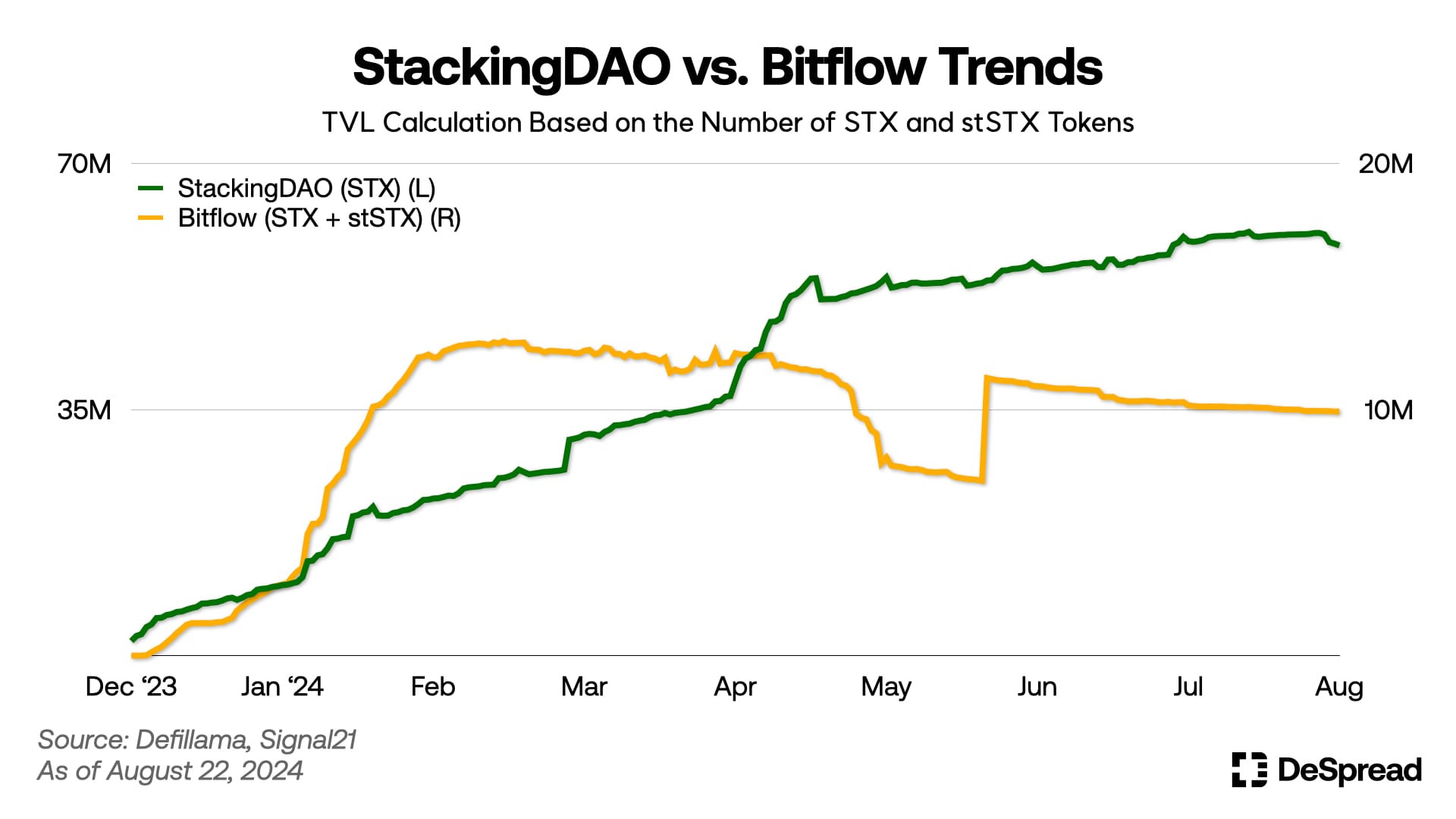
Bitflow, a stableswap protocol essential for maintaining stSTX value, has also benefited from the launch of StackingDAO and its points system. Currently, about 10.5 million STX tokens are deposited in the protocol, reflecting strong growth momentum.
StackingDAO’s TVL measured in STX tokens has shown an upward trend since launch, with approximately 58.6 million tokens deposited. This represents about 4% of the total 1.48 billion STX circulating supply and roughly 13% of the 425 million STX currently participating in Stacking—a significant figure given the dApp has been live for less than a year.
3.3. Contribution to the Stacks Network: StackingDAO V2
Starting in late August, as the activation phase of the Nakamoto upgrade fully rolls out, Stackers will transition into the role of Signer, responsible for validating Stacks blocks. Signers are analogous to validators in Proof-of-Stake (PoS) chains, so enhancing the stability and diversity of the Signer network is a key goal for improving the security and decentralization of the Stacks blockchain post-upgrade.
In this context, StackingDAO launched StackingDAO V2 to streamline the Signer onboarding process. A key feature of this update is delegating STX tokens deposited into StackingDAO to new signers on the Stacks blockchain, thereby supporting network growth. Announced initially in March, the update is set to be implemented following completion of the Nakamoto upgrade.
StackingDAO V2 is built around a mechanism where deposited STX tokens are proportionally delegated based on Signer performance, aiming to achieve the following goals:
-
Improved network performance: Delegating STX stakes to diverse Signers enhances network diversity and incentivizes better Signer performance.
-
Higher user returns: More STX stakes are allocated to higher-performing Signers, offering users increased compounded rewards.
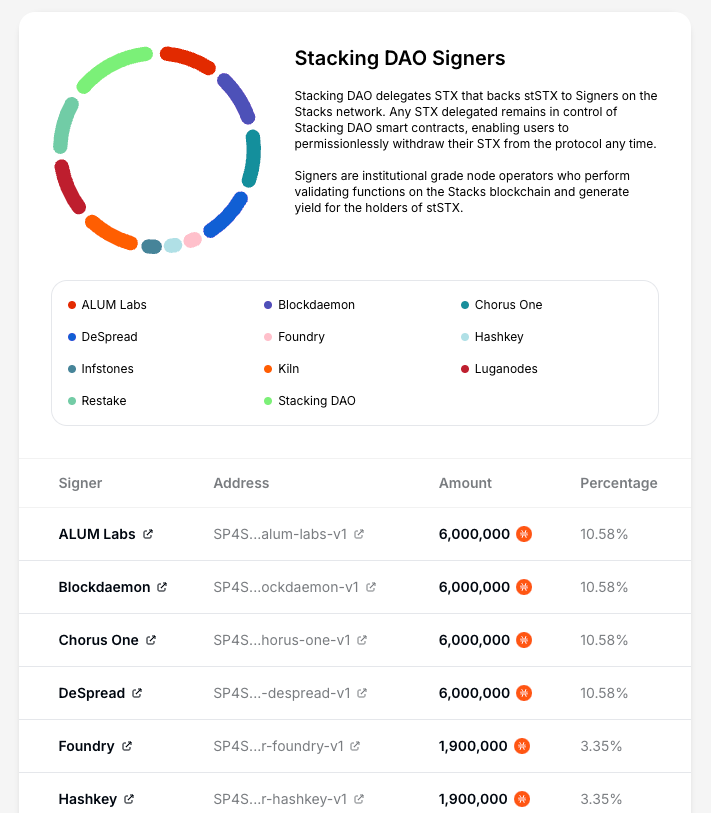
Status of Signers joined with StackingDAO, source: StackingDAO
Even before full activation of the Nakamoto upgrade, 10 entities (excluding StackingDAO itself) have already joined the StackingDAO Signer program, with delegation allocations beginning in May. Post-upgrade, the scope of Signers joining via StackingDAO is expected to expand further, enhancing Signer network diversity.
4. Conclusion
At the beginning of this year, surging interest in the Bitcoin ecosystem brought significant attention to Stacks and related projects. This spotlight drove growth in the total value locked (TVL) on the Stacks network, peaking at $180 million in April—18 times higher than the $10 million TVL recorded in September of the previous year.
However, as the broader market entered a correction phase, the Stacks ecosystem faced a series of challenges, including delays in the Nakamoto upgrade and a hack affecting Alex, the largest decentralized exchange in the Stacks ecosystem. Despite these setbacks, emerging projects like StackingDAO, Zest, Bitflow, and LISA continued to accumulate TVL and grow. With the Nakamoto upgrade expected to complete in September, optimism around the future of the Stacks ecosystem is returning.
Source: Hiro blog
With the Nakamoto upgrade imminent, the evolution of the Stacks ecosystem warrants close observation. The trajectory of StackingDAO—the dApp with the largest TVL in the ecosystem—will be particularly telling. How successfully StackingDAO continues to act as a liquidity magnet within Stacks DeFi will be a key factor in the coming months.
Join TechFlow official community to stay tuned
Telegram:https://t.me/TechFlowDaily
X (Twitter):https://x.com/TechFlowPost
X (Twitter) EN:https://x.com/BlockFlow_News
 @DeSpreadTeam