Why You Should Care About Bitcoin's OP_CAT: The Biggest Narrative Since the Lightning Network
TechFlow Selected TechFlow Selected
Why You Should Care About Bitcoin's OP_CAT: The Biggest Narrative Since the Lightning Network
Will OP_CAT be the next Lightning Network? The concept sparks a rally as core developers of the Lightning Network collectively endorse it.
 Navigating Web3 tides with focused insights
By Jaleel, BlockBeats
Earlier this year, when I was writing "Can 13 Lines of Code Enable Smart Contracts on Bitcoin? Understanding the OP_CAT Soft Fork," OP_CAT was still an unfamiliar term to many. If not for the Bitcoin NFT project Taproot Wizards leveraging meme culture to launch its Quantum Cats NFT series and promote OP_CAT, few might have noticed this seemingly dull technical concept.
But just six months later, OP_CAT has become red-hot—so much so that it's now seen as the next "Lightning Network." The recently viral fractal network Fractal Bitcoin is essentially an implementation of OP_CAT in Bitcoin; its token FB surged three to four times within days of launch. As a result, multiple OP_CAT-based protocols have emerged overnight in the Bitcoin ecosystem. For example, CAT20 on the fractal network also leverages the OP_CAT concept—during minting, gas fees spiked above 5,000, and currently each CAT trades around $5.5 off-exchange, often with no available orders despite demand. Early minter profits range from 5x to 20x. Meanwhile, Quantum Cats have consistently maintained a price of 0.25 BTC, becoming a blue-chip Bitcoin NFT.
It seems anything touching OP_CAT can pump.
This isn't just community hype—OP_CAT has sparked intense discussion among Bitcoin developers. Reviewing this year’s Bitcoin Optech newsletters and developer meetings, OP_CAT frequently appears and is a regular topic of conversation.
The OP_CAT Bitcoin BIP draft jointly published by Bitcoin Core developers Ethan Heilman and Armin Sabouri has now been officially named BIP347. Many heavyweight figures in the Bitcoin space—including Lightning Network whitepaper co-author Tadge Dryja, Lightning Labs CTO Olaoluwa Osuntokun, and Blockstream research director Andrew Poelstra—have expressed strong support for OP_CAT.
Why Are Lightning Network Developers So Keen on OP_CAT?
To understand this phenomenon, we need to start with the Lightning Network. In 2011, Satoshi Nakamoto mentioned a prototype of the Lightning Network in an email, positioning it as a key solution for scaling Bitcoin and improving payment speed. Since its inception, the Lightning Network has drawn significant attention from developers.
In recent years, the idea of a "Bitcoin ecosystem" has gained momentum, with sidechains, virtual machines, and various Bitcoin scaling solutions springing up like mushrooms after rain, attracting many investors. Yet, to veteran Bitcoin developers, most of these projects are trivial and lack legitimacy. After all, the Lightning Network is widely regarded as Bitcoin’s best “payment channel,” one of the few “posthumous children” of Satoshi himself, and spiritually the “rightful heir” of the Bitcoin community.
However, things have shifted dramatically over the past year. Several developers have announced their exit from Lightning Network-related work, and criticism of the network has grown louder—especially from seasoned developers. Nostr founder Fiatjaf bluntly stated: "The Lightning Network has been stealing Bitcoin users’ time, energy, and money for six long years."
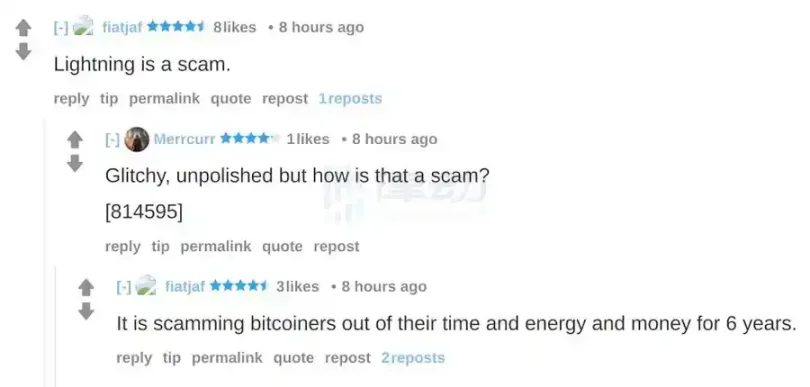
Against this backdrop, some developers are searching for the next “Lightning Network.” And OP_CAT is increasingly seen by many Bitcoin developers as the next major breakthrough following the Lightning Network. Given OP_CAT’s highly technical nature, before diving into what it is and what it enables, let’s first examine some of the prominent Bitcoin developers who support it.
Bitcoin Developers Supporting OP_CAT
Co-Author of the Lightning Network Whitepaper
Tadge Dryja is one of the co-authors of the Lightning Network whitepaper. In 2015, Tadge Dryja and Joseph Poon—the other whitepaper author—founded Lightning Labs under the leadership of Elizabeth Stark. Standing alongside BlockStream as another major Bitcoin Lightning Network company, the two differ primarily in programming language: Lightning Labs uses Go, while Blockstream uses C.
However, by the end of 2016, Tadge Dryja had disagreements and arguments with the Lightning Labs team. Just one year after founding the company, he chose to leave and joined MIT’s Digital Currency Initiative (DCI) to continue his research on the Lightning Network. At MIT DCI, he contributed to multiple research projects focused on scalability and interoperability in cryptocurrencies and smart contracts. This included developing Utreexo, a new Bitcoin scalability technology designed to make Bitcoin nodes smaller and faster. In 2022, Tadge Dryja joined Lightspark as a senior research scientist, where he continues working on scalability issues in Bitcoin and blockchain, leveraging his expertise as a co-inventor of the Lightning Network.
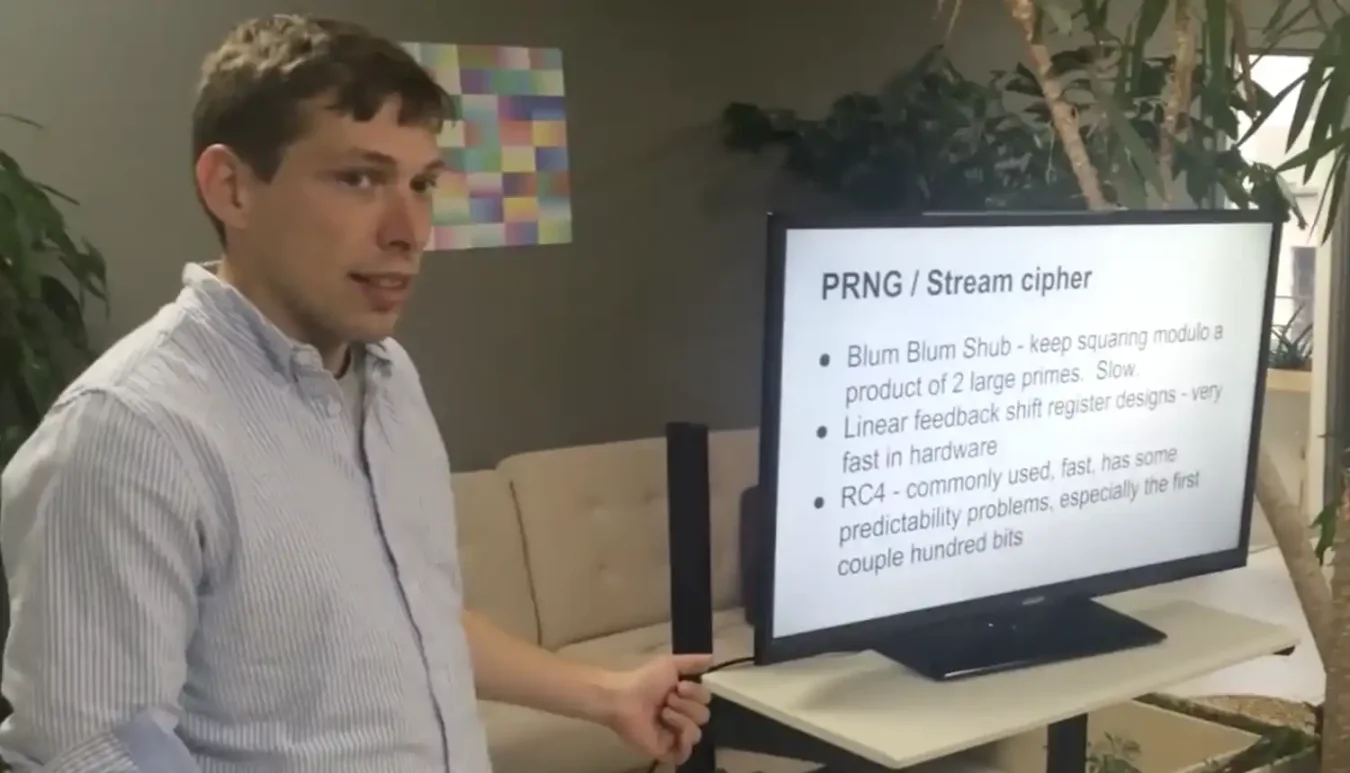
Given his deep expertise in Bitcoin smart contracts and scalability technologies, Tadge Dryja recognized OP_CAT’s potential early on. He has long supported testing OP_CAT on Bitcoin testnets and encouraged developers to try to “break” it in order to uncover potential vulnerabilities.
CTO of Lightning Labs
Olaoluwa Osuntokun (Roasbeef) is another co-founder and CTO of Lightning Labs and a distinguished Bitcoin developer who has made significant contributions to the development of the Lightning Network. In fact, Lightning Labs’ early team was on par with Blockstream in terms of technical strength.

When discussing Olaoluwa Osuntokun, one must mention his “gentleman’s rivalry” with Tadge Dryja. Interestingly, Tadge Dryja’s departure from Lightning Labs was largely due to Olaoluwa. When Dryja worked at Lightning Labs, his initial protocol LIT was incompatible with Blockstream’s BOLT. However, Olaoluwa developed a compatible version, which gradually gained broader recognition and adoption among developers, allowing him to surpass Dryja and, to some extent, accelerate Dryja’s exit.
Yet history is full of irony. Today, these two former “rivals” from Lightning Labs stand together in supporting OP_CAT.
Research Director at Blockstream
There’s a persistent rumor in the community: Blockstream is the “power behind the throne” of Bitcoin. This claim isn’t baseless. In 2014, “father of PoW” Adam Back brought together renowned early Bitcoin developers including Matt Corallo, Greg Maxwell, and Pieter Wuille to found Blockstream. During the Bitcoin scaling debate, Blockstream clearly backed and promoted the Lightning Network, cementing its current status.
Today, in discussions about OP_CAT, Blockstream’s research director Andrew Poelstra is an unavoidable figure. As Blockstream’s research director and a veteran Bitcoin cryptography and scripting developer, his influence in the industry is undeniable. As early as January 30, 2021, he wrote an article titled “CAT and Schnorr Tricks I,” discussing OP_CAT and pointing out that combining OP_CAT with CHECKSIGFROMSTACK could provide an elegant method for transaction introspection.

Although Blockstream hasn’t created a separate blockchain for OP_CAT, it supports OP_CAT testing via Bitcoin Inquisition—a testnet designed to evaluate new Bitcoin features. This effectively creates a secure “training ground” where researchers can observe OP_CAT’s performance under real-world conditions.
Andrew Poelstra has also compared OP_CAT with other proposals like OP_CTV, noting that OP_CAT offers greater flexibility, while OP_CTV narrowly focuses on non-recursive smart contracts.
Authors of BIP347
In advancing OP_CAT, Bitcoin developers Ethan Heilman and Armin Sabouri have made significant contributions. They jointly authored and advanced the OP_CAT proposal, now formally designated as BIP347. The proposal aims to redefine the opcode OP_SUCCESS126 via a soft fork to re-enable OP_CAT.
Armin Sabouri has previously focused on improvements to Bitcoin scripts and consensus layers. He believes that while OP_CAT may not be the final solution, it opens possibilities for various new functionalities and represents an important step forward in Bitcoin script evolution.
Ethan Heilman also influenced Andrew Poelstra’s thinking. It was during a private conversation in autumn 2019 that Heilman changed Poelstra’s stance on Bitcoin smart contract functionality. Heilman argued that although people worry about harmful smart contract capabilities on Bitcoin, such contracts can already be implemented using CHECKMULTISIG. To prove this, Heilman issued a challenge on social media, inviting anyone to propose a viable “dark” smart contract—but to date, no one has succeeded.
StarkWare
StarkWare is a company focused on developing blockchain scaling technologies, particularly skilled in using zero-knowledge proofs (ZKPs) to enhance transaction privacy and efficiency. The company specializes in offloading complex computations from mainchains (like Ethereum) to secondary networks without sacrificing security or decentralization. In doing so, StarkWare addresses blockchain scalability while preserving transaction transparency and verifiability.
StarkWare’s advocacy for OP_CAT stems from its interest in Bitcoin network scaling and smart contract functionality. OP_CAT is a Bitcoin opcode that allows more complex transactions and contracts through data concatenation on the Bitcoin network. By enabling OP_CAT, StarkWare aims to bring Ethereum-like smart contract capabilities to Bitcoin, expanding its use cases and enhancing functionality.
In July 2022, StarkWare launched a $1 million research fund dedicated to studying the pros and cons of enabling OP_CAT on Bitcoin. The fund supports researchers and developers with innovative ideas on how to safely and efficiently implement OP_CAT on Bitcoin.
Additionally, StarkWare has demonstrated the potential of using OP_CAT to implement zero-knowledge proofs on Bitcoin test environments, particularly Signet. These efforts show how OP_CAT can enable more complex operations on Bitcoin, such as ZKP applications—key components of smart contract functionality. Recently, StarkWare partnered with sCrypt to explore the design of a proof-of-concept (PoC) bridge based on OP_CAT and ZK magic, suggesting that StarkWare may soon launch an OP_CAT-related protocol.
Others
A few other developers aren’t as well-known, so we’ll cover them together.
Salvatore Ingala has conducted in-depth research on Bitcoin payment pools and smart contracts. He proposed using OP_CAT to optimize payment pool exit processes, arguing that it could significantly reduce on-chain data and operational costs. Ingala sees OP_CAT as a potential plugin for other Bitcoin scaling strategies, such as Arc and Coinpools, and even future Bitcoin optimistic rollups, to improve efficiency and security.
Anthony Towns is one of the main developers behind Bitcoin Inquisition—a tool similar to a testnet but more flexible, used to test Bitcoin protocol changes that haven’t yet gained wide acceptance. Towns has pushed for OP_CAT activation on the Inquisition platform, providing a safe “testing ground.” While recognizing OP_CAT’s importance in testing new features and exploring Bitcoin scripting capabilities, Towns remains cautious about adding too much programmability to Bitcoin, fearing it could increase risks of censorship or control.
Robin Linus, creator of BitVM, believes the reintroduction of OP_CAT provides Bitcoin with a powerful tool, especially beneficial for projects like BitVM, which simplify and streamline the verification of arbitrary computations on Bitcoin. With OP_CAT enabled, the Bitcoin ecosystem can create more general-purpose and expressive smart contracts, fostering a richer and more functional blockchain environment.
Why Are Lightning Network Developers So Interested?
Why are Lightning Network developers showing such strong interest in OP_CAT? What’s the secret behind this? To understand this, we need to first grasp the essence of OP_CAT.
What Is OP_CAT?
OP_CAT is an opcode in Bitcoin Script that concatenates two pieces of data on the stack into a larger element. Though its function appears simple, it can greatly expand Bitcoin’s smart contract capabilities, enabling developers to create and manage more complex data structures and transaction logic.
OP_CAT is not a new opcode—it existed in early versions of Bitcoin but was disabled in later versions due to concerns over security and complexity. However, as Bitcoin has evolved, more and more developers believe it’s time to re-enable OP_CAT. For further reading, see: “Can 13 Lines of Code Enable Smart Contracts on Bitcoin? Understanding the OP_CAT Soft Fork”
But why does such a seemingly simple operation generate so much discussion among Bitcoin developers? One key reason is that it can significantly enhance Bitcoin’s smart contract capabilities, enabling functions that are currently complex or even impossible under existing Bitcoin scripting rules.
Potential Applications of OP_CAT in Payments
OP_CAT shows immense potential in payment systems, especially in off-chain protocols and payment channel networks. Its reactivation would greatly improve operational efficiency in these systems and reduce the burden on on-chain transactions. Key functionalities enabled by OP_CAT include:
Multisignature (Multisig) Optimization: In multisig scenarios, OP_CAT can help users combine multiple signatures into a single data block, reducing the number of signatures that need to be submitted. This saves on-chain space and reduces transaction fees. Multisig is crucial for Bitcoin payment security and shared account management—particularly in applications like the Lightning Network, where OP_CAT can make the process far more efficient.
State Contracts: OP_CAT can also be used for state contracts—smart contracts that maintain state across multiple transactions. With OP_CAT, developers can concatenate state information from different transactions, enabling more complex contract logic on Bitcoin. For instance, certain complex payment protocols or decentralized applications (such as lotteries, betting, or sophisticated financial products) require maintaining state across multiple on-chain transactions—all of which could be achieved using OP_CAT.
Scalability of Payment Channel Networks: Another important application of OP_CAT lies in payment channel networks similar to the Lightning Network. In such networks, users typically conduct numerous micro-payments off-chain, only settling the final balance on-chain. OP_CAT’s concatenation capability allows more effective management and validation of intermediate transactions within payment channels. By bundling different payment requests together, users can perform more complex payments without increasing on-chain load. This significantly boosts the throughput and efficiency of payment channels.
With the advancement of BIP347 and growing participation from developers and researchers in exploring OP_CAT, we have good reason to believe this once-abandoned opcode will breathe new life into the Bitcoin network. Just as the Lightning Network evolved from concept to mainstream, the reactivation of OP_CAT could become the next critical milestone in Bitcoin’s scaling and payment innovation.
Join TechFlow official community to stay tuned
Telegram:https://t.me/TechFlowDaily
X (Twitter):https://x.com/TechFlowPost
X (Twitter) EN:https://x.com/BlockFlow_News
 BlockBeats