Crypto Morning News: BingX疑似遭黑客攻击,Vitalik称保险DAO被严重低估
TechFlow Selected TechFlow Selected
Crypto Morning News: BingX疑似遭黑客攻击,Vitalik称保险DAO被严重低估
Sui could become Solana's biggest competitor.
 Navigating Web3 tides with focused insights
Author: TechFlow
Yesterday's Market Developments
Vitalik: Insurance DAOs Are Severely Underrated
Ethereum co-founder Vitalik Buterin recently shared his views on social media, stating that insurance DAOs (decentralized autonomous organizations) are severely undervalued. Buterin explained that insurance DAOs allow multiple participants facing similar risks to pool funds and agree to cover any member who suffers a loss. He emphasized that this symmetric model ensures balanced incentives. Buterin noted that DAOs can still hire professional claims assessors, but because each participant doesn't know whether they will be the next beneficiary, assessors are incentivized to remain fair. He also mentioned that similar models have existed in the past and still exist in some places today.
South Korean Exchange Upbit to List MEW/BTC, MEW/USDT Spot Trading Pairs
South Korean cryptocurrency exchange Upbit announced it will list new digital assets. According to the announcement, Upbit will open trading for Cat in a Dogs World (MEW) tokens at 19:00 KST on September 19 (18:00 Beijing time).
BingX Suspected of Being Hacked, Over $13.6 Million in Assets Transferred
According to PeckShield monitoring, cryptocurrency exchange BingX appears to have been hacked, with a large volume of abnormal fund outflows detected. Over $13.6 million in assets have already been transferred.
BingX officially stated that due to system maintenance, user withdrawals may experience delays. Relevant services are expected to gradually return to normal within 24 hours.
K33 Research: Sui Could Become Solana’s Biggest Competitor
David Zimmerman, analyst at K33 Research, stated in a research report released on September 18 that the Sui network has the potential to become a strong competitor to Solana. Since early August, the SUI/SOL ratio has risen 115%, while SOL/ETH increased only 6% during the same period. Zimmerman believes Sui’s technical capabilities, architectural design, and upcoming gaming console could position it as a top-tier “alternative L1” blockchain. Notably, on September 17, stablecoin issuer Circle announced the launch of USDC on the Sui network. From a technical standpoint, Sui’s theoretical maximum transaction processing capacity is 297,000 transactions per second, far exceeding Solana’s 65,000. However, Zimmerman also pointed out that Sui faces challenges with token supply, with only 27% of tokens currently in circulation. Nevertheless, the upcoming SuiPlay0x1 gaming console could provide new growth momentum for Sui.
Solana-based DeFi Platform Drift Completes $25M Series B Funding Led by Multicoin Capital
According to Fortune, Solana-based DeFi platform Drift announced it has completed a $25 million Series B funding round led by Multicoin Capital. In an exclusive interview, Drift co-founder Cindy Leow said the company aims to build Drift into the "Robinhood of crypto." This round brings Drift’s total funding to $52.5 million. Drift plans to double its team from 25 to 50 employees within the next year to support business expansion. Notably, Drift is one of the few female-led crypto companies, with about half of its leadership team being women.
Sky Passes Proposal to “Phase Out $200M WBTC Collateral in Five Stages”
The community of decentralized finance lending platform Sky (formerly MakerDAO) voted to approve a proposal to phase out WBTC as collateral. Sky currently has $200 million in loans backed by WBTC, which has a total market cap of nearly $10 billion, making it one of the largest cryptocurrencies. The unwinding plan will begin execution on October 3 and is expected to complete the final stage by November 28. BA Labs previously proposed removing WBTC as collateral due to concerns over Tron founder Justin Sun’s involvement with BiTGlobal, the custodian of WBTC’s underlying assets. Notably, the Aave community, the largest DeFi lending platform, remains cautious about removing WBTC as collateral.
Banana Gun Confirms Frontend May Have Vulnerability, Fewer Than 10 Users Affected
Banana Gun posted an announcement on social platform X, stating that some users experienced unauthorized wallet transfers. The team immediately shut down the bot and launched an investigation after the first incident. After a thorough review, Banana Gun confirmed that backend systems (including routers and databases) were not compromised, and fewer than 10 users were affected. These abnormal transfers appear to have been manually executed, and the team suspects the issue originated from a frontend vulnerability. The bot remains offline to ensure user asset safety. Banana Gun stated it will continue investigating the root cause and expressed gratitude for the community’s support.
Louisiana Government Now Officially Accepts Cryptocurrency Payments
According to Decrypt, Louisiana has officially begun accepting cryptocurrency payments, becoming the latest U.S. state to embrace digital currencies. State Treasurer John Fleming announced that residents can now use Bitcoin, the Bitcoin Lightning Network, and USDC to pay for various state government services. Louisiana has already received its first cryptocurrency payment via the Bitcoin Lightning Network—a fine paid to the Department of Wildlife and Fisheries. Fleming emphasized that despite accepting crypto payments, received funds will be converted into U.S. dollars to mitigate volatility risk.
Multicoin Capital Founder: Ethereum Community Development Is Slow, Lacks Clear Identity
During the TOKEN2049 main conference’s panel discussion titled “Why SOL Will Flip ETH,” Multicoin Capital co-founder and managing partner Kyle Samani shared his views on Ethereum’s development. Samani pointed out that Ethereum has been around for nine years, yet its community development has been slow and it has failed to clearly define its identity. He highlighted three key moments in Ethereum’s evolution: DeFi Summer, the release of a new roadmap in October 2020 (which was detrimental to DeFi), and the 2022 transition from PoW to PoS. Samani specifically noted that Ethereum had planned to shift to PoS even before its mainnet launch in 2015, but it took seven years to actually implement it. He believes the Ethereum community has never clearly defined its direction, which is precisely why its development has been slow.
Samani pointed out that Ethereum’s roadmap aims to push transactions from L1 to L2—a goal that has already been achieved, with over 90% of transactions now occurring on L2s. However, he questioned the ultimate purpose of this strategy, arguing that in moving transactions to L2s, Ethereum has also shifted most of the real value accrual toward usability of assets. Samani emphasized that although Ethereum discusses DA (data availability) value tools, it is actually the L2 layer capturing all the profits.
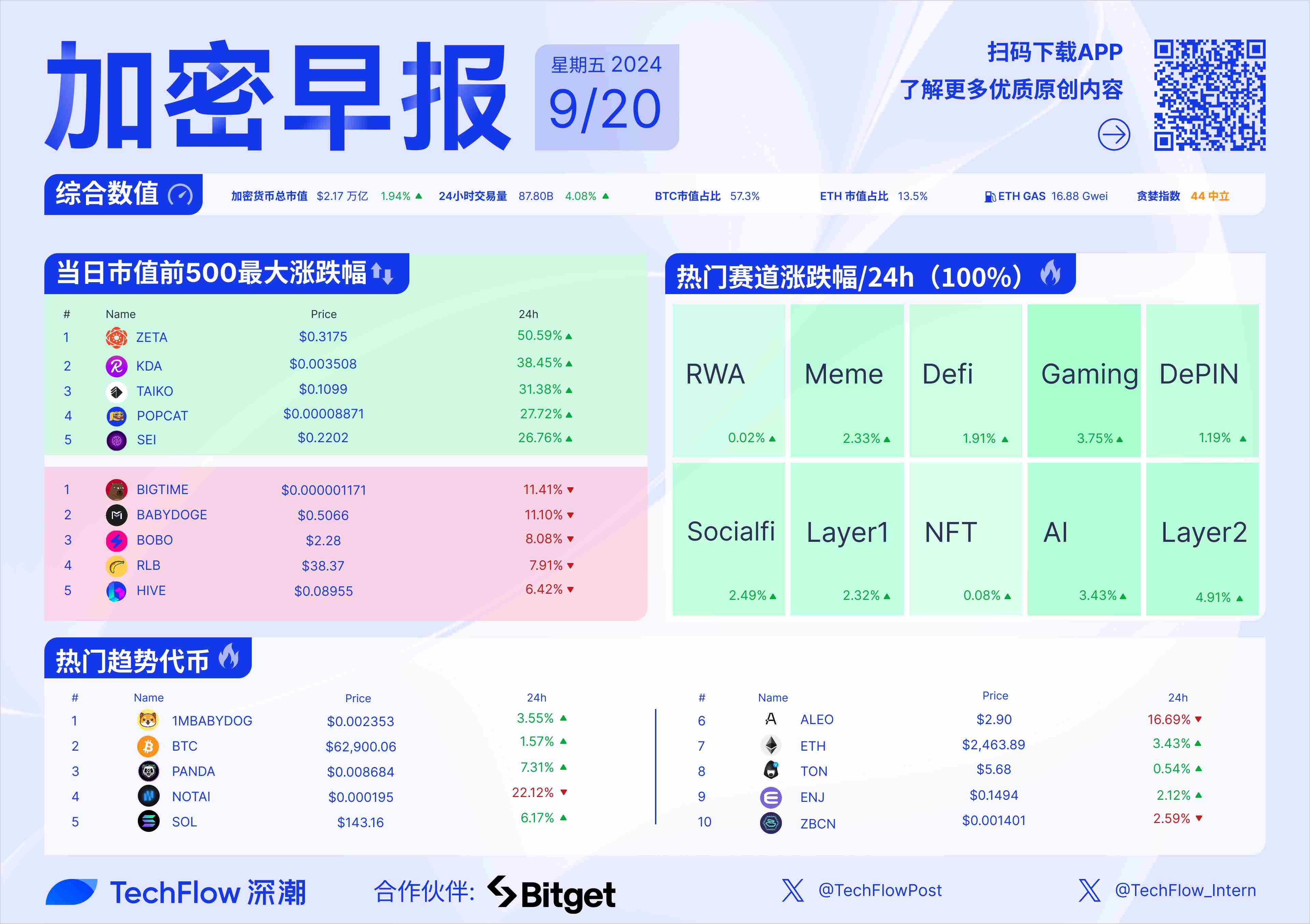
Market Data
Recommended Reading
Beyond Click-to-Earn: Where Is Catizen’s Sustainable Future?
Understanding Powell’s Hawkish Press Conference: Key Q&A Takeaways
What Is the MetaGame of Altcoins in This Cycle?
DePIN Special Report: Over 370 Tokens Launched, Helium Users Surpass 110K
Analyzing World Liberty Financial’s Value: A New Option Amid Trump’s Campaign Funding Gap
2024 Global Crypto Adoption Survey: South Asia and Oceania Lead the World
Stablecoin Boom: Daily Supply Exceeds $16.8B, Monthly Stablecoin Wallet Addresses Grow 100x
Join TechFlow official community to stay tuned
Telegram:https://t.me/TechFlowDaily
X (Twitter):https://x.com/TechFlowPost
X (Twitter) EN:https://x.com/BlockFlow_News
 深潮TechFlow