Quick Look at Vana: An AI Project Backed by Three Top VCs, Focused on Data DAO but Starting with Click-to-Mine (With Participation Guide)
TechFlow Selected TechFlow Selected
Quick Look at Vana: An AI Project Backed by Three Top VCs, Focused on Data DAO but Starting with Click-to-Mine (With Participation Guide)
Adult, times have changed.
 Navigating Web3 tides with focused insights
Author: TechFlow
The market has long been caught in a cycle of "AI is dead, AI is back."
Especially when news breaks about top-tier VC investments, AI projects can instantly shift from lukewarm to trending overnight.
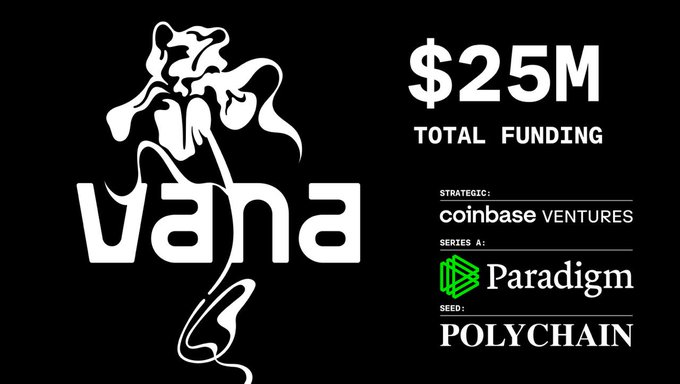
Besides discussions around Vitalik’s live singing performance at Token 2049, the most talked-about project on Crypto Twitter yesterday was undoubtedly Vana: after announcing it had raised $25 million from crypto's three VC giants—Coinbase Ventures, Paradigm, and Polychain—waves of likes, congratulations, and analytical threads immediately followed.
You might not care for VC-backed tokens, but in a market starved for momentum, any major funding round deserves attention.
Vana's Twitter bio states: "AI owned by users, powered by user-owned data."
At first glance, another familiar narrative emerges—fighting Big Tech's AI monopoly, focusing on data ownership, with the usual lineup of elite VCs. So what makes Vana different this time?
Data DAOs Go High-End, Uniting VCs
Following the announcement of its funding, reactions were overwhelmingly positive.
For instance, one observer pointed out that Vana is the first AI project Paradigm has invested in—and across multiple rounds, Vana secured backing from all three top-tier VCs:
-
Strategic round: Coinbase Ventures invested $5 million
-
Series A: Led by Paradigm with $18 million
-
Seed round: Polychain invested $2 million
When the three biggest VCs jointly back a project, it usually signals that the narrative and problem being addressed are sufficiently ambitious.
As mentioned earlier, Vana centers on the “slay-the-dragon” narrative of reclaiming control over data in the AGI era—individuals contribute their data without compensation or privacy guarantees, while tech giants monopolize training for dominant AI models. The solution? Break this status quo.
Yet following recent AI trends, advocating for multi-model competition and opposing monopolies has become the accepted narrative within crypto circles.
(Related reading: Delphi Labs: AI Will See Multi-Model Competition—Which Crypto Applications Are We Bullish On?)
This isn’t a new story. Most current crypto-native AI projects addressing this issue focus on DePIN—encouraging contributors to provide various hardware resources across domains.
Vana, however, takes an old playbook and gives it a fresh twist—using purpose-built DAOs to allow people to contribute different types of data for training specialized AI models.
In a technical blog post titled "Data DAOs", Vana explains:
"A Data DAO is a decentralized entity that allows users to pool and manage their data... It’s somewhat like a data union. The DAO maintains full control over the dataset and may choose to rent or sell anonymized copies. For example, Reddit’s data could even be used on new user-owned platforms—including friends lists, past posts, and other data—all readily transferable to new platforms."
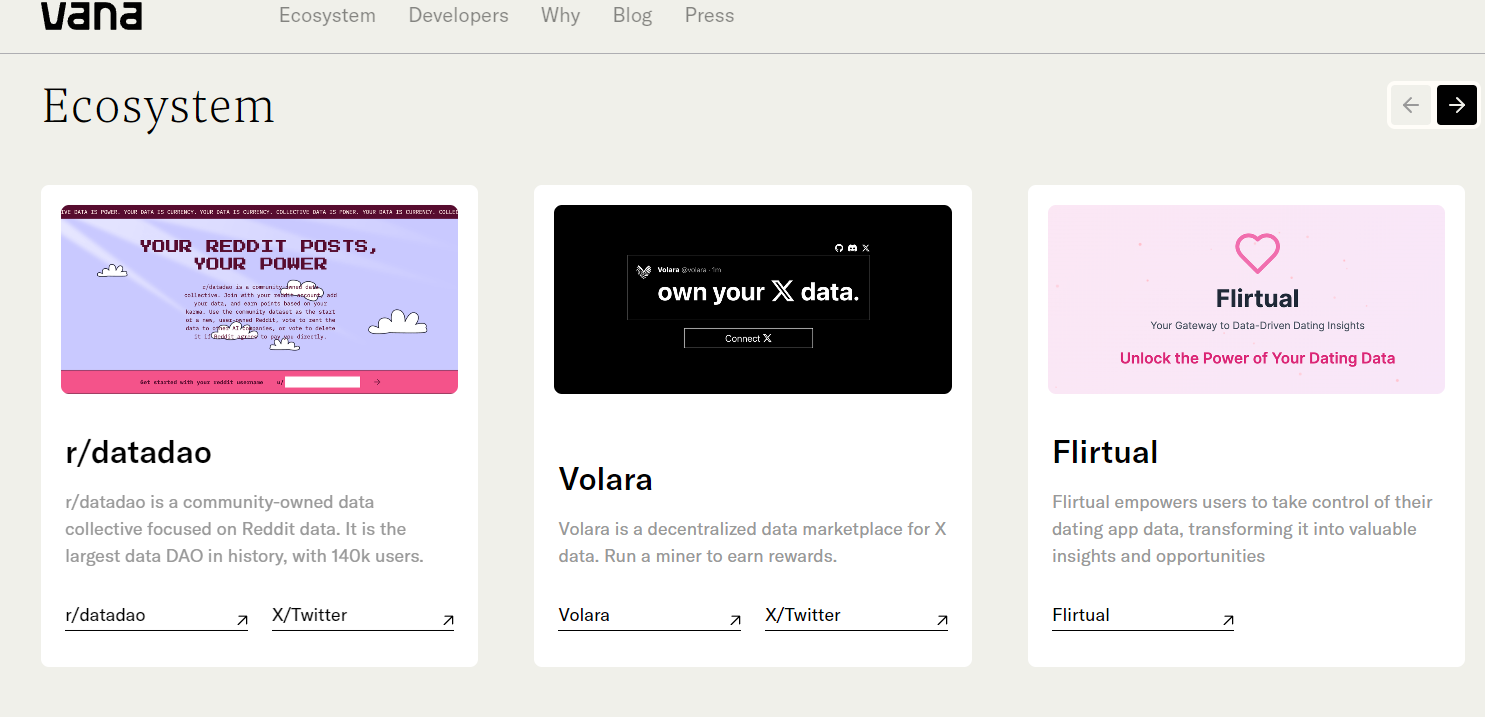
Currently, Vana’s official website lists 16 distinct Data DAOs, enabling users to contribute diverse datasets—from Reddit, Twitter, dating apps, and more—while maintaining control over their data via Vana’s blockchain network.
Additionally, this data can be used to train AI models requiring specific vertical-domain datasets, allowing contributors to earn rewards.
If data across every industry could be contributed through such DAOs, it would indeed represent a relatively ideal model. But how do you actually implement it?
Two key challenges immediately arise:
-
How do you verify that I actually contributed data?
-
How do you ensure the security and ownership of contributed data?
These questions lead directly into the architecture and mechanics of the Vana network.
At the core of Vana lies a unique multi-layered design aimed at building a decentralized data ecosystem that addresses critical issues around data ownership, privacy protection, and value creation.
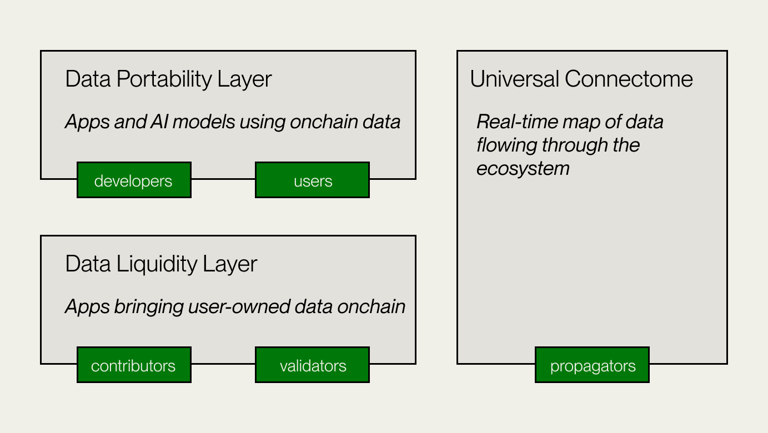
According to its latest architectural diagram, the Vana network consists of three primary components: the Data Portability Layer, the Data Liquidity Layer, and the Universal Connectome.
-
Data Portability Layer—This top layer handles on-chain data applications and AI models. It involves two main participants:
-
Developers: They build applications and AI models that use on-chain data.
-
Users: They interact with these apps and models and ultimately benefit from their data contributions.
The primary function of this layer is ensuring data portability and interoperability, enabling users to seamlessly transfer and use their data across different applications and models.
-
Data Liquidity Layer—This layer brings user-owned data onto the blockchain and serves as the foundation of the entire system. It includes two crucial roles:
-
Contributors: Individuals who submit their personal data to the system.
-
Validators: Entities responsible for verifying the authenticity and value of submitted data.
This layer solves the challenge of securely and trustlessly converting offline data into on-chain assets, providing essential liquidity to the ecosystem.
-
Universal Connectome—A unique component acting as a real-time map of data flows throughout the ecosystem. It comprises one key role:
-
Propagators: Nodes responsible for disseminating and updating information about data movement across the network.
The Universal Connectome provides a live view of data circulation across the ecosystem, giving all participants visibility into where and how data is being used.
These three components work together to form a complete data ecosystem:
-
The Data Liquidity Layer securely brings user-owned data on-chain, supplying raw input for the system.
-
The Data Portability Layer leverages this on-chain data to support the development and usage of diverse applications and AI models.
-
The Universal Connectome monitors and visualizes data flows in real time, ensuring transparency and traceability.
Without diving into technical implementation details—such as smart contracts, zero-knowledge proofs, or code—you can think of Vana simply as a blockchain network offering a comprehensive solution for contributing, validating, using, and monitoring data.
Mega infrastructure, anti-monopoly AI ambitions, repurposed DAO mechanics—layering these elements together makes it reasonable why several leading VCs would rally behind Vana.
(TechFlow note: Readers interested in technical details can visit the project documentation for deeper insights.)
Tap-to-Mine Goes Mainstream, Mobilizing the Masses
Traditionally, crypto AI projects lean heavily into high-tech, high-concept narratives, leaving average users impressed but unable to meaningfully participate.
Vana, however, has adopted a far more accessible approach—not only delivering a sophisticated narrative for VCs but also introducing a low-barrier, crowd-pleasing "tap-to-mine" mechanic tailored for retail users.
Narrative matters. Tone matters… but engagement matters more.
Given that Paradigm backed it, echoes of classic engagement-driven models like Blur and Friend.Tech are evident in Vana’s strategy. The gameplay is straightforward:
-
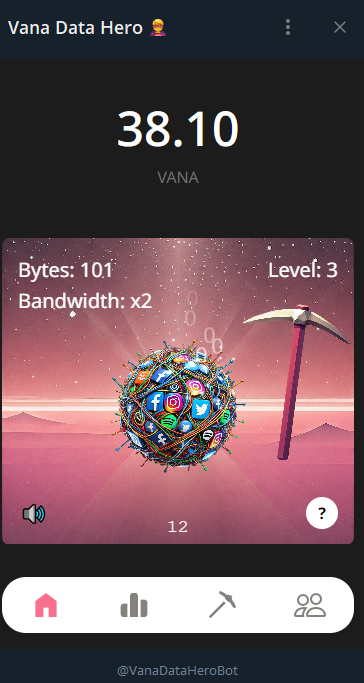
Open Telegram and launch the Vana Data Hero mini-app (interested users can try it here).
-
The core mechanic is simple: tap rapidly on floating balls labeled with icons of various Web2 apps. The faster and more frequently you tap, the more VANA points you earn per unit of time (symbolizing data contribution from Web2 platforms for mining purposes).
-
Beyond tapping, users can complete additional tasks—following social media accounts, inviting friends, adding testnet wallets—to earn extra points.
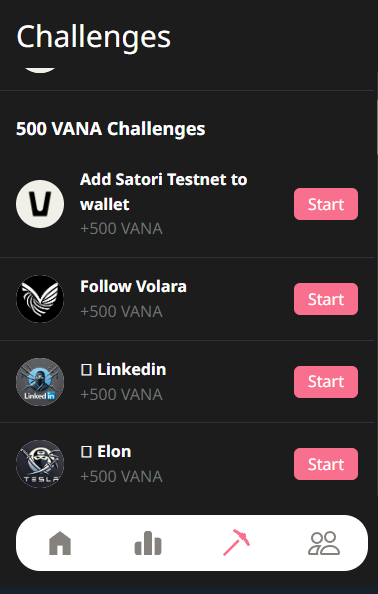
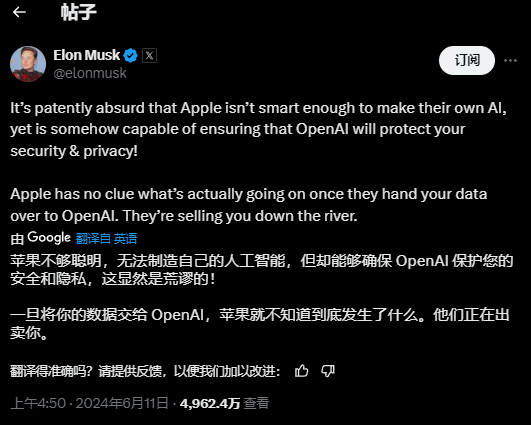
The team clearly understands marketing and trend-jacking. One task, for example, asks users to reply under Elon Musk’s post discussing AI, data, and privacy—a clever way to piggyback on existing discourse and amplify Vana’s own visibility.
However, the exact token redemption rate and distribution rules for VANA points have not yet been fully disclosed. Interested users should follow Vana’s social channels for updates.
Still, given the backing of major VCs and the proven success of similar Telegram-based mini-apps, expectations around token distribution and exchange listings are naturally high. That said, the gamified point-collecting grind induces both fatigue and FOMO—how deeply you choose to engage is ultimately up to you.
Adults, Times Have Changed
Interestingly, even serious AI projects now resort to Telegram mini-apps to generate hype and build community.
Past AI initiatives often felt distant and elite, but after the industry-wide debate questioning whether VC-funded tokens still attract buyers—and recognizing TON’s mini-app ecosystem as a sign of true mass adoption—project teams have clearly adapted to shifting tides.
Now, you must win over both VCs and the public.
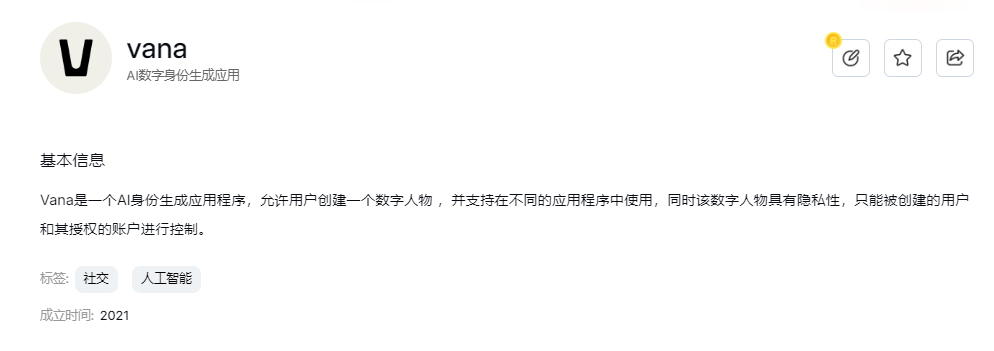
If you dig into Vana’s earlier history, you’ll find that since its founding in 2021, it initially positioned itself as an AI-powered identity generation app.
Clearly, building infrastructure beats building standalone apps, and appealing to both investors and everyday users trumps targeting just one side.
In Vana’s evolution, we see a clear shift in go-to-market strategy. With limited truly novel narratives and breakthrough technologies emerging quickly, rather than waiting for macro shifts, projects are proactively adapting to fit the current market rhythm.
The author expects more new—or rebranded—projects will follow suit, reinventing their engagement models.
Timing is everything. Adaptation defines survival.
Join TechFlow official community to stay tuned
Telegram:https://t.me/TechFlowDaily
X (Twitter):https://x.com/TechFlowPost
X (Twitter) EN:https://x.com/BlockFlow_News
 深潮TechFlow