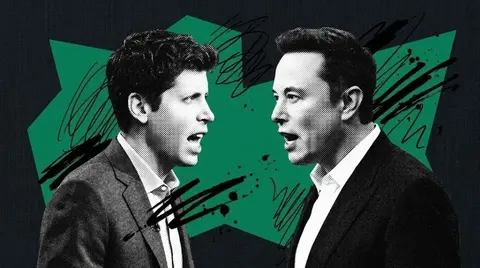
How did Musk emerge unscathed from allegations of Dogecoin market manipulation and insider trading?
TechFlow Selected TechFlow Selected
How did Musk emerge unscathed from allegations of Dogecoin market manipulation and insider trading?
Investors claim that Musk and Tesla repeatedly sold Dogecoin at peak prices through control of multiple Dogecoin wallets, profiting substantially. However~~
 Navigating Web3 tides with focused insights
Author: Aiying Aiying

Let’s skip the basics about cryptocurrencies—we generally know that Elon Musk’s association with Dogecoin began in 2020, when he posted multiple tweets supporting the meme coin. As the founder of Tesla and SpaceX, and one of the wealthiest individuals globally, Musk’s statements carry significant market influence. He has repeatedly called Dogecoin the “people’s cryptocurrency” and even claimed that SpaceX would “put Dogecoin on the moon,” further fueling its popularity and price surge. Notably, in May 2021, during his appearance on NBC’s *Saturday Night Live* (SNL), Musk referred to Dogecoin as a “hustle,” causing its price to plummet nearly 30% during the broadcast.
Data shows that from 2020 to early 2021, Dogecoin’s price surged over 36,000%, rising from under $0.01 to $0.73. Musk’s tweets and public comments acted as catalysts, drawing waves of investors hoping to profit from volatility. However, Dogecoin’s peak was short-lived, followed by a sharp decline back below $0.30, leaving many investors with heavy losses. By the end of 2021, Dogecoin had lost more than 70% of its value.
In response to these fluctuations, investors filed lawsuits against Musk, accusing him of leveraging his Twitter influence to manipulate the market through "pump and dump" schemes and engaging in insider trading. Plaintiffs alleged that Musk and Tesla controlled multiple Dogecoin wallets and repeatedly sold large amounts at peak prices for substantial profit. However, in August 2024, the U.S. District Court for the Southern District of New York dismissed the claims. Judge Alvin Hellerstein ruled that Musk’s statements constituted mere “puffery” and did not meet the legal threshold for market manipulation or insider trading.
Aiying believes this outcome may seem counterintuitive to many—but it's understandable. Let me walk you through the logic behind it.
1. Legal Definitions of Market Manipulation and Insider Trading
Market manipulation and insider trading are clearly defined under securities law. According to Section 10(b) of the U.S. Securities Exchange Act and Rule 10b-5, market manipulation involves using deceptive practices to influence security prices, leading investors to misjudge market conditions. Common examples include wash trading, spoofing volume, or spreading false information to artificially inflate or depress prices. The key element is intentional deception that undermines market transparency and fairness.
Insider trading refers to individuals profiting from material non-public information in securities transactions. Under 15 U.S.C. § 78t-1 of the Securities Exchange Act, insider trading typically involves corporate insiders, major shareholders, or close affiliates who trade based on confidential financial data or upcoming corporate events. Such actions violate fair-market principles by exploiting asymmetric information.
2. Why Musk’s Tweets Don’t Constitute Market Manipulation
Musk’s active presence on social media—especially regarding Dogecoin—is well known. A few words from him can trigger massive market swings. Yet legally, courts ultimately concluded his actions didn't amount to market manipulation. This stems from how legal standards interpret such behavior.
1. The Court Ruling: Tweets Qualify as “Puffery”
Why were the lawsuits dismissed? Simply put, the judge determined that Musk’s tweets about Dogecoin amounted to exaggerated promotional speech—commonly known as “puffery”—rather than actionable market manipulation. Statements like calling Dogecoin “the currency of the future” or saying it will “go to the moon” may be entertaining, but no reasonable person would treat them as binding business commitments. Thus, the court classified these remarks as puffery—expressions so obviously hyperbolic they cannot form the basis of factual reliance. In other words, Musk made no concrete promises or verifiable claims, so there was no fraud.
This concept of “puffery” is common in law. Companies routinely claim their products are “the best” or “one-of-a-kind” in advertising, yet such statements rarely qualify as fraudulent because audiences understand them as subjective exaggerations.
2. The “Reasonable Investor” Standard
The court also emphasized that determining fraud requires evaluating how a “reasonable investor” would interpret the statements. A reasonable investor is someone with basic market knowledge and experience. The court reasoned that no prudent investor would allocate significant capital to Dogecoin based solely on Musk’s casual tweets. After all, the crypto market is inherently volatile and high-risk, and investors should recognize those risks rather than blindly follow celebrity endorsements.
Particularly in cryptocurrency markets, where extreme price swings are normal and expected, such movements aren't necessarily evidence of manipulation—they reflect the nature of the market itself. Therefore, even if Musk’s comments influenced prices, the court found they did not meet the legal definition of market manipulation.
3. Investors Cannot Solely Rely on Social Media Posts
Another legal requirement in securities fraud cases is whether investors reasonably relied on specific misleading statements when making investment decisions. Plaintiffs must prove they suffered losses due to reliance on materially false or omitted information. In this case, the court found Musk’s tweets contained no substantive or quantifiable claims—such as “Dogecoin will reach $X”—that could serve as a foundation for legal liability. If investors chose to trade based purely on rhetorical expressions, the law does not protect them from poor judgment.
This ruling sends an important message to cryptocurrency investors: Crypto markets are highly emotional and susceptible to social media influence, but ultimate responsibility lies with the individual investor. You cannot fully rely on public figures’ statements when making financial decisions.
3. Web3 Cases Involving Alleged Market Manipulation and Insider Trading
-
Conviction in the Avraham Eisenberg Case: In 2024, this became the first criminal conviction by the U.S. Department of Justice for cryptocurrency market manipulation. Eisenberg manipulated futures contracts and the MNGO token on Mango Markets, inflating prices far beyond intrinsic value, then borrowed millions in crypto assets without intent to repay. He faces charges including wire fraud, commodities fraud, and market manipulation, potentially up to 20 years in prison.
-
Binance Litigation (Ongoing): The U.S. Securities and Exchange Commission (SEC) has sued Binance and its CEO Changpeng Zhao, alleging unregistered securities offerings and various compliance violations. While some secondary-market-related claims were dismissed, most allegations remain active. This case highlights regulators’ growing scrutiny of exchanges potentially involved in market manipulation.
-
HEX Manipulation Case: A class-action lawsuit accused Binance.US and CoinMarketCap of artificially suppressing HEX token rankings on CoinMarketCap to manipulate its price. Initially dismissed, the case was partially revived in 2024 by a U.S. appeals court, allowing price manipulation claims to proceed.
How Web3 Projects Can Avoid Being Classified as Market Manipulation or Insider Trading
In the Web3 and cryptocurrency space, project teams face significant regulatory challenges, especially concerning market manipulation and insider trading. Due to the volatility and decentralized nature of crypto markets, every action or statement by a project can trigger price movements, raising potential legal exposure. To mitigate these risks, Aiying recommends Web3 practitioners adopt proactive compliance measures.
1. Maintain Transparent and Accurate Disclosures
Transparency is fundamental to compliance, whether launching or promoting a project. Teams must ensure whitepapers, technical roadmaps, and marketing materials contain truthful, accurate, and clear information. Avoid overstating project potential or making false promises. Excessive hype can mislead investors and increase the risk of being perceived as market manipulation.
All project information should undergo rigorous review and align with actual development progress to prevent market instability caused by information asymmetry. For example, regularly publish development updates, disclose financial data where appropriate, and promptly address public concerns.
2. Avoid Publishing Misleading Social Media Content
Social media is a crucial channel for promoting crypto projects, but public statements require caution. Actions like Musk’s tweet-driven price influence easily invite manipulation accusations. Although Musk’s case was dismissed, his powerful legal team helped—heavyweight defense aside, smaller teams shouldn’t invite unnecessary legal trouble.
Compliance Recommendations:
-
Clearly define official spokesperson roles and establish content guidelines to ensure only verified information is shared on social platforms.
-
Avoid vague or sensational language about future performance, such as “about to explode” or “will revolutionize the industry.”
-
Consider establishing a compliance team to vet all external communications, especially during sensitive periods like pre-ICO phases or major product announcements.
3. Establish Internal Trading Controls
To prevent insider trading, Web3 projects must implement strict internal controls. Insider trading occurs when individuals use non-public material information to trade assets for personal gain. Team members with access to unreleased technical developments or partnership details may unintentionally engage in such activity.
Ways to Prevent Insider Trading:
-
Implement Blackout Periods: Establish restricted trading windows for team members and key advisors around major disclosures, prohibiting asset trades before and after critical announcements.
-
Require Confidentiality Agreements: Ensure all team members and partners sign binding NDAs to prevent leaks of sensitive information and impose legal consequences for breaches.
-
Deploy Automated Transaction Monitoring: Leverage blockchain transparency by using smart contracts or third-party audit tools to monitor large transactions and detect suspicious activities in real time.
Conclusion
Cryptocurrency markets differ fundamentally from traditional securities markets, particularly in terms of behavior and price volatility regulation. Traditional markets are tightly overseen by regulators like the SEC, requiring companies to regularly disclose financial results and promptly release any material information affecting stock prices. Cryptocurrency markets, however, are decentralized and global, making oversight difficult. Most crypto price movements stem from sentiment and speculation—levels of instability rarely seen in traditional finance. Moreover, regulatory standards for digital assets are still rapidly evolving, with many countries lacking comprehensive legal frameworks. Therefore, Aiying believes enterprises often have no choice but to self-regulate, and retail investors should not take this unpredictable game too seriously.
Join TechFlow official community to stay tuned
Telegram:https://t.me/TechFlowDaily
X (Twitter):https://x.com/TechFlowPost
X (Twitter) EN:https://x.com/BlockFlow_News
 Aiying Compliance