Opinion: Crypto speculation is a feature of the industry, not a bug
TechFlow Selected TechFlow Selected
Opinion: Crypto speculation is a feature of the industry, not a bug
Speculation and gambling may belong to the same family, but they are far from twins.
 Navigating Web3 tides with focused insights
Author: Sterling Campbell
Compiled by: TechFlow
Amid the noise and excitement surrounding meme coin casinos and the infinite game of crypto, it's easy to view cryptocurrency as pure speculation. Many have labeled the recent bull run as rampant high-risk gambling, financial nihilism, and bubbleware. While speculation indeed drives much of the activity, categorizing it as a net negative for our industry is incomplete. Speculation and gambling may belong to the same family, but they are far from twins.
Casinos themselves feel detached from reality. There are no clocks; time seems to crawl. The floor plans are maze-like, making navigation or exit difficult. You're literally isolated from the outside world, distracted by jackpots and the screams of big winners (which is indeed more exciting than posting Phantom wallet screenshots). Enjoy it all—but don’t let the casino’s noise distract you from our industry’s potential.
I grew up in Las Vegas and am no stranger to high-stakes games. I’ve seen my hometown flourish on gamblers’ support—so much so that we don’t pay state income tax because casinos cover it. I watched Las Vegas become one of America’s fastest-growing cities, attracting companies like Zappos and Gusto, evolving into something far greater than just the “Sin City.” I have even grander ambitions for our industry.

Everything Is Speculation
Speculation isn't just the domain of high-risk investors or futurists; the structure of modern society is woven from threads of speculation.
The philosopher Søren Kierkegaard once observed: "Life can only be understood backwards, but it must be lived forwards." From the moment we wake, we engage in an ongoing process of predicting and preparing for future events. Our morning commutes are based on speculation about traffic conditions and arrival times. The clothes we choose often reflect speculation about the day’s weather or social interactions.
In the workplace, project planning and resource allocation rely on speculative forecasts of market trends and consumer behavior. Even our social lives are shaped by speculation—every left or right swipe on dating apps is filled with possibility. This continuous process of anticipating and adapting to potential futures runs so deep in daily life that we often overlook its pervasive influence.
We constantly dance with uncertainty, using our speculative abilities to navigate the complexities of modern life and shape our realities. More importantly, behind uncertainty lie some of the greatest opportunities.

Speculation and Innovation
Throughout history, speculation has walked hand in hand with humanity’s greatest technological advances. Progress comes from visionaries dedicated to seemingly impractical or distant concepts, requiring upfront capital and immense foresight to develop. For example, in the 15th century, the printing press wasn’t an instant success—it followed decades of speculation about movable type and the democratization of knowledge. Similarly, 18th-century steam power emerged from early speculative investments in coal mining, metallurgy, and engine design. These processes weren’t smooth.

Again and again, the most impactful innovations result from bold individuals and organizations willing to bet on the future—often after their efforts showed no immediate results or endured repeated failures. In pharmaceutical development, the story of penicillin illustrates how even accidental failure can lead to revolutionary breakthroughs. Alexander Fleming discovered penicillin when he noticed mold contamination in a petri dish killed surrounding bacteria—a “failure” in his original experiment that led to one of the most important medical discoveries of the 20th century. It would be foolish to condemn any number of failures without acknowledging their role in our greatest successes.
Take the .com boom, during which $1.7 trillion in value was lost between March 2000 and October 2002. One could simply point to Pets.com or other casualties of the speculative frenzy, but doing so misses the point. The .com bubble laid the foundation for the modern digital economy, e-commerce, and social media platforms we now take for granted—developments that took decades to build. When viewed at scale, the value lost during that period was merely a blip.
In Crypto, Speculation Is Good
Given that speculation is foundational to human experience and there are clear examples over the past decade where reckless speculation has driven innovation and growth, reducing the entire crypto industry to meaningless high-risk gambling is shortsighted. No one remembers Thomas Edison’s 1,000 failures or the dead ends he encountered; today, there are 8 billion light bulbs in the world.
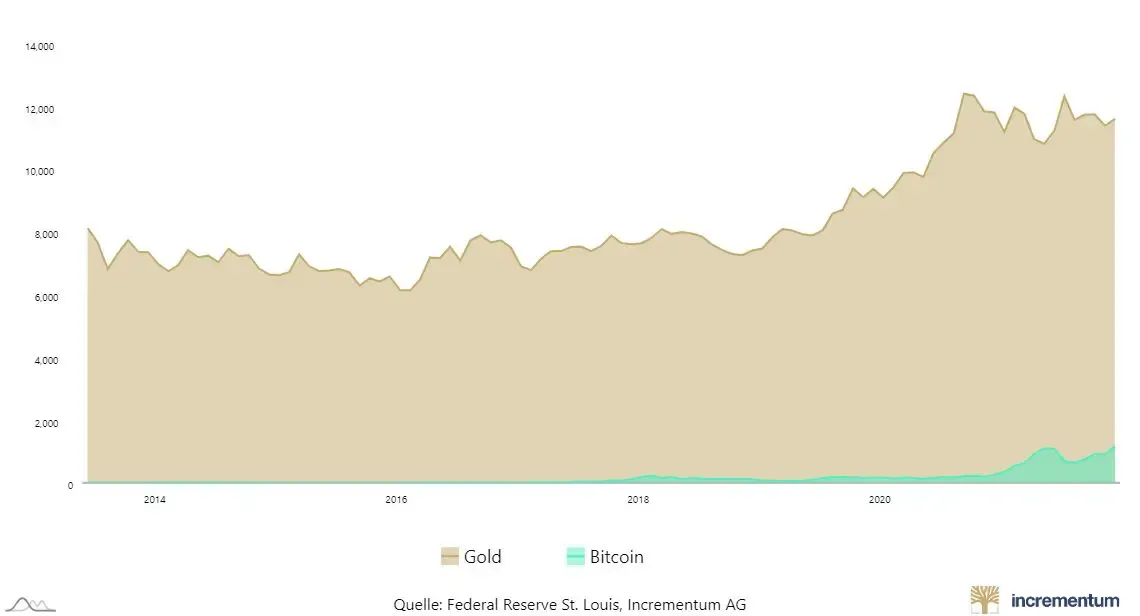
An excessive focus on current failures obscures the bigger picture. Success stories in crypto are already unfolding. With Bitcoin’s market cap surpassing $1.2 trillion and another trillion added by other cryptocurrencies, and considering gold is a $15 trillion asset, vast opportunities remain ahead. Any individual failure or misstep pales in comparison. In fact, even if the entire value of crypto beyond Bitcoin dropped to zero, we’d still hold a massive venture opportunity (hint: we won’t drop to zero). Bitcoin has entered the public lexicon and, due to its simplicity, immutability, and universality, will continue serving as the industry’s north star for the foreseeable future.
Various things must be tried, money must be burned, people must fail—only then can we reach the lightbulb moment. The good news is, with Bitcoin’s global adoption steadily rising and demand growing over time (despite relentless attempts to kill the industry), we’re moving in the right direction.
You might ask, “Well, Sterling, how does buying Smoking Chicken Fish contribute to crypto’s overall value proposition?” Or “Hey Sterling, isn’t Solana just a meme coin? Why is it so valuable?” Or “Sterling, my wife told me the youthful energy she fell in love with died years ago—can you help me?”
First, part of crypto’s appeal has always been tied to the infinite game, which may persist within internet-native, synchronized communities. These speculative games naturally attract the most attention, while Bitcoin’s core appeal has always centered on redistributing wealth to anyone willing to believe in its long-term value proposition. That’s a feature, not a bug.
This speculative behavior extends across every crypto cycle. In the last cycle, NFTs went global, with people exploring various ways to express verifiable actions and ownership. The bottleneck to innovation ultimately became infrastructure—gas fees deterred many early adopters, and onboarding friction brought real tears to my parents’ eyes. Unworkable infrastructure severely damaged the industry, as emerging business models incentivized rug pulls, and only a few developers could realize the grand visions NFTs promised. Yes, there were scams, but also many sincere attempts to use the technology—and the story of verifiable fan culture is far from over.

I hope these people’s time is over.
Meme coins aren’t just superior forms of speculation—thanks to wider distribution, lower prices, and more accessible value propositions—but they also test the infrastructure improvements crypto has made over the past few years, and all systems are running remarkably well.
Considering that the main hesitation among many institutions engaging with this technology is its perceived unreliability or lack of a “Lindy effect,” the seamless activity we see across many ecosystems is a necessary step in demonstrating how robust our infrastructure has become. Likewise, those fearless early users who dare to put $15,000 on-chain and lose it in various ways are invaluable pioneers helping us build solutions for ordinary people.
The rise of stablecoins has had a profound impact on decentralized finance (DeFi), but it also had its own penicillin moment—many people in emerging markets now access dollar-denominated savings accounts, avoid high fees on cross-border payments and remittances, and enter global markets. The global remittance market is worth $740 billion—these are huge opportunities with clear paths to success.
For Yellow Card—Africa’s most popular exchange, processing hundreds of millions in monthly volume—their users aren’t buying meme coins but primarily trading Naira and Dinar for more stable USDC or USDT. This behavior extends to Southeast Asia and Latin America, where inflation and hyperinflation plague regions and traditional use of the dollar is restricted.
Payments offer similar relief, helping small businesses escape financial system oppression. Companies like Blackbird largely abstract away the “crypto” aspect, yet restaurants worldwide choose them because they reduce transaction costs and customer acquisition costs (CAC) for diners seeking rewards. Meanwhile, TYB offers a fresh take on loyalty, rewarding consumers for engagement beyond spending. These companies show significant improvements in conversion, spending, and user retention compared to traditional peers, marking the first real adoption of crypto infrastructure beyond typical “crypto” users. When networks succeed, they become extremely valuable—and the winners experimenting in these verticals will achieve massive success.
Prediction markets harness speculation to better incentivize truth-telling in voting. Companies like Polymarket are nearing $500 million in trading volume this month alone, gaining mainstream traction. Drift recently launched prediction markets on Solana, and soon we’ll see Blinks embedded whenever people argue online.
The path toward tokenization will include categories that initially seem silly—because you’ll realize everything could mean anything, from carbon credits to ETFs, to whiskey, recipes, and cattle. Still, we’re already making major strides toward this mission, as Securitize partnered with Blackrock to launch BUIDL, bringing their first tokenized fund to market. Even BCAP’s early fund was tokenized—because things must be tried, and the game must go on (sorry, I refuse to use the word “arena”).
Beyond the Casino
A perpetually online user base is prone to intense emotional swings, and sensationalist media waits eagerly for the next chance to expose our industry’s madness, so I don’t blame people for feeling frustrated or negative when viewing recent activity. The essence of crypto is disrupting existing financial systems; you should feel the world around you crumbling, and absurdism is often a close companion. The good news is, you can also play a key role in the solution. Many ideas are being tested, and many are destined to fail. That’s just how it works.
The crypto casino may look like a pixelated punk dream of dog-themed tokens, but beneath this meme-driven chaos lies real transformative potential. So, whether you’re here for the tech, the yield, or because your wife’s boyfriend told you Bitcoin will hit $100,000—we only need one flash of insight.
Join TechFlow official community to stay tuned
Telegram:https://t.me/TechFlowDaily
X (Twitter):https://x.com/TechFlowPost
X (Twitter) EN:https://x.com/BlockFlow_News