








Q2 RWA Tokenization Update: Institutions Drive Market, DeFi Scales Up
TechFlow Selected TechFlow Selected
Q2 RWA Tokenization Update: Institutions Drive Market, DeFi Scales Up
This article explores the latest trends in tokenizing real-world assets (RWA) and highlights successful pilot projects that define the RWA landscape in the second quarter of 2024.
 Navigating Web3 tides with focused insights
Author: The Open Platform
Translation: Baishuo Blockchain
Disclaimer: This article discusses various aspects of real-world asset (RWA) tokenization, including institutional participation, blockchain integration, and potential benefits and challenges. It is important to note that the legislative and regulatory environment surrounding RWA tokenization is rapidly evolving. Current laws and regulations are still being shaped, and future developments may significantly impact the views and outcomes discussed in this article. The information provided herein is based on the current market understanding and conditions at the time of publication. Readers are advised to closely monitor ongoing legislative changes and consult legal and financial experts when considering investments in tokenized assets.
RWA tokenization involves converting tangible assets such as cash, stocks, bonds, loans, real estate, commodities, or artwork into digital tokens on a blockchain, thereby making these assets more accessible, liquid, and transparent. This concept has recently gained significant attention, serving as a bridge between traditional financial instruments and the world of digital assets.
We previously discussed the topic of real estate tokenization. In the second half of 2023, this sector was largely stagnant. Due to technological, regulatory, and market challenges, RWA tokenization experienced multiple failed attempts. As a result, real estate tokenization has now become a smaller segment within the broader RWA market.
However, in Q2 2024, RWA emerged as the second-largest narrative in the digital asset space, accounting for 11% of network traffic across narratives tracked by CoinGecko. The industry now exhibits a rich and diverse landscape, spanning various markets and involving stakeholders from both decentralized finance (DeFi) and traditional finance (TradFi).
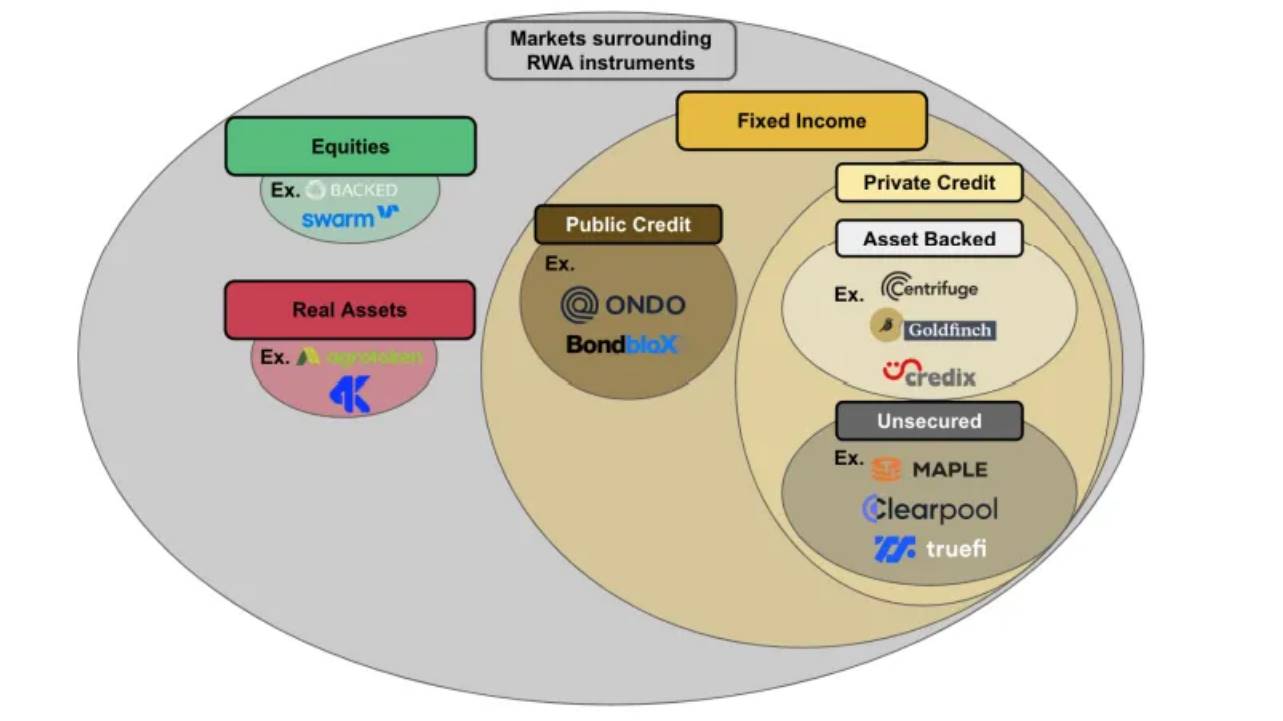
Source: Binance Research, "Real World Assets: Bridging Traditional Finance and Decentralized Finance"
In this article, we explore the latest trends in real-world asset (RWA) tokenization and highlight successful pilot projects that defined the state of RWA in Q2 2024. We also summarize the current narratives surrounding the RWA market and look ahead to potential waves of tokenization on the horizon.
1. Increased Institutional Participation Drives Market Revival
In 2024, several major financial institutions made their first strategic moves in the RWA space. Growing interest in RWA tokenization has likely been driven by successful pilot programs launched by traditional finance giants such as BlackRock and Franklin Templeton, alongside leading decentralized finance (DeFi) participants like Ondo Finance.
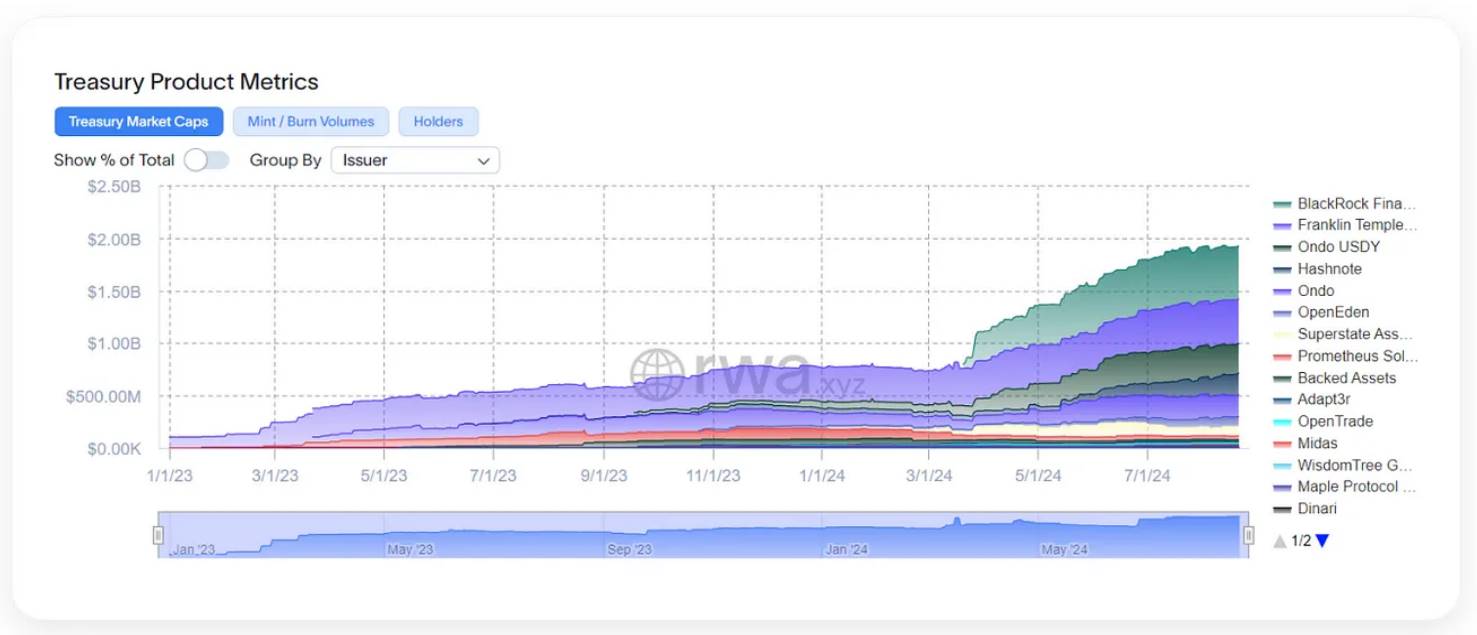
Source: RWA.xyz, accessed August 22, 2024
Tokenized financial products from BlackRock, Franklin Templeton, and Ondo account for over 60% of the total market capitalization of tokenized government securities:
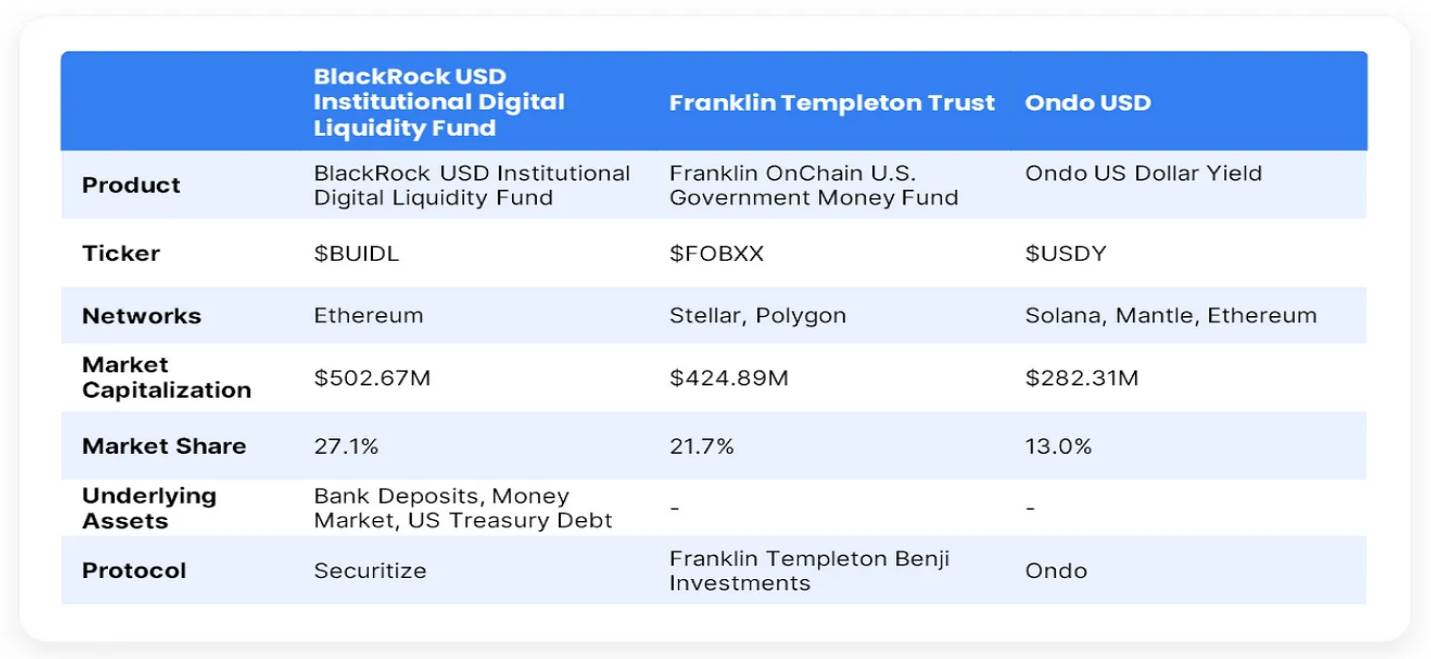
Source: RWA.xyz, Dune.com, accessed August 22, 2024
BlackRock’s BUIDL, officially named the BlackRock USD Institutional Digital Liquidity Fund, is an Ethereum-based tokenized fund launched on March 20, 2024. The BUIDL fund consists of cash, U.S. Treasuries, and repurchase agreements, aiming to provide qualified investors with opportunities to earn dollar-denominated yields through blockchain technology.
By July 2024, BUIDL had grown into the largest tokenized U.S. Treasury fund, managing over $500 million in assets.
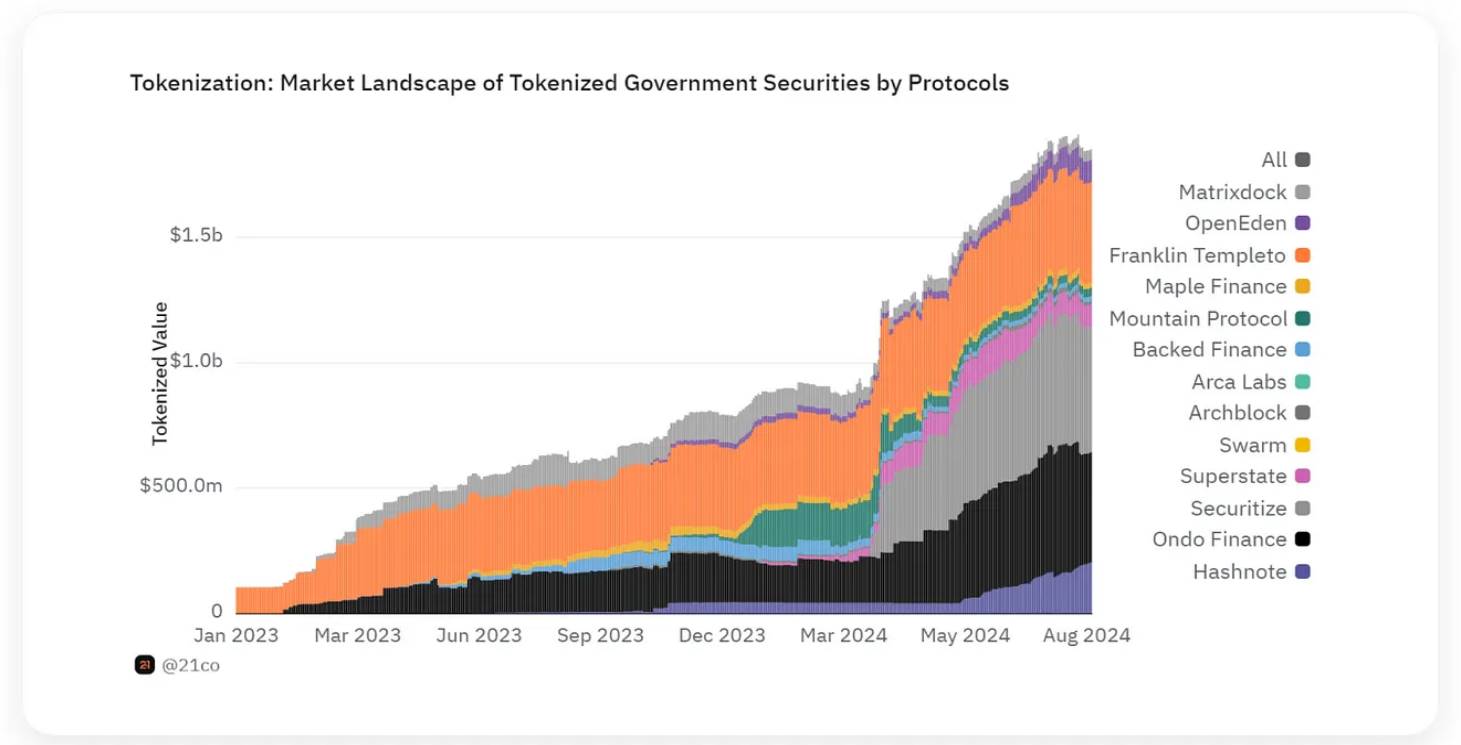
Three projects participating in BUIDL—Ondo Finance, Securitize, and Maple Finance—rank among the top tokenized government securities protocols. Source: Dune.com, accessed August 22, 2024
Multiple blockchain projects have contributed to BUIDL's success. Securitize handles compliance and investor management, ensuring the tokenized product meets regulatory standards. Maple Finance provides an on-chain credit market, facilitating the creation and trading of credit products. Swarm Markets, a licensed decentralized finance (DeFi) platform, enables the tokenization and trading of RWAs within a regulated framework. Boson Protocol allows BlackRock to explore new pathways for RWA tokenization and trading via blockchain-based e-commerce markets. Polytrade offers a marketplace for managing RWAs, supporting democratization of investment opportunities and improving asset liquidity. Finally, Ondo Finance, issuer of the tokenized short-term U.S. Treasury fund OUSG, has deployed most of its assets into BUIDL, offering practical utility for traditional investors (Sources: BeInCrypto, CoinDesk, CoinMarketCap, The Defiant).
Franklin Templeton’s tokenization initiative—the Franklin OnChain U.S. Government Money Fund (FOBXX)—is another example of TradFi-DeFi integration. Launched in 2021, it was the first registered U.S. mutual fund to use blockchain for transaction processing and share ownership records. The project leverages the Stellar and Polygon blockchains to support BENJI tokens, which represent shares in the FOBXX fund. This program enables peer-to-peer transfers of tokenized shares and aims to offer investors stable returns while enhancing liquidity and accessibility of U.S. government money funds. Franklin Templeton developed the project in-house but collaborated with blockchain networks to implement the technology (Sources: Franklin Templeton, BeInCrypto).
Franklin Templeton’s RWA strategy differs from BlackRock’s, which primarily relies on partnerships with existing blockchain projects. While BlackRock’s BUIDL focuses on integrating various DeFi platforms to tokenize U.S. Treasuries and other fixed-income products, Franklin Templeton’s approach centers on using public blockchains to enhance transparency and efficiency in traditional money market funds.
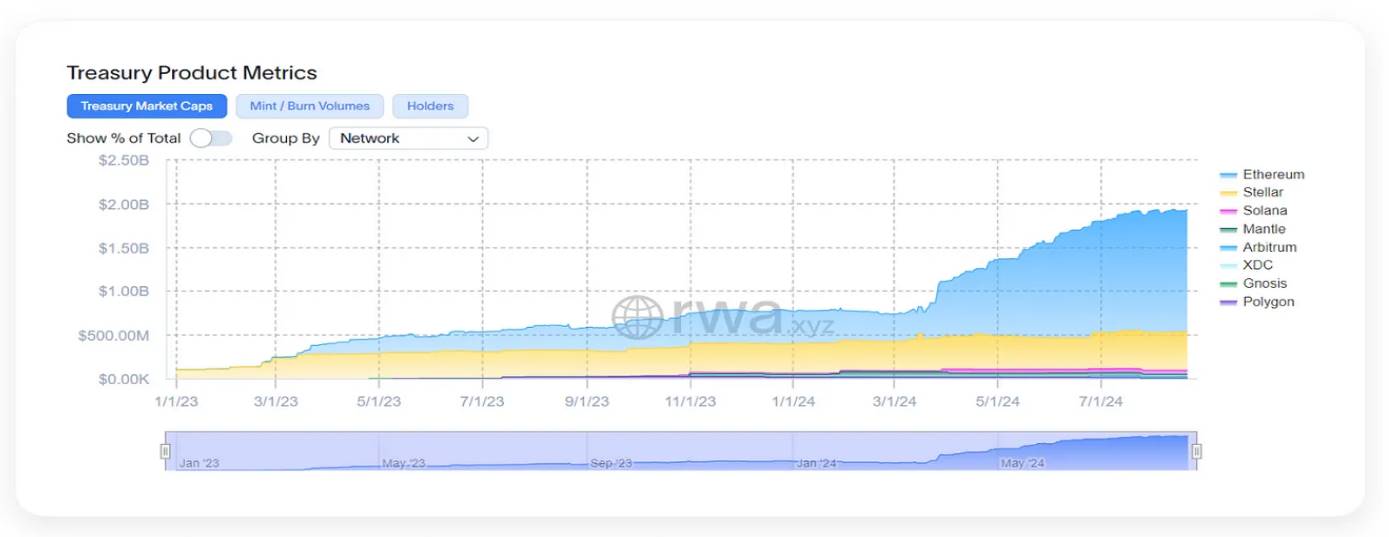
Translation: 90% of the market cap of tokenized U.S. Treasury assets comes from Ethereum and Stellar. Source: RWA.xyz, accessed August 22, 2024
Ondo Finance serves as a successful example of a non-institutional issuer of tokenized U.S. Treasury assets. Ondo’s USDY project, launched at the end of 2023, is designed as a yield-bearing stablecoin backed by U.S. Treasuries and bank deposits. USDY represents a stable and income-generating digital asset that provides yield to holders through integration with traditional financial instruments. Unlike typical stablecoins, USDY generates yield from underlying U.S. Treasury assets, making it an attractive option for both DeFi users and institutional investors seeking stable returns.
Ondo Finance’s short-term U.S. government bond fund (OUSG) represents tokenized short-term U.S. Treasuries, complementing USDY by offering investors a secure and yield-bearing alternative for gaining exposure to U.S. Treasuries within the DeFi ecosystem. Together, they provide diversified investment options, delivering stability along with attractive yields for DeFi users.
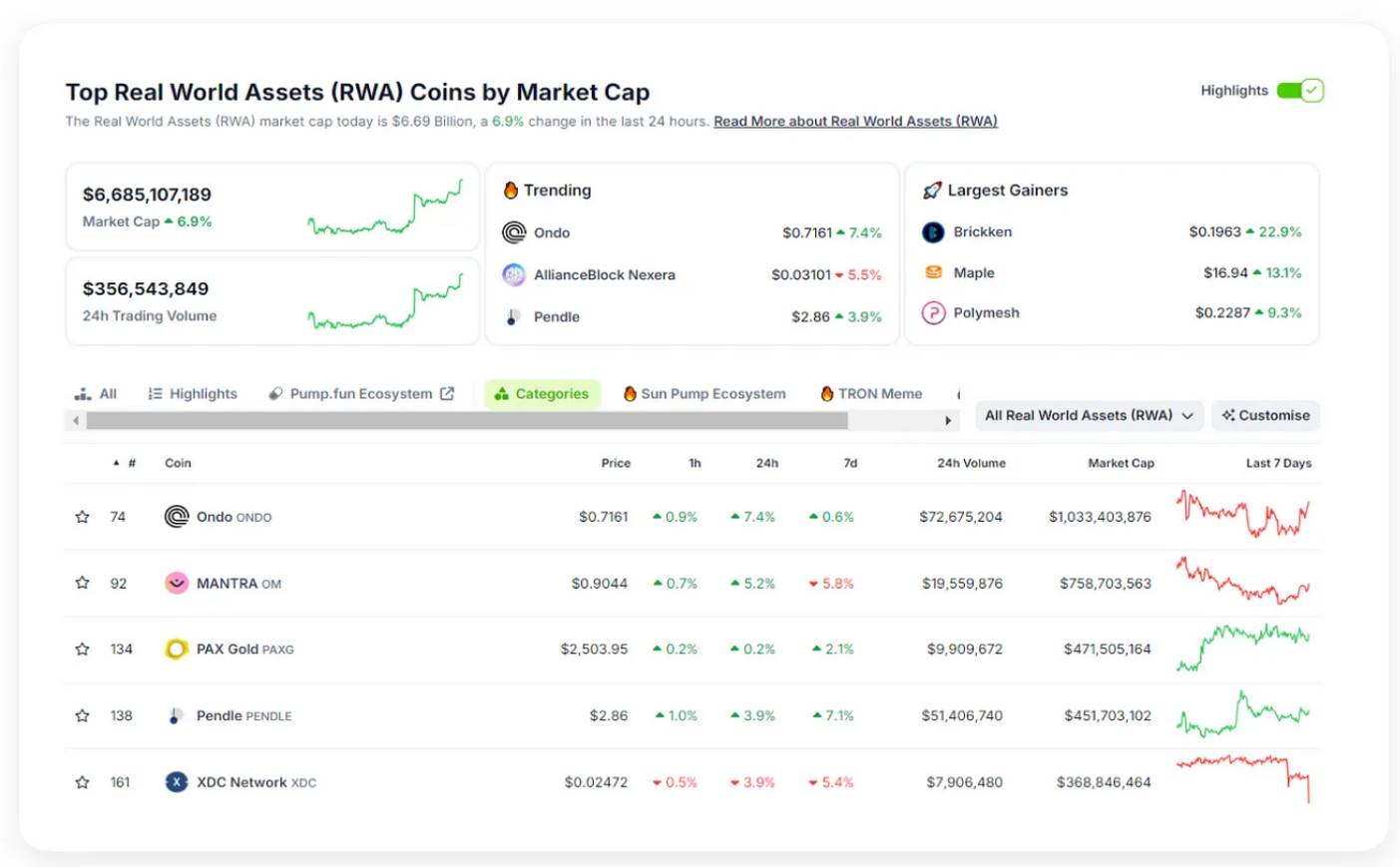
$ONDO is the largest RWA token by market cap. Source: CoinGecko, accessed August 22, 2024
JPMorgan and Goldman Sachs are also pursuing similar initiatives in tokenizing U.S. Treasuries, such as JPMorgan’s Onyx and Goldman Sachs’ RWA market concept (J.P. Morgan | Official Website) (BeInCrypto).
These institutions possess the resources, expertise, and regulatory influence necessary to navigate the complex environment of tokenization and are expected to become major driving forces in the RWA tokenization space. BUIDL demonstrates how traditional finance (TradFi) can accelerate the adoption of DeFi protocols like Ondo Finance, while also incorporating them into its own operations.
Notably, all instruments discussed in this section are fixed-income instruments, currently the dominant segment in the RWA tokenization landscape—a trend we will explore further in the next section.
2. Shift in RWA Market Trends: From Equity to Fixed Income
Leadership in the RWA tokenization market has shifted toward fixed-income assets, extending beyond U.S. Treasuries. Tokenized fixed-income securities such as yield-bearing credit have gained significant traction due to their stability and clearer regulatory frameworks. These assets offer predictable returns and are easier to integrate into existing regulatory systems.
According to data from RWA.xyz, tokenized yield-bearing credit holds the largest share of total RWA value:
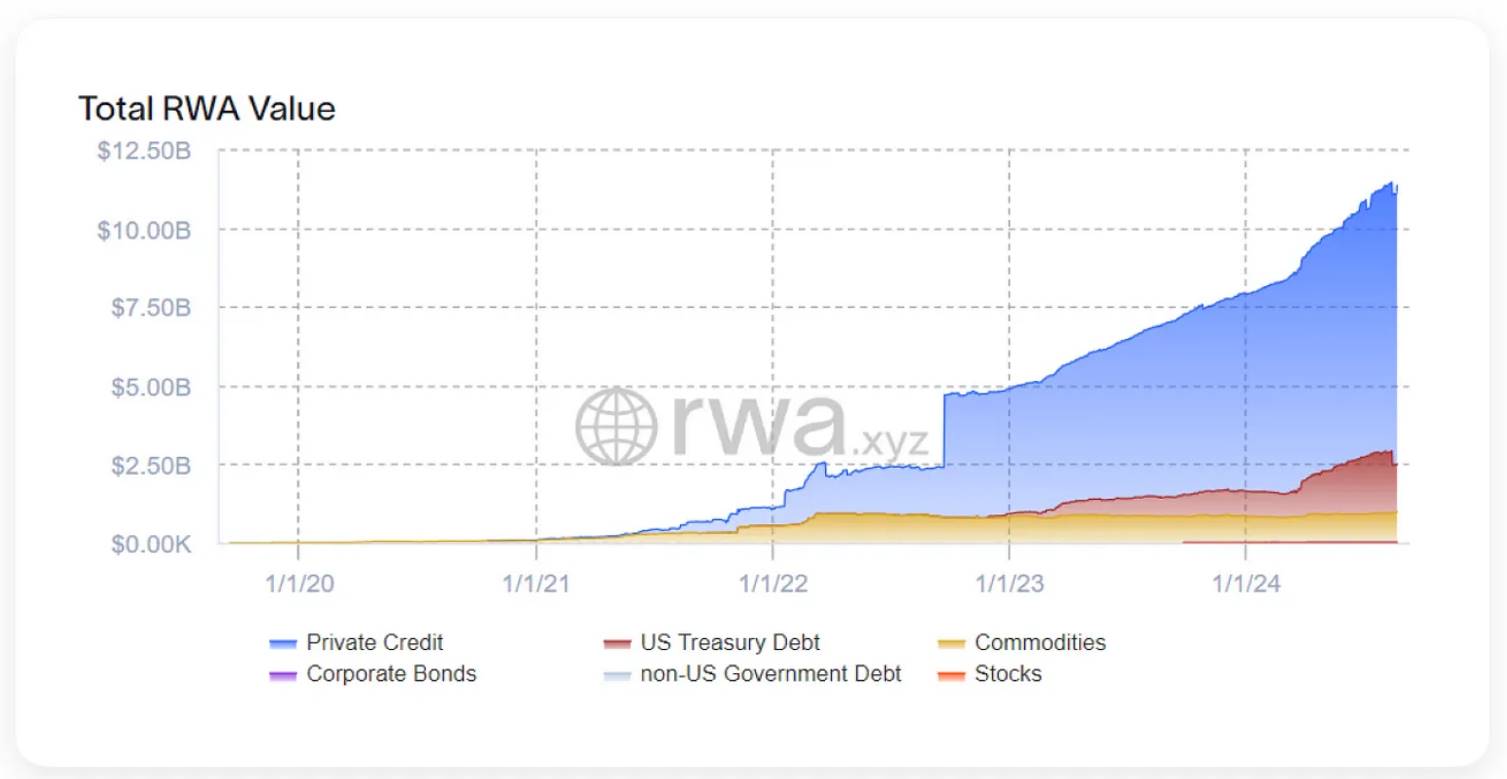
Source: RWA.xyz, accessed August 22, 2024
Tokenized yield-bearing credit involves converting traditional debt instruments such as loans and bonds into digital tokens on a blockchain. This process is used by various entities including investment funds, specialized financial firms, and fintech startups, generating returns through interest payments from underlying loans.
Based on data from RWA.xyz, the top yield-bearing credit tokenization protocols ranked by total loan value are Figure, Maple, and TrueFi:
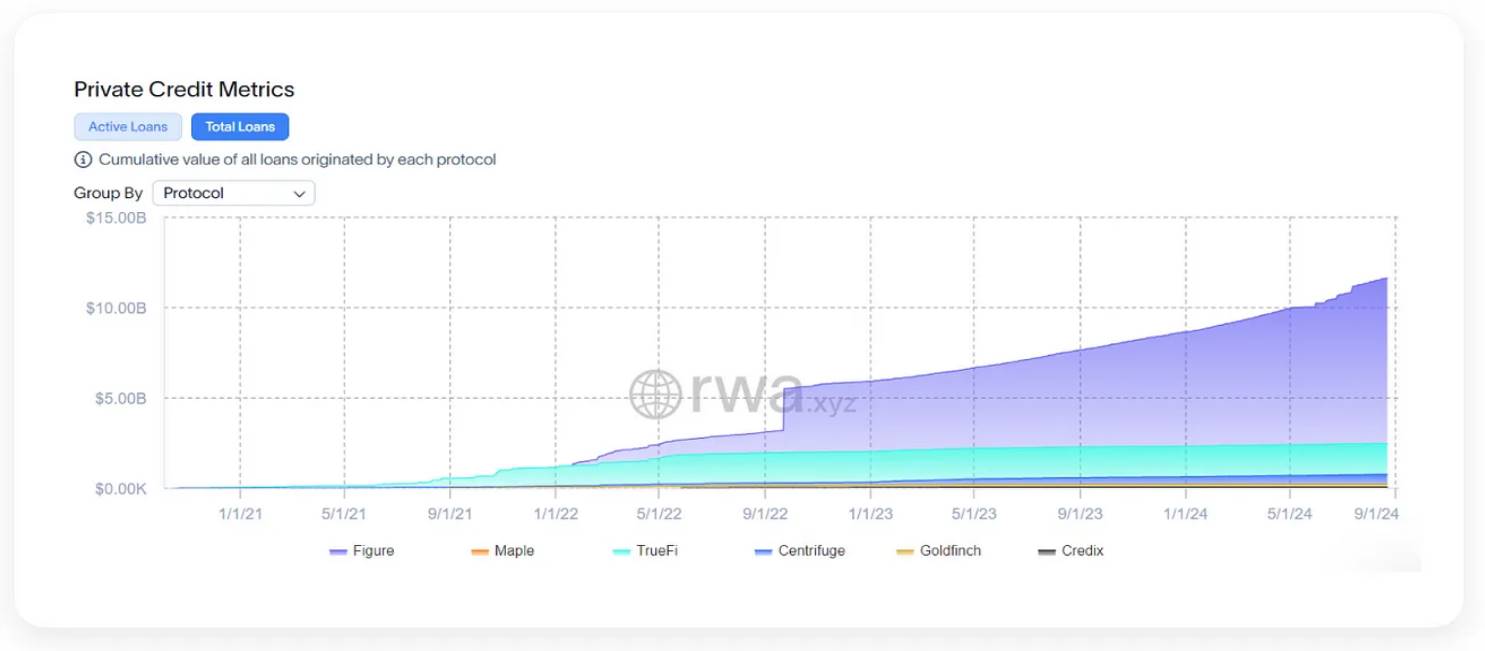
Source: RWA.xyz, accessed August 22, 2024
Figure leverages blockchain technology to streamline and modernize lending processes, focusing primarily on home equity lines of credit (HELOCs), student loan refinancing, and mortgage refinancing. The platform uses its proprietary blockchain, Provenance, to deliver these services, aiming to improve efficiency, reduce costs, and increase transparency in loan origination, servicing, and trading. Figure stands out by utilizing blockchain throughout the entire lending lifecycle, differentiating itself from both traditional and tokenized lending platforms (Source: Figure Lending).
Maple Finance provides decentralized infrastructure for institutional lending, enabling the creation of lending pools. Its strategy includes using digital asset collateral such as BTC and ETH to offer high-quality, risk-adjusted yields. The platform operates on Ethereum and Solana and partners with blockchain credit risk management firms to provide managed credit portfolios (Source: Maple Finance).
TrueFi is a decentralized finance (DeFi) platform focused on uncollateralized lending. Launched in November 2020 and operating on Ethereum and Arbitrum, TrueFi connects borrowers and lenders via smart contracts governed by TRU tokens. Borrowers undergo rigorous credit assessments, including KYC and AML checks, and are assigned on-chain credit scores to determine loan terms. This process enables TrueFi to offer loans without collateral, increasing accessibility and efficiency in the lending market (Source: TrueFi | Docs).
According to McKinsey’s report, yield-bearing credit—alongside U.S. Treasuries—is at the forefront of the first wave of tokenized asset adoption.
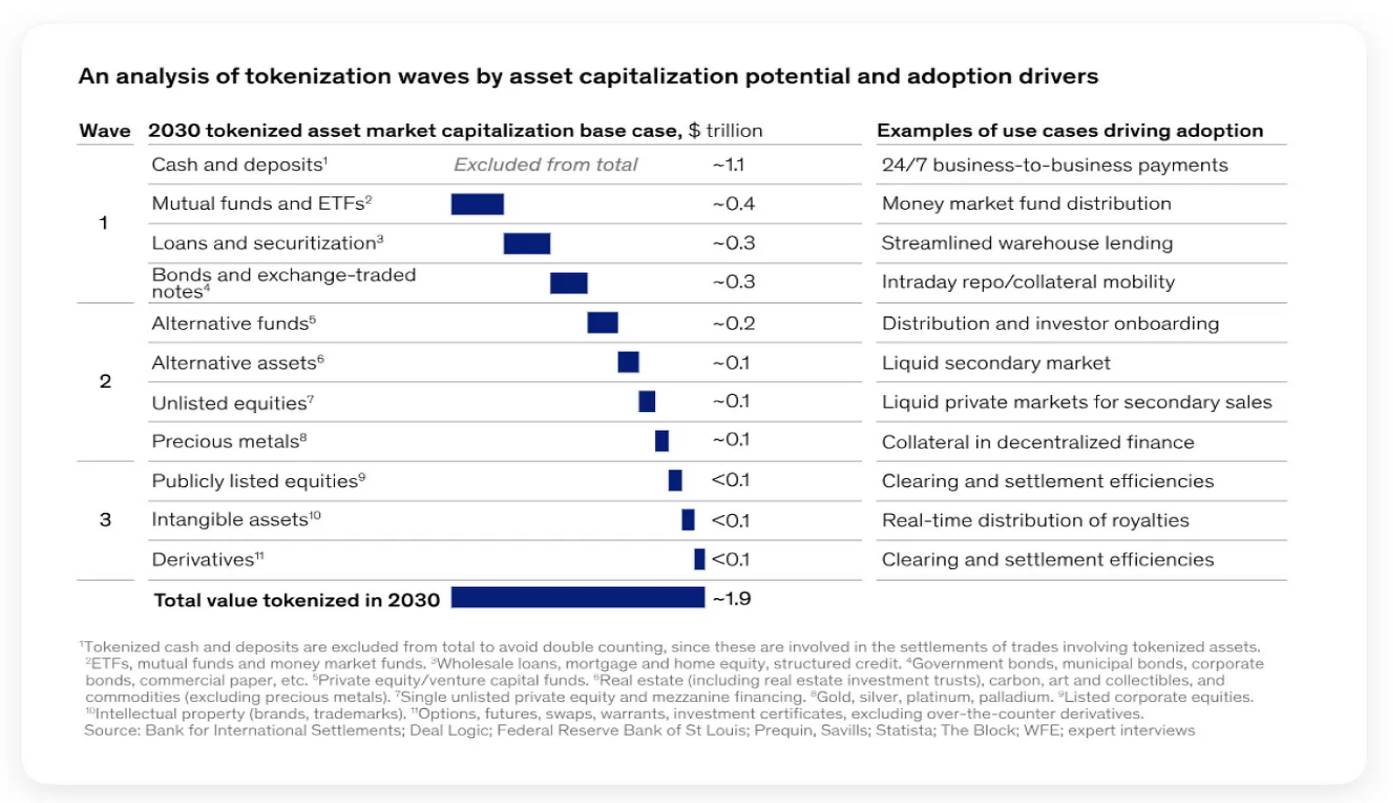
Source: McKinsey, "From Ripple to Wave: The Transformative Power of Tokenized Assets"
McKinsey’s report “From Ripple to Wave: The Transformative Power of Tokenized Assets” notes that interest in tokenized investments is influenced by the efficiency and profitability of current processes, the extent of outsourcing, and the roles and fees of key participants.
U.S. Treasuries and yield-bearing credit typically involve high transaction volumes and relatively low margins, making cost savings from blockchain-enabled efficiency and automation particularly appealing. These assets often have standardized and scalable processes, lowering barriers to tokenization and accelerating impact visibility, thus strengthening early business cases. Since these activities are frequently outsourced to achieve economies of scale, there is strong incentive to adopt more efficient blockchain solutions to further reduce costs and boost returns.
The combination of high potential cost savings, fast return on investment, and standardized characteristics makes tokenized U.S. Treasuries and yield-bearing credit ideal candidates for early adoption in the tokenization space.
3. Tokenized Real Estate: Success Through Specialization
Real estate is a segment within the RWA domain where the benefits of tokenization are especially evident. Tokenization enables fractional ownership, enhances liquidity, and lowers investment thresholds, making real estate investing more accessible and opportunities more democratized. Despite these clear advantages, the sector has remained relatively quiet to date, though it is expected to play a significant role in future adoption. Nevertheless, some companies have made notable progress. For instance, RealT has emerged as a successful project offering fractional ownership of U.S. real estate.
RealT is a blockchain platform that enables fractional real estate ownership through tokenization. Its marketplace functions as a dynamic investment and trading platform representing ownership shares in specific U.S. properties. These tokens confer proportional ownership and rental income rights and can be traded on secondary markets.
As of August 2024, RealT achieved approximately $2.9 million in monthly primary market sales, with historical highs reaching $5.9 million.
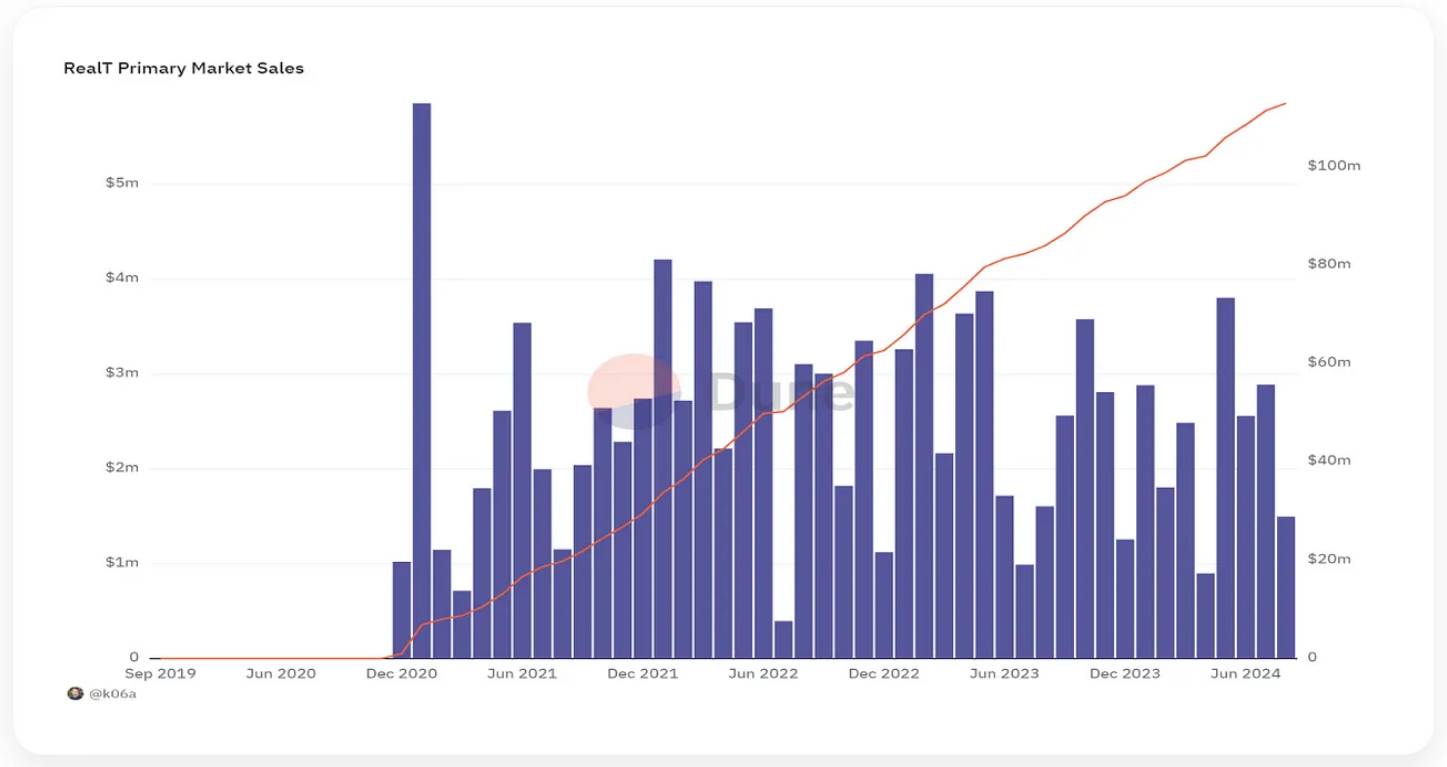
Source: Dune.com, accessed August 22, 2024
RealT’s $2.9 million in monthly primary market sales is significant, especially when compared to traditional real estate metrics. In the U.S., the median home price as of mid-2024 was $412,300 (Source: St. Louis Federal Reserve Bank, 2024). Traditional real estate firms typically facilitate individual property sales, meaning each transaction may represent just one sale. For example, a real estate agent might close several properties per month, with each deal significantly impacting their monthly sales total. Monthly sales volume for a small to medium-sized brokerage varies widely depending on market size and number of agents. For such a firm, achieving $2.9 million in monthly sales would be substantial—equivalent to about seven median-priced home sales. Larger brokerages with multiple agents may handle higher volumes, but given the fragmented nature of traditional real estate sales, RealT’s achievement remains noteworthy.
Large online real estate platforms like Zillow or Redfin generate billions in annual sales, but these figures span vast markets with millions of listings. However, these platforms do not directly sell properties; instead, they connect buyers and sellers, earning revenue from commissions, advertising, and lead generation rather than direct sales. For a company like RealT, which directly sells fractional ownership, $2.9 million in monthly sales is particularly impressive given that the market is still emerging and niche.
In our previous report, we expressed skepticism about widespread adoption of real estate tokenization due to its failure to meet the needs of individual investors, lenders, and tax authorities. RealT primarily deals with residential properties in the U.S., which are well-suited for fractional ownership and tokenization. This means the platform may be less versatile in handling more complex transactions, commercial properties, or regions with less favorable legal frameworks. Conversely, by focusing on a specific niche, RealT has been able to build a streamlined and scalable model that attracts a targeted investor base.
4. Tokenized Private Equity and Its Implications for TON
While the aforementioned projects focus on integrating RWAs with traditional financial institutions to attract institutional investors, TON’s RWA strategy emphasizes DeFi. TON aims to enable ordinary DeFi users to diversify their portfolios by holding equity in private companies—a traditionally closed and opaque domain. MMPro facilitates access to and trading of tokenized private equity within the TON ecosystem.
MMPro is a new DeFi protocol offering tokenization services for company equities, including pre-IPO shares of firms such as Ledger, Consensys (MetaMask), Ripple, Circle, and Animoca Brands. Tokenized private equity involves converting shares of private companies into digital tokens on a blockchain, enabling fractional ownership and trading on digital platforms. This process makes private equity investments more accessible, liquid, and transparent—aligning perfectly with the services offered by MMPro.
Through MMPro Trust, investors gain partial ownership of company shares via RWA NFTs. These NFTs can be traded on secondary markets such as Getgems and stored in Tonkeeper wallets.
Source: https://rwa.mmprotrust.com/
Although TON’s RWA space is still in its early stages, examples like MMPro Trust demonstrate the potential to mobilize various parts of the ecosystem, including secondary markets, wallets, and associated companies. This approach holds significant value for ecosystem participants who can now diversify their portfolios through equity, while also offering new opportunities for external individuals traditionally invested in public equities and seeking diversification via private equity. By bridging these two worlds, TON’s RWA initiative creates fresh opportunities for both DeFi users and traditional investors, injecting vitality and possibility into the future of asset tokenization.
However, adoption of tokenized private equity may take longer. The regulatory environment for unlisted equity is still evolving, creating uncertainty and posing significant compliance challenges. Private companies typically exhibit lower financial transparency and more complex ownership structures, making accurate valuation and risk assessment more difficult. Unlike fixed-income instruments, which offer predictable returns and mature markets, unlisted equity requires comprehensive due diligence and investor protections, further slowing adoption.
Nonetheless, protocols that successfully navigate these challenges and establish early positions in the tokenized alternative asset market can gain a first-mover advantage. By building trust, setting industry standards, and creating network effects, early adopters can position themselves as leaders and capture market share as the ecosystem matures and regulatory frameworks solidify.
5. Future Outlook
RWAs (real-world assets) face significant initial hurdles that have hindered their early adoption. These manifest in several ways: lack of established liquidity and market participants, limited trust and recognition from traditional investors, and slow uptake due to regulatory uncertainty.
A notable mismatch often exists between the tokenized products offered and the target market, usually due to insufficiently compelling benefits of tokenization and limited buyer demand. These challenges led to significant shifts in the RWA space over the past year, with institutions like BlackRock and Franklin Templeton now driving adoption of more viable and attractive tokenized fixed-income instruments that offer clearer advantages and better align with market needs.
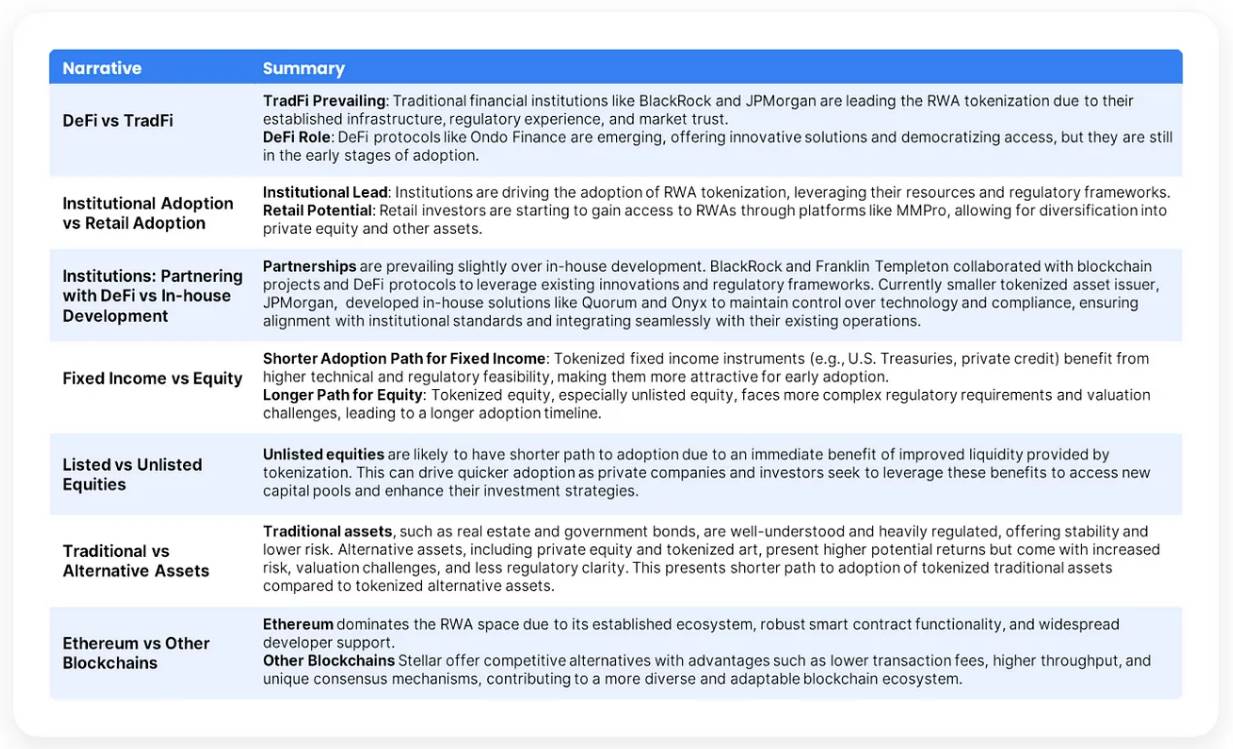
Overview of current RWA narratives. Source: The Open Platform.
TON is well-positioned to benefit from future waves of tokenized asset adoption, including unlisted and listed equities, commodities, and real estate. By then, the regulatory environment is expected to be more mature, thanks to successful use cases driven by large institutions today. This evolving landscape will offer TON and other blockchains opportunities to gain first-mover advantages in second- and third-wave markets, leveraging their innovative, DeFi-centric approaches to deliver novel and compelling investment opportunities.
Join TechFlow official community to stay tuned
Telegram:https://t.me/TechFlowDaily
X (Twitter):https://x.com/TechFlowPost
X (Twitter) EN:https://x.com/BlockFlow_News
 @topdotco






