HTX Ventures’ Latest Research Report Explains RWA Perps: On-Chain Finance Evolves from “Asset Tokenization” to “Risk Tokenization”
TechFlow Selected TechFlow Selected
HTX Ventures’ Latest Research Report Explains RWA Perps: On-Chain Finance Evolves from “Asset Tokenization” to “Risk Tokenization”
This is a migration of the transaction coordinate system.
 Navigating Web3 tides with focused insights
Recently, HTX Ventures—the global investment arm of HTX—released its latest research report titled “RWA Perps: A New Frontier in the On-Chain Expansion of Global Financial Markets”, offering a systematic analysis of the explosive growth logic, technical architecture, and competitive landscape of the emerging RWA perpetuals sector in 2026.
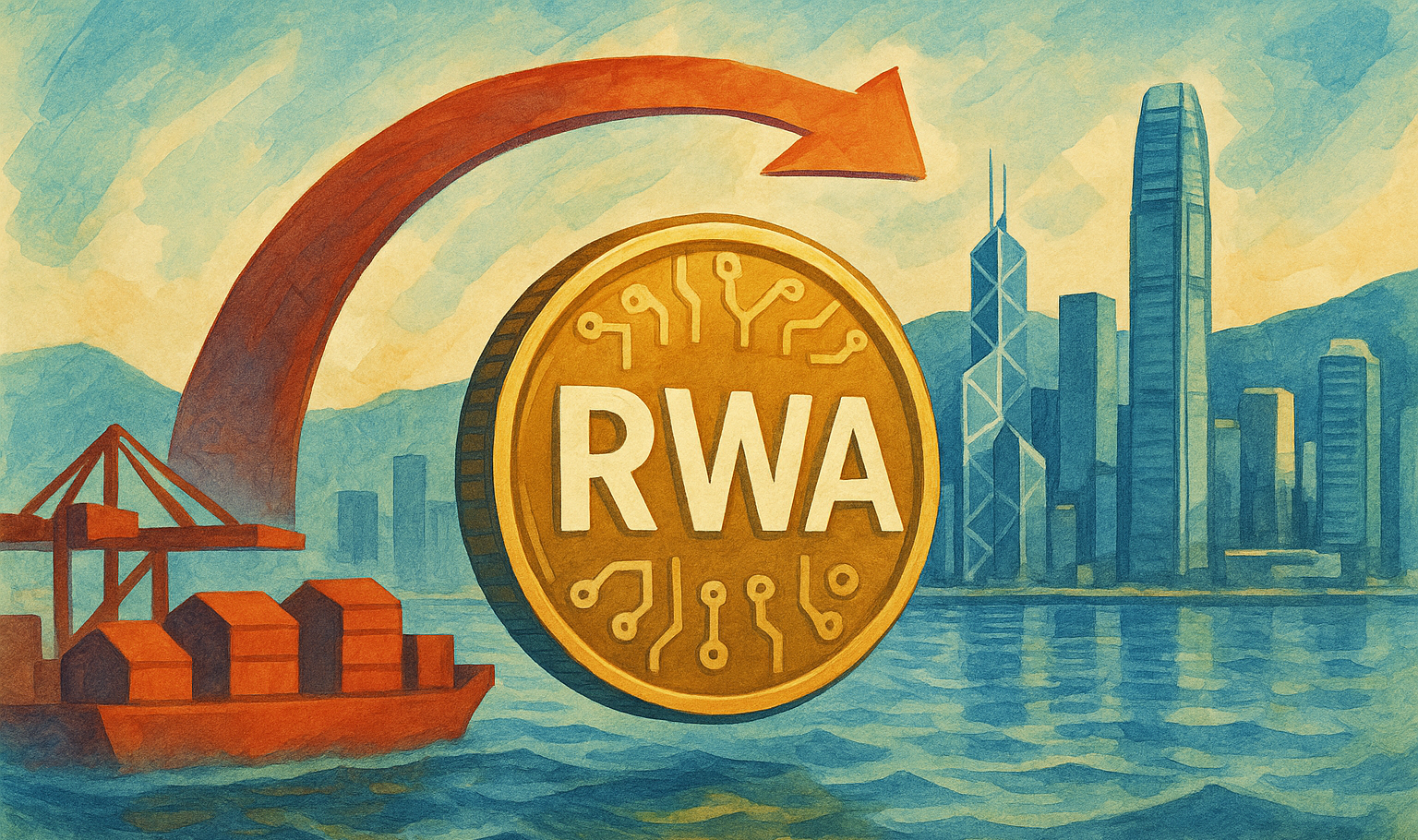
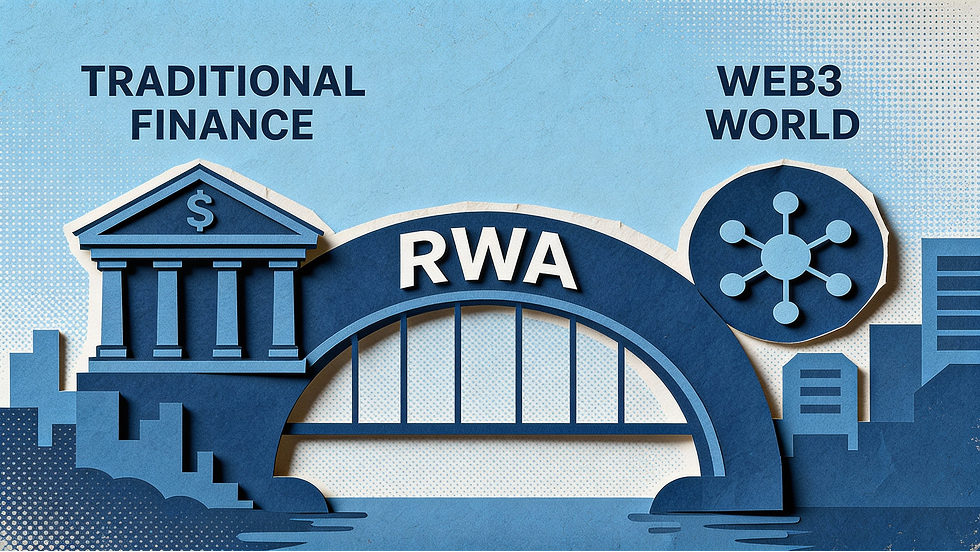
HTX Ventures contends that RWA Perps represent a pivotal step for on-chain finance—from “asset tokenization” to “risk tokenization.” By embedding price fluctuations of global macro assets such as gold, crude oil, U.S. equities, and indices into on-chain perpetual contracts around the clock, users no longer trade asset ownership but rather global macro volatility itself—a fundamental shift in the trading coordinate system.
From “Asset Tokenization” to “Price Tokenization”: Two Fundamentally Distinct Paths
To understand the explosive rise of RWA Perps, one must first clarify an underlying conceptual distinction. Tokenized real-world assets (Tokenized RWAs) follow the “asset tokenization” path: real-world assets are minted as tokens, where each token represents ownership or entitlement to returns from the underlying asset—requiring off-chain infrastructure including custody, regulatory certification, and redemption mechanisms, resulting in high entry barriers and lengthy listing timelines. RWA Perps, by contrast, pursue the “price tokenization” path: perpetual contracts provide price exposure to off-chain assets without requiring users to hold or custody those assets—enabling leveraged trading on their price movements.
This distinction unlocks explosive demand-side potential. Absence of ownership lowers regulatory hurdles and accelerates listing speed; 24/7 trading eliminates liquidity gaps inherent in traditional markets—U.S. equities’ weekend closures and crude oil’s missing overnight sessions become irrelevant on-chain; and leveraging stablecoins as collateral enables low-cost, leveraged access to traditionally high-barrier assets like gold and U.S. equities—no need for overseas brokerage accounts or cumbersome KYC procedures.
Explosive Growth in 2026: Quarterly Volume Surpasses Entire 2025 Total
In Q1 2026, RWA Perps officially transitioned beyond the experimental phase. Quarterly trading volume reached $524.8 billion—exceeding the full-year 2025 volume of $313 billion in just one quarter—while daily open interest surged 5.6x to $4.82 billion. The core catalyst behind this inflection point was Hyperliquid’s HIP-3 protocol, enabling “permissionless market deployment.” It slashed the onboarding timeline for on-chain RWA assets from months of approvals down to minutes—directly unleashing pent-up demand across the entire sector.
This explosion reflects the resonance of four long-term drivers plus one acute catalyst. Over the past year-plus, tokenization’s scale buildup has pushed user trust in “non-crypto assets going on-chain” past a critical threshold; the introduction of mature assets—including gold, crude oil, and U.S. equities—reduces cognitive load for traders; deep familiarity with the perpetuals paradigm among crypto-native users ensures near-zero learning curve when switching to RWA assets; and engineering breakthroughs in oracles and pricing engines have resolved early pain points such as gap openings during market holidays and illiquidity in tail assets.
The true “live test” occurred over a weekend in March 2026. As U.S.-Israeli military action against Iran unfolded precisely during the weekend window—when traditional crude markets were fully shut—CME’s WTI price remained frozen at Friday’s close of $91–$92, with no mechanism available to absorb this sudden information shock. Meanwhile, on-chain crude oil perpetuals surged within hours to $96–$109, peaking near $115 as tensions escalated. During those 48 hours, the on-chain market became the sole globally functioning crude price discovery mechanism. When traditional markets reopened Monday, CME’s crude price gapped directly toward the weekend on-chain range—meaning the traditional market’s opening price served, in effect, as a lagging confirmation of the on-chain price. This event elevated “24/7 trading” from a marketing feature to a battle-tested, mission-critical infrastructure capability.
Migration of Pricing Power: On-Chain Markets Outperform Traditional Institutions in Real IPO
RWA Perps expansion follows a logical progression—from “simple, high-frequency” to “complex, low-frequency” assets: starting with commodities, expanding into equities and ETFs, and now penetrating the most challenging frontier—Pre-IPO securities. In May 2026, AI chipmaker Cerebras debuted on Nasdaq at $350 per share; prior to listing, its on-chain Pre-IPO perpetual opened one hour before Nasdaq’s launch at $340—just 2.9% away from the actual opening price. Concurrently, institutional secondary platform Hiive—which serves qualified investors—quoted ~$220, roughly 37% below the actual opening price. For the first time in a real IPO, on-chain markets demonstrated superior pricing accuracy for private companies relative to traditional institutional secondary markets.
HTX’s Strategic Positioning: A Full-Spectrum TradFi Perpetuals Matrix—from Commodities to U.S. Equities
Within this sector, CEXs and DEXs are forming clear functional divisions. As of mid-May 2026, weekly RWA Perps volume across all venues totaled $55.9 billion—with CEXs accounting for 71.6%, up from under 15% six months earlier. CEXs are rapidly becoming the primary channel for mainstream user acquisition in RWA Perps.
HTX’s TradFi product suite exemplifies CEX strategic intent. HTX officially launched its TradFi perpetuals segment in February 2026, with product design mirroring crypto perpetuals exactly: USDT-denominated, no expiry date, 24/7 trading, and support for leverage alongside cross or isolated margin. Initial focus centered on commodities, quickly expanding across U.S. equities and major indices.
As of June 9, 2026, HTX’s TradFi segment lists 96 assets, organized into a clearly defined three-tier structure. Precious metals and energy form the foundation—gold, silver, platinum, palladium, WTI & Brent crude, copper, and natural gas have all been added. The U.S. equity tier boasts the broadest coverage: flagship tech names—including NVIDIA, Apple, Microsoft, Google, Amazon, and TSMC—are fully represented, alongside blue-chip stalwarts such as JPMorgan, Walmart, and Berkshire Hathaway—and crossover stocks bridging crypto and TradFi—including CoreWeave, Circle, Coinbase, and MicroStrategy. The index & ETF tier covers S&P 500, Nasdaq-100, QQQ, SPY, as well as cross-market products like iShares MSCI Korea and iShares MSCI Japan—expansion remains ongoing.
Leveraging its centralized matching engine’s ultra-low latency and deep liquidity, HTX seamlessly integrates TradFi contracts into interfaces already familiar to crypto users—significantly lowering the cognitive barrier to entry. This creates a clear division of labor with DEXs: CEXs drive user acquisition and mainstream adoption, while DEXs serve users and capital explicitly demanding decentralization—not zero-sum competition, but complementary expansion of the overall market frontier.
Conclusion
The rapid expansion of RWA Perps does not obscure its structural constraints—oracle accuracy, gap openings during market holidays, directional liquidity risk, and dual regulatory barriers—each representing a potential breaking point. Long-term success in this sector hinges not on trading volume growth speed, but on the depth of risk management frameworks and compliance architecture. Yet the direction is unmistakable: once on-chain markets begin absorbing global macro asset price discovery—and prove their efficacy under extreme conditions and real IPOs—the boundary between on-chain finance and global capital markets is being fundamentally redrawn. HTX’s early strategic positioning in TradFi perpetuals reflects a proactive response by a leading exchange to this long-term trend.
About HTX Ventures
HTX Ventures is the global investment arm of HTX, integrating investment, incubation, and research to identify the world’s most outstanding and innovative teams. As an industry pioneer, HTX Ventures brings over 11 years of blockchain infrastructure experience and excels at identifying cutting-edge technologies and emerging business models. To foster ecosystem growth, we provide portfolio projects with comprehensive support—including fundraising, resources, and strategic guidance.
HTX Ventures currently backs over 300 projects spanning multiple blockchain domains—several high-quality projects are already listed on HTX. Additionally, as one of the most active fund-of-funds (FOF), HTX Ventures invests in 30 top-tier global funds and collaborates with leading blockchain funds—including Polychain, Dragonfly, Bankless, Gitcoin, Figment, Nomad, Animoca, and Hack VC—to jointly build the blockchain ecosystem. Visit us.
For investment and partnership inquiries, please contact VC@htx-inc.com
Join TechFlow official community to stay tuned
Telegram:https://t.me/TechFlowDaily
X (Twitter):https://x.com/TechFlowPost
X (Twitter) EN:https://x.com/BlockFlow_News
 @Ventures_HTX