From Silver Onchain to Reserve Assets: How the Matrixdock FRS Standard Is Reshaping RWA Issuance Logic
TechFlow Selected TechFlow Selected
From Silver Onchain to Reserve Assets: How the Matrixdock FRS Standard Is Reshaping RWA Issuance Logic
“When silver goes on-chain, the holding cost and economic attributes of real-world assets begin to be encoded at the protocol layer.”
 Navigating Web3 tides with focused insights
As real-world assets (RWA) increasingly emerge as a key development direction for the blockchain industry, market discussions around asset tokenization are evolving. In the early stage, the central question was: “Which assets can be tokenized?” As infrastructure matures, however, a more critical question is emerging: Which assets can operate stably and sustainably on-chain—and become integral components of the financial system? This shift signals that the RWA sector is moving beyond “putting assets on-chain” toward “designing asset structures.”
Institutional research reflects this trend. Boston Consulting Group (BCG) estimates that the global tokenized asset market could reach $16 trillion by 2030; McKinsey forecasts that even under a conservative scenario, the tokenized market could exceed $2 trillion. As market scale expands, attention is shifting from whether assets *can* go on-chain to more foundational issues—such as asset quality and structural design. Against this backdrop, the concept of “reserve assets” is re-entering industry discourse.
In traditional finance, reserve assets typically serve dual roles: stabilizing value and providing liquidity—examples include government bonds and gold. In the on-chain financial environment, however, assets fulfilling similar functions remain relatively limited. While stablecoins provide the foundational liquidity for on-chain transactions, the market continues searching for more diverse categories of real-world assets suitable for longer-term portfolio allocation. In this context, precious metals—assets with mature market structures and long-standing value foundations—are regaining attention in the RWA space and are increasingly viewed as a core component of on-chain reserve assets.
Silver: A New Variable in the On-Chain Precious Metals Ecosystem
Among on-chain real-world assets, gold has long been one of the most representative categories. After years of development, gold has become a relatively mature product type in real-world asset tokenization—and is widely regarded as a stable asset class within the on-chain financial system. Yet in traditional financial markets, precious metals extend beyond gold alone.
Unlike gold—which primarily serves as a store of value—silver is driven by both investment demand and industrial consumption. Sustained demand from electronics manufacturing, new-energy equipment, and general industrial production often gives silver price behavior a more pronounced cyclical character tied to macroeconomic conditions. This dual nature positions silver differently in portfolio allocation: gold leans closer to a macro-level reserve asset, whereas silver combines investment characteristics with industrial commodity attributes—occupying an intersection between the precious metals and broader commodities markets.
Nonetheless, mature silver tokenization products remain relatively scarce in on-chain financial markets. Compared to gold, silver’s on-chain adoption is still in its early stages—making it an underexplored frontier within real-world asset tokenization.
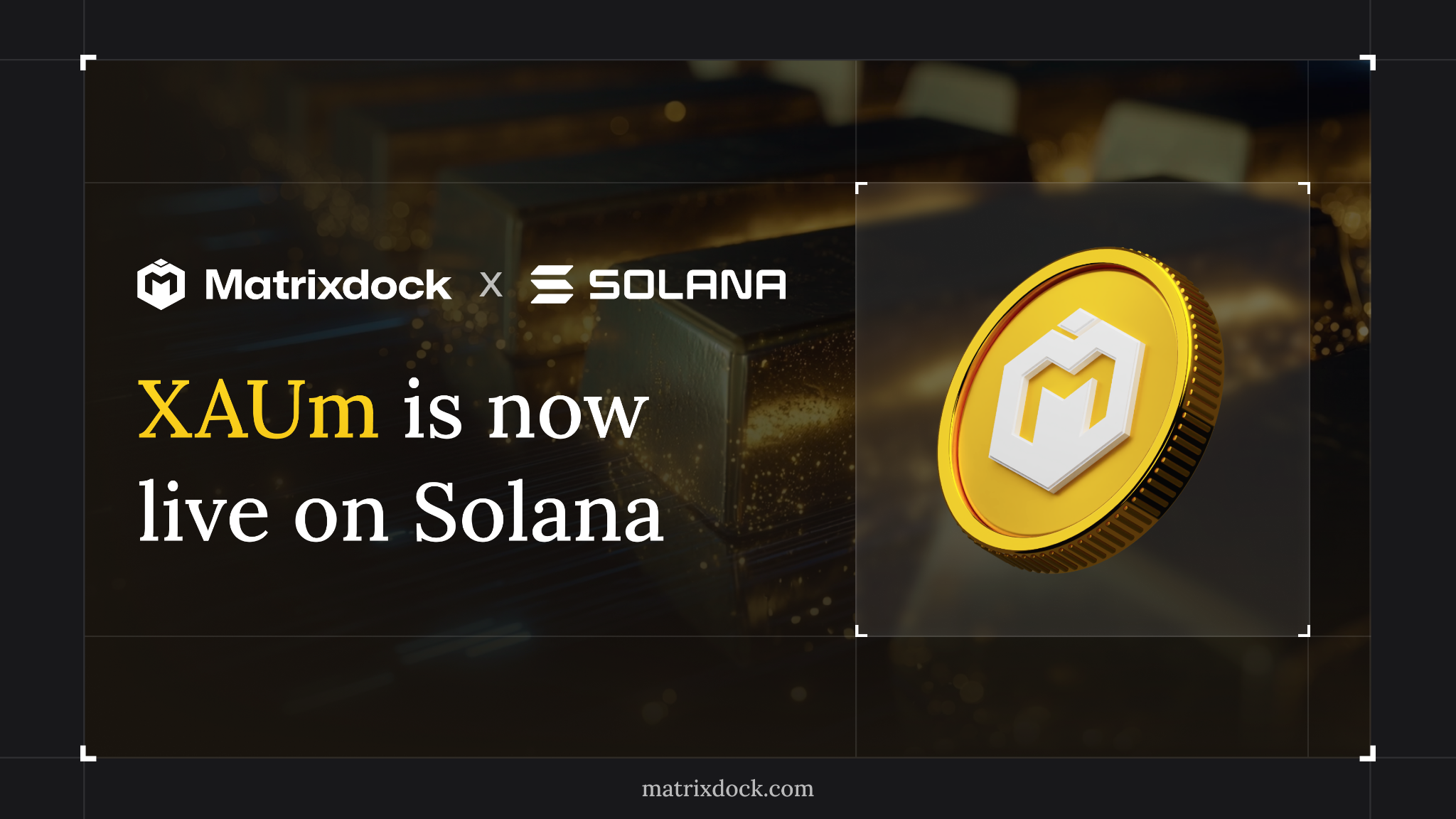
Recently, Matrixdock—a leading RWA platform—launched XAGm, a silver-backed token representing a representative product emerging from this context. Backed by physical silver meeting the LBMA Good Delivery standard and held in institutional-grade vaults, XAGm bridges traditional precious metals with on-chain finance. In the on-chain market, this means silver can now serve not only as an investment instrument but also as collateral, a tradable asset, and a building block for portfolio allocation across DeFi applications.
From a broader perspective, the introduction of silver-based products carries industry-wide significance. Throughout the evolution of real-world asset tokenization, a consensus has gradually formed: Not all assets are suited for long-term operation within the on-chain financial system. By contrast, asset classes with mature market structures, globally recognized pricing mechanisms, and long historical validation are far more likely to become foundational components of on-chain financial infrastructure.
Precious metals fit this profile perfectly. Gold has long served as a reserve asset in traditional finance; silver, meanwhile, combines investment appeal with broad industrial utility and more pronounced market cyclicality. Introducing silver into the on-chain financial system not only diversifies the range of on-chain precious metal assets but also delivers an asset class that balances reserve characteristics with high trading activity and liquidity.
Viewed this way, silver tokenization signifies more than just adding another asset type—it marks the expansion of the on-chain precious metals ecosystem from a single-reserve-asset model toward a diversified reserve-asset architecture.
FRS: An On-Chain Issuance Mechanism Designed for Real-World Assets
Beyond the underlying asset itself, the structural design of XAGm reflects Matrixdock’s systematic approach to on-chain asset issuance within the RWA domain. In traditional finance, holding physical assets such as precious metals incurs ongoing costs—including storage, insurance, and audit fees. These structural costs—commonly termed “negative carry”—are typically reflected in traditional financial products via fee structures or net asset value (NAV) erosion; for example, commodity ETFs gradually deduct related expenses through NAV decline.
Matrixdock’s Fungible Reserve Standard (FRS) is a deterministic mechanism designed to encode real-world asset holding costs directly onto-chain. By introducing a time-varying variable q(t), representing the quantity of underlying asset per token, FRS enables the amount of physical asset represented by each token to decrease deterministically over time according to pre-specified cost parameters—thus mapping real-world holding costs directly into on-chain logic.
Under this mechanism, the underlying asset reserve remains constant, while token supply dynamically adjusts to allocate costs—reflecting holding costs without altering users’ token balances. Structurally, this mirrors how traditional commodity ETFs reflect fees via NAV erosion—but FRS is explicitly designed to reflect actual custody and operational costs, excluding management fees or profit margins.
From a mechanism-design standpoint, this approach seeks to balance economic authenticity of the underlying asset with composability in DeFi.
Matrixdock’s Reserve Layer: The Long-Term Vision for RWA
The launch of XAGm also represents an expansion of Matrixdock’s Reserve Layer framework—a conceptual architecture describing the construction of a reserve-asset layer composed of high-quality real-world assets within the on-chain financial system, providing a stable and verifiable value foundation for on-chain financial activity.
Within this framework:
- Gold serves predominantly as a store of value and long-term reserve asset;
- Silver—owing to its stronger cyclical sensitivity and higher market liquidity—adds dimensions of trading activity and liquidity to the system.
Together, gold and silver enable the on-chain precious metals ecosystem to evolve from a monolithic reserve-asset model into a more diversified asset structure. From an industry-development perspective, this also reflects a broader shift in the RWA race: competition is gradually moving away from “who can issue assets fastest,” toward “who can build more resilient on-chain asset structures.”
As precious metals—including gold and silver—progressively integrate into on-chain infrastructure, a more diversified on-chain reserve asset system is taking shape. For Matrixdock, launching XAGm does not merely add another precious metal asset—it further clarifies its strategic positioning in the RWA space: building the Reserve Layer of on-chain finance around high-quality real-world assets.
Join TechFlow official community to stay tuned
Telegram:https://t.me/TechFlowDaily
X (Twitter):https://x.com/TechFlowPost
X (Twitter) EN:https://x.com/BlockFlow_News