








Opinion: Centralization in Layer 2 is a time bomb for blockchain
TechFlow Selected TechFlow Selected
Opinion: Centralization in Layer 2 is a time bomb for blockchain
In the future, the Ethereum Layer 2 ecosystem cannot rely on a single network to achieve sequencer decentralization.
 Navigating Web3 tides with focused insights
By: Daranee Ganesh
Translation: Scott Liu, Bitpush News
Today, sequencers in Layer-2 solutions are overly centralized, posing significant risks to the entire blockchain industry. Without timely action, the core principle of decentralization in blockchain will be compromised, inevitably leading to a crisis of trust. To safeguard network security, Layer-2 projects must swiftly transition toward eliminating single points of failure.
If not addressed promptly, network security will face severe threats, and the entire ecosystem could encounter a series of problems including transaction censorship, security vulnerabilities, and even leaks of customer data and funds.
Since Q2 2024, Ethereum-based Layer-2 solutions have processed 12 times more transactions than the Ethereum mainnet. Additionally, the total value locked (TVL) across the Layer-2 ecosystem hit a record high of $49 billion on June 6. These figures highlight the rapidly accelerating adoption of Layer-2 networks. However, with this growing popularity comes a new challenge—the increasing centralization of sequencer operations.
The sequencer is a critical component of Layer-2 networks, responsible for ordering and batching transactions before they are submitted to the Ethereum mainnet. Yet this efficient operation comes at the cost of decentralization, making sequencers an increasingly apparent "double-edged sword."
In Ethereum's Layer-2 solutions, sequencers manage the flow of transaction data, determining which transactions get processed first when multiple occur simultaneously. This process is often controlled by a single entity—while improving efficiency, it also introduces substantial risks of censorship and manipulation.
These concerns are far from hypothetical. Most mainstream Layer-2 solutions today rely on centralized sequencers, typically managed directly by the companies that built the rollups. For example, data shows that Base, Coinbase’s Layer-2 network, generated $30 million in sequencer fees in March 2024 alone, translating to an annualized revenue of approximately $360 million.
In an industry striving for greater decentralization, trust should be minimized. The fact that a single company controls such a critical part of the blockchain naturally raises widespread skepticism.
Christine Kim, Vice President of Research at Galaxy Digital, noted that decentralization should not be seen as a simple binary concept but rather as a spectrum—and efforts should aim to minimize centralization wherever possible. She emphasized: “Implementing decentralized sequencers may be one of the most challenging tasks for rollup projects, yet it is essential for enhancing decentralization and resilience.”
Recently, users of Linea—a zkEVM rollup backed by Consensys—suffered losses totaling $2.6 million. More alarmingly, the project’s development team collectively decided to halt sequencer operations and “block the attacker’s address to protect users and developers.”
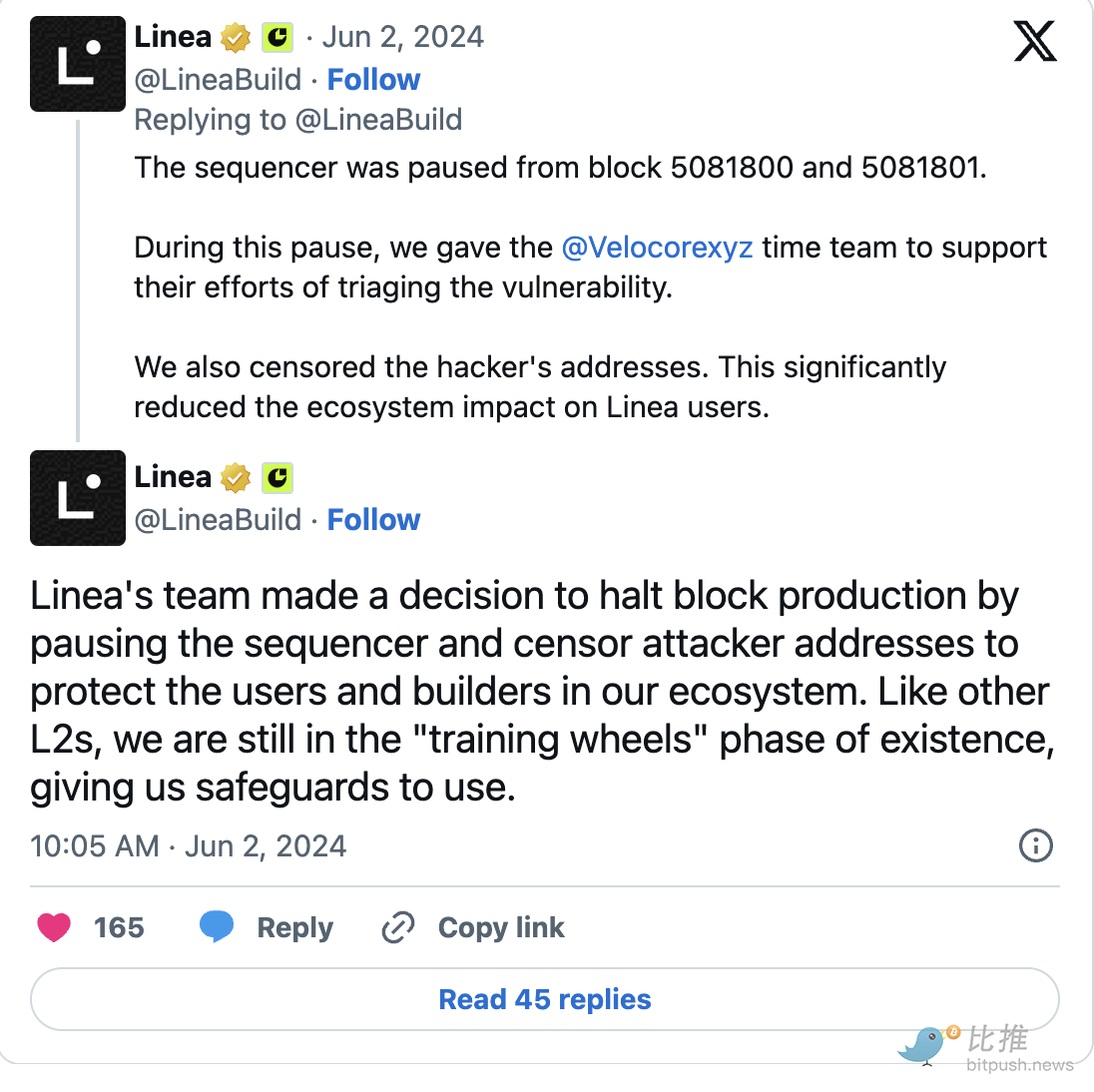
This incident underscores the potential dangers of centralized sequencers and serves as a stark reminder of the importance of decentralization. By adopting decentralized sequencers, networks can effectively eliminate single points of failure and strengthen resistance against attacks and technical outages. This not only enhances security but also better aligns with the core values of blockchain technology—especially transparency and efficiency.
Fortunately, most Layer-2 solutions are now recognizing the necessity of decentralization. By introducing networks of validators and block producers, Layer-2 systems can enable random selection and rotation of sequencer nodes. These nodes collectively handle transaction ordering and packaging, significantly improving network security and resilience.
Such decentralized sequencing mechanisms ensure fairness and security in the sequencing process while substantially reducing the risks of censorship and manipulation—all without sacrificing performance. This approach encourages broader community participation and aligns the interests of the network with its users, thus better upholding the foundational principles of blockchain.
Recently, Vitalik Buterin proposed a classification system for rollup networks, dividing them into stages from 0 to 2. He pointed out that most leading rollup projects still rely on some form of “training wheels.”
Looking ahead, Layer-2 solutions must quickly move beyond these temporary measures, or risk stagnation—or even obsolescence. While centralization undoubtedly brings short-term economic benefits and operational convenience, it primarily serves the interests of operators. In contrast, despite its challenges, decentralization offers long-term stability and growth for both projects and their communities.
This “self-reinforcing model” not only reduces security costs but also initiates a virtuous cycle: increased community participation leads to greater staking, further strengthening network security, which in turn attracts more decentralized applications and innovators.
Moreover, the steady increase in capital inflows to decentralized exchanges (DEXs) following sequencer decentralization indicates that users are willing to accept slight increases in latency if proper incentives are in place. Beyond enhancing security through mechanisms like liquid staking, decentralized sequencers tightly align the interests of industry participants and contributors with the growth of the ecosystem.
For instance, revenue-sharing models in sequencer mining effectively boost user engagement, creating a direct link between community participation, network security, and ecosystem growth. As technical prototypes mature, even Bitcoin Layer-2 networks are beginning to offer mining rewards via decentralized sequencers.
Going forward, the Ethereum Layer-2 ecosystem cannot depend on just one network to achieve sequencer decentralization. Achieving decentralization across multiple networks is key to preserving the integrity of blockchain technology. Established Layer-2 solutions must act swiftly to avoid being left behind and to ensure user safety.
Join TechFlow official community to stay tuned
Telegram:https://t.me/TechFlowDaily
X (Twitter):https://x.com/TechFlowPost
X (Twitter) EN:https://x.com/BlockFlow_News
 比推 BitpushNews











