Plugging the Gaps: 3-Minute Overview of Recent Major Changes in the BTC Ecosystem
TechFlow Selected TechFlow Selected
Plugging the Gaps: 3-Minute Overview of Recent Major Changes in the BTC Ecosystem
The Fractal Bitcoin mainnet will launch on September 1; Babylon's Bitcoin mainnet staking will go live on August 23.
 Navigating Web3 tides with focused insights
Author: Golem, Odaily Planet Daily
In recent days, the Bitcoin ecosystem has become increasingly vibrant, with various sectors achieving substantial progress after months of development. Keen users have already turned their attention back to the Bitcoin ecosystem, hoping to uncover the latest wealth opportunities it offers.
While becoming an early alpha hunter is difficult—requiring deep immersion in the ecosystem along with significant time and effort—even if we can't lead the pack, we shouldn't miss out on this wave of opportunity. This article by Odaily Planet Daily summarizes the major recent developments in the Bitcoin ecosystem to help you quickly grasp the current hotspots and key trends.
Traffic Hotspot: Fractal Bitcoin Mainnet Launches September 1
The biggest current highlight in the Bitcoin ecosystem is Fractal Bitcoin, a scalability solution developed by UniSat. Built on Bitcoin's core code, Fractal is fully compatible with existing Bitcoin wallets, tools, and mining equipment. It achieves block confirmation times of approximately 30 seconds. On the smart contract front, Fractal introduced OP_CAT on its testnet on August 13, though the cross-chain bridge implementation remains undecided.
The Fractal Bitcoin testnet has seen over 8.3 million active addresses in the past 24 hours. On August 19, BRC-20 services were activated on the testnet, allowing users to deploy and mint BRC-20 tokens. Many users believe that active participation in testnet activities may qualify them for future mainnet airdrops.
On the ecosystem side, more than a dozen projects have announced plans to build on Fractal Bitcoin. Odaily Planet Daily previously highlighted 10 promising ecosystem projects—see our recommended read: Fractal Mainnet Launch Imminent: Top 10 Ecosystem Projects to Watch.
Babylon Bitcoin Mainnet Staking Launches August 23
Babylon is a self-custodial Bitcoin staking protocol that has raised over $96 million in total funding from leading investors including Paradigm, Polychain, HashKey Capital, IOSG Ventures, Amber Group, HTX Ventures, Galaxy Digital, Binance Labs, and OKX Ventures.
Babylon has drawn sustained attention due to its innovative self-custodial staking design and prestigious investor lineup. Its testnet trial tokens were previously in such high demand they became oversubscribed. Recently, Babylon announced that Bitcoin mainnet staking will go live on August 23, with an initial cap of 1,000 BTC. Each staking transaction must be between 0.005 BTC and 0.05 BTC, suggesting fierce competition when the service launches.
Since there are currently no active PoS chains integrated, staking will not provide direct staking rewards. Instead, Babylon uses a points system to track user contributions. Meanwhile, liquid staking protocols within the Babylon ecosystem such as PumpBTC and pSTAKE are running complementary staking reward campaigns.
RGB Ecosystem Projects Gain Momentum
RGB is a general-purpose Bitcoin smart contract protocol enabling asset issuance and smart contract functionality on the Bitcoin network. Development of RGB has been ongoing since 2019, supported by numerous contributors and institutions, but most work has remained behind-the-scenes, with limited ecosystem growth—until recently.
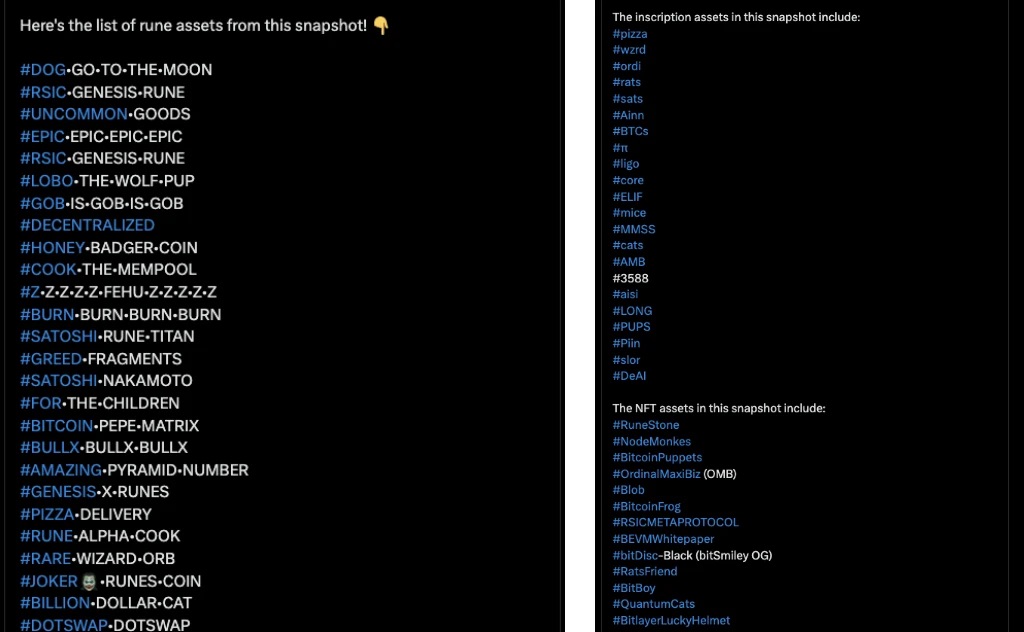
Two projects in the RGB ecosystem have now captured broad attention. The first is Jerry's Box, the first RGB-20 token project to conduct a large-scale airdrop. On August 16, it took snapshots of addresses holding certain runes, BRC-20 tokens, or Bitcoin NFTs—holders of any of these assets qualified for the airdrop. Eligible assets are shown in the image below.
Because RGB-20 assets require special receiving addresses, users must link a BiHelix-format address to their whitelisted address via the official website. For details, refer to the tutorial published by Wizz Wallet, a Bitcoin ecosystem wallet. To deter bots and professional farming operations, the team updated the airdrop rules: whitelisted addresses must send at least 0.0001 BTC to their associated BiHelix address to qualify. Additional rule changes are detailed in the author’s posts on X.
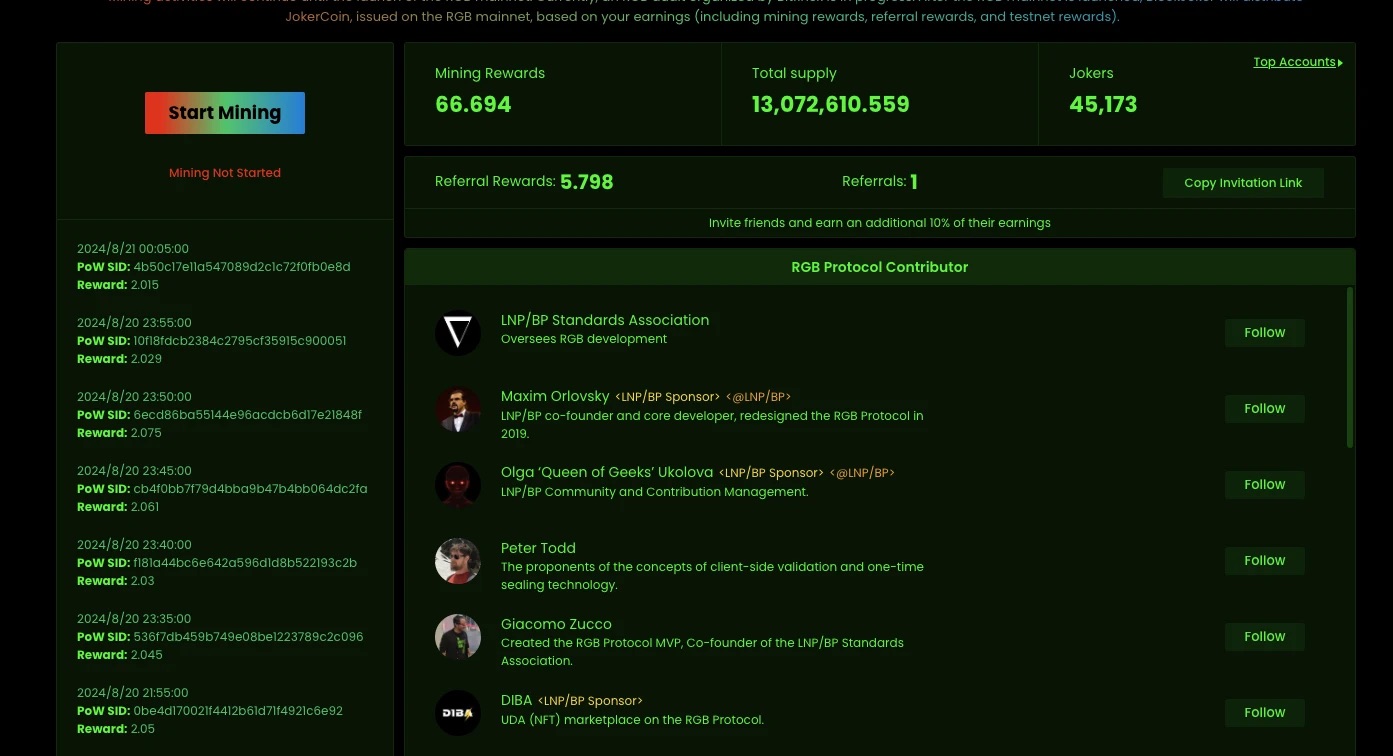
The second notable project is BlockJoker, a meme coin issued via POW free mining. Users simply visit the official website, connect their X account, and click the top-left button to start mining. The system generates 2–3 tokens every five minutes on average. Currently, over 45,000 nodes worldwide are participating in mining. BlockJoker mining will continue until the RGB mainnet launches, meaning the total supply remains undetermined.
First Stablecoins Arrive on Lightning Network
On July 23, leading Lightning Network developer Lightning Labs announced the launch of Taproot Assets on the Lightning Network. Users can now mint Taproot Assets on Bitcoin and leverage the Lightning Network’s speed and low fees for transfers. Unlike other Bitcoin asset protocols focused on creating new tokens on-chain, Lightning Labs is committed to bringing stablecoins onto the Lightning Network. The author previously detailed the advantages of this strategy in The Lightning Network’s Bet on Stablecoins Is Paying Off.
Several projects have already launched stablecoins on the Lightning Network. Speed Wallet has bridged USDT from Ethereum to Taproot Assets and integrated it into their Lightning Network custodial wallet. The stablecoin on Taproot Assets is labeled USDT-L. Lnfi Network (formerly Nostr Assets) announced the launch of LN Bridge, which brings Ethereum-based USDT to Taproot Assets under the ticker TA-USDT.
Atomicals Virtual Machine Beta Released
Atomicals is another Bitcoin-layer smart contract protocol. Though it generated significant buzz in the Bitcoin ecosystem in late 2023, interest waned due to market cycles and the team’s relatively low-profile approach. Nevertheless, many Bitcoin enthusiasts still regard Atomicals as one of the most promising Layer-1 smart contract solutions on Bitcoin.
Despite slow development, progress continues steadily. On August 15, the team released a beta version of the Atomicals Virtual Machine (AVM), enabling developers to define custom rules—via Bitcoin scripts—for managing asset creation and transfers. We may soon see AVM deployed and operating on the mainnet.
Runes Remain Dominant Transaction Type on Bitcoin Network
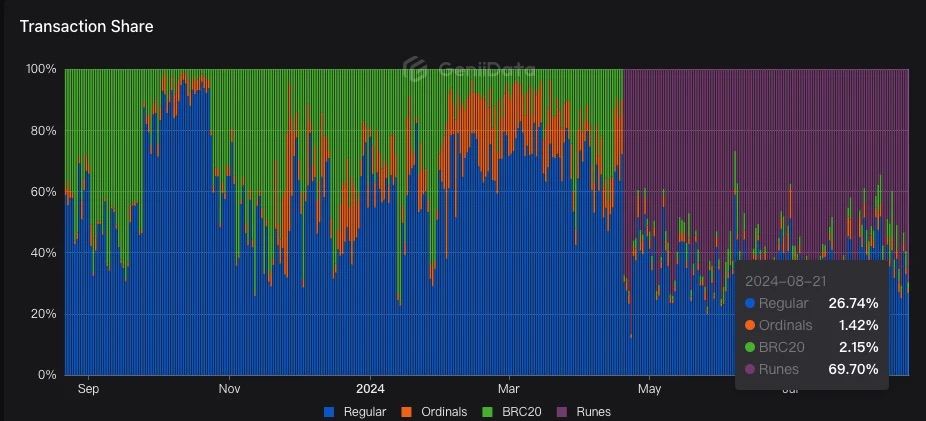
According to Geniidata, Runes have remained the primary transaction type on the Bitcoin network since August, accounting for over 50% of all transactions on average. Regular Bitcoin transactions come second, while BRC-20 and Ordinals combined make up less than 10% of total transaction volume. Additionally, the number of unique addresses holding Runes has already surpassed that of BRC-20.
In terms of minting activity, the Rune asset UNCOMMON•GOOD (Rune #0) remains the most popular. It now has 193,002 unique holders, making it the most widely held Rune. Below are three main reasons why Bitcoin ecosystem participants are accumulating Rune #0:
-
Holding Rune #0 across multiple addresses to qualify for potential airdrops from other ecosystem projects, such as Jerry's Box mentioned above;
-
Minting additional Rune #0 tokens during periods of low gas fees, then selling when gas prices rise for profit;
-
Believing Rune #0 could become the "sats" of the Rune ecosystem, with strong community support and holder count giving it potential for exchange listings and broader adoption.
Join TechFlow official community to stay tuned
Telegram:https://t.me/TechFlowDaily
X (Twitter):https://x.com/TechFlowPost
X (Twitter) EN:https://x.com/BlockFlow_News
 Odaily