








Arbitrum Preliminarily Approves Staking Empowerment Proposal: Can It Revitalize the ARB Token?
TechFlow Selected TechFlow Selected
Arbitrum Preliminarily Approves Staking Empowerment Proposal: Can It Revitalize the ARB Token?
Given the actual profitability of the network, the positive impact is very limited.
 Navigating Web3 tides with focused insights
Author: Nanzhi, Odaily Planet Daily
Ethereum and Ethereum-based Layer 2 networks have shown increasingly evident signs of decline over the past two years, both in token prices and core projects. Among them, ARB has become the worst-performing token over the past year, while STRK plummeted by 90% within just six months of its launch.
The root causes lie partly in the limited ecosystem activity and revenue generation of Layer 2 platforms, and partly in the fact that most Layer 2 tokens offer only governance functionality without any yield mechanism, resulting in weak demand. Regarding the latter issue, PlutusDAO—a governance aggregation protocol on Arbitrum—proposed a staking-for-yield initiative for ARB last year, which passed off-chain voting. Although it ultimately failed during on-chain voting, it temporarily boosted the token price significantly (approximately 40% gain over 30 days).
On August 16, the Arbitrum community preliminarily approved a proposal titled "Enabling ARB Staking to Unlock Token Utility," aiming to enhance the utility of the ARB token. What exactly does this proposal entail, and can it reverse the fundamentals of the ARB token? Odaily provides an in-depth analysis below.
Proposal Analysis
Governance and Token Pain Points
This proposal was put forward by Frisson, Head of Market Operations at Tally. According to Frisson, ARB currently faces several key issues:
-
Governance rights are the sole source of demand for ARB, yet there is substantial new supply entering the market from unlocks and treasury expenditures;
-
Re-staking or using ARB in DeFi protocols is incompatible with governance functions. When ARB is deposited into smart contracts, voting rights are lost, and less than 1% of ARB tokens are actively used in on-chain governance.
-
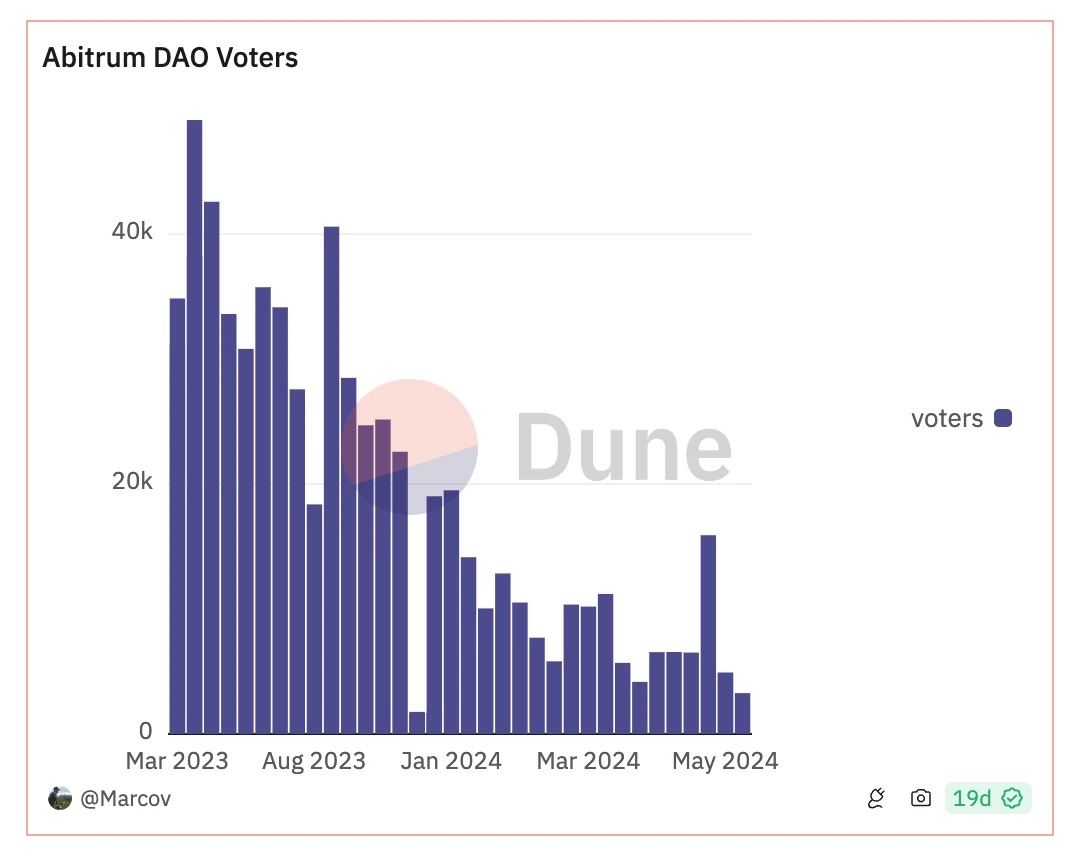
DAO members participating in governance have been consistently declining since the launch of the Arbitrum token.
Solution
To address these challenges, the proposal aims to create a mechanism that distributes earnings from Arbitrum to token holders. These earnings could come from various sources such as sequencer fees, MEV revenue, validator fees, token inflation, and treasury funds—though the specific revenue streams will be determined through future governance votes.
Furthermore, the proposal requires token holders to delegate their tokens to "active governors" in order to earn rewards. Additionally, Tally introduces stARB, a liquid staking derivative of ARB, enabling users to stake their tokens while retaining compatibility with DeFi protocols and benefiting from automatic compounding.
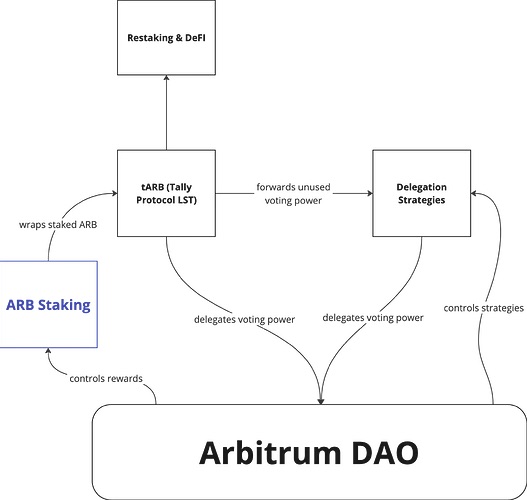
By combining these two components, ARB holders may earn returns driven by network activity, while the introduction of stARB removes previous constraints on governance participation. Linking income incentives with governance is expected to boost engagement levels.
From a fundamental logic perspective, approval of this proposal would clearly benefit ARB. However, practical implementation raises another critical question: how much actual network-generated revenue is available? Even if all network revenue were distributed to token holders, what level of return would it generate?
Network Activity Revenue
Rising Network Activity
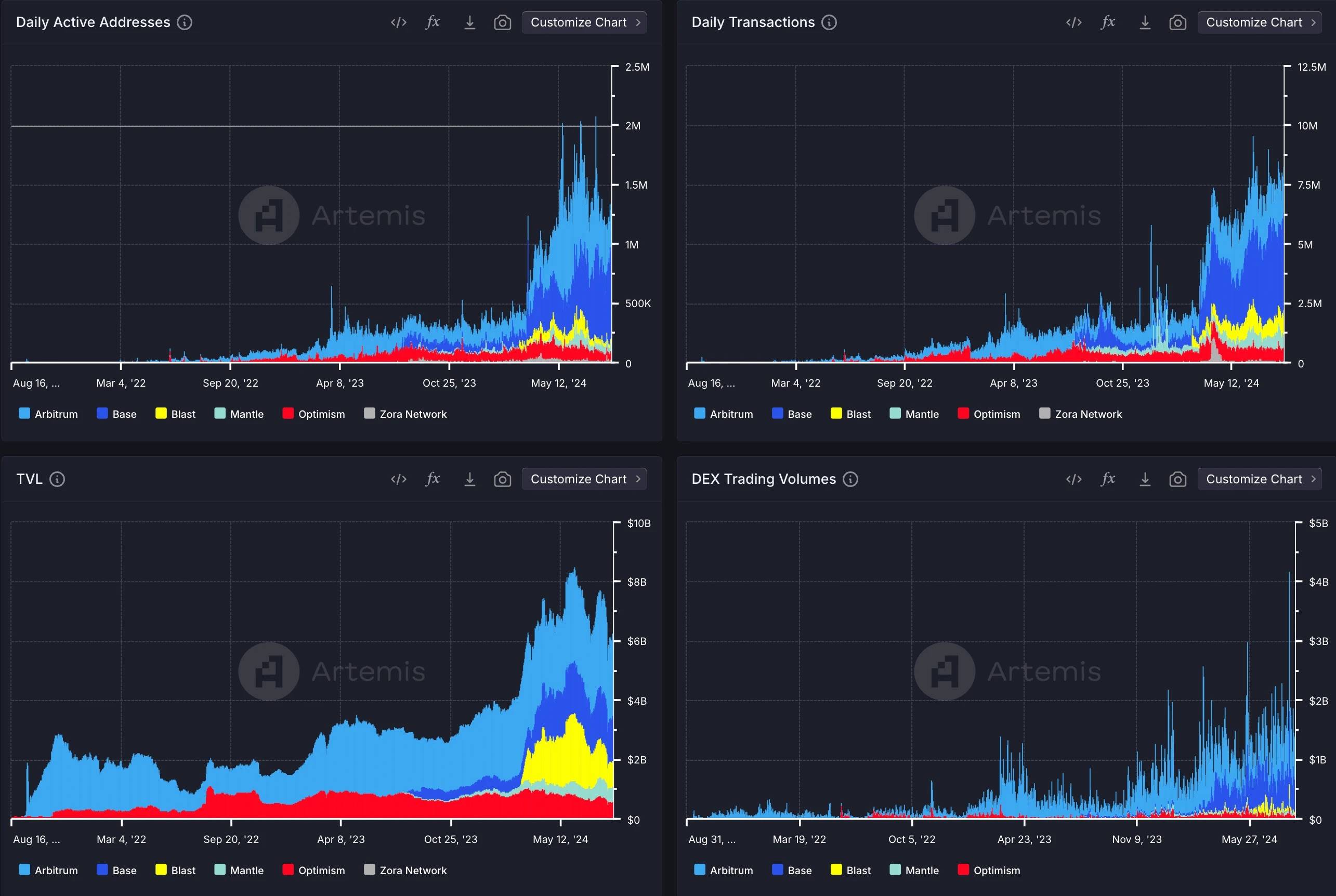
In terms of standard metrics, Layer 2 networks continue to maintain high or even slightly increasing market share. The charts below show active addresses, daily transaction volume, TVL, and DEX trading volume across major Layer 2 platforms.
Falling Network Revenue—Now Negligible
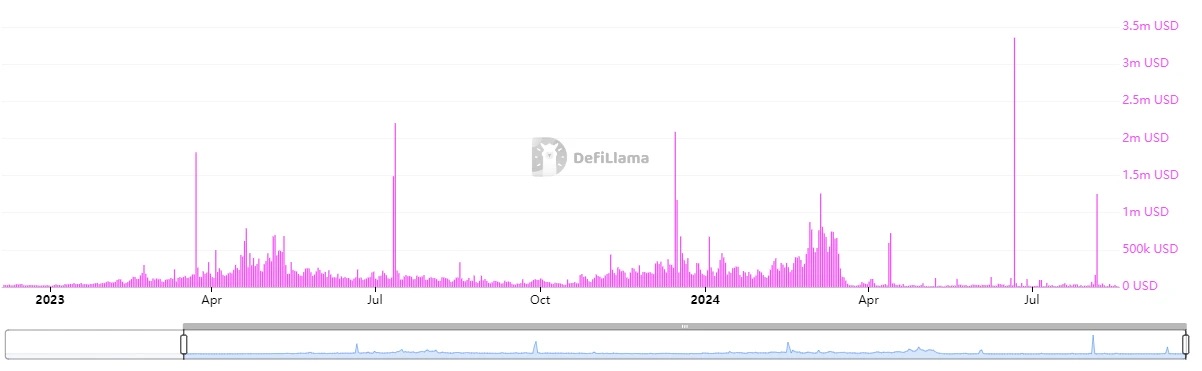
However, according to DefiLlama data, Arbitrum’s network revenue over the past 24 hours stands at merely $6,000. Since the Cancun upgrade in March, aside from occasional spikes, daily revenue has fluctuated between $10,000 and $40,000. Assuming an average daily income of $30,000, annual network revenue would amount to approximately $10 million—insignificant compared to ARB’s $1.8 billion circulating market cap and monthly token unlocks of around $60 million.
The sharp decline in revenue stems from changes pre- and post-Cancun upgrade. Prior to the upgrade, Arbitrum and other Layer 2 networks primarily earned profits from the difference between gas fees paid by users on Layer 2 and the cost of posting transactions to Ethereum’s mainnet. For example, Starknet charged at least $1–$2 per transaction, while the underlying cost was nearly negligible—resulting in profit margins exceeding 99%. After the Cancun upgrade, this primary revenue stream is unlikely to return to previous levels.
As a result, the only remaining viable path to deliver meaningful yields is through "inflationary emissions." In November last year, PlutusDAO proposed minting 100 million additional ARB tokens as staking rewards. While it passed Snapshot off-chain voting, it failed during on-chain voting via Tally—likely due to concerns over excessive inflation. At the time, 100 million ARB represented 7% of the circulating supply and 1% of the total supply.
Currently, the circulating supply of ARB is 3.26 billion. Issuing 100 million new tokens would yield a 3% return, assuming distribution over one year—barely reaching the minimum threshold acceptable in DeFi yield standards. However, excessively high inflation rates could severely threaten the token’s price stability.
Conclusion
In summary, while the staking utility proposal is logically sound and clearly beneficial for ARB, its actual positive impact appears limited given Arbitrum’s current revenue-generating capacity. The Tally on-chain vote is scheduled for October. ARB holders are advised to closely monitor the detailed implementation plans over the next two months.
Join TechFlow official community to stay tuned
Telegram:https://t.me/TechFlowDaily
X (Twitter):https://x.com/TechFlowPost
X (Twitter) EN:https://x.com/BlockFlow_News
 Odaily






