








How Harris's First Clear Economic Policy, the "Economy of Opportunity," Could Impact the Crypto World
TechFlow Selected TechFlow Selected
How Harris's First Clear Economic Policy, the "Economy of Opportunity," Could Impact the Crypto World
Overall, Harris's "opportunity economy" framework is an extreme-left economic proposal.
 Navigating Web3 tides with focused insights
Author: Web3Mario
Summary: This week, the market officially entered a quiet period ahead of the Jackson Hole symposium. Everyone is waiting for Powell’s official interpretation of the latest employment and inflation data, along with clear guidance on future monetary policy, which will undoubtedly be a key reference for the September rate decision. However, there was an interesting piece of news last Friday that didn’t receive much attention in the crypto world: Democratic presidential candidate Kamala Harris formally unveiled her first explicit economic policy framework—the “Opportunity Economy.” Since I was occupied writing an analysis article about Usual Money last Friday, I initially missed it. After reviewing the details over the weekend, I found some insights worth sharing. Overall, Harris’s “Opportunity Economy” framework represents a far-left economic plan, specifically aiming to reduce living costs for Americans in four areas—housing, healthcare, groceries, and childcare—through government intervention. If implemented, this plan could potentially reignite the crypto market surge seen in 2021, but it would likely come at the cost of renewed U.S. inflation.
Kamala Harris’s First Economic Policy Document: “Agenda to Lower Costs for American Families”—A $1.7 Trillion Subsidy Plan
Recently, following Harris’s formal nomination as the Democratic presidential candidate and backed by major financial backers and mainstream media, her momentum has visibly increased. Polls even briefly showed her surpassing Trump, creating a sense of widespread expectation. However, those familiar with electoral politics understand that polls are highly subjective non-official activities. Organizers can subtly manipulate survey methods, questionnaire design, and participant selection to achieve desired outcomes. Given that Democrats control mainstream media, producing such favorable poll results isn’t surprising. Still, this reflects the strength of Harris’s campaign team after consolidating internal forces and activating its full propaganda machinery—a force not to be underestimated, which explains why Trump rushed back to Twitter and actively engaged with Musk. Therefore, we must closely observe and analyze Harris’s potential governance trajectory.
One consistent criticism of Harris has been her lack of clearly defined economic policies throughout her political career, largely due to her professional background. While past stances on immigration and public safety have signaled left-wing populist tendencies, allowing markets to somewhat anticipate a left-leaning economic agenda if she wins, the release of her first concrete economic document on August 16—“Agenda to Lower Costs for American Families”—surprised many and sparked significant controversy. The proposal is dubbed the “Opportunity Economy” because Harris’s team argues that reducing household expenses will give middle-class families greater opportunities to work or start businesses, revitalizing economic vitality and reviving the American Dream. The main source of controversy lies in its far-left nature: using government intervention to lower living costs across housing, healthcare, groceries, and childcare.
Housing measures include three main components:
1. Harris calls for building 3 million new homes to end housing shortages within four years. This would be supported through tax incentives for constructing entry-level homes and affordable rental units; establishing a $40 billion federal innovation fund to encourage innovative construction solutions; and streamlining government approval processes to cut costs.
2. Reducing rent by targeting corporations and major landlords, including blocking Wall Street investors from mass-buying and price-gouging homes, eliminating tax benefits for single-family home rentals, and preventing large corporate landlords from using private equity-backed pricing tools to manipulate rents.
3. Providing a $25,000 down payment subsidy for first-time homebuyers—an expansion from Biden’s 400,000 spots to 4 million spots, with relaxed eligibility criteria.
Healthcare initiatives focus on three areas:
1. Capping insulin costs at $35 and out-of-pocket prescription drug expenses at $2,000 annually.
2. Accelerating Medicare negotiations on prescription drug prices.
3. Enhancing competition and transparency in healthcare by cracking down on pharmaceutical companies that hinder competition and pharmacy benefit managers that squeeze small pharmacies’ profits while raising consumer costs.
Grocery and daily essentials measures include:
1. Enacting the federal government’s first ban on grocery price gouging.
2. Establishing clear rules prohibiting large corporations from unfairly exploiting consumers to extract excessive profits from food and household goods.
3. Granting the Federal Trade Commission and state attorneys general new powers to investigate violators and impose strict penalties.
Childcare support includes:
1. Tax credits up to $3,600 per child for middle-class families with children.
2. A $6,000 tax credit in the first year for families with newborns.
3. A $1,500 tax break for dual-income households.
4. Tax reductions for health insurance purchases.
Harris’s team promises to begin implementing these proposals within her first 100 days in office to alleviate financial burdens on ordinary Americans. The most controversial aspects center on housing and grocery policies, as well as the overall budget. Critics argue that aggressive housing subsidies and construction programs would severely strain government finances, worsening the national debt crisis. Grocery-related policies are seen as violating market principles. Blaming inflation on corporate profiteering shows a fundamental misunderstanding of market dynamics—retail is a highly competitive sector where most retailers operate on single-digit profit margins. Government interference could distort supply-demand equilibrium, triggering fresh inflation and causing widespread business failures.
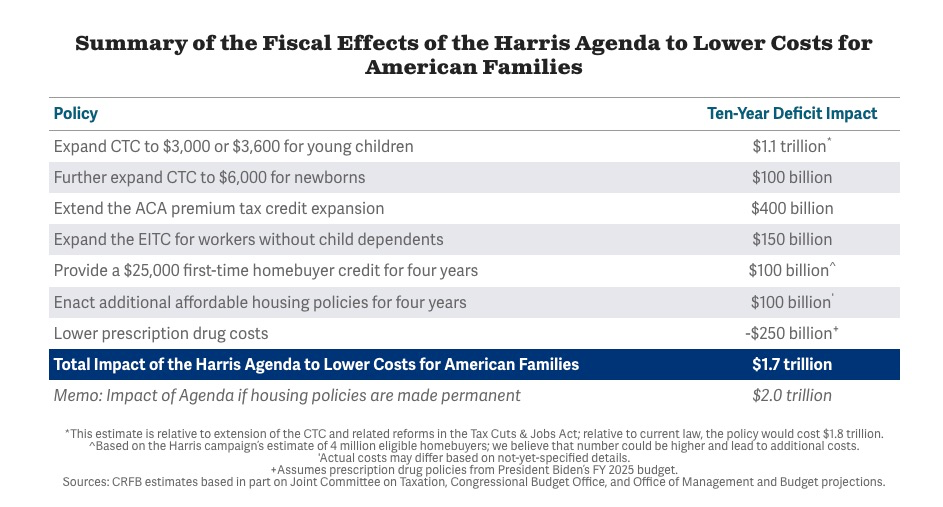
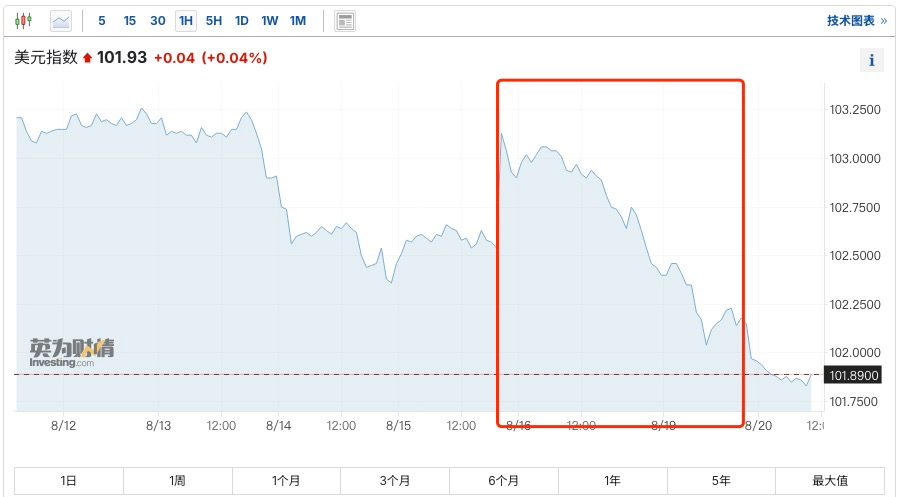
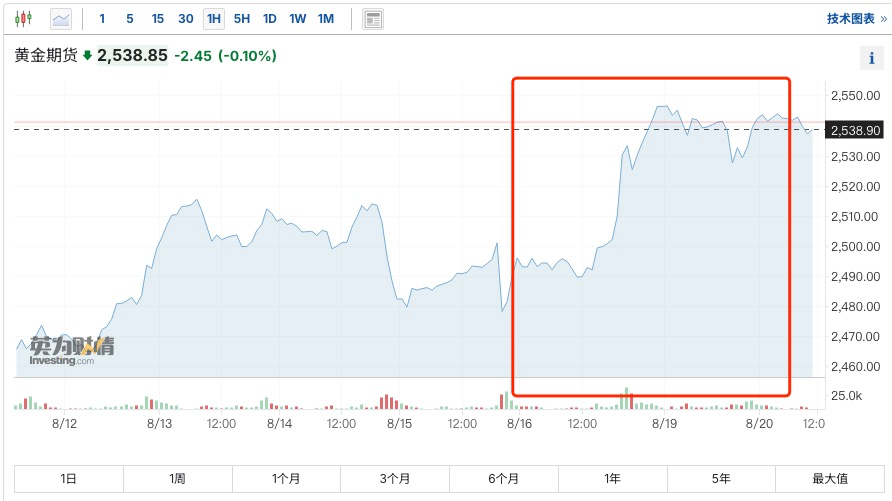
Regarding total cost, the nonpartisan Committee for a Responsible Federal Budget estimates the plan could add between $1.7 trillion and $2 trillion to deficits over the next decade, posing three major risks: exacerbating the already severe U.S. debt crisis, further eroding America's creditworthiness and risking a dollar crisis; fueling domestic inflation through stimulus spending; and intensifying social tensions, as Harris proposes funding the plan through higher taxes on wealthy individuals—directly opposing Trump’s pro-business, pro-rich tax cuts. Following the announcement, both the U.S. Dollar Index and gold, a traditional inflation hedge, reacted sharply.
Impact on Crypto—Short-Term Bullish, Long-Term Bearish
Now let’s examine how this proposal might affect the crypto market. The U.S. has long prided itself on its spindle-shaped class structure. Although the middle class is shrinking, it still comprises over 50% of society. This policy primarily benefits that demographic. We know the effectiveness of government intervention diminishes over time due to altered market expectations, but its short-term impact tends to be strong. If implemented, the immediate effect—no doubt—would be significantly reduced living costs for most American middle-class families, increasing disposable income in the near term. This creates fertile ground for risk assets, especially high-EPS tech stocks, to rise. The logic is simple: when retail investors have more money, big capital makes more money—and then aggressively promotes new narratives, driving market activity.
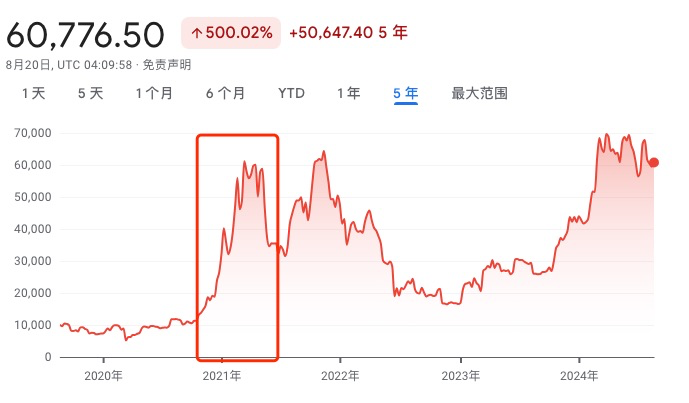
This story played out once before—in early 2021, Biden’s $1.9 trillion pandemic relief package caused a sharp rise in disposable income for American households, igniting a massive rally in Bitcoin and the broader crypto market. But as wealth effects accumulated, inflation pressures mounted relentlessly. As we all know, the Fed responded with over two years of aggressive monetary tightening to combat persistent inflation, leading to a major correction in risk assets. Thus, I believe a similarly scaled economic policy, if enacted, would be bullish for crypto in the short term—but medium- to long-term risks stemming from resurgent inflation and consequent monetary tightening warrant caution. Of course, this hinges on Harris winning the election and successfully enacting these policies. I will continue monitoring developments closely.
Join TechFlow official community to stay tuned
Telegram:https://t.me/TechFlowDaily
X (Twitter):https://x.com/TechFlowPost
X (Twitter) EN:https://x.com/BlockFlow_News
 @web3_mario











