A Closer Look at Prediction Markets: Sports Markets Are Now a Pillar, and Memes Themselves Have Become Predictive Indicators
TechFlow Selected TechFlow Selected
A Closer Look at Prediction Markets: Sports Markets Are Now a Pillar, and Memes Themselves Have Become Predictive Indicators
In the coming years, at least one protocol will directly compete with Polymarket in trading volume.
 Navigating Web3 tides with focused insights
Author: mikey
Compiled by: TechFlow
With many new teams emerging in the prediction market space, this article provides a comprehensive overview of the field.
We'll quickly summarize categories of prediction markets, market entry strategies, product updates, some data, mechanism explanations, and future directions.
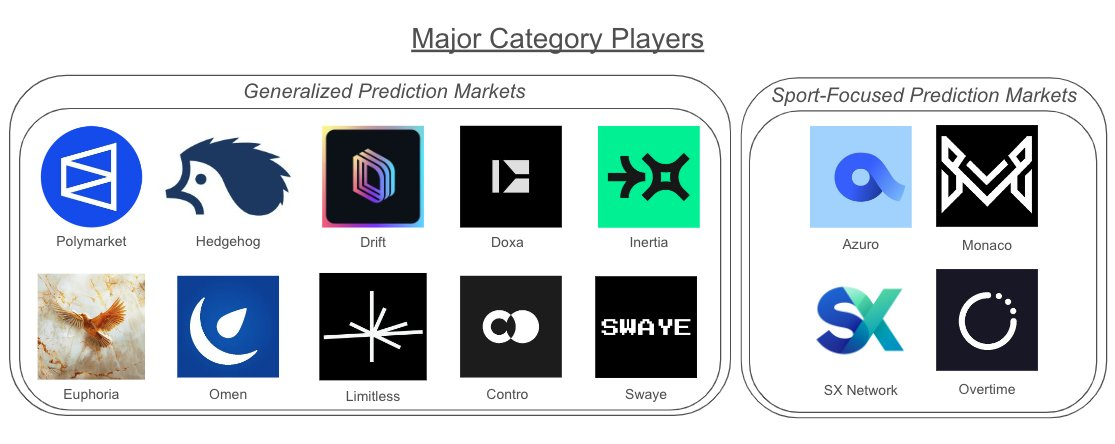
Market entry strategies can be broadly divided into two categories: non-sports and sports. The non-sports market is a relatively underexplored area, with potential targets including cryptocurrency, politics, and cultural events.
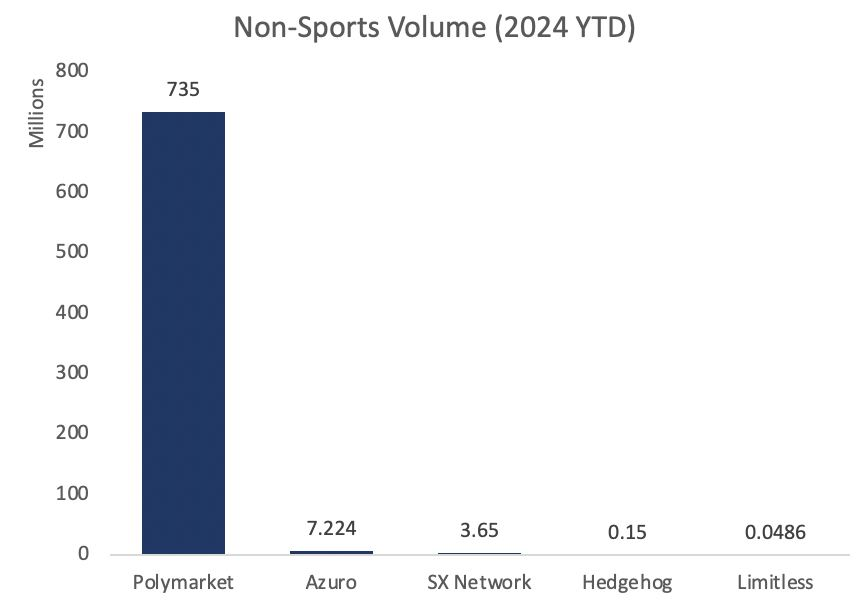
Within the non-sports market, Polymarket is the clear leader, focusing primarily on political events.
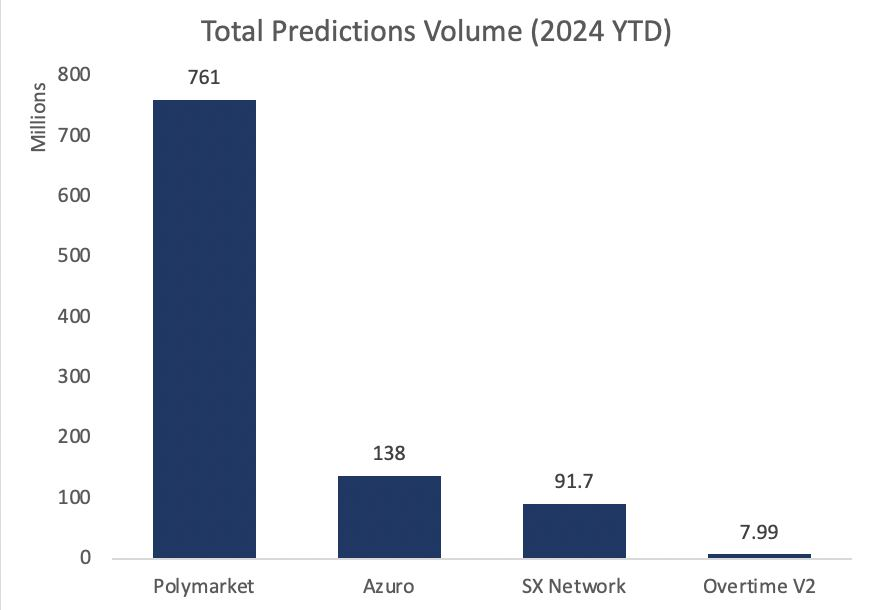
If sports betting volume is included in the comparison, Azuro and SX Network are not far behind Polymarket.
Currently live competitive projects include @LimitlessExchange (offering ETH-denominated markets on EVM) and @HedgehogMarkets (offering pooled bets on SOL—bet first, odds determined later).
Upcoming projects include: @DriftExchange, @xMarkets, @InertiaSocial, @Doxa, @Contro.
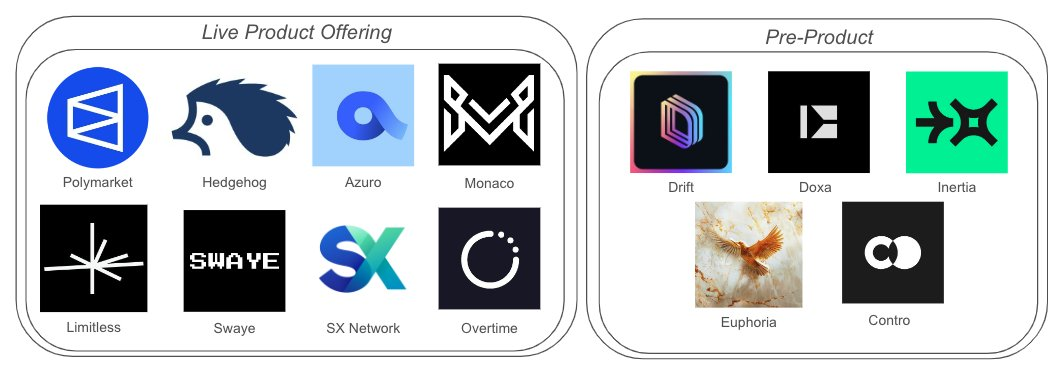
Two common themes among new entrants are:
-
Permissionless markets—open market creation and its incentive mechanisms.
-
Settlement—relying on AI for market resolution or building more efficient settlement systems.
These are recurring requests from Polymarket users.
The sports category has already proven its appeal in Web2 due to its popularity and regularity of events.
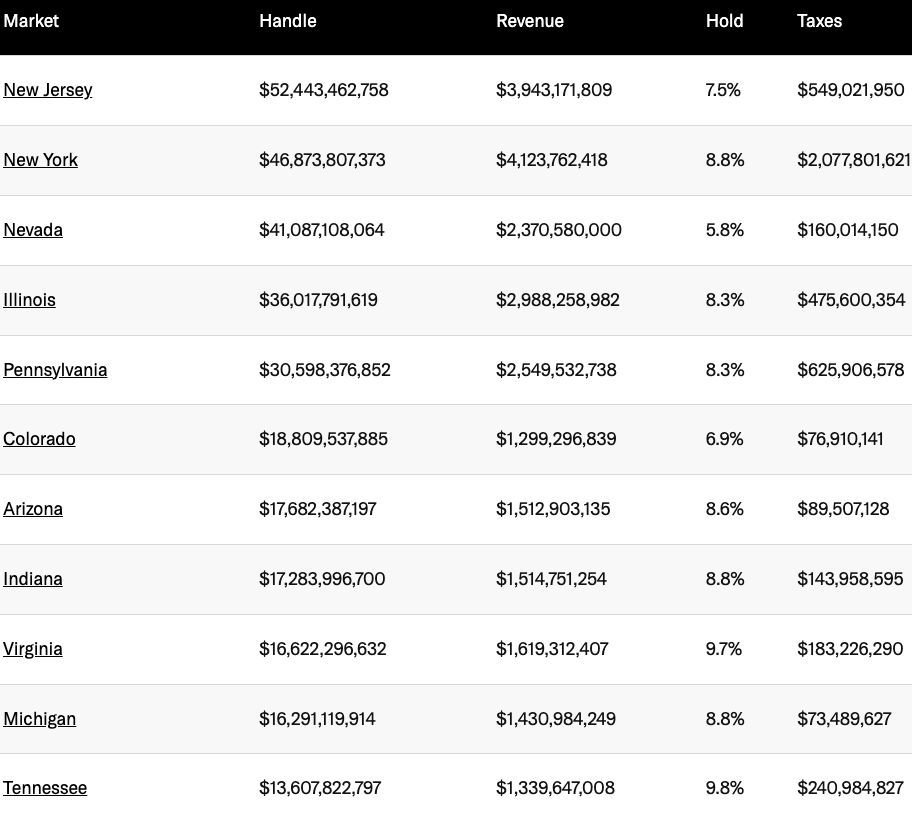
However, it's extremely difficult for users to transition to crypto-based platforms because most users value brand and user experience. Web2 sportsbooks also have virtually unlimited marketing budgets—over five sports betting companies spend more than $100 million annually.
Americans wagered about $23 billion on a single Super Bowl game—ten times the historical trading volume of crypto prediction markets (~$2 billion)—and even individual states surpass $2 billion in wagers.
The argument is: More on-chain capital will lead to more on-chain sports betting, just as internet bookmakers took over via phone lines.
One limiting factor for prediction markets is the lack of leverage. In the non-sports space, @LogX_trade will allow perpetual contracts on TRUMP, similar to FTX in 2020, while @doxamarket is also exploring leverage applications.
Both projects use centralized liquidity pools as counterparties. Liquidation and bad debt remain unresolved issues. It would be interesting if Polymarket explored multi-leg markets (parlays) further. Technically, a market like "Trump and Biden nominated" is already a leveraged bet since it depends on correctly predicting two independent events.
I'd love to see markets like "Will a, b, c, and d all happen?"
I don't think initial liquidity would be an issue—liquidity providers (LPs) are happy to earn their daily rewards!
On the sports side, several protocols already allow leverage through a mechanism called parlays, which only pay out if users correctly guess multiple unrelated events. SX Bet, Azuro, and Overtime already support this.
Prediction market mechanisms can be roughly divided into two types: Web2.5 and Web3.
Web2.5 refers to using cryptocurrency as a payment rail, such as Stake and Rollbit. Users can place bets with crypto, but the counterparty is the team behind the app, and the product does not directly interact with the blockchain.
Web3 prediction markets, on the other hand, feature on-chain characteristics, whether positions exist as NFTs or bets are executed via smart contracts.
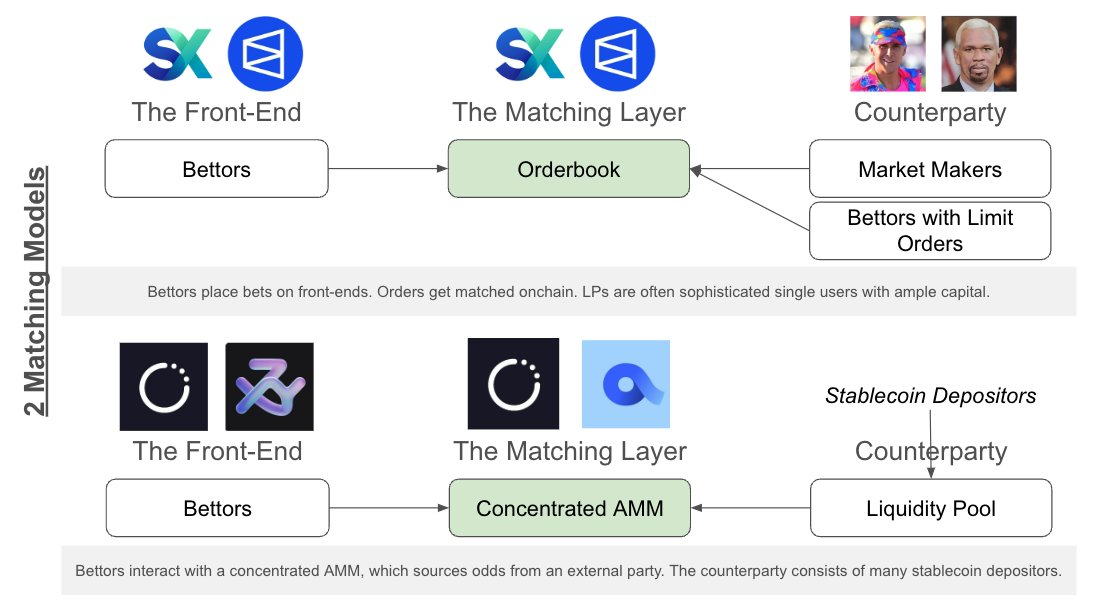
On-chain bet matching typically happens in two ways: one relies on passive liquidity providers (LPs) using automated market makers (AMMs), the other uses an order book model where the platform acts as an exchange.
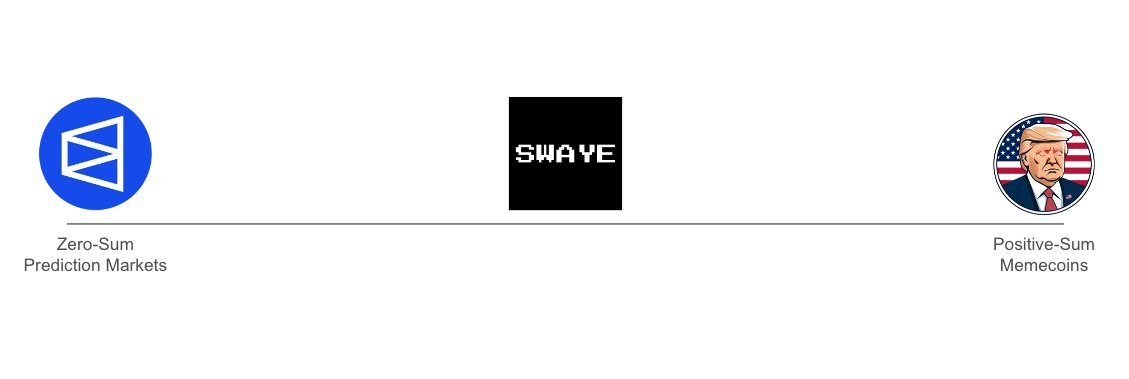
In Web3, memecoins themselves have become prediction markets—for example, $TRUMP and $BODEN. Their holders gain exposure in two key ways:
-
Directional correctness
-
Attention capture
Memecoins allow users to speculate on others' speculation, regardless of whether they themselves are right.
A new protocol called @swaye_co aims to combine the best aspects of prediction markets and memecoins. Early users aren’t just betting on outcomes—they’re incentivized to gain attention, as betting activity on either side increases the overall PnL.
As a protocol, there are several ways to generate revenue:
-
Trading fees
-
Taking a cut of traders’ winnings (the path commonly followed by Web2 models)
-
Accumulating counterparty PnL (Web2 likes serving losing customers)
Most protocols adopt either method 1 or 3, while Polymarket charges no fees at all.
What comes next? AI agents will be the next major users in this space, as they can react instantly to news, manage orders, inventory, and place bets. They can also calculate expected values and take on computational risk. Some teams are secretly developing this technology.
Within the next few years, at least one protocol will directly compete with Polymarket in terms of volume. Given Polymarket’s current incentives for its markets, heavy use of incentives—such as points, tokens, or USDC—may be required.
Everyone is asking about post-election volume sustainability, but so far, non-election volume on Polymarket has been steadily rising since the beginning of the year.
Join TechFlow official community to stay tuned
Telegram:https://t.me/TechFlowDaily
X (Twitter):https://x.com/TechFlowPost
X (Twitter) EN:https://x.com/BlockFlow_News
 @Mikey0x_