








The Cryptocurrency Revolution: Restructuring Financing Strategies in Modern Finance
TechFlow Selected TechFlow Selected
The Cryptocurrency Revolution: Restructuring Financing Strategies in Modern Finance
Facilitating financing is one of the core functions of cryptocurrency.
 Navigating Web3 tides with focused insights
Authors: Jesse Zheng, Willie Shi, Yue Wang, Li Guoquan
This article provides an in-depth analysis of the transformative impact of cryptocurrency on fundraising strategies, with a particular focus on the evolution from initial coin offerings (ICOs) to airdrops and other mechanisms. We explore the significance of tokens and clarify the advantages of ICOs over traditional fundraising methods such as initial public offerings (IPOs) and crowdfunding. Additionally, we critically assess the effectiveness of airdrops as both launch mechanisms and tools for project development. To optimize ecosystem benefits, we propose a set of airdrop design principles. Furthermore, we introduce the latest fundraising strategies and identify meaningful directions for future research. By offering valuable insights and references, our article serves as a comprehensive guide for researchers and practitioners exploring new cryptocurrency-based fundraising strategies.

1. Introduction
Cryptocurrencies, secured by cryptographic techniques and stored as data in virtual space, have revolutionized the financial industry in recent years (Geuer & L 2023). These decentralized digital assets operate independently of central banks, providing a new type of payment system based on blockchain technology (Jiménez et al. 2021). Cryptocurrencies, particularly Bitcoin, have significantly changed how transactions, investments, and wealth storage are managed (Stein & S 2020). They offer clear advantages in transaction transparency, lower fees, and faster cross-border transfers—marking a paradigm shift in finance (Enajero & S 2021). Understanding their long-term implications is crucial. One notable impact of cryptocurrencies is their ability to facilitate successful project fundraising, bringing benefits and transformation to society (Li et al. 2019).
This article serves as a comprehensive guide that rethinks cryptocurrency-based fundraising strategies within modern financial environments, mapping out the evolution and future trajectory of fundraising. Section 2 explains the core value of tokens. Section 3 introduces initial coin offerings (ICOs), their development, opportunities, and risks, comparing them with traditional fundraising methods. Section 4 presents the current most popular fundraising launch method—the airdrop mechanism. Section 5 proposes effective standards for future protocol fundraising using cryptocurrencies. Section 6 showcases the latest ways native crypto projects use cryptocurrencies to launch initiatives, such as BRC-20 inscriptions and Decentralized Physical Infrastructure Networks (DePIN).
2. The Importance of Tokens
With the advent of the digital era, adoption of digital financial tools has become widespread (Johnson et al. 2021). However, many people around the world still lack access to traditional banking services, limiting their growth opportunities (Yao et al. 2021). Digital currencies deployed on consortium or private blockchains are restricted to specific domains. In contrast, cryptocurrencies built on public blockchains offer an innovative solution to these issues. They enable free movement of wealth without relying on trusted third parties (Li et al. 2020). This decentralization helps build a more inclusive financial system not controlled by centralized entities. Cryptocurrencies can provide vital financial support to individuals and businesses in regions where traditional financial services are limited (Corbet et al. 2018). The decentralization offered by cryptocurrencies represents a significant step toward a more inclusive and open financial system.
Moreover, cryptocurrencies serve as important coordination mechanisms (Enajero et al. 2021). As decentralized autonomous organizations (DAOs) gain influence, more people purchase governance tokens representing ownership in these organizations, driving up token prices (Light 2019). This increase in value not only brings financial gains to token holders but also strengthens connections among stakeholders, attracting more contributors and accelerating organizational growth (Jagtiani et al. 2021).
3. Initial Coin Offerings (ICO)
3.1 Introduction to ICOs
An ICO, also known as a token sale, is a novel fundraising mechanism that allows projects to raise capital by issuing digital tokens on a blockchain. It enables blockchain startups to execute experimental, community-driven funding by exchanging newly created tokens for highly liquid cryptocurrencies. This is an innovative way to obtain capital and indirectly acquire fiat currency. Instead of purchasing equity, investors exchange their cryptocurrencies for software-generated tokens (Lee & Low 2018).
In the evolving landscape of ICOs, tokens serve multiple purposes beyond mere equity representation. Some function as credentials granting holders access to specific services or products the project intends to offer—effectively acting as a pre-sale mechanism. The whitepaper—a comprehensive document detailing project goals, team members, technical specifications, and token distribution strategy—is central to the ICO process. During the ICO boom, significant capital inflows were often driven by speculative fervor rather than intrinsic project value (Li et al. 2021). This led to startups achieving million-dollar valuations based solely on conceptual whitepapers—drawing comparisons to the dot-com bubble. Such speculative environments inevitably lead to market corrections, posing risks especially to investors entering high-valuation markets (Li et al. 2020).
While ICOs offer promising avenues for fundraising in the digital age, they come with inherent risks and challenges (Şarkaya et al. 2019). Unfortunately, the lure of rapid capital accumulation in the ICO space has attracted bad actors. Investors are often driven by FOMO (fear of missing out), sometimes abandoning rigorous due diligence, making them vulnerable to sophisticated scams (Shehu et al. 2023). Copied whitepapers, fake project websites, and “exit scams” where teams disappear after fundraising highlight the necessity of thorough project evaluation. Engaging in the ICO space requires awareness of regulatory ambiguity, as jurisdictions adopt varying approaches (Oliveira et al. 2021). While some regions like Switzerland take a more permissive stance, others such as China have imposed strict bans. This regulatory diversity, combined with shifting perspectives, demands that both project initiators and investors remain informed about applicable rules. Moreover, the value proposition of these tokens often hinges on a single demand event, potentially limiting fundraising potential compared to traditional multi-round equity financing (Sousa et al. 2021). A deep understanding of their dynamics, coupled with appropriate regulatory frameworks, is essential to protect investor interests and fully realize their potential.
3.2 Key Milestones of ICOs
The concept of ICOs originated with Mastercoin. Their popularity surged following the launch of the Ethereum network in 2015. Table 1 outlines key milestones in ICO development (Zheng et al. 2020).
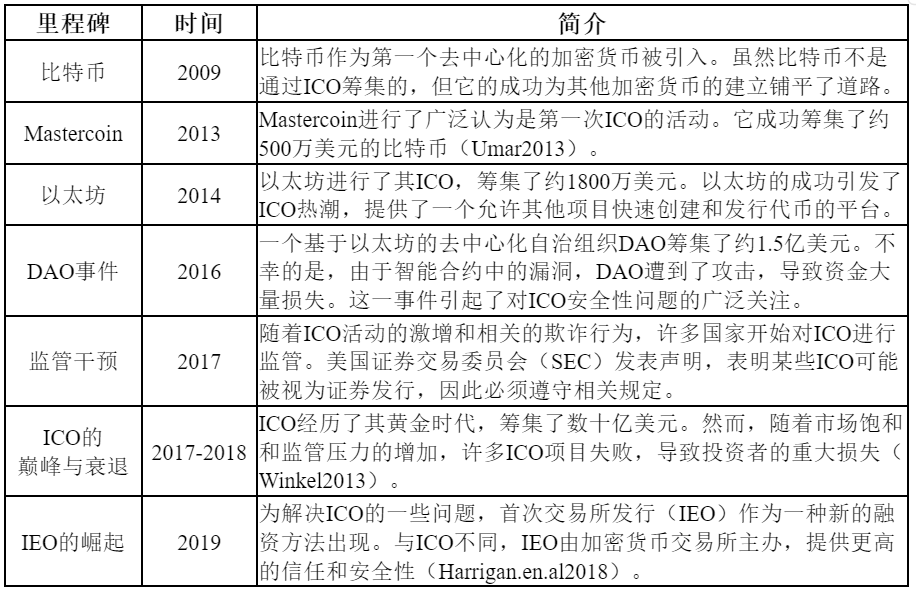
Table 1: Key Milestones in ICO Development
Throughout ICO history, projects like Tezos, EOS, and Filecoin successfully raised substantial funds. However, numerous projects failed for various reasons, offering valuable lessons for both investors and regulators (Lee et al. 2018).
3.3 Comparison with Initial Public Offerings (IPOs)
In stock markets, IPOs refer to a company's first public listing of shares on a securities exchange, aiming to raise capital by exchanging ownership stakes (Lee et al. 2021).
ICOs and IPOs represent fundamentally different paradigms in capital raising, each with distinct advantages and challenges. Built on blockchain technology, ICOs offer a fast and decentralized fundraising mechanism, enabling projects to secure capital in significantly less time than traditional IPO processes. This speed bypasses complex regulatory entanglements and intermediaries, democratizing investment opportunities, breaking geographical barriers, and welcoming a diverse investor base. In contrast, IPOs follow a more structured yet lengthy path through rigorous audits, regulatory compliance, and partnerships with established financial institutions. The dichotomy between ICOs and IPOs reflects a trade-off between speed and decentralization versus regulation and stability—the choice depending on investor risk tolerance, objectives, and familiarity with the evolving cryptocurrency landscape.
Shareholders in IPOs enjoy rights such as voting in corporate affairs or receiving dividends. The purpose of an IPO is to raise funds by exchanging company ownership. In contrast, ICO participants typically do not share in profits. Their potential returns are usually tied to the appreciation in value or utility of tokens within the project’s ecosystem.
IPOs are often limited to institutional investors or individuals with substantial capital during early stages. ICOs democratize this process, allowing anyone with internet access and some cryptocurrency to participate. Table 2 summarizes the comparison between ICOs and IPOs.
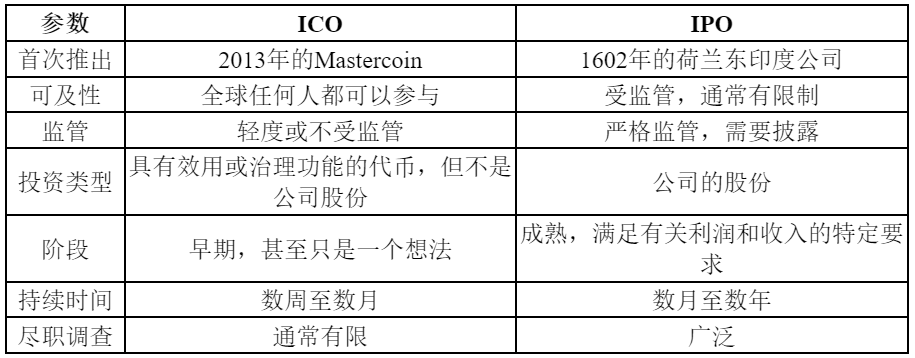
Table 2: Comparison Between ICOs and IPOs
3.4 Further Evolution: IDO and IEO
Although pioneering, ICOs faced challenges regarding regulation and investor protection. This gave rise to Initial Exchange Offerings (IEOs) and Initial DEX Offerings (IDOs), which offer similar fundraising opportunities with fewer regulatory constraints, higher decentralization, and improved due diligence.
In 2017, regulators in several countries began scrutinizing ICOs more closely. Notably, the U.S. Securities and Exchange Commission (SEC) stated that certain ICOs might qualify as securities offerings, requiring compliance with relevant regulations. Countries like China and South Korea outright banned ICO activities. The surge in ICO activity also correlated with increased fraudulent schemes. Many projects vanished after raising large sums, causing significant losses to investors. Consequently, ICO popularity waned over time.
Unlike ICOs, IEOs are hosted by cryptocurrency exchanges. This provides greater trust and security for investors, as exchanges conduct preliminary reviews and vetting of projects. Additionally, tokens are typically listed immediately after the IEO concludes, ensuring liquidity. Binance launched Binance Launchpad to provide a more structured and secure platform for projects to raise funds. Endorsement from reputable exchanges adds credibility. The success of Binance Launchpad prompted other major exchanges to launch their own IEO platforms. This shift marks a transition from the decentralized ICO model to a more centralized, potentially safer IEO model. With backing from well-known exchanges, investors feel more confident participating in IEOs, knowing projects have undergone some level of scrutiny.
In contrast, IDOs involve token sales on decentralized exchanges (DEXs), offering higher decentralization than IEOs. This allows project teams to raise funds more quickly and flexibly under the IDO model. This approach combines the decentralized spirit of ICOs with the structured methodology of IEOs. Through IDOs, projects can bypass the stringent listing requirements typically enforced by centralized exchanges. Moreover, DEXs provide immediate liquidity for project tokens. While ICOs revolutionized fundraising, smart contract security cannot be overlooked. The market’s evolution toward IEOs and IDOs reflects the industry’s adaptability and ongoing efforts to balance innovation with security. As the cryptocurrency sector matures, regulators worldwide struggle to keep pace. The shift from ICOs to IEOs and IDOs can be seen as a response to this changing regulatory environment—offering greater investor protection while fostering innovation.
4. Airdrops
The concept of airdrops dates back to the early days of cryptocurrency, when developers would distribute tokens to holders of specific cryptocurrencies or wallets meeting certain criteria. Since these distributions resemble items falling from the sky without requiring any action from recipients, the term "airdrop" was coined. The first notable airdrop occurred in 2011 when Bitcoin holders received Litecoin for free.
An airdrop is a marketing strategy used in the cryptocurrency space to distribute tokens freely or at minimal cost to a large number of wallet addresses. Various protocols adopt this method for fair token distribution, building decentralized communities, and sometimes incentivizing user interaction with the protocol. A classic example is the story between Uniswap and SushiSwap. SushiSwap, a fork of Uniswap, created the SUSHI token, offering additional rewards to liquidity providers. The platform attracted Uniswap’s liquidity providers to migrate their funds to SushiSwap, rewarding them with SUSHI tokens. This strategy proved highly successful, leading to a massive transfer of liquidity from Uniswap to SushiSwap. To maintain its market position, Uniswap responded by launching its governance token UNI, distributing it to liquidity providers and users who had previously transacted on the platform. This event marked a pivotal moment in the history of decentralized finance (DeFi) and airdrops, demonstrating how protocols can strategically attract and reward users through targeted airdrops.
The core advantage of airdrops lies in their cost-effective ability to rapidly and sustainably realize ideas. In the early phase of Web3+ projects, users spend time and resources testing protocols without compensation. Protocols improve their products based on user feedback before seeking funding. Investors identify promising protocols through due diligence. Once funded, these protocols reward early users via token airdrops. Early users can then actively participate in DAO governance or exchange tokens for other cryptocurrencies. Recipients are more likely to use the service, provide feedback, and support the protocol. Entrepreneurs and investors committed to advancing the internet support these blockchain-based solutions to coordinate all stakeholders at minimal cost. Web3+ breaks free from reliance on Web 2.0 giants to drive change, directly competing with Web 2.0 companies (Zheng and Lee 2023).
Airdrops play a crucial role in generating excitement and publicity, attracting new users to platforms. When airdrops occur, media and community members actively promote, discuss, and research the protocol, giving it extensive exposure. Developers cultivate loyalty and stimulate sustained community engagement by incentivizing and rewarding early supporters. This approach enhances project visibility, attracts a broader user base, and ensures decentralized token distribution, reducing concentration risks.
However, airdrops also have drawbacks. Users holding large amounts of airdropped tokens may manipulate the market or dump them at low prices. Individuals may create multiple wallets to claim more airdrops, diluting intended benefits. Additionally, resources used for airdrops could be allocated to other development or marketing activities. Airdrops may pose challenges in uncertain regulatory environments. If classified as securities, they may require strict regulatory compliance. Therefore, projects must understand the current regulatory landscape and ensure compliance to avoid legal disputes. Allocation size can also be a double-edged sword. Insufficient airdrop rewards may cause dissatisfaction among community members.
On the other hand, excessive allocations may dilute token value, negatively impacting price and weakening investor enthusiasm. This instability intensifies if many recipients decide to sell simultaneously. These downsides were clearly evident in recent airdrop distributions by zkSync and LayerZero. To address this, projects can implement carefully designed airdrops with clear guidelines and vesting schedules to prevent sudden devaluation. The structure and release of airdrops can significantly influence participant behavior. Poorly designed airdrops may encourage short-term mindsets, potentially undermining the project’s overall goals. Ensuring airdrop incentives align with the project’s long-term vision is critical to promoting sustainable growth and development.
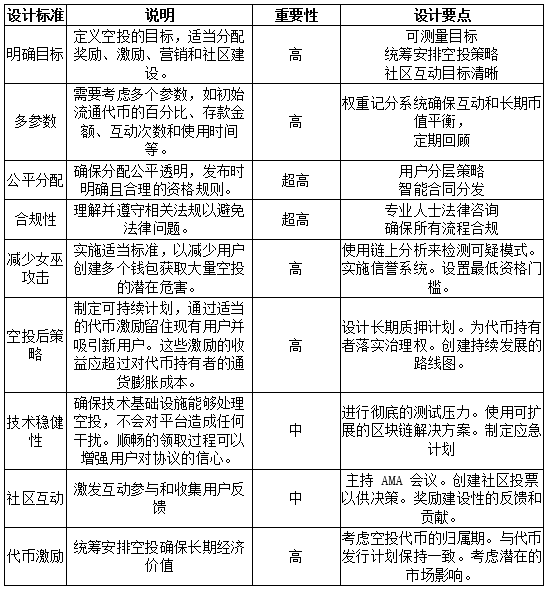
Industry builders can refer to the design criteria in Table 3 when creating tokenomics, while investors can use these benchmarks when deciding whether to hold tokens long-term.
Airdrop Design Criteria
5. Other Fundraising Mechanisms Using Cryptocurrency
BRC-20 inscriptions and Decentralized Physical Infrastructure Networks (DePIN) represent two innovative fundraising mechanisms.
Bitcoin is often viewed as a store of value, while Ethereum is seen as an innovative ecosystem for building decentralized applications. However, interest in creating a Bitcoin-based ecosystem has grown since Casey (2023), a core member of the Bitcoin community, introduced the Ordinals protocol.
A satoshi is the smallest unit of Bitcoin, equivalent to one hundred millionth of a Bitcoin. The Ordinals protocol assigns a unique ordinal number to each satoshi based on its mining order. This ordinal remains unchanged during any transfer, making each satoshi uniquely non-fungible. Inscriptions are a core component of the Ordinals protocol, allowing data to be inscribed onto individual satoshis. Some consider inscribed satoshis as unique digital artifacts. Ordinals confer non-fungibility to satoshis, while inscriptions add unique information—similar to drawing on a blank sheet of paper. Combining these features creates a new NFT standard within the Bitcoin ecosystem.
Inspired by ERC-20 tokens and the Ordinals protocol, Twitter user @domodata created a new fungible token standard called BRC-20. It uses JSON data from ordinal inscriptions to deploy token contracts and manage minting and transfer processes. BRC-20 tokens follow a "first-come, first-served" deployment principle. Once a BRC-20 token with a given name is deployed, no other token with the same name can be created. Although @domodata categorized BRC-20 as a social experiment, the standard gained widespread adoption due to community promotion and support from centralized exchanges and Bitcoin miners.
Venture capitalists acquire large quantities of tokens at very low prices during private sales. They leverage their reputation to support protocols and craft compelling narratives to attract retail investors. Unfortunately, when VCs later sell their tokens, retail investors often become the source of liquidity. Retail investors grow weary of this unfair mechanism. The emergence of BRC-20 offers an opportunity for fairer distribution. There are no private sales reserved for venture capitalists or angel investors. Everyone has equal opportunity to obtain tokens through minting. During minting events, investors pay gas fees to mint tokens, with no cap on how many tokens each investor can mint. This mechanism distributes tokens fairly and decentralizes ownership. Token holders are naturally incentivized to promote and support the protocol. With BRC-20, strong consensus forms among community members because everyone has equal participation rights. If VCs want BRC-20 tokens, they must either join the minting process or buy on secondary markets. Notably, many successful BRC-20 tokens foster strong community cultures, some even embracing meme culture. Meme coins play an important role in the cryptocurrency ecosystem. Current BRC-20 token prices are primarily supported by community consensus and meme culture within the crypto space. Intrinsic value refers to the discounted present value of cash flows generated over a product or business lifecycle—thus, most BRC-20 tokens lack intrinsic value. However, the psychological value of BRC-20 tokens is determined by holders’ subjective sentiment, akin to emotional value associated with collectibles or pets. As a fungible token standard, BRC-20 offers better liquidity than NFTs. Meanwhile, some BRC-20 tokens possess specific utilities, such as serving as gas fees or entry tickets to token launch platforms.
Following the success of BRC-20, numerous other token standards have emerged across the Bitcoin system and other blockchains—such as ARC-20, Rune, BRC-420, and SRC-20. These inscription-based innovations warrant further research and development. These new token standards contribute to a more inclusive financial ecosystem with enhanced functionality, ensuring equal fundraising opportunities for anyone with internet access.
Another increasingly popular trend is Decentralized Physical Infrastructure Networks (DePIN). The rise of DePIN represents a new paradigm, leveraging blockchain technology to facilitate and manage distributed physical infrastructure systems. DePIN aims to address challenges in deploying and managing physical infrastructure—domains traditionally dominated by large corporations due to high capital requirements and complex logistics.
IoTeX (2021) first proposed the concept of DePIN, calling it MachineFi—an integration of machines and decentralized finance (DeFi)—to harness machine-driven data, events, and tasks. Messari introduced the term "DePIN" in its 2022 report based on a Twitter poll.
At the outset, DePIN uses tokens or potential airdrops to incentivize user participation in ecosystem building, attracting skilled developers to deliver more cost-effective products. As more users adopt the product or service, protocol revenue increases. These revenues can fund market capitalization management and further marketing, benefiting both supply and demand sides, encouraging more participants, capturing market attention, and fostering a thriving ecosystem. During bull markets, DePIN can generate strong positive flywheel effects. By implementing incentive mechanisms, DePIN networks can gain initial momentum to compete with established Web2 companies and achieve broad adoption (Sami 2023). DePIN serves as a crucial bridge connecting virtual Web3+ with the real world, effectively enhancing data security, coordinating idle resources, improving lives, and showcasing the practical value of cryptocurrencies to more people. It marks the first time cryptocurrencies are being used to develop real-world physical infrastructure.
Despite being innovative fundraising strategies within cryptocurrency, neither BRC-20 nor DePIN has succeeded in altering the speculative nature of the crypto market. When the market shifts from bull to bear phases, many BRC-20 tokens see zero trading volume, and DePIN sector tokens trend toward zero. How to better leverage tokens to empower organizations and establish lasting, sustainable distribution mechanisms remains a critical area for thought and practice among cryptocurrency entrepreneurs. Only then can we avoid wasting what Satoshi Nakamoto created—a once-in-a-century fundraising opportunity. Otherwise, the cryptocurrency industry risks devolving into a new kind of casino, unable to progress further.
6. Conclusion
The evolution of cryptocurrency fundraising, powered by blockchain technology, ushers in an era challenging traditional financial paradigms. The democratization of fundraising redefines the nature of value exchange and trust, expanding global access to investment opportunities. Yet, this profound transformation brings challenges—particularly regulatory ambiguity and the potential for fraudulent activities. The dynamic nature of the cryptocurrency ecosystem, evident in its adaptability and innovation (e.g., ICOs, IEOs, and strategic airdrops), stands as a testament to its resilience and potential.
Facilitating fundraising is one of the core functions of cryptocurrency. Compared to traditional finance, it operates more efficiently and inclusively. The inclusivity of cryptocurrency in fundraising should not be underestimated. It offers more fundraising opportunities and visibility, lowering the barrier for investors to fund potentially world-changing projects. As we consider how to help more people understand and use cryptocurrency for fundraising, protecting investors and minimizing fraud risks—without stifling innovation—should be a shared goal for policymakers, industry groups, academics, and project owners.
Finally and most importantly, due to the permissionless nature of public blockchains, anyone wishing to fundraise via cryptocurrency can issue tokens at low cost. If a project fails, founders can easily launch another. Statistics show that 92% of blockchain projects cease operations within a year of launch. In contrast, the IPO application process is far more difficult, and entrepreneurs listing on traditional markets have stronger incentives to sustain their projects. Therefore, investors should carefully assess the risks associated with cryptocurrency investments.
Join TechFlow official community to stay tuned
Telegram:https://t.me/TechFlowDaily
X (Twitter):https://x.com/TechFlowPost
X (Twitter) EN:https://x.com/BlockFlow_News












