









20 Hottest WeChat Mini Games That Are Perfect for Telegram Mini Apps
TechFlow Selected TechFlow Selected
20 Hottest WeChat Mini Games That Are Perfect for Telegram Mini Apps
Copying WeChat is Telegram's shortest path to growth.
 Navigating Web3 tides with focused insights
Author: Fu Ruheshi, Odaily Planet Daily
Mini-program games on Telegram began emerging as a new traffic hub for Web3 in 2024, transforming Telegram from an early crypto-focused IM app into an integrated platform combining payments, social interaction, and entertainment.
When seeing keywords like instant messaging (IM), payments, social networking, and entertainment, Chinese users are naturally reminded of WeChat—the dominant force in communication and social software. Comparing the development paths of Telegram and WeChat, Telegram is increasingly resembling a "crypto version of WeChat." Beyond their shared foundation in IM functionality, both platforms follow nearly identical ecosystem expansion strategies: leading with payments, then building social graphs, and ultimately creating comprehensive ecosystems via built-in mini-programs. However, at the architectural level, there’s a key difference: WeChat is purely a Web2 product, while Telegram bridges both Web2 and Web3.
Today, WeChat has evolved into a mature commercial ecosystem, while Telegram is actively building its own mini-program ecosystem. The recent surge in popularity of Tap-to-Earn (tap-based casual games) has attracted numerous developers to Telegram, resulting in a rapid replication and proliferation of mini-program games within a short timeframe.
So why not replicate top-performing and profitable WeChat mini-programs directly onto Telegram? With this in mind, Odaily Planet Daily uses WeChat's mini-program game rankings as a data baseline to explore which types of mini-programs are best suited for migration to Telegram. Additionally, through in-depth analysis of each game, the author shares insights on economic mechanisms that can attract Web3 users to Telegram.
Please note: All economic models discussed in this article are based on the author’s subjective analysis and interpretation. Feedback is welcome.
Traffic Monetization Is More Suitable Than Recharge-Based Monetization for Telegram's Mini-Program Ecosystem
According to discussions between the author and staff from Gravity Engine—a domestic WeChat mini-program analytics platform—current monetization channels for WeChat mini-program games fall into two broad categories: traffic monetization and recharge-based monetization.
Traffic monetization primarily applies to games with strong user retention, using embedded rewarded ads as the revenue channel. For example, in puzzle or survival games, when players get stuck or need high-value rewards, they watch ads to progress. Advertisers pay fees to the game publishers during this process, forming the core of traffic monetization.
In contrast, recharge-based monetization focuses on encouraging in-game purchases (pay-to-win mechanics) to generate publisher revenue. These games typically require high production quality to entice spending, placing less emphasis on continuous user engagement and more on gameplay loops such as idle monster grinding or PVP combat.
Below is data from Gravity Engine, dated August 1st.
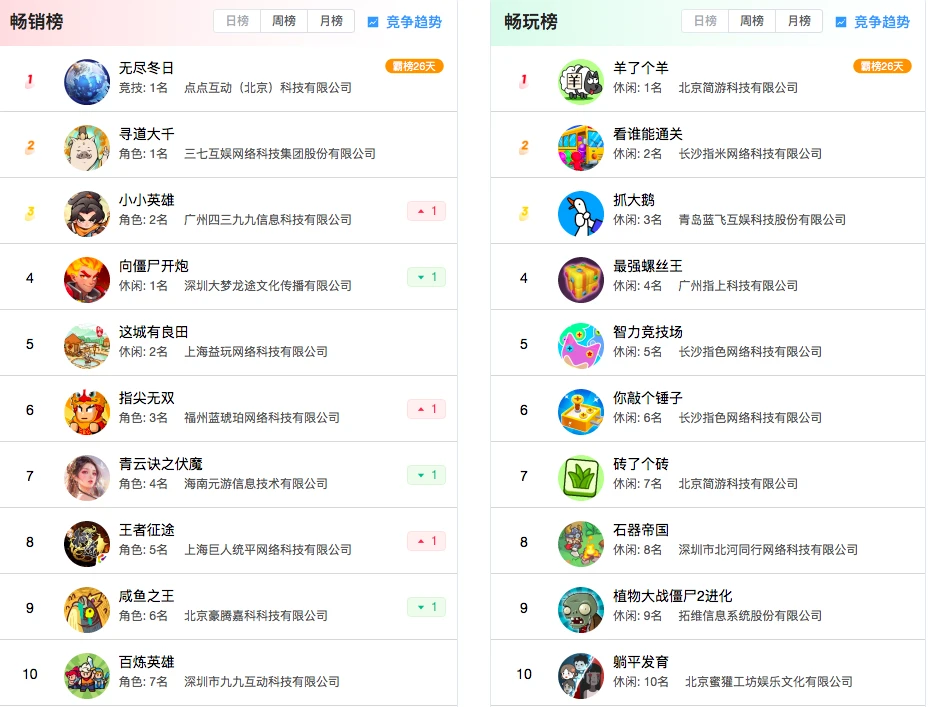
Odaily Planet Daily Note: The “Bestseller Chart” represents games ranked by in-app purchase revenue, while the “Top Played Chart” reflects performance under traffic monetization models.
Which game model should developers choose for Telegram’s mini-program ecosystem? After personally testing all 20 listed games, the author concludes that traffic-monetized games are better suited for early-stage development on Telegram, whereas recharge-based games should be considered only in later stages.
How Traffic-Monetized Games Can Be Adapted for Web3 Users
As far as Odaily Planet Daily understands, some existing Telegram mini-games already employ traffic monetization, mainly through token-rewarded tasks (similar to those on Web3 task platforms), such as watching YouTube videos or completing promotional tasks set by project teams.
However, WeChat integrates rewarded ad APIs directly into its mini-games and partners with traditional ad networks, allowing games to access advertiser inventories and earn revenue from ad placements. Telegram currently lacks a comparable internal advertising infrastructure, making it difficult to support the same kind of rewarded ad experience found in WeChat mini-games.
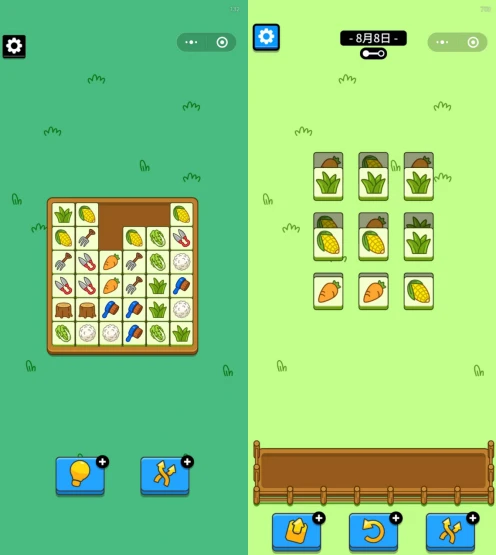
From the chart above, games led by titles like “Sheep It Up” are particularly popular. “Sheep It Up,” originally a single-game concept, has expanded into a multi-game framework—including “Brick It Up,” ranked eighth on the Top Played Chart—as part of its ecosystem.
These games combine casual puzzle-solving with strategic elements, making them highly addictive. Once deeply engaged, most users resort to “rewarded ads” when stuck or facing difficulty spikes. In later levels, the game mechanics become so challenging that passing without watching five or more ads becomes nearly impossible. Most games on the Top Played Chart operate similarly, leveraging users’ competitiveness and aversion to spending money by forcing them to endure 30-second ads to gain advantages.
While these games are relatively easy to develop and attract large traffic volumes, their returns are steady rather than explosive—unless traffic surges dramatically, revenues remain moderate. Moreover, for Web3 users accustomed to GameFi’s investment-driven incentives, these games offer limited appeal compared to established alternatives.
Therefore, the author proposes enhancements tailored to better meet Web3 user expectations. Using puzzle-type games as an example:
-
Introduce tiered token rewards per level, distributed based on player performance (e.g., three tiers with varying token amounts), incentivizing prolonged play and sustained engagement;
-
Retain traffic monetization: require ad views upon failure to revive, maintaining stable Web2-style cash flow alongside Web3 elements;
-
On the supply side, issue tokens as described in point one; on the demand side, introduce special in-game items that alter level conditions, compelling players to spend earned tokens to purchase these tools for progression.
Recharge-Based Games Are Currently Unsuitable for Telegram Mini-Programs Due to Development Complexity and Mechanism Constraints
Based on the “WeChat Mini-Program Game Rankings,” recharge-based games generally fall into three categories: PVP modes, idle/idle-grinding modes, and character-raising (gacha) games. These types typically involve higher development costs and longer production cycles compared to traffic-monetized games. They also require innovative game mechanics and narrative depth—comparable in complexity to developing full standalone mobile apps.
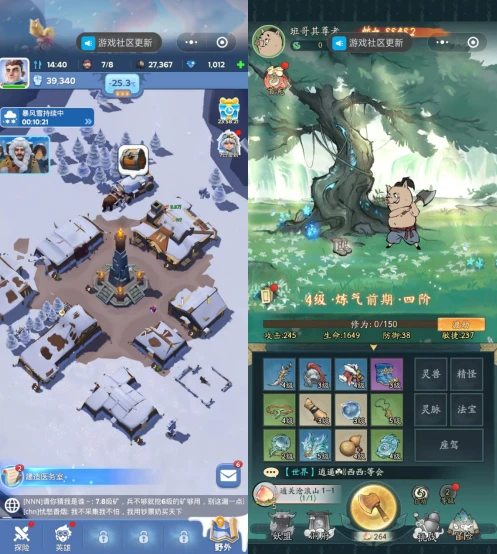
Particularly top-ranked titles like “Endless Winter” and “Seek Dao: Great Thousand,” feature complex internal systems and diverse content, making them unsuitable for quick market entry by development teams. They are better aligned with a mature Telegram mini-program ecosystem and a user base with established spending habits—ideal for introduction during later phases focused on recharge monetization.
That said, if companies do pursue such games, integrating crypto payments—such as Toncoin, USDT, or other digital assets—for in-game purchases could attract Web3 users. Especially in regions like Russia, Central Asia, or areas with underdeveloped internet infrastructure, Telegram mini-programs represent a novel offering. Selecting appropriate game genres or utility tools for these audiences may unlock entirely new markets.
Overall, recharge-based games are currently ill-suited for Telegram’s evolving mini-program ecosystem. Without robust GameFi economic models, issuing tokens risks immediate dumping, mirroring the current struggles seen across many GameFi projects.
Conclusion
Odaily Planet Daily believes Telegram should leverage the proven success of WeChat mini-program games by replicating them early on to accelerate ecosystem growth.
By comparing traffic versus recharge-based monetization models, the author finds that migrating traffic-monetized games from WeChat to Telegram is currently more viable. These models align well with Telegram’s early-stage development, while recharge-based games should wait until the ecosystem matures before being introduced.
Additionally, conversations between Odaily Planet Daily and Telegram developers reveal that Telegram supports JavaScript—the widely used language in China—potentially attracting experienced domestic developers to build on its platform. However, implementing smart contracts on TON for secure Web3 transactions introduces greater technical complexity due to differences in programming requirements.
According to Gravity Engine insiders, China’s WeChat mini-program market is becoming increasingly saturated and competitive. Many established studios plan to go global starting next year. As a rising social platform with rich asset integration capabilities, Telegram could become a new hub for Chinese developers.
In summary, Telegram is rapidly evolving into a “crypto WeChat,” with its mini-program ecosystem expanding at full speed—offering vast opportunities and challenges for developers.
Join TechFlow official community to stay tuned
Telegram:https://t.me/TechFlowDaily
X (Twitter):https://x.com/TechFlowPost
X (Twitter) EN:https://x.com/BlockFlow_News
 Odaily











