









Revealed! The culprit behind the plunge has been found
TechFlow Selected TechFlow Selected
Revealed! The culprit behind the plunge has been found
The叠加 of these factors led to a wild market plunge.
 Navigating Web3 tides with focused insights
Author: Viee, Core Contributor at Biteye
Editor: Crush, Core Contributor at Biteye
BTC dropped over 10% intra-day, ETH plunged more than 20%, reverting markets back to square one. Ethereum's price has now nearly erased all gains made this year, leaving today’s landscape littered with blood-soaked筹码.
Even more painful is that Ethereum fell like a mere altcoin, reminiscent of the March 12 crash, while you’re still holding those altcoins bought at the beginning of the year.
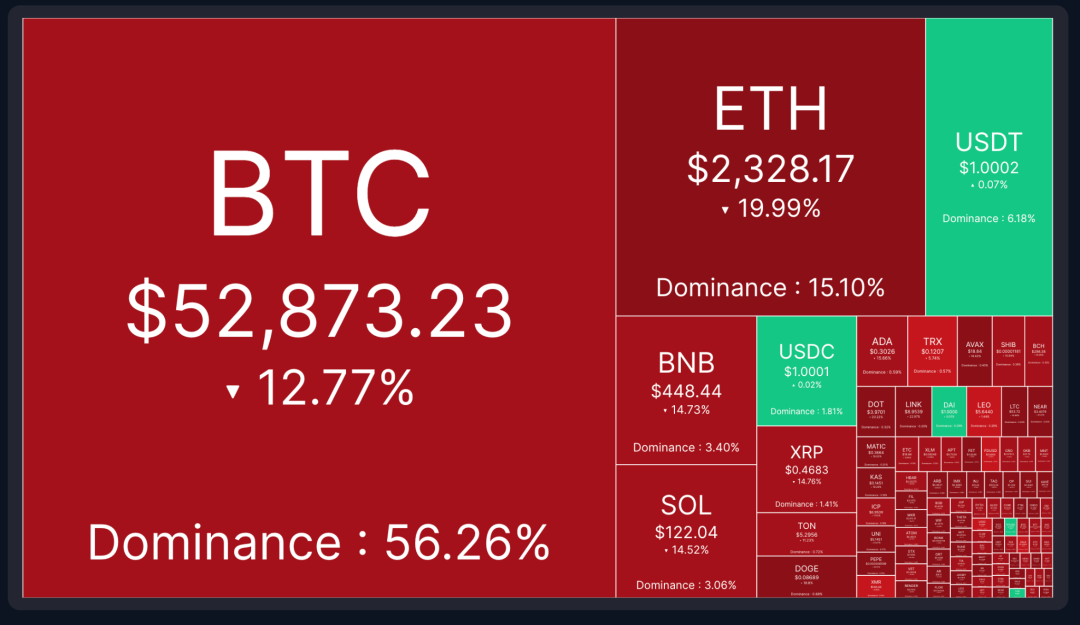
In fact, the seeds of this sharp decline were sown as early as last week.
Following the release of U.S. ISM manufacturing data, recession fears spread continuously, compounded by sudden shifts in Middle East tensions, leading to a global stock market crash on Monday. On top of this, the crypto sector faced a wave of selling pressure driven by multiple forces—government and Mt. Gox compensation-related sell-offs, Jump Trading liquidations, among others.
Overall, Jump Trading’s liquidation actions directly triggered panic in the crypto market, resulting in massive margin calls and frequent on-chain liquidations, intensifying downward pressure and accelerating the downtrend.
What exactly accelerated the crypto market's major plunge? It can likely be attributed to the following factors:
01 Macroeconomic Recession Signals Trigger Major U.S. Stock Pullback

U.S. equities experienced consecutive sharp pullbacks, with recession signals triggering panic selling across markets.
Last week, the ISM manufacturing index released on August 1 came in at just 46.8%, below expectations, sending U.S. stocks sharply lower. Since this index reflects activity in American factories, it is widely seen as a harbinger of economic recession.
On Friday, weaker-than-expected U.S. nonfarm payrolls further fueled market anxiety. The unemployment rate surged to 4.3%, activating the Sahm Rule—a reliable early indicator of recessions.
Over the weekend, U.S. markets were hit again by a series of bad news. Warren Buffett’s Berkshire Hathaway sold nearly half of its Apple shares in Q2, adding further downward pressure.
Intel announced the largest layoff in company history and said it would stop paying dividends starting in Q4 2024, causing its after-hours share price to plummet nearly 20%. Additionally, Nvidia delayed the launch of its new AI chip due to design flaws, impacting major tech firms including Meta, Google, and Microsoft.
This cascade of negative developments snowballed into a global equity market panic. The Nasdaq Composite tumbled 2.43%, while the S&P 500 fell 1.84%.
Asian markets were not spared either. Japan’s stock market dropped over 12% in three days, triggering circuit breakers. South Korea, Australia, and Singapore also saw significant declines. Market sentiment became extremely fragile, with investors on edge.
These upheavals have similarly increased uncertainty in cryptocurrency price movements.
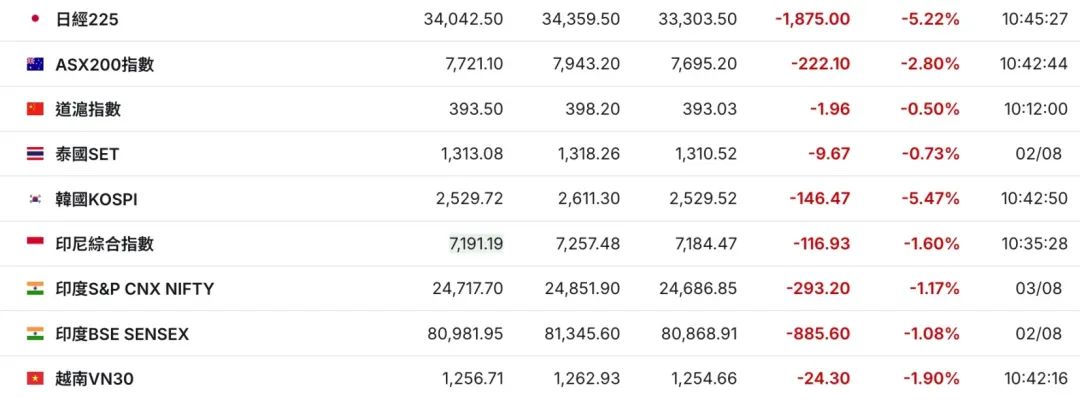
02 Escalating Geopolitical Crisis: Middle East Tensions Rise Again
After the assassination of a Hamas leader, conflict continued to escalate. Israel faces threats of retaliation from multiple fronts, raising global concerns about the conflict spreading into a full-scale Middle East war.
On August 5, the U.S. warned G7 nations that Iran could attack Israel within 24 hours. Military tensions between Israel and Iran intensified, and the killing of the Hamas leader ignited already-high regional tensions.
This geopolitical storm shook the world, rapidly boosting risk-off sentiment and impacting global financial markets, causing equities to retreat from recent highs.
Deteriorating Middle East conditions suggest an increasingly unstable geopolitical outlook for the second half of the year. Combined with growing macroeconomic recession fears, Wall Street’s fear gauge—the VIX index—climbed to its highest level in nearly 18 months.
03 Jump Trading Liquidations Directly Spark Crypto Market Panic
Jump Crypto’s recent large-scale withdrawal from Ethereum and mass selling of ETH attracted widespread market attention.
As early as June 24, when the CFTC began investigating Jump Crypto, CEO Kanav Kariya announced his resignation via social media without clarifying the reason.
Specifically, Jump converted large amounts of wstETH into ETH and rapidly transferred them to major exchanges—an action often interpreted as a bearish signal, triggering a chain reaction.

Within the past 24 hours, Jump Trading moved another 17,576 ETH (worth ~$46.78 million) to centralized exchanges.
According to Scopescan monitoring, Jump’s current holdings are primarily USDC and USDT. This unusual shift has led to speculation: Is Jump exiting the crypto market altogether?
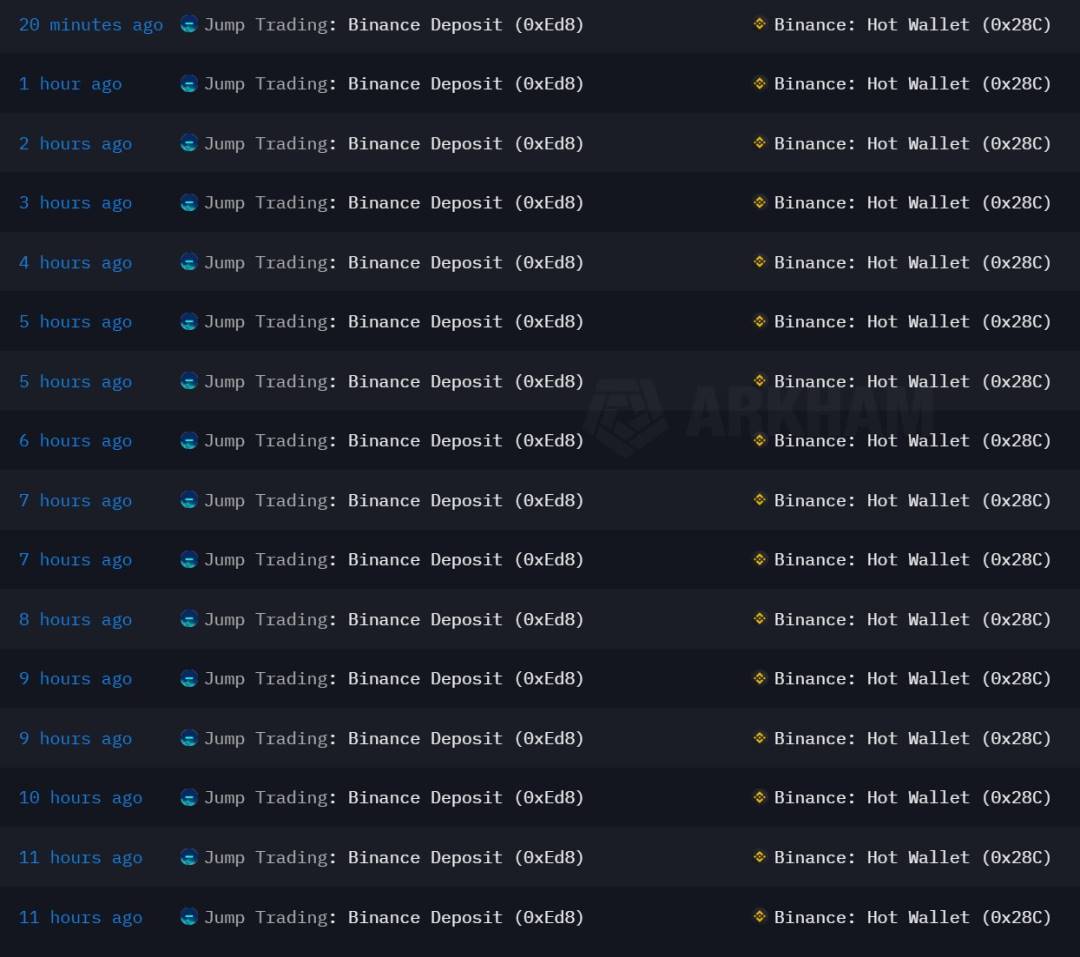
In response, ARCA Chief Information Officer Jeff Dorman offered several possible explanations:
-
First, Jump may be under regulatory pressure, especially considering the CFTC’s ongoing investigation;
-
Second, Jump might anticipate greater market turmoil and is taking preemptive defensive measures, similar to recent stock sell-offs;
-
Third, it could be adjusting its overall investment strategy or holding bearish options.
This event directly caused significant volatility in Ethereum’s price. Such large-scale capital movements could easily trigger a domino effect, further amplifying market swings.
04 Bank of Japan Hikes Rates, Disrupting Yen Carry Trades
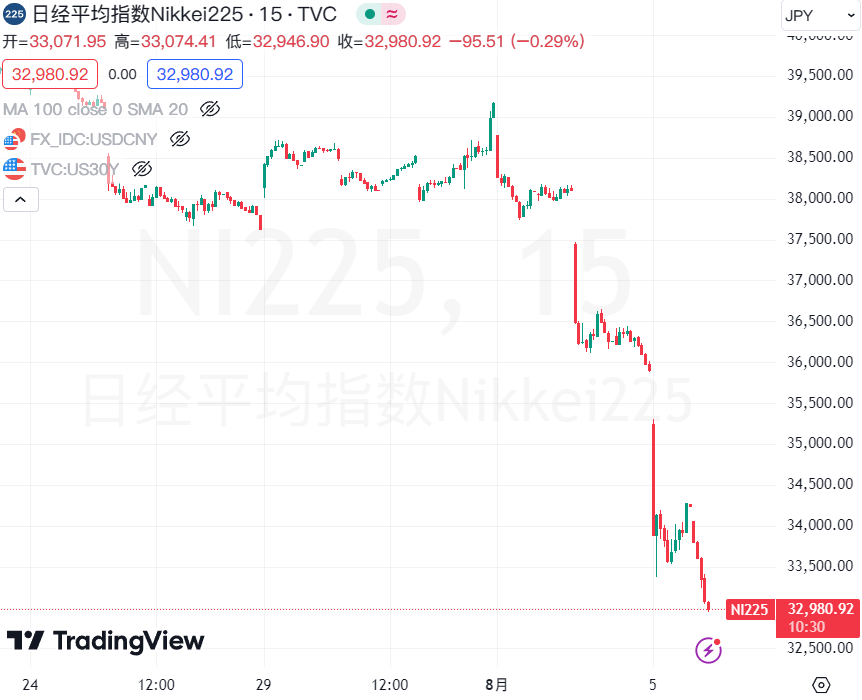
Japan’s Nikkei 225 Index posted its largest drop in history, even exceeding the 1987 Black Monday crash.
This plunge is closely tied to the Bank of Japan’s unexpected rate hike. On July 31, the BoJ raised its policy interest rate from 0%-0.1% to 0.25%, marking its first rate hike since ending negative rates in March this year.
This move triggered severe market volatility. The yen strengthened approximately 8% against the dollar within a month. This sharp exchange rate shift, coupled with expectations of further hikes, sparked a global financial market "cleansing."
The rate hike most directly impacted yen carry trades. Previously, investors borrowed cheap yen due to ultra-low Japanese interest rates and invested in higher-yielding assets abroad.
However, with rising Japanese interest rates, these arbitrage trades became costlier to maintain. As carrying costs rose, market instability followed, forcing traders to unwind positions and dump dollar-denominated assets, fueling broader market turbulence.
Consequently, Japan’s stock market suffered an unprecedented collapse. The Nikkei plunged 9%, and the Topix Index triggered circuit breakers twice, recording its biggest single-day drop in eight years.
Japan’s bond market wasn’t spared either. The yield on 10-year JGBs fell to 0.785%, down 17 basis points intraday.
05 Trump’s Support Drops, U.S. Election Uncertainty Rises
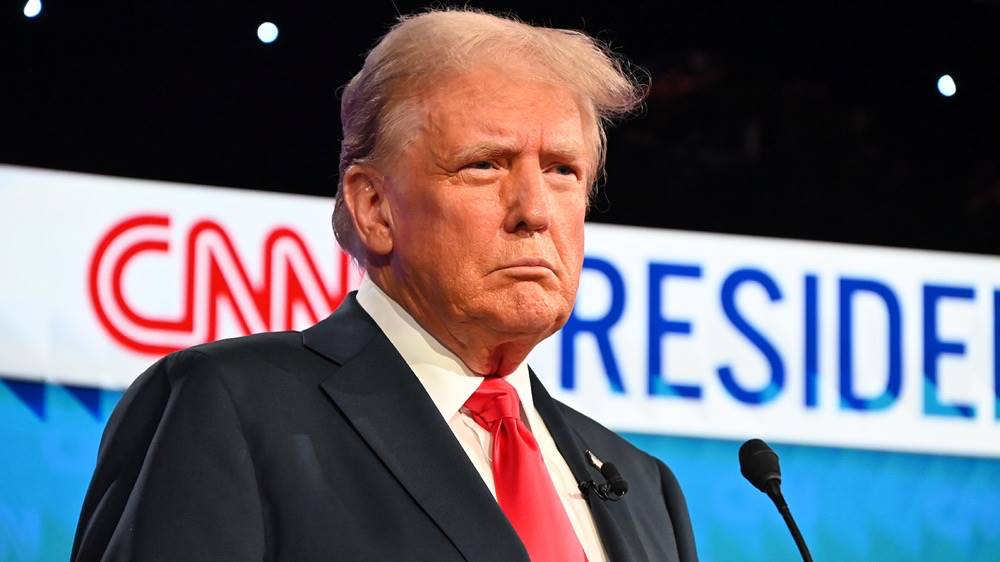
The U.S. election is also stirring markets. Kamala Harris’s surging popularity has disrupted the so-called “Trump trade.” Just two weeks ago, Trump single-handedly boosted BTC to near $70K through a speech, positioning himself as a crypto advocate.
Yet according to decentralized prediction platform Polymarket, Harris’s odds of winning have risen from 30% to 45%, while Trump’s support has declined. Harris is slowly gaining ground in public opinion polls.
Although Harris hasn't clearly endorsed cryptocurrencies, her campaign team is engaging key figures in the crypto industry to develop a reasonable regulatory framework. Given previous trends, the crypto market generally favored a Trump victory. Heightened election uncertainty adds yet another layer of market unease.
06 Ongoing Mt. Gox Sell-Off Adds Pressure from Multiple Fronts
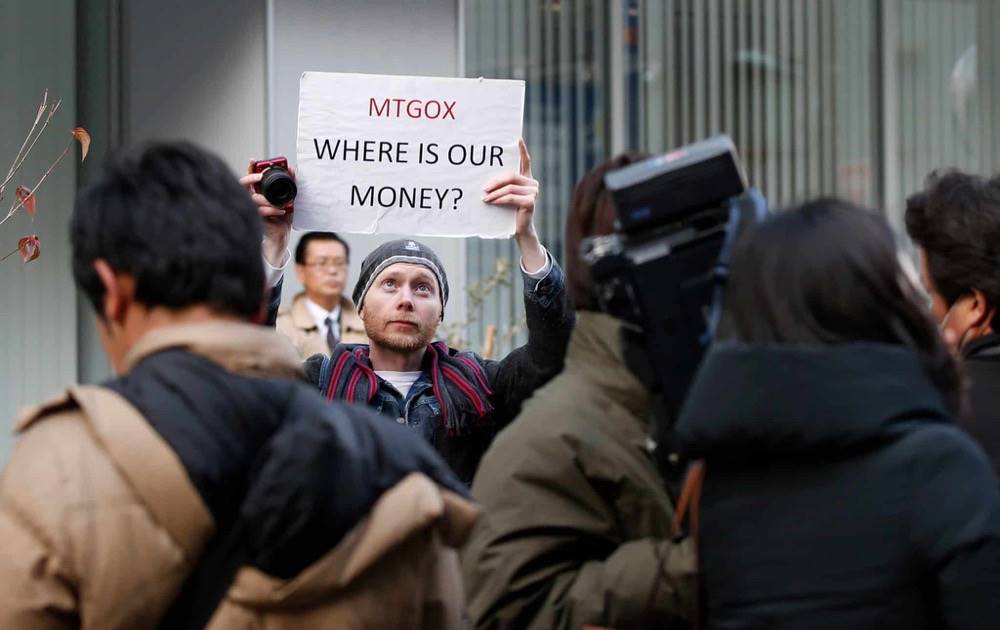
The long-running Mt. Gox sell-off continues. Recently, nearly 34,000 BTC allocated under the Mt. Gox settlement agreement added further downward pressure.
On July 31, Arkham monitoring showed the Mt. Gox address transferring 33,963.888 BTC (~$2.25 billion) to two addresses.
Additionally, the U.S. government and Genesis creditors are releasing large volumes of crypto assets. Genesis has begun distributing approximately $1.5 billion worth of Bitcoin and ETH to creditors, further exacerbating market supply-demand imbalances.
These combined factors caused Bitcoin’s price to swing sharply, briefly falling below the $50,000 mark.
07 Massive Margin Calls and Frequent Ethereum Liquidations
Due to heavy selling pressure and falling prices, multiple large-scale liquidations and on-chain clearing events occurred.
Four whale accounts had leveraged positions forcibly liquidated due to the sharp downturn, totaling 14,653 ETH (~$33.54 million). According to Parsec data, DeFi loan liquidations exceeded $320 million in the past 24 hours, hitting a yearly high.
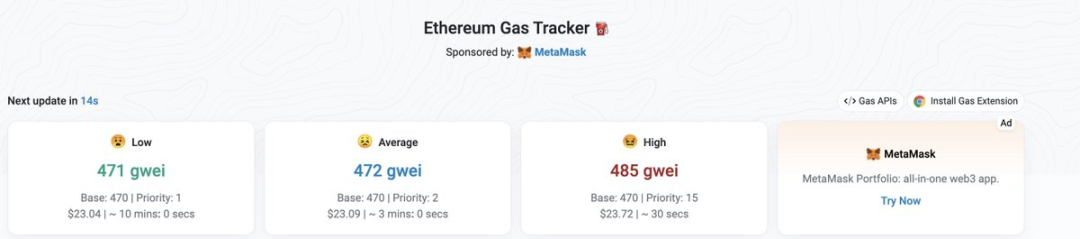
Parsec data shows that DeFi borrowing liquidations surpassed $320 million in the last 24 hours, including $187 million in ETH collateral, $77.9 million in wstETH, and $32.5 million in wBTC. Ethereum gas fees spiked to a peak of 701 Gwei—making it feel like a bull run was underway.
These liquidations intensified selling pressure, pushing the market into a sustained downward spiral.
08 Conclusion
Markets always progress through cycles of ups and downs. There are no markets that rise forever, nor ones that fall endlessly. If there were truly continuous declines with no rebounds, crypto would effectively be over—and that’s highly improbable.
We remain confident in the outlook. The critical phase of the U.S. election has yet to arrive, and economic recession remains in the realm of expectation rather than reality—actual developments remain to be seen. In terms of timing, the current correction has approached four months, surpassing the May 2021 drawdown period. If the bull market is still alive, we may well be in a bottoming zone now. Even if following a bear market script, bottoms typically emerge within 6–7 months, suggesting a rebound could materialize by October or November at the latest.
During phases of high uncertainty, maintaining calm and rationality is crucial. For now, patience is key. Markets will eventually find equilibrium, and those who wait often reap substantial rewards in the future.
Join TechFlow official community to stay tuned
Telegram:https://t.me/TechFlowDaily
X (Twitter):https://x.com/TechFlowPost
X (Twitter) EN:https://x.com/BlockFlow_News
 @BiteyeCN











