Build advantages and avoid becoming a sitting duck in market volatility
TechFlow Selected TechFlow Selected
Build advantages and avoid becoming a sitting duck in market volatility
Sustainable profitability does not happen overnight; it is a process of gradual accumulation.
 Navigating Web3 tides with focused insights
Author: Crypto, Distilled
Compiled by: TechFlow
In crypto, if you don't have an edge, you're just a sheep in the herd.
Don't let the bull market slaughter you.
Here’s how to find your edge:

1. Develop Your Edge
Most edges are cultivated, not discovered.
They come from consistent learning, curiosity, and observation.
Study your psychology, take smart risks, and surround yourself with supportive people.
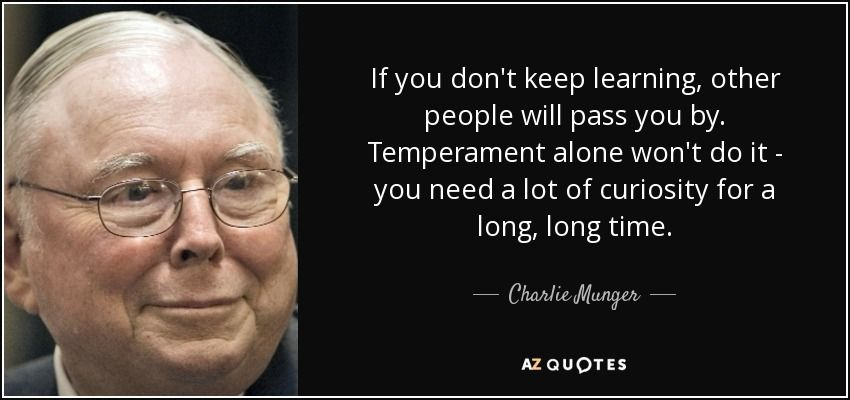
“If you’re not continuously learning, someone else will pass you. Personality isn’t enough—you must stay curious over the long term.” — Charlie Munger
2. Learn Like a Sponge
Be a sponge.
Absorb public knowledge—books, papers, articles, podcasts.
Remember, you're not limited to the present; history is filled with human genius and lessons learned.
“History is the best teacher for shaping the future. A $30 book on history may contain answers worth billions.” — Charlie Munger

3. Creativity
Public ideas can only take you so far.
The real magic lies in combining public knowledge with your personal experience.
Innovate by adapting and personalizing ideas to fit your goals.
This is especially crucial in the fast-moving world of crypto.
4. Personalize Your Approach
As you learn and grow, gradually build your personal trading profile.
Identify your strengths and weaknesses.
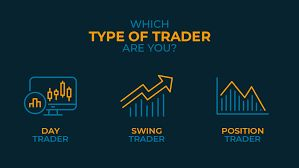
Explore trading styles that best suit your personality and time horizon.
5. Types of Edges
To spark your thinking, here are several categories of edges in crypto:
a. Informational: Timely information, deep research;
b. Analytical: Technical analysis (TA), fundamental analysis (FA), sentiment, narratives;
c. Behavioral: Risk and emotion management;
d. Social: Regulatory knowledge, network resources;
6. Stress-Test Your Ideas
Once you find your edge, stress-test it rigorously to see if it holds:
a. Turn your idea into a strategy;
b. Backtest historically;
c. Check for biases;
d. Forward-test;
It might be tedious, but it's essential for finding a robust edge.
7. Sample Size
Ensure you have sufficient data to test your edge and identify patterns.
This includes number of projects, time frame, and project types.
Let sample size and probability do the heavy lifting for you.
8. Crypto Principles
Beyond testing your edge, consider these key crypto principles:
a. Simplicity is stronger than complexity;
b. Crypto assets are highly reflexive;
c. BTC is in a macro uptrend (ever-rising);
d. Altcoins operate in an attention economy;
9. Start Slow, Focus on Consistency
When applying your edge in live trading, gradually increase risk or position size.
This prevents burnout and makes progress more sustainable.
Keep a trading journal, documenting both successful and failed trades, along with lessons learned.
“I’m not better than the next trader—I just admit my mistakes faster and keep looking for the next opportunity.” — George Soros

10. Patience and Persistence
Consistent profitability doesn’t happen overnight—it’s a gradual process.
Finding your edge often involves discovering what doesn’t work.
Don’t give up—keep learning and improving.
GCR: “The worst thing you can do is quit or walk away; compound the loss with lost future opportunities; no matter how small your remaining capital, familiarity with this space is priceless.
Survivors will be rewarded.
The casino theory hasn’t changed—central banks won’t stay tight forever.”

Join TechFlow official community to stay tuned
Telegram:https://t.me/TechFlowDaily
X (Twitter):https://x.com/TechFlowPost
X (Twitter) EN:https://x.com/BlockFlow_News
 @DistilledCrypto