








Bitcoin 2024 Recap: Bitcoin Has Crossed the Rubicon, L2 Becomes the Focus
TechFlow Selected TechFlow Selected
Bitcoin 2024 Recap: Bitcoin Has Crossed the Rubicon, L2 Becomes the Focus
Michael Saylor predicts that by 2045, the price of Bitcoin will reach $13 million. Perhaps, you should remind yourself every day that you might not be bold enough, nor optimistic enough.
 Navigating Web3 tides with focused insights
Author: Guillaume, Venture Investment Associate at UTXO Management
Translation: Yangz, Techub News
If you're looking for a more substantial recap of "Bitcoin 2024" than TL;DR threads on X, this article is tailored for you. The following insights are largely drawn from discussions with TradFi investors, crypto investors, Bitcoin ecosystem founders, analysts, and mining executives.
Macro: Bitcoin Has Crossed the Rubicon
Donald Trump and the Point of No Return
The idea of a "strategic bitcoin reserve" has long been a belief—sometimes even a dream—among many Bitcoiners. Last week, it became real. Arguably, Bitcoin crossed its own Rubicon last Saturday, driven by geopolitical maneuvering. From now on, nations must take seriously the concept of holding Bitcoin in reserves or risk falling behind. If fully implemented, this initiative would give the U.S. approximately 1% of Bitcoin’s total supply.
Note: The Rubicon is a shallow river in northeastern Italy. In 49 BC, Julius Caesar crossed it to march on Rome, declaring "alea iacta est" ("the die is cast"), signifying an irreversible decision—akin to the Chinese phrase “the wood is already made into a boat,” meaning events have passed the point of no return.
From other countries’ perspectives, replicating this strategy will be difficult—the U.S. essentially acquired these Bitcoins for free. By contrast, accumulating hundreds of thousands of BTC without paying massive premiums will be extremely challenging for most nations. This also explains why Bitcoin mining has become a national security issue. After Trump's announcement, Michael Saylor presented a framework for national adoption of Bitcoin as a treasury asset before over a dozen U.S. senators—detailing how and why such adoption makes sense. When strong ideas meet the right moment, they become unstoppable.
Institutions Are Piling In
Game theory applies equally to institutions. If nation-states accumulate Bitcoin, corporations must follow suit. National accumulation effectively guarantees long-term price appreciation, which implies that dollar-denominated corporate finances will relatively deteriorate. This creates a clear line between winners and losers. Holding some Bitcoin may not guarantee victory, but it is becoming a baseline requirement for institutional competitiveness. As the saying goes, “It makes sense to buy some just in case.”
Retail Investors Remain Absent
Despite Bitcoin trading within 10% of its all-time high (ATH), retail activity—as measured by changes in 30-day transfer volume for transactions under $10,000—is at a three-year low, as shown in the chart below.
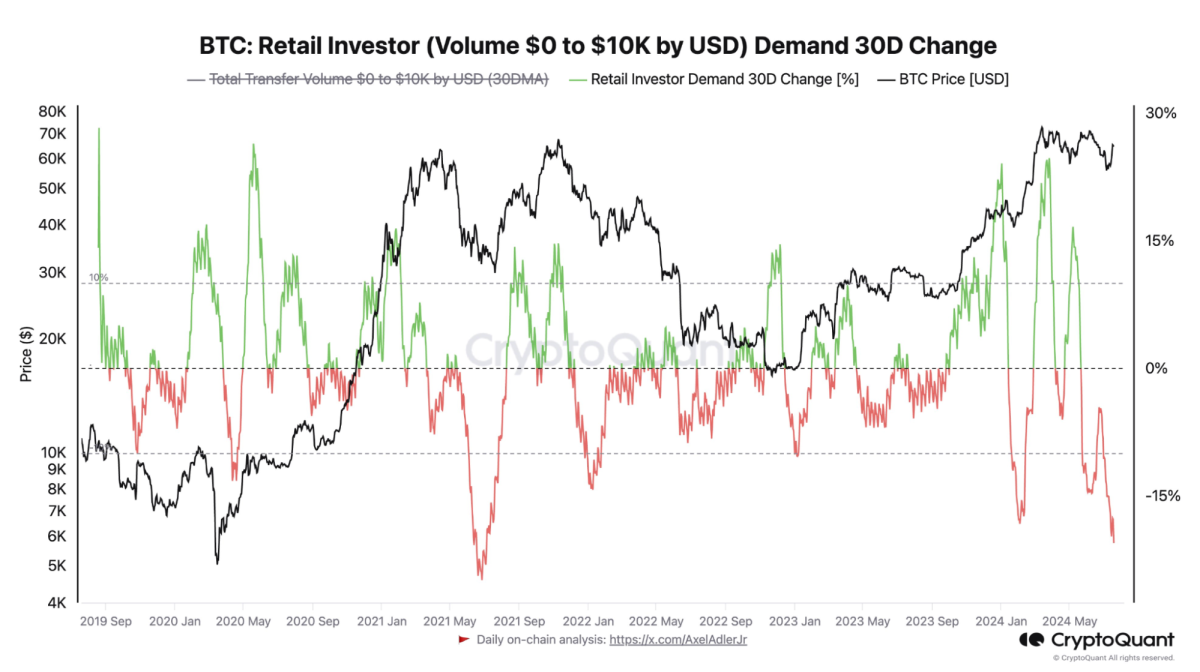
While the conference succeeded in engaging retail participants, actual retail buyers appear fatigued—either already all-in or unwilling to buy more at current prices. Another possible explanation is a widespread sentiment during the event: people are “waiting for the next catalyst.”
VCs and the Bitcoin Ecosystem
Backing the Best Bitcoin Talent
UTXO Management hosted its first investor day, UTXO Alpha Day, during the conference. We brought together hundreds of capital allocators, entrepreneurs, institutional investors, and angel investors to discuss yield-bearing assets in Bitcoin, the landscape of new Bitcoin layers, and Bitcoin as the ultimate fiscal asset. The event was a success and served as a powerful reminder that venture capital should first and foremost focus on exceptional individuals who are racing to expand Bitcoin’s utility. After participating in BTC Startup Lab’s networking session, I gained a deeper appreciation for the rarity and value of Bitcoin ecosystem founders—and the urgent need for the U.S. to welcome them with open arms. Their primary mission is preparing for the bull market. Once Bitcoin decisively breaks past previous highs, everything else will follow.
One key takeaway was the growing demand among investors for native Bitcoin yield strategies—greater than we initially anticipated. While idle capital often brings to mind BTC sitting in wallets, last week showed that native Bitcoin yield opportunities are equally appealing to crypto investors currently allocating capital across different chains. In today’s environment, TVL follows incentives. We spoke with many investors either looking to move Bridged BTC (e.g., WBTC) from other chains to Bitcoin L2s, or seeking more attractive opportunities than Ethereum or Solana-based altcoins. Incentive programs from Bitcoin-native projects offer not only yield but also significant upside potential.
VCs Still Know Little About Bitcoin
As highlighted in Galaxy’s latest report on blockchain venture capital, interest in crypto investments has steadily increased this year, though still far from Q1 2022 peaks. The report states: “In Q2 2024, venture capitalists invested $3.194 billion into crypto and blockchain companies (up 28% quarter-on-quarter), across 577 deals (down 4% quarter-on-quarter).”
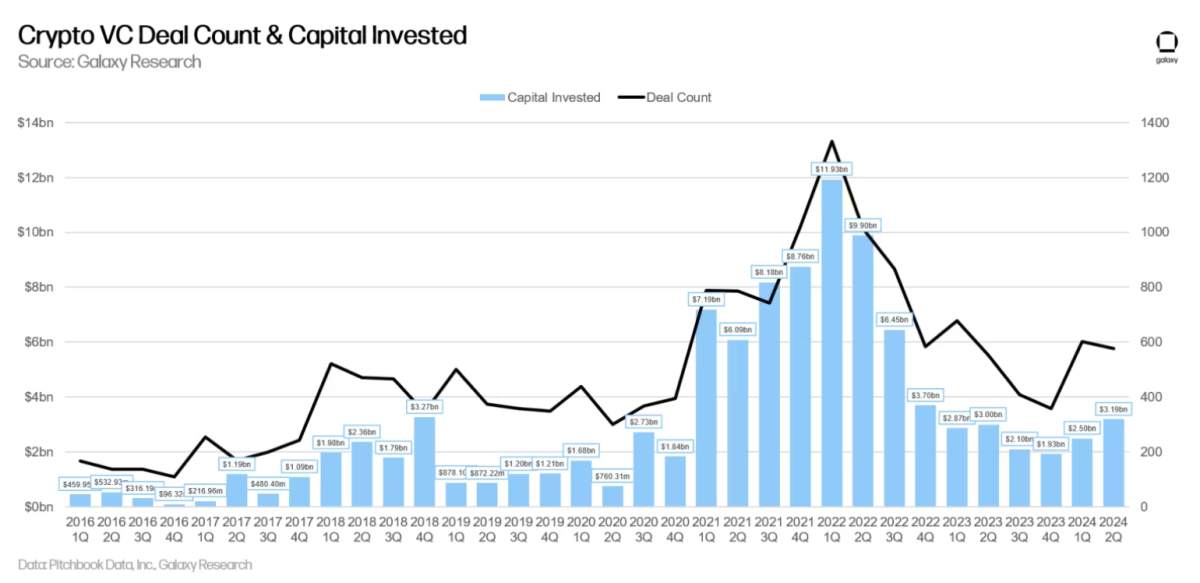
While positive for the broader crypto industry, Bitcoin ecosystem startups received only 3.1% of total VC deal volume in Q2 2024—$96.4 million—despite Bitcoin accounting for over 55% of the entire crypto market cap.
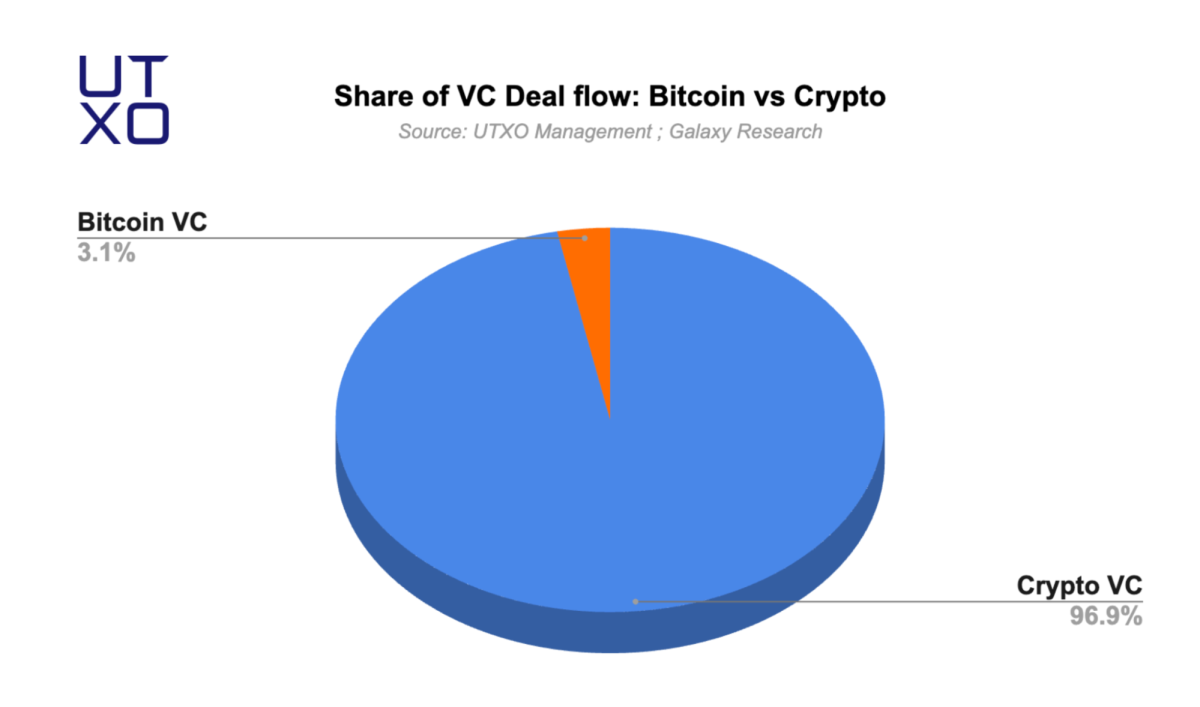
We believe this trend will soon reverse. As Bitcoin DeFi and infrastructure mature, VC opportunities in the Bitcoin ecosystem will become impossible to ignore. One reason for the current lag may be VCs’ limited technical understanding of Bitcoin compared to other crypto ecosystems. There are few Bitcoin analysts, and Bitcoin’s historical lack of programmability has dampened VC interest. But we expect this to change quickly, as understanding Bitcoin’s intricacies will attract more technical talent—including developers—to a less crowded market.
Alpha in the Bitcoin Ecosystem
Henry Elder from UTXO emphasized all the ways traditional investors should consider deploying Bitcoin capital on-chain during Alpha Day. Key points include:
BTCFi is still in its infancy and can be broadly categorized into three types: sidechains, L2s, and meta-protocols.
-
Drawing on years of experience with Ethereum sidechains and related tooling, Bitcoin sidechains are easier to launch than true Bitcoin L2s. As a result, sidechains are currently the most developed and mature segment of the BTCFi ecosystem. They also benefit from Ethereum and its L2s' highly advanced security audit infrastructure.
-
L2s: Beyond Lightning Network, Bitcoin L2s remain largely in development, each implementing unique and novel technical solutions tied securely to Bitcoin.
-
Meta-protocols that operate directly on the Bitcoin chain represent the most native form of Bitcoin protocols. They use Bitcoin-native assets, with operational details encoded directly into Bitcoin blocks—but require custom indexers for decoding. Arch Network is an example of a meta-protocol supporting BTCFi applications, while Ordinals, BRC-20s, and Runes are also meta-protocols enabling BTCFi assets.
Previously, viable Layer 1 platforms for building were limited to Ethereum and a few other blockchains. Now, Bitcoin offers an alternative that is not only economically more secure and trust-minimized but potentially more technically secure due to a smaller attack surface than Ethereum. Traditional projects can switch to proof-of-stake models using BTC or Bitcoin L2s, eliminating billions in annual expenses and/or inflation, while gaining superior security and maintaining high technical and cultural independence.
Bitcoin L2: The Shiniest Star on the Block
L2 Takes Center Stage
Unsurprisingly, L2 was the central topic of discussion at the conference. BitcoinOS (Grail) announced a new rollup protocol capable of verifying proofs directly on Bitcoin (similar to BitVMX, which achieved something comparable on testnet days earlier). Additionally, Bitlayer and several other L2-related firms were major sponsors, hosting numerous L2 afterparties. Altogether, momentum behind L2s is clearly strong—primarily around sidechains, though Janusz of Bitcoin Layers insists this focus is pragmatic. I predict this trend will intensify as these L2s continue integrating more projects. Different Bitcoin L2s will compete fiercely to build strong community moats against intense competition. With over 80 projects already in the space, it's clear to us that much of the hype is fleeting. Most know the key players from Asia and the U.S., while others—unless bringing genuine innovation—will remain obscured by the fog of war. A pivotal moment came when Cathie Wood joined Alyse Killeen on the main stage to discuss Bitcoin L2s, signaling that larger institutional players may be eyeing entry (Franklin Templeton’s Development Institute also held a private event with several VCs, including UTXO).
Rollup Teams at the Frontier of Bitcoin Research
After meeting teams from Alpen, Bitlayer, and Citrea, we gained a clear view of the cutting-edge research happening in the Bitcoin space. The paradigm shift introduced by BitVM has attracted some of the brightest minds to explore the frontiers of Bitcoin scripting and zero-knowledge proofs. The work being done today could onboard the next million users, with trust assumptions suitable for most mainstream needs.
Yet despite excitement around Bitcoin rollups, the sector faces significant challenges. First is the cost of posting data availability to Bitcoin. While beneficial for miners, designing optimal solutions that minimize reliance on trusted intermediaries remains difficult. Another key point: several teams are preparing to release new technical papers aimed at advancing understanding of how to design bridges for these rollups.
The Forgotten Lightning Network
With all attention focused on Trump and newer, shinier objects like sidechains, the Lightning Network was largely forgotten during the conference. Alex B of Bitcoin Magazine raised this during Alpha Day: “I don’t think I’ve heard a single person mention Lightning Network.”
Maybe forgotten for a few days—but Lightning isn’t dead. Once fees spike again (not if, but when), I’m confident Lightning will reclaim center stage.
Regardless, the Lightning ecosystem will continue growing steadily. Just before the conference, Lightning Labs announced (finally) the rollout of Taproot Assets on Lightning—a development I responded to with: “I don’t think people grasp the significance yet. Bitcoin is evolving.”
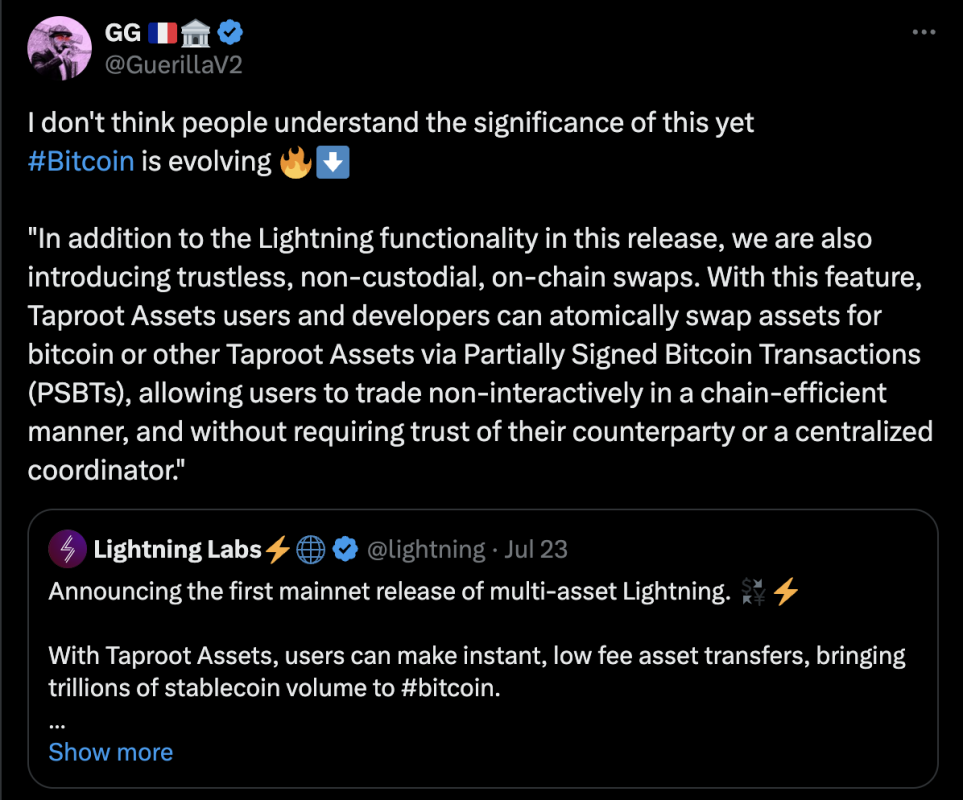
Lightning-fast, trustless, and natively integrated with Bitcoin (generating revenue for nodes)—transactions on Lightning offer immense potential. People often say “too early” means “wrong,” but in Lightning’s case, I believe this timing is actually ideal for capital allocators. Yes, there are no degens on Lightning, no flashy culture—but it has superior token standards and network effects. Many I spoke with at the conference expressed opposition to applying Runes/BRC-20s to Taproot Assets, but I see them as complementary: one brings community, the other brings cost savings and faster settlement (in a fully trustless way).
I believe investment opportunities at the intersection of Runes/native Bitcoin assets and Lightning infrastructure will be crucial, as demand will naturally flow toward such projects (Joltz and LnFi come to mind as excellent examples).
Is Mining Still Viable?
Hashrate Price Is No Longer the Key Metric—“We’re Building an AI Pilot Project”
In my conversations with miners and analysts, it became clear that the current driver behind miner valuations has little to do with mining itself—and everything to do with capital allocation. Miners are redirecting resources toward AI and high-performance computing (HPC), while investors are favoring miners with the greatest exposure to these emerging verticals. Several factors explain this shift:
First, after the Bitcoin halving, miners struggle to maintain healthy profits. Transaction fees from Ordinals and Runes have so far been disappointing. This has pushed many miners to seek alternative revenue streams—preferably high-margin, predictable, and compatible with existing infrastructure. AI fits perfectly.
Second, the diminishing marginal returns from hash rate announcements have forced miners and analysts to rethink how public mining companies are valued. Markets are generously rewarding miners with AI exposure.
While this trend owes much to Core Scientific and Iris, it appears to be cooling down and returning to rationality, with many attendees betting on selling excess capacity at a premium to AI/HPC firms.
Nonetheless, other drivers of mining growth were evident last week, including unexpected advances in ASIC efficiency (notably, Bitdeer targeting 5J/TH by 2025), and the return of institutional mining financing led by Cantor Fitzgerald, which announced a $2 billion funding facility—expected to grow far beyond that level. This is significant because unlike the 2021 mining cycle, where miners relied heavily on ASIC-backed loans, capital markets have since shut them out, forcing reliance on highly dilutive ATM offerings. This announcement may mark a turning point for mining finance in the 2025 cycle.
Blockspace Commoditization Is Becoming Real
I had the privilege of attending the Alkymia launch hosted by Blockspace Media. For those unfamiliar, Alkymia’s newly launched platform enables directional bets on Bitcoin transaction fees. It provides a suite of tools allowing miners to stabilize income while enabling exchanges, protocols, and traders to hedge against fee volatility. As blockspace becomes increasingly valuable, on-chain transaction complexity will rise—giving professionals who understand the nuances of the Bitcoin mempool a competitive edge.
Mempools were also a key topic last week, as Bitcoin’s added programmability and the introduction of rollups may bring some form of MEV—or MEVil—into the protocol. Understanding MEV’s potential impact on Bitcoin is critical, making our investment in Rebar Labs more relevant than ever. While we’re still in early stages, most people I spoke with agree that MEV on Bitcoin will differ from Ethereum’s—less centralized, with opportunities more evenly accessible to all miners.
The Overlooked Matt Corallo Talk
Delivering a talk in front of a potential future U.S. president is no small feat. Yet Matt Corallo, a core Bitcoin developer, delivered a brilliant exposition on Bitcoin’s foundational principles—one deserving far greater attention. In particular, his accurate recounting of the block size debate before tens of thousands of attendees stood out. That chapter in Bitcoin’s history was less about block size and more about governance—who gets to decide when and how code changes happen?
After 2017, we began to see the answer: neither miners nor corporations hold unilateral power. After this year’s BTC++ conference, it became clear developers and technical commentators don’t either. The only remaining stakeholder group in Bitcoin’s governance triumvirate is users. While users must ultimately collaborate with miners and developers to harden code changes into the blockchain, they remain the gatekeepers preventing unnecessary protocol alterations. Bitcoin is not code, not a blockchain, not even money—it is consensus among users.
So, what did we learn from the over 22,000 people who came to Nashville to learn about Bitcoin?
Through conversations with locals and international visitors alike, I gathered the following insights:
-
Change is exciting—most support recent proposals to enhance Bitcoin’s functionality. However, most don’t understand what these changes enable or how they work. Educational content remains severely lacking.
-
After discussing Bitcoin with Uber drivers and restaurant/bar staff, I realized user experience remains the top concern. Most people know of Bitcoin, have heard of it, or even bought some. But commonly, they keep Bitcoin in mobile apps like Cash App without knowing how to send it to their own address. Above all, I believe Bitcoin’s next upgrade should make self-custody easier—exactly what users will need when interacting with L2s and applications. I believe infrastructure investment will be paramount this cycle.
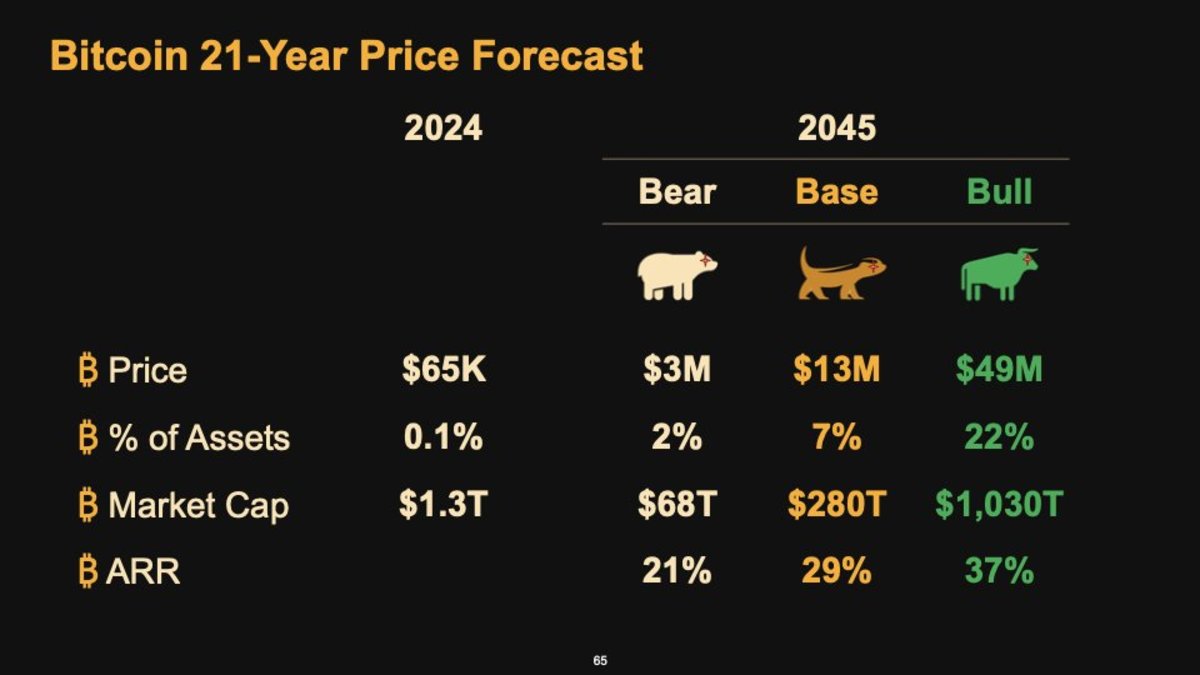
Finally, I’d like to close with Michael Saylor’s optimistic Bitcoin price prediction. Saylor forecasts Bitcoin will reach $13 million by 2045. Perhaps, you should remind yourself daily—you might not be bold enough, or optimistic enough.
Join TechFlow official community to stay tuned
Telegram:https://t.me/TechFlowDaily
X (Twitter):https://x.com/TechFlowPost
X (Twitter) EN:https://x.com/BlockFlow_News
 @BitcoinMagazine











