Exclusive Interview with Wang Chao, Co-Founder of Investment DAO: Prefers Thinking Outside the Box When Investing in AI, and Believes Crypto and AI Will Deeply Integrate
TechFlow Selected TechFlow Selected
Exclusive Interview with Wang Chao, Co-Founder of Investment DAO: Prefers Thinking Outside the Box When Investing in AI, and Believes Crypto and AI Will Deeply Integrate
DAO OG Wang Chao's insights on investing in AI through DAOs over the past year and a half.
 Navigating Web3 tides with focused insights
Author: Siwei GuaiGuai
In Chinese-speaking circles discussing DAOs, Wang Chao is a name you can't avoid.
In 2020, after stepping down as a partner at Bitpie Wallet, he shifted his primary focus to studying the then-emerging field of DAOs. Since his day-to-day work with wallets involved extensive communication with numerous teams, he carried this approach into his DAO research—over several years, he spoke with around two to three hundred DAO teams. Along the way, he documented his observations and insights, becoming a guide for many people looking to understand and get involved in DAOs.
Beyond DAOs, he has also done significant investing. At the end of 2022, he co-founded a DAO dedicated to AI investments—Metropolis DAO. You may not have heard of it, but they've already backed hot AI projects like Pika, Glif, and Altera. Recently, BlockBeats sat down with Wang Chao. From a participant’s perspective, he shared insights on Metropolis DAO, AI investing, and his personal observations about the current state of crypto-AI development.
"ChatGPT made me instantly believe in AI's potential"
How did your previous industry experience influence your current AI investments?
Wang Chao: My career has been roughly divided into three parts: traditional software development, wallet development, and investing.
After graduating from university, I spent over ten years in the software industry—first as a developer, later moving into management. I worked on everything from emerging internet projects to traditional service outsourcing and custom development. During that time, I encountered many forms of AI from that era. For example, we were among the first in China to use Microsoft's Cognitive Services to build enterprise solutions. So I'm certainly no stranger to AI.
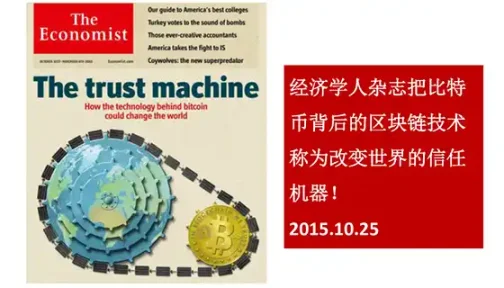
I entered the crypto space professionally in 2017 when I joined Bitpie to work on Bitcoin wallets. But actually, I’d been personally trading and investing in the industry since 2013, closely following developments. In 2015, blockchain became a huge trend after The Economist published an article titled “The Trust Machine: How the Technology Behind Bitcoin Could Change the World,” which quickly popularized the concept. That year was dubbed the "Year One of Blockchain." In the B2B space, both software companies and financial institutions began experimenting with consortium and private blockchains.
Even while still working in traditional industries, we had already invested some technical resources exploring blockchain, including collaborating with clients on POC (proof-of-concept) experiments. Back then, I never expected AI would advance so dramatically within just seven or eight years, let alone imagined how it could integrate with blockchain technology across multiple domains.
After leaving the wallet space in 2020, I’ve spent most of my time investing. Some people know me because I’ve publicly explored many DAOs and written extensively about them. But truthfully, what has been most productive for me in recent years is investing—both in crypto and other sectors.
When did you start thinking about investing in AI specifically?
Wang Chao: Given my technical background and long experience in software, I’ve always been sensitive to new technologies. Ever since childhood, I've loved gaming and exploring new things. This curiosity isn’t tied to whether I’m in crypto—it’s simply triggered whenever a new technology emerges. However, I haven’t focused exclusively on AI; I’ve continued investing in crypto as well.
Regarding AI specifically, I started paying close attention around October 2022. Two factors contributed: first, generative AI tools like Midjourney began gaining traction; second, a friend shared details of a project he was launching. Though it sounded sci-fi at the time, it sparked my interest and prompted deeper exploration. About a month later, ChatGPT launched—and that’s when I truly believed in AI’s potential. It suddenly felt real and imminent.
Because I’d been actively involved in the DAO space and participated in other investment DAOs, I discussed with like-minded individuals whether we could create a DAO focused solely on AI investments. Everyone thought it was feasible, so we moved forward. The launch of ChatGPT brought massive capital and attention, greatly helping our investment DAO get off the ground. By February 2023, Metropolis DAO officially launched. Through this platform, we connected with more outstanding founders and innovative projects, naturally shifting more of our energy toward learning about and investing in AI. That said, it’s important to emphasize that Metropolis DAO is something all members participate in during their spare time—it’s not anyone’s main job, including mine.
When Metropolis DAO started, the AI boom had just begun—were there even enough AI projects to invest in back then?
Wang Chao: Actually, there were quite a few investable AI projects at the time—and ironically, it’s harder now than it was then. Although we began planning early, we didn’t fully set up compliance structures, secure funding, and begin formal deal evaluation until February 2023.
By February 2023, AI was already heating up, with many startups emerging—but investor attention and capital hadn’t flooded in yet. As a result, early-stage projects were open to conversations, and valuations were reasonable. Now, a year and a half later, valuations have soared and competition is fierce. I think it’s much harder today. Back then, some deals were genuinely cheap—there were projects we passed on that went on to do extremely well.
"Investing is highly dependent on networks and circles"
Are AI startups willing to accept investment from a DAO? Don’t they prefer traditional VC backing?
Wang Chao: If it’s a lead investment, our fund size isn’t large enough to lead rounds. But for follow-on investments, it doesn’t matter. Leading investors usually want names like Sequoia or Lightspeed on board, whereas follow-ons are more about building relationships—if your participation brings useful resources, they’ll allocate you shares; if not, no big deal. The key is whether you’re in the loop when the round happens. Often, by the time you hear about a promising project, the financing has already been announced. Then it’s too late—unless you really want in, you reach out asking to join the next round, which sometimes works.
Investing is deeply tied to networks and social circles. Most of our DAO members are based in New York and Silicon Valley—about half come from crypto, the other half from outside. Some members are very active, using their connections and attending events to meet new founders. Of course, we can’t access every project out there. We’re not Sequoia—everyone doesn’t come knocking. But given our fund size, being able to access even part of the market is sufficient.
There are indeed projects skeptical of the DAO model. The skepticism comes from two angles: First, founders unfamiliar with crypto might have inherent biases or dislike dealing with KYC challenges. In reality, we can do KYC—we have compliant off-chain entities and institutional accounts. It’s just a matter of education and explanation. Second, concerns about coordination overhead: having 30 people in a DAO might seem like added complexity. Some founders welcome engaging with each member for potential synergies, while others worry about getting bombarded with requests post-investment. But in practice, we assign a single point of contact per project, avoiding fragmentation.
Overall, communication barriers are minimal. More often, the issue is missing great projects simply because we don’t know the founder or lack access due to tight allocation—then we just skip the deal.
How many projects has Metropolis DAO invested in so far?
Wang Chao: We’ve invested in nearly 20 projects. Some have publicly disclosed funding, which I occasionally discuss on Jike. Others haven’t officially announced their rounds yet, so we refrain from naming them—even if they don’t strictly require confidentiality. Generally, if the project hasn’t gone public, we stay silent.
Can these investments be categorized into specific sectors?
Wang Chao: Our portfolio is quite diverse. Let me clarify: anything I say here reflects only my personal views as a participant in an investment DAO, not official Metropolis DAO positions. Personally, I’ve also invested in about ten AI startups. Overall, non-crypto AI projects make up over two-thirds of our investments. We’ve done some crypto-AI deals, but those are fewer.
We don’t systematically map out sectors like Sequoia does—we lack the resources and stature. Instead, we tend to evaluate whatever comes our way. We have certain preferences, so projects outside those areas get filtered out quickly. Therefore, our investment pattern is relatively random and hard to categorize systematically.
Currently, our investments cluster in a few areas. Generative AI is a major focus, especially multimedia creation tools like Glif and Scenario—about 5–6 projects, making it the largest category. Next are AI Agent-related projects, whether combining AI Agents with crypto or pure AI Agent ventures—we’ve backed around 5–6 of these.
We also have a category we call "blue-sky projects"—investments in ideas others haven’t considered or dared to pursue, backed by a coherent methodology. These typically lack clear applications and carry high risk, but we believe they’re worth betting on. Innovation often emerges from the fringes. Not seeing a monetization path upfront isn’t a dealbreaker—just as no one in the 1990s could predict how the internet would eventually generate revenue. Monetization will happen in unforeseen ways. Even if such projects fail, they might yield technological breakthroughs or spawn unexpected innovations, delivering long-term value and future benefits.
Can blue-sky projects be understood as primarily founder-driven bets?
Wang Chao: Yes, partly it’s about the team, partly about the idea itself. Take Altera, a project that disclosed funding earlier this year. Founded by a Chinese professor at MIT specializing in computational neuroscience, his life’s work has focused on reconstructing the human brain inside computers. Now, he aims to build "digital humans."
These aren't simple avatars—they're intended to be autonomous agents capable of meaningful interaction in various contexts. For instance, he currently has an Agent built on Minecraft that plays alongside you as a true AI teammate, not just a scripted NPC.
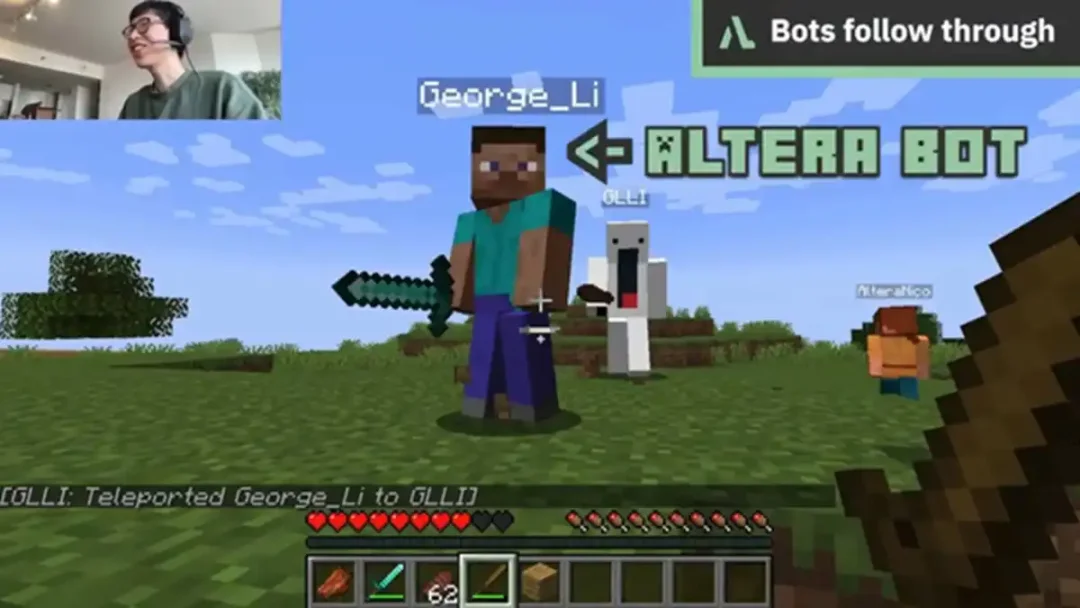
His long-term vision is creating digital humans capable of integrating into human society, complete with emotions—akin to scenarios depicted in *Westworld*. Many can imagine this, but we look for founders who have deep domain expertise and a structured approach to realizing such visions. Whether their experiments succeed or fail, we believe supporting such ambition is worthwhile.
What investment preferences have you developed through this process?
Wang Chao: Over the past year+, the AI landscape has changed dramatically. It’s an incredibly dynamic field—top talent and global capital are pouring in, with new developments daily. Yet it remains immature, with unstable paradigms. For example, everyone thought Runway led in video generation—until Sora emerged and overshadowed it. But Sora hasn’t even launched, while Kuaishou’s KLING beat it to market as the first true Sora-level product. Just yesterday, Llama 3.1 dropped, and suddenly people say it might dethrone ChatGPT. This is an industry where paradigms shift violently every day.
Investing here—especially traditionally—is extremely risky. A startup you back today might be obsolete in six months. Under such conditions, unless you’re strongly bullish on a particular sector, the team becomes paramount—their background, ability to mobilize resources, and iteration speed. With changes happening so fast, you may need to pivot directions within three months. Without agility, failure is likely. But if a team secures enough funding, even if their initial direction proves wrong, rapid adaptation can still lead to success.
Last year, we passed on a company we thought was weaker than another in its niche, so we invested in the latter—a game-focused firm. But the one we skipped quickly abandoned that space and pivoted to broader creative applications, achieving remarkable success. Every time I see that company near the top of AI traffic rankings, I feel regret—we missed it when it was very cheap. So I believe execution speed and adaptability are crucial.
Additionally, we favor blue-sky projects because human imagination is limited—we can’t foresee the future. When someone conceives something truly novel, it might align perfectly with future trends. Those are the bets we’re happy to make.
"Don’t judge crypto-AI by traditional investment standards"
Is the reason you’ve invested less in crypto-AI because those projects are harder to access?
Wang Chao: Not really. First, the methodologies for evaluating these two types of projects are fundamentally different.
Initially, we tried applying traditional AI investment frameworks to crypto-AI projects, but many didn’t pass muster—the evaluation criteria simply don’t align. Under those assumptions, several projects got filtered out. Later, we realized we shouldn’t assess them the same way—the focus should differ. Once we adjusted our mindset, we began investing in more crypto-AI ventures.
Crypto has a bad habit: once a trend catches fire, dozens of similar projects flood the market, creating intense competition. Teams may look impressive on paper, but genuine differentiation is rare. In such cases, we remain cautious. I think this reflects both market dynamics and our own historical preferences.
For us, crypto projects aren’t inherently harder to invest in. Nearly half our members come from various crypto funds—several are partners or founders themselves—so our network in crypto-AI far exceeds that in traditional AI. But since these members already evaluate such projects daily at their own funds, they don’t necessarily need the DAO to place bets—that’s partly why we’ve done fewer crypto-AI deals.
What are some promising patterns for combining crypto and AI today?
Wang Chao: There are actually many strong models—I could list dozens. I generally break them into three categories: First, using crypto technologies to solve problems that standalone AI cannot address—though the core remains AI, enhanced by crypto. Second, applying AI to crypto—for example, using AI for smart contract auditing.
More exciting is decentralized AI. This includes decentralized data collection. Today, data is extremely scarce—most usable datasets are already exploited. What remains is either too costly or lacks mechanisms for mass coordination. Managing ownership of collected data is another challenge—clearly an area where crypto and AI can converge.
Other directions include decentralized models and decentralized compute. While some argue compute decentralization doesn’t belong under AI, I consider compute fundamental to AI. There are too many sub-directions to enumerate.
Personally, I’m especially bullish on data. In traditional AI, demand for data has reached desperate levels. Anyone who can supply data—legally or gray-market—is welcomed. For example, when Sam Altman launched Sora, he was asked if YouTube data was used—he dodged the question, clearly implying yes, and without authorization. Around data, there’s immense opportunity for crypto. Can we incentivize contributions via “collect-to-earn” models?
Past “X-to-earn” models mostly devolved into Ponzi schemes because they created little real economic value. But data collection inherently creates value—whether sold directly to companies or aggregated into training sets. It holds enormous potential. Moreover, digitizing such data contributes meaningfully to human progress.
By designing sound tokenomics and identifying areas with product-market fit (PMF) or data-market fit, ensuring data gets used, purchased, and widely applied in AI training—these are promising paths worth exploring. Already, many projects are tackling this, targeting different data domains. Some show real promise; others are just bandwagon jumpers.
Compute is a perennial topic. Everyone tracking AI and crypto is watching this space—numerous projects have emerged. I believe compute is foundational to AI operations—its importance cannot be overstated. Decentralized compute will inevitably undergo massive growth.
But current platforms still fall short—even popular ones. Technically, they aren’t truly decentralized yet. Many are merely compute matchmaking platforms with centralized architectures, using crypto only for settlement or incentives. They’re far from the ideal of fully decentralized computing networks.
Distributed training is also immature. Real AI training demands massive data transfer, which distributed systems struggle to support. While startups—Web3 and Web2—are building distributed training infrastructures, no mature solutions exist yet. This limits usable architectures mainly to inference, where alternatives abound, while training faces compute shortages. And if users choose decentralized platforms for privacy, but find protection inadequate—that too remains unresolved.
Moreover, I believe the Agent economy hasn’t taken off yet—but I’m very optimistic about Autonomous Agents’ future. If Agent intelligence improves dramatically, will they rent compute on AWS—or opt for an unstoppable decentralized network guaranteeing uninterrupted operation for 5, 10, or more years? The answer seems obvious.
Agents aren’t there yet, but I believe a decentralized compute and cloud network will one day occupy a central position in the market.
Many say the rise of AI Agents could be the key to crypto’s mass adoption—when do you think that inflection point might arrive?
Wang Chao: Hard to say. I’ve seen many projects building infrastructure for AI Agents, including attempts to put Agents on-chain. But both infrastructure maturity and viable on-chain use cases remain early-stage.
I think the first large-scale convergence between Agents and crypto won’t involve putting Agents on-chain, but rather Agents using crypto for settlements. Using crypto is far easier than opening a Citibank account. If crypto assets like USDC gain broader regulatory acceptance, payment use cases could mature first. Of course, this assumes Agent capabilities also mature—currently, they’re not reliable enough to handle financial flows. Optimistically, in three to five years, we may see powerful AI Agents. Then, they’ll likely adopt crypto as a payment tool within their operations—not necessarily live on crypto networks.
Forget about Agents living on-chain—first, think about Agents using crypto. Imagine a society composed of tens or hundreds of billions of Agents forming complex economic relationships—with humans and among themselves. Such a vast economic network, even partially powered by crypto, would multiply crypto transaction volumes by hundreds or thousands of times. That alone would be transformative.
Later, Agents might truly inhabit chains—as native entities living on-chain, achieving near-perpetual existence and operating autonomously. That’s further out, but I believe it’s the future.
Now that we have Metropolis DAO—an AI-focused investment DAO—will we eventually see DAOs dedicated to AI development?
Wang Chao: Definitely. First, expecting organizations like OpenAI to fully operate as DAOs—like BanklessDAO, placing all work and resources under a DAO framework—is still distant. Coordinating complex tasks efficiently within a DAO remains challenging. Not impossible—but it’ll take time.
It took 400 years for corporations to evolve into the highly advanced form we saw in the 20th century. DAOs have a long road ahead. But if we adopt a semi-centralized model—keeping operations centralized while delegating governance to a DAO—I think that’s achievable in the medium term. OpenAI doesn’t fully do this, though its structure hints at decentralization by involving broader societal input (though execution falls short). Anthropic takes a more community-oriented approach than OpenAI.
Take Stability AI: Emad (founder and former CEO) initially wanted to build it as a DAO, but realized current DAO capabilities made it unfeasible, so he opted for a centralized model. Interestingly, its first backers were crypto funds like Seed Club Ventures—the second round brought in Lightspeed. I believe he originally intended a DAO path but ultimately compromised.
Alternatively, without full DAO collaboration, we could delegate modules—like data collection—to specialized Data DAOs, which would become vital to AI development. Or, in niche domains, could a vertical-specific DAO gather experts to jointly train and fine-tune models? These are plausible directions. I’m fairly optimistic about such models.
"Raise enough money to survive the cycle"
Crypto-AI market cap is currently $30B, compared to DeFi’s $88B, Ethereum’s $400B, Bitcoin’s $1T, and Nvidia’s $3T. If crypto-AI develops successfully, what scale could it eventually reach?
Wang Chao: I’m terrible at predicting secondary markets—I don’t have a clear answer. First, I admit my limitations. Second, I think the boundary between future AI and crypto will blur.
I believe AI and crypto will deeply merge, creating interesting phenomena. For example, we recently invested in a project enabling AI Agents to hire humans via crypto payments. It’s not a crypto-native project—just an AI application using crypto tech, no token issuance. But if successful, it could grow into a massive marketplace with huge annual economic activity, potentially reaching valuations in the tens or hundreds of billions.
Who owns that market cap—crypto or AI? If this platform thrives, driving so much activity that Ethereum rises 50% and Polkadot 30%, whose credit is that? Crypto-AI or traditional AI? It becomes impossible to separate. As integration deepens and scales, isolating crypto-AI’s market cap will grow increasingly difficult.
If we force a quantitative analysis, here’s one way to view it: Consensus expects AI to significantly boost global GDP over the next 10–15 years. Current global GDP is ~$100 trillion annually. If AI adds another $100 trillion over that period, and AI tech captures 20% of that value, that’s $20 trillion.
Of that $20 trillion, power and compute as foundational layers might claim $10 trillion; model layer (e.g., OpenAI-like firms) $5 trillion; applications $4 trillion; services $1 trillion. Many products capturing this value will incorporate crypto tech. Even if crypto-AI only penetrates 1% of the total AI market, that still means $200 billion flowing into crypto-AI.
Currently, blockchain networks capture very little value—prices are driven more by narratives and memes than actual usage. Value derived from real network activity might be around $2 billion annually. Deep integration with AI and widespread adoption could transform crypto from a narrative-driven market to one sustained by real value capture. But this will take time—perhaps 10 to 15 years. Within one or two cycles, don’t expect such shifts. Current cycles may last just 1–2 years; the next might not see groundbreaking projects emerge. But teams building seriously in this space, surviving multiple cycles, could become industry leaders eight years from now. Even if they don’t survive, their technical innovations and validations contribute significantly to the ecosystem’s evolution.
Recently, Polygon co-founder’s new project Sentient raised $85M in a single round—approaching traditional AI funding levels. But controversy followed, with critics calling it a “PPT project.” What’s your take on such high-profile crypto-AI ventures backed by star investors and founders?
Wang Chao: From an investment standpoint, I hold a neutral-to-positive view. Why neutral-to-positive? Because I’ve also seen non-star projects succeed brilliantly through innovation. Success doesn’t require celebrity investors or legendary backgrounds. But undeniably, strong backers help build consensus. A team with a proven track record earns credibility—that’s validation of capability.
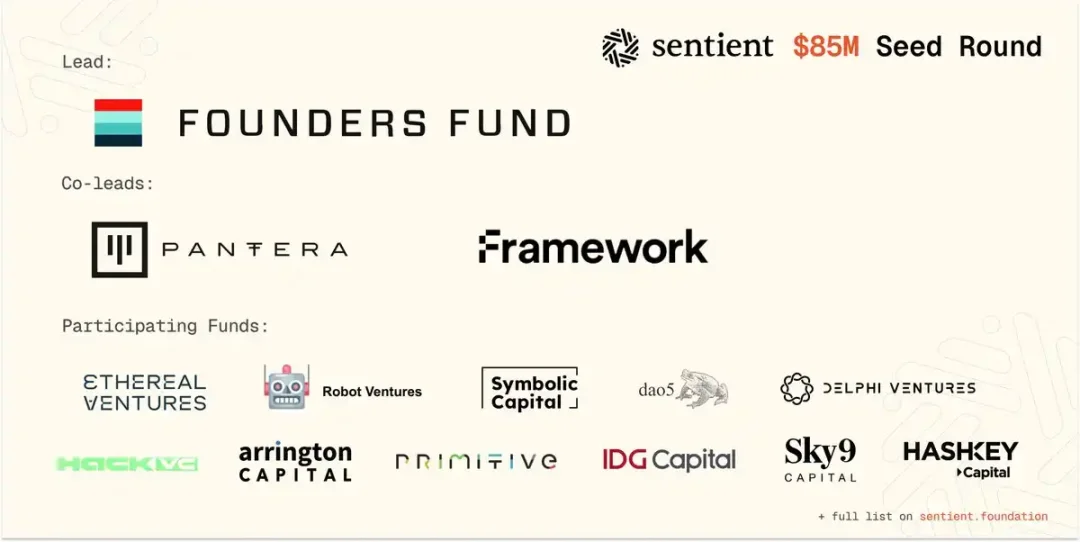
Second, my expectation for all crypto-AI projects right now is that none will deliver truly useful products within this cycle. Most will achieve proof-of-concept or minor PMF, with valuations supported largely by future expectations. A small team raising $3M might not survive until that future arrives. But a serious team—not out to cash grab—raising $85M upfront, then securing another $300M in follow-up rounds, can endure the funding winter. If they keep pace with technical iterations, they stand a chance of succeeding years down the line.
Look at early internet days—many companies survived the crash to become giants. Amazon, founded in 1995, weathered the 2000 dot-com bust while others collapsed, emerging as a dominant force.
Therefore, if such projects are genuinely committed, I give them a favorable assessment. Whether to invest is another decision—maybe valuations are too high—but I won’t dismiss them just for raising big sums. On the contrary, if they’re truly mission-driven, it’s a positive sign.
Across both the investment DAO and personal investments, which AI investment are you most satisfied with?
Wang Chao: In AI, “most satisfying” is hard to define—“exciting” fits better. Right now, the AI project I’m most excited about is Altera. The team’s background and ambition deeply resonate with me, and their fundraising momentum is strong. They raised two rounds in under 100 days: first from a16z SPEEDRUN, then from First Spark Ventures, a deep-tech fund led by Google’s former CEO Eric Schmidt. Simulating the human brain computationally likely aligns well with such deep-tech investors.
I’m filled with anticipation—many of their experiments could profoundly advance humanity into the next era. If successful, this investment could return hundreds or even thousands of times. Even if it fails, I won’t regret supporting such bold innovation—I’d still be proud to have backed it.
Join TechFlow official community to stay tuned
Telegram:https://t.me/TechFlowDaily
X (Twitter):https://x.com/TechFlowPost
X (Twitter) EN:https://x.com/BlockFlow_News
 BlockBeats