









The国产中小game developers who were once forgotten are now being saved by the TON blockchain
TechFlow Selected TechFlow Selected
The国产中小game developers who were once forgotten are now being saved by the TON blockchain
From the winter of traditional games to the confusion of blockchain gaming, and finally to the rebirth on the TON chain.
 Navigating Web3 tides with focused insights
Reporting by: Jaleel Jia Liu, BlockBeats
Before meeting me this time, Xiao Ze had just finished a client meeting to discuss selling the source code of a mini-game he developed. Compared to last year, Xiao Ze appeared completely different—no longer discouraged, but full of ambition, like a teenager reborn into youth.
Last year, he confided in me about his confusion and helplessness while working on large-scale blockchain games: "I’ve been in the blockchain gaming space for three years and haven’t produced anything. It’s far from the ideals I had when I first entered this industry—maybe it's a midlife crisis. I’m already over 30 and haven’t built anything meaningful. I feel like a failure."
After more than half a year, he has finally regained his momentum, spending our entire conversation smiling. Recently, many game development platforms on the TON chain have reached out to his team, offering to buy their mini-game source code, with bids as high as $100,000. TON is a blockchain project developed by Telegram. Although the Telegram team eventually stepped back from direct development, the TON Foundation took over and continued its growth. Starting from transaction bots last year, the TON chain has gradually flourished, creating new opportunities for mini-game bots today.
A traditional game developer who survived two winters, only to fall into another blockchain gaming trap
"Jiale, you might not know it, but the traditional gaming industry started entering winter as early as 2018—it's just that no one realized it at the time," said Xiao Ze, who has nearly a decade of experience in game development, starting at a small-to-medium-sized traditional game company.
Starting in 2018, with the introduction of stricter game licensing policies, the number of approved Chinese game titles began declining steadily, even halting twice completely. For game developers, it felt like enduring two consecutive harsh winters.
"People used to say, 'The higher you climb, the harder you fall.' By the end of 2018, Tencent’s stock plummeted, losing over $80 billion in market value," recalls Lao Si, a former Tencent employee who vividly remembers that period.
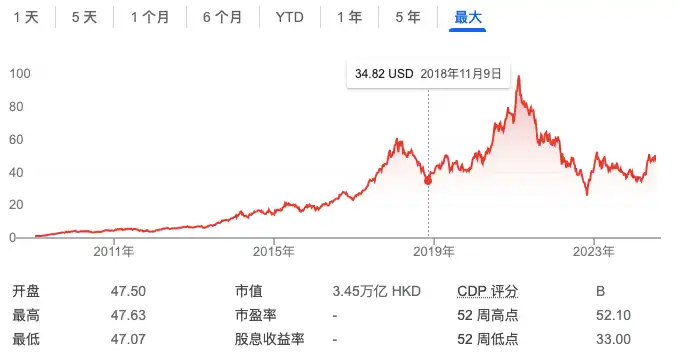
"From the third month of the freeze, people gradually became pessimistic and demotivated. What was terrifying was that nobody knew how long we’d have to endure it," recalled Xiao Ze, showing me old social media posts reflecting his despair at the time.
At first, no one expected the freeze would last eight months, nor did they foresee its massive ripple effects—but the dominoes were already falling silently.
The 2018 license freeze directly or indirectly caused the loss of at least 1,000 new games in China, leading to the closure of over 600 game companies that year. According to QichaCha data, by the second half of 2021, 14,000 domestic gaming-related companies had been dissolved.
"This impact lasted for years. My company kept laying off staff until it ultimately collapsed. That was my first time being unemployed," Xiao Ze became one of the thousands of game developers laid off in 2021.
"That was probably five or six years ago, but I remember it clearly—it was the lowest point of my life. I thought I might never make games again. I cried so hard," he said. "I cried every single day for two weeks. I did nothing. I was anxious and didn’t know what to do."
Blockchain gaming—the "refuge" for "game refugees"
Amid the policy-driven downturn, game studios began exploring new paths. At the time, game developers faced only two options: one was creating premium-quality games.
Faced with tighter licensing rules and intensified competition, game companies realized only high-quality, polished games could survive. Premiumization meant pushing excellence not just in graphics and gameplay, but also in design, user experience, and creative content to meet rising player expectations.
However, for most small and mid-sized studios, this path wasn’t easy. Premiumization required concentrating limited resources on just a few titles, intensifying competition in an already crowded domestic market.
Thus, going global became the only remaining option—and the choice for most studios.
"Maybe it was a second chance from fate. After getting laid off, thanks to my English skills, a former boss brought me to a game company with overseas market access." Xiao Ze could finally continue making games.
"Tencent also expanded heavily into overseas markets, shifting significant resources and focus abroad—developing international versions of games, opening overseas offices, directly acquiring or investing in foreign game studios," analyzed Lao Si. He believes that because Tencent controls much of the industry’s resources, its stock rebounded to a peak in 2021.
During that period, Tencent set records in M&A activity. TiMi Studios opened offices in Los Angeles, Seattle, and Montreal, acquired Riot Games, Funcom, and Sharkmob, and held stakes ranging from 4% to 84% in companies like Remedy, Epic Games, Activision Blizzard, Ubisoft, Krafton, Supercell, and Frontier Developments.
Three years later, Axie remains the ceiling of blockchain gaming
Unlike "gaming giants" like Tencent, small and mid-sized studios found overseas expansion far from smooth. They needed heavy investment in distribution, promotion, and revenue sharing—all areas where smaller studios lacked resources.
Despite this, some still attempted to go global. But they struggled immensely, hitting wall after wall. Without experience or resources in foreign markets, they encountered numerous obstacles—cultural differences, legal disparities, localization challenges, and more.
It was precisely during this period that "blockchain gaming" broke into the mainstream.
This then-foreign concept not only attracted major game studios but unexpectedly became a "safe haven" for these displaced game developers.
After two years of buildup, Ethereum’s hottest blockchain game, Axie Infinity, exploded in May 2021. Its daily revenue grew exponentially, surpassing $334 million in August—far exceeding Honor of Kings’ $231 million in July.
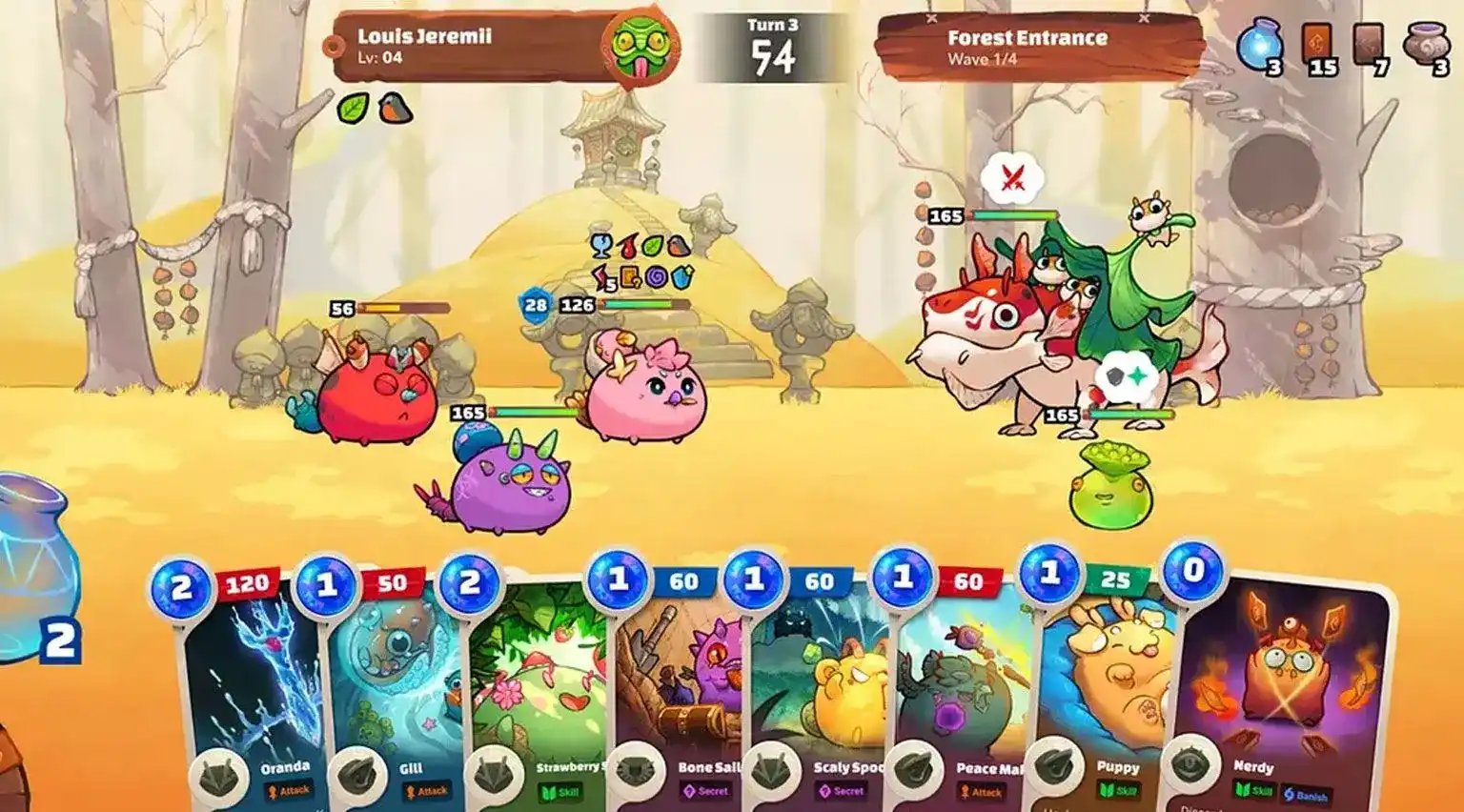
Axie game interface
"Actually, Tencent once considered developing Web3 games. Back then, many other Chinese companies like ZQGame were also jumping on the metaverse bandwagon," Lao Si told BlockBeats.
There are many ways to go global, but blockchain gaming seemed like the best option at the time. This emerging format attracted massive capital inflows and allowed some developers to keep working in gaming.
"It feels like we chose blockchain gaming, but in reality, blockchain gaming chose us," recalled Xiao Ze. Many developers hurt by the traditional gaming industry flocked to blockchain gaming, hoping for a fresh start.
"But three years have passed, and nothing happened—Axie is still the ceiling of blockchain gaming." What once seemed like a rebirth now leaves Xiao Ze feeling conflicted. He feels he spent three years going down the wrong path.
Most blockchain gamers are speculators—highly motivated by profit, lacking genuine interest in gameplay or long-term engagement. For Web3 players, the initial cost—both time and transaction fees—is prohibitively high. Meanwhile, traditional gamers struggle to enter due to steep learning curves.
Given these factors, CoinGecko reports that from 2018 to 2023, Web3 games had an average annual failure rate of 80.8%—a figure that hardly surprises anyone.
Finally, blockchain gaming gets a lucky break
Xiao Ze hadn’t opened his social feed for over half a year because seeing classmates and relatives doing better made him uncomfortable.
"I kept wondering—if I got laid off, should I have just quit game development altogether? Building large blockchain games was the second pitfall for game developers; the first was becoming a game developer in the first place." When overwhelmed, Xiao Ze would drink to vent, but even after drinking, these thoughts haunted him.
When laid off five or six years ago, Xiao Ze was still young. Now things are different—he has a family. Facing familial misunderstanding and colleagues’ condescension, his game development journey felt surrounded on all sides.
Unlike the anxiety and confusion he felt when rejected by traditional gaming, in blockchain gaming, Xiao Ze experienced deeper despair...
Xiao Ze isn't alone in feeling hopeless. According to him, most people around him have already left blockchain gaming—including Tencent—with only half-hearted participants remaining.
In early 2022, most blockchain game developers dreamed of a world free from dominant platforms like Apple or Steam—a decentralized world where anonymous community members could shape their favorite games. Of course, that dream was naive, lacking solid foundation.
Having the right distribution channel is critical to a game’s success. Creating a great game doesn’t guarantee success—you need a large audience willing to play and pay for it.
In traditional gaming, platforms like Steam and Epic were traffic goldmines for PC and console games, while App Store and Play Store served mobile games.
'No centralized review platform is good, but from another angle, blockchain gaming never had a proper user-facing platform.' Over three years, Xiao Ze participated in five or six blockchain game projects, none of which matched his original vision. Today, he’s disillusioned with blockchain gaming. He no longer believes it can produce a truly playable game—at least not within the next five years.
Until this year, after visiting Mount Wutai with his family, Xiao Ze’s tragic life finally began turning around.
Because earlier this year, Notcoin, a clicker game on the TON chain, went viral.
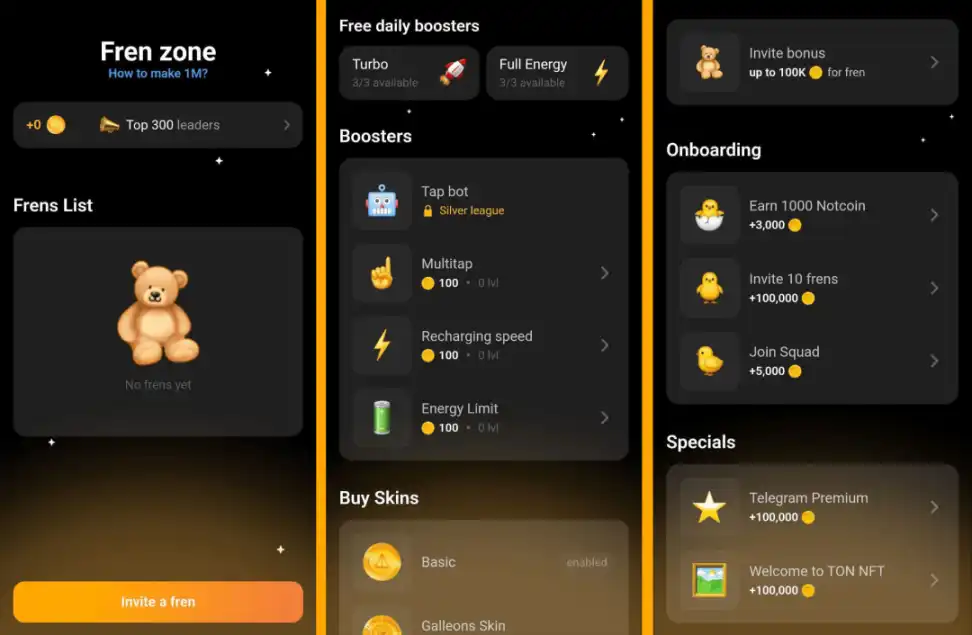
Notcoin game interface
By simply clicking, users earn tokens. Easy to operate, quick to learn, fast-spreading—perfect for short bursts of play. Notcoin is even simpler than Snake—just keep clicking. This low barrier to entry allows users to jump in instantly with zero learning curve.
After launch, Notcoin rapidly attracted millions of users. Currently, Notcoin boasts over 5 million daily active users and monthly revenue exceeding $300,000. These results quickly built a massive user base and gave Xiao Ze renewed hope.
"It felt like I’d been swimming in the ocean forever, almost out of strength, when the TON chain pulled me ashore." After connecting with others building games on TON, Xiao Ze finally saw real business potential.
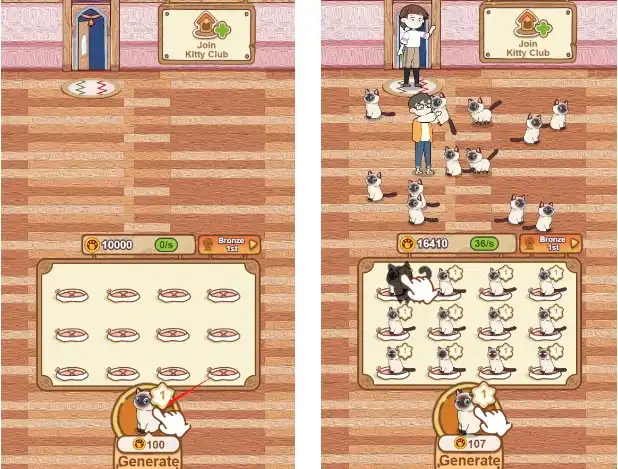
Catizen game interface
Following Notcoin, more Tap-to-Earn games launched, with increasingly diverse mechanics. Take Catizen, currently the hottest blockchain game: operated via Telegram bot, players merge two lower-level cats into a higher-level one to attract more customers for virtual petting and earnings.
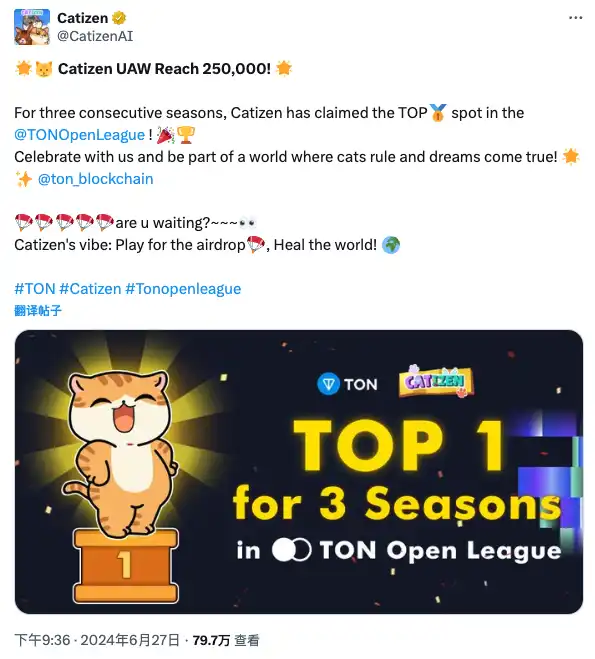
By late June, Catizen announced total users surpassed 20 million, daily active players exceeded 250,000, and it had ranked #1 in The Open League for three consecutive seasons, with monthly revenue exceeding $500,000. These games are simple, intuitive, and designed for micro-interactions, greatly enhancing user stickiness.
While everyone knows self-reported metrics may be inflated, the growing number of players and games on TON is undeniable.
More importantly, blockchain game developers have finally found their traffic goldmine. Telegram’s user base provides TON with enormous potential reach. While slightly smaller than WeChat’s 1.1 billion active users, Telegram’s 900 million users are highly globalized and active, enabling faster spread and adoption of TON-based games.
It’s not just indie developers like Xiao Ze—TON’s mini-game market is attracting traditional game companies to revive shelved small-to-mid-sized domestic titles.
Traditional game studios enter TON
After working on several Web3 projects, Sunny has now shifted her focus to TON games. She’s managing multiple mini-game projects, including a shooting mini-game.
"Recently I’ve talked with various traditional game studios—they’re all very interested in the current mini-game market on TON, including Shanda Games," Sunny revealed to me.
As widely known, Shanda Games is backed by Tencent. According to Lao Si, one of Shanda’s data centers is primarily dedicated to cryptocurrency mining.
Lao Si also confirmed Sunny’s claims—beyond Shanda, companies like Bingchuan, Weiyou, and 37Games (Web2 studios) have already begun launching projects in the TON ecosystem. Clearly, these traditional studios found it easy to enter—they’ve long been observing the crypto space, waiting for opportunities. Joining TON’s mini-game wave is therefore natural.
"As for Tencent, I think direct involvement is unlikely. At most, Tencent might let subsidiaries or portfolio companies take the lead—like Shanda." In Lao Si’s view, Tencent might allocate some support, perhaps leveraging resources from WeChat mini-program game partners.
"If Tencent really enters, no one could do it better. But the problem is—wouldn’t that just drive traffic to Telegram instead?" Lao Si believes supporting Shanda’s TON efforts is already Tencent’s biggest compromise.
"They’re all pouring in, rushing to push mini-games onto the TON chain—games that were previously abandoned or never launched." Recalling the previous cycle, Sunny noted that traditional studios had considered GameFi but hesitated due to long development cycles.
"But every studio has hundreds or even thousands of such mini-games sitting around. Everyone wants to rush in."
Returning to the point raised at the beginning—getting licenses for games in China is a grueling process with long approval times. But TON has no such restrictions, and with Telegram’s 900 million active users behind it, it represents a massive traffic goldmine.
"The big GameFi cycle logic won’t work this round, but mini-games can. Mini-apps can." Like Xiao Ze, Sunny also believes large-scale blockchain games won’t succeed this cycle. "If your goal is mass adoption, GameFi is a false premise. The timing isn’t right. Maybe next cycle."
"Blockchain gaming might have been the best option at the time. It’s just that the timing for large-scale blockchain games hasn’t arrived yet. I don’t think anyone’s to blame—it’s just the industry and market choosing."
Just build something small—for now, forget changing the world
With more people playing games on the TON chain, Xiao Ze is once again experiencing dopamine rushes, rediscovering his passion and motivation.
"In the past, everyone wanted to build big things—grand visions that would change the world—so mini-games were always looked down upon, until NOTCOIN blew up on TON."
Indeed, the mini-game market seems simple—it’s essentially retracing the steps of PC and mobile gaming, rekindling past successful genres. Web3 mini-games are even simpler: they’re just retreading the path of WeChat mini-program games, reviving hits from that space.
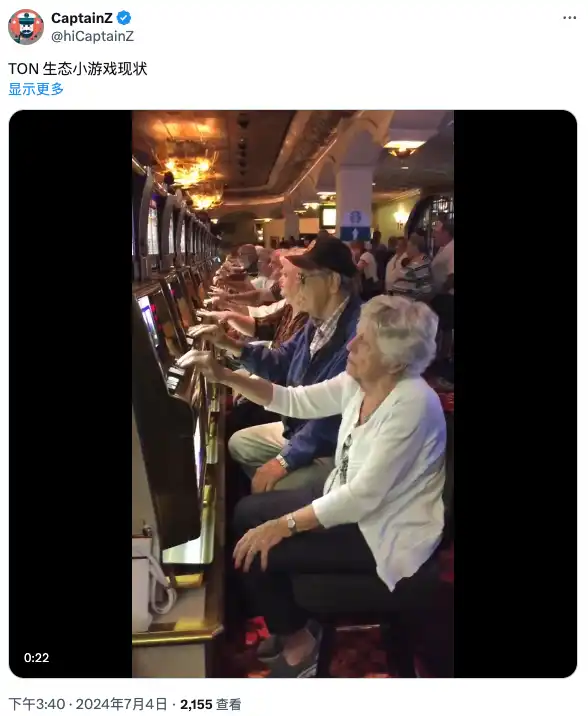
Mockery of TON games
Although most current TON games still lack depth in gameplay, with more developers and major studios joining, it won’t be long before we see classic WeChat top sellers on TON—titles like *Seeking the Immortal*, *Lord of Saltfish*, *Sheep Game*, *Happy Elimination*, *Plants vs. Zombies*, *Carrot Fantasy*, and even *Arknights*.
"When I sold my first mini-game last month, I immediately called all my former colleagues from large blockchain game projects to confirm my TON strategy was right. Now, I'm incredibly happy—over the moon."
At this moment, Xiao Ze took a call—from his developer teammate, confirming code details. Before hastily leaving, I told him: "You seem completely different from last year—like you've been reborn."
Waving his hand, Xiao Ze replied: "I’ve just stopped pretending. Whether it’s gaming or blockchain, you don’t have to build huge things to be impressive. Starting small is perfectly fine. So just to hell with huge games."
Special thanks to all interviewees who provided information for this article. To protect privacy, some identities have been anonymized.
Join TechFlow official community to stay tuned
Telegram:https://t.me/TechFlowDaily
X (Twitter):https://x.com/TechFlowPost
X (Twitter) EN:https://x.com/BlockFlow_News
 BlockBeats






