








The Solana hype begins with ETF applications
TechFlow Selected TechFlow Selected
The Solana hype begins with ETF applications
Solana spot ETF officially added to approval agenda.
 Navigating Web3 tides with focused insights
Author: Tuoluo Finance
Following Bitcoin and Ethereum, Solana has now caught a wave of ETF enthusiasm.
On July 8, an official announcement revealed that Cboe had submitted Form 19b-4 to the U.S. SEC on behalf of VanEck and 21Shares’ Solana ETFs, marking the formal entry of SOL ETFs into the approval process. As early as June 28, both VanEck and 21Shares publicly disclosed their filings of S-1 applications for Solana ETFs with the U.S. SEC, with VanEck even releasing an open letter explaining its rationale. Coincidentally, recent market rumors suggest BlackRock may also be preparing to file for a SOL ETF.
While such rumors remain unverified, it is clear that institutional interest in this seemingly improbable ETF has emerged. Whether this move reflects mere speculation or a strategic market positioning remains uncertain. However, one thing is certain: regardless of final approval, the hype around SOL has already begun in earnest.
Looking back to June, after Ethereum ETFs successfully reversed market sentiment, speculation intensified over which cryptocurrency would be next. Among the contenders—BCH, LTC, DOGE—SOL stood out as the most favored candidate.
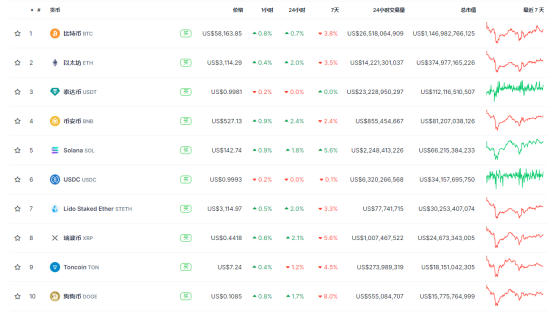
The reasoning is straightforward. A viable ETF candidate must possess broad consensus value and sufficient market depth; otherwise, issuers face challenges in distribution. With SOL consistently ranking among the top five cryptocurrencies by market cap—USDT clearly ineligible due to its stablecoin nature and BNB entangled in ongoing U.S. legal disputes—the feasibility of a SOL ETF stands out.
Secondly, there’s the closeness of backing capital. Although SOL hasn't explicitly disclosed any specific capital affiliations, given FTX's historical stake and its strong ties to North American tech circles, many in the market believe Wall Street capital underpins SOL. This can be seen from the ecosystem: most projects built on Solana are Western-based, and SOL’s recovery from below $10 to highs near $160–$200 was likely supported by institutional capital.
Against this backdrop, on June 27, asset management giant VanEck took the lead by filing an S-1 form for the "VanEck Solana Trust" with the SEC. The following day, 21Shares followed suit. According to the filings, both opted for the Cboe BZX Exchange, named Coinbase as custodian, and committed that the funds would not participate in staking or validating SOL.
Then on July 8, the Chicago Board Options Exchange (Cboe) officially filed the 19b-4 forms for both VanEck and 21Shares Solana ETFs. Once the SEC confirms receipt, the application enters the review period. Under regulations, the SEC has up to 240 days to decide whether to approve the 19b-4 filings.
Despite rapid progress by applicants, skepticism persists in the market, primarily centered on SOL’s regulatory baggage. The core issue lies in classification: while ETH faced initial resistance due to being deemed a security by the SEC, the argument lacked definitive proof at the time thanks to the SEC chair’s noncommittal stance. In contrast, SOL has been explicitly labeled a security.
On June 5, 2023, the SEC listed SOL as a security in its lawsuit against Binance. The next day, in its case against Coinbase, SOL was again classified as a security, with both exchanges accused of operating unregistered securities businesses. As recently as June this year, the SEC reiterated in its action against Kraken that SOL, along with ADA and ALGO among others, constitutes securities—demonstrating consistent regulatory posture.
Being classified as a security means compliance with SEC disclosure rules, transparency requirements, and KYC protocols—conditions fundamentally incompatible with the anonymity inherent in most cryptocurrencies. This presents a major hurdle for a SOL ETF. Additionally, ETFs require reliable spot price references. The approvals of Bitcoin and Ethereum ETFs were contingent upon having futures traded on the Chicago Mercantile Exchange (CME). Currently, only BTC and ETH meet this criterion.
Another concern is decentralization. While Bitcoin’s longevity and economic model have led to relatively distributed holdings, and Ethereum has passed regulatory scrutiny after investigation, Solana—a public chain barely five years old—previously had over 10% of its supply held by FTX, raising clear concerns about centralization.
In fact, even the issuers appear cautious. In VanEck’s open letter, Matthew Sigel, Head of Digital Asset Research, stated: “We view the native token SOL as functioning similarly to other digital commodities like Bitcoin and Ethereum. SOL’s decentralized characteristics, high utility, and economic viability align with those of established digital commodities, reinforcing our belief in SOL as a valuable commodity offering use cases for investors, developers, and entrepreneurs seeking alternatives to the duopoly of app stores.”
The phrase “we believe” underscores subjectivity, sidestepping the actual regulatory status of SOL and revealing underlying uncertainty. In a recent interview, Sigel further admitted: “ETF feasibility isn’t necessarily tied to futures markets—this has already been proven in industries like uranium. For crypto, we think it’s achievable, but it might take a different SEC chair.”
This hope in leadership change is shared by many supporters. According to Bloomberg senior ETF analyst Eric Balchunas, the final decision window for a Solana ETF is mid-March 2025. With the U.S. presidential election in November, the ultimate approval will rest with a post-election regulatory body. He emphasized: “If Biden wins re-election, the Solana ETF will likely die. But if Trump wins, anything is possible.”
Given that both Republican and Democratic parties have recently shown friendliness toward the crypto community, reality could shift. Recently, Anita Dunn, a senior advisor to President Biden, made a rare appearance at a crypto roundtable, signaling a softening stance. Yet, even under new leadership, prior lawsuits won’t simply vanish. More likely, new appointees may continue enforcement—but in a more moderate manner. Otherwise, the SEC’s authority risks becoming a farce.
Beyond regulation, commercial viability adds further complexity to the SOL ETF proposition. Many market analysts believe inflows into a SOL ETF would pale in comparison to those of Bitcoin or Ethereum ETFs, undermining issuer profitability. Cathie Wood’s Ark Invest previously withdrew its Ethereum ETF application due to intense fee competition—crypto ETF management fees are significantly lower than traditional ETFs, resulting in poor cost-benefit ratios.
As 0xTodd pointed out, Ark’s BTC ETF ranks fourth among 11 ETFs, generating about $7 million annually in management fees. Yet Ark concluded ETH wouldn’t generate enough revenue to justify the effort—implying they don’t expect ETH to reach similar scale. By extension, SOL—with a market cap of ~$66.2 billion, just one-sixth of ETH and 5% of BTC—if expected to yield $7 million, would require managing at least 20 million SOL (~4.5% of circulating supply). In contrast, BlackRock, the largest Bitcoin ETF manager, holds only about 1.5% of all BTC. Requiring a much higher relative holding for a much smaller asset makes little business sense for issuers.
This challenge isn’t unique to SOL. Even for Ethereum ETFs, some institutional voices remain skeptical, forecasting net inflows no more than 15% of Bitcoin’s. Still, optimism exists: market maker GSR estimates that if a SOL ETF is approved, SOL could rise 1.4x in a bear market, 3.4x under normal conditions, and up to 8.9x in a bull market.
Compared to SOL, Litecoin and Dogecoin emerge as more promising candidates in analysts’ eyes. Both lack the securities classification burden and rank within the top ten cryptos by market cap. Arthur Hayes, founder of BitMEX, and Raoul Pal, CEO of Real Vision, have both suggested in blogs that “a Dogecoin ETF could launch before this cycle ends.”
Overall, regardless of approval, the SOL ETF initiative has opened the door for altcoin ETFs, paving the way for more cryptocurrencies to pursue this financial milestone. And if the FIT21 bill passes, even meme coin ETFs might become feasible.
This House-passed legislation grants the CFTC jurisdiction over digital assets and defines decentralization criteria—specifically, a token qualifies as a digital commodity (not a security) if no single entity holds over 20% of the asset or voting rights. This could remove key obstacles for future ETFs. The bill has now moved to the Senate, but since the Senate may choose to rewrite it, the process could involve returning to committee review before another Senate vote. Even if voted directly, amendments would necessitate reconciliation with the House—meaning this pivotal legislation still faces a long road ahead.
Meanwhile, the immediate impact is clear: SOL hype. On June 28, when the S-1 filing news broke, SOL rose 7%. On July 8, upon submission of the 19b-4 form, it jumped another 8%. Recently, unconfirmed whispers surfaced claiming BlackRock is also planning to apply.
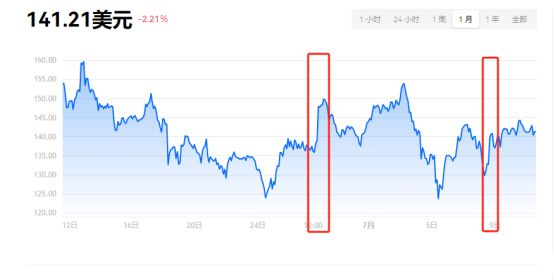
From a price-action perspective, this strongly suggests coordinated capital-driven speculation around a potential ETF. Even if ultimately rejected, during the 240-day review window—with continuous real and rumored developments—the price could enjoy sustained support, influenced heavily by election outcomes.
Yet judging by retail sentiment, enthusiasm remains muted. Most appear to be waiting and watching—not convinced yet. Time will tell. Perhaps they’re simply awaiting the next, more promising ETF candidate.
Join TechFlow official community to stay tuned
Telegram:https://t.me/TechFlowDaily
X (Twitter):https://x.com/TechFlowPost
X (Twitter) EN:https://x.com/BlockFlow_News












