








Vitalik's ETHCC Talk Summary: Advancing Automated Responses to Ethereum 51% Attacks
TechFlow Selected TechFlow Selected
Vitalik's ETHCC Talk Summary: Advancing Automated Responses to Ethereum 51% Attacks
Vitalik also advocates increasing the adoption of light clients at the Ethereum infrastructure level, especially including wallets.
 Navigating Web3 tides with focused insights
Author: Tim Copeland
Translation: DeThings
Key Takeaways:
-
Ethereum co-founder Vitalik Buterin is pushing for better preparedness of the Ethereum network against 51% attacks.
-
He advocates for automated responses to such attacks to reduce social layer pressure.
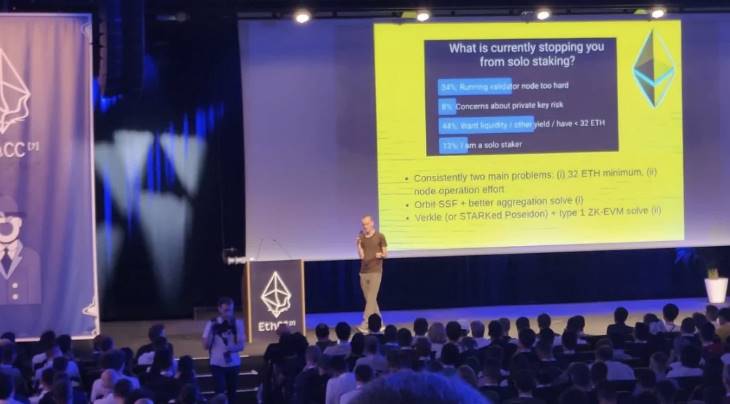
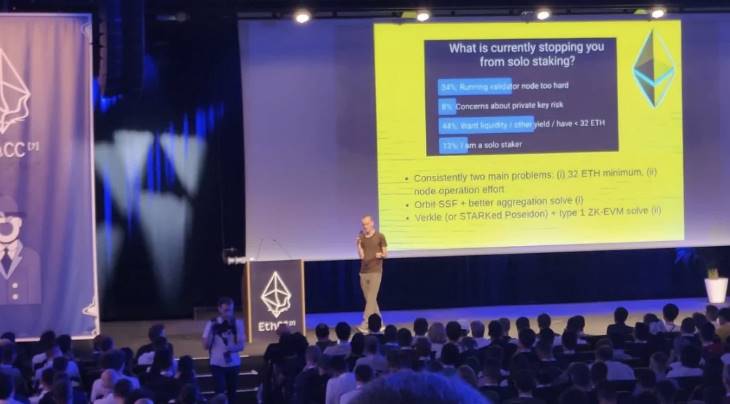
Ethereum co-founder Vitalik Buterin is advocating that the Ethereum network prepare in advance for potential 51% attacks and censorship scenarios
“This is something I’m arguing we should research more and build,” he said during a keynote speech at ETHCC in Brussels.
Buterin is considering the scenario of a 51% attack, where malicious actors (or multiple coordinated actors) produce more Ethereum block states than honest ones. One of his primary concerns is that this could lead to censorship on the network.
A potential response to such an attack, he said, would involve honest validators shifting to a fork of the chain. The current plan largely relies on social consensus, with community members working together to agree on a fork.
However, Buterin believes it would be better if the network were better prepared for such a response. He said ideally this response should be largely automated and pre-planned.
“We want the response to a 51% attack to be as automated as possible. So if you’re a validator, your node should run software that automatically counter-censors the majority chain if it detects transactions being censored, or if certain validators are being censored or it itself is under censorship—so all honest nodes will automatically coordinate on the same minority fork as a result of the code they’re running,” he said.
Buterin acknowledged that making the network’s shift to a fork 100% automatic is impossible due to various constraints. But he added, “The closer you can get to this, the less effort social consensus will need to make.”
He said the protocol layer should at least provide a clear frontrunner soft fork candidate so the community can rally around it when needing to escape a censored chain.
Other Suggestions from Buterin for Ethereum
Buterin also advocated for greater adoption of light clients at Ethereum’s infrastructure level, especially within wallets. He said they should also support zk-EVM verification, further strengthening Layer 2 networks.
He also discussed quantum resistance. He pointed out that this remains an open issue for the Ethereum blockchain. However, he noted the network faces four risk elements—Merkle trees, consensus signatures, data blobs, and user accounts—but each has its own viable solutions.
Beyond that, he pushed for further protocol simplification to make Ethereum easier to use for developers and users alike.
Join TechFlow official community to stay tuned
Telegram:https://t.me/TechFlowDaily
X (Twitter):https://x.com/TechFlowPost
X (Twitter) EN:https://x.com/BlockFlow_News
 The Block











